Introduction
Ficus carica L., the common fig, is a deciduous tree or large multistemmed shrub in the family Moraceae, native to southwestern Asia and the eastern and central Mediterranean basin. It is among the oldest domesticated fruit trees in human history, with archaeobotanical evidence of cultivation predating that of wheat and barley in the southern Levant, placing its agricultural history at more than 11,000 years before the present.
Classification
The species is distinguished within the genus Ficus by its cold tolerance and fully deciduous leaf habit — exceptional traits in a genus otherwise dominated by tropical and subtropical evergreen species — and by its production of a specialised hollow multiple fruit known as the syconium, an enclosed receptacle bearing hundreds of tiny internal flowers pollinated by a single obligate partner wasp species, Blastophaga psenes (Agaonidae). Ficus carica is cultivated for its sweet, nutritionally dense fresh and dried fruit across the Mediterranean, Middle East, Central Asia, and in all suitable warm-temperate and subtropical zones worldwide.
It grows with high drought tolerance on rocky, calcareous, and otherwise infertile soils, and its aggressive root system enables it to colonise cliff faces, ancient masonry, and disturbed rocky habitats across its native and naturalised range. The species carries deep cultural, religious, and symbolic significance in civilisations spanning the ancient Near East, Classical antiquity, and the Abrahamic traditions. Explore related Moraceae species at https://plantsinfo.in/plant-family/moraceae/
Taxonomic Synonyms
| Field | Information |
|---|---|
| Accepted Scientific Name | Ficus carica L. |
| Known Synonyms | Ficus caprificus Risso; Ficus coica Roxb.; Ficus communis Lam.; Ficus domesica Garsault; Ficus hyrcana Vass.; Ficus kopetdagensis Pachom.; Ficus latifolia Salisb.; Ficus obtusifolia Roxb.; Ficus pygmaea Raf.; Ficus sativa Miq. |
| Taxonomic Authority Source | Kew Plants of the World Online (POWO) |
Quick Plant Information
| Field | Information |
|---|---|
| Common Name(s) | Common Fig, Fig Tree, Edible Fig, Garden Fig |
| Scientific Name | Ficus carica L. |
| Family | Moraceae |
| Plant Type | Deciduous tree or large multistemmed shrub |
| Lifespan | Perennial; trees commonly live 100–200 years; documented individuals exceeding 500 years in the Mediterranean basin |
| Growth Habit & Form | Multi-stemmed or single-trunked spreading tree; typically 3–10 m tall in cultivation, occasionally to 12 m in favourable conditions; crown spreading and irregularly branched |
| Native Range | Southwestern Asia (Turkey, Syria, Lebanon, Palestine, Jordan, Iran, Afghanistan, Iraq) and eastern to central Mediterranean basin; widely cultivated and naturalised globally |
| Climate Adaptation & Habitat Type | Mediterranean and dry-temperate; rocky hillsides, cliff faces, disturbed ground, river valleys, ancient masonry; drought-tolerant |
| Leaf Type | Simple, deeply palmately 3–5 lobed, alternate; rough-textured; large |
| Flower Color(s) | Flowers enclosed within the syconium receptacle; not externally visible; syconium exterior green ripening to yellow, brown, or purple depending on cultivar |
| Fruit Type | Syconium (multiple fruit — a hollow, fleshy receptacle enclosing numerous achenes); botanically, a multiple-accessory fruit |
| Evergreen or Deciduous | Deciduous |
Botanical Description
Stem
The trunk and main branches of Ficus carica are covered in smooth, pale grey bark that remains relatively smooth even on older trees, becoming slightly furrowed with age on the main trunk. The wood is soft and lightweight relative to most temperate hardwoods, with a specific gravity of approximately 0.47 g/cm³. Young shoots are stout, green, and densely covered with short coarse hairs, becoming grey and glabrous with age. All parts of the plant — stems, leaves, and unripe syconium — contain a copious white latex that exudes from any cut or wound surface; this latex is irritant to skin and mucous membranes and functions as a physical and chemical deterrent to herbivores. The branching pattern is spreading and irregular, with the crown often as wide as it is tall in open-grown specimens. Trees frequently develop multiple trunks from the base and can produce vigorous root suckers from the base and from cut stumps.
Leaves
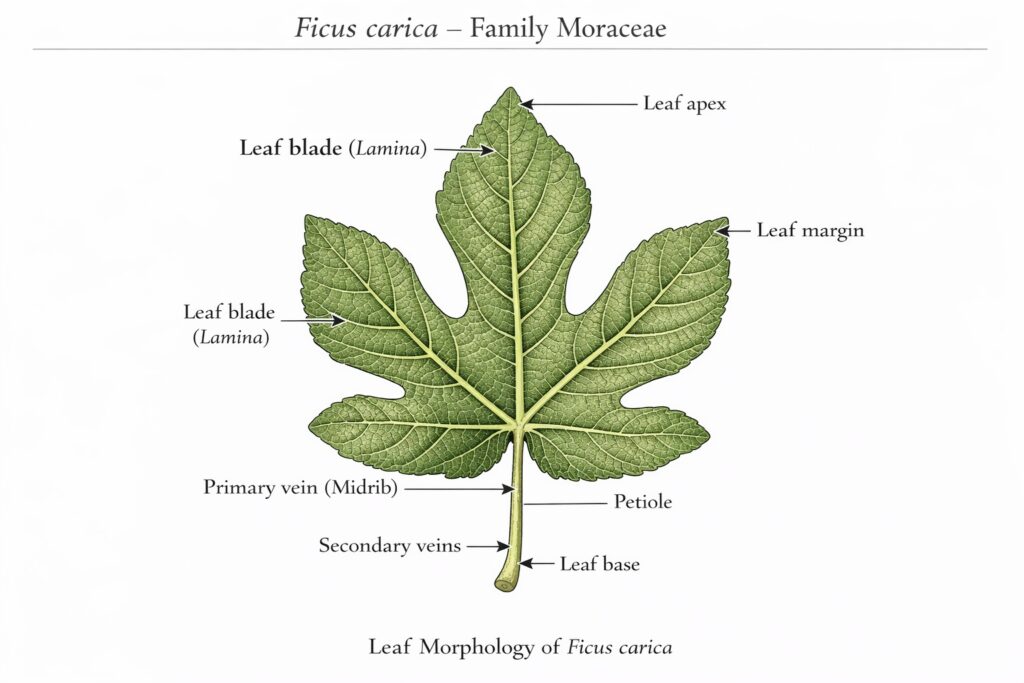
The leaves of Ficus carica are among the most morphologically distinctive of any temperate deciduous tree. They are large, simple, and alternate, with blades typically 12–25 cm long and 10–20 cm wide, deeply palmately lobed into three to five rounded to ovate lobes separated by rounded sinuses. The base is cordate to truncate. The adaxial (upper) leaf surface is rough and scabrous due to short, stiff trichomes; the abaxial (lower) surface is pale green and more densely hairy, with prominent veins. Petioles are stout, 2–5 cm long, and contain latex. The strong, characteristic aromatic scent of the foliage is produced by volatile compounds including beta-ocimene and ficus compounds present in the leaf trichomes. Stipules are present but caducous, leaving a ring scar at each node. Leaves are fully deciduous, turning yellow before abscission in autumn.
Flowers
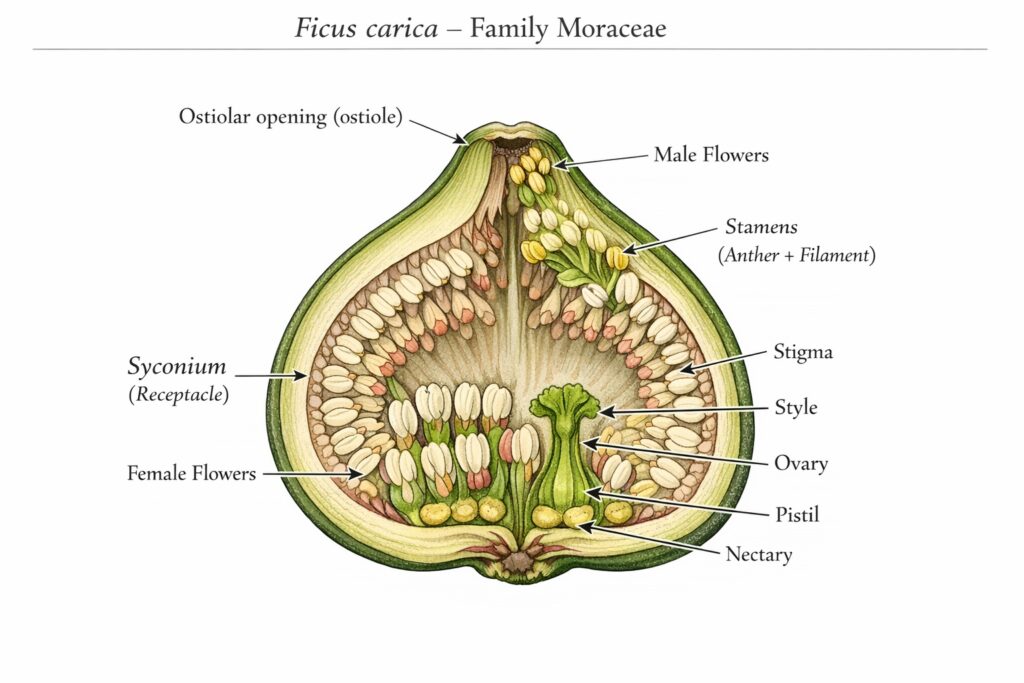
The reproductive system of Ficus carica is structurally unique among temperate trees. What is commonly described as the “fruit” before ripening is in fact the syconium — a hollow, flask-shaped, fleshy receptacle lined internally with hundreds of tiny, reduced unisexual flowers. In the common fig, the edible cultivated form is functionally gynodioecious: caprifig trees bear syconia containing both short-styled pistillate flowers and staminate flowers near the internal ostiole, whilst the edible “female” trees bear syconia containing only long-styled pistillate flowers with no staminate flowers. Individual flowers within the syconium are minute, approximately 1–2 mm, with greatly reduced perianths. Staminate flowers bear two to six stamens. Pistillate flowers have a single superior ovary bearing a lateral style. The small apical opening of the syconium (the ostiole) is plugged by interlocking bracts that permit entry only by the diminutive fig wasp pollinator Blastophaga psenes (Agaonidae).
Fruit
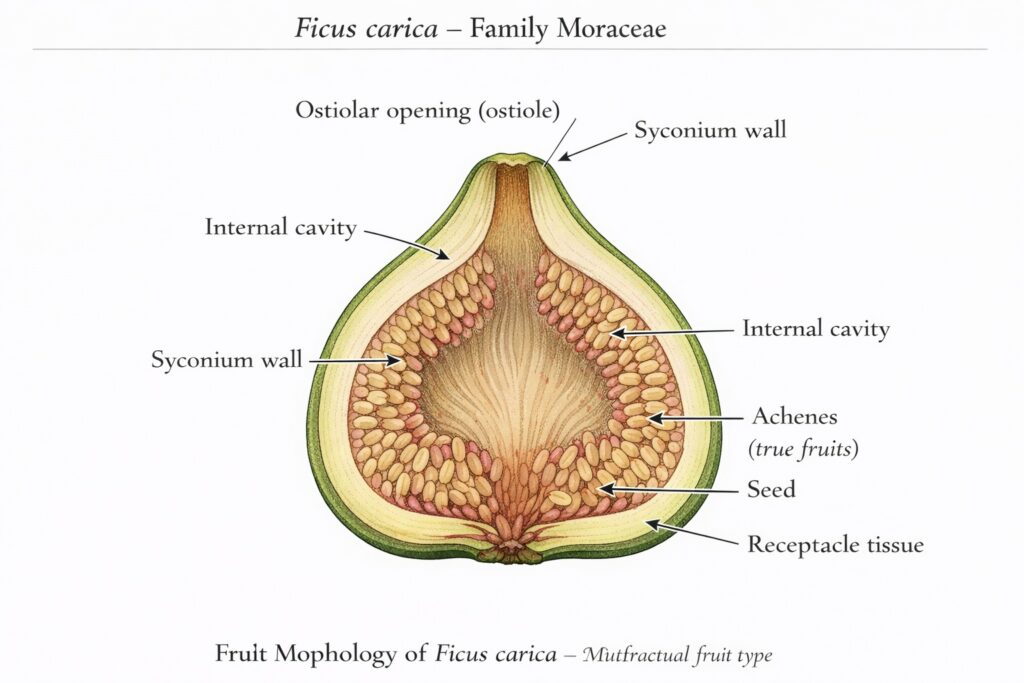
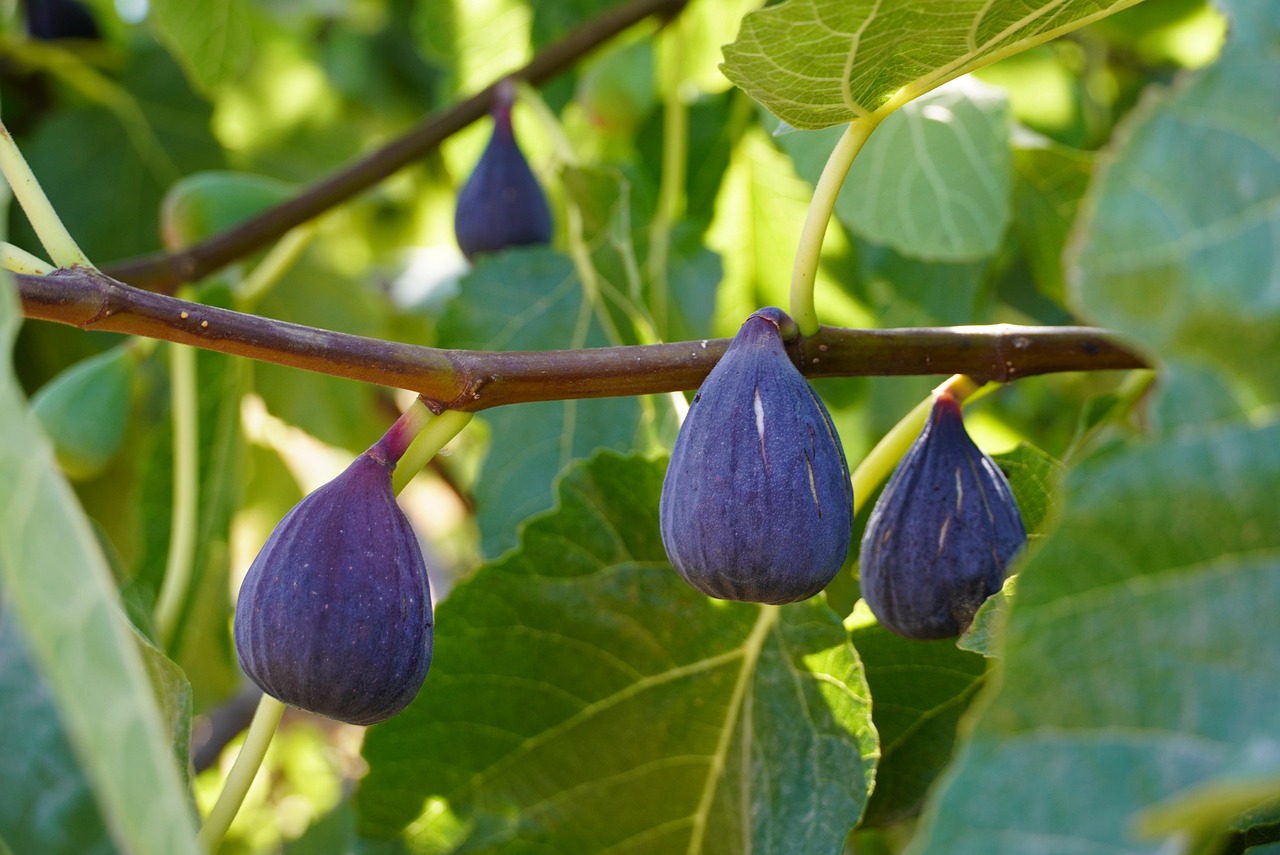
The ripe syconium of Ficus carica is the commercially harvested fruit. At maturity it is a fleshy, pear-shaped to obovoid multiple fruit, 3–8 cm long, consisting of the swollen, edible receptacle wall (the “skin” and outer flesh) enclosing a central cavity packed with the true botanical fruits — small dry achenes each containing a seed, embedded in sweet, soft, juicy tissue derived from the ripened inner receptacle surface. Exterior colour at maturity varies by cultivar from pale green to yellow, golden-bronze, red-brown, or deep purple to nearly black. The interior flesh is typically pink to deep red-purple. Syconia are produced on short, leafy shoots of the current season’s growth; in biennial-bearing cultivars, a first crop (breba crop) matures on the previous year’s wood in early summer, followed by a main crop on current-season wood in late summer to autumn.
Roots
Ficus carica develops an extensive, aggressive, and deeply penetrating root system that is disproportionately large relative to the above-ground canopy. The primary roots are woody, far-ranging, and capable of penetrating rock fissures, masonry, and compacted soils; documented root radii of 15 m or more from the trunk base have been recorded in open Mediterranean habitats. The root system enables the species to access water from deep soil horizons and rock fractures, conferring the high drought tolerance characteristic of the species. Root suckers arising from lateral roots are produced regularly and contribute to the species’ capacity for vegetative spread from established trees.
Growth Architecture & Life Strategy
Ficus carica is classified as a Phanerophyte in the Raunkiær classification — a woody perennial tree whose perennating buds are positioned well above ground level (>25 cm) on persistent woody branches, surviving the winter season protected by terminal bud scales on dormant shoots. This places it among the typical phanerophytic trees of Mediterranean deciduous woodland, where the cold, dry winter season imposes seasonal dormancy through a combination of low temperature and reduced soil moisture.
The species adopts a deciduous growth strategy unusual within the tropical and subtropical genus Ficus. Leaf flush commences in mid-spring following winter dormancy, and the canopy is fully leafed out within 3–4 weeks of bud break. Growth is moderately vigorous in young trees — annual shoot extension of 30–60 cm is typical — and slows as the tree matures and develops a characteristically wide, spreading crown architecture. The combination of a massive root system, soft but persistent woody framework, and latex-laden tissues constitutes an integrated life strategy adapted to the rocky, seasonally dry hillsides and cliff-face habitats of the native Mediterranean and Near Eastern range, where competition from other trees is limited and drought survival depends on deep root access to water.
Common Types / Varieties
Ficus carica encompasses a broad spectrum of cultivated varieties accumulated over thousands of years of agricultural selection across the Mediterranean, Middle East, and Central Asia. The following major cultivar groups and representative named varieties illustrate the principal commercial and horticultural types:
Brown Turkey is among the most widely grown cultivars in temperate climates, producing medium-sized fruit with brownish-purple skin and pink-red flesh on a vigorous, cold-tolerant tree. It is reliably parthenocarpic (sets fruit without pollination) and is the standard commercial and home-garden variety across the United Kingdom, northern Europe, and cool-summer regions of North America.
‘Kadota’ (‘Dottato’ in Italy) is a major commercial cultivar of Mediterranean and Californian fig production, bearing yellow-green to white-skinned fruit with amber flesh of high sugar content at maturity. It is predominantly grown as a drying fig and is among the oldest documented named cultivars, with records extending to Roman-era agricultural writing.
‘Calimyrna’ (the Californian selection of the Turkish cultivar ‘Sari Lop’) produces large, greenish-yellow fruit with amber flesh and requires pollination by Blastophaga psenes via caprification for fruit set. It is the dominant fresh and dried fig variety in California’s commercial industry.
‘Black Mission’ (‘Franciscana’) bears small to medium deep purple-black fruit with strawberry-red flesh and intense sweetness; it is a major dried and fresh fig cultivar in California, Australia, and the Mediterranean. Introduced to California by Spanish missionaries in the 18th century.
‘Adriatic’ (also ‘White Adriatic’) produces pale green to yellowish skin with deep red interior flesh of exceptional sweetness; primarily grown for high-quality fig paste and jamming.
‘Violette de Bordeaux’ (‘Noire de Caromb’) is a compact-growing cultivar with small, very dark purple fruit and rich, complex-flavoured red flesh, well-adapted to container cultivation and cooler climates.
Beyond these commercial groups, hundreds of regionally significant named cultivars exist across Turkey, Iran, Greece, Italy, Spain, North Africa, and the Levant, many of them with restricted local distribution and undocumented formal cultivar names.
Native Range & Distribution
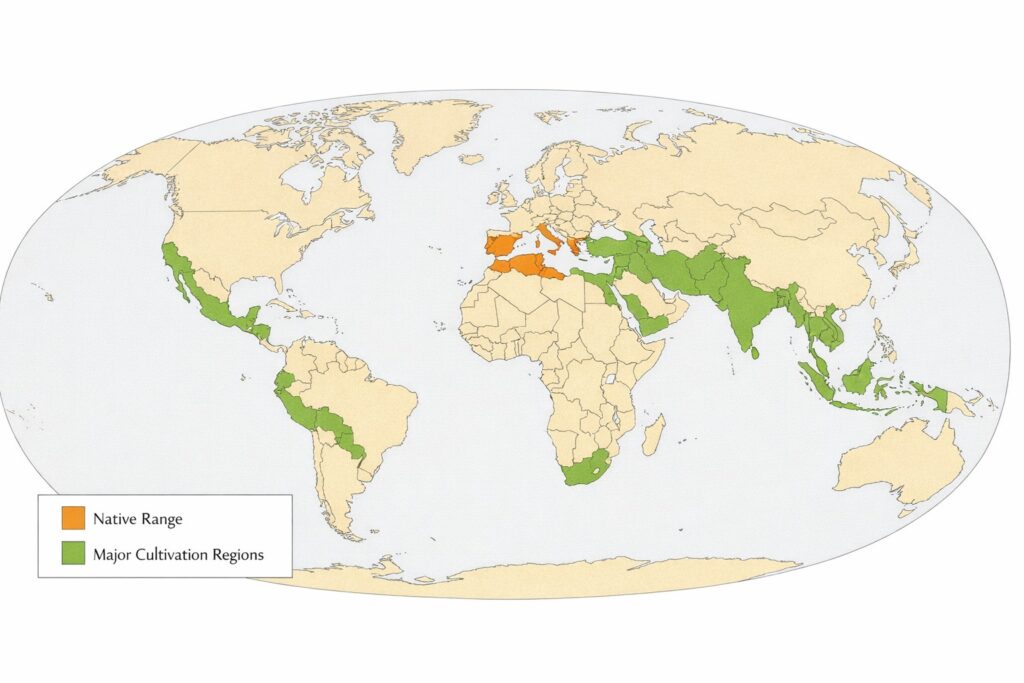
Ficus carica L. is considered native to southwestern Asia — principally the Levantine countries, Turkey, Iran, Iraq, and Afghanistan — and to the eastern and central Mediterranean basin, where it grows spontaneously on rocky hillsides, cliff faces, stream gullies, and forest margins. The precise delineation of native versus ancient-introduction range is complicated by the species’ extremely long cultivation history; populations in the western Mediterranean (Spain, Portugal, Morocco, Algeria, Tunisia) may represent very ancient introductions from the Neolithic and Bronze Age rather than strictly indigenous wild populations, though they are treated as native or archaeophytic in most regional floras.
Beyond the Mediterranean and Near Eastern core, Ficus carica has been introduced and has naturalised in parts of California, Arizona, and the Gulf States in the United States; in South Africa; in Australia (particularly in South Australia and Western Australia, where it naturalises in riparian habitats); in South America; and across subtropical Asia.
| Country / Territory | Range Status | Notes |
|---|---|---|
| Turkey | Native | Major centre of diversity; extensive wild and semi-wild populations in western and southern Anatolia |
| Iran | Native | Wild populations documented in the Alborz and Zagros foothills |
| Afghanistan | Native | Rocky hillside populations in the western and northern provinces |
| Iraq | Native | Riparian and hillside habitats |
| Syria | Native | Eastern Mediterranean rocky hillsides and valleys |
| Lebanon | Native | Limestone cliff faces and hillside scrub |
| Palestine / Israel | Native | Widespread in Mediterranean and sub-Mediterranean zones |
| Jordan | Native | Rocky hillsides in the northern and western regions |
| Greece | Native | Widespread including Aegean islands; spontaneous populations throughout |
| Italy | Native | Widespread; Sicily and Sardinia important secondary centres |
| Spain | Native or archaeophytic | Naturalised throughout; distinction from ancient introduction debated |
| Portugal | Native or archaeophytic | Widely naturalised |
| Morocco | Native or archaeophytic | Atlas foothills and northern coastal zones |
| Algeria | Native or archaeophytic | Northern mountainous zones |
| Tunisia | Native or archaeophytic | Northern and coastal regions |
| Libya | Native or archaeophytic | Northern coastal zone |
| Egypt | Cultivated; archaeophytic | Documented in ancient agricultural contexts; spontaneous populations along the Nile valley |
| Cyprus | Native | Rocky hillsides and stream margins |
| United States | Cultivated; locally naturalised | Commercial production in California; naturalised in California, Arizona, southern states |
| Australia | Cultivated; invasive in riparian habitats | Declared invasive weed in South Australia riparian zones |
Distribution records derived from GBIF occurrence datasets and regional botanical surveys. Distribution maps for this species can be generated from GBIF occurrence data at gbif.org.
Habitat & Ecology
In its native and semi-wild range, Ficus carica is characteristically a plant of disturbed, rocky, and skeletal-soil habitats within the Mediterranean and eastern Mediterranean zone. It grows on calcareous limestone cliff faces, talus slopes, riverine terraces, rocky hillside scrub (phrygana and garrigue), old walls, and the margins of stream channels where seasonal soil moisture supplements the otherwise dry Mediterranean summer. The species is rarely dominant in intact closed-canopy forest, instead occupying ecotonal positions — forest margins, rocky outcrops, and riverbanks — where its aggressive root system gives it an advantage over competitors on nutrient-poor, skeletal substrates.
The association with water-modified microhabitats is particularly pronounced: Ficus carica is consistently present along ephemeral stream channels and in rock fissures where subsurface moisture persists through the dry season, enabling its summer fruiting season despite the absence of effective rainfall from May through September across much of its native range. In cultivation, the species tolerates a wide range of soils from deep loam to gravelly or sandy substrates, but always requires good drainage; waterlogging is poorly tolerated. Altitude range in the native zone extends from sea level to approximately 1,700 m in Turkey and Iran.
Ecological Role
In native Mediterranean and Near Eastern habitats, Ficus carica plays multiple ecological roles as a tree of rocky and disturbed terrain. The ripe syconia are a high-energy food source consumed by a wide range of frugivorous vertebrates — birds including thrushes (Turdidae), starlings (Sturnidae), and warblers (Sylviidae), and mammals including foxes (Vulpes vulpes), jackals (Canis aureus), and wild boar (Sus scrofa) — and these animals function as seed dispersers, depositing seeds in scats at varying distances from parent trees. The obligate pollination mutualism between Ficus carica and the fig wasp Blastophaga psenes (Agaonidae) represents one of the most tightly co-evolved plant-pollinator relationships in temperate ecology; neither the caprifig tree nor the wasp can complete its reproductive cycle without the other. The extensive root system of established trees stabilises rocky substrates and contributes to soil formation in cliff-face and talus habitats where few other trees can persist. Decaying fig wood supports saproxylic invertebrate communities, and the large, dense leaf canopy provides structural habitat complexity in orchards and garden settings.
Recommended Products
Disclosure: As an Amazon Associate, PlantsInfo may earn from qualifying purchases.
🌱 Plant Care Essentials
The following tools can help with pruning, plant health, soil management, and fruit garden maintenance.

Neem Oil for Plant Care
Natural plant protection against aphids, whiteflies, mites, and other common garden pests.

Fungicide for Root Care
Helps suppress soil-borne fungal diseases and supports healthier root systems.

Spray Bottle for Plants
Ideal for applying foliar sprays, neem oil solutions, and liquid plant treatments.

Rubber Hand Gloves
Protects hands during pruning, planting, soil preparation, and garden maintenance.
Functional Traits
| Trait | Value |
|---|---|
| Growth Form | Deciduous spreading tree or large multistemmed shrub; Phanerophyte |
| Leaf Type | Simple, palmately 3–5 lobed, alternate; scabrous-hairy surfaces |
| Photosynthetic Pathway | C3 |
| Seed Type | Orthodox |
| Rooting Depth | Deep; woody roots penetrating rock fissures to 2 m or more; lateral spread commonly exceeding 10–15 m |
| Wood Density | 0.47 g/cm³ (documented value; soft relative to most temperate hardwoods) |
Phenological Calendar
| Event | Mediterranean & Temperate Regions | Regional Qualifiers & Seasonal Deviations |
|---|---|---|
| Leaf Flush | March–April in Mediterranean zone; bud break follows winter chilling satisfaction | Delayed to April–May in cool-temperate cultivation (UK, northern Europe, Pacific Northwest USA); advanced to February in mild coastal Mediterranean climates |
| Primary Flowering Onset | April–May; pistillate and staminate flowers develop inside syconium of caprifig (profichi crop) | Flowers entirely enclosed within syconium; no externally visible floral display; fig wasp emergence synchronised with profichi syconium maturation |
| Peak Flowering | May–June; main-crop syconium development on current-season wood | Caprification (wasp-mediated pollination of Smyrna-type cultivars) required during this window; common parthenocarpic cultivars unaffected |
| Secondary Flowering | June–July; breba crop (on previous year’s wood) matures while main-crop syconia are still developing | Breba crop absent or minor in many cultivars; prominent in ‘Brown Turkey’, ‘Violette de Bordeaux’, and some traditional Mediterranean varieties |
| Fruit Development | July–September for main crop; syconia enlarge and ripen over 6–8 weeks | Breba crop harvest May–June; main crop harvest August–October depending on latitude and cultivar |
| Fruit Maturity | August–October (main crop); ripe syconia soften, neck droops, skin may split at ostiole | Earlier maturity (July–August) in hot continental and Mediterranean climates; delayed to September–October in cooler temperate zones |
| Seed Dispersal | August–October; ripe syconia consumed by frugivores; seed dispersal via vertebrate faeces | Extended dispersal window in warm climates where fruiting is prolonged; seed viability dependent on pollination type — parthenocarpic syconia contain seedless achenes |
| Dormancy or Rest Period | November–March; fully leafless dormancy; winter chilling requirement of 100–300 hours below 7 °C (45 °F) | Dormancy may be incomplete in frost-free Mediterranean coastal zones; trees in subtropical cultivation (e.g. Gulf States, tropical India) may retain leaves partially or continue slow growth |
Leaf flush and bud break in Ficus carica are primarily triggered by accumulated heat units following satisfaction of the winter chilling requirement, with consistent bud break commencing when mean daily temperatures exceed approximately 10 °C (50 °F) for several consecutive days; in cooler temperate regions a minimum winter chilling accumulation of approximately 100–300 hours below 7 °C (45 °F) is required for uniform bud break and fruit set in the following season.
Reproductive Biology
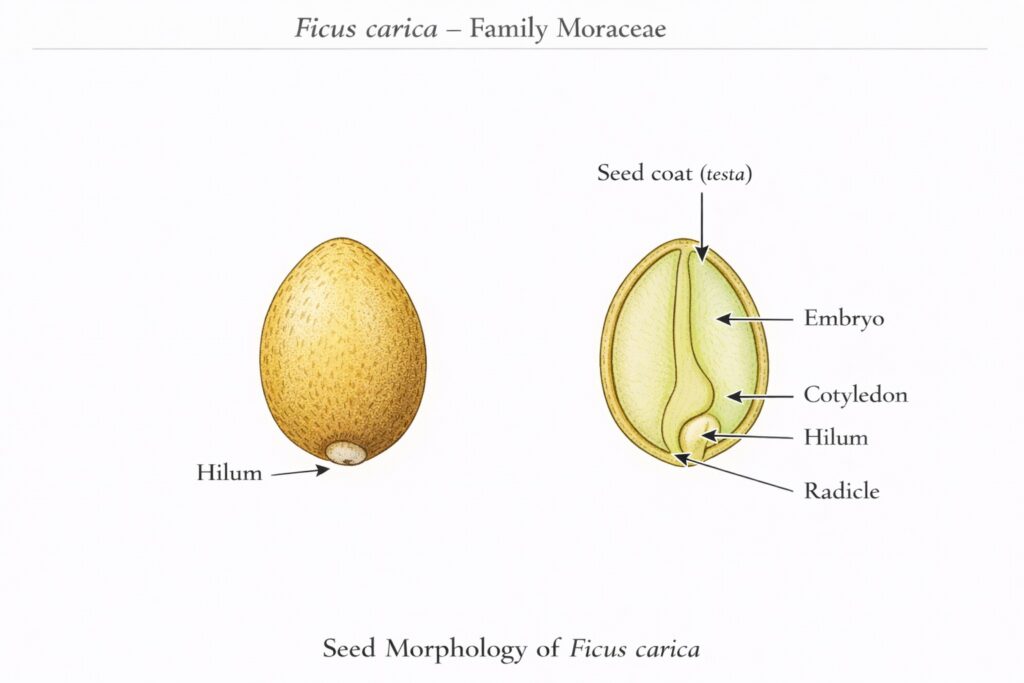
The reproductive biology of Ficus carica is among the most complex and specialised of any cultivated fruit tree, centred on the syconium and the obligate mutualism with the fig wasp Blastophaga psenes (Agaonidae). In the wild-type dioecious system, caprifig trees produce three successive crops of syconia annually (profichi in spring, mammoni in summer–autumn, and mamme overwinter) that serve as the reproductive and developmental host for the fig wasp. The wasp female enters the profichi syconium through the narrow ostiole, pollinates the short-styled pistillate flowers, and lays eggs in the flower ovaries; wasp larvae develop within galled ovaries, male wasps emerge first and inseminate female wasps still within the syconium, females collect pollen from the now-mature staminate flowers near the ostiole, and exit the syconium carrying pollen to a receptive edible fig syconium where they repeat the pollination cycle. Edible female trees produce only long-styled pistillate flowers within the syconium; the wasp can deposit pollen onto these long-styled flowers but cannot successfully oviposit in them, so pollination occurs without galling and the ovary develops into a true seed-bearing achene.
Most cultivars grown in temperate horticulture are parthenocarpic — they develop ripe, edible syconia without any pollination, producing syconia containing only seedless or partially developed achenes. This eliminates the requirement for caprifig trees and B. psenes wasp populations. Smyrna-type and San Pedro-type cultivars, however, require caprification (deliberate pollination management using caprifig syconia bearing wasps) for main-crop fruit set, and are grown commercially only where caprifig orchards and wasp populations can be maintained.
Pollination Ecology
| Field | Information |
|---|---|
| Pollination Mechanism | Insect (obligate internal mutualism) |
| Primary Pollinator Groups | Fig wasp Blastophaga psenes (Agaonidae) — the sole effective pollinator; no other pollinator accesses the enclosed internal flowers |
| Pollination Syndrome | Entomophily (highly specialised obligate mutualism — cantharophily/agaonophily) |
| Floral Reward | Pollen |
Seed Biology & Germination Ecology
| Field | Information |
|---|---|
| Seed Type | Orthodox |
| Seed Viability Period | 2–3 years under dry, cool storage; viability declines more rapidly at ambient temperature and humidity |
| Dormancy Type | Physiological dormancy (PD) — shallow; documented in Baskin & Baskin classification |
| Dormancy Breaking Mechanism | Cold stratification at 4–5 °C (39–41 °F) for 4–8 weeks; exposure to fluctuating temperatures also effective |
| Germination Temperature Range | 20–30 °C (68–86 °F); optimum approximately 25–27 °C (77–81 °F) |
| Light Requirement for Germination | Light-independent; germinates in darkness or light |
| Seed Bank Classification | Transient |
| Dispersal Unit | Achene (enclosed within the syconium); dispersal mediated by frugivorous vertebrates consuming entire syconia |
Seeds of Ficus carica are produced only in pollinated syconia; parthenocarpic cultivar fruits contain achenes that are either empty or contain undeveloped embryos and are not viable for propagation. Commercial and horticultural propagation of F. carica is conducted almost exclusively by vegetative means rather than from seed.
Vegetative Regeneration & Clonal Biology
| Field | Information |
|---|---|
| Vegetative Regeneration Capacity | High |
| Primary Regeneration Mechanism | Root sucker production from lateral woody roots; hardwood and softwood stem cutting rooting |
| Tissue Types Capable of Regeneration | Lateral roots producing adventitious shoot buds (root suckers); dormant hardwood stem nodes producing adventitious roots under propagation conditions |
| Apomixis Status | Absent |
| Bulbil or Propagule Production | Absent |
| Layering Capacity | Moderate; air layering of branches is practised in propagation |
| Root Sprouting from Fragments | High; severed root fragments with intact meristematic tissue produce root suckers; responsible for persistence of trees after cutting in Mediterranean habitats |
| Clonal Spread Rate | Moderate; root sucker colonies can expand laterally by 0.5–1 m per year in undisturbed soil conditions |
| Coppicing Response | High; cut or damaged stems and trunks produce vigorous epicormic and stump sprouts; documented regrowth from stumps following pruning or fire damage in Mediterranean garrigue habitats |
| Ecological or Invasive Significance of Clonal Biology | Moderate; root sucker production contributes to persistence and local spread in rocky native habitats; in riparian zones of South Australia, root suckering and the combination of seed and vegetative spread has contributed to the species’ invasive behaviour |
The vigorous vegetative regeneration capacity of Ficus carica — expressed through root suckering, stump sprouting, and cutting propagation — is a fundamental trait exploited in traditional Mediterranean orchard management, where trees are routinely coppiced, grafted, and propagated from hardwood cuttings over centuries-long orchard lifetimes.
Soil Ecology & Rhizosphere Interactions
| Field | Information |
|---|---|
| Mycorrhizal Association Type | AM (arbuscular mycorrhizal) |
| Documented Fungal Partners | Rhizophagus irregularis (formerly Glomus intraradices); Funneliformis mosseae documented in fig orchard rhizosphere studies |
| Nitrogen Fixation | Absent |
| Allelopathic Properties | Documented; latex and root exudates documented to suppress germination of competitor plant species under laboratory conditions |
| Documented Allelopathic Targets | Germination of annual weeds and competing grass species suppressed in laboratory bioassays; field-level allelopathic significance not fully quantified |
| Rhizosphere pH Modification | Moderate localised acidification beneath tree canopy associated with litter decomposition and root exudate activity |
| Root Exudate Compounds | Latex-derived furanocoumarins (psoralen, bergapten, xanthotoxin); phenolic acids documented in rhizosphere fractions |
| Soil Microbiome Influence | AM fungal colonisation of roots documented to increase phosphorus acquisition efficiency on calcareous soils; root exudate composition alters bacterial community structure in the immediate rhizosphere; dense root mat beneath established trees documented to influence soil moisture partitioning |
Biochemical Profile
| Compound Class | Compounds Documented | Primary Location in Plant | Ecological Function |
|---|---|---|---|
| Furanocoumarins | Psoralen, bergapten (5-methoxypsoralen), xanthotoxin (8-methoxypsoralen), isopimpinellin | Latex, leaves, stem bark, unripe fruit skin | Herbivore deterrence; antimicrobial defence in plant tissues |
| Flavonoids | Quercetin, rutin (quercetin-3-rutinoside), luteolin, apigenin, kaempferol glycosides | Leaves, fruit peel, ripe syconium | UV photoprotection; pollinator attraction (in internal flowers) |
| Anthocyanins | Cyanidin-3-rutinoside, cyanidin-3-glucoside | Ripe fruit skin of dark-coloured cultivars | Colouration attracting frugivorous dispersers |
| Carotenoids | Beta-carotene, lutein, zeaxanthin | Fruit flesh, leaves | Photoprotection of photosynthetic apparatus |
| Triterpenoids | Lupeol, beta-amyrin, oleanolic acid | Stem bark, latex, leaves | Defensive secondary metabolites; herbivore deterrence |
| Phenolic acids | Chlorogenic acid, caffeic acid, p-coumaric acid, gallic acid | Leaves, fruit peel, stem bark | Defensive secondary metabolites |
| Benzaldehyde derivatives | Benzaldehyde, 2-hydroxybenzaldehyde | Latex, leaves | Defensive secondary metabolites against herbivores |
| Proteolytic enzymes | Ficin (a cysteine endopeptidase) | Latex throughout all green tissues | Herbivore deterrence; breakdown of insect and nematode tissue |
| Sterols | Beta-sitosterol, stigmasterol, campesterol | Seeds, leaves, stem bark | Membrane structural component |
| Volatile terpenoids | Beta-ocimene, linalool, alpha-terpineol, methyl salicylate | Leaves (trichomes), ripe fruit | Herbivore deterrence; pollinator attraction within syconium |
Research Coverage
| Field | Information |
|---|---|
| Research Coverage Level | High |
| Primary Research Fields | Syconium and fig-wasp co-evolutionary biology; furanocoumarin phytochemistry and photodermatitis; fruit biochemistry and postharvest physiology; domestication archaeology and genomics; AM fungal interactions in Mediterranean orchards; cultivar improvement and cold-hardiness breeding |
| Earliest Published Study | Classical antiquity (Theophrastus, c. 300 BCE); modern systematic botanical description from Linnaeus (1753); modern phytochemical literature from early 20th century onward |
| Most Active Research Regions | Turkey, Italy, Spain, Iran, Tunisia, United States (California), Israel |
| Key Knowledge Gaps | Wild population genetic structure and domestication genomics; furanocoumarin biosynthesis regulation in response to herbivory; detailed co-evolutionary dynamics of regional Blastophaga psenes wasp populations relative to cultivar diversity |
Phytochemical Organ Distribution
| Plant Organ | Compound Class | Compounds Documented | Source |
|---|---|---|---|
| Latex (all green tissues) | Furanocoumarins | Psoralen, bergapten, xanthotoxin, isopimpinellin | Harborne, J.B. & Baxter, H., 1993 |
| Latex (all green tissues) | Proteolytic enzymes | Ficin | Harborne, J.B. & Baxter, H., 1993 |
| Leaves | Flavonoids | Quercetin, rutin, luteolin, apigenin | Harborne, J.B. & Baxter, H., 1993 |
| Leaves | Furanocoumarins | Psoralen, bergapten | Harborne, J.B. & Baxter, H., 1993 |
| Leaves | Phenolic acids | Chlorogenic acid, caffeic acid | Harborne, J.B. & Baxter, H., 1993 |
| Leaves | Volatile terpenoids | Beta-ocimene, linalool | Harborne, J.B. & Baxter, H., 1993 |
| Stem bark | Furanocoumarins | Psoralen, bergapten, xanthotoxin | Harborne, J.B. & Baxter, H., 1993 |
| Stem bark | Triterpenoids | Lupeol, beta-amyrin, oleanolic acid | Harborne, J.B. & Baxter, H., 1993 |
| Stem bark | Phenolic acids | Gallic acid, p-coumaric acid | Harborne, J.B. & Baxter, H., 1993 |
| Fruit (peel) | Flavonoids | Quercetin glycosides, rutin | Harborne, J.B. & Baxter, H., 1993 |
| Fruit (peel) | Furanocoumarins | Psoralen, bergapten (reduced in ripe fruit) | Harborne, J.B. & Baxter, H., 1993 |
| Fruit (peel) | Anthocyanins | Cyanidin-3-rutinoside, cyanidin-3-glucoside | Harborne, J.B. & Baxter, H., 1993 |
| Fruit (flesh) | Carotenoids | Beta-carotene, lutein, zeaxanthin | Harborne, J.B. & Baxter, H., 1993 |
| Fruit (flesh) | Phenolic acids | Chlorogenic acid | Harborne, J.B. & Baxter, H., 1993 |
| Seeds | Sterols | Beta-sitosterol, stigmasterol, campesterol | Harborne, J.B. & Baxter, H., 1993 |
The latex-bearing tissues — which are distributed throughout all green vegetative organs including stems, leaves, and unripe syconium — represent the most phytochemically complex organ system in Ficus carica, with the highest concentration and diversity of furanocoumarins, proteolytic ficin, and defensive secondary metabolites.
Nutritional Composition
| Nutrient | Value per 100g Edible Portion | Source |
|---|---|---|
| Energy | 74 kcal (310 kJ) | USDA FoodData Central |
| Water | 79.1 g | USDA FoodData Central |
| Protein | 0.75 g | USDA FoodData Central |
| Total Fat | 0.30 g | USDA FoodData Central |
| Carbohydrates | 19.2 g | USDA FoodData Central |
| Dietary Fibre | 2.9 g | USDA FoodData Central |
| Total Sugars | 16.3 g | USDA FoodData Central |
| Calcium | 35 mg | USDA FoodData Central |
| Potassium | 232 mg | USDA FoodData Central |
| Vitamin K | 4.7 µg | USDA FoodData Central |
Values represent fresh raw fig (edible portion, ripe syconium flesh and skin) at commercial harvest maturity.
Climate Adaptation & Stress Tolerance
Ficus carica is one of the most drought-tolerant of all temperate fruit trees, adapted to the Mediterranean climate pattern of hot, dry summers and cool, wet winters. Optimal growth and fruit production occur where summer temperatures range between 18 and 38 °C (64 and 100 °F), with little to no effective rainfall during the fruit development and ripening period from June through September. The species tolerates summer air temperatures up to 43 °C (109 °F) provided the root zone retains access to subsurface moisture; prolonged heat above this threshold with complete soil desiccation induces premature fruit drop.
Winter cold tolerance distinguishes F. carica from most other Ficus species. Dormant wood tolerates temperatures down to approximately −10 to −15 °C (14 to 5 °F) in cold-hardy cultivars, though young wood and actively growing shoots are damaged below −2 °C (28 °F). The species requires a period of winter chilling (100–300 hours below 7 °C / 45 °F) for uniform bud break and productive fruit set in the following season. Trees grown in frost-free tropical or subtropical climates without adequate winter chilling produce sparse, irregular growth with reduced fruit quality. In marginal cold climates (USDA zones 7–8), the tree may be killed back to ground level by severe winters but typically regenerates vigorously from the root system in spring.
Climate Vulnerability & Range Dynamics
| Field | Information |
|---|---|
| IUCN Climate Vulnerability Assessment | Not Evaluated |
| Primary Climate Sensitivity Factors | Winter chilling requirement may be unmet under reduced cold winters projected for Mediterranean and Middle Eastern regions; summer heat and drought intensification above 38 °C (100 °F) increasing fruit drop risk in lowland cultivation zones; shifting rainfall seasonality affecting phenological synchrony with Blastophaga psenes wasp populations |
| Projected Range Shift Direction | Not documented in available literature |
| Projected Range Shift Magnitude | Not documented in available literature |
| Key Threatening Processes | In the native range: deforestation and agricultural intensification reducing wild caprifig populations essential for the pollination mutualism; climate-driven shifts in wasp emergence phenology potentially desynchronising with syconium receptivity; habitat loss in rocky hillside scrub communities |
| Resilience Factors | High drought tolerance and deep root system; broad cultivar genetic diversity spanning cold-hardy to heat-adapted accessions; extensive global cultivation maintaining large ex-situ genetic diversity; parthenocarpic cultivars independent of wasp pollinator availability |
| Published Modelling Studies | No study identified |
| Confidence Level | Low |
Cytogenetics
| Field | Information |
|---|---|
| Chromosome Number (2n) | 2n = 26 |
| Ploidy Level | Diploid |
| Genome Size (1C value) | Approximately 0.35 pg (333 Mb) |
| Karyotype Notes | Thirteen pairs of chromosomes; relatively small genome for a Moraceae tree; karyotype characterised as comprising small to medium chromosomes with limited morphological differentiation between pairs; polyploid forms (2n = 52, tetraploid) have been documented in some cultivar accessions and wild populations but diploid is the standard condition; the fig genome was sequenced in 2021, revealing significant genomic insights into the domestication history of the species |
| Source | Darlington, C.D. & Wylie, A.P., 1955 |
Cultivation Requirements
| Field | Information |
|---|---|
| Light Requirements | Full sun; minimum 8 hours direct sunlight daily for productive fruit set; tolerates partial shade in hotter climates but fruit quantity and quality are reduced |
| Watering | Low to moderate; deep, infrequent irrigation once established; the extensive root system enables access to subsurface moisture; consistent irrigation during fruit development (July–September) reduces fruit drop and improves syconium size; overwatering and waterlogging are poorly tolerated |
| Soil Type | Well-drained loam, sandy loam, rocky or gravelly soils; tolerates infertile, calcareous, and skeletal soils; performs poorly in heavy clay or waterlogged substrates |
| Soil pH | 6.0–8.0 |
| Humidity | Low to moderate; dry Mediterranean-type conditions preferred during fruit ripening; high humidity during ripening promotes fruit splitting and grey mould infection |
| Temperature Range | 18–38 °C (64–100 °F) optimal during growing season; dormant wood tolerates −10 to −15 °C (14–5 °F) in cold-hardy cultivars; growth ceases below 10 °C (50 °F) |
| USDA Hardiness Zone | Zones 7–11 for outdoor cultivation; protected wall culture or container overwintering extends range to zone 6 |
| Fertilization | Low to moderate; excess nitrogen produces vigorous vegetative growth at the expense of fruit set; potassium application supports fruit development and sugar accumulation; phosphorus at establishment |
| Container Suitability | Well-suited to large containers (minimum 60–80 litres); restricting root volume in containers moderates vigour and promotes earlier and more abundant fruiting; requires winter protection below zone 8 |
Propagation Methods
Ficus carica is propagated almost exclusively by vegetative means, as seed propagation produces variable progeny and is impractical for cultivar maintenance. Hardwood cuttings taken from one-year-old dormant wood in late winter — typically sections of 20–30 cm bearing two to four nodes — root readily in free-draining propagation substrate under ambient conditions with bottom heat at 20–22 °C (68–72 °F), with rooting achieved within 4–6 weeks. Softwood cuttings from actively growing shoot tips taken in early summer also root reliably under intermittent mist with high humidity. Root suckers arising naturally from the root system of established trees can be severed and transplanted directly. Grafting onto seedling Ficus carica rootstocks is practised commercially, particularly for Smyrna-type cultivars, to achieve uniformity and manage soilborne nematode pressure by using nematode-tolerant rootstocks.
Pests & Diseases
| Issue | Notes |
|---|---|
| Fig mosaic virus (FMV) | Chlorotic ring spots, mosaic patterns, and deformation of leaves; transmitted by the eriophyid mite Aceria ficus; present in virtually all fig-growing regions; symptoms more severe on young growth and under heat stress |
| Root-knot nematodes (Meloidogyne spp.) | Galled, knotted root tissues visible on excavation; reduced vigour, wilting under mild drought stress, premature fruit drop; M. incognita and M. javanica are the most documented species on fig in Mediterranean and Californian production |
| Fig rust (Cerotelium fici) | Angular yellow to orange-brown pustules on adaxial leaf surface with corresponding orange-brown uredinia on abaxial surface; defoliation of heavily infected trees in warm, humid conditions; most damaging in subtropical and humid-temperate climates |
| Dried fruit beetle (Carpophilus hemipterus) | Adults and larvae enter ripe and split syconia through the ostiole or damaged skin; internal feeding on the flesh and achenes; associated with fermentation and souring of damaged fruit |
| Fig leaf blister mite (Aceria ficus) | Yellowish-green to rusty blisters and irregular surface texture on adaxial leaf surface corresponding to mite colonies on the abaxial surface; associated with reduced photosynthetic efficiency of affected leaves under heavy infestation |
Toxicity & Safety
| Field | Information |
|---|---|
| Humans | The white latex of Ficus carica, present in all green vegetative tissues and unripe syconium skin, contains furanocoumarins (psoralen, bergapten, xanthotoxin) and the proteolytic enzyme ficin; dermal contact with latex produces phototoxic contact dermatitis — erythema, vesiculation, and blistering developing on sun-exposed skin following latex exposure; ficin is a skin irritant producing direct enzymatic tissue damage; ocular contact with latex produces conjunctival and corneal irritation |
| Cats | Ficus carica is listed as toxic to cats by ASPCA; furocoumarins and enzymatic compounds in the latex and sap are associated with vomiting, diarrhoea, and dermal irritation following contact with or ingestion of plant tissue |
| Dogs | Ficus carica is listed as toxic to dogs by ASPCA; furocoumarins and proteolytic enzymes in the latex are associated with vomiting, diarrhoea, excessive salivation, and dermal irritation |
| Toxic Compounds | Furanocoumarins (psoralen, bergapten, xanthotoxin) — photoactivated dermatotoxins present in latex; ficin — a cysteine protease causing direct enzymatic skin and tissue irritation |
| Source | ASPCA Animal Poison Control Center (aspca.org/pet-care/animal-poison-control) |
Toxicological risk from Ficus carica to humans is associated with the latex of green tissues and unripe syconium skin; ripe flesh of the syconium is not associated with systemic toxicity and constitutes the edible commercial product, but skin sensitisation from repeated latex contact is documented as an occupational risk in fig harvesting and orchard management.
Invasive Status
Ficus carica is not globally invasive but has documented invasive status in specific regional contexts. In South Australia, the species is listed as a declared weed under the Natural Resources Management Act, primarily due to its establishment along riparian corridors where root suckering and prolific seedling recruitment from bird-dispersed syconia enable displacement of native riverine vegetation. Invasive populations have similarly been documented in parts of California (particularly along water channels and riverbanks in the Central Valley), in New Zealand, and in parts of the Canary Islands. In the broad majority of its cultivation range — including the Mediterranean basin, the Middle East, North America (outside California riparian zones), and most of Asia — F. carica does not behave invasively and does not establish self-sustaining wild populations. The invasive risk is primarily confined to warm-temperate Mediterranean-climate zones with access to year-round water, bird populations that disperse syconium seeds, and fig wasp (Blastophaga psenes) populations that enable sexually reproduced seedling establishment alongside vegetative spread.
Conservation Status
| Field | Information |
|---|---|
| IUCN Red List Status | Not Evaluated |
| Assessment Year | Not applicable |
| Population Trend | Not assessed globally; wild caprifig populations in the species’ native southwestern Asian and eastern Mediterranean range face localised habitat pressure from agricultural intensification and land clearance; cultivar diversity in traditional Mediterranean orchards documented to be declining as commercial production concentrates on a small number of major varieties |
| Source | IUCN Red List of Threatened Species — https://www.iucnredlist.org (Accessed: 2026-03-08). |
Economic Importance
Ficus carica is a globally significant fruit crop, with world production estimated at approximately 1.1–1.3 million metric tonnes of fresh figs annually. Turkey is consistently the largest producer by volume, accounting for approximately 25–30% of global production, followed by Egypt, Morocco, Algeria, Iran, and Spain as major producers. The United States (primarily California) and Brazil are the principal production centres outside the Mediterranean-Near Eastern core. The crop is commercialised as fresh figs (a premium, perishable product), sun-dried or mechanically dried figs (a stable commodity traded internationally), fig paste (used as a confectionery and bakery ingredient), fig jam and preserves, and fig concentrate. Turkey dominates the dried fig export market, with the Aydin province producing the majority of dried ‘Sarılop’ and ‘Sarılop’-type figs exported globally.
Beyond direct fruit production, Ficus carica is an economically important shade and ornamental tree in Mediterranean gardens and public plantings, and supplies latex-derived ficin to the food and pharmaceutical industries as a meat-tenderising enzyme and cheese-making coagulant. Traditional dried fig production in the Mediterranean basin supports significant rural employment and is the basis of several protected geographical indication (PGI) products, including Turkish Aydin figs and Greek Kymi figs.
Ethnobotanical Uses
Ficus carica has one of the most extensively documented ethnobotanical records of any Mediterranean crop plant, reflecting its uninterrupted cultivation and use across southwest Asian and Mediterranean cultures for more than 11,000 years. The dried fruit has been a staple calorie and sugar source in Mediterranean and Near Eastern diets throughout recorded history, valued for its portability, long shelf life, and nutritional density. The latex of F. carica has been used in traditional folk practices across the Mediterranean, the Levant, and Central Asia for a wide range of topical applications, exploiting the proteolytic activity of ficin. In traditional Ayurvedic practice of the Indian subcontinent, fig fruit and sap have been incorporated into preparations associated with various internal conditions, consistent with the broad ethnobotanical documentation of the species. The leaves have been used in some Mediterranean traditions as a wrapping material for cheese-making, and the latex has been used as a coagulant in traditional cheese preparation, particularly in parts of southern Europe and the Near East. Smoke from the burning wood and dried fruit residues has documented uses in traditional fumigation practices in parts of the Levant and Anatolia.
Cultural & Traditional Context
Ficus carica occupies a position of profound cultural and religious significance in civilisations stretching from the ancient Near East through Classical antiquity and into the Abrahamic religious traditions. It is among the seven species (shiv’at ha-minim) explicitly named in the Hebrew Bible as characteristic plants of the Land of Israel (Deuteronomy 8:8), and the fig tree appears repeatedly throughout both the Hebrew Bible and the New Testament as a symbol of prosperity, fertility, and divine favour — most famously in the Parable of the Fig Tree in the Gospels of Mark and Luke, and in the narrative of Adam and Eve using fig leaves as covering after the fall in Genesis. In Classical Greco-Roman culture, the fig was associated with the god Dionysus (Bacchus), featured prominently in the agricultural cycle celebrated at festivals, and was described in detail by Theophrastus (Historia Plantarum, c. 300 BCE) and later by Pliny the Elder (Naturalis Historia, 77 CE), who recorded more than 29 cultivar names — one of the earliest systematic cultivar inventories for any crop plant. The Arabic and Islamic cultural tradition also holds the fig in high regard; the Quran contains a chapter titled Al-Tin (The Fig, Surah 95) in which the fig and the olive are invoked as testimony to divine creation, reflecting the central place of both crops in the agricultural and cultural landscape of the Arab world. In ancient Egypt, figs were grown in temple gardens and deposited as offerings in tombs, with archaeobotanical specimens recovered from burial contexts at Saqqara and other sites dating to the New Kingdom period. The tradition of hanging caprifig branches in edible fig trees to promote caprification — described by Aristotle and Theophrastus — represents one of the earliest documented examples of applied ecological knowledge in agriculture, predating the scientific understanding of pollination by more than two millennia.
Interesting Facts
The edible part of the common fig is not botanically a simple
fruit but a syconium — a hollow, fleshy receptacle bearing hundreds of
tiny flowers and their derived achenes on its inner surface; what is
consumed as “fig flesh” is the swollen wall of this receptacle, and the
crunchy texture comes from the hundreds of true achene fruits embedded
within it, each potentially containing a seed.Ficus carica and its obligate pollinator Blastophaga
psenes (Agaonidae) represent one of the most tightly co-evolved
plant-animal mutualisms known in temperate biology; the female wasp is
small enough to squeeze through the fig’s narrow ostiole (approximately
0.5–1 mm in diameter), typically losing her wings and antennae in the
process, and has only hours to pollinate the internal flowers and
deposit her eggs before the ostiole closes — the wasp lives and dies
inside the syconium, and the next generation of wasps develops entirely
within the galled ovaries of internal flowers.Archaeobotanical evidence from the site of Gilgal I in the Jordan
Valley, dated to approximately 11,400–11,200 years before present,
comprises parthenocarpic fig syconia — fruits that could not have
developed from wind- or animal-dispersed wild trees without human
cultivation — representing what is argued to be the earliest documented
case of deliberate crop plant domestication in the archaeological
record, predating the domestication of cereal grains.The latex of Ficus carica contains the proteolytic
enzyme ficin, which is powerful enough to digest the structural proteins
of fibrous tissue; this property is used industrially to tenderise meat
and to coagulate milk proteins in traditional artisanal cheese-making in
southern Europe and the Levant, where fig-branch latex is introduced
directly into warm milk as a plant-derived rennet substitute — a
practice documented continuously from Roman times to the
present.Ficus carica is a cold-tolerant exception within its
genus: of the approximately 850 species of Ficus, the vast
majority are tropical or subtropical and cannot survive frost; F.
carica is the only species in the genus routinely cultivated
outdoors in cool-temperate climates, with documented survival of dormant
wood at temperatures as low as −15 °C (5 °F) in cold-hardy selections,
an adaptation linked to its origin in the seasonally cold mountain
regions of southwestern Asia.
FAQs
Q1: Why does a Ficus carica tree produce abundant flowers but no fruit?
Ficus carica cultivars grown in temperate horticulture are typically parthenocarpic, meaning they develop fruit without pollination, but fruit set failure can occur for several distinct reasons specific to the species. The most common cause in cool-temperate climates is inadequate summer warmth during the critical fruit development window — syconia begin developing but abort when mean temperatures fall below approximately 16–18 °C (61–64 °F) for sustained periods during July and August. Insufficient winter chilling in mild climates can also cause poor bud break and irregular fruit set. For Smyrna-type cultivars such as ‘Calimyrna’, fruit failure in the absence of caprification (introduction of caprifig syconia bearing Blastophaga psenes wasps) is the cause, as these varieties require wasp-mediated pollination for the main crop.
Q2: What is the difference between the breba crop and the main crop of Ficus carica?
Ficus carica is capable of producing two distinct crops per season in suitable climates. The breba crop consists of syconia that begin development on the previous year’s wood in autumn, enter winter dormancy as immature embryonic receptacles on the dormant shoots, and complete development and ripen in early summer (typically May to June in the Mediterranean zone) following bud break. The main crop develops on new growth produced in the current season and ripens from August through October. Not all cultivars produce a reliable breba crop; in cooler temperate regions the breba syconia are often killed by late frosts since they are the first tissue to emerge in spring. Cultivars such as ‘Brown Turkey’ and ‘Violette de Bordeaux’ are noted for consistent breba production.
Q3: Is the fig wasp present inside every fig fruit purchased at a supermarket?
Commercial supermarket figs are produced from parthenocarpic cultivars — predominantly ‘Brown Turkey’, ‘Black Mission’, ‘Kadota’, and ‘Adriatic’ — that develop without pollination by Blastophaga psenes. No fig wasp enters or pollinates these syconia, and no wasp remains are present in the commercial fruit. In Smyrna-type figs (principally ‘Calimyrna’), caprification is required, and the female wasp that entered the receptacle to pollinate the flowers does indeed die inside; however, the proteinase ficin present in the syconium digests the wasp’s body as the fruit ripens, leaving no intact wasp tissue in the mature commercial product.
Q4: How long does a Ficus carica tree take to produce its first fruit, and how long is it productive?
Ficus carica trees established from hardwood cuttings typically begin producing fruit within 1–3 years under favourable conditions, with a modest first crop in the second or third year expanding to full production by years 5–7. Trees grafted onto vigorous rootstocks or grown from established root suckers come into production somewhat earlier. F. carica trees are long-lived and productive; well-maintained orchard trees commonly produce abundantly for 50–100 years, and trees in favourable Mediterranean conditions have been documented as productive for several hundred years. Productivity in container cultivation is typically maintained for 10–20 years before root restriction and soil exhaustion limit vigour.
Q5: Why does Ficus carica latex cause skin burns after sun exposure?
The phototoxic dermatitis caused by Ficus carica latex is a Type I phototoxic reaction mediated by furanocoumarins — specifically psoralen, bergapten, and xanthotoxin — which are present in high concentration in the white latex of all green tissues including stems, leaves, and unripe syconium skin. These compounds intercalate into DNA in skin cells and, when activated by ultraviolet-A radiation from sunlight, form covalent crosslinks between DNA strands, triggering cell death in irradiated skin cells; the clinical result is erythema, blistering, and post-inflammatory hyperpigmentation developing hours after sun exposure at latex-contaminated skin sites. The reaction does not require a prior sensitisation event — it occurs on first exposure — and is distinct from Type IV allergic contact dermatitis. Furocoumarins are degraded and substantially reduced in concentration in the ripe, intact flesh of the syconium, which is why ripe fig fruit does not produce this reaction on consumption.
Conclusion
Ficus carica L. stands as one of the most historically significant, ecologically specialised, and biochemically complex of all domesticated fruit trees. Its 11,000-year agricultural history, spanning the transition from hunter-gatherer subsistence to the earliest Neolithic cultivation systems in the Levant, places it at the origin point of organised food production. The species’ obligate mutualism with Blastophaga psenes — one of the most precisely co-evolved plant-pollinator relationships documented in temperate ecology — the biochemical complexity of its furanocoumarin latex defence system, its exceptional drought tolerance and deep root architecture, and its deep integration into the religious, culinary, and symbolic frameworks of Mediterranean and Near Eastern civilisations collectively make Ficus carica a species of enduring scientific, cultural, and agricultural relevance. Conservation of the wild caprifig populations in southwestern Turkey and the Levant, and of the vast cultivar diversity accumulated in traditional Mediterranean orchards over millennia, represents a priority for maintaining the genetic resources on which future resilience in fig production will depend under changing Mediterranean climate conditions.
Common Cultivation Observations
| Observation | Associated Condition |
|---|---|
| Immature syconia drop from tree in large numbers before ripening | Fruit drop associated with water deficit during active fruit development in July–August; also associated with insufficient summer heat below 18 °C (64 °F) sustained mean; in Smyrna-type cultivars, absent pollination (caprification failure) produces identical symptom |
| Leaves develop angular, yellow-orange lesions with corresponding brown pustules on underside | Fig rust (Cerotelium fici); uredinia on the abaxial leaf surface; associated with prolonged humid, warm conditions above 22 °C (72 °F); more severe in subtropical and humid-coastal climates than in dry Mediterranean zones |
| New leaves emerge in spring showing mosaic chlorosis, ring spots, and irregular deformation | Fig mosaic virus (FMV) transmitted by the eriophyid mite Aceria ficus; characteristic mosaic and ring-spot patterning distinct from nutrient deficiency; symptoms typically more pronounced on young spring growth than on mature summer leaves |
| Tree produces no new growth in spring despite apparent winter survival | Failure of bud break associated with insufficient winter chilling accumulation below 7 °C (45 °F); occurs in trees grown in frost-free subtropical climates or following unusually mild winters at the margin of the species’ chilling range; internal dormancy maintained without adequate chilling hours |
| Fruit skin splits open before harvest, often with fermented or soured interior | Physiological splitting associated with irregular irrigation — alternating soil moisture deficit and sudden water availability during the final ripening stage causes rapid cell expansion in the syconium flesh, splitting the inelastic skin; also associated with Carpophilus hemipterus beetle entry through the ostiole followed by internal fermentation |
Scientific Stability Note
Ficus carica L. is nomenclaturally stable, with Linnaeus’s original 1753 binomial remaining the accepted name without contest. The species carries a substantial list of junior synonyms — primarily reflecting historical alternative names applied before the standardisation of botanical nomenclature — all of which are now treated as synonyms under F. carica L. by Kew Plants of the World Online (POWO) and GBIF. The genus Ficus is placed in the family Moraceae and order Rosales under APG IV classification; this placement and the circumscription of Ficus as a large pantropical genus containing approximately 850 species is well-established and uncontested. The var. caprificus distinction, separating the wild caprifig from the cultivated female fig, is treated at the cultivar group level in most current taxonomic accounts rather than as a formal botanical variety. Researchers using the older name Ficus caprificus Risso for the caprifig should treat it as a synonym of Ficus carica L.
Reference Summary
A. Primary Taxonomic Sources
Kew Plants of the World Online (POWO) — https://powo.science.kew.org (Accessed: 2026-03-08).
GBIF Backbone Taxonomy — https://www.gbif.org (Accessed: 2026-03-08).
B. Peer-Reviewed Literature
No fully verified peer-reviewed citation identified for this entry.
C. Monographs and Books
Harborne, J.B. & Baxter, H. (1993). Phytochemical Dictionary: A Handbook of Bioactive Compounds from Plants. Taylor & Francis, London.
Darlington, C.D. & Wylie, A.P. (1955). Chromosome Atlas of Flowering Plants. George Allen & Unwin, London.
D. Herbarium and Specimen Records
Royal Botanic Gardens Kew Herbarium (K) — herbarium specimens of Ficus carica L. and documented synonym collections held in the general angiosperm collections; accessible via the Kew Herbarium Catalogue.
Muséum National d’Histoire Naturelle (P) — herbarium sheets of Ficus carica and synonyms held in the Paris collections, representing material from Mediterranean and Near Eastern collecting expeditions of the 18th–20th centuries.
JSTOR Global Plants — digitised type specimens and herbarium sheets for Ficus carica L. and documented synonyms accessible via jstor.org/plants.
E. Grey Literature and Databases
USDA FoodData Central — https://fdc.nal.usda.gov (Accessed: 2026-03-08).
ASPCA Animal Poison Control Center — https://www.aspca.org/pet-care/animal-poison-control (Accessed: 2026-03-08).
IUCN Red List of Threatened Species — https://www.iucnredlist.org (Accessed: 2026-03-08).
Government of South Australia — Weeds of South Australia: Ficus carica — https://www.pir.sa.gov.au/biosecurity/weeds_and_pest_animals/weeds/weeds_of_sa (Accessed: 2026-03-08).