Philodendron Flowering Season: When and What to Expect in India
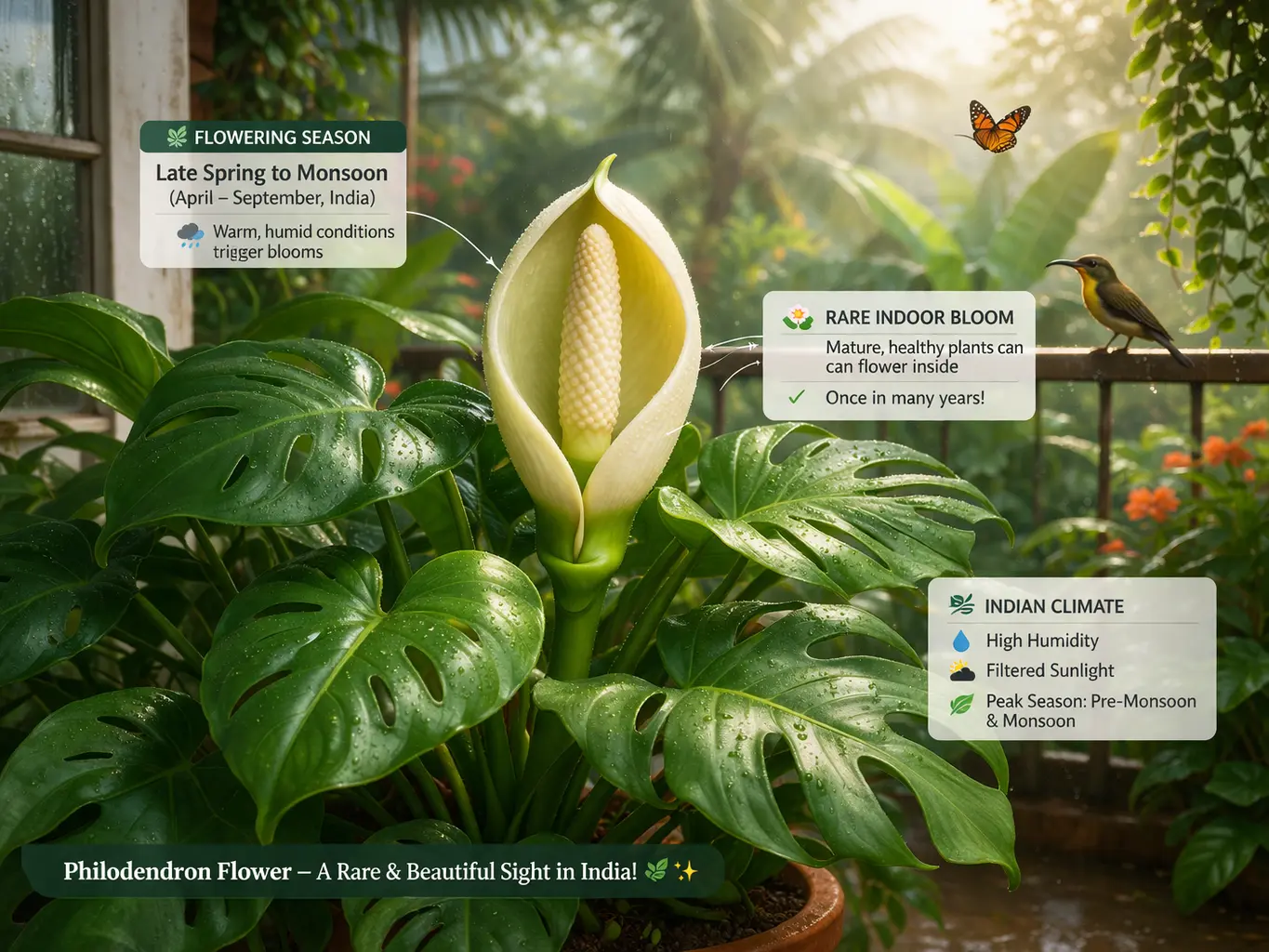
Quick Answer: Philodendron grown indoors in India almost never flowers — it is grown entirely for its foliage. When kept outdoors or in very mature conditions, it may bloom between May and July. The best time to plant or propagate philodendron in India is during the monsoon (June–September), when warm temperatures and high humidity fuel the fastest root establishment and leaf growth.
See also: Philodendron Plant plant profile, how to grow it, its benefits, and quick facts.
Here is the seasonal truth that most articles skip entirely: for the Indian home gardener, the “season” of a philodendron is really a growth season story, not a flowering one. This plant’s rhythm is tied to India’s warmth and rain cycles — and understanding those cycles will make you a significantly better philodendron parent.
Recommended Products
Disclosure: As an Amazon Associate, PlantsInfo may earn from qualifying purchases.
🌱 Growing Essentials
The following products can help with container gardening, potting, root development, soil management, and healthy plant growth.
Organic Potting Soil Mix
Provides nutrients, structure, and healthy growing conditions for container plants.
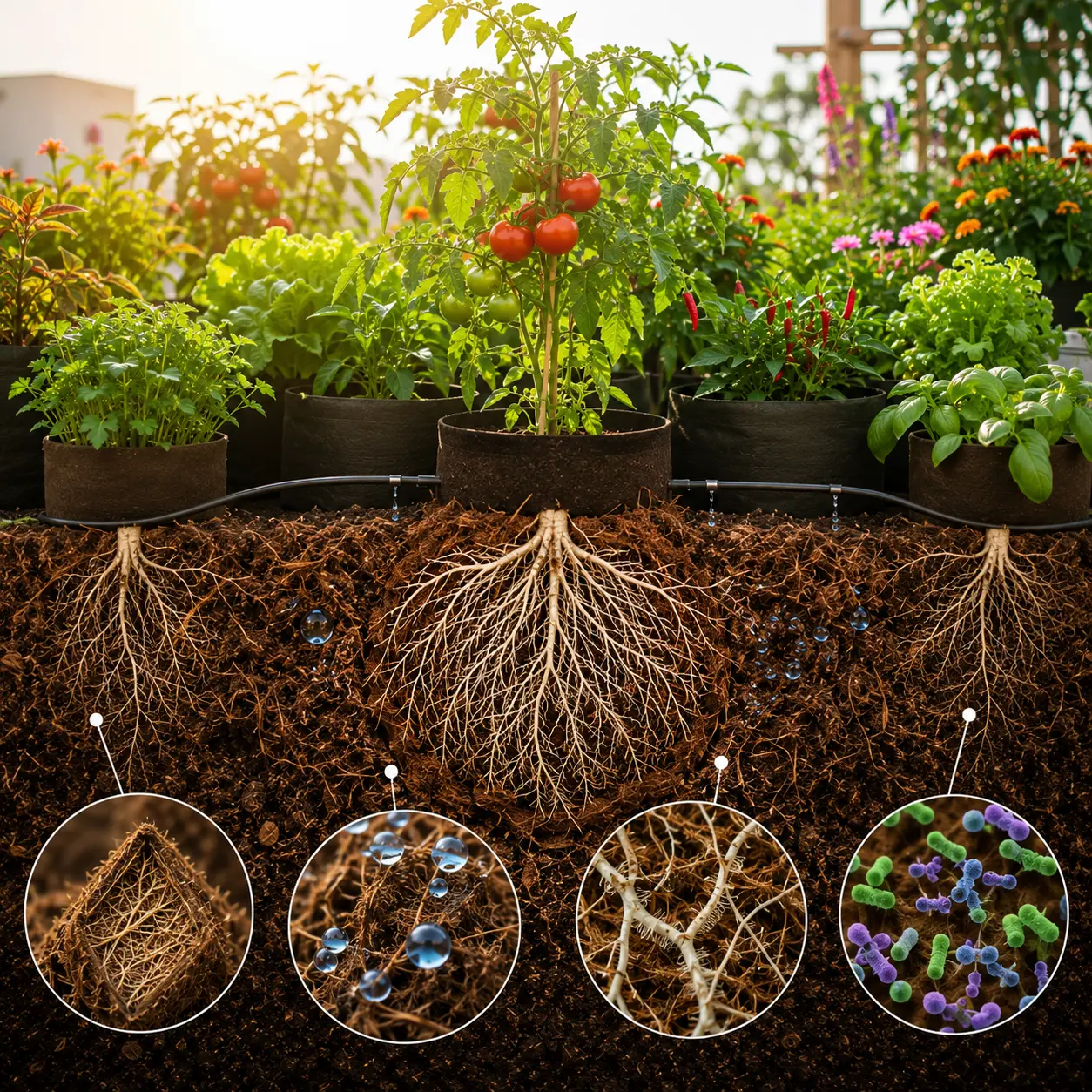
Coco Peat Growing Medium
Enhances moisture retention while maintaining excellent root-zone aeration.

Grow Bags for Plants
Improve drainage, root aeration, and vegetable production in limited spaces.

Plastic Pots for Plants
Ideal containers for seedlings, ornamentals, herbs, and balcony gardens.
India’s Seasons and This Plant
| Season (months) | What the plant is doing |
|---|---|
| Pre-monsoon (Mar–May) | Active growth begins; push out new leaves rapidly as temperatures rise |
| Monsoon (Jun–Sep) | Peak growing season; fastest leaf production; ideal for propagation and repotting |
| Post-monsoon (Oct–Nov) | Growth continues but slows; good time for light pruning |
| Winter (Dec–Feb) | Slowest growth phase; reduce watering and feeding; protect from cold draughts |
Flowering Season in Detail
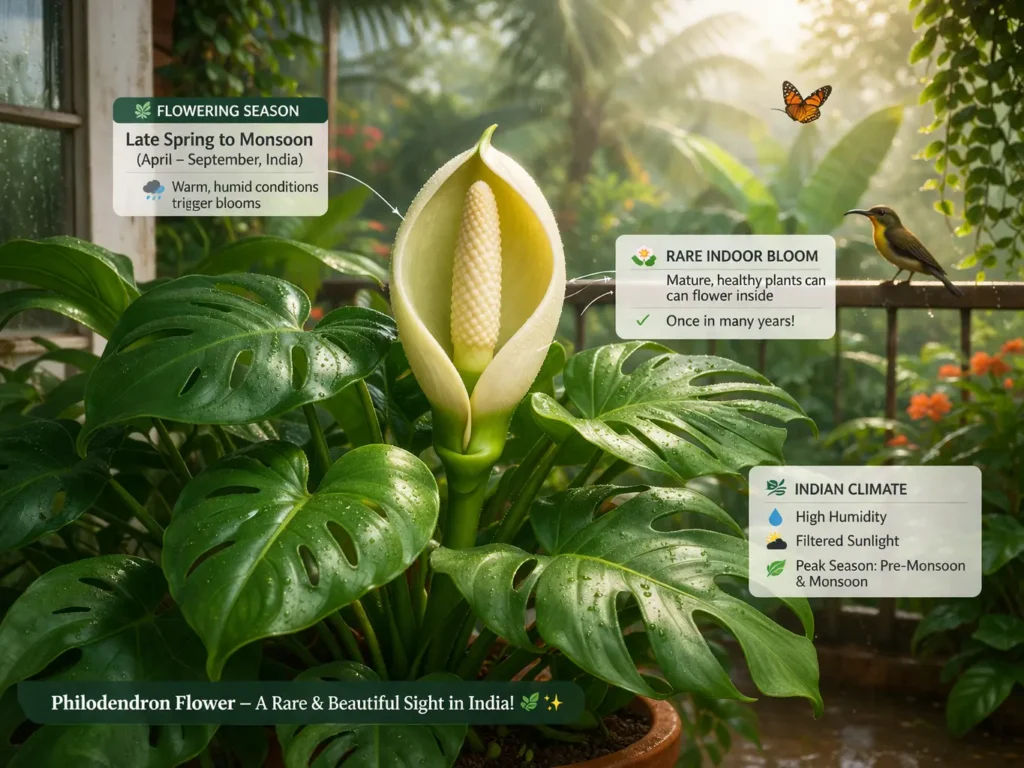
When philodendron does flower — which happens only in mature plants kept in near-ideal conditions — blooms appear between May and July, aligning with the warming pre-monsoon and early monsoon period in India. The flower itself is not showy: a pale cream or white spadix enclosed in a spathe (a hood-like modified leaf), resembling a small peace lily bloom. The spadix can generate its own heat to attract beetle pollinators — a genuinely unusual biological trait.
Most varieties take 15–16 years to reach flowering maturity. Even then, indoor plants in India rarely bloom because the conditions — sufficient maturity, consistent humidity, and the right light — are difficult to achieve simultaneously in a home setting. If your philodendron flowers, it is a sign that the plant is exceptionally healthy and well-established. Regional note: plants kept on open verandas in Kerala, West Bengal, or other humid states stand a slightly better chance than those in drier, air-conditioned interiors.
Best Time to Plant
The ideal planting window in India is the monsoon (June–August). The combination of warm temperatures, high ambient humidity, and naturally moist air dramatically reduces transplant stress and accelerates root establishment. A sapling planted in June or July will typically show strong new leaf growth within 4–6 weeks. The second-best option is pre-monsoon (March–April), when temperatures are warm but before the peak summer heat. Avoid planting during peak summer (May) in north India, where temperatures above 42°C can stress a new plant. Container vs. ground timing is the same — monsoon first, every time.
Month-by-Month Care Calendar
| Month | Season | Key Task |
|---|---|---|
| January | Winter | Reduce watering to once every 10–14 days; keep away from cold draughts |
| February | Winter/Pre-monsoon | Resume light feeding; check for mealybugs on new growth |
| March | Pre-monsoon | Water more frequently as temperatures climb; mist leaves if the air is dry. |
| April | Pre-monsoon | Protect from direct afternoon sun; water when the top 2 cm of soil dries |
| May | Pre-monsoon/Summer | Reduce watering gradually; move indoor plants away from windows in north India. |
| June | Monsoon | Best month to repot or propagate; reduce manual watering if outdoors |
| July | Monsoon | Peak growth; enjoy rapid leaf unfurling; ensure pot drains freely |
| August | Monsoon | Check for fungal issues in very wet conditions; trim leggy vines if needed |
| September | Monsoon/Post-monsoon | Continue feeding; take stem cuttings for propagation before growth slows |
| October | Post-monsoon | Taper off fertiliser; last good month to repot if needed |
| November | Post-monsoon/Winter | Water more frequently as temperatures climb; mist leaves if the air is dry. |
| December | Winter | Minimal watering; no feeding; enjoy the plant’s deep green colour in winter light |
What Can Go Wrong Seasonally?
Monsoon root rot is the most common seasonal problem: when pots sit in waterlogged saucers during heavy rain, roots suffocate within days. Always empty saucers after watering and ensure pots have drainage holes.
Winter yellowing is often mistaken for a watering problem, but in north India, it is usually a temperature and light issue — the plant slows down dramatically below 15°C. Move it to a warmer spot, and the yellowing will stop without any change to the watering schedule.
Summer leaf curl on balcony plants means the plant is receiving too much direct sunlight. Move it back 1–2 feet from the railing or add a shade cloth.