Complete Philodendron Plant (Philodendron spp.) Guides
Flowering Season
Introduction
The Philodendron plant refers to a large and diverse group of flowering plants belonging to the genus Philodendron, which is part of the family Araceae. This genus includes hundreds of species that display a wide range of growth forms, leaf shapes, and sizes. Philodendrons are flowering angiosperms and are classified as monocotyledons, sharing botanical characteristics with other aroids such as Anthurium and Monstera.
Classification
- Plant Type
- Vine
- Lifecycle
- Perennial
- Leaf Habit
- Evergreen
- Native Region
- South America
- Plant Family
- Araceae
Botanically, Philodendron species are notable for their adaptive growth habits and morphological diversity. They are commonly found as climbing, trailing, or self-supporting plants in tropical forest ecosystems, where they occupy various ecological niches. Their ability to grow as epiphytes, hemiepiphytes, or terrestrial plants contributes to their widespread distribution across tropical regions.
Beyond their botanical importance, Philodendrons hold cultural and historical significance as recognizable tropical foliage plants. They have been documented in botanical literature since the early exploration of the Americas and continue to be studied for their taxonomy, ecology, and evolutionary adaptations within tropical environments.
Quick Plant Information
| Attribute | Details |
|---|---|
| Common Name(s) | Philodendron |
| Scientific Name | Philodendron spp. |
| Family | Araceae |
| Plant Type | Flowering plant (Angiosperm) |
| Lifespan | Perennial |
| Growth Habit / Growth Form | Climbing, trailing, or self-heading |
| Native Range | Tropical Americas |
| Climate Adaptation / Habitat Type | Tropical rainforest environments |
| Leaf Type | Simple, often lobed or heart-shaped |
| Flower Color(s) | Greenish-white to cream |
| Fruit Type | Berry |
| Evergreen / Deciduous | Evergreen |
Botanical Description
Philodendron plants exhibit considerable variation in physical appearance, though they share common structural traits characteristic of the Araceae family. Stems may be elongated and climbing, creeping along forest floors, or thickened and upright in self-supporting species. Many species develop aerial roots along their stems, which assist in attachment and nutrient absorption.
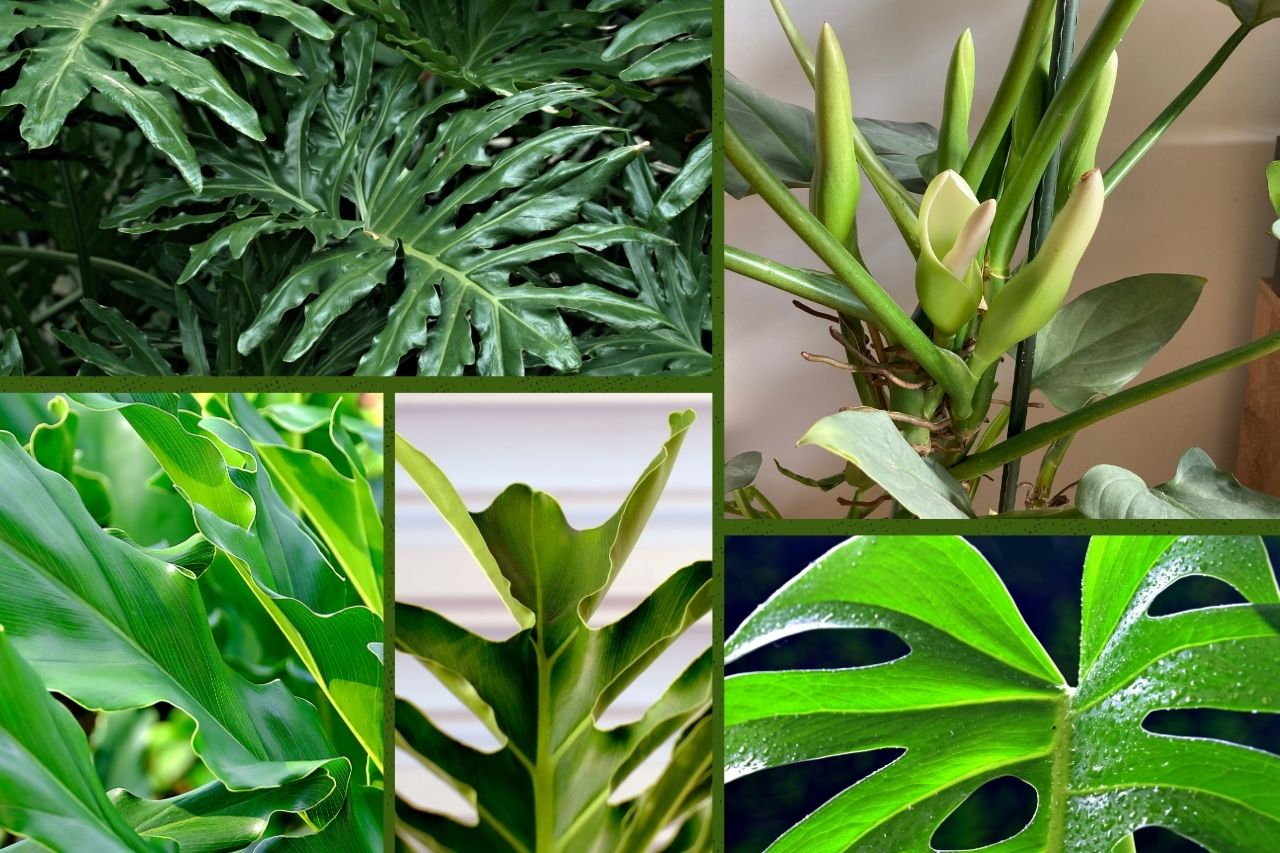
Leaves are one of the most distinctive features of Philodendrons. They are typically large and glossy, though texture can range from smooth to velvety depending on the species. Leaf shapes vary widely and may be heart-shaped, oval, deeply lobed, or elongated. Juvenile and mature leaves often differ significantly in shape and size, a phenomenon known as heteroblasty.
The flowers of Philodendron plants are arranged in an inflorescence called a spadix, which is enclosed by a modified leaf known as a spathe. The spathe is usually green, cream, or pale yellow and may change color as the inflorescence matures. Individual flowers are small and densely packed along the spadix, with separate male and female zones.
Fruits develop as clusters of fleshy berries following pollination. These berries may contain multiple seeds and typically change color as they mature. Root systems include both subterranean roots and aerial roots, reflecting the plant’s adaptability to various growth forms within forest environments.
Plant Classification & Growth Habit
Philodendron plants are classified as perennial evergreen flowering plants within the Araceae family. As monocots, they exhibit parallel leaf venation and a fibrous root system typical of this group. The genus is taxonomically complex, with ongoing research leading to reclassification and the description of new species.
Growth habits within the genus vary broadly. Some Philodendrons are climbers or hemiepiphytes, beginning life on the forest floor and later ascending tree trunks. Others are scandent or trailing, spreading horizontally across surfaces. Self-heading species grow in a compact, upright form with thick stems and large leaves emerging from a central point.
This diversity in growth habit allows Philodendron species to occupy multiple vertical layers within tropical forests, from ground level to the canopy, contributing to their ecological success.
Common Types / Varieties / General Classifications
Philodendron species are often grouped based on growth form and leaf characteristics rather than formal horticultural categories. Common general classifications include:
- Climbing Philodendrons
Species with elongated stems and aerial roots that attach to vertical surfaces. - Self-Heading Philodendrons
Compact, non-climbing species with upright growth and thickened stems. - Large-Leaf Philodendrons
Species characterized by broad, often deeply lobed mature leaves. - Vining or Trailing Philodendrons
Plants with flexible stems that spread horizontally or cascade.
These groupings are descriptive and reflect observable growth patterns rather than taxonomic divisions.
Native Range & Distribution
Philodendron plants are native to the tropical regions of the Americas, with the highest diversity found in Central and South America. Their natural range extends from southern Mexico through the Caribbean and into Brazil, Colombia, Ecuador, and neighboring countries.
They primarily inhabit tropical rainforests, where warm temperatures and high humidity prevail year-round. Within these ecosystems, Philodendrons are found at various elevations, from lowland forests to montane regions. Their adaptability allows them to thrive in shaded understories as well as brighter canopy zones.
Outside their native range, Philodendrons have been introduced to other tropical and subtropical regions, where some species have become naturalized.
Cultural, Culinary, or Traditional Context
Historically, Philodendron plants have been part of the natural landscapes encountered by Indigenous peoples of the Americas. In some regions, they were recognized for their distinctive foliage and presence within forest habitats. Certain species have appeared in traditional practices, though documentation focuses primarily on identification and symbolic association rather than functional use.
In modern times, Philodendrons have become widely recognized through botanical exploration, plant collections, and scientific study. Their striking leaf forms and growth diversity have made them a familiar component of tropical plant displays and botanical gardens worldwide.
Economically, Philodendrons play a role in the global ornamental plant trade, contributing to the study of tropical plant taxonomy and conservation efforts. Their popularity has also led to increased interest in understanding species diversity and protecting native habitats.
Interesting Facts / Did You Know
- The name Philodendron is derived from Greek words meaning “tree-loving,” reflecting the climbing nature of many species.
- Some Philodendron species exhibit dramatic changes between juvenile and mature leaf forms.
- The inflorescence of Philodendron plants can generate heat during flowering, a process known as thermogenesis.
- The genus Philodendron includes several hundred described species, with new species identified regularly.
- Philodendrons are closely related to other aroids such as Monstera and Anthurium.
FAQs
Is Philodendron a single species or a group of plants?
Philodendron refers to a genus that includes many different species rather than a single plant.
Are Philodendron plants flowering plants?
Yes, Philodendrons are flowering angiosperms, though their flowers are often less noticeable than their foliage.
What is the difference between climbing and self-heading Philodendrons?
Climbing types grow along vertical supports, while self-heading types grow upright without climbing.
Do all Philodendrons have large leaves?
Leaf size varies by species, ranging from relatively small leaves to very large, broad foliage.
Recommended Products
Disclosure: As an Amazon Associate, PlantsInfo may earn from qualifying purchases.
🌱 Plant Care Essentials
The following tools can help with pruning, plant health, soil management, and fruit garden maintenance.

Neem Oil for Plant Care
Natural plant protection against aphids, whiteflies, mites, and other common garden pests.

Fungicide for Root Care
Helps suppress soil-borne fungal diseases and supports healthier root systems.

Spray Bottle for Plants
Ideal for applying foliar sprays, neem oil solutions, and liquid plant treatments.

Rubber Hand Gloves
Protects hands during pruning, planting, soil preparation, and garden maintenance.
Conclusion
The Philodendron plant represents a diverse and ecologically significant genus within the Araceae family. With a wide range of growth forms, leaf structures, and habitat adaptations, Philodendrons exemplify the complexity of tropical flowering plants. Their presence in rainforest ecosystems highlights their role in plant diversity and forest structure.
Notable for their morphological variation and long history of botanical study, Philodendrons continue to attract scientific interest and public recognition. As a genus, they illustrate the adaptability and evolutionary success of tropical plants across a broad geographic range.
The Plants Info provides a structured plant database designed for educational and reference purposes. It offers detailed, factual profiles of plant species and genera, supporting learning through organized botanical information without instructional or commercial content.