Banana Plant: Quick Facts and Essential Information
Quick Answer: Banana is not a tree but a giant herbaceous plant that produces fruit from an underground stem called a corm. India is the world’s largest banana producer, growing over 50 varieties across tropical and subtropical regions. The plant fruits once from each pseudostem, then dies back and regrows from suckers for multiple harvests.
See also: Banana Plant plant profile, how to grow it, common problems, its flowering season, and its benefits.
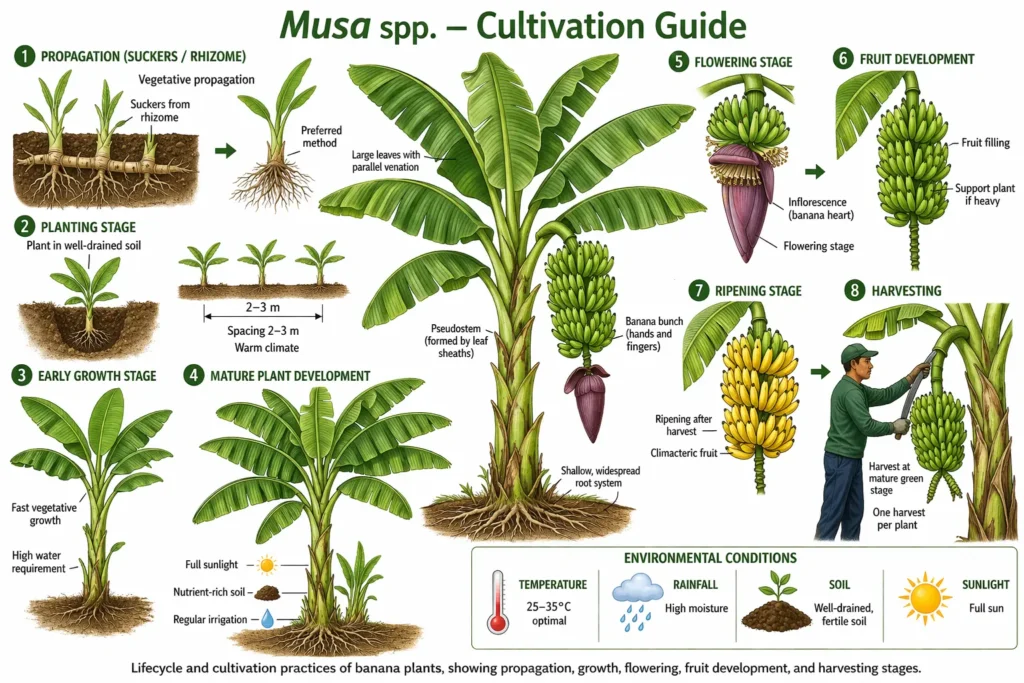
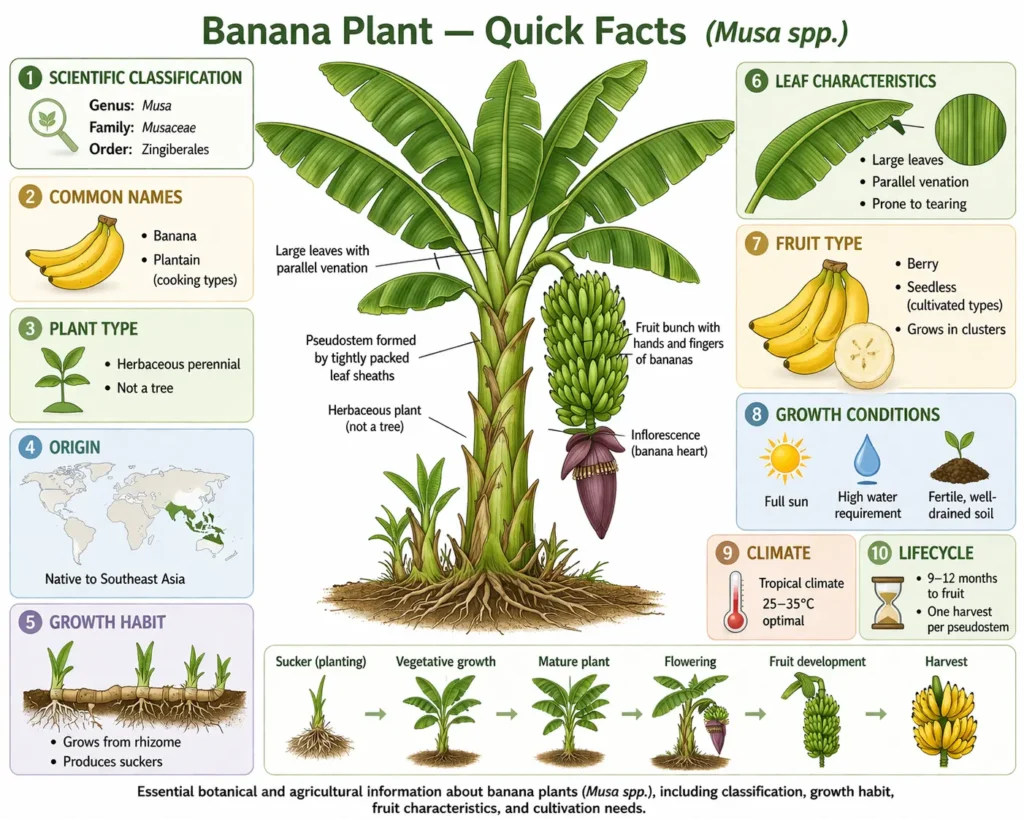
The banana plant fools most people. That thick trunk looks woody, but it’s not — it’s actually tightly wrapped leaf sheaths forming a false stem called a pseudostem. Cut into it, and you’ll find layers of moisture-filled fibers, not solid wood. The true stem stays underground while everything you see above ground is technically a flowering herb, not a tree. This botanical oddity can grow 7 metres tall and produce a 30-kilogram bunch of fruit in less than a year.
Recommended Products
Disclosure: As an Amazon Associate, PlantsInfo may earn from qualifying purchases.
🌱 Growing Essentials
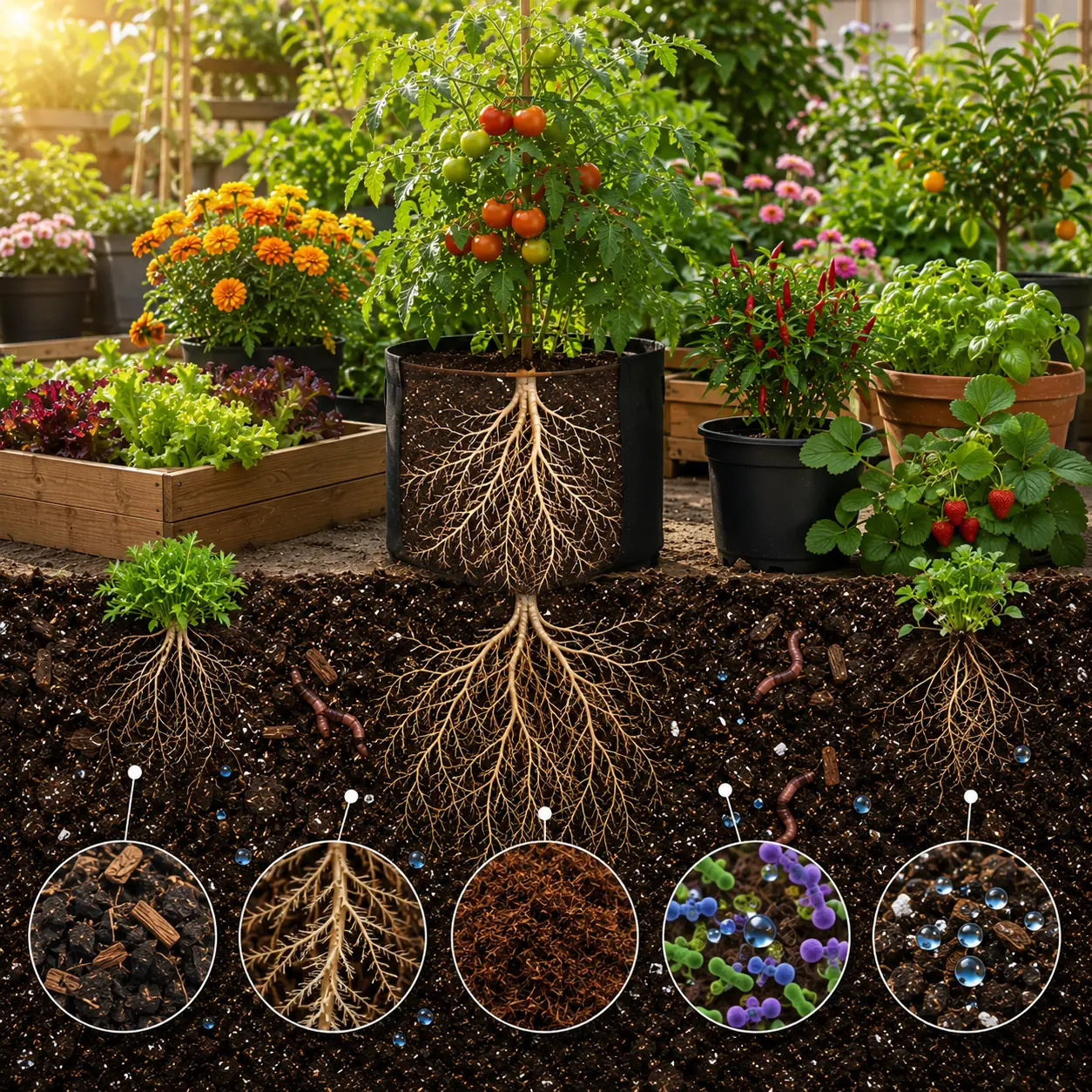
The following products can help with container gardening, potting, root development, soil management, and healthy plant growth.
Organic Potting Soil Mix
Provides nutrients, structure, and healthy growing conditions for container plants.
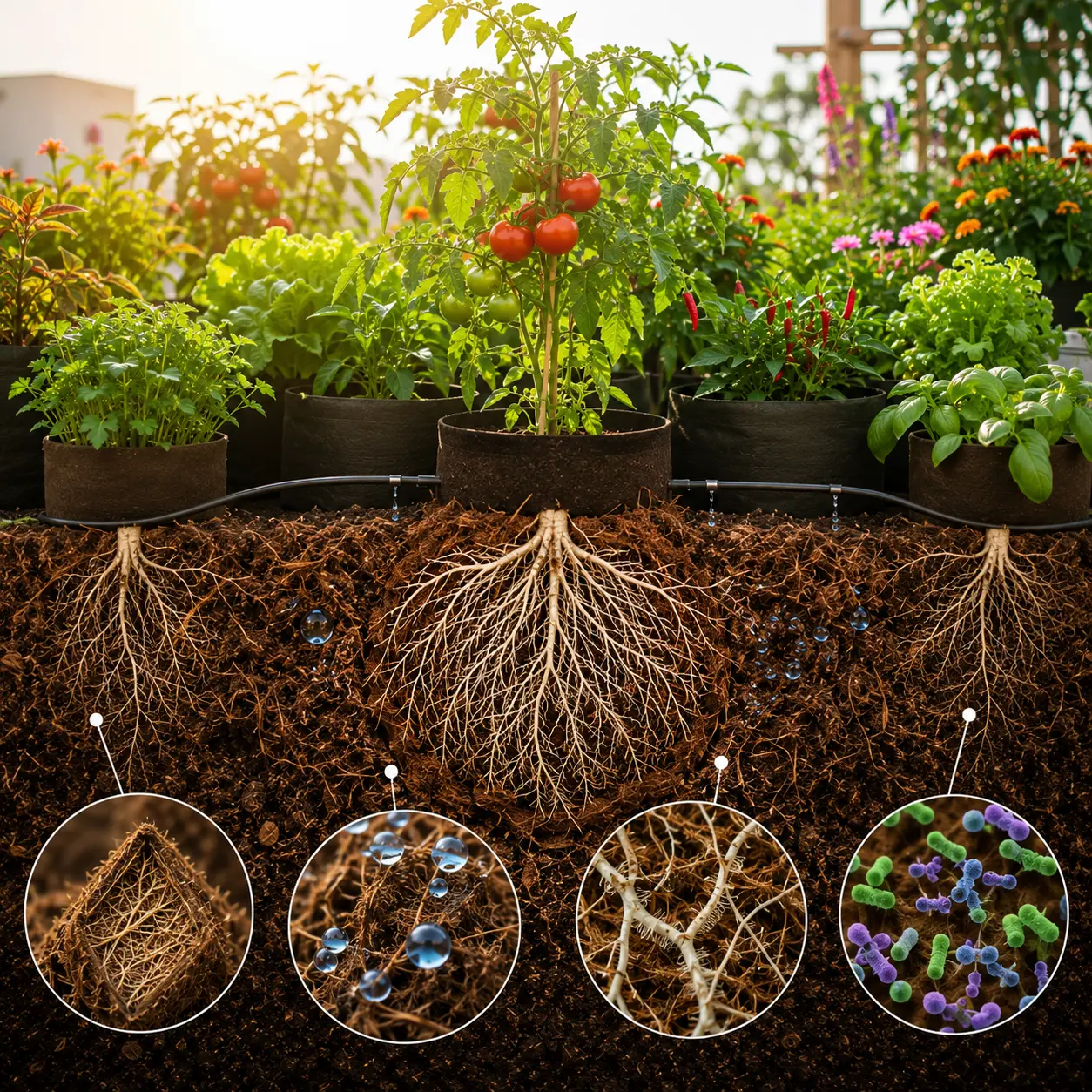
Coco Peat Growing Medium
Enhances moisture retention while maintaining excellent root-zone aeration.

Grow Bags for Plants
Improve drainage, root aeration, and vegetable production in limited spaces.

Plastic Pots for Plants
Ideal containers for seedlings, ornamentals, herbs, and balcony gardens.
What Is a Banana Plant?
Bananas belong to the genus Musa in the family Musaceae. Almost all modern edible bananas trace their ancestry to two wild species: Musa acuminata (contributing the A genome) and Musa balbisiana (contributing the B genome). Most dessert bananas you buy are AAA triploids descended primarily from M. acuminata. Starchy cooking bananas and plantains often carry ABB or AAB genomic combinations with more M. balbisiana influence.
The banana plant is classified as an herbaceous perennial despite its size. It lacks woody tissue — the rigid structure comes from the overlapping pressure of tightly packed leaf bases. The underground corm (often incorrectly called a rhizome) serves as the true stem, storing energy and producing both roots and shoots.
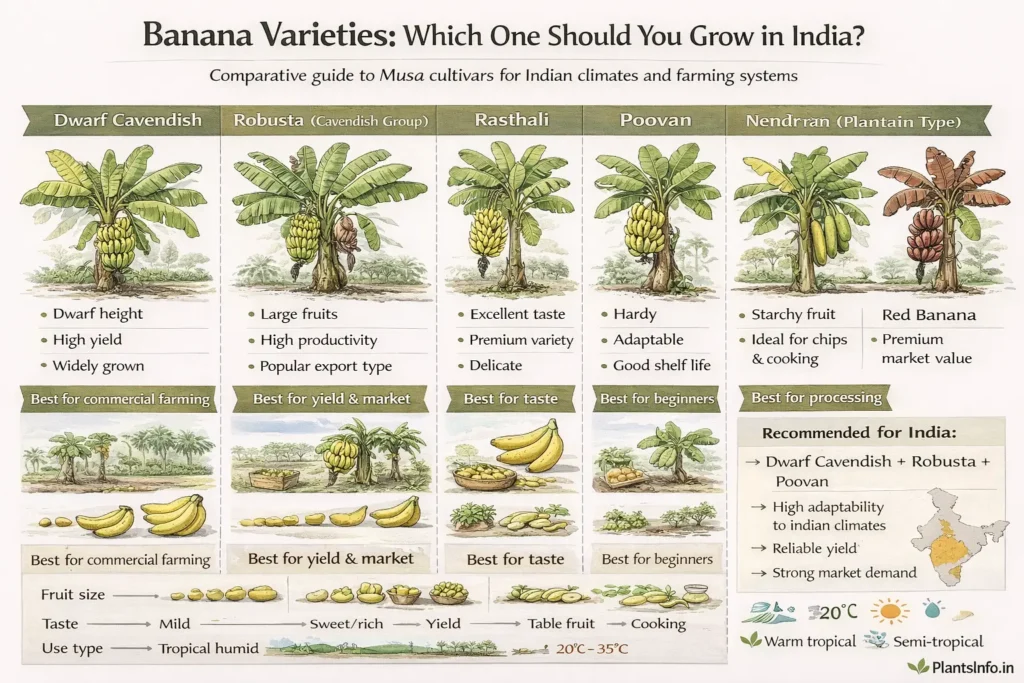
A mature plant stands 2.5–7 metres tall, depending on variety. Dwarf varieties like Dwarf Cavendish reach 2.5–3 metres. Semi-tall varieties like Robusta and Poovan stand 3.5–4.5 metres. Tall varieties like Nendran can exceed 5 metres. At high altitudes, hill banana varieties grow shorter and more compact.
The leaves are massive — up to 2.7 metres long and 60 cm wide. They emerge from the centre of the pseudostem in a spiral arrangement, unfurling at a rate of one per week during active growth. The leaf blade is bright green with a prominent midrib and parallel veins. Wind naturally shreds the leaf surface into strips, giving mature plants that characteristic ragged look.
Scientific Classification
| Category | Classification |
|---|---|
| Kingdom | Plantae |
| Order | Zingiberales |
| Family | Musaceae |
| Genus | Musa |
| Common species | Musa acuminata, Musa balbisiana, and hybrids |
| Chromosome count | Most edible varieties are triploid (3n = 33) |
| Life form | Herbaceous perennial |
| Reproduction | Vegetative (through suckers); most edible varieties are sterile |
Major Varieties in India
India cultivates approximately 50 distinct banana varieties commercially, though five groups dominate production.
Cavendish group (AAA): Includes Grand Naine, Robusta, Basrai, Harichal, and other clones. These account for 52% of India’s banana cultivation area and 64% of total production. Preferred for export due to uniform size, good shelf life, and high yield. Susceptible to Sigatoka leaf spot in humid conditions.
Poovan group (AAB): Called Palayankodan in Kerala, Karpura Chakkarakeli in Andhra Pradesh, Alpan in northeast India. One of the most commercially important varieties across India. Slightly acidic taste, golden yellow when ripe. Moderate disease resistance.
Nendran (AAB): Kerala’s flagship variety, used for both dessert and culinary purposes (especially banana chips). Thick green skin turning buff-yellow at ripeness. Bunch weight 12–15 kg. Now expanding to Tamil Nadu and Karnataka. Takes 12–14 months to fruit.
Red Banana (AAA): Distinctive purple-red pseudostem and peel. Called Lal Velchi in Bihar, Chandra Bale in Karnataka. Sweet, aromatic, orange-yellow flesh. Commands a premium price. Susceptible to bunchy top and Fusarium wilt.
Rasthali (AAB): Also called Silk banana. Highly prized for its delicate taste and silk-like texture. Pale yellow skin, thin peel, exceptional aroma. Most expensive variety in South Indian markets. Longer crop duration (12–13 months) and susceptibility to Fusarium wilt make cultivation challenging.
Monthan and Karpuravalli (ABB): Culinary varieties grown for cooking applications. High starch content, lower sugar. Monthan produces 18–20 kg bunches, used for flour and chip production. Both varieties tolerate marginal soils better than desert types.
Hill varieties: Virupakshi, Sirumalai, and Namarai grow at elevations up to 1500 metres. Smaller bunches (8–12 kg), more intense flavour, highly aromatic. Traditionally cultivated in the Western Ghats, Nilgiris, and northeast hill regions.
Where It Grows in India
Bananas thrive across India’s tropical and subtropical zones. The crop is cultivated from sea level to 1500 metres elevation, with specialized hill varieties extending to 2000 metres in places.
Leading states by production: Tamil Nadu leads with the highest acreage and production, followed by Gujarat (which has the highest yield per hectare at 66 tonnes), Maharashtra, Karnataka, Andhra Pradesh, and West Bengal. These six states account for nearly 70% of India’s total banana production.
Other significant producers: Kerala (Nendran and Palayankodan), Bihar (Red Banana, Malbhog), Assam and northeast states (Jahaji, Chenichampa, Malbhog), Madhya Pradesh, and Odisha.
Climate requirements: Bananas prefer temperatures of 15–35°C with 75–85% relative humidity. Growth stops below 12°C (causing chilling injury) and slows above 38°C. The monsoon months (June–September) with 650–750 mm rainfall are critical for vigorous vegetative growth.
Coastal regions of Karnataka, Kerala, and Konkan provide ideal humid conditions. Gujarat and Maharashtra have adopted high-density planting with drip irrigation for commercial cultivation in drier regions. The Indo-Gangetic plains of Uttar Pradesh and Bihar grow bananas in summer-monsoon cycles with winter protection.
Growth Cycle and Reproduction
Banana plants grow from an underground corm that produces both roots (shallow, spreading to 2 metres radius) and shoots. What looks like a trunk is actually the pseudostem — overlapping leaf sheaths that unroll to produce the leaf blades.
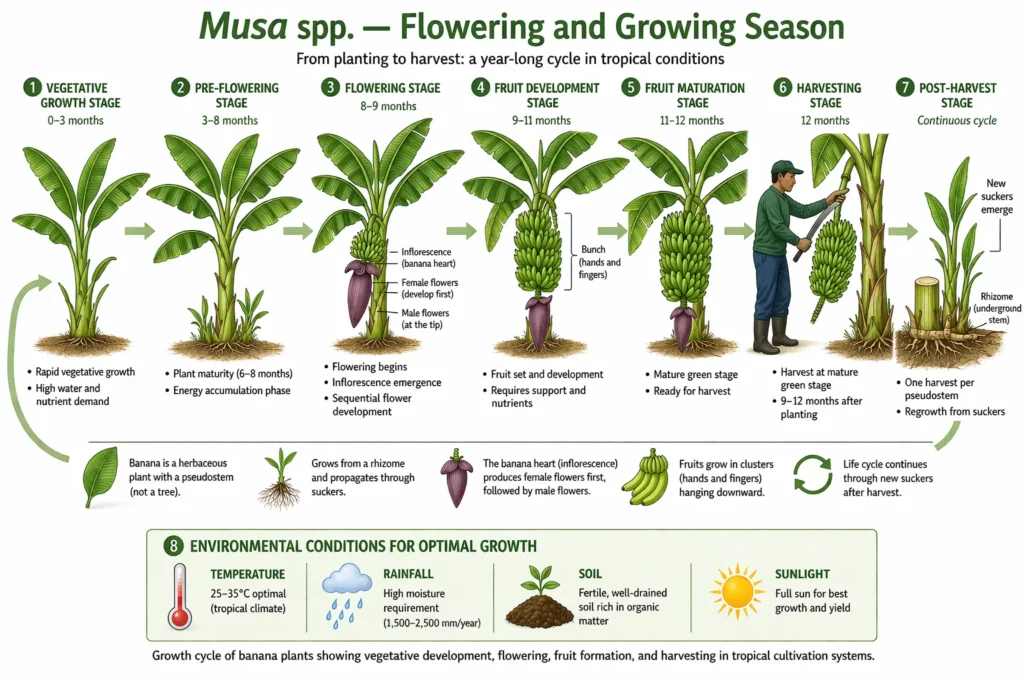
The vegetative phase lasts 6–9 months. During this time, the plant produces 30–45 leaves that build up food reserves in the corm. Once the plant reaches maturity, it stops producing leaves, and the growing point changes from vegetative to reproductive.
The inflorescence (flower spike) develops inside the pseudostem and emerges from the top as a large purple bud. This is commonly called the banana heart. The bud descends on a thick stalk and opens to reveal rows of flowers. Female flowers at the top develop into fruit without pollination (parthenocarpy). Male flowers at the bottom remain functional but serve no role in fruit development.
Fruit development takes 90–120 days from flowering to harvest. The bunch matures from top to bottom. The pseudostem that produced fruit dies after harvest, but 5–10 suckers emerge from the corm during the growth cycle. One or two of these become the next fruiting plants, creating a continuous cycle. This ratoon cropping can continue for 3–5 years before productivity declines.
Cultural and Traditional Significance
The banana plant holds sacred status across Hindu, Buddhist, and Jain traditions. Every part has ritual significance.
In Hindu ceremonies, banana trees are planted in pairs at wedding entrances to symbolise fertility and prosperity. The plant is one of the Navapatrika (nine sacred plants) worshipped during Durga Puja in Bengal. Banana leaves serve food during festivals and ceremonies, believed to add auspicious energy to the meal.
The fruit itself is offered in most puja rituals. The belief that bananas can be offered to any deity without restriction makes them one of the most common temple offerings. In Kerala, the Nendran banana holds particular ritual importance during Onam and Vishu festivals.
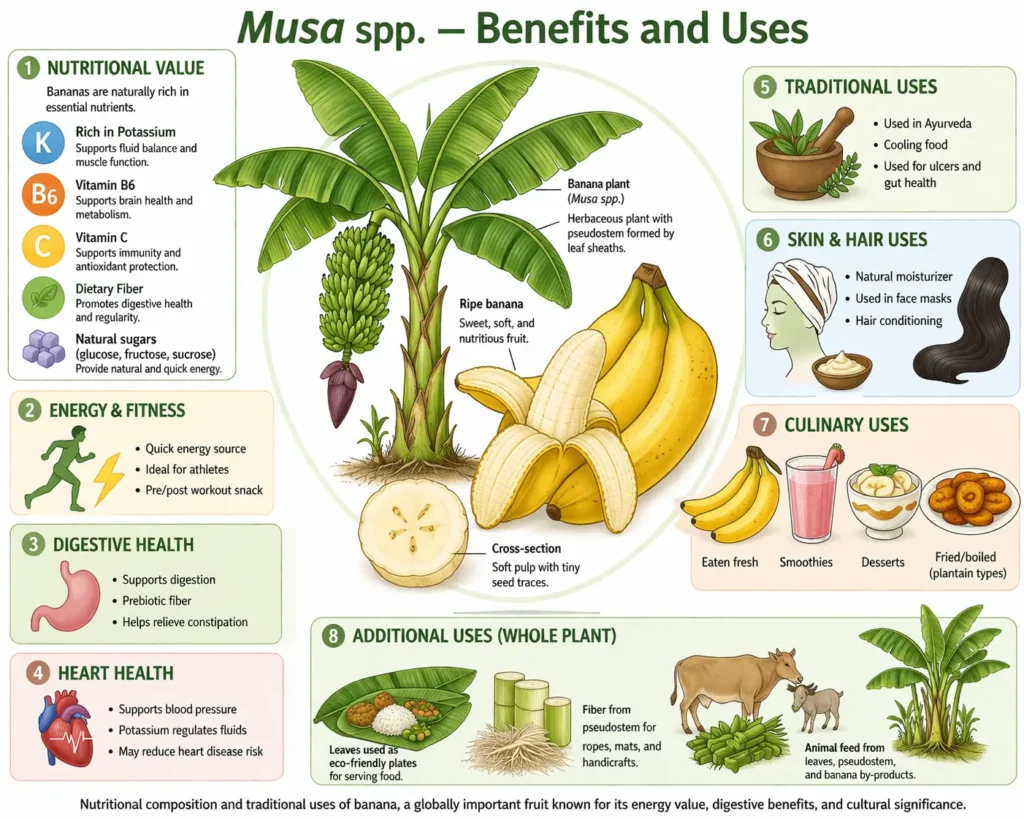
Banana leaves are mandatory for serving the sadya (feast) in Kerala and the virundhu in Tamil Nadu during festivals and weddings. The practice combines practicality with tradition — leaves are biodegradable, naturally antimicrobial, and impart a subtle fragrance to food.
Folk medicine across India uses banana in traditional treatments. The stem juice is consumed during summer as a cooling agent and for urinary health. The flower addresses digestive and menstrual concerns in traditional practice. The ash from burning the pseudostem is used in some regional practices for skin conditions.
In rural economies, banana cultivation supports small and marginal farmers. The plant provides multiple products — fruit for markets, flowers and stems for vegetables, leaves for packaging and plates, fiber from the pseudostem for crafts and textiles. This multi-use value makes it an economically critical crop.
Is It Easy to Grow?
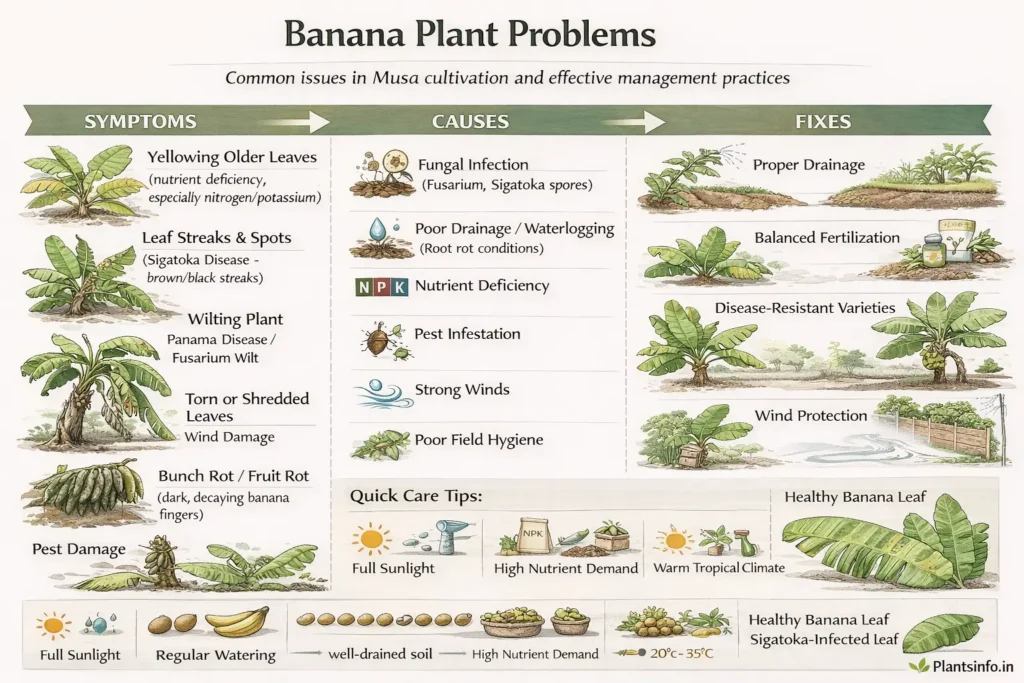
Banana cultivation ranges from easy to moderate, depending on the variety and region. In tropical zones with good rainfall (Kerala, coastal Karnataka, Tamil Nadu, Assam), bananas grow almost effortlessly with minimal intervention. In subtropical zones or areas with extreme summer heat (Maharashtra interior, Gujarat, north India), success requires more active management of water and protection from temperature extremes.
Space is the biggest limitation for home gardeners. A single plant needs 1.8–2 metres in diameter of clear ground. Container growing works for dwarf varieties, but yields are significantly lower.
The plant demands consistent water; drought during critical growth phases reduces yield. It’s also a heavy feeder, requiring regular organic matter or fertiliser application. Disease pressure varies by region, with fungal issues more common in humid areas.
For someone with adequate space, water access, and a willingness to feed the plant regularly, a banana is one of the faster-fruiting crops you can grow. From planting to first harvest takes 9–13 months — much quicker than mango (4–5 years) or guava (2–3 years).
⚠ Special notes:
Not invasive in most regions, but spreads through underground suckers. Manage by removing unwanted suckers regularly.
No significant toxicity to humans. All commonly cultivated varieties are safe. However, latex from cut surfaces can cause skin irritation in sensitive individuals. The large leaves pose no danger but are slippery when wet.
Commonly confused with: Ensete species (false bananas), which have larger, non-edible fruit and are grown primarily as ornamentals. Strelitzia (bird of paradise) is sometimes called “wild banana,” but belongs to a different family entirely.
Conservation status: Wild banana species face habitat pressure in Southeast Asia, but cultivated varieties are not endangered. India maintains germplasm collections of over 500 accessions at the ICAR-National Research Centre for Banana in Tiruchirappalli, Tamil Nadu.
Frequently Asked Questions
Are banana plants safe around pets and children?
Yes, the plant is non-toxic. Children often play with the large leaves. The pseudostem is harmless if touched or ingested, though the latex from cut surfaces may cause minor skin irritation in sensitive individuals.
Can you eat banana flowers from any variety?
Most varieties produce edible flowers, but culinary varieties (Monthan, Nendran, Karpuravalli) and certain dessert types (Poovan, Rasthali) have better-flavoured flowers. Cavendish flowers are edible but less commonly used as they’re more bitter.
How long does a banana plant live?
A single pseudostem lives 12–18 months from emergence to fruiting and death. However, the underground corm persists for 25 years or more, continuously producing new suckers. This makes the banana effectively perennial through vegetative regeneration.
Conclusion
Bananas bridge the practical and the sacred in Indian life — a plant that feeds families, marks celebrations, and sustains livelihoods while growing vigorously in backyards and commercial fields alike.