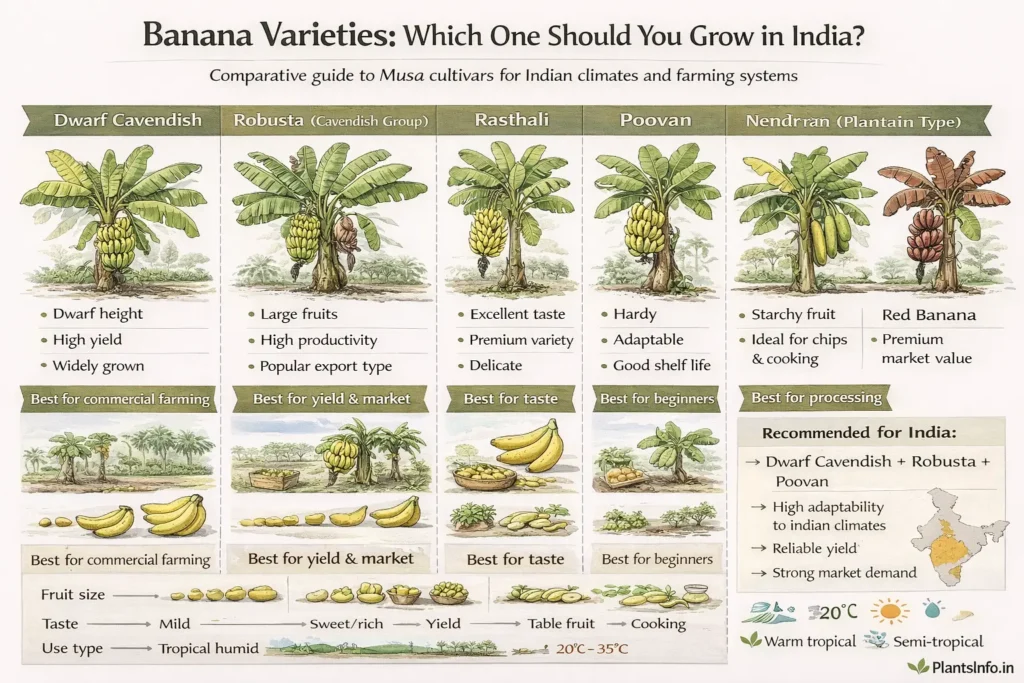
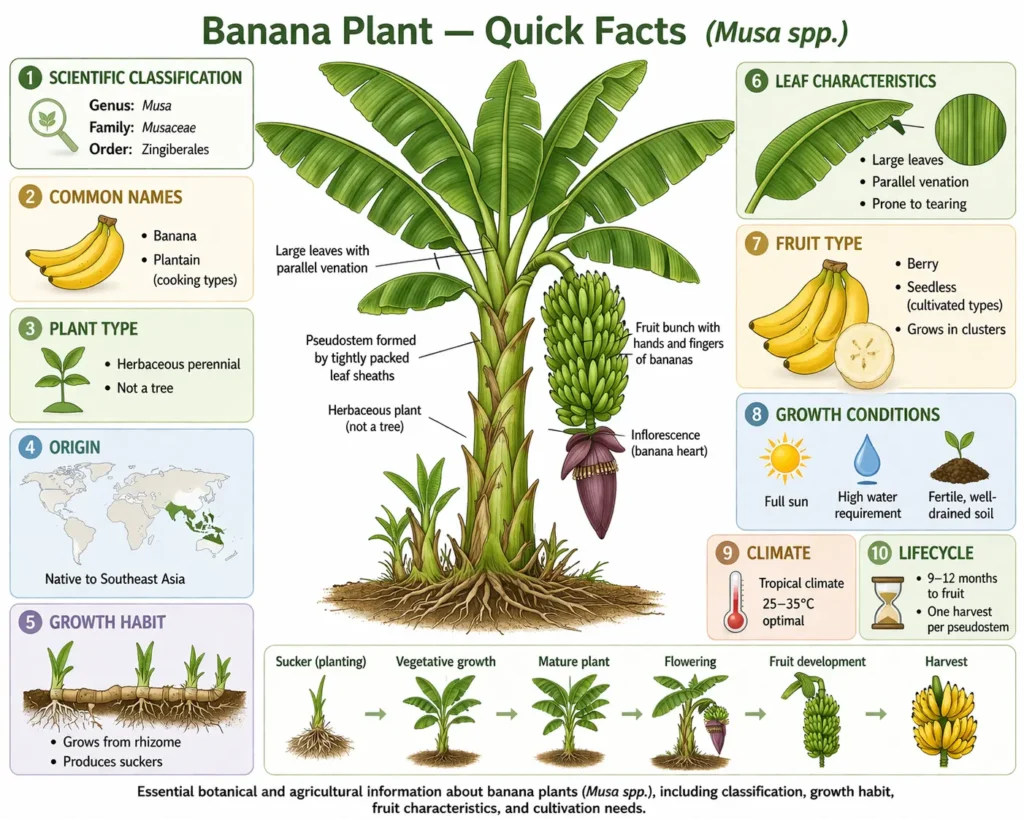
Banana Varieties: Which One Should You Grow in India?
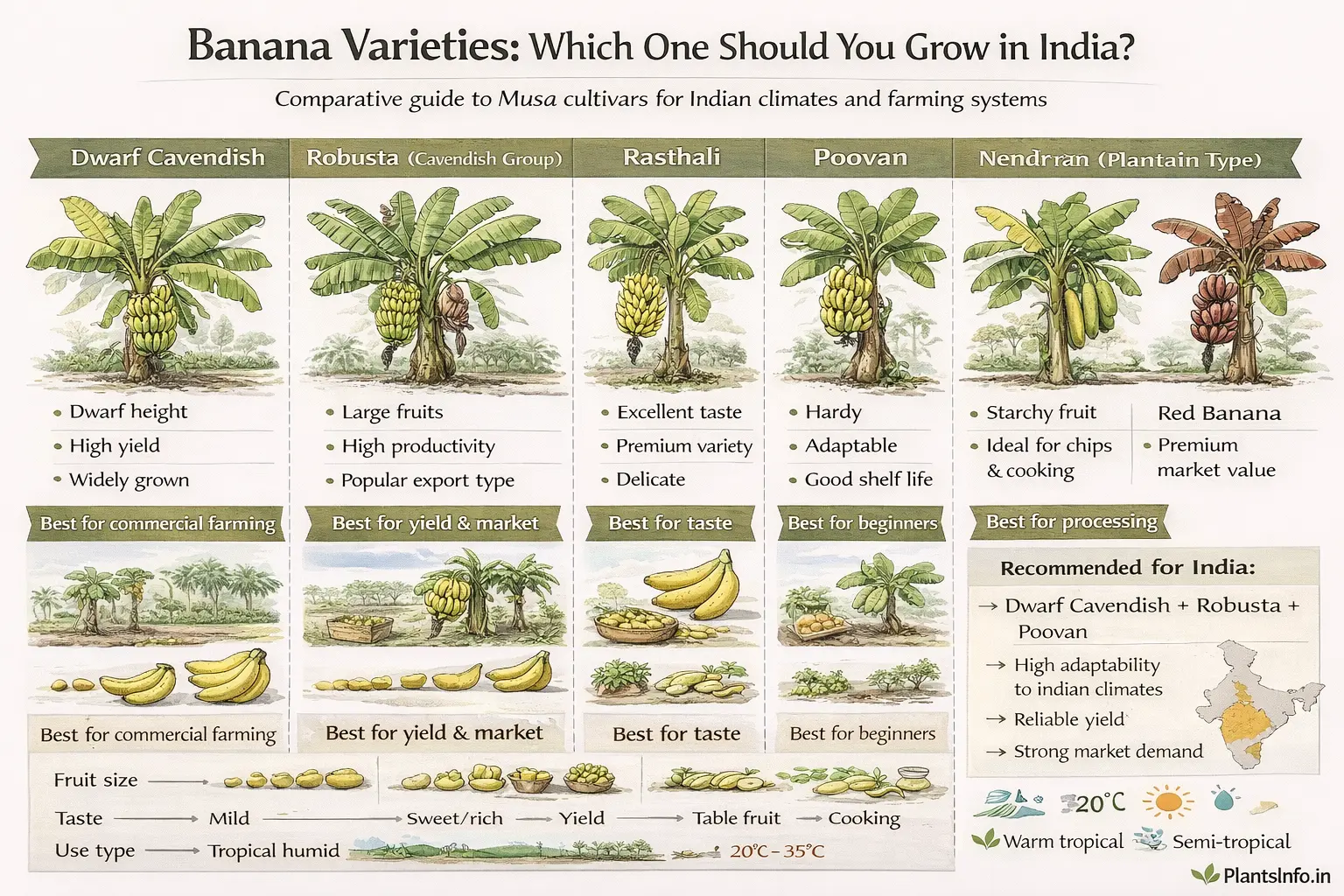
Banana Varieties: Which One Should You Grow in India?
Quick Answer: India grows more banana varieties than almost any country in the world — over 600 documented types — but most home gardeners buy whatever their local nursery stocks rather than choosing for their space, climate, or purpose. This guide helps you match the right variety to your actual growing conditions.
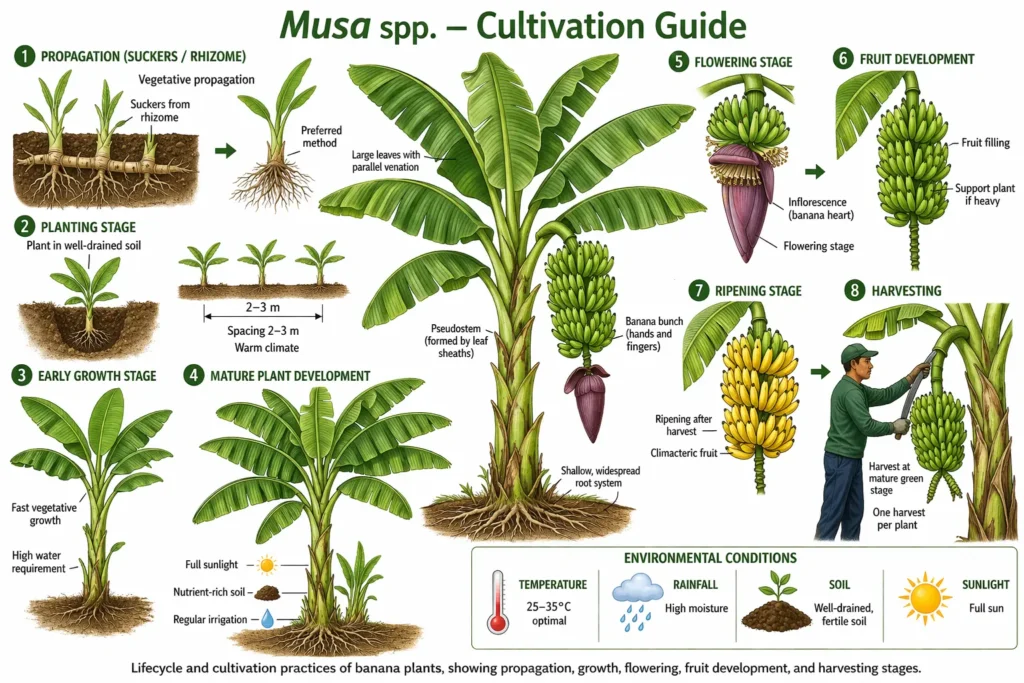
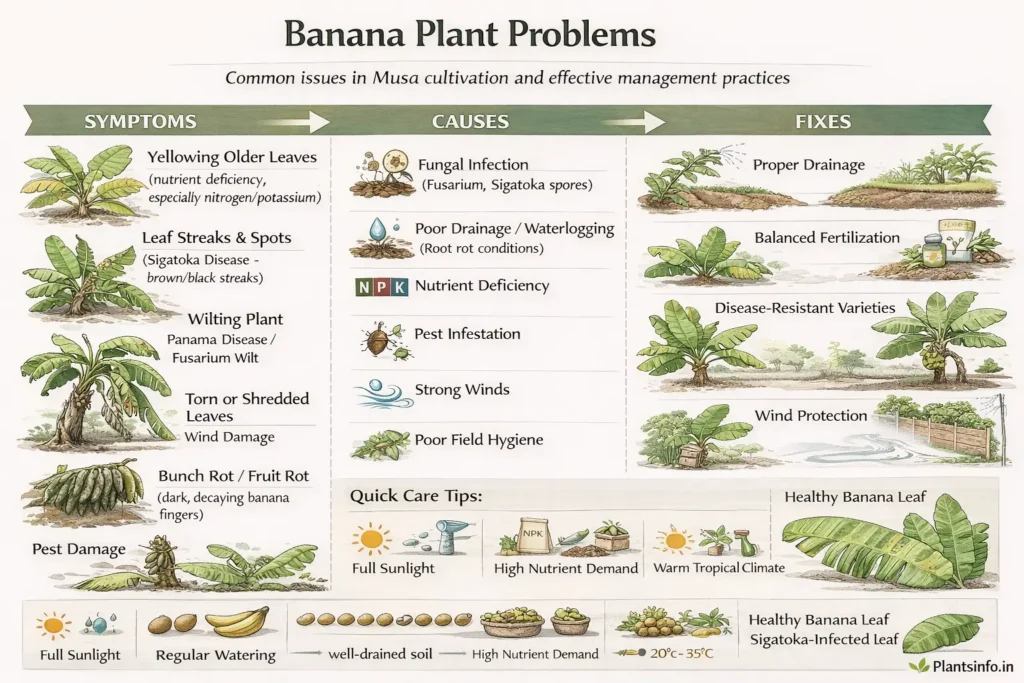
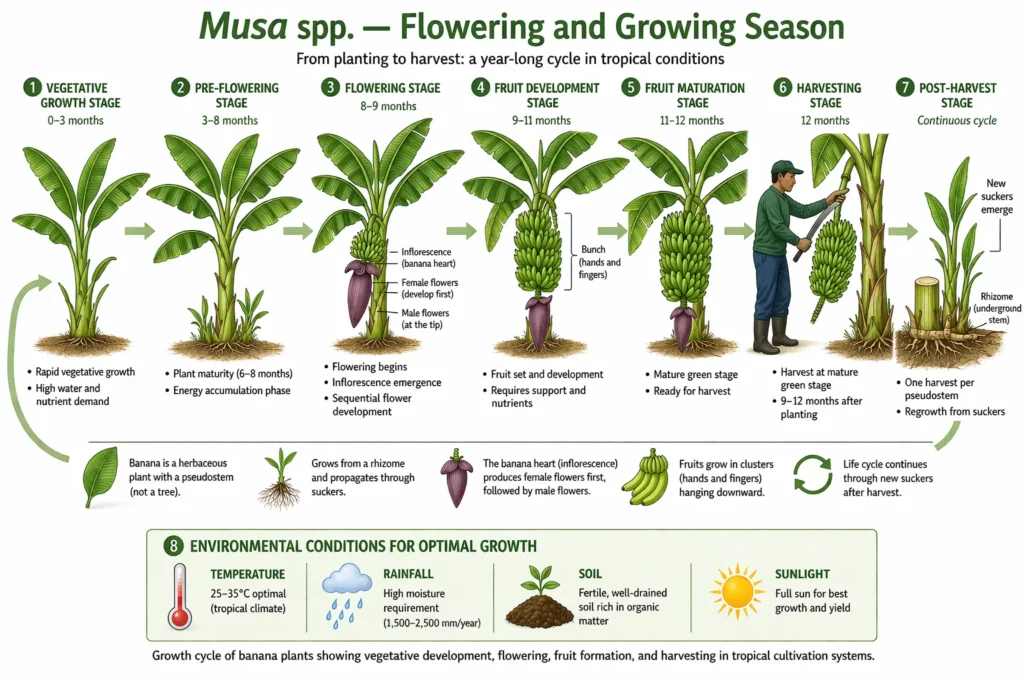
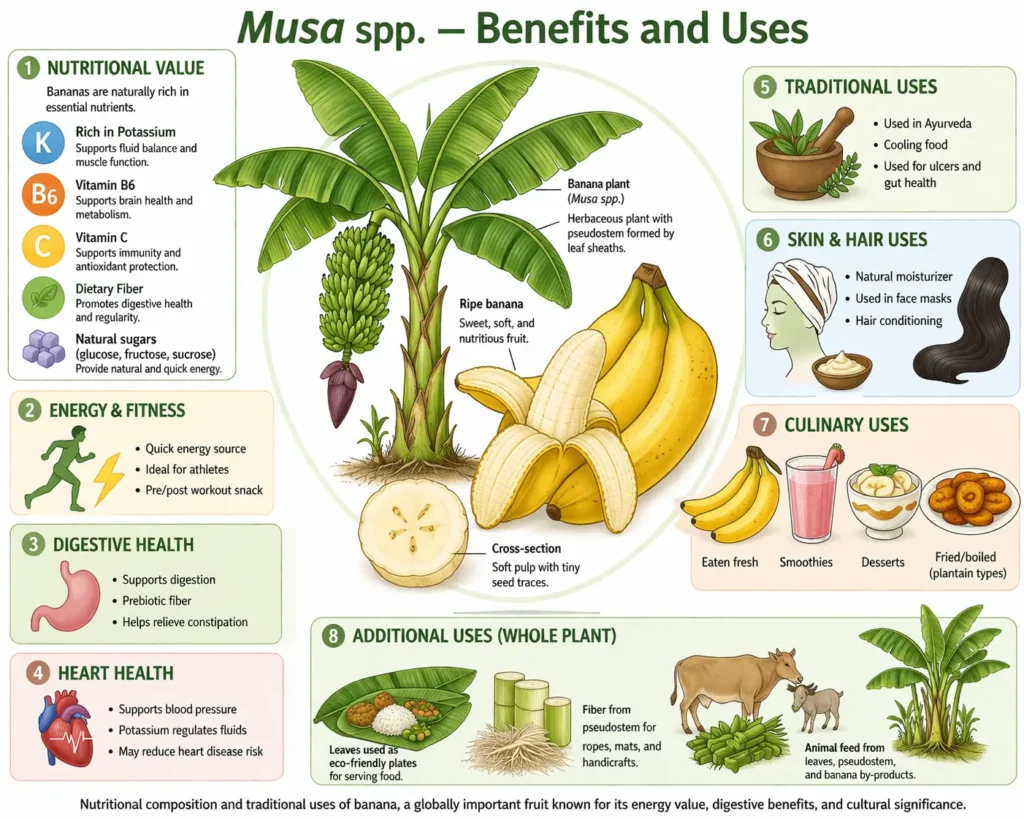
See also: Banana Plant plant profile, how to grow it, common problems, its flowering season, and its benefits.
Walk into any nursery in Tamil Nadu, and you will find Nendran. Walk into one in Maharashtra, and it is almost certainly Robusta or Grand Naine. The variety on offer is usually the variety that dominates commercially in that state, which may or may not suit a terrace garden in a humid coastal city, a rooftop in Delhi, or a small plot in the Western Ghats foothills.
Recommended Products
Disclosure: As an Amazon Associate, PlantsInfo may earn from qualifying purchases.
🌱 Growing Essentials
The following products can help with container gardening, potting, root development, soil management, and healthy plant growth.
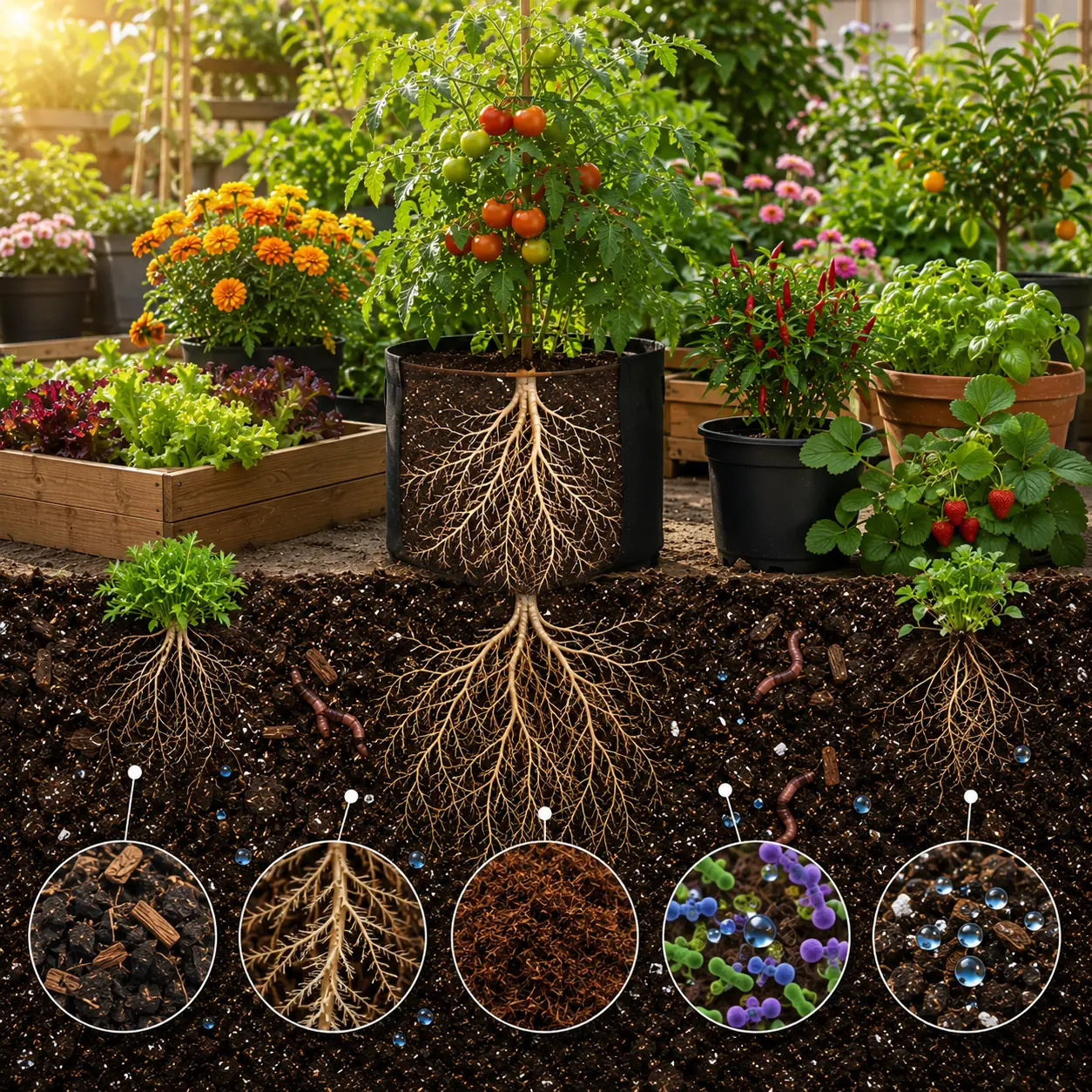
Organic Potting Soil Mix
Provides nutrients, structure, and healthy growing conditions for container plants.
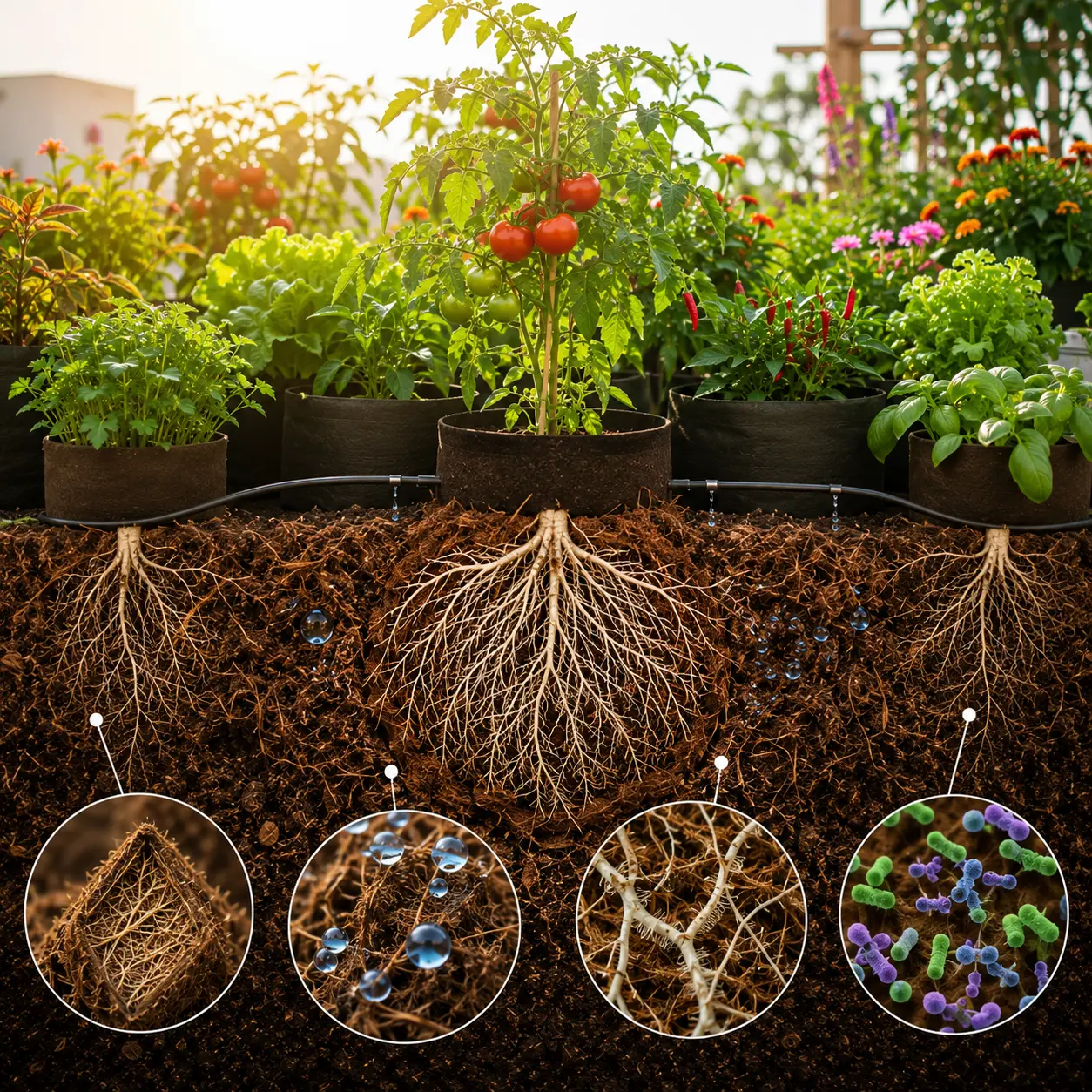
Coco Peat Growing Medium
Enhances moisture retention while maintaining excellent root-zone aeration.

Grow Bags for Plants
Improve drainage, root aeration, and vegetable production in limited spaces.

Plastic Pots for Plants
Ideal containers for seedlings, ornamentals, herbs, and balcony gardens.
The most important thing to know before buying: banana varieties differ meaningfully in plant height, climate tolerance, fruit use, and disease resistance. Getting this choice right saves years of frustration.
Quick Variety Selector
| Variety | Type | Plant Size | Best For | Suited To |
|---|---|---|---|---|
| Grand Naine (G9) | Tissue culture hybrid | Compact | Containers, small gardens, commercial | Pan-India; all zones |
| Robusta (Cavendish) | Improved open-pollinated | Medium-large | Home gardens, moderate yield | Peninsular, coastal, Maharashtra |
| Nendran | Desi / traditional | Large | Cooking banana, Kerala cuisine | Kerala, coastal Karnataka, Tamil Nadu |
| Rasthali (Silk banana) | Desi / traditional | Medium | Dessert eating, puja use | Tamil Nadu, Andhra Pradesh, Karnataka |
| Red Banana (Lal Kela) | Desi / traditional | Medium | Home eating, ornamental interest | Tamil Nadu, Kerala, Northeast India |
| Poovan (Pisang Awak) | Desi / traditional | Medium | Home eating, long shelf life | Tamil Nadu, Andhra Pradesh, Karnataka |
| Dwarf Cavendish | Improved | Compact-medium | Windy locations, low-headroom spaces | Pan-India; well-suited to North India |
| Karpooravalli | Desi / traditional | Large | Medicinal use, home gardens | Tamil Nadu, Kerala |
Varieties in Detail
Grand Naine (G9)
Grand Naine — also called G9 in the Indian nursery trade — is a tissue culture Cavendish selection that became the dominant commercial variety in India through the 1990s and 2000s because of its uniformity, compact height (typically 1.8–2.5 metres), and reliable bunch weights. It was developed and promoted through banana tissue culture programmes, and the TC plants available in Indian nurseries today are largely derived from those programmes.
Its key strength is predictability: planted under similar conditions, Grand Naine plants fruit within 11–14 months and produce well-shaped, marketable fruit. Its weakness is disease susceptibility — it is moderately resistant to Panama wilt Race 1 but highly susceptible to Tropical Race 4, which is an increasing concern in South India.
It is also raised from tissue culture only, which means home gardeners cannot save suckers with the same genetic uniformity as the parent. For containers and terrace gardens, it is the single most practical choice available in India today.
Robusta
Robusta is the traditional commercial Cavendish type that Grand Naine largely displaced, but it remains popular in Maharashtra, parts of Karnataka, and the Deccan plateau. Plants grow taller than Grand Naine — typically 2.5–3.5 metres — and take slightly longer to fruit, but many home gardeners prefer it for the larger bunch size and the ease of obtaining suckers from existing plants.
Robusta handles moderate drought stress better than G9 and is considered slightly more forgiving for gardeners who cannot maintain the rigorous irrigation schedule that TC banana plants demand in their first season. Its weakness is height — in exposed gardens or rooftop spaces, tall plants are wind-vulnerable.
Nendran
Nendran is Kerala’s most important banana variety and one of India’s most culturally distinctive. The fruit is large, starchy, and used almost exclusively as a cooking banana — eaten ripe, it is sweet and fragrant; unripe, it is used in chips, curries, and the iconic Kerala banana flower dishes. The plant grows tall (3–4 metres), takes 14–18 months to fruit, and produces a single large bunch.It is not suited to containers or small plots.
Nendran thrives in the humid, warm climate of coastal Kerala and Karnataka — it does poorly in dry regions or anywhere with temperatures that drop significantly in winter. In Tamil Nadu, it is grown in irrigated zones with reasonable success. For gardeners outside Kerala who want Nendran for cultural or culinary reasons, it can be grown but requires consistent humidity and will underperform in dry North Indian conditions.
Rasthali (Silk Banana)
Rasthali is arguably India’s finest dessert banana — the fruit is small to medium, pale yellow when ripe, exceptionally sweet, and aromatic in a way that commercial Cavendish varieties cannot match. It is considered premium in South Indian markets and is the preferred variety for religious offerings in Tamil Nadu and parts of Andhra Pradesh.
The plant grows to medium height (2.5–3 metres) and is relatively sensitive to Panama wilt — historically it was devastated by Race 1 in many growing areas, which is why it is less common today than it once was. It performs best in well-drained red laterite soils in South India. For home gardeners in Tamil Nadu who have the space, it is deeply rewarding. For gardeners in other regions or with heavy clay soils, the disease risk is real and should be factored in.
Red Banana (Lal Kela)
Red banana varieties — sold under various names including Lal Kela, Red Dacca, and Chakkarakeli — have distinctive red-to-purple pseudostems and, depending on the specific type, red-tinted fruit skin that turns yellow-orange when fully ripe. The fruit flavour is generally richer and creamier than standard Cavendish, with a slight raspberry-vanilla note that many home gardeners find superior for eating fresh.
Plants grow to medium height and are moderately hardy. Red banana has ornamental value that other varieties lack — the coloured pseudostem is attractive in a garden setting. It is most commonly grown in Tamil Nadu, Kerala, and parts of Northeast India. Availability in nurseries outside these states is inconsistent, which is often the main constraint for gardeners who want to try it.
Poovan (Pisang Awak)
Poovan is a reliable, low-maintenance variety widely grown across South India. The fruit is smaller than Cavendish types, slightly tart when underripe, and develops good sweetness when fully ripe. Its outstanding characteristic is shelf life — Poovan fruit keeps noticeably longer after harvest than Grand Naine or Rasthali, which makes it practical for home gardeners who may not consume a full bunch quickly.
The plant is vigorous, produces multiple ratoon crops reliably, and shows decent tolerance to a range of soil conditions. For gardeners who want a variety that largely takes care of itself and produces consistently, Poovan is an underrated option.
Dwarf Cavendish
Dwarf Cavendish is the shortest commercial banana variety widely available in India, typically reaching 1.2–1.8 metres at maturity. This makes it the best choice for rooftop gardens with low overhead clearance, for exposed terraces where wind is a consistent problem, and for North Indian gardeners where slightly cooler winter temperatures can stress taller varieties.
Fruit quality is good — similar to Robusta — and the compact plant handles container growing reasonably well in large pots (minimum 50 litres). Availability of genuine Dwarf Cavendish planting material in Northern nurseries is improving, but can still be inconsistent.
Karpooravalli
Karpooravalli is a traditional Tamil Nadu and Kerala variety valued more for its medicinal and household uses than for commercial fruit production. The unripe fruit and flower are used in traditional preparations for digestive and respiratory conditions.
The plant grows large and requires substantial space. For home gardeners with a specific interest in traditional or Ayurvedic plant cultivation, it is worthwhile; for those primarily interested in fruit yield, other varieties are more practical.
Head-to-Head Comparisons
Grand Naine vs Robusta
For most home gardeners across India, Grand Naine wins on space efficiency, faster maturity, and the availability of certified disease-free TC plants. Robusta wins on height tolerance for drought, easier propagation via suckers, and marginally better performance on the Deccan plateau and in areas with irregular irrigation.
If you are planting in a container or a small garden where plant height is a constraint, choose Grand Naine without hesitation. If you are planting in open ground in Maharashtra or Central India and want to work with suckers rather than buying TC plants each cycle, Robusta is the more practical long-term choice.
Nendran vs Rasthali
These two should not really be compared because they are grown for entirely different purposes — Nendran for cooking, Rasthali for fresh eating. If your goal is to recreate Kerala cooking at home, Nendran is the only authentic option.
If you want the best-tasting dessert banana for eating fresh and you are in South India with well-drained soil and some tolerance for disease risk, Rasthali is genuinely worth growing. Rasthali wins on flavour. Nendran wins on cultural utility and versatility in the kitchen.
How to Choose for Your Space
Container or terrace garden: Grand Naine is the clear first choice — compact, reliable, widely available as certified TC plants, and manageable in a large container (minimum 50–60 litres). Dwarf Cavendish is the second option, particularly for rooftop spaces with low clearance or strong winds. Avoid Nendran, Robusta, and Karpooravalli in containers.
Small ground plot (under 100 sq ft): Grand Naine or Dwarf Cavendish for most of India. In Tamil Nadu or Kerala, Rasthali or Poovan are viable — both reach manageable heights and produce ratoon crops that give you multiple years of fruit from one planting spot.
Larger garden or backyard: Full flexibility here. In South India, Nendran is worth growing for cooking use, even if it takes 14–18 months to first fruit. Rasthali is excellent for eating quality. In North and Central India, Robusta or Grand Naine remain the practical choices because most traditional South Indian varieties underperform outside their native climate zones.
Home garden vs commercial intent: Grand Naine was bred for commercial use, and its advantages — uniformity, marketable appearance, predictable maturity — are most relevant at scale. For home use, traditional varieties like Rasthali, Poovan, and Red Banana often deliver better flavour and cultural satisfaction even if they are less “productive” by weight.
Regional Suitability
North India (Punjab, Haryana, UP, Bihar): Grand Naine and Dwarf Cavendish perform best. Bihar is India’s third-largest banana producer, largely on the strength of Cavendish-type cultivation in the Hajipur belt. Winters are the primary constraint — frost pockets should avoid planting in exposed sites. Nendran and Rasthali are not recommended for North India.
South India (Tamil Nadu, Andhra Pradesh, Karnataka): The greatest variety diversity in India is found here. All major varieties — Grand Naine, Rasthali, Poovan, Nendran (in humid zones), Red Banana, Karpooravalli — can be grown successfully with appropriate soil management.
Kerala and coastal Karnataka: Nendran is the home variety. Red Banana and Karpooravalli also perform well. The high humidity and year-round warmth suit traditional tall varieties better than in any other Indian region.
Maharashtra and Deccan plateau: Robusta and Grand Naine dominate. Jalgaon district in Maharashtra is one of India’s largest banana-producing zones — Robusta has a long, proven history here. Nendran can be grown in Konkan coastal areas but not in the drier Vidarbha or Marathwada regions.
Northeast India (Assam, Meghalaya, Mizoram): The Northeast has its own rich catalogue of traditional varieties, including Chenichampa, Jahaji, and Malbhog, which are regionally specific and available mainly through local nurseries. These are generally not available in the rest of India. Grand Naine also performs well in the warm, humid conditions of the Brahmaputra valley.
Desi vs Hybrid — What Nobody Tells You
Hybrid and tissue culture varieties like Grand Naine offer real advantages: uniform bunch size, predictable maturity, disease-screened planting material, and in TC’s case, freedom from many of the soil-borne diseases that accumulate in suckers over generations. These advantages matter most to commercial growers who need consistency.
What they lose: Seed saving ability is gone entirely with TC plants — you buy new TC plants each cycle rather than using your own suckers. Flavour complexity is genuinely lower in most Cavendish-type hybrids compared to Rasthali, Poovan, or Red Banana.
Local climate adaptation — the thing that makes an old Nendran sucker from a Kerala garden outperform a TC plant from a nursery — is not transferred through tissue culture. For a home gardener whose goal is flavour, cultural connection, or growing something genuinely special, desi varieties are the honest recommendation. For a home gardener whose goal is reliable fruit with the lowest fuss, TC Grand Naine is the practical one.
Watch Out for Mislabelling
Banana mislabelling is common in Indian nurseries, particularly for Rasthali, Nendran, and Red Banana — three varieties that command higher prices and are sometimes substituted with cheaper material.
Rasthali suckers are frequently sold as-is without the seller being certain of the variety. The most reliable verification is growth habit: genuine Rasthali develops a distinctly reddish-tinged midrib on young leaves, and the pseudostem has a wine-red blush at the base even when young.
Nendran has a distinctly robust, upright pseudostem with tight leaf arrangement — impersonators are usually Robusta or a mixed-variety sucker. For certified material, state horticulture department nurseries, KVK outlets, and banana research station-linked nurseries (particularly NRCB in Tamil Nadu for South Indian varieties) are the most reliable sources.
Avoid buying suckers from unverified sources for disease-sensitive varieties like Rasthali — see the Problems Guide for the Panama wilt risk that uncertified suckers carry.
Where to Source These Varieties in India
For TC plants of Grand Naine and Dwarf Cavendish, certified tissue culture labs supply through state government nurseries and through many private nurseries that display TC certification. Verify the certification label on the polybag — it should indicate the source lab and variety name.
For traditional varieties like Nendran, Rasthali, Poovan, and Red Banana, the most reliable sources are state horticulture department nurseries, KVK outlets in the relevant states, and farmers in established growing regions who sell suckers directly.
The National Research Centre for Banana (NRCB) in Tiruchirapalli, Tamil Nadu, is the premier public institution for banana variety research and occasionally supplies material through state channels.
When buying suckers for traditional varieties from any source, request to see the mother plant if possible — this is the single most useful verification step available to a home gardener.
The single most important decision criterion for Indian home gardeners is space: if space is limited, Grand Naine or Dwarf Cavendish in a large container is your path forward. If you have open ground and live in South India, a traditional desi variety will give you fruit worth eating slowly.