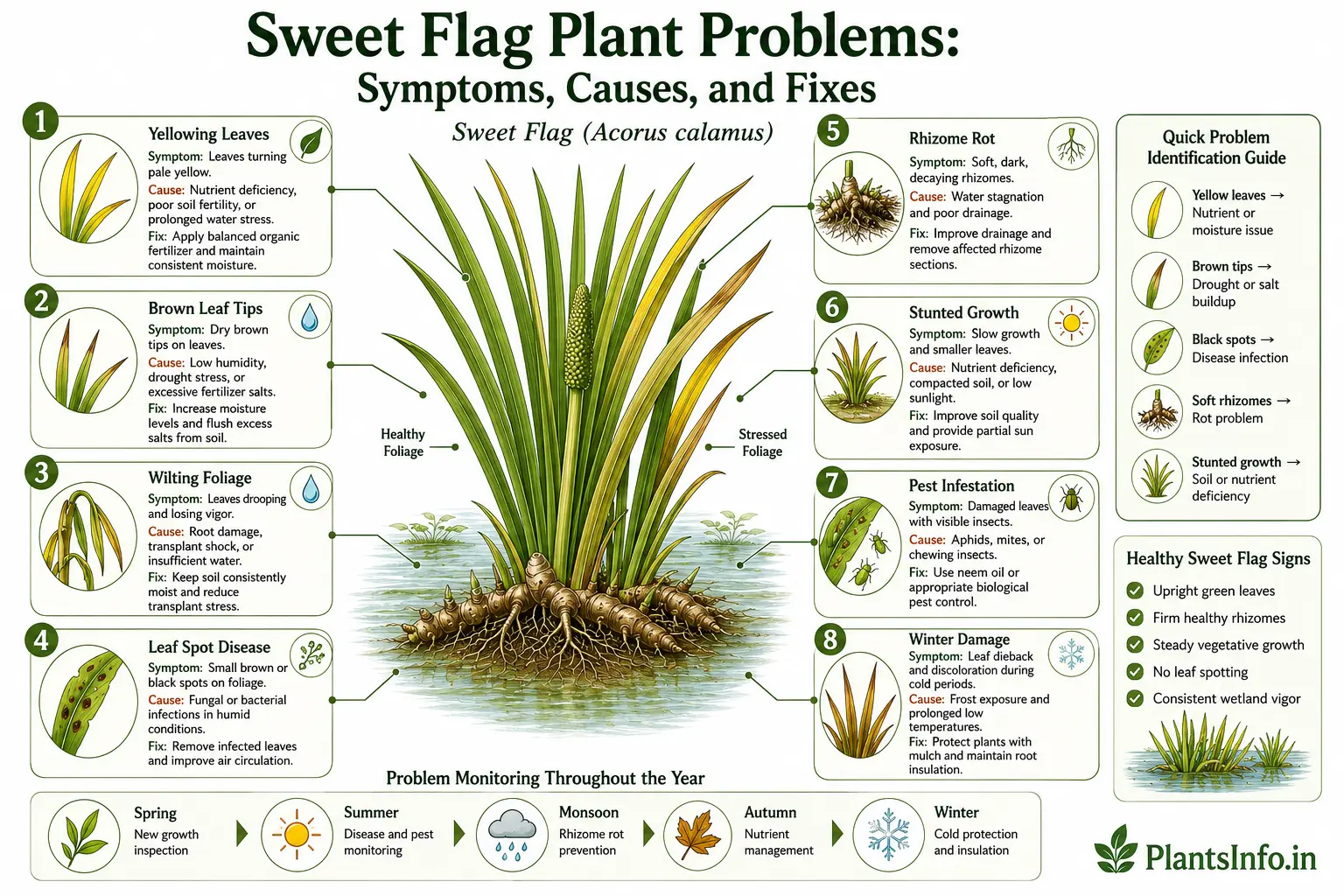
Sweet Flag Plant Problems: Symptoms, Causes, and Fixes
Quick Answer: The vast majority of Sweet Flag problems in Indian home gardens come from one cause: insufficient water. Leaf tip dieback, yellowing, and stunted growth are almost always water stress before they are disease. True disease problems — primarily rhizome rot and fungal leaf spot — occur in a small minority of plants, usually when standing water has become stagnant and airless.
See also: Sweet Flag plant profile, how to grow it, its flowering season, its benefits, and its varieties.
Pick up a dying Bach clump, and the diagnosis is usually in your hands within seconds — either the rhizome is mushy and dark (rot) or it is hard and dried out (thirst). Very few plants make their problem this legible. Most Sweet Flag problems are preventable, and most plants that appear dead can be saved if caught early.
Recommended Products
Disclosure: As an Amazon Associate, PlantsInfo may earn from qualifying purchases.
🌱 Growing Essentials
The following products can help with container gardening, potting, root development, soil management, and healthy plant growth.

Organic Potting Soil Mix
Provides nutrients, structure, and healthy growing conditions for container plants.
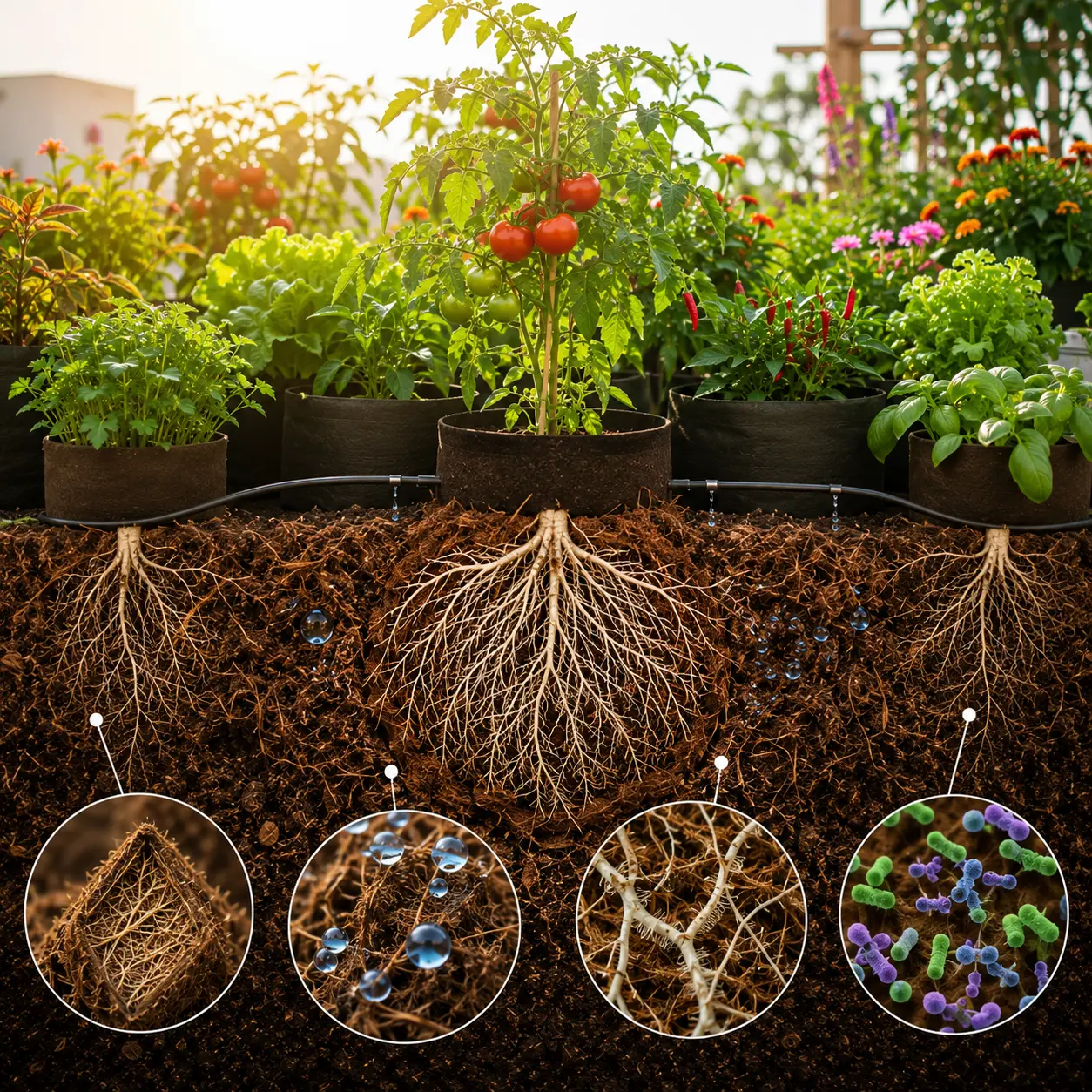
Coco Peat Growing Medium
Enhances moisture retention while maintaining excellent root-zone aeration.

Grow Bags for Plants
Improve drainage, root aeration, and vegetable production in limited spaces.

Plastic Pots for Plants
Ideal containers for seedlings, ornamentals, herbs, and balcony gardens.
Quick Diagnosis
| Symptom | Most Likely Cause | First Action |
|---|---|---|
| Leaf tips turning brown, V-shaped | Underwatering / soil too dry | Fill tray; increase watering immediately |
| Entire leaves yellowing, soft rhizome | Rhizome rot (anaerobic water) | Lift, cut off rotted sections, replant |
| Brown spots with yellow halo on leaves | Fungal leaf spot | Remove affected leaves; improve air circulation |
| White cottony masses at leaf base | Mealybugs | Wipe with neem oil + soap solution |
| Tiny moving specks on leaves, fine webbing | Spider mites | Spray water; apply neem oil |
| Pale, limp new leaves, stunted growth | Nutrient deficiency | Apply vermicompost drench |
| Sudden total collapse of healthy plant | Root/crown rot (advanced) | Lift immediately; assess rhizome |
Diseases
Rhizome and Crown Rot
Rhizome rot is the most serious disease threat to cultivated Sweet Flag and by far the most common cause of plant death. It is caused by water mould organisms (Pythium spp. and Phytophthora spp.) that thrive in stagnant, oxygen-depleted water — exactly the conditions that form in pot trays left unchanged for weeks in monsoon heat. The first visible sign is not in the roots: affected plants show sudden, progressive wilting and yellowing of all leaves simultaneously, with the base of the leaf sheaths turning brown and soft. On lifting the rhizome, affected sections are dark brown to black, waterlogged, and give off a fetid odour.
Plants can often be saved when a substantial portion of the healthy rhizome remains. Lift the clump, cut all darkened and soft sections away with a clean, sterilised knife, dust the cut surfaces with wood ash or powdered sulphur, and allow to air-dry in shade for 24 hours before replanting into fresh mix. Refresh tray water every two to three days — this single habit prevents most rot. Once rot is extensive and the growing points are destroyed, the plant cannot be saved.
Fungal Leaf Spot
Leaf spot in sweet flag presents as small, water-soaked, circular to irregular brown spots, often with a distinct yellow halo, appearing on the leaf blades — primarily during high-humidity periods (monsoon and early post-monsoon). The causal organisms are typically Colletotrichum or Alternaria species. The disease does not kill the plant but significantly weakens leaf growth and reduces photosynthetic area.
Leaf spot is manageable rather than curable once established on a leaf — remove all affected leaves at the base immediately to reduce spore load. The critical prevention measure is airflow: plants crowded against walls or packed tightly in container collections develop spots far more frequently than those with 30–40 cm of open space around them. Copper-based fungicide (Bordeaux mixture at 1% dilution) applied at fortnightly intervals during peak monsoon months prevents new infections effectively.
Root Knot Nematode
In sandy loam soils in South India — particularly in coastal Andhra Pradesh, Tamil Nadu, and Karnataka — root knot nematodes (Meloidogyne spp.) occasionally affect Sweet Flag planted in garden beds. The symptom above ground is chronic stunting and pale, anaemic leaf colour that does not respond to fertiliser. The symptom below ground is the diagnostic one: characteristic galls (small hard knots) visible on fine root strands when the rhizome is lifted. There is no cure once a plant is heavily infested in a given soil patch.
Prevention is the only reliable strategy: incorporate neem cake into planting beds at 100–150 grams per square metre before planting. Do not replant the Bach plant in a confirmed nematode-affected bed for at least two seasons. Container growing sidesteps this problem entirely, as fresh potting mix does not carry nematode populations.
Pest Problems
Mealybugs
Mealybugs on Bach appear as white, cottony, powdery clusters at the base of leaf sheaths — the tight overlap of leaves at the plant’s crown is exactly the protected, humid microhabitat they seek. They damage the plant by feeding on sap, causing distorted, stunted new growth. A moderate infestation is identifiable by the cottony deposits; a heavy infestation produces yellowing of the innermost young leaves.
Organic fix: Apply a solution of neem oil (5 ml) and dish soap (2 ml) in 500 ml of water directly to affected areas using a soft toothbrush to penetrate the leaf base gaps. Repeat every five days for three applications.
Chemical option: A diluted imidacloprid systemic drench (per label rate) applied to the soil is effective for persistent infestations.
This information is for general guidance only. Always read product labels before applying any pesticide or fungicide. Follow state agriculture department guidelines for food crops. Keep children and pets away during and after application.
Spider Mites
Spider mites appear in dry post-monsoon and winter months (October–February), particularly on container-grown plants in low-humidity indoor conditions. They are difficult to see individually — look for fine stippling (tiny pale dots) on the upper leaf surface and delicate webbing in the inner leaf base. Severe infestations cause leaf bronzing and dieback.
Organic fix: A strong spray of plain water dislodges mites effectively and disrupts the colony. Follow with neem oil spray (5 ml in 500 ml water) at three-day intervals for two weeks. Increasing ambient humidity around the plant — grouping containers or placing a water tray nearby — reduces mite pressure significantly.
Spider mites are commonly mistaken for a disease, as the leaf stippling they cause resembles a fungal or nutritional problem. The diagnostic test is a white paper held under the leaves while you tap: live mites fall and move on the paper surface.
Aphids
Aphids on Sweet Flag are less common than mealybugs but appear occasionally on new growth flushes in spring (March–April). They cluster on new, still-furled leaf shoots, feeding on soft tissue. Damage is typically limited to distorted or stunted new leaves. A hard spray of water removes most aphid colonies without further treatment. For persistent colonies, neem oil spray (same preparation as above) is effective.
Environmental and Care Mistakes
Chronic Underwatering
The single most common mistake made by first-time Sweet Flag growers is treating it like a normal potted herb — watering when the surface feels dry, then being surprised when the leaves die back from the tips inward in a V-pattern. Unlike most plants, Bach has no drought tolerance built into its evolutionary history. The symptom — tip dieback that progresses down the leaf in a crisp, not mushy, manner — is distinct from rot or disease. The fix is immediate: submerge the pot in a bucket of water for 30 minutes, then establish a tray system. For full watering guidance, see the Growing Guide.
Stagnant Tray Water
Tray water that is not refreshed regularly becomes anoxic within days in hot weather. This is the precursor condition to rhizome rot — the pathogen is opportunistic; the stagnant environment is the invitation. A tray that smells musty or shows a surface film is already dangerous. The fix is simple: empty, rinse, and refill the tray every two to three days during monsoon and every four to five days in cooler months. This one habit prevents the majority of rot events.
Wrong Soil Mix
Using standard commercial potting mix designed for flowering plants or succulents causes chronic stress in Sweet Flag. Those mixes dry quickly by design — the opposite of what this plant needs. Symptoms are subtle at first: slow growth, pale colour, reduced leaf length — none of which look like a soil problem. Repot into a moisture-retentive mix (garden soil, cocopeat, vermicompost in equal parts), and the improvement is visible within two to three weeks. See the Growing Guide for full soil specifications.
Overcrowding Without Division
A clump that has not been divided for four or more years begins to exhaust the soil, becomes so dense that airflow through the leaf base is eliminated, and competes against itself for nutrition and water. The symptom is declining vigour across all leaves — not the death of the plant, but a gradual diminishment. Division in early spring (February–March) resets the vigour. This is the one mistake that experienced gardeners make through neglect rather than ignorance.
Prevention Protocol
The most effective prevention routine for Sweet Flag is built around three habits, not products. Before monsoon onset (May–June), refresh pot tray water and ensure drainage is functioning — stagnant pre-monsoon water with rising heat is the highest-risk period for rot. Through peak monsoon (July–August), refresh tray water every two to three days and monitor the inner leaf base for the first signs of mealybug cottony deposits or rot at the crown. In post-monsoon (October–November), check the rhizome during harvest or inspection: any softness, dark colouration, or off smell is early rot and must be treated immediately by cutting and drying the affected sections.
Incorporating neem cake into the planting mix at setup provides long-duration suppression of both soil-borne pathogens and nematodes. No expensive products are needed. Bach is a plant that rewards attentive observation over reactive treatment.
When to Give Up on a Plant
Plants are unlikely to recover when most of the rhizome has become soft, dark, and foul-smelling. At that point, no amount of cutting and drying will preserve enough viable growing nodes to re-establish the plant. Remove the entire plant and dispose of it away from the compost heap — do not compost rot-affected rhizome material.
The pot or planting area should be treated before reuse. For containers, empty completely, scrub with a dilute bleach solution (10 ml bleach per litre of water), rinse thoroughly, and fill with entirely fresh potting mix. For ground beds, do not replant Sweet Flag in the same location for at least one full season; during that period, grow a non-aquatic crop to allow the pathogen load to decline.
Starting fresh with a healthy division is nearly always faster than trying to rescue a heavily rotted clump.