Sweet Flag Benefits: What Ayurveda and Modern Research Say

Quick Answer
Sweet Flag (Vacha) is one of Ayurveda’s most respected nervine herbs, traditionally used to support speech, memory, concentration, and cognitive function. The aromatic rhizome contains biologically active compounds including beta-asarone, acorone, and related phytochemicals. Modern research has identified several promising pharmacological properties that align with traditional uses, while also highlighting important safety considerations regarding certain plant varieties and long-term internal use.
See also: Sweet Flag plant profile, how to grow it, common problems, its flowering season, and its varieties.
A root that has been valued in Ayurvedic practice for more than two thousand years occupies a rare position in herbal medicine: both deeply traditional and actively researched. What makes Vacha particularly interesting today is the growing body of scientific investigation exploring its chemical composition and biological activity. While some findings support aspects of its historical use, modern research also introduces safety questions that were not addressed in classical medical systems, making informed and supervised use essential.
Recommended Products
Disclosure: As an Amazon Associate, PlantsInfo may earn from qualifying purchases.
🌱 Growing Essentials
The following products can help with container gardening, potting, root development, soil management, and healthy plant growth.
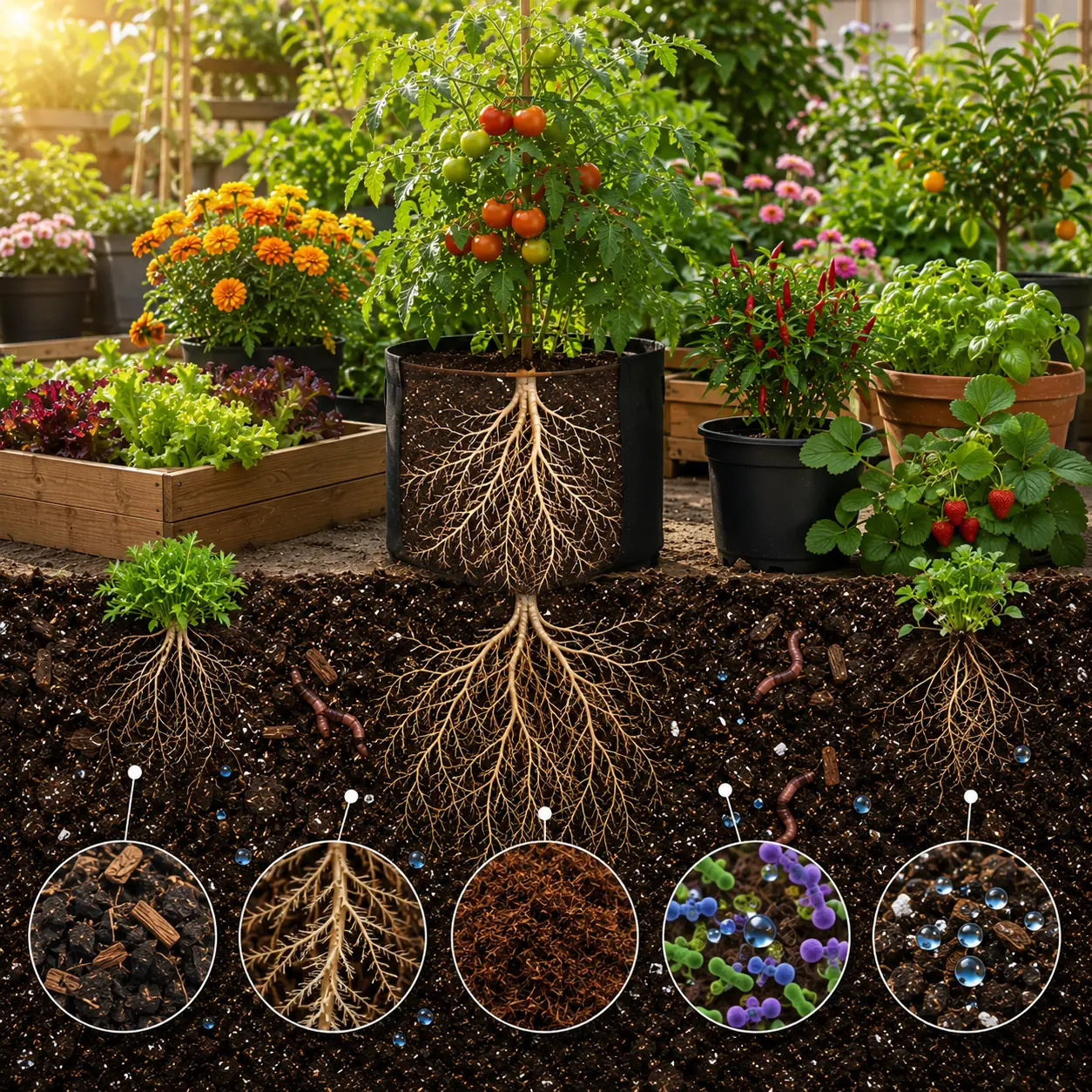
Organic Potting Soil Mix
Provides nutrients, structure, and healthy growing conditions for container plants.
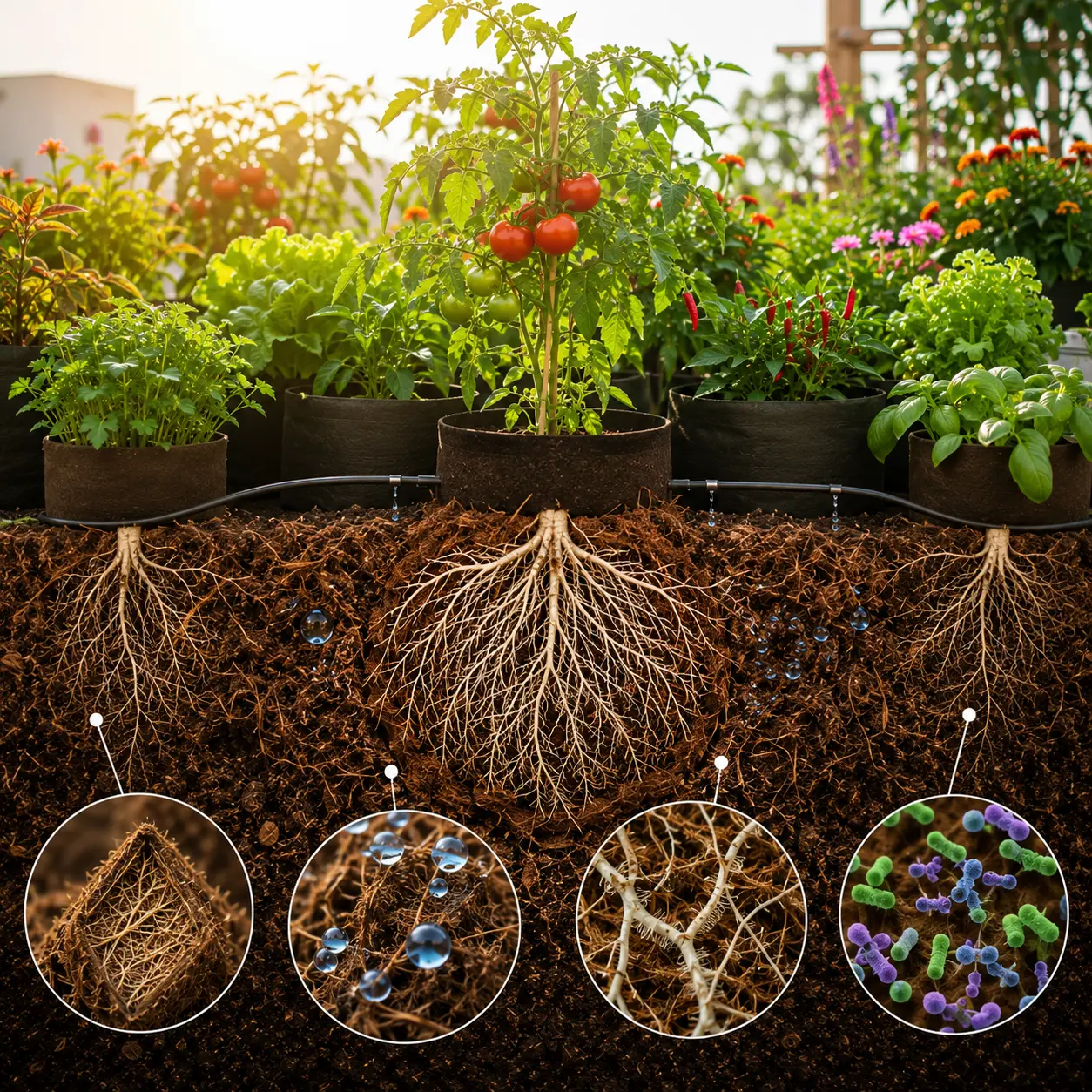
Coco Peat Growing Medium
Enhances moisture retention while maintaining excellent root-zone aeration.

Grow Bags for Plants
Improve drainage, root aeration, and vegetable production in limited spaces.

Plastic Pots for Plants
Ideal containers for seedlings, ornamentals, herbs, and balcony gardens.
Ayurvedic and Medicinal Uses
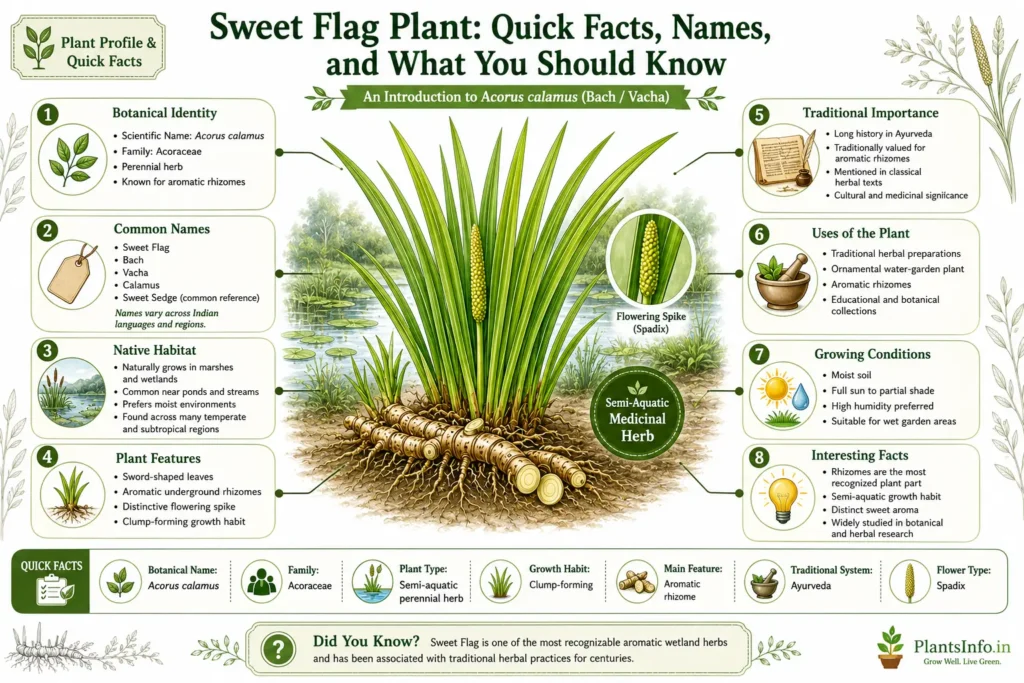
Vacha (Acorus calamus) holds a prominent place in Ayurveda, particularly within the category of medhya rasayana—herbs traditionally associated with supporting intellect, memory, and mental clarity. Classical texts, including the Charaka Samhita and Ashtanga Hridayam, describe it as a medhya (intellect-promoting), vak-shodha (speech-supporting), and krimighna (traditionally used against harmful microorganisms) herb. It has historically been included in Ayurvedic formulations intended to support learning, speech development, concentration, and neurological balance.
The rhizome is the primary medicinal part of the plant. Traditional preparations include vacha churna (dried rhizome powder), medicated oils, and medicated ghee used in various classical formulations. In Ayurveda, Vacha is generally regarded as a potent herb that should be used under the guidance of a qualified practitioner rather than as a routine self-administered supplement.
Modern pharmacological research has identified several active compounds within the rhizome, including beta-asarone, acorone, calamenol, and various sesquiterpenoids. Experimental studies, primarily in laboratory and animal models, have reported neuroprotective, anticonvulsant, antioxidant, and acetylcholinesterase-inhibitory activity. This latter mechanism is also involved in several approved Alzheimer’s medications, although this does not mean Sweet Flag has equivalent clinical effects in humans. Research has additionally documented antimicrobial activity against a range of microorganisms, though further human studies are needed to confirm therapeutic applications.
Safety considerations are an important part of the modern understanding of Sweet Flag. Beta-asarone, one of the plant’s major constituents, has shown potentially carcinogenic effects in high-dose rodent studies, leading some regulatory authorities to restrict or monitor products containing significant amounts of this compound. Beta-asarone concentrations vary considerably among Sweet Flag populations, cultivars, and cytotypes, meaning not all plants contain the same levels. The North American form, Acorus calamus var. americanus, contains little or no beta-asarone and differs chemically from many Asian populations. Because of these differences, as well as the herb’s pharmacological activity, internal use should only occur under appropriate Ayurvedic or medical supervision.
Important: Vacha should not be used during pregnancy or breastfeeding unless specifically advised by a qualified healthcare professional. Individuals taking prescription medications, particularly those affecting the nervous system, should seek medical guidance before using any Sweet Flag preparation.
This information is provided for educational purposes and is based on traditional Ayurvedic literature and published scientific research. It is not intended as medical advice, diagnosis, or treatment. Always consult a qualified healthcare professional before using any herbal remedy for a health condition.
Cultural and Ritual Significance
Sweet Flag has been used across India for centuries in ways that extend beyond its medicinal applications. The dried rhizome is sometimes burned as incense in household and temple rituals, where its distinctive aromatic smoke is traditionally associated with purification and protection. In parts of Bengal, historical folk practices have included touching tiny amounts of Bach root to an infant’s tongue during birth-related rituals, reflecting a long-standing belief that the plant supports speech and intellect. Modern medical and pediatric guidance does not recommend administering herbal preparations to newborns without professional supervision.
In Assam, Manipur, and other northeastern regions, Sweet Flag is often grown along paddy field margins and near household water bodies, serving both as a useful medicinal plant and as a familiar feature of the local landscape. The association between Vacha and communication is reflected in its Sanskrit name, vach, meaning speech or voice. References to its traditional use in speech- and cognition-related formulations appear throughout classical Ayurvedic literature.
Ecological Role
Sweet Flag plays a valuable role in wetland and waterside ecosystems. Its extensive rhizome network helps stabilise moist soil and reduce erosion along pond edges, drainage channels, and riverbanks. The dense foliage can provide shelter for aquatic insects, amphibians, and other small wetland organisms.
Because it tolerates prolonged waterlogging, Sweet Flag is often included in wetland restoration projects and traditional pond-edge plantings in regions such as West Bengal and Assam. In garden ponds and water features, the plant absorbs nutrients from the surrounding environment and may contribute to improved water quality, potentially helping to limit excessive algal growth when grown as part of a balanced aquatic planting scheme.
Practical Value for Home Gardeners
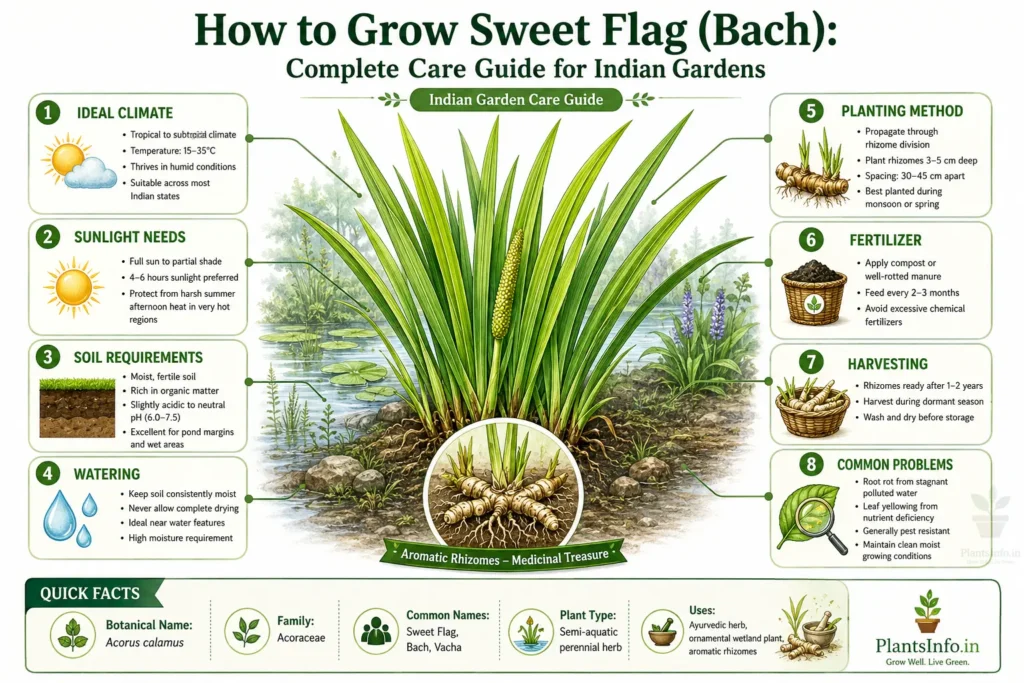
Growing Bach at home provides an attractive, low-maintenance plant for areas where many ornamentals struggle. Its ability to thrive in consistently wet soil makes it particularly useful for waterlogged corners, pond margins, and container water gardens.
Dried rhizome pieces have traditionally been placed among stored grains, especially rice, as a household insect-deterrent practice in parts of eastern India. While this remains a common traditional use, effectiveness may vary depending on storage conditions and pest species.
Beyond its cultural and historical value, Sweet Flag adds year-round structure to aquatic gardens through its upright, sword-shaped foliage and pleasant aromatic scent released when the leaves are handled. A single healthy plant can produce a substantial rhizome system over time, making it both an ornamental and a useful heritage plant for gardeners interested in traditional Indian botanical species.
How to Prepare or Use at Home
The harvested rhizome is traditionally dried in shade and stored for later use in various cultural, aromatic, and Ayurvedic applications. After harvesting, rhizome sections are typically cleaned and dried in a well-ventilated shaded area until fully cured, then stored in an airtight container away from heat and moisture.
For non-medicinal household use, small pieces of dried Sweet Flag rhizome may be added to traditional incense blends or gently simmered in water to release their distinctive aromatic fragrance. Dried rhizome sections have also been used traditionally in some regions as a natural storage companion for grains and household goods.
Because Sweet Flag contains biologically active compounds that vary among plant populations and preparations, internal use should only occur under the guidance of a qualified Ayurvedic practitioner or healthcare professional. Home preparation does not guarantee consistent potency or safety.
What to Avoid
Pregnant and breastfeeding women should avoid internal Sweet Flag preparations unless specifically advised by a qualified healthcare professional. Individuals taking prescription medications, particularly those affecting the nervous system, should seek professional guidance before using any preparation derived from the plant.
Traditional herbal preparations should never be viewed as a substitute for medical diagnosis or treatment. Because Sweet Flag contains pharmacologically active compounds, prolonged or unsupervised internal use is not recommended. Extra caution should be exercised when considering herbal preparations for children, older adults, or individuals with underlying medical conditions.
Frequently Asked Questions
What are the traditional benefits of Vacha?
In Ayurveda, Vacha is traditionally associated with supporting memory, speech, concentration, and mental clarity. It is classified as a medhya rasayana herb.
Is Sweet Flag scientifically proven?
Modern research has identified several biologically active compounds and promising pharmacological effects, but many traditional uses require further human clinical research.
Is Vacha safe to use?
Safety depends on the plant variety, preparation, and intended use. Because Sweet Flag contains biologically active compounds, internal use should only occur under professional supervision.
Can I grow Sweet Flag at home?
Yes. Sweet Flag is relatively easy to grow in consistently moist soil, pond margins, and container water gardens across much of India.
Key Takeaways
- Vacha is a classical medhya rasayana herb that has been associated with cognition, speech, and nervous system support in Ayurvedic tradition for centuries.
- Modern research has identified several biologically active compounds within the rhizome, although many traditional uses require further clinical study.
- Beta-asarone and related compounds contribute to both the plant’s pharmacological interest and its safety considerations.
- Sweet Flag has cultural, ecological, aromatic, and horticultural value in addition to its historical medicinal importance.
- Internal use should only occur under appropriate professional guidance, particularly for children, pregnant women, and individuals taking medications.
Bach remains one of Ayurveda’s most fascinating medicinal plants—a species whose long history of traditional use continues to inspire modern scientific investigation while reminding us of the importance of balancing historical knowledge with contemporary safety standards.