Matar Plant: Quick Facts, Names, and What You Should Know
A single pea plant can produce dozens of pods over its short life, each one packed with seeds that are technically tiny, storing batteries of energy for the next generation of plants. Here is what every Indian gardener and cook should know about this familiar winter vegetable.
See also: Pea Plant plant profile, how to grow it, common problems, its flowering season, and its benefits.
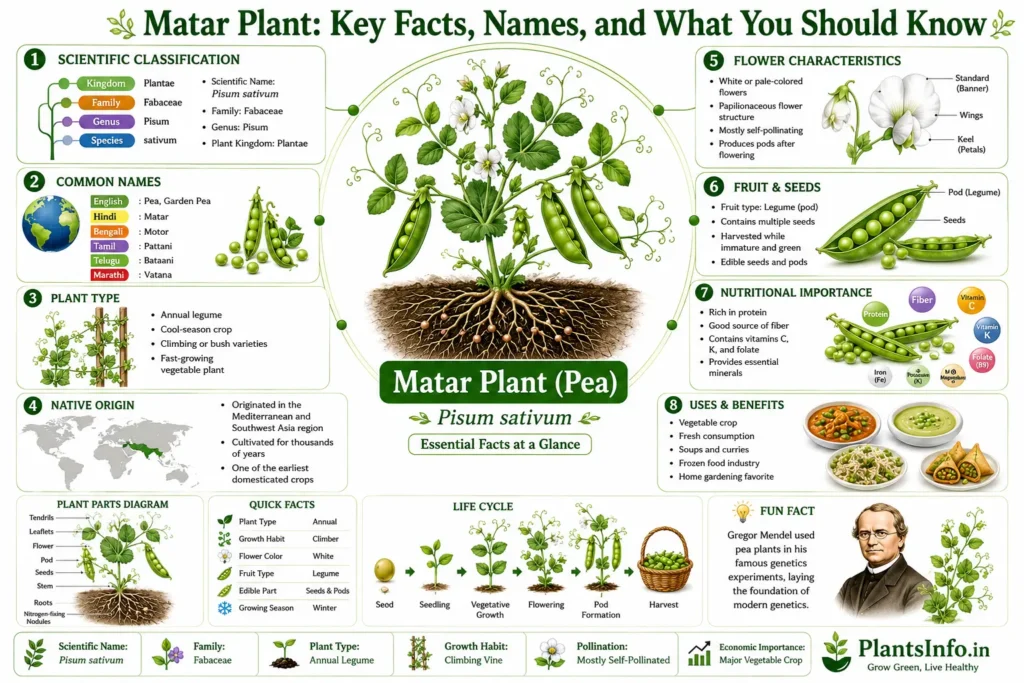
Names in Different Languages
| Language | Name |
|---|---|
| English | Garden Pea / Pea |
| Hindi | मटर (Matar) |
| Bengali | মটর (Motor) |
| Tamil | பட்டாணி (Pattani) |
| Telugu | బటానీ (Batani) |
| Marathi | वाटाणा (Watana) |
| Kannada | ಬಟಾಣಿ (Batani) |
| Malayalam | പട്ടാണി (Pattani) |
| Gujarati | વટાણા (Vatana) |
| Punjabi | ਮਟਰ (Matar) |
| Scientific name | Pisum sativum |
| Family | Fabaceae (Leguminosae) |
“Matar” is by far the most searched and recognised name across Hindi-, Bengali-, and Punjabi-speaking regions, while “pea” or “green peas” is common in English-language searches nationwide.
Recommended Products
Disclosure: As an Amazon Associate, PlantsInfo may earn from qualifying purchases.
🌱 Growing Essentials
The following products can help with container gardening, potting, root development, soil management, and healthy plant growth.
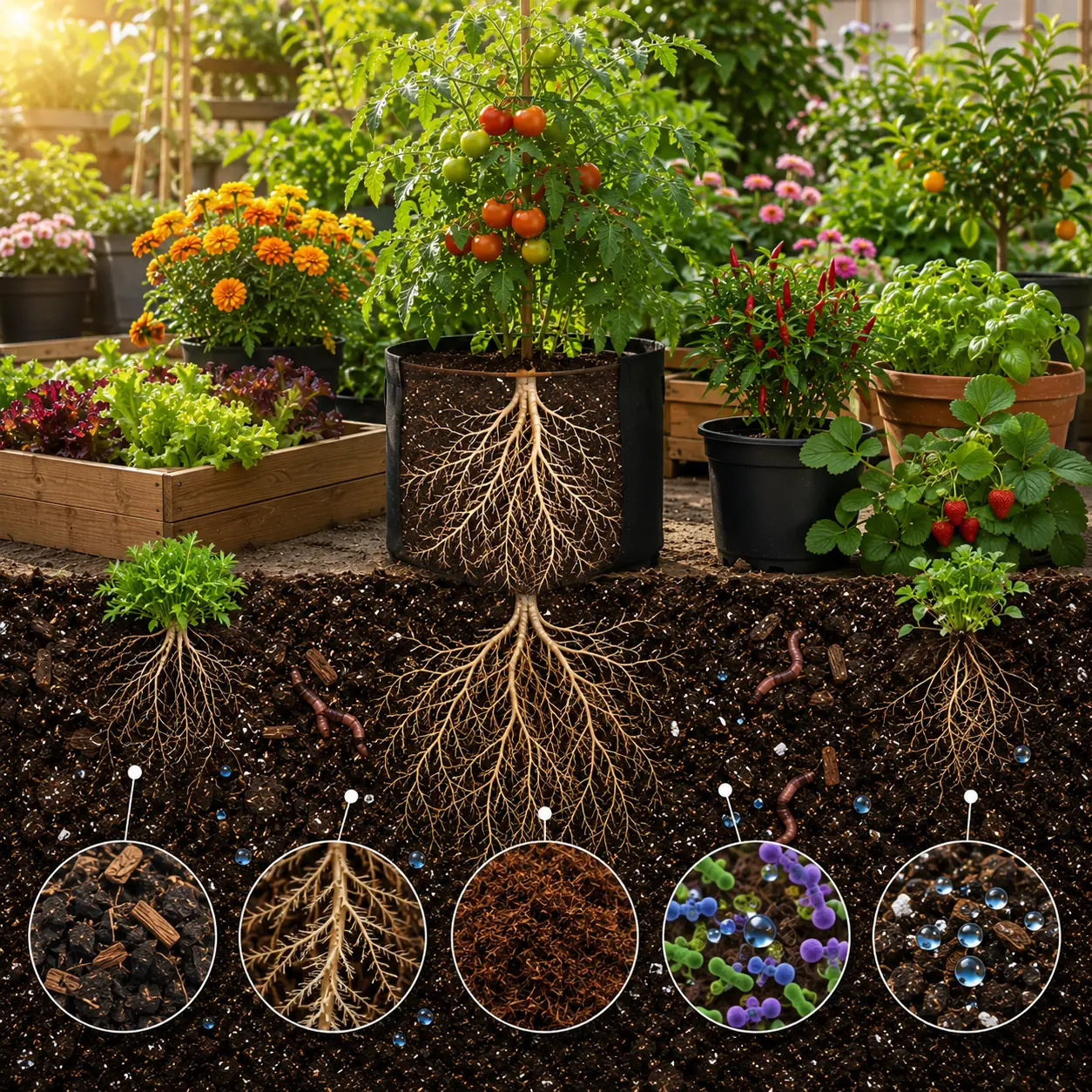
Organic Potting Soil Mix
Provides nutrients, structure, and healthy growing conditions for container plants.
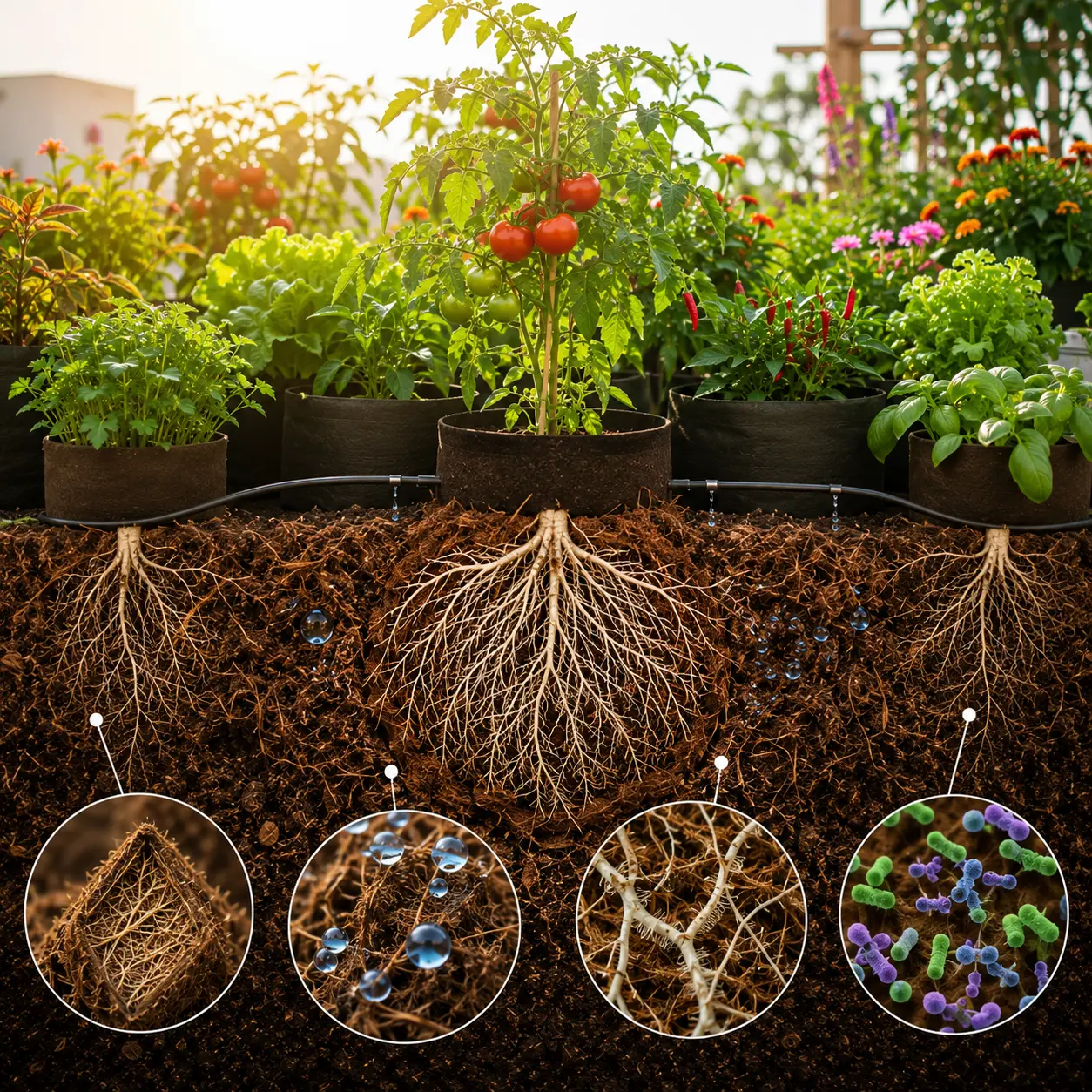
Coco Peat Growing Medium
Enhances moisture retention while maintaining excellent root-zone aeration.

Grow Bags for Plants
Improve drainage, root aeration, and vegetable production in limited spaces.

Plastic Pots for Plants
Ideal containers for seedlings, ornamentals, herbs, and balcony gardens.
What Does It Look Like?
The pea plant is a slender annual that typically grows between 45 cm and 1.5 metres tall, depending on whether the variety is bushy or climbing. Its leaves are compound, made up of several small oval leaflets with curling tendrils at the tips that grip onto supports as the plant grows. Flowers are usually white or pale purple, butterfly-shaped, and appear in small clusters along the stem during winter. The pods are flat to slightly rounded, green, and 5–10 cm long, each containing a row of 4–8 round seeds. One unmistakable visual detail is the way the tendrils coil tightly around any thin support within hours of touching it, almost like a slow-motion grip.
Where Does It Grow in India?
Garden peas are cultivated, not native to India, having originated in the Mediterranean and Central Asian regions before becoming a major winter crop across the subcontinent. They are most widely grown in Uttar Pradesh, Madhya Pradesh, Bihar, Punjab, Haryana, and West Bengal, where winter temperatures suit their growth cycle. In hill states like Himachal Pradesh and parts of Uttarakhand, peas are also grown as an off-season crop during the relatively cooler months. The crop is common in both large-scale commercial farming and small kitchen gardens, with urban terrace and balcony growers increasingly using grow bags during winter.
What Is It Used For?
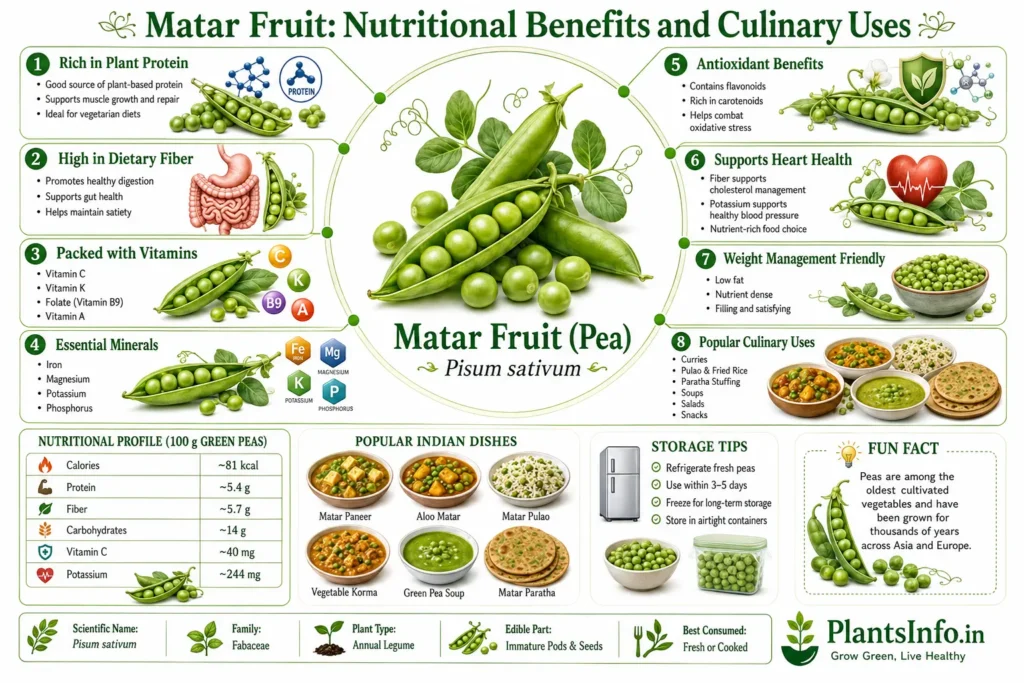
Garden peas are primarily a food crop, used fresh, frozen, or dried in countless Indian dishes — see the Benefits Guide for culinary detail. The dried, split form of the pea is also used to make besan-like flours in some regional preparations. Nutritionally, peas are valued for their protein and fibre content, covered in full in the Benefits Guide. The spent vines and pods, after harvest, are sometimes used as green manure or animal fodder in farming communities. Ornamentally, flowering pea vines are occasionally grown on small trellises purely for their winter greenery.
Is It Easy to Grow?
Garden peas are genuinely one of the easier winter vegetables for Indian home gardeners, requiring minimal space, simple support structures, and no specialised equipment. The main requirement is timing the sowing correctly to match the local cool season, since the plant has almost no tolerance for sustained heat. Climate suitability is broad across northern and central India during winter, narrower in consistently warm coastal and southern regions where the cool window is shorter.
Frequently Asked Questions
Is the pea plant toxic to pets?
The pods and seeds of garden peas are generally considered non-toxic and are even used in small amounts in some pet foods, though large quantities can cause digestive upset in dogs and cats.
Can garden peas be confused with any other plant?
Young pea seedlings can sometimes be mistaken for other climbing legumes like beans or lentils before flowering, since their early leaves look similar.
Do garden peas need a trellis to survive?
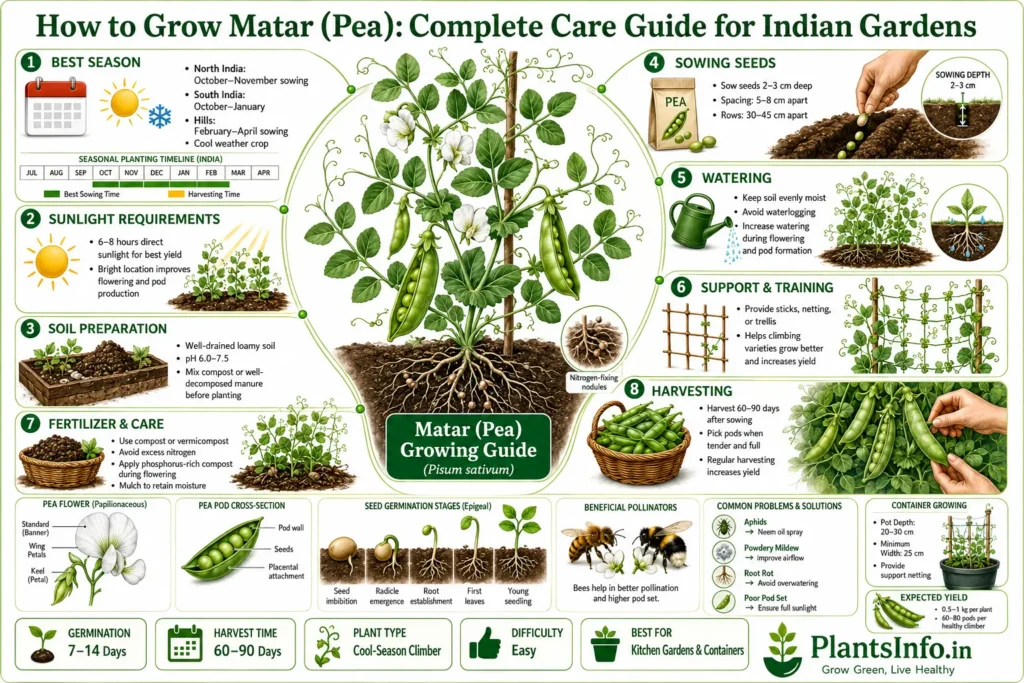
No, but most varieties grow more productively and stay healthier with some form of support — see the Growing Guide for details.
Garden peas remain one of the most reliable and rewarding winter crops for Indian home gardens.