Matar Fruit: Nutritional Benefits and Culinary Uses
Quick Answer: Garden peas (matar) are a nutrient-dense legume, valued for their plant protein, dietary fibre, and vitamin content, especially vitamin K and vitamin C. In Indian kitchens they appear in everything from winter pulao to street-food chaats, making them one of the most versatile cool-season vegetables grown at home.
See also: Pea Plant plant profile, how to grow it, common problems, its flowering season, and its varieties.
Bite into a fresh pea straight from the pod, and there is a clean sweetness that bears almost no resemblance to the soft, starchy peas from a can or freezer packet. That difference is not just about freshness; it reflects how quickly sugars in peas convert to starch after harvest, a transformation that begins within hours. This is part of why home-grown matar tastes noticeably better than store-bought, and why understanding what is actually in a pea — and how India eats it — matters for anyone growing their own.
Recommended Products
Disclosure: As an Amazon Associate, PlantsInfo may earn from qualifying purchases.
🌱 Growing Essentials
The following products can help with container gardening, potting, root development, soil management, and healthy plant growth.
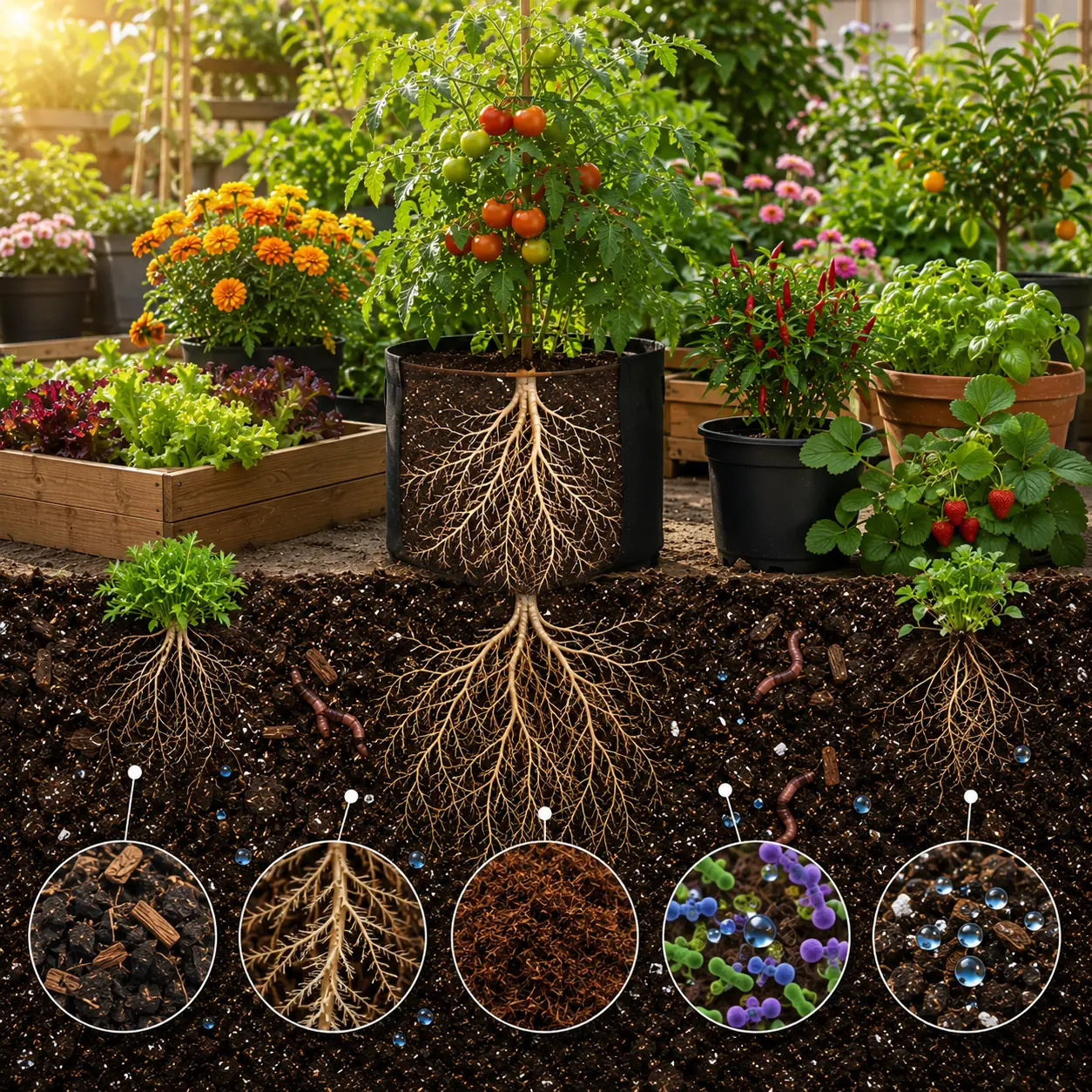
Organic Potting Soil Mix
Provides nutrients, structure, and healthy growing conditions for container plants.
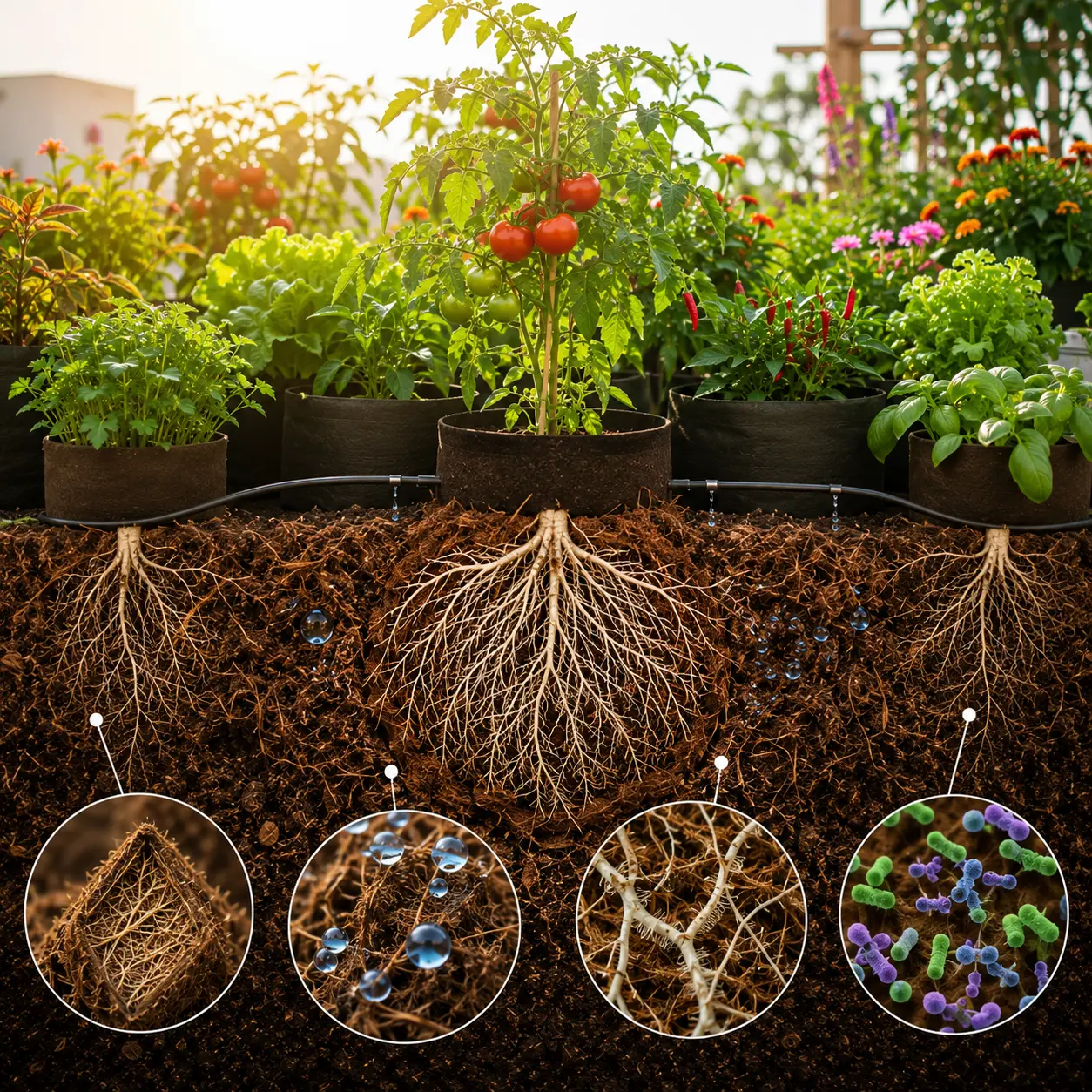
Coco Peat Growing Medium
Enhances moisture retention while maintaining excellent root-zone aeration.

Grow Bags for Plants
Improve drainage, root aeration, and vegetable production in limited spaces.

Plastic Pots for Plants
Ideal containers for seedlings, ornamentals, herbs, and balcony gardens.
Nutritional Profile and Culinary Uses
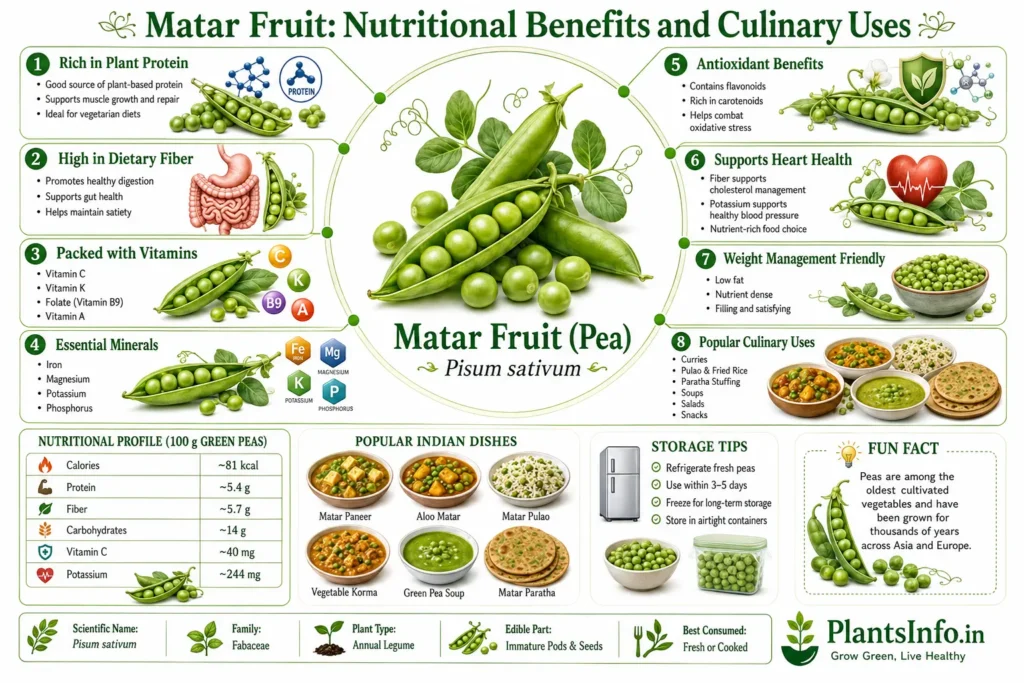
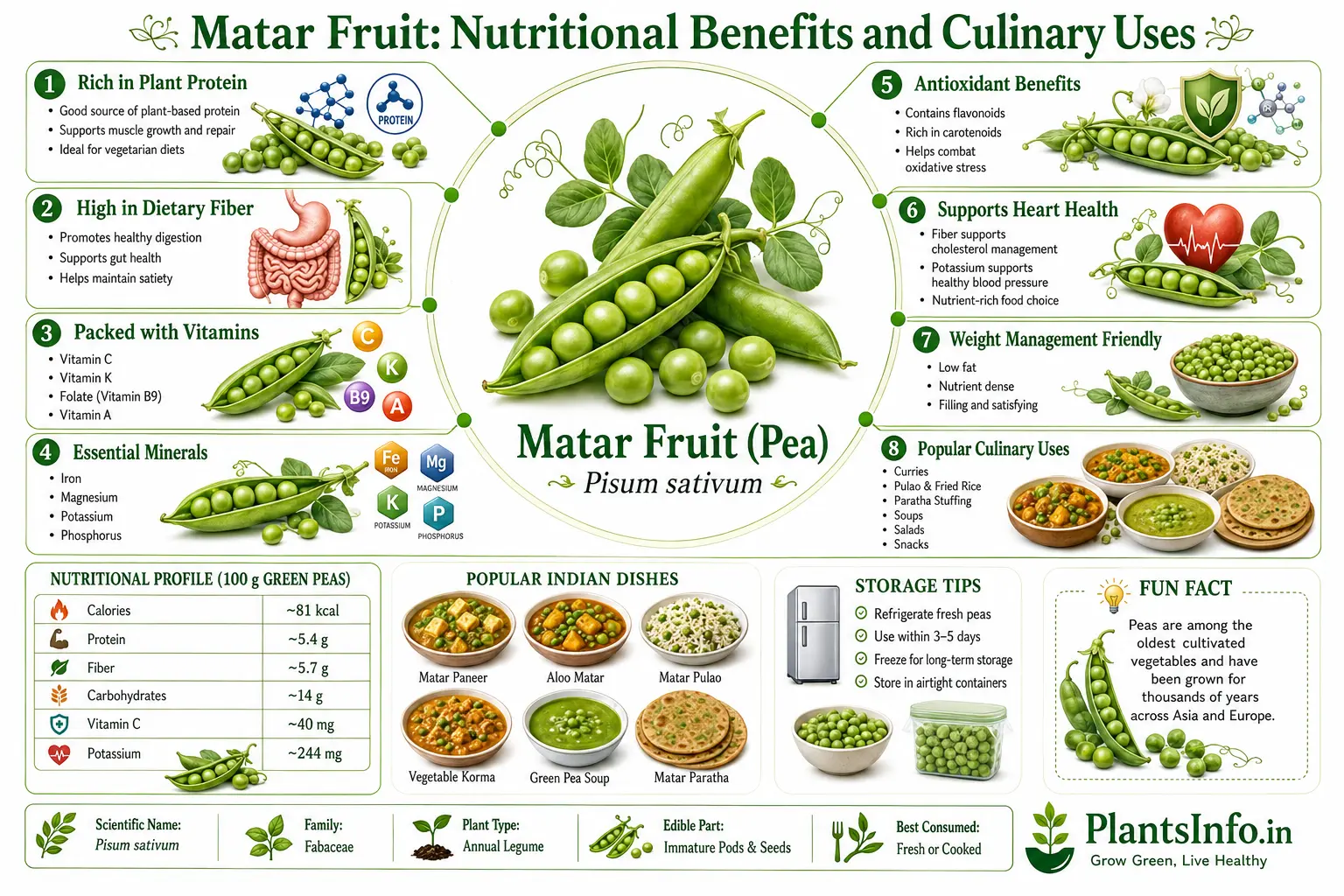
Fresh garden peas are notably high in plant protein for a vegetable, typically providing around 5 grams per 100 grams, alongside a good amount of dietary fibre that supports digestion. They contain meaningful levels of vitamin K, vitamin C, and folate, along with smaller amounts of iron and manganese. Research suggests the fibre and protein combination in legumes like peas contributes to better satiety compared to many other vegetables, which is one reason matar-based dishes feel more filling.
In Indian kitchens, matar is everywhere during winter. Matar paneer, a creamy tomato-based curry with peas and cottage cheese, is a staple across North India. Aloo matar combines peas with potatoes in a simple, everyday curry found in homes from Punjab to Bihar. Pulao and biryani recipes across regions use peas for both colour and texture, while street food vendors use boiled, mashed peas in matar kulcha and ragda, especially popular in cities like Indore and Delhi. Bengali cuisine uses fresh peas in kosha mangsho and various winter vegetable preparations, taking advantage of the same winter harvest season that home gardeners rely on.
Processing peas at home is straightforward: pods can be shelled fresh for immediate cooking, or blanched briefly in boiling water and frozen for use over the following months, which preserves much of their texture and sweetness better than refrigeration alone.
Ecological Role
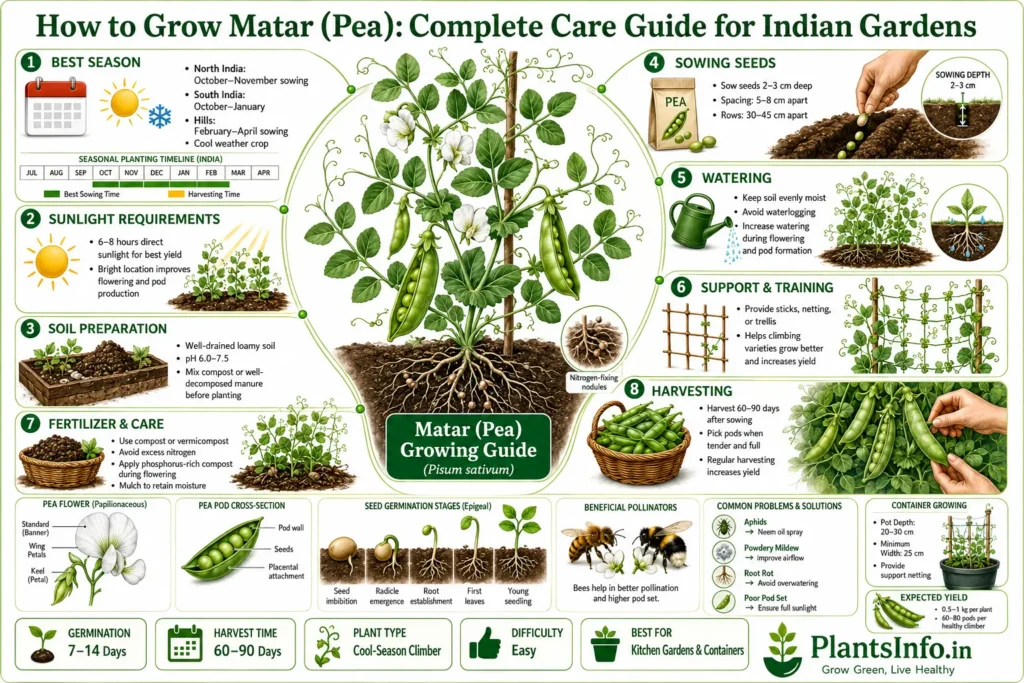
As a legume, garden peas have a quiet but genuinely useful role in the garden ecosystem. Their roots host nitrogen-fixing bacteria in small nodules, which convert atmospheric nitrogen into a form usable by plants, enriching the soil for whatever is grown next in that bed. Pea flowers, though modest compared to ornamental blooms, attract bees and other small pollinators during the winter months when fewer other flowering plants are active in many Indian gardens. After harvest, the spent vines can be cut and worked back into the soil or composted, returning organic matter and some of that fixed nitrogen to future plantings.
Practical Value for Home Gardeners
Beyond the kitchen, a pea crop is genuinely useful for soil improvement, making it a good choice to grow in a bed before a heavier-feeding summer crop like tomatoes or chillies. Because peas mature quickly and occupy space for only a few months, they fit easily into a rotation without committing a garden bed for an entire year. For households that cook regularly with matar, even a modest container crop can offset a meaningful portion of winter vegetable purchases, while also providing fresher, sweeter peas than what is typically available in the market.
This information is based on traditional knowledge and published nutritional research. It is not a substitute for medical advice. Consult a qualified healthcare professional before making significant dietary changes for health conditions.
Key Takeaways
- Fresh matar offers notable plant protein, fibre, vitamin K, and vitamin C, with sugars that convert to starch quickly after harvest.
- Matar paneer, aloo matar, and pulao are among the most common Indian uses of garden peas.
- Blanching and freezing preserves home-grown peas better than simple refrigeration.
- As a legume, pea roots fix nitrogen and improve soil for the next crop planted in the same bed.
- A small home pea crop offers fresher flavour than market peas, which lose sweetness rapidly after picking.
That gap between a pea picked minutes ago and one bought days earlier is the real reason to grow your own.