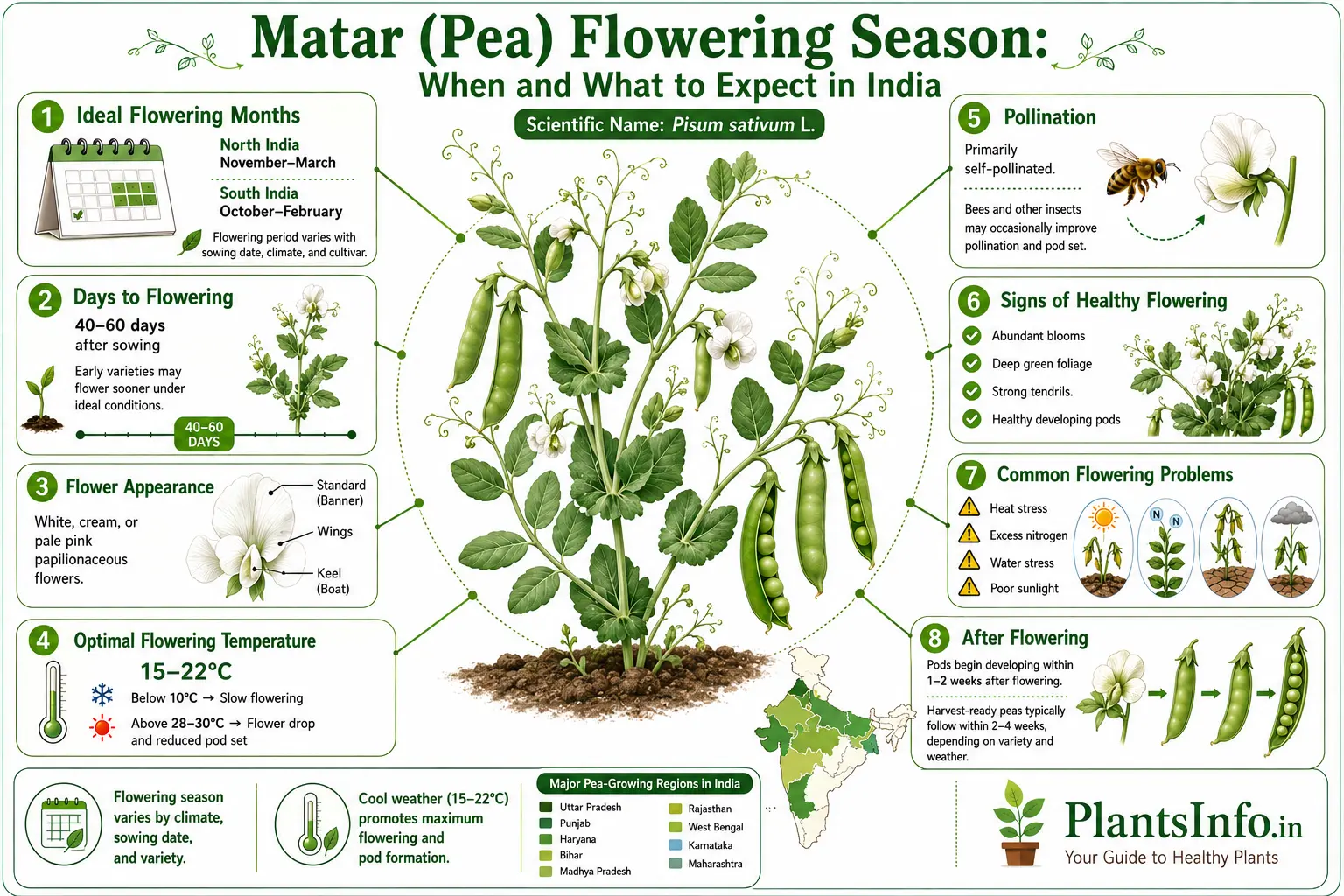
Matar Flowering Season: When and What to Expect in India
Here’s something that surprises new gardeners: a light winter frost in the hills doesn’t damage pea plants — it often makes the pods taste sweeter. Timing matters enormously with this crop, and getting it right is the difference between weeks of harvest and a plant that fizzles out before it really gets going. Timing also varies meaningfully by region, with hill areas and southern plains following noticeably different windows than the main northern growing belt.
See also: Pea Plant plant profile, how to grow it, common problems, its benefits, and its varieties.
India’s Seasons and This Plant
| Season (months) | What the plant is doing |
|---|---|
| Pre-monsoon (Mar–May) | Main-season crop finishing or already harvested; too hot for new sowing in most regions |
| Monsoon (Jun–Sep) | Generally not grown in plains; some hill-region sowing for autumn harvest |
| Post-monsoon (Oct–Nov) | Primary sowing window across northern and central India |
| Winter (Dec–Feb) | Flowering, pod formation, and main harvest period |
Flowering Season in Detail
Flower buds typically appear around 25–35 days after sowing, once the plant has established a basic framework of leaves and tendrils. Peak bloom occurs through December and January in the plains, though hill regions sowing earlier may see flowering as early as November. Each flower lasts only a few days before either setting a pod or dropping if pollination or conditions weren’t right. Flowering is triggered primarily by the plant reaching a certain maturity stage combined with cool temperatures, and prolonged heat during this stage causes flowers to abort before pods form.
Recommended Products
Disclosure: As an Amazon Associate, PlantsInfo may earn from qualifying purchases.
🌱 Growing Essentials
The following products can help with container gardening, potting, root development, soil management, and healthy plant growth.
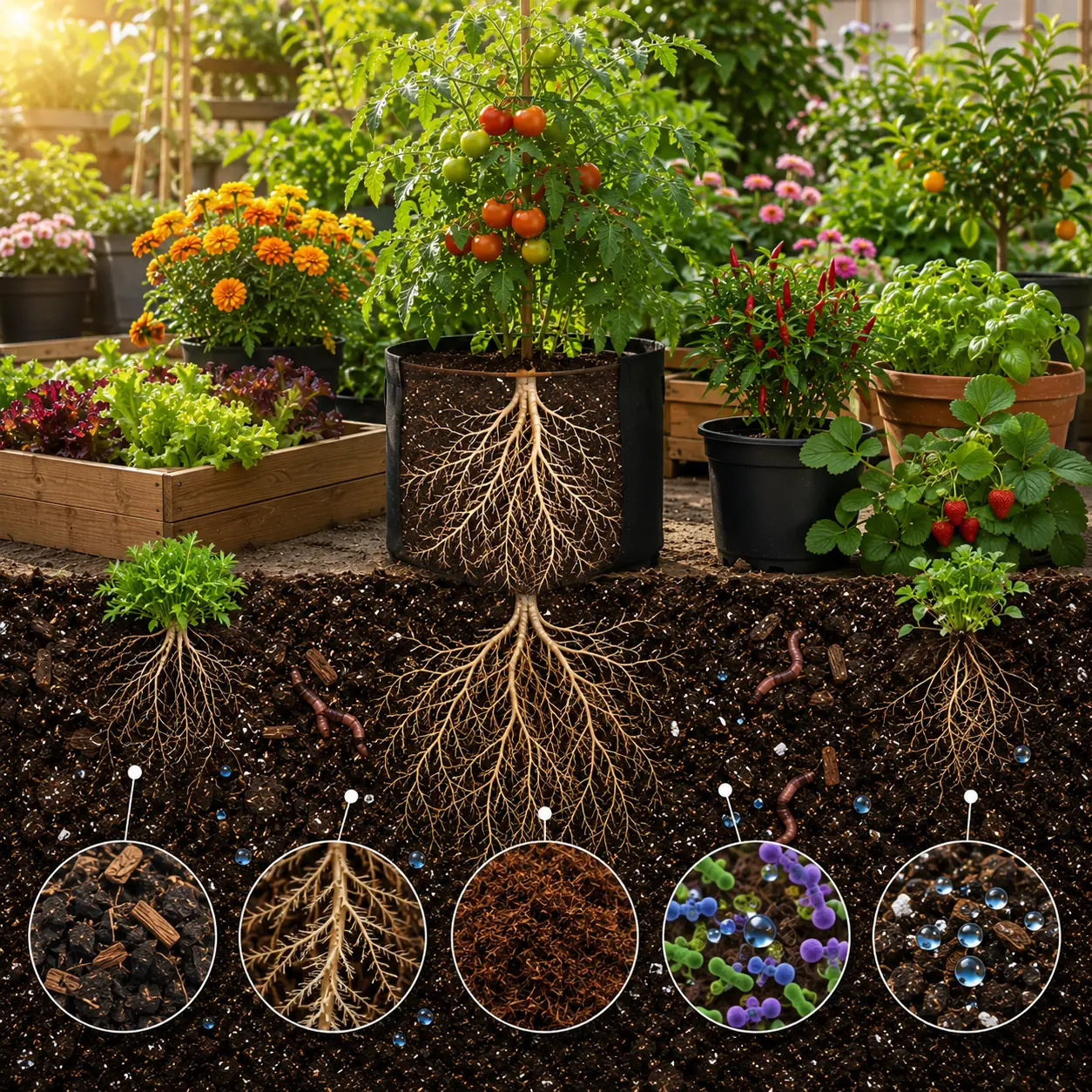
Organic Potting Soil Mix
Provides nutrients, structure, and healthy growing conditions for container plants.
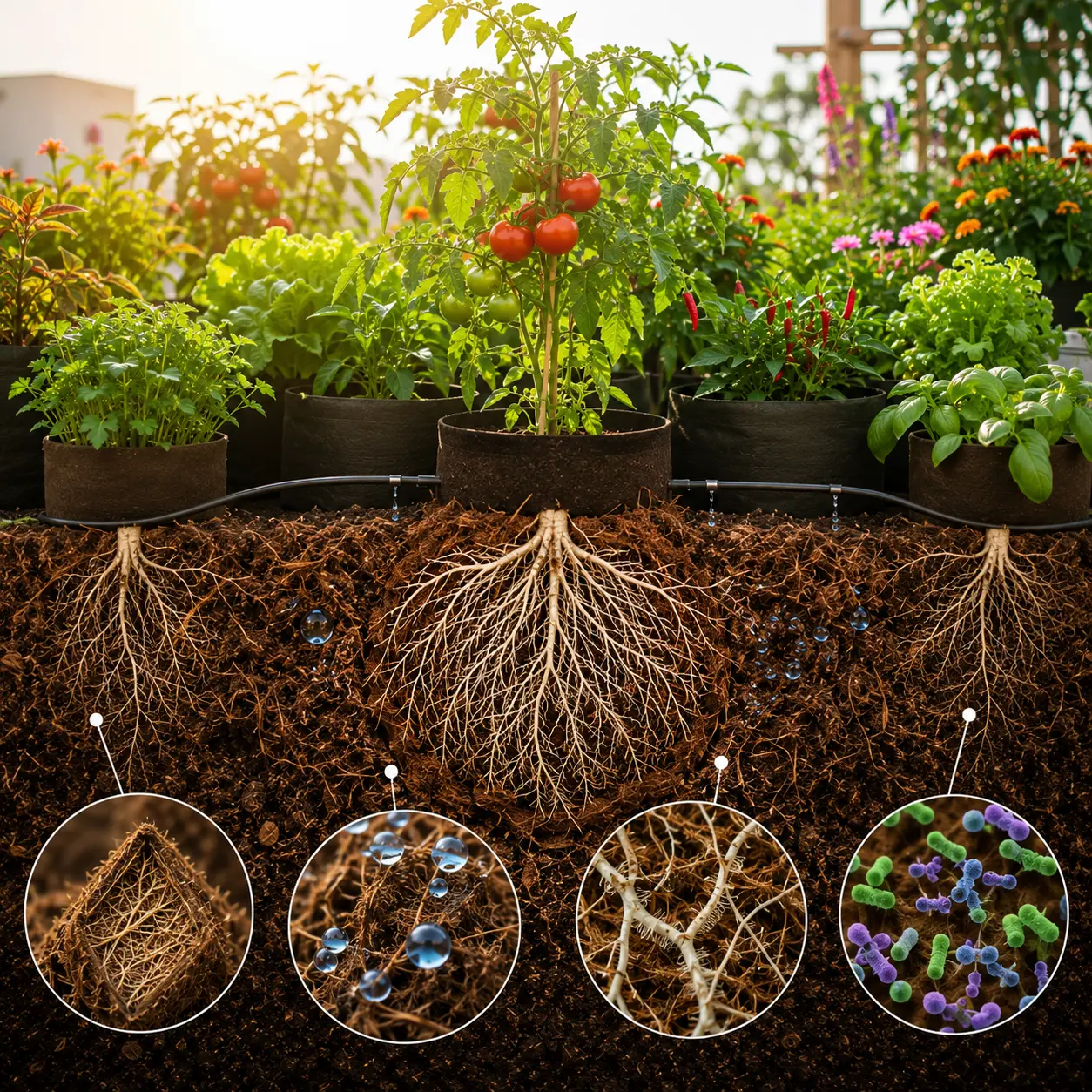
Coco Peat Growing Medium
Enhances moisture retention while maintaining excellent root-zone aeration.

Grow Bags for Plants
Improve drainage, root aeration, and vegetable production in limited spaces.

Plastic Pots for Plants
Ideal containers for seedlings, ornamentals, herbs, and balcony gardens.
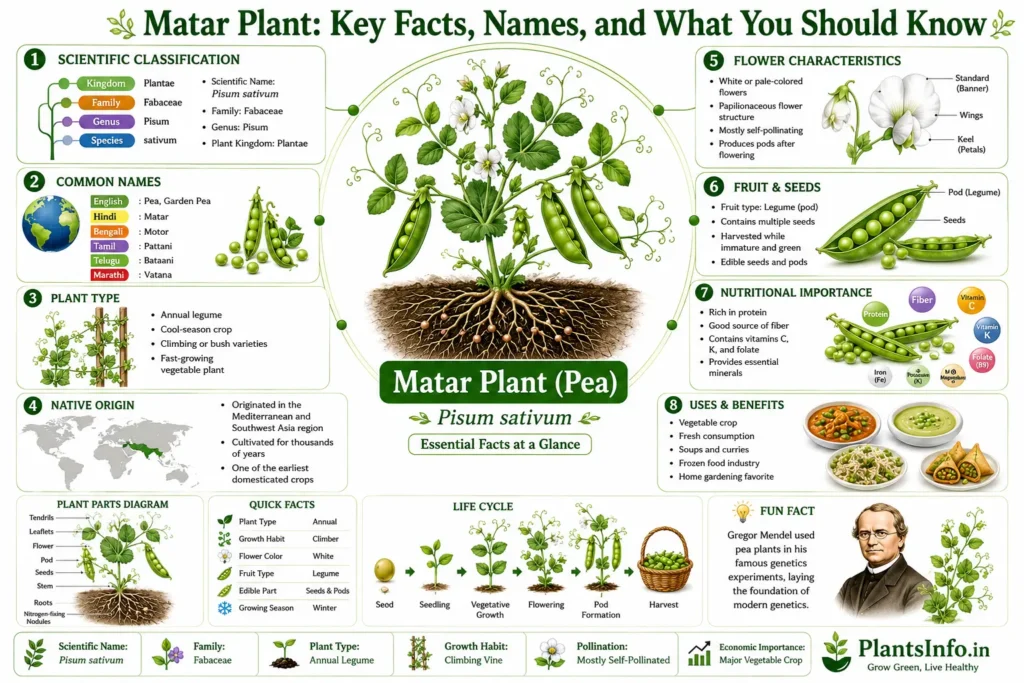
Pollination in garden peas happens largely on its own, since each flower contains both male and female parts and is naturally self-pollinating before it even fully opens. Hand pollination is rarely necessary for home gardeners, though gently shaking flowering vines on still days can occasionally help pod set in crowded plantings.
Fruiting Season
Pods begin forming within days of successful flowering, becoming visible as small flat structures that swell over roughly two to three weeks. Ripening is indicated by pods turning a fuller, slightly glossy green and feeling firm rather than soft when gently squeezed. The harvest window for each pod is relatively short, generally a few days at peak ripeness. If pods are missed and left on the vine too long, the peas inside become starchy and tough, and the plant may slow further flowering as it diverts energy into maturing seeds.
Best Time to Plant
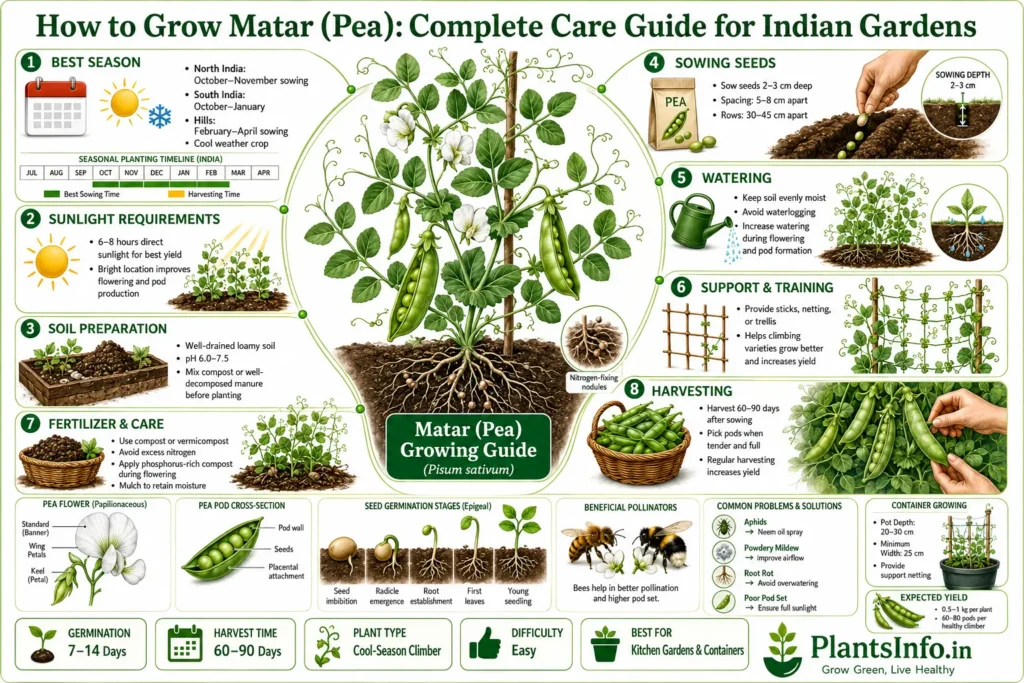
The ideal planting window across most of northern and central India is mid-October to late November, timed so the plant grows through the coolest months and finishes before spring heat arrives. This window works because it gives the crop roughly 60–80 days of consistently cool weather for flowering and pod development. A second-best option, particularly in regions with milder winters, is sowing slightly earlier in late September to catch more of the cool season. Container sowing can follow the same windows as ground planting, though containers may warm up faster in late-season heat, so slightly earlier sowing in pots can help.
Month-by-Month Calendar
| Month | Season | What to Do |
|---|---|---|
| January | Winter | Peak flowering and pod harvest underway |
| February | Winter | Harvest continues, slowing toward month-end as warmth increases |
| March | Pre-monsoon | Last harvests in most plains; vines begin declining |
| April | Pre-monsoon | Season typically over in plains; hill regions may still be harvesting |
| May | Pre-monsoon | Dormant period for plains gardeners — no sowing |
| June | Monsoon | No sowing in plains; some hill-region planning for autumn crops |
| July | Monsoon | Hill-region sowing may begin for an autumn harvest |
| August | Monsoon | Hill-region seedlings establishing |
| September | Post-monsoon | Early sowing window opens in milder-winter regions |
| October | Post-monsoon | Primary sowing window begins across plains |
| November | Post-monsoon | Main sowing continues; earliest sowings beginning to flower |
| December | Winter | Flowering well underway; first pods may appear by month-end |
What Can Go Wrong Seasonally?
An unexpectedly warm spell in late autumn can cause early-flowering plants to drop blossoms before pod set, a heat-related issue rather than a disease — check drainage and shade if this happens repeatedly. A late, lingering winter can extend the harvest pleasantly, but also raises humidity-related disease risk toward the end of the season — see the Problems Guide. One commonly mistaken issue is sudden flower drop being blamed on pests, when it is most often simply a temperature spike; the Problems Guide covers how to tell the difference.
Post-Harvest or Post-Bloom Care
Once the main harvest is finished and vines begin yellowing naturally, cut the plants at soil level rather than pulling them, leaving the nitrogen-rich roots in place for the soil — see the Growing Guide for full bed preparation details. This is also the point at which the bed can be prepared for the next warm-season crop.
A short winter window, well-timed, is really all a pea plant needs to deliver weeks of fresh pods.