Matar Plant Problems: Symptoms, Causes, and Fixes
A fine white powder dusted across the upper leaves of a pea plant, almost as though flour has been lightly sprinkled over them, is one of the most common sights in late-season pea patches across India. Fortunately, most pea plant problems are easier to prevent than cure. Proper spacing, timely sowing, careful watering, and regular inspection can prevent many issues before they become serious. Among all diseases affecting peas, powdery mildew is the most frequently encountered by home gardeners, typically appearing as temperatures begin to rise toward the end of the growing season.
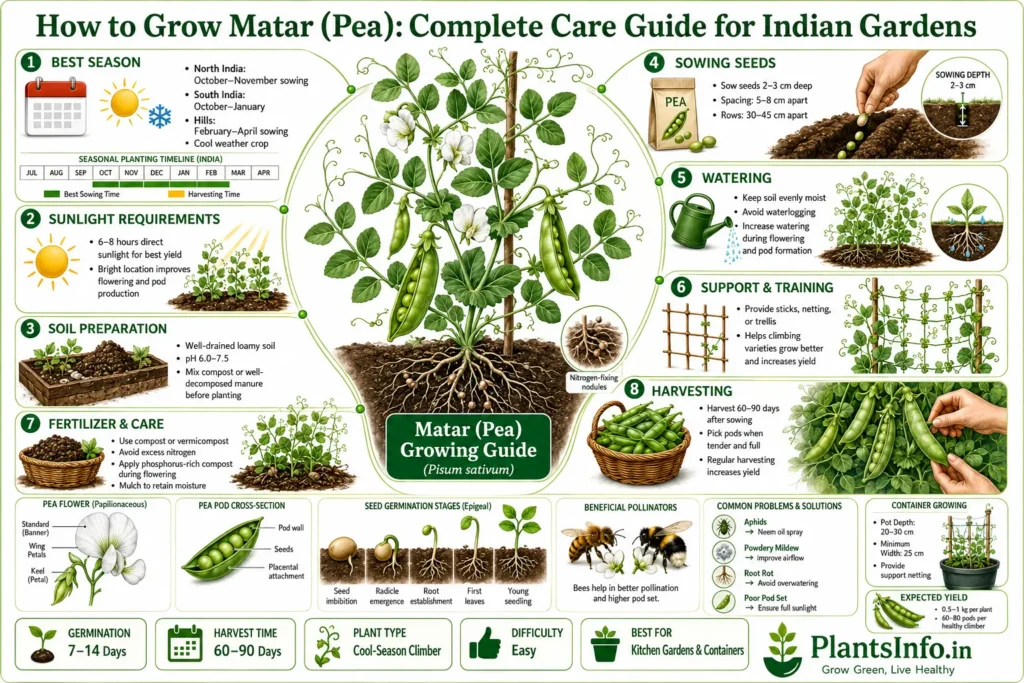
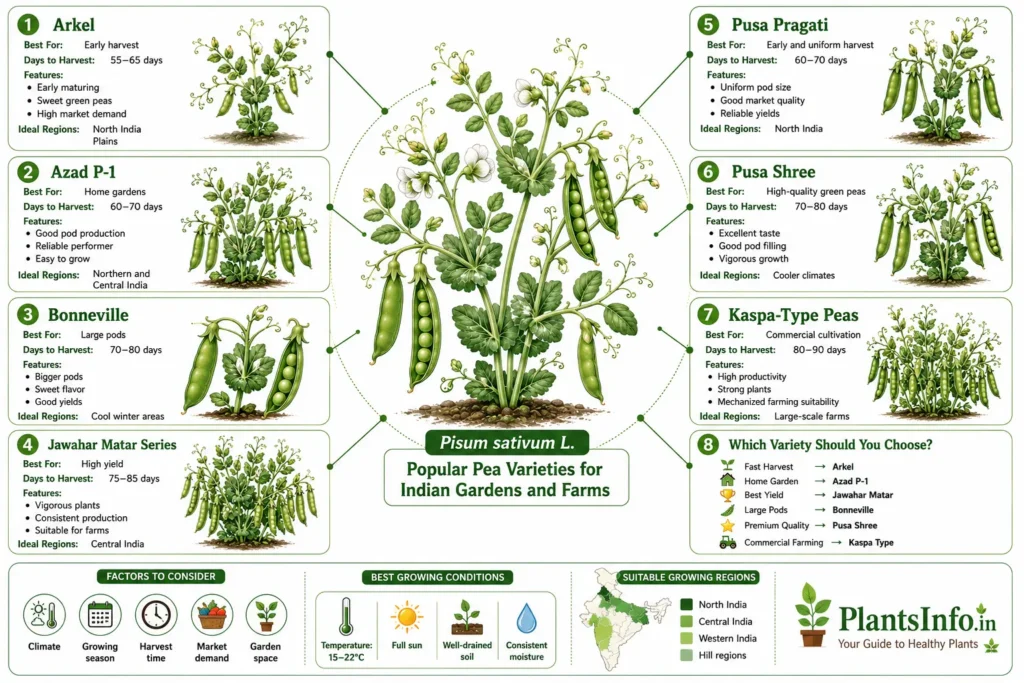
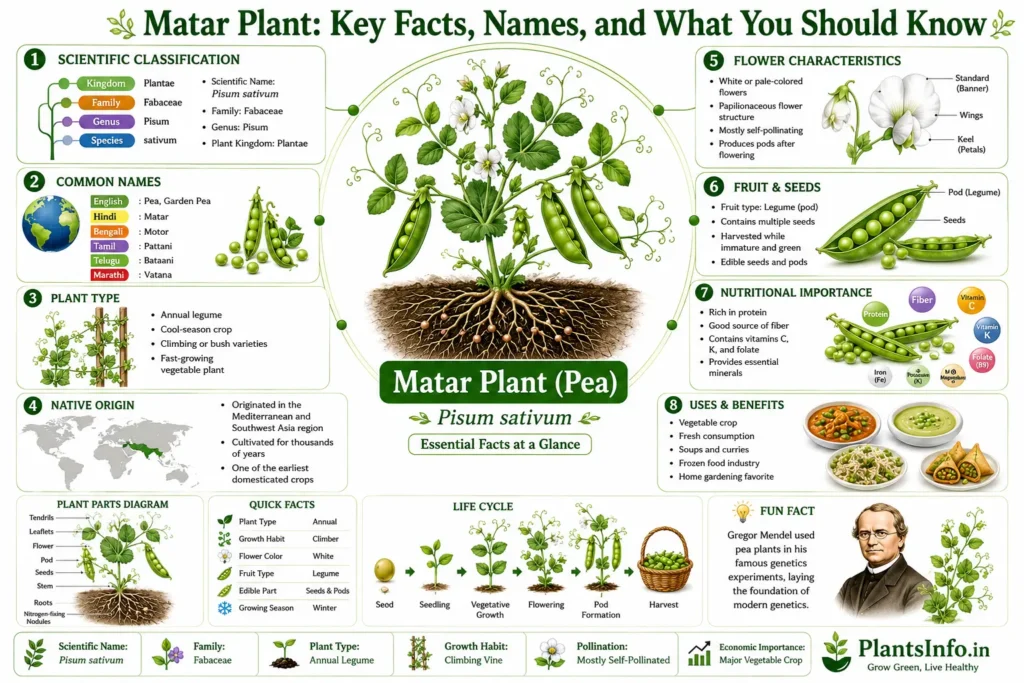
See also: Pea Plant plant profile, how to grow it, its flowering season, its benefits, and its varieties.
Quick Diagnosis
| Symptom | Most Likely Cause | First Action |
|---|---|---|
| White powdery coating on leaves | Powdery mildew | Improve airflow and reduce dense, humid foliage conditions |
| Clusters of tiny green or black insects on shoots | Aphids | Spray with a strong jet of water |
| Yellowing lower leaves, plant otherwise healthy | Natural ageing or excess nitrogen | Review fertiliser application history |
| Sudden flower drop without pods forming | Heat stress | Provide afternoon shade where practical |
| Soft, collapsing stems near soil line | Root or stem rot | Improve drainage immediately |
| Small holes in leaves with ragged edges | Caterpillars or other leaf-feeding insects | Hand-pick visible larvae |
| Reddish-brown pustules on leaves or pods | Rust disease | Remove affected foliage and improve plant spacing |
Diseases
Powdery Mildew
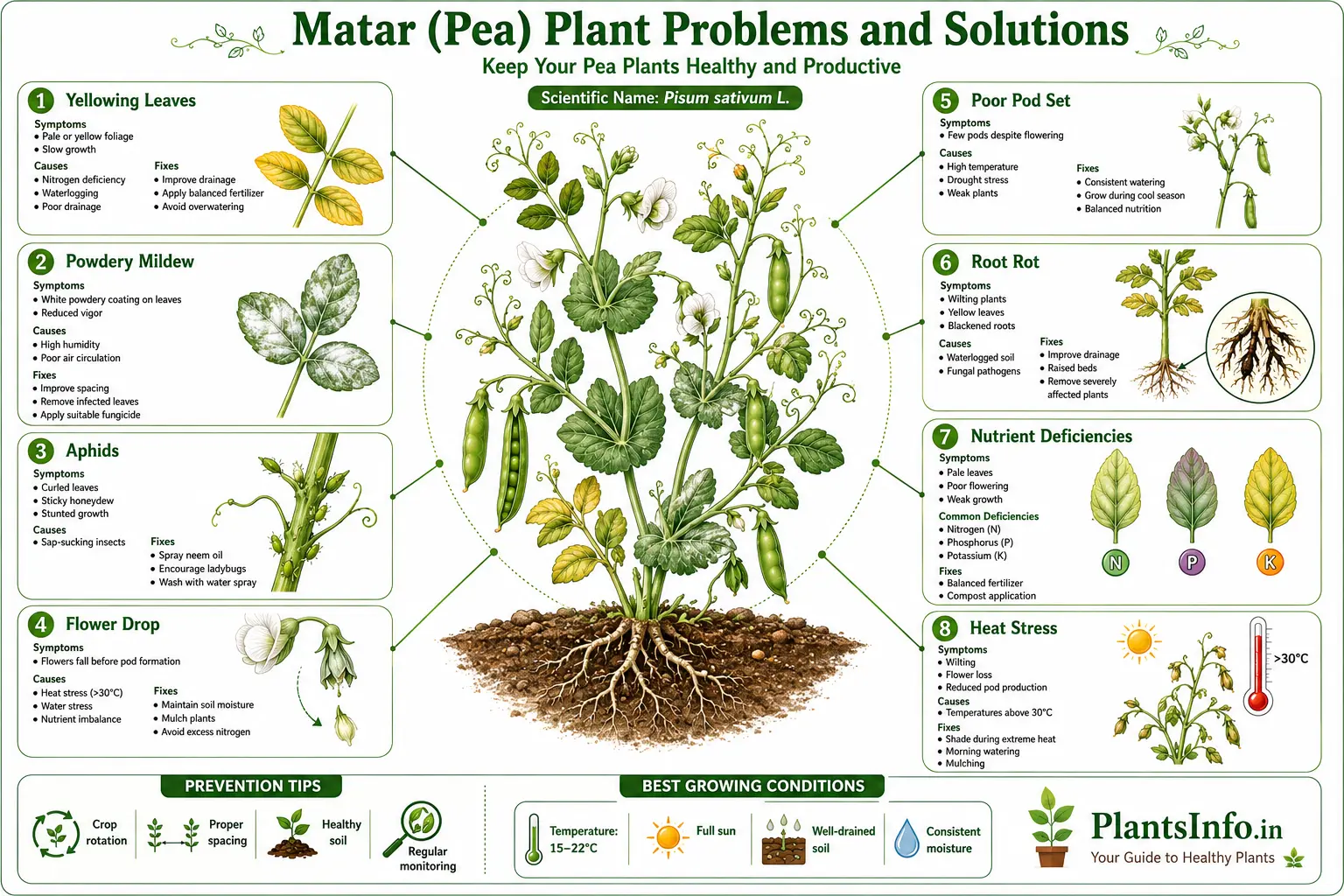
Powdery mildew appears as a white to greyish powdery coating on leaves, usually beginning on older foliage before spreading to stems and pods in advanced cases. It is caused by fungal spores that thrive in warm, humid conditions with poor air circulation, particularly as plants become dense and mature late in the season.
Recommended Products
Disclosure: As an Amazon Associate, PlantsInfo may earn from qualifying purchases.
🌱 Growing Essentials
The following products can help with container gardening, potting, root development, soil management, and healthy plant growth.
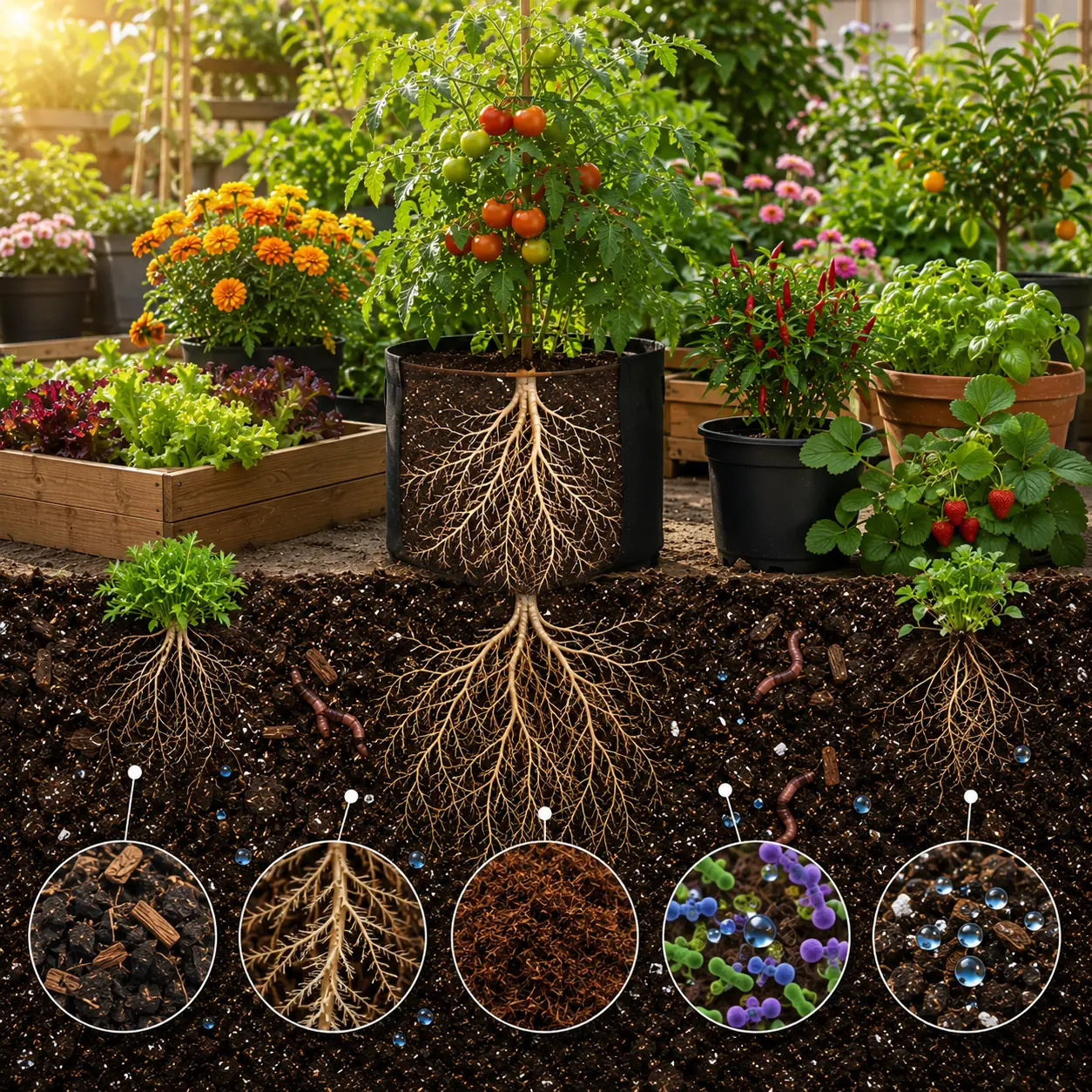
Organic Potting Soil Mix
Provides nutrients, structure, and healthy growing conditions for container plants.
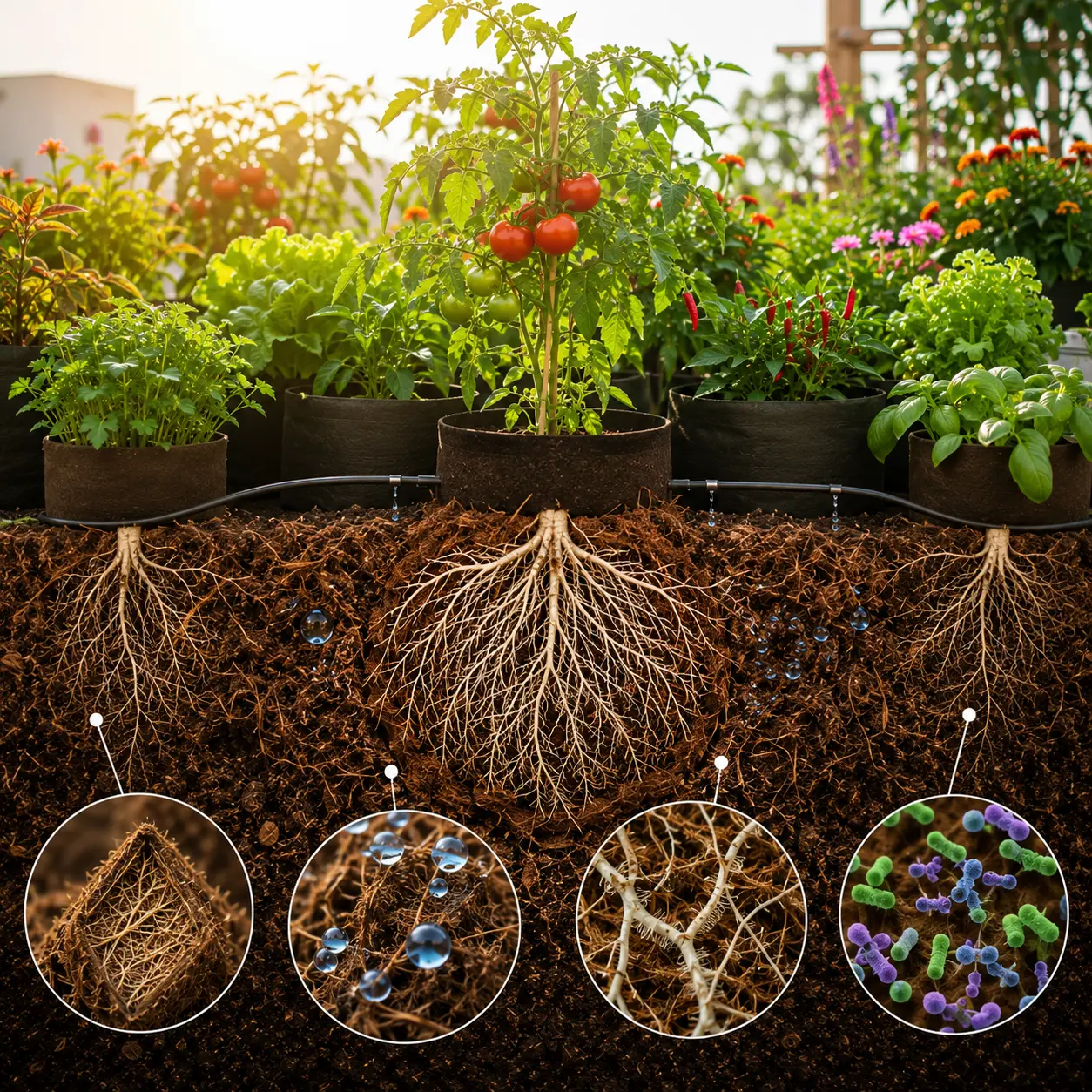
Coco Peat Growing Medium
Enhances moisture retention while maintaining excellent root-zone aeration.

Grow Bags for Plants
Improve drainage, root aeration, and vegetable production in limited spaces.

Plastic Pots for Plants
Ideal containers for seedlings, ornamentals, herbs, and balcony gardens.
While powdery mildew can be managed, it cannot usually be reversed once established. Treatment focuses on slowing further spread and protecting healthy foliage. Severely affected leaves may need to be removed to reduce disease pressure.
The most effective prevention measure is proper spacing at planting time. Allowing adequate airflow between plants helps foliage dry quickly and reduces the humid conditions that favour fungal growth. Watering at the base of plants rather than wetting the foliage and avoiding overcrowding can further reduce the likelihood of infection.
Rust
Rust appears as small, raised reddish-brown to orange pustules, most commonly on the undersides of leaves and sometimes on stems and pods. Yellow spots often develop on the upper leaf surface directly above the pustules. The disease is caused by fungal pathogens that spread more readily during periods of high humidity, prolonged leaf wetness, and damp weather conditions.
If detected early, rust can usually be managed before it causes severe damage. However, heavily infected leaves rarely recover and should be removed and disposed of to reduce the spread of spores. Good air circulation, adequate plant spacing, and prompt removal of affected foliage are important management measures. Prevention focuses on avoiding prolonged moisture on leaves by watering at the base of plants and avoiding overhead irrigation, especially late in the day when foliage may remain damp overnight.
Fusarium Wilt
Fusarium wilt is a soil-borne fungal disease that causes lower leaves to yellow, wilt, and gradually die back. Symptoms often begin on one side of the plant before spreading throughout the entire vine. As the disease progresses, plants may collapse despite the soil containing adequate moisture.
The fungus enters through the root system and colonises the plant’s water-conducting tissues, restricting water movement and causing progressive wilting. Unfortunately, there is no effective cure once a plant becomes infected. Affected plants should be removed promptly, including as much of the root system as possible, to reduce the amount of infected plant material remaining in the garden.
Prevention is the most effective strategy. Crop rotation is particularly important because the fungus can survive in the soil for several years. Avoid planting peas or other susceptible legumes in the same location in consecutive seasons, and ensure soil drainage is good to minimise stress on plant roots.
Pest Problems
Aphids
Aphids are tiny, pear-shaped insects, usually green, black, or brown, that cluster on tender new growth, stems, flower buds, and the undersides of leaves. They feed by sucking plant sap, causing leaves to curl, distort, or yellow. Heavy infestations can weaken plants, reduce flowering and pod production, and encourage the growth of black sooty mould on the sticky honeydew they produce.
Small infestations can often be controlled by spraying plants with a strong jet of water to dislodge the insects. Organic treatments such as insecticidal soap or neem oil can also help reduce populations when applied according to label directions. Encouraging natural predators such as ladybirds and lacewings can provide additional control. In severe infestations, approved insecticides labelled for edible vegetable crops may be considered as a last resort.
Pea Leaf Miner
Leaf miners are the larvae of small flies that tunnel between the upper and lower surfaces of leaves, creating distinctive winding white or pale trails. Unlike chewing insects, they feed within the leaf tissue itself, leaving visible tunnels rather than holes.
Damage is often cosmetic on established plants, but heavy infestations on young seedlings can reduce growth and vigour. The most effective management strategy is to remove and dispose of affected leaves as soon as symptoms appear, helping to break the insect’s lifecycle. Good garden hygiene and regular monitoring can prevent populations from building up. In severe infestations, approved insecticides specifically labelled for leaf miner control may be used according to label directions where permitted.
Pod Borer
Pod borer caterpillars attack developing pea pods by chewing small entry holes through the pod wall. Affected pods often show a neat circular hole accompanied by frass (caterpillar droppings) near the opening. Once inside, the larvae feed on developing seeds, reducing yield and quality.
Early infestations can often be managed by hand-picking visible caterpillars and removing damaged pods. Regular inspection during flowering and pod development helps detect problems before significant damage occurs. Where infestations are severe, approved insecticides labelled for vegetable crops may be used according to manufacturer instructions and local regulations.
Pod borer damage is sometimes mistaken for a disease because secondary fungal or bacterial rot may develop around feeding wounds. However, the primary cause of the damage is the caterpillar rather than a plant pathogen.
Root Rot / Stem Rot
Root and stem rot typically occur when peas are grown in poorly drained or consistently waterlogged soil. Affected plants may show yellowing leaves, stunted growth, wilting despite moist soil, and soft or collapsing stems near the soil surface. Several soil-borne fungi and fungus-like organisms can cause these problems, particularly during cool, wet conditions.
Once significant root or stem rot develops, recovery is often difficult. Improving drainage, reducing watering frequency, and removing severely affected plants can help limit further losses. Prevention is the most effective strategy and includes using well-drained soil, avoiding overwatering, and ensuring containers or garden beds drain freely.
Important: This information is provided for general gardening guidance only. Always read and follow pesticide and fungicide label instructions before use. Follow local agriculture department recommendations and regulations for food crops. Keep children, pets, and pollinators away from treated areas until it is safe to re-enter according to the product label.
Environmental and Care Mistakes
Overcrowded Planting
Sowing pea seeds too close together creates dense foliage with poor air circulation. This traps humidity around the leaves and creates ideal conditions for diseases such as powdery mildew and rust. Overcrowded plants also compete for light, water, and nutrients, resulting in weaker growth and reduced yields.
The best solution is to follow the recommended spacing guidelines at sowing time. Adequate spacing allows air to move freely through the crop, helping foliage stay drier and healthier throughout the growing season. Refer to the Growing Guide for detailed spacing recommendations.
Late Sowing Into Warm Weather
Peas are a cool-season crop and perform best when flowering and pod development occur during mild temperatures. Sowing too late can cause plants to reach their flowering stage just as temperatures begin to rise, resulting in poor pollination, flower drop, reduced pod set, and a shorter harvest period.
Following the recommended sowing window for your region is the most effective way to avoid heat-related stress. Refer to the Seasonal Guide for region-specific planting times.
Overwatering in Cool Conditions
One of the most common mistakes with peas is watering them as frequently as warm-season vegetables. During cooler weather, soil loses moisture more slowly, and excessive watering can leave the root zone constantly wet. Waterlogged soil reduces oxygen availability to roots and increases the risk of root rot, stem rot, and other soil-borne diseases.
Allow the soil surface to dry slightly between waterings and adjust irrigation according to weather conditions rather than following a fixed schedule. Detailed watering recommendations can be found in the Growing Guide.
Delaying Support Until Vines Collapse
Many gardeners wait until pea vines begin leaning or sprawling before installing support. By this stage, stems may already be tangled, bent, or damaged, making it difficult to train plants properly.
Install stakes, netting, or a trellis at planting time or shortly after seedlings emerge. Early support encourages upright growth, improves airflow, makes harvesting easier, and reduces disease pressure by keeping foliage off the ground.
Prevention Protocol
Most pea plant problems can be avoided through a few simple preventative practices. Space plants correctly at sowing time to maintain good airflow as the foliage develops. Water at the base of plants rather than wetting the leaves, preferably during the morning, so excess moisture can evaporate during the day. Rotate planting locations each season and avoid growing peas or other legumes in the same bed repeatedly.
Provide support structures early in the growing season and inspect plants weekly for signs of pests or disease. Paying attention to young shoots and leaf undersides can help identify aphids and other problems before they become difficult to manage. Consistent monitoring and good cultural practices are often more effective than treating problems after they become established.
When to Give Up on a Plant
A pea plant showing widespread wilting, progressive yellowing, and collapse despite adequate soil moisture may be suffering from Fusarium wilt or another serious vascular disease. Once these diseases become established within the plant, recovery is unlikely.
Remove the affected plant promptly, including as much of the root system as possible, to reduce the amount of infected plant material remaining in the garden. Avoid composting severely diseased plants unless your composting system consistently reaches temperatures high enough to destroy plant pathogens.
If Fusarium wilt is suspected, avoid planting peas or closely related legumes in the same area for several years. Instead, rotate to unrelated crop families and focus on improving overall soil health and drainage to reduce future disease pressure.
Frequently Asked Questions
Is it safe to eat pods from a plant with powdery mildew?
In most cases, yes. Powdery mildew primarily affects the surface of leaves, stems, and occasionally pods rather than the edible seeds inside the pod. Healthy-looking pods can generally be harvested and eaten after being washed thoroughly. However, heavily diseased plants may produce lower-quality pods, and any pods showing signs of rot or significant damage should be discarded.
My pea flowers are dropping without forming pods. Is this caused by a pest?
Not usually. Flower drop without visible pest activity is most commonly caused by heat stress. Peas are cool-season plants and can struggle when temperatures rise during flowering. Sudden warm weather, irregular watering, or drought stress can all contribute to flowers dropping before pods develop.
Can I use the same neem spray for both aphids and fungal diseases?
Neem-based products can help suppress certain insect pests, including aphids, when used correctly. However, they are generally not considered a reliable treatment for fungal diseases such as powdery mildew or rust. Fungal problems are better managed through good airflow, proper watering practices, sanitation, and, where necessary, fungicides specifically labelled for fungal disease control.
Why are my pea leaves turning yellow?
Yellowing leaves can have several causes, including natural ageing, overwatering, nutrient imbalances, root diseases, or environmental stress. If yellowing is limited to older lower leaves while the rest of the plant remains healthy, it is often part of the normal ageing process. Widespread yellowing, especially when accompanied by wilting or poor growth, may indicate a more serious issue that requires investigation.
What causes holes in pea leaves?
Small holes or ragged leaf damage are usually caused by caterpillars, beetles, slugs, snails, or other leaf-feeding pests. Inspect plants carefully, particularly in the early morning or evening, to identify the culprit. Minor damage rarely affects overall yield, but severe infestations should be managed promptly.
Can peas recover from powdery mildew?
Plants can often continue producing pods after powdery mildew appears, particularly if the disease develops late in the season. However, affected leaves will not return to normal. Management focuses on slowing further spread and maintaining plant health rather than curing existing infections.
Conclusion
Most matar (pea) plant problems can be traced back to a handful of common causes, including poor airflow, unsuitable watering practices, heat stress, and delayed pest management. The earlier symptoms are identified, the easier they are to address before they affect flowering, pod production, or overall plant health.
Regular inspection, proper spacing, timely sowing, and good garden hygiene remain the most effective tools for preventing both pests and diseases. By understanding the warning signs of common issues such as powdery mildew, rust, aphids, and fusarium wilt, gardeners can take action quickly and enjoy a healthier, more productive pea harvest throughout the growing season.