Introduction
Cucumis sativus L., commonly known as cucumber, is a frost-tender annual vine in the family Cucurbitaceae, indigenous to the Indian subcontinent and cultivated for thousands of years across tropical, subtropical, and temperate regions of the world. The species produces elongated, fleshy fruit that are harvested at the immature stage for slicing or pickling, and at later stages for seed extraction. Cucumber is among the four most widely cultivated vegetable crops globally, occupying significant area in field cultivation, greenhouse production, and home gardens across Asia, Europe, the Americas, and Africa. Its fast growth cycle, high water content, and adaptability to warm-season climates have made it a staple of warm-season vegetable production systems. Wild and semi-wild populations persist in parts of South Asia, and the species has a complex ethnobotanical history spanning culinary, traditional, and agricultural contexts across multiple continents.
Classification
- Plant Type
- Vine
- Lifecycle
- Annual
- Leaf Habit
- Deciduous
- Native Region
- Asia
- Plant Family
- Cucurbitaceae
Taxonomic Synonyms
| Field | Information |
|---|---|
| Accepted Scientific Name | Cucumis sativus L. |
| Known Synonyms | Cucumis sativus var. hardwickii (Royle) Alef.; Cucumis sativus var. sativus; Cucumis anguria sensu auct. (misapplied) |
| Taxonomic Authority Source | Kew Plants of the World Online (POWO) |
Quick Plant Information
| Field | Information |
|---|---|
| Common Name(s) | Cucumber, Garden Cucumber, Slicing Cucumber, Pickling Cucumber |
| Scientific Name | Cucumis sativus L. |
| Family | Cucurbitaceae |
| Plant Type | Annual herbaceous vine |
| Lifespan | Trailing or climbing vine with branching tendrils; stems can reach 1–3 m in length. |
| Growth Habit & Form | Warm temperate to tropical; thrives in well-drained, fertile soils under full sun. |
| Native Range | Indian subcontinent; cultivated globally in warm-season agriculture |
| Climate Adaptation & Habitat Type | Pepo (a specialised berry with a hard rind derived from an inferior ovary) |
| Leaf Type | Simple, palmately lobed, alternate |
| Flower Color(s) | Yellow |
| Fruit Type | Pepo (a specialised berry with a hard rind derived from inferior ovary) |
| Evergreen or Deciduous | Deciduous (annual) |
Botanical Description
Stem
The stem of Cucumis sativus is herbaceous, angular, and bristly-hairy (hispid), typically four- to five-angled in cross-section. It is weak and climbing or trailing, producing simple, unbranched tendrils at each node that coil around support structures. Stems range from 1 to 3 m in length under field conditions and branch from the main axis to produce lateral shoots bearing flowers and fruit. The stem surface is covered with stiff, short trichomes that are persistent throughout the growing season.
Leaves
Leaves are large, simple, alternate, and palmately three- to five-lobed with a cordate (heart-shaped) base. The blade surface is rough to the touch due to stiff trichomes on both surfaces, with the adaxial surface appearing darker green than the abaxial surface. Blades typically range from 7 to 20 cm in both length and width. Margins are irregularly toothed. Petioles are long, 5–15 cm, and also hispid. Stipules are absent.
Flowers
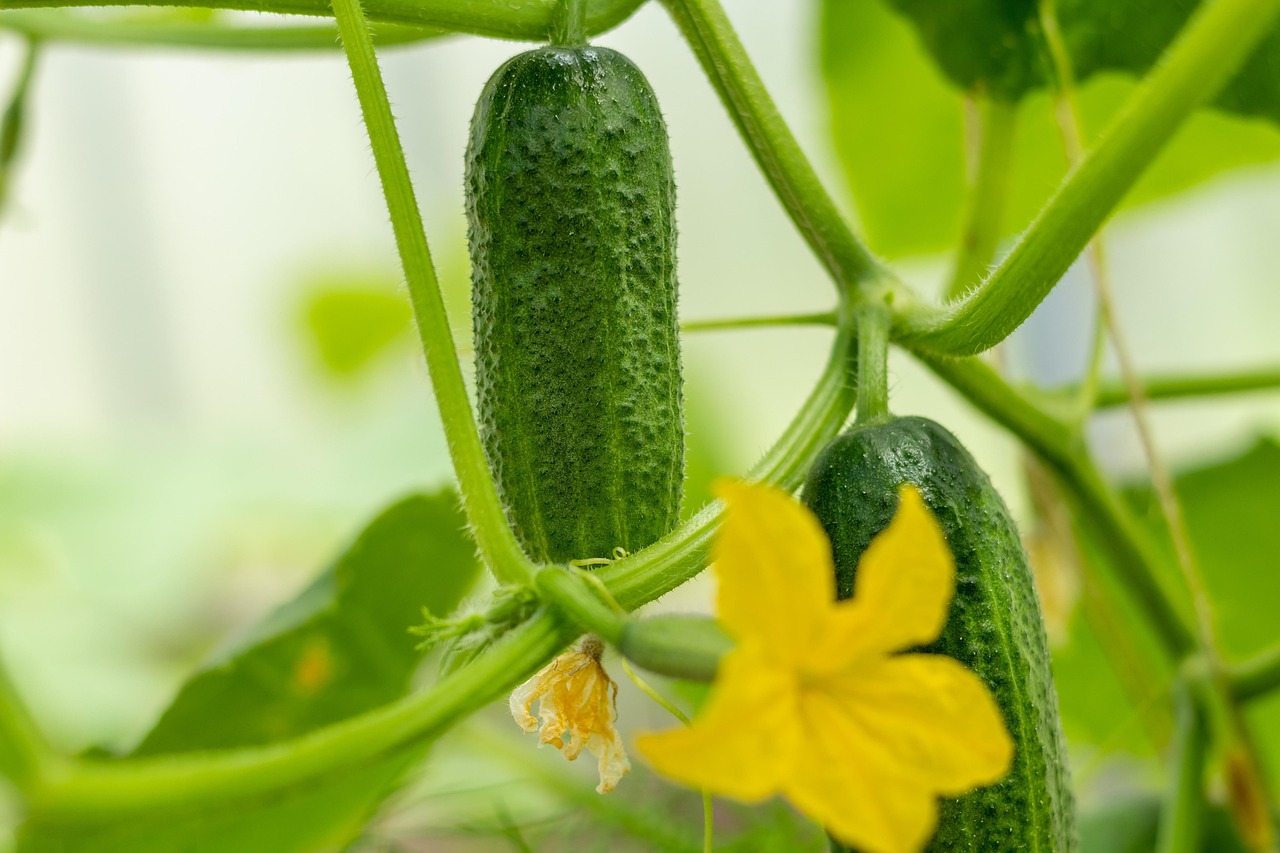
Cucumis sativus produces unisexual flowers on the same plant (monoecious), though gynoecious and hermaphroditic cultivars have been developed for commercial production. Staminate (male) flowers typically appear before pistillate (female) flowers on the main stem. Both flower types are actinomorphic, five-petalled, and bright yellow, opening in the morning. The calyx is five-lobed, and the corolla is fused at the base into a short tube with five spreading lobes. Pistillate flowers possess an elongate inferior ovary bearing dense trichomes, which develop into the fruit. Flowers are approximately 2–3 cm in diameter.
Fruit
The fruit of Cucumis sativus is botanically a pepo — a type of modified berry derived from an inferior ovary with a hardened outer rind. At commercial harvest, immature fruit are typically 10–35 cm long, cylindrical to slightly tapered, smooth or warty depending on cultivar, and green to dark green externally with white to pale green flesh. At full maturity, the fruit turns yellow to orange, and the seeds complete their development. The flesh is crisp and high in water content at the immature harvest stage. Numerous oval, compressed seeds are embedded in the central seed cavity (locule).
Roots
Cucumis sativus develops a moderately deep taproot system with extensive lateral roots concentrated in the upper 30–45 cm of soil. The root system is fibrous and relatively shallow compared to other Cucurbitaceae, making the crop sensitive to waterlogging and soil compaction. Roots do not produce stolons or rhizomes.
Growth Architecture & Life Strategy
Cucumis sativus is classified as a Therophyte in the Raunkiær classification — an annual plant that survives unfavourable seasonal conditions entirely as dormant seed, with no perennating vegetative structures persisting above or below ground between growing seasons. The plant completes its entire life cycle from germination through seed maturation within a single warm growing season, typically 60–90 days from direct sowing.
The vine grows rapidly under warm conditions, extending via indeterminate sympodial branching that produces lateral shoots at each node. Growth form is climbing when support is provided and prostrate or trailing when unsupported. The species allocates resources rapidly toward reproductive organs; pistillate flower development and fruit set begin while vegetative extension continues. This r-selected annual life history, combined with high fruit and seed output per plant, enables rapid colonisation of disturbed, fertile ground and makes the species highly amenable to intensive agricultural management.
Common Types / Varieties
Cucumis sativus has been developed into a large number of horticultural groups differing in fruit morphology, sex expression, disease resistance, and end use. The principal groups include:
Slicing cucumbers (C. sativus ‘Straight Eight’, ‘Marketmore’, ‘Burpless Bush’) are grown for fresh consumption. Fruits are typically 20–35 cm long, smooth-skinned, dark green, with a mild flavour and thin rind.
Pickling cucumbers (C. sativus ‘National Pickling’, ‘Calypso’, ‘Boston Pickling’) produce shorter fruit, 5–12 cm, with thin skin, pale colour, and small seed cavities, suited to brine or vinegar preservation. The skin texture is often warty or bumpy.
English or European greenhouse cucumbers (‘Telegraph’, ‘Carmen’) are parthenocarpic (setting fruit without pollination), producing long, smooth, thin-skinned fruit up to 40 cm in length, cultivated under protected conditions to exclude bee pollination.
Persian cucumbers are compact, thin-skinned, nearly seedless, and harvested at 10–15 cm; they are consumed fresh without peeling.
Asian or Japanese cucumbers (‘Suyo Long’, ‘Tasty Jade’) are elongated and ribbed, commonly grown across East and Southeast Asia, with a mild, sweet flavour.
Lemon cucumber (C. sativus var. lemon) produces round, pale yellow fruit approximately the size of a lemon, with thin skin and mild flavour, grown primarily in home gardens.
Native Range & Distribution
Cucumis sativus L. is considered native to the Indian subcontinent, with the greatest diversity of wild and semi-wild populations documented in northeastern India, particularly in the foothills of the Himalayas, as well as in Nepal and adjacent Bangladesh. The wild progenitor, sometimes treated as Cucumis sativus var. hardwickii, occurs in disturbed forest margins and riparian habitats in these regions. Archaeological and archaeobotanical evidence places cucumber cultivation in India at least 3,000 years before the present, with subsequent spread to the Middle East, Mediterranean, and East Asia in antiquity.
Today, Cucumis sativus is cultivated in virtually every country with a warm growing season and is not restricted to any single climatic zone. It is grown as a major commercial crop across China, India, Iran, Turkey, Russia, the United States, Mexico, the Netherlands, and Spain, among many others.
| Country / Territory | Range Status | Notes |
|---|---|---|
| India | Native; widely cultivated | Centre of origin; var. hardwickii documented in Himalayan foothills |
| Nepal | Native; cultivated | Wild populations in lowland and mid-elevation zones |
| Bangladesh | Native; cultivated | Naturalised in disturbed habitats |
| China | Cultivated; major producer | Leading global producer by volume |
| Iran | Cultivated | Historically important in Persian horticulture |
| Turkey | Cultivated | Significant regional producer |
| United States | Cultivated | Major greenhouse and field production |
| Netherlands | Cultivated | Dominant European greenhouse producer |
| Russia | Cultivated | Extensive greenhouse production |
| Mexico | Cultivated | Export-oriented field production |
| Egypt | Cultivated | Important North African production zone |
| Spain | Cultivated | Significant Mediterranean field and greenhouse production |
Distribution records derived from GBIF occurrence datasets and regional botanical surveys. Distribution maps for this species can be generated from GBIF occurrence data at gbif.org.
Habitat & Ecology
In its native and semi-wild range on the Indian subcontinent, Cucumis sativus and its wild progenitor C. sativus var. hardwickii occur in disturbed forest margins, roadsides, stream banks, and secondary vegetation in the foothills and lowland zones of the eastern Himalayan region. The species is adapted to warm, humid conditions with seasonal rainfall, fertile alluvial soils, and high light availability. It does not persist in intact mature forest understories and is associated with light-gap vegetation and anthropogenically disturbed land.
In cultivation, cucumber is grown across a wide variety of managed environments, including open fields, polytunnel structures, glasshouses, and home gardens. It is adapted to freely draining, well-aerated soils and performs best in full sun with adequate soil moisture. The species is absent from waterlogged, saline, or highly acidic soils. In greenhouse production, it is grown in controlled humidity and temperature environments without seasonal dependence.
Ecological Role
In its native South Asian habitat, Cucumis sativus and its wild relatives occupy early successional niches in disturbed riparian and forest-margin vegetation, contributing to ground cover and soil stabilisation during the post-disturbance recovery phase. The large, nectar- and pollen-rich yellow flowers attract a range of visiting insects, particularly bees (Apidae), including Apis cerana and Apis mellifera, as well as solitary bees and flies (Syrphidae), supporting pollinator activity within cultivation zones and adjacent habitats. Fruit produced by wild and semi-wild plants is consumed and dispersed by vertebrates, including birds and mammals, contributing to seed dispersal in the native range. In agricultural landscapes, the crop supports insect pollinator communities through abundant floral resource provision during the warm growing season.
Recommended Products
Disclosure: As an Amazon Associate, PlantsInfo may earn from qualifying purchases.
🌱 Plant Care Essentials
The following tools can help with pruning, plant health, soil management, and fruit garden maintenance.

Neem Oil for Plant Care
Natural plant protection against aphids, whiteflies, mites, and other common garden pests.

Fungicide for Root Care
Helps suppress soil-borne fungal diseases and supports healthier root systems.

Spray Bottle for Plants
Ideal for applying foliar sprays, neem oil solutions, and liquid plant treatments.

Rubber Hand Gloves
Protects hands during pruning, planting, soil preparation, and garden maintenance.
Functional Traits
| Trait | Value |
|---|---|
| Growth Form | Annual herbaceous climbing vine (Therophyte) |
| Leaf Type | Simple, palmately lobed, alternate; hispid surfaces |
| Photosynthetic Pathway | C3 |
| Seed Type | Orthodox |
| Rooting Depth | Shallow to moderate; primary roots concentrated in upper 30–45 cm |
| Wood Density | Not applicable (herbaceous species) |
Phenological Calendar
| Phenological Event | Northern Hemisphere | Southern Hemisphere & Regional Qualifiers |
|---|---|---|
| Leaf Flush | April–May (after direct sowing or transplanting) | October–November; year-round in tropical cultivation |
| Primary Flowering Onset | 5–6 weeks post-sowing; June–July | December–January in temperate southern zones |
| Peak Flowering | July–August | January–February |
| Secondary Flowering | At full fruit maturity, August–October | Continuous in tropical cultivation |
| Fruit Development | 50–65 days from sowing; July–August | January–February |
| Fruit Maturity (commercial) | 55–70 days from sowing; July–September | February–March; year-round in tropics |
| Seed Dispersal | At full fruit maturity; August–October | March–May; delayed by harvesting in cultivation |
| Dormancy or Rest Period | Seed dormancy from autumn through winter until spring warming | Seed dormancy through cool winter months in temperate zones |
Flowering onset in Cucumis sativus is strongly temperature-driven, with soil temperatures consistently above 18 °C (64 °F) required for germination and establishment; warm night temperatures above 15 °C (59 °F) accelerate both vegetative growth and flower initiation, while photoperiod plays a secondary role in most cultivated accessions.
Reproductive Biology
Cucumis sativus reproduces primarily by seed in cultivation and in the wild. The plant is monoecious under standard conditions — staminate (male) and pistillate (female) flowers are produced separately on the same individual. Staminate flowers typically appear first on the main stem, followed by pistillate flowers at higher nodes and on lateral branches. This temporal and spatial separation of male and female flowers promotes cross-pollination by visiting insects, though self-pollination within the same plant is possible. Commercial gynoecious lines produce predominantly pistillate flowers and are used in hybrid seed production systems paired with monoecious polliniser rows. Parthenocarpic cultivars set fruit without fertilisation and are grown in enclosed greenhouse environments where bee access is excluded.
Pollination Ecology
| Field | Information |
|---|---|
| Pollination Mechanism | Insect |
| Primary Pollinator Groups | Bees (Apidae) — Apis mellifera, Apis cerana, and solitary bees (Bombus spp., Halictidae); flies (Syrphidae) as secondary visitors |
| Pollination Syndrome | Entomophily |
| Floral Reward | Nectar and pollen |
Seed Biology & Germination Ecology
| Field | Information |
|---|---|
| Seed Type | Orthodox |
| Seed Viability Period | 5–10 years under cool, dry storage conditions; viability declines rapidly under humid or warm conditions |
| Dormancy Type | None documented |
| Dormancy Breaking Mechanism | None documented; seeds germinate readily without pretreatment |
| Germination Temperature Range | 15–35 °C (59–95 °F); optimum 25–30 °C (77–86 °F) |
| Light Requirement for Germination | Not required; germinates in darkness |
| Seed Bank Classification | Transient |
| Dispersal Unit | Seed (extracted from pepo at maturity); fruit dispersed by vertebrate frugivores in the wild |
Seeds of Cucumis sativus are orthodox and well-suited to ex-situ conservation in cold, dry storage. In agricultural contexts, seeds are sown directly into warm soil or into transplant modules under protection, with germination typically occurring within 3–7 days at optimal temperature.
Vegetative Regeneration & Clonal Biology
| Field | Information |
|---|---|
| Vegetative Regeneration Capacity | Low |
| Primary Regeneration Mechanism | Shoot cuttings can root under controlled misting conditions in propagation research; not used in commercial practice. |
| Tissue Types Capable of Regeneration | Not documented in the available literature |
| Apomixis Status | Absent |
| Bulbil or Propagule Production | Absent |
| Layering Capacity | Not documented in available literature |
| Root Sprouting from Fragments | Absent |
| Clonal Spread Rate | Negligible |
| Coppicing Response | Not documented; herbaceous growth habit |
| Ecological or Invasive Significance of Clonal Biology | Negligible; Cucumis sativus is an annual with no documented invasive clonal spread |
Cucumis sativus is reproduced almost exclusively by seed in both commercial and subsistence contexts. Vegetative propagation via stem cuttings has been demonstrated in laboratory settings but is not employed in field production due to the annual life cycle and ready availability of seed.
Soil Ecology & Rhizosphere Interactions
| Field | Information |
|---|---|
| Mycorrhizal Association Type | AM (arbuscular mycorrhizal) |
| Documented Fungal Partners | Rhizophagus irregularis (formerly Glomus intraradices); Funneliformis mosseae (formerly Glomus mosseae) |
| Nitrogen Fixation | Absent |
| Allelopathic Properties | Cucurbitacin-related compounds, phenolic acids, and carbohydrate-based exudates were reported in rhizosphere fractions |
| Documented Allelopathic Targets | Echinochloa crus-galli, Portulaca oleracea, and other annual weeds in adjacent soil under laboratory assay conditions |
| Rhizosphere pH Modification | Moderate acidification documented under high root density; mechanism not fully characterised |
| Root Exudate Compounds | AM fungal colonisation increases phosphorus uptake efficiency; root exudates influence bacterial community composition in the rhizosphere. |
| Soil Microbiome Influence | AM fungal colonisation increases phosphorus uptake efficiency; root exudates influence bacterial community composition in the rhizosphere |
Biochemical Profile
| Compound Class | Compounds Documented | Primary Location in Plant | Ecological Function |
|---|---|---|---|
| Cucurbitacins (tetracyclic triterpenoids) | Cucurbitacin B, C, D, E, I | Fruit, leaves, stems, roots | Herbivore deterrence |
| Flavonoids | Quercetin, luteolin, kaempferol, apigenin | Leaves, flowers, fruit peel | UV photoprotection; pollinator attraction |
| Carotenoids | Beta-carotene, lutein, zeaxanthin | Fruit flesh and peel, leaves | Photoprotection of photosynthetic apparatus; pollinator attraction |
| Sterols | Beta-sitosterol, stigmasterol | Seeds, leaves | Membrane structural component |
| Phenolic acids | Caffeic acid, p-coumaric acid, ferulic acid | Leaves, fruit peel | Defensive secondary metabolites |
| Lignans | Secoisolariciresinol, lariciresinol | Seeds | Not documented in available literature |
| Saponins | Oleanolic acid glycosides | Leaves, roots | Herbivore deterrence |
| Volatile terpenoids | Nonanal, (E)-2-nonenal, decanal | Fruit flesh | Pollinator attraction; not fully characterised for other functions |
Research Coverage
| Field | Information |
|---|---|
| Research Coverage Level | High |
| Primary Research Fields | Late 19th century; taxonomic and horticultural studies were documented from the 1880s onward |
| Earliest Published Study | China, India, the United States, the Netherlands, Turkey |
| Most Active Research Regions | China, India, the United States, the Netherlands, and Turkey |
| Key Knowledge Gaps | Wild population genetics of var. hardwickii; comprehensive volatile compound ecological role documentation; detailed cucurbitacin biosynthesis regulation under field conditions |
Phytochemical Organ Distribution
| Plant Organ | Compound Class | Compounds Documented | Source |
|---|---|---|---|
| Fruit (peel) | Cucurbitacins | Cucurbitacin B, C, E | Harborne, J.B. & Baxter, H., 1993 |
| Fruit (peel) | Flavonoids | Quercetin, luteolin | Harborne, J.B. & Baxter, H., 1993 |
| Fruit (peel) | Carotenoids | Lutein, beta-carotene | Harborne, J.B. & Baxter, H., 1993 |
| Fruit (flesh) | Volatile terpenoids | Nonanal, (E)-2-nonenal | Harborne, J.B. & Baxter, H., 1993 |
| Leaves | Cucurbitacins | Cucurbitacin B, D, E | Harborne, J.B. & Baxter, H., 1993 |
| Leaves | Phenolic acids | Caffeic acid, ferulic acid | Harborne, J.B. & Baxter, H., 1993 |
| Leaves | Flavonoids | Quercetin, Kaempfärol, Apigenin | Harborne, J.B. & Baxter, H., 1993 |
| Roots | Cucurbitacins | Cucurbitacin B, I | Harborne, J.B. & Baxter, H., 1993 |
| Roots | Saponins | Oleanolic acid glycosides | Harborne, J.B. & Baxter, H., 1993 |
| Seeds | Sterols | Beta-sitosterol, stigmasterol | Harborne, J.B. & Baxter, H., 1993 |
| Seeds | Lignans | Secoisolariciresinol, lariciresinol | Harborne, J.B. & Baxter, H., 1993 |
| Flowers | Flavonoids | Luteolin, quercetin | Harborne, J.B. & Baxter, H., 1993 |
The fruit peel is the best-documented organ for phytochemical diversity in Cucumis sativus, with cucurbitacins, flavonoids, and carotenoids all characterised from this tissue.
Nutritional Composition
| Nutrient | Value per 100g Edible Portion | Source |
|---|---|---|
| Energy | 15 kcal (63 kJ) | USDA FoodData Central |
| Water | 95.2 g | USDA FoodData Central |
| Protein | 0.65 g | USDA FoodData Central |
| Total Fat | 0.11 g | USDA FoodData Central |
| Carbohydrates | 3.63 g | USDA FoodData Central |
| Dietary Fibre | 0.5 g | USDA FoodData Central |
| Total Sugars | 1.67 g | USDA FoodData Central |
| Vitamin K | 16.4 µg | USDA FoodData Central |
| Potassium | 147 mg | USDA FoodData Central |
| Vitamin C | 2.8 mg | USDA FoodData Central |
Values represent a fresh, raw cucumber with peel at the commercial harvest stage (immature fruit).
Climate Adaptation & Stress Tolerance
Cucumis sativus is a warm-season annual with a narrow functional temperature range. Optimal growth and fruit production occur between 20 and 32 °C (68 and 90 °F) during the day, with night temperatures above 15 °C (59 °F). Germination fails below 12 °C (54 °F) and plant growth ceases below 10 °C (50 °F). The species has no frost tolerance; even brief exposure to temperatures at or below 0 °C (32 °F) causes lethal cell damage. Upper thermal limits for sustained production are approximately 38–40 °C (100–104 °F); prolonged temperatures above this threshold cause flower abortion and reduced fruit set.
The crop requires high humidity for optimal growth, but is susceptible to foliar fungal diseases under stagnant humid conditions with poor air circulation. Moderate drought stress reduces fruit size and increases cucurbitacin concentration in the fruit flesh. The species is sensitive to waterlogging; soil saturation for more than 24–48 hours can cause root hypoxia and secondary pathogen invasion. Cucumis sativus has moderate salt tolerance, with growth reductions documented at electrical conductivity values above 2.5 dS/m.
Climate Vulnerability & Range Dynamics
| Field | Information |
|---|---|
| IUCN Climate Vulnerability Assessment | Not Evaluated |
| Primary Climate Sensitivity Factors | High temperature intolerance above 38 °C (100 °F); sensitivity to frost and cold nights below 10 °C (50 °F); dependence on consistent soil moisture |
| Projected Range Shift Direction | Not documented in the available literature |
| Projected Range Shift Magnitude | Increasing heat extremes, reducing fruit set, altered seasonal rainfall patterns affecting rain-fed cultivation, and heightened disease pressure under humid warming scenarios. |
| Key Threatening Processes | No study identified for wild populations; agricultural impact modelling exists for specific production regions, but not synthesised into a formal range model |
| Resilience Factors | Orthodox seed storage enabling ex-situ conservation; large active breeding programmes; adaptation to protected cultivation environments (greenhouses, polytunnels) |
| Published Modelling Studies | No study identified for wild populations; agricultural impact modelling exists for specific production regions but not synthesised into a formal range model |
| Confidence Level | Low |
Cytogenetics
| Field | Information |
|---|---|
| Chromosome Number (2n) | 2n = 14 |
| Ploidy Level | Diploid |
| Genome Size (1C value) | Approximately 0.37 pg (367 Mb) |
| Karyotype Notes | Seven pairs of chromosomes; karyotype includes one pair of chromosomes with satellite regions associated with nucleolar organiser regions; relatively small genome enabling rapid sequencing and genomic studies; the cucumber genome was among the first vegetable crop genomes to be fully sequenced (2009) |
| Source | Darlington, C.D. & Wylie, A.P., 1955; Huang, S. et al., 2009 |
Cultivation Requirements
| Field | Information |
|---|---|
| Light Requirements | Full sun; minimum 6–8 hours of direct sunlight daily |
| Watering | Consistent moisture; approximately 25–50 mm per week; soil should not dry out between irrigation events; drip irrigation preferred to reduce foliar disease pressure |
| Soil Type | Well-drained loam or sandy loam; rich in organic matter; avoids heavy clay or waterlogged conditions |
| Soil pH | 6.0–7.0 |
| Humidity | Moderate to high; 60–85% relative humidity preferred; air circulation required to limit fungal disease |
| Temperature Range | 20–32 °C (68–90 °F) optimum; germination requires minimum 15 °C (59 °F); lethal below 0 °C (32 °F) |
| USDA Hardiness Zone | Not applicable (annual); grown as a warm-season crop in zones 3–12 where frost-free growing period exceeds 60 days |
| Fertilization | Moderate to high nitrogen and potassium demand; phosphorus application at establishment; boron micronutrient linked to fruit set |
| Container Suitability | Suitable in large containers (minimum 40–60 litres) with trellis support and frequent irrigation |
Propagation Methods
Cucumis sativus is propagated exclusively by seed in commercial and home garden production. Seeds are sown directly into warm, prepared soil at a depth of 1.5–2.5 cm after soil temperature consistently reaches 18 °C (65 °F) or above, or started in modular trays under protection 3–4 weeks before the anticipated last frost. Transplant seedlings are handled carefully to avoid root disturbance, as cucumber roots are sensitive to mechanical damage. Grafting onto disease-resistant Cucurbitaceae rootstocks (Cucurbita maxima × C. moschata or Sicyos angulatus) is practised in intensive greenhouse cucumber production to confer resistance against soilborne pathogens, including Fusarium oxysporum, and to extend the productive lifespan of greenhouse crops.
Pests & Diseases
| Issue | Notes |
|---|---|
| Cucumber mosaic virus (CMV) | Colonies on growing tips and young leaves are causing distortion; vectors of CMV and other viruses; honeydew secretion promotes sooty mould development |
| Downy mildew (Pseudoperonospora cubensis) | Angular yellow lesions on adaxial leaf surface with grey-purple sporulation on abaxial surface; progresses rapidly under high humidity and moderate temperatures of 15–20 °C (59–68 °F) |
| Powdery mildew (Podosphaera xanthii, Erysiphe cichoracearum) | White powdery colonies on both leaf surfaces; favoured by warm days and cool nights with low leaf wetness; major late-season disease in field and protected cultivation |
| Two-spotted spider mite (Tetranychus urticae) | Fine webbing on abaxial leaf surface; bronze stippling and leaf chlorosis; populations peak under hot, dry conditions with low relative humidity |
| Aphids (Aphis gossypii) | Colonies on growing tips and young leaves are causing distortion; vectors of CMV and other viruses; honeydew secretion promotes sooty mould development. |
Toxicity & Safety
| Field | Information |
|---|---|
| Humans | No cucurbitacin toxicity documented in cats from commercial cucumber fruit; leaf and stem tissues containing cucurbitacins are associated with gastrointestinal irritation in small mammals. |
| Cats | No cucurbitacin toxicity documented in dogs from commercial cucumber fruit; leaf and stem tissues containing cucurbitacins are associated with gastrointestinal irritation in small mammals. |
| Dogs | No cucurbitacin toxicity documented in dogs from commercial cucumber fruit; leaf and stem tissues containing cucurbitacins are associated with gastrointestinal irritation in small mammals |
| Toxic Compounds | Cucurbitacins (B, C, D, E, I) — tetracyclic triterpenoids biosynthesised constitutively in vegetative tissues and at variable levels in fruit |
| Source | ASPCA Animal Poison Control Center (aspca.org/pet-care/animal-poison-control) |
Toxicological risk from Cucumis sativus in domestic settings is associated primarily with cucurbitacin-containing vegetative tissues and bitter-phenotype fruit; immature fruit flesh of commercial cultivars selected for low cucurbitacin content presents no documented systemic toxicity in humans, cats, or dogs under ordinary consumption conditions.
Invasive Status
Cucumis sativus is not documented as invasive in any region. As an annual with no vegetative spread mechanism, no seed dormancy enabling persistent seed banking, and strong dependence on warm growing conditions, the species does not establish feral populations outside of cultivation in temperate or subtropical regions. Semi-wild populations of the wild progenitor C. sativus var. hardwickii exist within the native range of South Asia but are not considered invasive.
Conservation Status
| Field | Information |
|---|---|
| IUCN Red List Status | Not Evaluated |
| Assessment Year | Not applicable |
| Population Trend | Not assessed; cultivated worldwide with no population decline documented; wild var. hardwickii populations in South Asia may face habitat pressure from agricultural intensification |
| Source | IUCN Red List of Threatened Species — https://www.iucnredlist.org (Accessed: 2026-03-08). |
Economic Importance
Cucumis sativus is one of the four highest-volume vegetable crops produced globally, alongside tomato, onion, and cabbage. China is by far the largest producer, accounting for approximately 75–80% of global cucumber production by volume, with production concentrated in protected greenhouse and field systems across Hebei, Henan, Shandong, and Jiangsu provinces. Other major producing countries include Russia, Iran, Turkey, Ukraine, Mexico, Egypt, and Spain.
The crop is traded fresh and processed. Processed forms include pickled cucumbers (gherkins) preserved in brine or vinegar, which constitute a major food industry category with significant export trade between Eastern Europe, Germany, the Netherlands, and North American markets. The greenhouse cucumber sector in the Netherlands is a technologically advanced export industry supplying year-round product across European markets. In South and Southeast Asia, cucumber is grown predominantly in small-scale vegetable farming systems with high domestic consumption. The global seed industry for cucumber cultivars, particularly hybrids with gynoecious sex expression and disease resistance packages, is a commercially significant sector driven by major seed companies investing in breeding for yield, disease tolerance, and shelf life.
Ethnobotanical Uses
Cucumis sativus has a documented ethnobotanical history spanning several millennia across South Asia, the Middle East, and the Mediterranean. In Ayurvedic traditions of the Indian subcontinent, cucumber fruit and seeds have been used in preparations associated with cooling properties and hydration, consistent with the fruit’s high water content. Seeds of C. sativus have been recorded in traditional Chinese material medica, where they were classified as cooling and used in preparations addressing heat-related conditions. In Middle Eastern and Central Asian traditional practice, cucumber was consumed as a cooling summer food and used topically in skin preparations, a use pattern documented in Persian medical texts dating to the medieval period. Historically, the fruit was used in folk preparations across the Ottoman Empire, North Africa, and the Indian subcontinent. Seeds were also used in European herbal traditions during the early modern period. Many of these traditional applications are consistent with the fruit’s documented phytochemical profile, including its cucurbitacin content and high proportion of water.
Cultural & Traditional Context
Cucumber has been cultivated and culturally embedded in human agricultural societies for an estimated 3,000 years or longer, with references appearing in ancient Indian Sanskrit literature and in texts from the ancient Near East, including Mesopotamia and Egypt. The cucumber is mentioned in the Biblical Old Testament (Numbers 11:5) among the foods the Israelites recalled from Egypt, providing one of the earliest textual records of its cultivation in the ancient Mediterranean world. In ancient Rome, Cucumis cultivation was documented by Pliny the Elder and was reportedly favoured by Emperor Tiberius, who demanded a daily supply and for whom greenhouses or specularia using thin sheets of mica or oiled linen were allegedly constructed, representing one of the earliest accounts of protected cultivation in antiquity. Across the Islamic world during the medieval period, the cucumber was a cultivated garden vegetable described in Arabic agricultural manuals (kutub al-filaha), and its cultivation spread along trade routes connecting Persia, the Arabian Peninsula, and North Africa. In South Asian culture, cucumber continues to hold significant dietary and symbolic importance, consumed fresh in salads, cooked in regional curries, and offered in religious and ceremonial contexts in some communities.
Interesting Facts
- The cucumber genome, comprising approximately 367 Mb across seven chromosome pairs, was fully sequenced and published in 2009 by an international consortium, making Cucumis sativus one of the first vegetable crops to have a reference genome available — a resource that has since accelerated breeding of disease-resistant and yield-improved cultivars.
- The expression of cucurbitacins in Cucumis sativus is controlled by a single dominant gene (Bi), and the bitter phenotype can reappear in the fruit of commercial sweet-cultivar plants when they are stress-pollinated by or crossed with bitter-phenotype or wild cucurbit plants — a phenomenon that has caused sporadic toxicity events in households growing cucumbers near ornamental gourds.
- Cucumis sativus fruit contains approximately 95% water by weight — among the highest water content of any cultivated vegetable — a physiological trait made possible by rapid cell expansion in the pericarp tissue during the brief immature-fruit development window, which spans only 7–15 days from pollination to commercial harvest size.
- Commercial gynoecious cucumber hybrids — which produce only female (pistillate) flowers — require the inclusion of a small proportion (typically 10–15%) of monoecious polliniser plants sown in the same field to supply pollen for bee-mediated pollination, as gynoecious lines cannot pollinate themselves and would set no fruit without this provision.
- The characteristic fresh scent of cucumber fruit is produced by a mixture of C9 volatile aldehydes and alcohols — primarily (E)-2-nonenal and nonanal — synthesised via lipoxygenase-mediated fatty acid oxidation in the fruit flesh; the same biosynthetic pathway produces the green, grassy volatile profile in many other cucurbit species, and the relative proportions of these compounds differ between pickling and slicing cultivar groups. Learn more about related Cucurbitaceae species at https://www.plantsinfo.in/plant-database/cucurbitaceae.
FAQs
Q1: Why do cucumber leaves sometimes wilt even when the soil appears moist?
Cucumis sativus leaves may wilt during the hottest part of the day, even under adequate soil moisture — a phenomenon attributed to transpirational demand temporarily exceeding root water uptake capacity at high air temperatures above 35 °C (95 °F). A more serious cause is infection by Erwinia tracheiphila, the bacterial wilt pathogen transmitted by cucumber beetles (Acalymma vittatum and Diabrotica undecimpunctata), which colonises the xylem vessels of C. sativus and restricts water movement throughout the plant; wilt caused by this pathogen progresses rapidly and is not reversible by irrigation.
Q2: What causes the bitter taste occasionally found in the cucumber fruit?
The bitter flavour in Cucumis sativus fruit is caused by cucurbitacins, particularly cucurbitacin B and C, which are tetracyclic triterpenoid secondary metabolites normally present in the vegetative tissues of the plant but suppressed in the edible fruit flesh of commercial cultivars through selection at the Bi gene locus. Bitter expression in fruit can be triggered by high temperatures, irregular irrigation, or inadvertent cross-pollination from ornamental gourds or wild cucurbits carrying the dominant bitter allele.
Q3: Can Cucumis sativus be grown successfully in containers?
Cucumis sativus can be successfully grown in containers of at least 40–60 litres capacity, provided a vertical trellis or climbing support is installed, and consistent irrigation is maintained — the shallow but extensive root system of the cucumber is sensitive to water stress, which in container conditions can develop rapidly between waterings. Bush or compact cultivars such as ‘Bush Pickle’ and ‘Spacemaster’ are better suited to container production than indeterminate vining types, as they produce shorter stems and can be managed in smaller volumes.
Q4: How does cucumber production in greenhouse systems differ from field production?
In greenhouse production, Cucumis sativus is typically grown as a parthenocarpic cultivar that sets fruit without pollination, eliminating the need for bee introduction and allowing fruit of uniform length and smooth skin to be produced year-round under climate-controlled conditions. Field production relies on insect pollination of monoecious or gynoecious cultivars and is constrained to the warm frost-free growing season; yields per square metre are generally lower than greenhouse systems, but production costs are significantly reduced. Grafting onto disease-resistant rootstocks is standard in greenhouse cucumber production to manage soilborne Fusarium and Pythium pathogens that accumulate in repeatedly cropped soil.
Q5: What distinguishes slicing cucumbers from pickling cucumbers botanically and agronomically?
Slicing and pickling types of Cucumis sativus are horticultural groupings within the same species, distinguished primarily by fruit characteristics shaped through centuries of selection. Pickling cultivars produce shorter, more uniform fruit with thinner skin, smaller seed cavities, and drier flesh texture that absorbs brine more evenly; they also tend to have a more compact vine habit and earlier, more concentrated fruit set suitable for once-over mechanical harvest. Slicing cultivars are selected for larger, smoother, darker-skinned fruit with thicker flesh, longer shelf life, and uniform shape suited to fresh-market retail standards; most are harvested by hand at multiple passes as fruit mature successively.
Conclusion
Cucumis sativus L. occupies a central position in global vegetable agriculture as one of the most produced and consumed vegetable crops on earth. Its South Asian origin, documented cultivation history of more than three millennia, and biochemical complexity — including the cucurbitacin triterpenoid system and a well-characterised volatile profile — make it a species of continuing scientific and agricultural significance. The cucumber’s annual Therophyte life strategy, C3 photosynthetic pathway, and dependence on insect pollination under field conditions place it within the ecological context of warm-season disturbance-adapted vegetation. Current research strength in genomics, plant breeding, postharvest physiology, and AM fungal interaction research reflects the crop’s global economic importance. Conservation of the wild progenitor C. sativus var. hardwickii in its native South Asian range remains a priority for maintaining the genetic diversity underpinning future crop improvement. Explore additional Cucurbitaceae entries at https://www.plantsinfo.in/plant-database/cucurbitaceae.
Common Cultivation Observations
| Observation | Associated Condition |
|---|---|
| Cucurbitacin accumulation is associated with heat stress, irregular irrigation, or cross-pollination from ornamental gourds or wild cucurbits carrying the dominant Bi allele | The plant wilts suddenly despite adequate soil moisture |
| Leaves show yellow, angular lesions with grey sporulation beneath | Downy mildew (Pseudoperonospora cubensis); lesion angularity defined by leaf venation; sporulation visible on abaxial surface under humid conditions |
| Flower drops without fruit development | Bacterial wilt (Erwinia tracheiphila) infection of xylem vessels transmitted by cucumber beetles; wilt in individual stems progressing to whole-plant collapse |
| Pistillate flower abortion; associated with inadequate pollinator visitation, very high temperatures above 38 °C (100 °F), causing pollen sterility, or nutritional imbalance affecting fruit set | Powdery mildew (Podosphaera xanthii); associated with warm, dry daytime conditions and cool nights with low leaf wetness; typically more severe in late season as canopy ages |
| White powdery coating on both leaf surfaces | Powdery mildew (Podosphaera xanthii); associated with warm, dry daytime conditions and cool nights with low leaf wetness; typically more severe in late season as the canopy ages |
Scientific Stability Note
Cucumis sativus L. is a nomenclaturally stable species with an uncontested placement in the family Cucurbitaceae and genus Cucumis. The species epithet and authority (Linnaeus, 1753) have remained unchanged since original publication in Species Plantarum. The wild progenitor population is variously treated as Cucumis sativus var. hardwickii (Royle) Alef. or as a distinct variety of the cultivated species; this intraspecific taxonomy reflects ongoing discussion in the literature but does not affect the species-level accepted name. APG IV classification places Cucurbitaceae in the order Cucurbitales, which is uncontested. Researchers should verify any infraspecific synonyms at Kew Plants of the World Online (POWO) for the most current accepted treatment.
Reference Summary
A. Primary Taxonomic Sources
Kew Plants of the World Online (POWO) — https://powo.science.kew.org (Accessed: 2026-03-08).
GBIF Backbone Taxonomy — https://www.gbif.org (Accessed: 2026-03-08).
B. Peer-Reviewed Literature
Huang, S., Li, R., Zhang, Z., Li, L., Gu, X., Fan, W., Lucas, W.J., Wang, X., Xie, B., Ni, P., Ren, Y., Zhu, H., Li, J., Lin, K., Jin, W., Fang, Z., Luo, R., Ding, L., Qi, T., Wang, Z., Huang, H., Lin, J., Minoche, A.E., Guo, S., Wang, B., Bahrman, H., Guo, H., Li, Y., Yuan, Y., Wen, Z., Liu, H., Shi, Y., Zhang, C., Fu, W., Zhao, L., Yin, G., Chen, Y., Zhang, W., Ouyang, S., Yin, X., Zheng, W., Zhang, G., Liang, H., He, F., Zhang, Y., Ren, S., Lu, G., Chan, B., Bhatt, D., Zhang, Y., Ji, W., Gao, P., Deng, B., Feng, H., Yang, J., Jin, P., Shen, Q., Guo, L., Zhang, W., Chen, C., Shen, B., Li, Y., Pei, J., Chen, W., Ji, J., Liu, F., Wang, X., Ni, J., Gu, Z., Chen, J., Zhang, L., Ye, W., Qi, Q., Zhang, P., Zhang, N., Bao, J., Yang, M., Zhou, L., Li, G., Li, J., Chen, Y., Wei, H., Fei, Z., Xie, Q., Havlak, P., Vignoli, A., Caccio, S. & Chen, R. (2009). The genome of the cucumber, Cucumis sativus L. Nature Genetics, 41(12), 1275–1281.
C. Monographs and Books
Harborne, J.B. & Baxter, H. (1993). Phytochemical Dictionary: A Handbook of Bioactive Compounds from Plants. Taylor & Francis, London.
Darlington, C.D. & Wylie, A.P. (1955). Chromosome Atlas of Flowering Plants. George Allen & Unwin, London.
D. Herbarium and Specimen Records
Royal Botanic Gardens Kew Herbarium (K) — specimen collections of Cucumis sativus and C. sativus var. hardwickii held in the British Isles collections; partially digitised via Kew Herbarium Catalogue.
JSTOR Global Plants — digitised type specimens and herbarium sheets for Cucumis sativus L. accessible via jstor.org/plants.
E. Grey Literature and Databases
USDA FoodData Central — https://fdc.nal.usda.gov (Accessed: 2026-03-08).
ASPCA Animal Poison Control Center — https://www.aspca.org/pet-care/animal-poison-control (Accessed: 2026-03-08).
IUCN Red List of Threatened Species — https://www.iucnredlist.org (Accessed: 2026-03-08).