Introduction
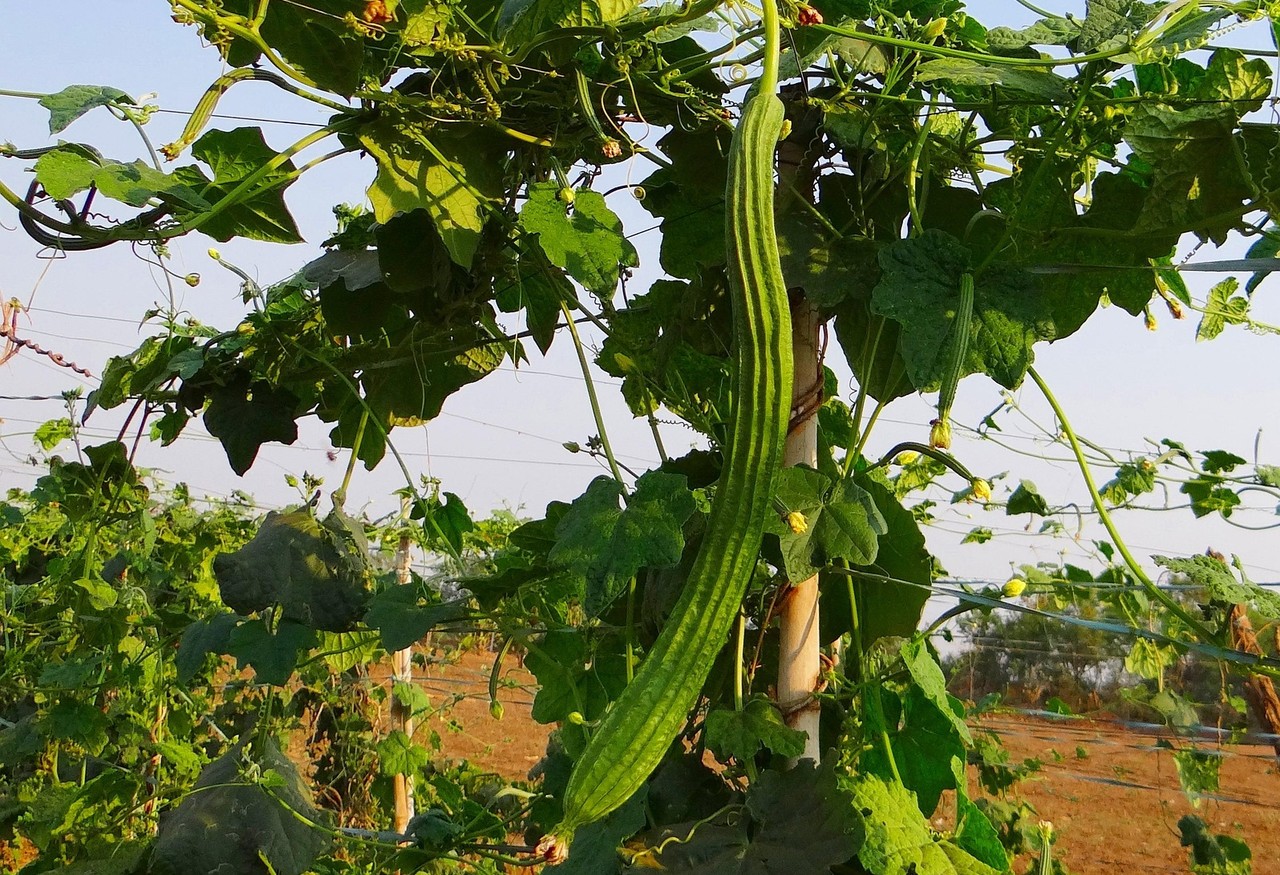
The Ridge Gourd plant, scientifically known as Luffa acutangula, is a tropical vine cultivated for its elongated, ribbed fruits. It belongs to the gourd family and is widely recognized across Asia for its culinary and agricultural significance. The plant is characterized by its vigorous climbing habit and distinctive ridged fruits, which differentiate it from related species within the same genus.
Classification
- Plant Type
- Vine
- Lifecycle
- Annual
- Native Region
- Asia
- Plant Family
- Cucurbitaceae
Ridge gourd is an important vegetable crop in many tropical and subtropical regions. It holds a long-standing presence in traditional cuisines and small-scale farming systems. Botanically, it is notable for its rapid vine growth, tendril-bearing stems, and monoecious flowering pattern, producing both male and female flowers on the same plant.
As a member of the Cucurbitaceae family, the ridge gourd shares structural characteristics with pumpkins, cucumbers, and melons, including trailing vines and fleshy fruits. Its adaptability to warm climates has contributed to its widespread cultivation and naturalization in various parts of the world.
Quick Plant Information
| Field | Information |
|---|---|
| Common Name(s) | Ridge Gourd, Angled Luffa, Chinese Okra, Turai |
| Scientific Name | Luffa acutangula |
| Family | Cucurbitaceae |
| Plant Type | Vegetable vine |
| Lifespan | Annual |
| Growth Habit / Growth Form | Climbing or trailing vine with tendrils |
| Native Range | South and Southeast Asia |
| Climate Adaptation / Habitat Type | Tropical and subtropical regions |
| Leaf Type | Broad, lobed leaves |
| Flower Color(s) | Yellow |
| Fruit Type | Pepo (fleshy fruit with ridges) |
| Evergreen / Deciduous | Seasonal annual |
Botanical Description
The Ridge Gourd plant is a fast-growing, herbaceous vine with slender, angular stems that are covered in fine hairs. The stems bear simple tendrils that allow the plant to climb over surrounding vegetation or structures. The vine can extend several meters in length during a single growing season.
Leaves are broad and palmately lobed, typically with five to seven lobes. They are arranged alternately along the stem and have a rough texture due to fine hairs. The leaf margins are irregularly toothed, and the surface may appear slightly wrinkled.
The plant produces bright yellow, unisexual flowers. Male flowers are usually borne in clusters on long peduncles, while female flowers appear singly and are identifiable by the small ovary located at the base. Flowering is followed by the development of elongated fruits.
The fruit of Luffa acutangula is cylindrical with prominent longitudinal ridges running along its length. The outer skin is green when immature and becomes tougher and fibrous as it matures. Internally, mature fruits develop a network of fibrous vascular tissue surrounding numerous flat, black seeds. The root system is relatively shallow and fibrous, supporting rapid vegetative growth.
Plant Classification & Growth Habit
Ridge Gourd is classified as an annual herbaceous vine within the Cucurbitaceae family. It completes its life cycle within one growing season, progressing from seed germination to flowering and fruit production before senescence.
The plant exhibits a climbing growth pattern facilitated by coiling tendrils. In natural or cultivated environments, it spreads horizontally across the ground or ascends vertical supports. Its growth form is vigorous and expansive, characteristic of many cucurbit species.
As a monoecious plant, it produces separate male and female flowers on the same individual. Pollination typically occurs through insect activity, leading to fruit formation. The structural development of the fruit follows the typical cucurbit pattern, classified botanically as a pepo.
Common Types / General Classifications
Ridge Gourd varieties are often categorized based on fruit characteristics and regional selection. General classifications include:
- Long-fruited types – Extended cylindrical fruits with pronounced ridges
- Medium-fruited types – Standard market-sized fruits
- Short-fruited types – Compact forms used in certain regional cuisines
- Dark green varieties – Deeper skin coloration
- Light green varieties – Pale green exterior
These variations primarily reflect differences in fruit length, ridge prominence, and skin coloration rather than major botanical distinctions.
Native Range & Distribution
Luffa acutangula is believed to have originated in South Asia, with early domestication likely occurring in the Indian subcontinent. Over time, its cultivation expanded throughout Southeast Asia, China, and parts of East Asia.
Today, ridge gourd is widely distributed in tropical and subtropical regions across Asia, Africa, and parts of the Americas. It is commonly found in warm climates where seasonal rainfall supports vine growth. In many areas, it is cultivated as a seasonal vegetable crop, while in others, it may naturalize in suitable environments.
The species thrives in regions characterized by warm temperatures and extended growing seasons, aligning with its tropical origins.
Cultural, Culinary, or Traditional Context
Ridge gourd has long been integrated into regional cuisines across South Asia, Southeast Asia, and parts of East Asia. It appears in a variety of traditional dishes, often prepared as a cooked vegetable. Its mild flavor and soft texture when immature contribute to its culinary versatility.
In several cultures, the plant is associated with seasonal agriculture and local market systems. The mature, fibrous interior of fully developed fruits has also been historically utilized for non-culinary purposes in some regions, reflecting the multipurpose nature of the species.
The plant holds economic importance as a vegetable crop in smallholder farming systems, where it contributes to local food supply chains. Its presence in home gardens and community farms further underscores its cultural integration in tropical agricultural landscapes.
Interesting Facts / Did You Know
- Ridge gourd belongs to the same botanical family as pumpkins, melons, and cucumbers.
- The mature fruit develops a dense network of fibers similar to those of other species in the Luffa genus.
- The ridged exterior of the fruit is the origin of its common name.
- The plant produces separate male and female flowers on the same vine.
- In some regions, ridge gourd is known by multiple vernacular names, reflecting its widespread cultivation.
FAQs
Is ridge gourd the same as sponge gourd?
Ridge gourd (Luffa acutangula) is related to sponge gourd (Luffa cylindrica), but they are distinct species. Ridge gourd fruits have pronounced longitudinal ridges, while sponge gourd fruits are typically smoother.
Is ridge gourd a fruit or a vegetable?
Botanically, the ridge gourd is a fruit because it develops from the ovary of a flower. In culinary classification, it is treated as a vegetable.
Is ridge gourd a climber?
Yes. Ridge gourd is a climbing vine that uses tendrils to attach to surrounding supports.
What type of fruit does ridge gourd produce?
It produces a pepo, a type of fleshy fruit characteristic of the Cucurbitaceae family.
Recommended Products
Disclosure: As an Amazon Associate, PlantsInfo may earn from qualifying purchases.
🌱 Plant Care Essentials
The following tools can help with pruning, plant health, soil management, and fruit garden maintenance.

Neem Oil for Plant Care
Natural plant protection against aphids, whiteflies, mites, and other common garden pests.

Fungicide for Root Care
Helps suppress soil-borne fungal diseases and supports healthier root systems.

Spray Bottle for Plants
Ideal for applying foliar sprays, neem oil solutions, and liquid plant treatments.

Rubber Hand Gloves
Protects hands during pruning, planting, soil preparation, and garden maintenance.
Conclusion
The Ridge Gourd (Luffa acutangula) is a tropical annual vine recognized for its ribbed fruits and vigorous climbing habit. As a member of the Cucurbitaceae family, it shares structural and reproductive features with other gourds and cucurbits. Its distinctive ridged fruits, monoecious flowering system, and fibrous mature interior make it botanically notable.
With origins in South Asia and widespread distribution across tropical and subtropical regions, ridge gourd continues to hold agricultural and cultural significance. Its integration into traditional food systems and regional cultivation practices underscores its importance as a seasonal vegetable crop.
The Plants Info platform maintains a structured plant database designed for educational reference. It provides organized, descriptive information across a wide range of plant species to support learning and botanical understanding.