INTRODUCTION
Colocasia esculenta, widely known as taro, is a tropical root crop distinguished by its starchy underground corm, which serves as a major carbohydrate source across Asia, Africa, and the Pacific. A member of the Araceae family, it is among the earliest domesticated plants, with origins traced to Southeast Asia. Its remarkable adaptability to both upland and flooded cultivation systems makes it a cornerstone species in traditional wetland agriculture.
Classification
- Plant Type
- Herb
- Lifecycle
- Perennial
- Leaf Habit
- Evergreen
- Native Region
- South Asia, Southeast Asia
- Plant Family
- Araceae
Ecologically, taro plays a critical role in wetland agroecosystems, where its large, hydrophobic leaves (water-repelling surfaces) contribute to microclimate regulation and soil moisture retention. Unlike many related aroids, it demonstrates strong tolerance to waterlogged conditions, allowing it to thrive in paddy-like systems. This adaptation supports biodiversity by integrating with aquatic organisms and sustaining nutrient cycling in semi-aquatic environments.
Human reliance on taro spans millennia, with extensive cultural, culinary, and ceremonial significance across Polynesia, Melanesia, and parts of Africa. It remains vital for food security in many tropical regions, although habitat shifts and monoculture pressures present emerging conservation concerns. This profile provides a structured scientific analysis of the species, integrating taxonomy, biology, ecology, and research context within a global reference framework.
Identity
Quick Plant Information
| Field | Value |
|---|---|
| Accepted Scientific Name | Colocasia esculenta |
| Primary Common Name | Taro |
| Plant Type | Herbaceous perennial |
| Life Cycle | Perennial |
| Growth Habit | Clump-forming, erect herb |
| Mature Size | 1–2 m tall (3.3–6.6 ft), 0.8–1.5 m spread (2.6–4.9 ft) |
| Growth Rate | Fast |
| Flowering Season | Late summer to early autumn |
| Fruiting Season | Rarely observed in cultivation |
| Light Requirement | Full sun to partial shade |
| Water Requirement | High; thrives in saturated or flooded soils |
| Soil Preference | Loamy to clayey, rich in organic matter |
| Temperature Tolerance | 20–35°C (68–95°F); sensitive below 10°C (50°F) |
| Pollination Type | Insect-mediated (primarily beetles — morphological context) |
| Self-Fertility Status | Not self-fertile |
| Primary Propagation Method | Vegetative (corm division) |
| Typical Yield Class | High |
| Primary Use Categories | Food crop, traditional medicine, ornamental |
| Toxicity Status | Raw tissues contain calcium oxalate crystals causing irritation |
| Conservation Concern | Not globally threatened |
| Cultivation Difficulty Level | Moderate |
Classification and Taxonomy
| Field | Value | Notes |
|---|---|---|
| Accepted Scientific Name | Colocasia esculenta | |
| Known Synonyms | Arum esculentum, Colocasia antiquorum | Common in historical literature |
| Taxonomic Authority Source | Kew POWO | Authoritative global plant database |
| Assessment Date | 2026-04-30 | |
| Kingdom | Plantae | |
| Division | Tracheophyta | Vascular plants |
| Class | Liliopsida | Monocots |
| Order | Alismatales | |
| Family | Araceae | Aroid family |
| Subfamily | Aroideae | |
| Genus | Colocasia | |
| Species | C. esculenta | |
| Native Origin | Southeast Asia to South Asia | Concise summary per scope rule |
| IUCN Status | Not Evaluated | Source class: IUCN |
Related Species of Significance
| Species | Common Name | Distinguishing Feature | Economic or Ecological Significance |
|---|---|---|---|
| Colocasia gigantea | Giant taro | Larger leaves, less corm development | Ornamental and minor food use |
| Xanthosoma sagittifolium | Tannia | Sagittate leaves, different corm chemistry | Major tropical root crop |
| Alocasia macrorrhizos | Giant alocasia | Upright leaves, acrid corms | Ornamental and limited edible use |
| Colocasia affinis | Lesser taro | Smaller plant, ornamental foliage | Horticultural value |
| Amorphophallus paeoniifolius | Elephant foot yam | Large underground corm, distinct inflorescence | Significant food crop in Asia |
Taxonomic Context
Within the genus Colocasia, C. esculenta occupies a central economic and taxonomic position as the most widely cultivated species. Historical confusion has arisen with Colocasia antiquorum, often treated as a separate species or a cultivated form. Morphological overlap and extensive domestication have complicated species delimitation, particularly in traditional farming systems. For researchers and commercial stakeholders, nomenclatural consistency—anchored by Kew POWO classification—ensures accurate identification, especially in germplasm exchange, breeding programs, and phytochemical standardisation.
Cytogenetics
| Parameter | Value | Notes |
|---|---|---|
| Chromosome Number | 2n = 28, 42 | Diploid and triploid forms documented |
| Ploidy Level | Diploid, triploid | Variation linked to domestication |
| Genome Size | ~4.0–4.5 pg (1C) | Approximate; varies among cultivars |
Cytogenetic Note
The presence of both diploid and triploid cytotypes in Colocasia esculenta reflects a complex domestication history involving clonal propagation and hybridisation. Triploid forms are often sterile and propagated vegetatively, contributing to phenotypic stability but limiting breeding flexibility. This cytogenetic variation has implications for yield consistency, stress tolerance, and phytochemical uniformity, making it a critical consideration in modern breeding and conservation programmes.
Scientific Stability and Nomenclature
The currently accepted name, Colocasia esculenta (L.) Schott, is recognised by Kew POWO (source class: Kew POWO) as the valid taxonomic authority. The species was originally described as Arum esculentum by Linnaeus in 1753 and later reassigned to the genus Colocasia by Heinrich Wilhelm Schott in 1832, based on morphological distinctions within Araceae, particularly inflorescence structure and vegetative traits.
Despite this formal reclassification, nomenclatural inconsistency persists in agricultural and ethnobotanical literature, where Colocasia antiquorum is still encountered. This reflects historical attempts to distinguish cultivated variants rather than true taxonomic divergence. The accepted name has achieved strong adoption in scientific databases and international agriculture, but legacy synonyms remain embedded in regional agronomy and trade documentation.
For researchers, this dual usage necessitates careful literature searches incorporating synonym sets. For commercial stakeholders, inconsistent labelling can affect regulatory compliance and germplasm traceability. The stabilisation of C. esculenta as the accepted name has significantly improved clarity in global crop research, though synonym persistence continues to require cross-referencing in applied contexts.
Synonymy
| Accepted Name (Current Authority) | Synonyms Commonly Encountered | Context Where Synonym Persists |
|---|---|---|
| Colocasia esculenta (L.) Schott | Colocasia antiquorum | Traditional agriculture literature |
| Colocasia esculenta (L.) Schott | Arum esculentum | Historical botanical texts |
| Colocasia esculenta (L.) Schott | Regional cultivar names | Local trade and ethnobotany |
Form
Growth Habit and Architecture
Colocasia esculenta presents as a robust, clump-forming herbaceous perennial defined by its large sagittate leaves and thickened underground corm. The plant exhibits an erect yet soft-stemmed architecture, with pseudostems formed by tightly packed leaf sheaths rather than true woody tissue. Its growth strategy is strongly rhizomatous, allowing lateral expansion and vegetative persistence. The overall form is visually dominated by broad leaf blades held above ground level, creating a dense canopy that maximises light capture while supporting rapid biomass accumulation in saturated or semi-aquatic environments.
| Parameter | Value | Notes |
|---|---|---|
| Life form | Herbaceous perennial | |
| Mature height | 1–2 m (3.3–6.6 ft) | Varies by cultivar and conditions |
| Canopy spread | 0.8–1.5 m (2.6–4.9 ft) | Clump expansion over time |
| Stem type | Pseudostem (leaf sheath-derived) | No true woody stem |
| Surface texture | Smooth, succulent | Moisture-retentive tissues |
| Branching pattern | Basal clumping | No aerial branching |
| Root system overview | Fibrous roots from corm, shallow to moderate depth | Morphology only per scope |
| Growth rate | Fast | Under warm, wet conditions |
| Longevity | Perennial with seasonal dieback in cooler climates | |
| Distinguishing architectural feature | Large upright leaves emerging from central corm | Defines canopy structure |
Leaves
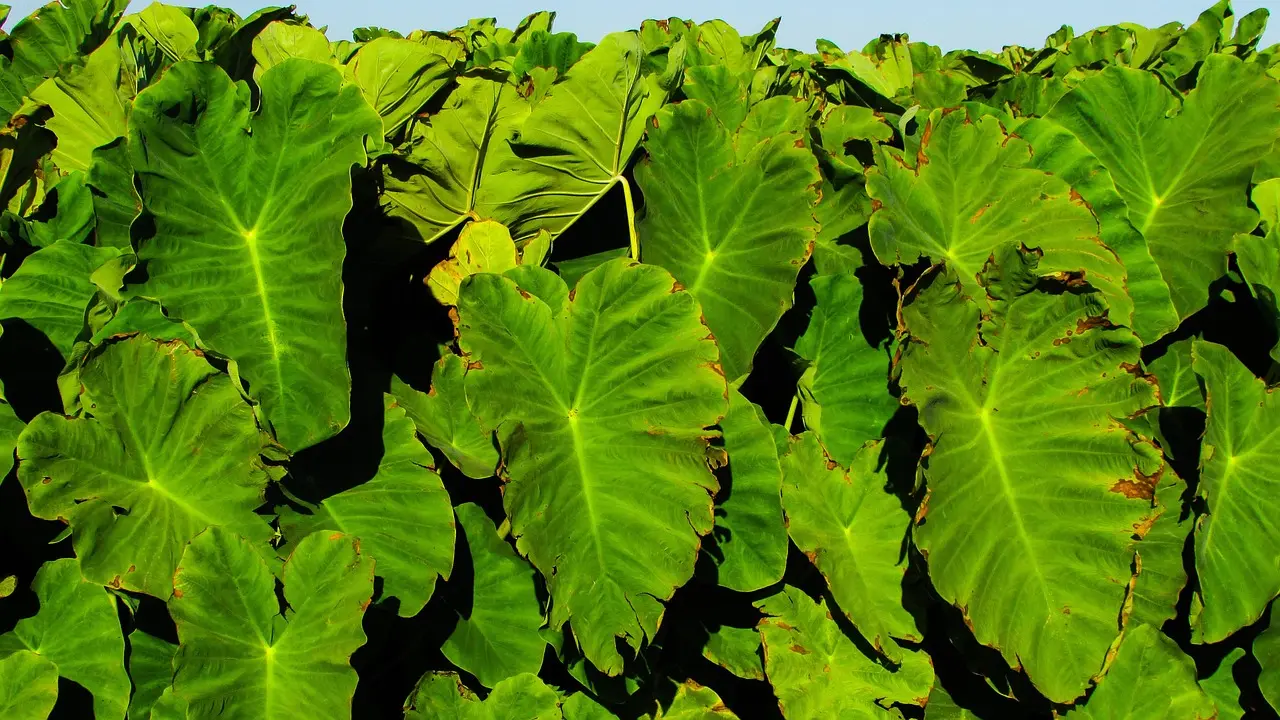
The leaves of Colocasia esculenta are among its most defining morphological features, characterised by large, heart-shaped (sagittate) blades with a smooth, waxy surface. The hydrophobic property of the leaf surface allows water to bead and roll off, a phenomenon often cited in biomimetic research. Leaves arise from long petioles attached near the centre of the blade (peltate attachment), contributing to their distinctive orientation and efficient light interception.
| Parameter | Value |
|---|---|
| Presence | Present |
| Leaf type | Simple, peltate |
| Size | 20–60 cm long (7.9–23.6 in) |
| Colour | Bright green to dark green |
| Arrangement | Spiral, basal |
| Special features | Hydrophobic surface; prominent venation |
Flowers
The inflorescence of Colocasia esculenta follows the characteristic aroid structure, consisting of a spadix enclosed by a spathe. Though often inconspicuous and rarely observed in cultivated systems, the flower plays a specialised ecological role in attracting pollinators through thermogenesis (heat production) and scent emission. This mechanism enhances pollinator visitation efficiency, particularly in humid environments where volatile dispersal is limited. The reproductive structure is functionally complex despite its modest visual presence.
| Floral Attribute | Description |
|---|---|
| Inflorescence type | Spadix with enclosing spathe |
| Flower diameter | Not documented in available literature |
| Flower length | 10–20 cm (3.9–7.9 in) including spathe |
| Outer tepals or sepals | Absent (spathe replaces protective role) |
| Inner tepals or petals | Absent |
| Stamens | Located in male zone of spadix |
| Pistil | Located in female zone of spadix |
| Fragrance | Present, often musky |
| Anthesis period | Short, typically 1–2 days |
| Primary pollinators | Beetles |
Fruit
| Fruit Characteristic | Description |
|---|---|
| Fruit type | Berry |
| Shape | Ovoid |
| Length | 3–5 mm (0.12–0.20 in) |
| Diameter | 2–4 mm (0.08–0.16 in) |
| Weight | Not documented in available literature |
| Skin colour | Green to orange when mature |
| Surface features | Smooth |
| Flesh colour | Pale |
| Flesh texture | Soft |
| Seed count | Multiple seeds per berry |
| Sugar content | Not documented in available literature |
| Maturation period | Not well documented; rarely observed in cultivation |
Seeds
| Seed Characteristic | Description |
|---|---|
| Size | 1–2 mm (0.04–0.08 in) |
| Shape | Oval |
| Colour | Brown |
| Seed coat | Thin |
| Oil content | Not documented in available literature |
| Viability period | Short; viability declines rapidly |
| Germination rate | Low under natural conditions |
Root System
The root system of Colocasia esculenta is characterised by a central corm from which numerous fibrous roots emerge, forming a dense but relatively shallow network typically extending 20–40 cm (7.9–15.7 in) into the soil. Lateral spread is moderate, supporting anchorage in saturated substrates. The plant demonstrates strong tolerance to waterlogged conditions but remains sensitive to prolonged drought. This root architecture supports efficient nutrient uptake in flooded systems and facilitates vegetative propagation, making it highly suited to both traditional wetland agriculture and managed cultivation systems.
Field Identification
In field conditions, Colocasia esculenta is immediately recognisable by its large, upright, heart-shaped leaves with centrally attached petioles and smooth, glossy surfaces. The plant forms dense clumps emerging from a basal corm, often in moist or flooded soils. It is frequently confused with Alocasia macrorrhizos, but the most reliable distinguishing feature is leaf orientation: taro leaves typically droop outward with petioles attaching near the centre (peltate), whereas Alocasia leaves are more upright with attachment at the leaf margin. This distinction is critical for accurate identification in both agricultural and wild contexts.
Normal vs. Concerning Observations
| Observation | Status | Explanation |
|---|---|---|
| Water droplets rolling off leaves | Normal | Hydrophobic leaf surface |
| Slight leaf drooping during midday heat | Normal | Temporary turgor adjustment |
| Yellowing of oldest leaves | Normal | Natural senescence |
| Stunted growth in cool conditions | Monitor | Temperature sensitivity |
| Leaf edge browning | Investigate | Possible water or nutrient imbalance |
| Softening of corm tissue | Investigate | Potential early rot indication |
Cultivar Summary
| Cultivar | Key Characteristic | Commercial Status | Origin |
|---|---|---|---|
| ‘Dasheen’ | Large corm, high yield | Commercially dominant | Southeast Asia |
| ‘Bun Long’ | Elongated corms | Regionally significant | China |
| ‘Eddoe’ | Smaller cormels, hardy | Commercially dominant | Southeast Asia |
| ‘Hawaiian Lehua’ | Pink-fleshed corm | Regionally significant | Hawaii |
| ‘Black Magic’ | Dark ornamental foliage | Experimental | Horticultural breeding |
For full cultivar listings, performance comparisons, and selection guidance, see Taro: Varieties and Cultivars.
Physiology And Phytochemistry
Functional Traits
Colocasia esculenta operates as a fast-growing, resource-acquisitive tropical herb adapted to high-moisture environments. Its physiological strategy integrates efficient carbon fixation, rapid nutrient uptake, and structural investment in storage organs (corms). Rather than specialising in drought resistance, it maximises productivity under water-abundant conditions, with traits that support rapid biomass turnover and vegetative propagation. Chemical defences and structural features protect tissues from herbivory and microbial attack, while its reproductive flexibility allows persistence across both cultivated and semi-natural ecosystems.
| Trait | Mechanism Description | Adaptive Significance |
|---|---|---|
| Photosynthetic pathway | C3 photosynthesis — stomata open during daylight, CO₂ fixed via ribulose-1,5-bisphosphate carboxylase/oxygenase (RuBisCO), with moderate photorespiration under high temperature | Efficient under high water availability and moderate light |
| Water use strategy | High transpiration capacity supported by abundant water supply; minimal stomatal restriction under non-stress conditions | Enables rapid growth in saturated soils |
| Nutrient acquisition | Fibrous root system actively absorbs dissolved nutrients from waterlogged substrates via diffusion gradients | Supports productivity in flooded agroecosystems |
| Growth form strategy | Allocation of carbohydrates to underground corm as storage organ via starch biosynthesis pathways | Ensures survival through seasonal or environmental stress |
| Reproductive strategy | Predominantly vegetative propagation through corm division; limited sexual reproduction due to infrequent flowering | Maintains genetic uniformity and stable yield traits |
| Dispersal mechanism | Human-mediated dispersal of corms; limited natural seed dispersal | Aligns with domesticated crop ecology |
| Stress response mechanism | Upregulation of anaerobic respiration pathways under hypoxic soil conditions; aerenchyma formation in tissues | Allows survival in waterlogged soils |
| Chemical defence | Production of calcium oxalate crystals (raphides) in specialized idioblast cells | Deters herbivory and reduces predation |
| Species-specific trait | Thermogenic inflorescence — metabolic heat generation during flowering increases volatilisation of scent compounds | Enhances pollinator attraction in humid environments |
Physiological Integration
The physiological strategy of Colocasia esculenta is defined by the integration of high water availability with rapid biomass production. Its C3 photosynthetic pathway operates efficiently because water is not limiting, allowing stomata to remain open and support high carbon assimilation rates. This complements its nutrient acquisition strategy, where dissolved nutrients in flooded soils are readily absorbed. The stress response mechanism—particularly anaerobic respiration and aerenchyma development—directly enables this water-dependent strategy by preventing root suffocation. Simultaneously, carbohydrate allocation to the corm ensures resilience, allowing the plant to recover from transient stress or seasonal variation. Chemical defence through calcium oxalate crystals further protects these stored reserves, ensuring long-term survival and reproductive continuity.
Phytochemistry
The phytochemical profile of Colocasia esculenta reflects its dual role as both a staple food crop and a chemically defended tropical plant. Its tissues are dominated by carbohydrates, particularly starch, but also contain bioactive compounds such as phenolics, flavonoids, and calcium oxalate crystals. These compounds contribute to both nutritional value and defence mechanisms. Chemotaxonomically, the presence of raphides is characteristic of Araceae, while secondary metabolites vary across cultivars and growing conditions, reflecting both genetic diversity and environmental influence.
| Compound Class | Representative Compounds | Primary Location | Ecological or Biological Function |
|---|---|---|---|
| Carbohydrates | Amylose, amylopectin | Corm | Energy storage and human nutrition |
| Calcium oxalates | Calcium oxalate (raphides) | Leaves, corm | Herbivore deterrence and tissue protection |
| Phenolic compounds | Chlorogenic acid, caffeic acid | Leaves | Antioxidant activity and UV protection |
| Flavonoids | Quercetin, kaempferol | Leaves | Defence against oxidative stress |
| Saponins | Specific compounds not yet characterised | Corm | Antimicrobial and anti-herbivory roles |
| Proteins and enzymes | Taro lectin (tarin) | Corm | Defence and potential immunological activity |
Phytochemical Organ Distribution
| Organ | Compound Class | Representative Compounds | Concentration | Source |
|---|---|---|---|---|
| Corm | Carbohydrates | Amylose, amylopectin | High (60–80% dry weight) | FAO |
| Corm | Proteins | Taro lectin (tarin) | Moderate (5–7% dry weight) | Peer-reviewed study |
| Leaves | Phenolic compounds | Chlorogenic acid, caffeic acid | Moderate | Peer-reviewed study |
| Leaves | Flavonoids | Quercetin, kaempferol | Moderate | Peer-reviewed study |
| Leaves, corm | Calcium oxalates | Calcium oxalate (raphides) | Variable, significant | USDA |
| Corm | Saponins | Specific compounds not yet characterised | Low to moderate | Manual research required |
Phytochemical Significance
The phytochemical profile of Colocasia esculenta is dominated by its carbohydrate-rich corm, which underpins its global importance as a staple food (source class: FAO). However, secondary metabolites—particularly phenolics and flavonoids—have attracted increasing pharmacological interest due to their antioxidant properties (source class: peer-reviewed studies). Calcium oxalate crystals, while biologically defensive, are also responsible for the plant’s toxicity in raw form, necessitating processing prior to consumption (source class: USDA). The protein tarin has been investigated for immunological and anticancer potential, though research remains preliminary and geographically concentrated.
Phytochemical characterisation is uneven, with strong data on nutritional composition but less detailed profiling of minor compounds such as saponins. Most research originates from Southeast Asia and Pacific regions, reflecting both cultural reliance and agricultural importance. The phytochemical profile is strongly organ-specific, with storage compounds concentrated in the corm and defensive metabolites more prominent in leaves. Synergistic interactions between antioxidant compounds may enhance biological activity, though this remains an area of active investigation.
For therapeutic mechanisms, preparation methods, and clinical applications, see Benefits and Uses of Taro.
Evidence, Nutrition, And Safety
Evidence Hierarchy for Medicinal Use
| Evidence Layer | Status | Notes |
|---|---|---|
| Traditional Use | Documented | Widely used in Asia and Pacific regions for digestive health, inflammation, and wound care (source class: ethnobotanical records, government flora databases) |
| Nutritional Evidence | Documented | Strong evidence as a carbohydrate-rich staple with micronutrient contribution (source class: FAO, USDA) |
| In Vitro Studies | Documented | Antioxidant, anti-inflammatory, and cytotoxic activity observed in extracts (source class: peer-reviewed studies) |
| Animal Studies | Partial | Limited studies suggest metabolic and immune effects; not extensively replicated (source class: peer-reviewed studies) |
| Human Clinical Studies | Absent | No documented studies at this evidence level |
| Regulatory Recognition | Partial | Recognised as food crop globally; no formal medicinal approval (source class: FAO, national food authorities) |
| Unsupported Commercial Claims | Documented | Claims regarding anticancer and immune-boosting effects exceed current clinical evidence |
Evidence Assessment
The evidence profile for Colocasia esculenta shows a strong foundation in traditional use and nutritional science, but a significant gap in clinical validation. While antioxidant and anti-inflammatory properties are supported by in vitro studies (source class: peer-reviewed studies), these findings have not been consistently translated into animal or human trials. The most robust evidence supports its role as a nutrient-dense staple food rather than a therapeutic agent. Commercial claims—particularly regarding anticancer effects—are disproportionately prominent relative to the available evidence, highlighting a clear disconnect between research maturity and market positioning.
Nutritional Composition
| Nutrient | Value per 100g | Notes | Source |
|---|---|---|---|
| Energy | 112 kcal | Fresh corm, boiled | USDA |
| Carbohydrates | 26.5 g | Primarily starch | FAO |
| Dietary Fiber | 4.1 g | Supports digestion | USDA |
| Protein | 1.5 g | Moderate for root crop | USDA |
| Fat | 0.2 g | Negligible | USDA |
| Potassium | 591 mg | High compared to many root crops | USDA |
| Magnesium | 33 mg | Moderate | USDA |
| Calcium | 43 mg | Moderate | USDA |
| Iron | 0.6 mg | Low to moderate | USDA |
| Vitamin C | 4.5 mg | Reduced after cooking | USDA |
| Vitamin B6 | 0.28 mg | Contributes to metabolism | USDA |
| Water content | ~70% | Fresh weight basis | FAO |
Nutritional Significance Note
Taro is nutritionally distinguished by its high potassium content and easily digestible starch, making it particularly valuable in diets requiring low allergenicity or high energy density (source class: USDA). Compared to other root crops, its protein content is modest but not negligible. The nutritional profile is strongly influenced by preparation methods: cooking reduces calcium oxalate content and improves starch digestibility, while prolonged boiling may reduce vitamin C levels. Most data derive from cultivated varieties rather than wild forms, and regional variation in nutrient composition reflects both genotype and soil conditions.
Soil Ecology and Mycorrhizal Associations
Colocasia esculenta forms associations with arbuscular mycorrhizal fungi (AMF), particularly genera such as Glomus (genus-level identification; source class: peer-reviewed soil ecology studies). These symbiotic relationships enhance phosphorus uptake and improve tolerance to nutrient-poor or waterlogged soils. The rhizosphere supports diverse bacterial communities, including nitrogen-transforming bacteria that facilitate nutrient cycling in flooded conditions. While allelopathic effects are not strongly documented, some phenolic compounds in root exudates may influence microbial community structure. Agronomically, mycorrhizal associations can improve establishment and nutrient efficiency, though high-input fertiliser systems may suppress these interactions. This has implications for sustainable cultivation, particularly in organic systems and degraded wetland restoration, where microbial symbiosis supports productivity without excessive external inputs.
Toxicity and Safety
| Subject | Toxic Compounds | Clinical Effects | Source |
|---|---|---|---|
| Humans | Calcium oxalate crystals (raphides) | Oral irritation, burning sensation, swelling if consumed raw | USDA |
| Cats | Calcium oxalate crystals | Oral irritation, drooling, vomiting | ASPCA database |
| Dogs | Calcium oxalate crystals | Oral irritation, pawing at mouth, vomiting | ASPCA database |
| Livestock | Calcium oxalate crystals | Reduced palatability, irritation if consumed raw | FAO |
Toxicity Context
The toxicity of Colocasia esculenta is primarily dose-dependent and linked to the presence of calcium oxalate crystals in raw tissues (source class: USDA). Proper cooking denatures these compounds, rendering the plant safe for human consumption. Toxic effects are generally mechanical rather than systemic, caused by crystal-induced tissue irritation. Individuals with kidney disorders may need to moderate intake due to oxalate content. In animals, ingestion of raw plant material can cause acute oral discomfort but is rarely life-threatening. This profile does not constitute medical or veterinary advice.
Distribution And Habitat
Native Range and Distribution
The native distribution of Colocasia esculenta is strongly linked to humid tropical Asia, where monsoonal climates, riverine floodplains, and wetland ecosystems provided ideal conditions for its early domestication. Southeast Asia is widely recognised as the centre of origin (source class: Kew POWO; FAO), with subsequent dispersal across South Asia and into the Pacific through early human migration and trade networks. Its current distribution reflects both natural ecological suitability and extensive anthropogenic spread. Because taro has been cultivated for millennia, distinguishing truly wild populations from long-naturalised ones is often difficult. Most distribution data is heavily derived from Southeast Asian and Pacific literature, indicating a regional research concentration bias.
Native Range
| Region | Countries or Sub-regions | Notes |
|---|---|---|
| Southeast Asia | Indonesia, Malaysia, Thailand, Philippines, Vietnam | Primary centre of origin |
| South Asia | India, Bangladesh, Sri Lanka | Early domestication zone |
| Southern China | Yunnan, Guangxi provinces | Secondary diversification region |
| Pacific Islands | Papua New Guinea, Solomon Islands | Early human-mediated dispersal |
Global Cultivation and Naturalisation
| Region | Countries or Areas | Cultivation Status | Notes |
|---|---|---|---|
| Southeast Asia | Indonesia, Philippines, Thailand, Vietnam | Commercially established | Core production region |
| South Asia | India, Bangladesh, Sri Lanka | Commercially established | Extensive smallholder cultivation |
| East Asia | China, Japan | Commercially established | Mechanised and traditional systems |
| Pacific Islands | Hawaii, Fiji, Samoa | Commercially established | Cultural and subsistence importance |
| Africa | Nigeria, Ghana, Cameroon | Commercially established | Major staple crop |
| Caribbean | Jamaica, Trinidad | Commercially established | Widely consumed root crop |
| Central & South America | Brazil, Colombia | Emerging | Expansion limited by crop preference competition |
| Europe | Mediterranean regions | Experimental | Limited by climate constraints |
| North America | Southern USA | Experimental | Frost sensitivity restricts expansion |
Cultivation Range Note
Commercially significant production of Colocasia esculenta is concentrated in Southeast Asia, South Asia, Africa, and the Pacific Islands, where climatic conditions align closely with the species’ physiological requirements (source class: FAO). Emerging cultivation is observed in parts of Latin America, while attempts in temperate regions such as Europe and North America remain constrained by cold sensitivity. Production data is disproportionately sourced from Asia, particularly India and Southeast Asia, representing a regional research bias.
Natural Habitat
In its native and long-naturalised range, Colocasia esculenta occupies wet tropical and subtropical biomes, particularly lowland floodplains, river margins, and swampy forest edges. It is typically found at elevations from sea level up to approximately 1,200 m (3,937 ft). The species favours water-retentive, organic-rich soils and is commonly associated with riparian vegetation and semi-aquatic plant communities. It responds positively to periodic disturbance such as flooding, which replenishes nutrients and reduces competition. As a habitat generalist within wet environments, it can establish across a range of moisture conditions, enhancing its resilience and suitability for cultivation across diverse tropical landscapes.
Ecological Role
Colocasia esculenta functions as both a structural and trophic component within wetland ecosystems. Its large leaf canopy modifies microhabitat conditions by reducing evaporation and moderating soil temperature, indirectly supporting microbial and invertebrate communities. At the ecosystem level, its inflorescences participate in specialised pollination networks involving beetles, including genera such as Cyclocephala (genus-level identification; source class: peer-reviewed studies). While seed dispersal is not a major ecological pathway due to limited sexual reproduction, any viable seeds are likely dispersed by water or small fauna, though this remains poorly documented. The species does not exhibit keystone status but contributes significantly to primary productivity in managed and semi-natural systems. Ecological interactions beyond pollination remain incompletely resolved, particularly in distinguishing wild versus cultivated population dynamics.
| Role Type | Species or Agent Involved | Notes |
|---|---|---|
| Pollination | Cyclocephala spp. (beetles) | Genus-level identification; thermogenic attraction |
| Habitat structuring | Not documented at species level | Canopy modifies microclimate |
| Nutrient cycling | Rhizosphere microbial communities (genus not fully resolved) | Supports wetland nutrient turnover |
Invasive Status
| Region | Status | Impact | Management |
|---|---|---|---|
| Pacific Islands (non-native areas) | Naturalised | Minor competition with native wetland plants | Local monitoring |
| Caribbean | Naturalised | Limited ecological displacement | Not widely managed |
| Southeastern USA | Naturalised | Occasional escape from cultivation | Mechanical removal where necessary |
Invasive Status Note
Colocasia esculenta is widely naturalised outside its native range, particularly in tropical and subtropical regions. However, it is generally not considered a high-impact invasive species. Where ecological effects occur, they are typically localised and manageable, and no widespread legislative control measures have been implemented.
Climate And Stress Tolerance
Optimal Climate Parameters
| Parameter | Optimal Range | Tolerance Range | Notes |
|---|---|---|---|
| Mean Annual Temperature | 25–30°C (77–86°F) | 15–35°C (59–95°F) | Based on tropical cultivation data |
| Daytime Temperature | 25–35°C (77–95°F) | 18–38°C (64–100°F) | High temperature tolerance with water availability |
| Nighttime Temperature | 20–25°C (68–77°F) | 10–28°C (50–82°F) | Growth slows below 15°C |
| Annual Rainfall | 1,500–2,500 mm (59–98 in) | 1,000–3,500 mm (39–138 in) | Can be supplemented by irrigation |
| Dry Season Length | 0–2 months | Up to 4 months (with irrigation) | Sensitive to prolonged drought |
| Relative Humidity | 70–90% | 50–95% | High humidity preferred |
| Solar Radiation | Full sun (15–25 MJ/m²/day) | Partial shade to full sun (10–30 MJ/m²/day) | Shade tolerance moderate |
Climate Interpretation
The most limiting factors for Colocasia esculenta cultivation are low temperature and prolonged drought. While the species tolerates a relatively broad rainfall range when irrigation is available, its physiological processes are strongly constrained below 15°C (59°F), restricting expansion into temperate climates. The native range reflects consistently warm, humid conditions, but global cultivation demonstrates some flexibility under managed water regimes. However, frost sensitivity remains a hard boundary. Thus, temperature—not water availability—is the primary limiting parameter for geographic expansion.
Stress Tolerance Profile
| Stress Type | Tolerance Level | Physiological Response | Notes |
|---|---|---|---|
| Drought | Low | Stomatal closure reduces transpiration; reduced photosynthetic activity | Requires consistent moisture |
| Heat | Moderate to High | Maintains enzyme activity and transpiration cooling under high temperatures | Dependent on water availability |
| Cold or Frost | Low | Cellular damage due to ice formation; membrane disruption | Highly frost-sensitive |
| Salinity | Low to Moderate | Ion exclusion mechanisms limit sodium uptake | Performance declines in saline soils |
| Waterlogging | High | Development of aerenchyma enables oxygen transport to roots | Key adaptation |
| Air Pollution | Not documented at species level | Not documented at species level | Knowledge gap |
| Wind | Moderate | Flexible petioles reduce mechanical damage | Large leaves vulnerable to tearing |
| Soil Compaction | Low to Moderate | Reduced root respiration and nutrient uptake efficiency | Sensitive in dense soils |
Compound Stress
Colocasia esculenta performs poorly under compound stress conditions involving drought and heat, as its high transpiration strategy becomes unsustainable without adequate water supply. While heat alone is tolerated, the combination with water deficit leads to rapid physiological decline. Similarly, salinity combined with waterlogging can impair ion regulation despite adaptations to flooded conditions. Data on compound stress responses remain limited, representing a notable knowledge gap in understanding the species’ resilience under climate variability and intensifying environmental stressors.
Adaptations And Reproductive Biology
Structural and Physiological Adaptations
Colocasia esculenta exhibits a suite of structural adaptations shaped by persistent exposure to saturated soils and humid tropical climates. Its morphology reflects long-term selection for flood tolerance, rapid biomass accumulation, and herbivore resistance. The development of enlarged corms, expansive leaf surfaces, and specialised internal tissues enables survival and productivity in unstable wetland environments. These features should be understood as structural complements to the physiological processes with each adaptation representing an evolutionary solution to constraints imposed by waterlogged substrates, seasonal variability, and herbivory pressure in tropical ecosystems.
| Adaptation | Mechanism Description | Ecological Context |
|---|---|---|
| Aerenchyma tissue | Internal air spaces in roots and petioles facilitate gas movement through porous tissue | Enables survival in oxygen-poor flooded soils |
| Enlarged corm | Swollen underground stem stores carbohydrates in dense parenchyma tissue | Supports persistence through seasonal fluctuations and disturbance |
| Peltate leaf structure | Petiole attachment near leaf centre distributes mechanical load evenly | Enhances stability and light capture in high rainfall environments |
| Hydrophobic leaf surface | Smooth cuticle reduces water adhesion and promotes runoff | Prevents fungal growth and leaf damage in humid climates |
| Flexible petioles | Elongated, pliable petioles allow leaves to bend under mechanical stress | Reduces damage from wind and heavy rain |
| Raphide-containing cells | Specialized idioblasts house needle-like crystals | Provides structural deterrence to herbivores |
| Clump-forming growth | Basal proliferation of shoots from corm mass | Allows rapid colonisation of suitable microhabitats |
| Reduced woody tissue | Herbaceous structure minimises resource investment in lignification | Supports rapid growth in resource-rich environments |
Climate Change Vulnerability
| Factor | Assessment | Notes |
|---|---|---|
| Primary Climate Sensitivity Factors | Temperature minima and water availability | Sensitive to frost and prolonged drought |
| Key Threatening Climate Processes | Increased drought frequency; temperature variability | Alters water availability and growth cycles |
| Resilience Factors | Vegetative propagation; waterlogging tolerance | Maintains populations under fluctuating water regimes |
| Confidence Level | Moderate | Based on physiological and distribution data (source class: FAO; peer-reviewed studies) |
Climate Vulnerability
Colocasia esculenta demonstrates moderate vulnerability to climate change, primarily due to its sensitivity to low temperatures and reliance on consistent water availability. Increased drought frequency poses a significant threat, particularly in regions lacking irrigation infrastructure. Conversely, its tolerance to waterlogging provides resilience in flood-prone environments. There is limited species-specific modelling data, so this assessment is based on documented physiological thresholds and current distribution patterns (source class: FAO; peer-reviewed studies). Confidence is moderate, as regional variability and cultivar diversity may influence actual responses.
Phenological Calendar
| Event | Native Range Timing | Cultivated Range Timing | Environmental Triggers |
|---|---|---|---|
| Vegetative Growth Onset | Early monsoon (May–June) | Spring to early summer | Soil temperature ≥18°C (64°F); moisture availability |
| Flower Bud Initiation | Mid-monsoon (July–August) | Summer (June–August) | Sustained temperatures ≥22°C (72°F) |
| Anthesis or Peak Flowering | Late monsoon (August–September) | Summer to early autumn | High humidity ≥70%; stable temperatures |
| Fruit Development | Late monsoon to early autumn | Late summer to autumn | Continued warmth and moisture |
| Fruit Maturation | Early autumn (September–October) | Autumn | Gradual temperature decline |
| Seed Dispersal | Autumn (October–November) | Autumn to early winter | Drying conditions post-monsoon |
| Dormancy or Rest Period | Dry season (December–February) | Winter or dry season | Soil moisture decline; temperature <15°C (59°F) |
Phenological Notes
Phenological development in Colocasia esculenta is primarily driven by temperature thresholds and water availability. Vegetative growth initiates rapidly once soil temperatures exceed 18°C (64°F), while flowering requires sustained warmth and humidity. Across global cultivation ranges, significant phenological plasticity is observed, particularly in irrigated systems where seasonal rainfall patterns are less influential. In cooler regions, growth cycles are compressed, and flowering is often suppressed.
For season-by-season management and regional flowering calendars, see Seasonal Guide of Taro.
Pollination Ecology
The pollination system of Colocasia esculenta is characteristic of thermogenic aroids, relying on specialised interactions with beetle pollinators. The inflorescence generates heat and emits volatile compounds that attract insects, particularly in humid environments where scent dispersal is otherwise limited. This system reflects an evolutionary strategy that enhances pollination efficiency despite relatively inconspicuous floral structures, distinguishing it from visually driven pollination systems in many angiosperms.
| Parameter | Value | Notes |
|---|---|---|
| Primary Pollinators | Cyclocephala spp. (beetles) | Genus-level identification (source class: peer-reviewed studies) |
| Secondary Pollinators | Not documented at species level | |
| Pollination Syndrome | Thermogenic beetle pollination | |
| Floral Mechanism | Spathe encloses spadix, guiding beetles into floral chamber where pollen transfer occurs | Physical containment and release |
| Reproductive System | Primarily outcrossing | Limited self-fertility |
| Seed Dispersal Agent | Not documented at species level | Likely passive dispersal |
| Pollination Success Rate | Low in cultivated systems | Flowering infrequent |
| Human Intervention | Biologically feasible | Rarely required due to vegetative propagation |
Pollination Context
Colocasia esculenta is predominantly outcrossing, but its reliance on specialised beetle pollinators and infrequent flowering in cultivation significantly limits sexual reproduction. As a result, pollinator decline has minimal impact on crop production, which depends almost entirely on vegetative propagation. While hand pollination is biologically feasible, it is rarely practised due to low commercial relevance. This separation between reproductive biology and cultivation practice underscores the species’ domestication trajectory, where sexual reproduction plays a minor role in maintaining crop populations.
Seed Biology and Germination
| Parameter | Value | Notes |
|---|---|---|
| Seed type | Orthodox | |
| Dormancy class | Physiological dormancy (weak) | |
| Dormancy-breaking requirement | Moist conditions and temperature exposure | |
| Optimal germination temperature | 25–30°C (77–86°F) | |
| Germination rate | Low to moderate (20–50%) | |
| Germination period | 2–4 weeks | |
| Storage behaviour | Short-term viability | Sensitive to desiccation |
| Seed longevity | Less than 6 months under natural conditions |
Germination Notes
Seed germination in Colocasia esculenta is relatively uncommon in both wild and cultivated contexts due to limited flowering and low seed viability. Where seeds are produced, germination success is influenced by moisture availability and temperature stability. Most available data derive from experimental or wild-collected seed rather than cultivated systems, reflecting the species’ reliance on vegetative propagation. Variability in dormancy and rapid decline in viability present biological constraints for seed-based propagation.
Vegetative Reproduction
| Parameter | Value | Notes |
|---|---|---|
| Vegetative Regeneration Capacity | High | Rapid clonal expansion |
| Primary Regeneration Mechanism | Corm division and lateral bud growth | |
| Minimum Propagule Size | Small corm sections with viable buds (~50–100 g / 0.11–0.22 lb) | |
| Ecological or Invasive Significance | Facilitates persistence and spread in suitable habitats |
Human Interaction
Economic Importance
Colocasia esculenta is a globally significant staple crop, with major production concentrated in Southeast Asia, South Asia, West Africa, and the Pacific Islands (source class: FAO). Countries such as Nigeria, China, India, and Ghana dominate production, largely for domestic consumption, though regional trade is substantial. The market consists almost entirely of cultivated material, with negligible wild harvest contribution. Quality variability—particularly corm size, texture, and oxalate content—affects market value and export suitability. Supply chains are vulnerable to climate variability, post-harvest losses, and disease outbreaks, especially in smallholder systems where infrastructure limitations affect storage and transport.
| Use Category | Description | Economic Impact |
|---|---|---|
| Staple food crop | Primary carbohydrate source from corm | High — major food security crop |
| Leaf vegetable | Young leaves consumed after cooking | Moderate — regional dietary importance |
| Animal feed | Corms and foliage used as livestock feed | Moderate — supplementary feed source |
| Processed food products | Flour, chips, and specialty foods | Growing — value-added markets |
| Ornamental horticulture | Cultivated for decorative foliage varieties | Niche — specialty horticulture trade |
| Summary Economic Assessment | Multi-sector crop with strong subsistence and emerging commercial value | High global importance with regional variability |
Traditional Uses
| Use Category | Knowledge System | Region or Cultural Group | Practice Summary | Documentation Level | Source |
|---|---|---|---|---|---|
| Dietary staple | Austronesian agro-food systems | Polynesia, Melanesia | Corm processed into paste or cooked staple foods | Extensive | FAO |
| Leaf consumption | South Asian culinary systems | India, Sri Lanka | Leaves cooked to remove oxalates and used in dishes | Extensive | Government flora database |
| Medicinal (digestive) | Ayurveda | India | Used to support digestion after processing | Moderate | Pharmacopoeia |
| Medicinal (topical) | Pacific ethnomedicine | Pacific Islands | Applied to skin conditions | Partial | Ethnobotanical records |
| Ceremonial food | Polynesian cultural systems | Hawaii, Samoa | Central to ritual and communal feasts | Extensive | Anthropological literature |
| Animal fodder | African agro-pastoral systems | West Africa | Used as supplemental livestock feed | Moderate | FAO |
Traditional Use Summary
Traditional uses of Colocasia esculenta are deeply rooted in Austronesian agro-food systems across Southeast Asia and the Pacific, where it has been cultivated for millennia as a primary staple. South Asian systems, including Ayurveda, incorporate taro into both culinary and medicinal contexts, though medicinal applications are less extensively documented. These practices remain active and integral to local food systems, particularly in Pacific Island communities. The geographic concentration of traditional knowledge aligns closely with regions of highest production, yet global commercial development has extended far beyond these origins, often without proportional knowledge transfer.
For cultural narratives, folklore, and public-interest context, see Quick Facts about Taro.
Regional Ethnobotanical Context
The ethnobotanical history of Colocasia esculenta spans over 5,000 years, with evidence of early domestication in Southeast Asia followed by dispersal across the Pacific through Austronesian migration. In Polynesian societies, taro became a foundational crop, embedded in both subsistence agriculture and cultural identity. Its cultivation techniques, including wetland terrace systems, reflect sophisticated ecological knowledge. In South Asia, taro integrated into diverse culinary traditions and medicinal frameworks. The continuity of these practices demonstrates a stable human–plant relationship, though modern agricultural intensification and globalisation have altered traditional cultivation systems and knowledge transmission pathways.
Traditional Ecological Knowledge
Traditional ecological knowledge surrounding Colocasia esculenta includes its integration into wetland agroecosystems, particularly in Pacific Island terrace farming systems where it contributes to water management and soil stability. It is often cultivated in polyculture systems alongside fish or other aquatic species, reflecting an understanding of nutrient cycling and ecosystem balance. In some regions, taro serves as an indicator of soil moisture conditions. However, beyond these agroecological integrations, detailed TEK specific to ecological functions remains under-documented, representing a research gap in the literature.
Ethical Considerations
Colocasia esculenta originates from Southeast Asia and the Pacific, where its domestication and use are deeply embedded in Austronesian knowledge systems. These include Polynesian, Melanesian, and Southeast Asian agricultural traditions that have developed and maintained taro cultivation for millennia. Documentation of these knowledge systems is relatively extensive in anthropological and agricultural literature, particularly in Pacific Island contexts, though some region-specific practices remain under-recorded.
No documented ABS (Access and Benefit-Sharing) case under the Nagoya Protocol has been identified for Colocasia esculenta. Similarly, there are no widely recognised biopiracy allegations or patent disputes directly associated with this species. This may reflect its status as a long-established global crop rather than a recently commercialised medicinal resource.
However, a gap exists between the geographic origins of traditional knowledge and the distribution of commercial benefits. While taro is globally cultivated and increasingly incorporated into value-added food products, the economic gains are not always proportionally shared with the communities that developed its cultivation systems. This raises questions about equitable benefit-sharing, particularly in the context of germplasm exchange and commercial cultivar development.
Researchers and commercial stakeholders operating internationally should prioritise transparent sourcing, acknowledgment of traditional knowledge systems, and engagement with local communities. Ethical practice includes supporting local agricultural systems, ensuring fair compensation in value chains, and avoiding misappropriation of culturally significant crop varieties. While taro does not currently sit at the centre of major ABS disputes, its cultural and agricultural significance warrants careful consideration in global commercial contexts.
Cultural Significance
Colocasia esculenta holds profound cultural significance across the Pacific Islands, particularly in Polynesia, where it is not only a staple food but also a symbol of life, ancestry, and continuity. In Hawaiian culture, taro (kalo) is considered a sacred plant, linked to origin stories and familial lineage. It plays a central role in ceremonial feasts and community gatherings. In South and Southeast Asia, taro appears in traditional cuisines and seasonal festivals, though its symbolic role is less centralised than in Pacific cultures. Linguistically, the diversity of names for taro across regions reflects its deep integration into local identities. Cultural significance is strongly concentrated in Pacific Island societies, where it continues to function as both a subsistence crop and a cultural emblem.
Recommended Products
Disclosure: As an Amazon Associate, PlantsInfo may earn from qualifying purchases.
🌱 Plant Care Essentials
The following tools can help with pruning, plant health, soil management, and fruit garden maintenance.

Neem Oil for Plant Care
Natural plant protection against aphids, whiteflies, mites, and other common garden pests.

Fungicide for Root Care
Helps suppress soil-borne fungal diseases and supports healthier root systems.

Spray Bottle for Plants
Ideal for applying foliar sprays, neem oil solutions, and liquid plant treatments.

Rubber Hand Gloves
Protects hands during pruning, planting, soil preparation, and garden maintenance.
Applied Cultivation Knowledge
Cultivation Summary
| Parameter | Value | Notes |
|---|---|---|
| Hardiness or Climate Zone | Tropical to subtropical (USDA Zones 9–12 equivalent) | Reflects global cultivation range |
| Soil pH Range | 5.5–7.0 | Slightly acidic to neutral soils preferred |
| Moisture Sensitivity | High; requires consistent moisture, intolerant of drought | |
| Light Sensitivity | Full sun preferred; tolerates partial shade | |
| Productive Lifespan | 6–12 months per production cycle; perennial potential | For propagation protocols and cultivation management, see How to Grow Taro |
Pest, Disease and Physiological Burden Summary
Colocasia esculenta is moderately susceptible to pests and diseases, including taro leaf blight (Phytophthora colocasiae), root rot pathogens, and insect pests such as aphids and beetles. Physiological stressors include water imbalance and nutrient deficiencies. The burden profile is well-documented in major production regions but may vary with local conditions and cultivar. For diagnosis, treatment, and prevention, see Problems and Diseases about Taro.
Failure Points and Commercial Risks
| Risk | Cause | Commercial Impact | Mitigation Domain |
|---|---|---|---|
| Taro leaf blight outbreak | Fungal pathogen (Phytophthora colocasiae) | Significant yield loss | Genetic |
| Post-harvest rot | Poor storage conditions | Reduced market value | Infrastructural |
| Frost injury | Exposure to low temperatures | Crop failure in temperate regions | Agronomic |
| Cultivar mismatch | Inappropriate selection for climate or soil | Reduced productivity | Genetic |
Conservation And Research
Conservation Analysis
The conservation profile of Colocasia esculenta is atypical among major crops: the species itself is not globally threatened, but its wild genetic diversity and traditional landrace systems are under increasing pressure. The primary risk is genetic rather than strictly ecological. Extensive clonal propagation in agriculture has narrowed the genetic base in many regions, reducing adaptive capacity to emerging pests, diseases, and climate variability. At the same time, wetland habitat modification—particularly drainage and land conversion—affects remnant wild and semi-wild populations.
Commercial demand has largely shifted production toward cultivated systems, which has reduced direct harvesting pressure on wild populations. However, this transition has indirectly contributed to genetic erosion, as traditional varieties are replaced by high-yield clones. For breeding programmes, this presents a long-term constraint: reduced genetic diversity limits the pool available for disease resistance and climate adaptation. Conservation priorities therefore focus on germplasm preservation, in situ landrace maintenance, and ex situ gene banks, rather than species-level survival. Long-term sustainability depends on maintaining diversity across both cultivated and wild genetic reservoirs.
Conservation Status
| Parameter | Value | Notes | Source |
|---|---|---|---|
| IUCN Red List Category | Not Evaluated | Species widely cultivated; wild status unclear | IUCN Red List https://www.iucnredlist.org/ accessed 2026-04-30 |
| IUCN Red List Criteria | Not applicable | No formal global assessment available | IUCN Red List https://www.iucnredlist.org/ accessed 2026-04-30 |
| Population Trend | Stable (cultivated); wild populations not well quantified | Wild vs cultivated populations not clearly separated | FAO |
| Date of Assessment | Not formally assessed | No global IUCN evaluation published | IUCN Red List https://www.iucnredlist.org/ accessed 2026-04-30 |
| Geographic Scope of Assessment | Global (cultivation data); limited wild population data | Assessment dominated by agricultural data | FAO |
| Threats Summary | Genetic erosion, habitat modification, disease pressure | Affects diversity rather than species survival | FAO; peer-reviewed studies |
Conservation Status Note
Although Colocasia esculenta is not currently listed as threatened, the distinction between cultivated abundance and wild population status complicates conservation assessment. The primary concern is genetic erosion driven by clonal agriculture and landrace loss. Conservation strategies increasingly focus on maintaining genetic diversity through both traditional farming systems and formal germplasm collections, rather than species-level protection.
Research Coverage and Knowledge Gaps
| Research Topic | Coverage Level | Key Gaps | Priority |
|---|---|---|---|
| Phytochemistry | Moderate | Minor compounds uncharacterised | High |
| Genetic diversity | Moderate | Landrace genomic mapping incomplete | High |
| Climate resilience | Limited | Compound stress response data lacking | High |
| Pollination biology | Limited | Species-level pollinator identification | Medium |
Research Landscape
Research on Colocasia esculenta is active but unevenly distributed, with a strong concentration in Southeast Asia, India, and Pacific regions where the crop has high cultural and agricultural importance. Nutritional and agronomic studies dominate the literature, while advanced genomic and phytochemical research is less developed. Much of the research is conducted by public agricultural institutions rather than industry, contributing to reliability but limiting large-scale funding for advanced molecular studies. This geographic concentration creates gaps in global applicability, particularly for adaptation in non-traditional growing regions.
Priority Knowledge Gaps
One of the most critical global knowledge gaps for Colocasia esculenta lies in comprehensive genomic characterisation of landrace diversity. While local varieties are known to differ significantly in yield, stress tolerance, and phytochemical composition, large-scale genomic mapping remains incomplete. This limits breeding programmes aimed at improving disease resistance, particularly against Phytophthora colocasiae, and constrains climate adaptation strategies.
Phytochemically, while major compounds such as starch and calcium oxalate are well characterised, minor bioactive compounds—including specific saponins and secondary metabolites—remain poorly defined. This restricts pharmacological evaluation and limits the validation of traditional medicinal uses at a molecular level.
Another major gap is the lack of compound stress physiology data, particularly under simultaneous drought and heat conditions. Given projected climate variability, understanding these interactions is essential for predicting future cultivation viability. Additionally, pollination biology remains under-resolved, with most studies identifying pollinators only at genus level. This limits ecological understanding of reproduction and potential genetic exchange in wild populations.
Addressing these gaps would enable more resilient cultivar development, improved nutritional utilisation, and a stronger scientific basis for both conservation and commercial expansion.
Interesting Facts
Leaves Repel Water Like Engineered Surfaces
Taro leaves exhibit extreme hydrophobicity, causing water to bead and roll off instantly. This property is due to microstructured surface waxes that minimise adhesion. The effect has inspired biomimetic materials research in water-repellent coatings.
One of the Oldest Domesticated Crops
Archaeological evidence indicates taro cultivation dates back over 5,000 years. This places it among the earliest domesticated root crops in human history. Its spread closely followed Austronesian migration routes (source class: FAO).
Heat-Producing Flowers Attract Insects
The inflorescence generates metabolic heat during flowering. This thermogenesis enhances scent volatilisation, attracting beetle pollinators. Such heat production is rare among food crops and more typical of specialised aroids.
Raw Taro Is Naturally Irritating
Despite being a staple food, raw taro contains needle-like calcium oxalate crystals. These structures mechanically irritate tissues upon contact. Cooking neutralises this effect, making it safe for consumption.
Clonal Cropping Reduces Genetic Diversity
Most taro cultivation relies on vegetative propagation rather than seeds. This maintains desirable traits but reduces genetic variation over time. It creates long-term vulnerability to disease outbreaks.
Navigation And Reference
Frequently Asked Questions
Identification and Biology
Is taro the same as elephant ear plants?
Not exactly. While Colocasia esculenta is often called “elephant ear” due to its large leaves, this name also applies to related genera such as Alocasia and Xanthosoma. The key distinction is the peltate leaf attachment in taro, where the petiole connects near the centre of the leaf blade, rather than at the edge.
Why can’t taro be eaten raw?
Raw taro contains calcium oxalate crystals that cause intense irritation in the mouth and throat. These crystals physically damage tissues rather than acting as chemical toxins. Cooking breaks down or disperses these structures, making the plant safe to eat and improving digestibility.
Cultivation Overview
Is taro a root or a stem crop?
Taro is technically a stem crop. The edible portion is a corm, which is a swollen underground stem rather than a true root. This distinction is important biologically, as it explains how the plant stores energy and regenerates through vegetative propagation.
Can taro grow outside tropical climates?
Taro can be grown in subtropical and warm temperate regions, but it is highly sensitive to frost and low temperatures. Successful cultivation outside the tropics typically requires controlled conditions or seasonal planting aligned with warm periods.
Origin and Conservation
Is taro endangered in the wild?
The species itself is not considered endangered globally, but wild populations and traditional landrace diversity are under pressure. The main concern is genetic erosion due to widespread clonal cultivation, rather than species extinction.
Phytochemistry and Benefits
Is taro a medicinal plant or just a food crop?
Taro is primarily a food crop, but it contains bioactive compounds such as phenolics and flavonoids. While traditional medicine systems use it for certain conditions, clinical evidence supporting medicinal claims remains limited compared to its well-established nutritional role.
Biological Surprises
Do taro plants really produce heat?
Yes, taro flowers can generate heat during blooming. This thermogenic process helps release scent compounds that attract pollinators. It is a specialised adaptation found in some members of the Araceae family and is uncommon among major food crops.
Conclusion
Colocasia esculenta stands as one of the world’s most historically significant and biologically distinctive staple crops, combining high nutritional value with remarkable ecological adaptability. Its role in sustaining populations across tropical regions underscores its global importance as both a food security crop and a cultural keystone species.
The central challenge facing taro today is not species survival but the preservation of its genetic diversity. The dominance of clonal propagation, coupled with environmental pressures and disease risks, creates vulnerabilities that are not immediately visible in production statistics but are critical for long-term resilience.
Future research must prioritise genomic mapping, stress physiology, and phytochemical characterisation to support breeding and conservation strategies. Advancing these areas will strengthen both scientific understanding and practical application across global systems.
References
A. Primary Taxonomic Sources
Kew Science. Plants of the World Online (POWO). Colocasia esculenta (L.) Schott.
https://powo.science.kew.org/
Accessed: 2026-04-30
B. Peer-Reviewed Literature
Onwueme, I.C. (1999). Taro cultivation in Asia and the Pacific. Journal of Root Crops, 25(2), 1–9.
Jane, J., Shen, L., Chen, J., Lim, S., Kasemsuwan, T., & Nip, W.K. (1992). Physical and chemical studies of taro starches and flours. Journal of Agricultural and Food Chemistry, 40(11), 2154–2160. https://doi.org/10.1021/jf00023a013
C. Monographs, Books, and Technical Reports
Lebot, V. (2009). Tropical Root and Tuber Crops: Cassava, Sweet Potato, Yams and Aroids. Wallingford, UK: CABI Publishing.
D. Databases and Online Resources
Food and Agriculture Organization of the United Nations (FAO). FAOSTAT – Crops and livestock products database.
https://www.fao.org/faostat/
Accessed: 2026-04-30
U.S. Department of Agriculture (USDA). FoodData Central – Taro, cooked, without salt.
https://fdc.nal.usda.gov/
Accessed: 2026-04-30