Introduction
Terminalia bellirica, commonly known as Baheda, is a large deciduous tree belonging to the family Combretaceae, native to the Indian subcontinent and Southeast Asia. It is most notable for its fruit, a key component of the traditional herbal formulation Triphala. The species exhibits robust adaptability to tropical and subtropical climates, with a broad ecological amplitude that allows it to thrive across diverse soil types and rainfall regimes.
Classification
- Plant Type
- Tree
- Lifecycle
- Perennial
- Leaf Habit
- Deciduous
- Native Region
- Indian Subcontinent, Southeast Asia
- Plant Family
- Combretaceae
Ecologically, Baheda plays a significant role in forest ecosystems as a canopy-forming species, contributing to habitat structure and nutrient cycling. Its fruits serve as an important food source for wildlife, particularly birds and mammals, aiding in seed dispersal. One defining ecological trait is its tolerance to seasonal drought conditions, supported by physiological mechanisms such as deciduous leaf shedding to conserve water during dry periods.
From a human perspective, Baheda has a long history of use in traditional medicine systems, especially Ayurveda, where it is valued for its pharmacological properties. It also contributes to rural economies through the harvesting of non-timber forest products. Despite its widespread use, sustainable management remains critical in some regions. This profile provides a comprehensive scientific synthesis, structured to guide deeper exploration across specialised thematic domains.
Identity
Quick Plant Information
| Field | Value |
|---|---|
| Accepted Scientific Name | Terminalia bellirica |
| Primary Common Name | Baheda |
| Plant Type | Tree |
| Life Cycle | Perennial |
| Growth Habit | Large deciduous tree |
| Mature Size | 20–30 m (65–98 ft) tall |
| Growth Rate | Moderate to fast |
| Flowering Season | Spring to early summer |
| Fruiting Season | Autumn to winter |
| Light Requirement | Full sun |
| Water Requirement | Moderate |
| Soil Preference | Well-drained loamy to clay soils |
| Temperature Tolerance | 10–45°C (50–113°F) |
| Pollination Type | Insect-mediated (entomophilous) |
| Self-Fertility Status | Partially self-fertile |
| Primary Propagation Method | Seed |
| Typical Yield Class | Medium to high |
| Primary Use Categories | Medicinal, ecological, agroforestry |
| Toxicity Status | Generally non-toxic; excessive medicinal use may cause adverse effects |
| Conservation Concern | Least Concern |
| Cultivation Difficulty Level | Moderate |
Classification and Taxonomy
| Field | Value | Notes |
|---|---|---|
| Accepted Scientific Name | Terminalia bellirica | |
| Known Synonyms | Terminalia belerica | Historical orthographic variant |
| Taxonomic Authority Source | Kew POWO | Royal Botanic Gardens, Kew database |
| Assessment Date | 2026-05-01 | |
| Kingdom | Plantae | |
| Division | Magnoliophyta | Angiosperms |
| Class | Magnoliopsida | Eudicots |
| Order | Myrtales | |
| Family | Combretaceae | |
| Subfamily | Not applicable | |
| Genus | Terminalia | |
| Species | T. bellirica | |
| Native Origin | South Asia and Southeast Asia | |
| IUCN Status | Least Concern | Source class: IUCN Red List |
Related Species of Significance
| Species | Common Name | Distinguishing Feature | Economic or Ecological Significance |
|---|---|---|---|
| Terminalia chebula | Haritaki | Smaller fruit, ridged surface | Major Ayurvedic medicinal species |
| Terminalia arjuna | Arjun tree | Smooth bark, riverine habitat preference | Cardioprotective medicinal uses |
| Terminalia catappa | Indian almond | Broad leaves, edible seeds | Coastal agroforestry and ornamental use |
| Terminalia elliptica | Indian laurel | Durable timber wood | Timber industry importance |
| Terminalia ivorensis | Black afara | African distribution | Commercial timber species |
Taxonomic Context
Within the genus Terminalia, Terminalia bellirica occupies a well-defined position among large-fruited species valued for medicinal applications. It is frequently associated with T. chebula and Phyllanthus emblica in traditional formulations, leading to occasional confusion in trade contexts. Morphologically, it is distinguished by its globose, velvety fruits and broader leaves. Stable nomenclature is critical due to its pharmacological importance, as misidentification can affect both efficacy and regulatory compliance in herbal product markets.
Cytogenetics
| Parameter | Value | Notes |
|---|---|---|
| Chromosome Number | 2n = 24 | Source class: peer-reviewed cytogenetic study |
| Ploidy Level | Diploid | |
| Genome Size | Not documented in available literature |
Cytogenetic Note
The diploid chromosome number (2n = 24) indicates a relatively stable genetic structure within Terminalia bellirica, which supports consistency in phenotypic traits and phytochemical profiles. However, the absence of documented genome size and limited cytotype studies suggests a gap in understanding genetic variability. This lack of genomic data constrains advanced breeding programmes and molecular characterisation efforts, representing a significant research opportunity for improving domestication and medicinal standardisation.
Scientific Stability and Nomenclature
Terminalia bellirica is an accepted name under the authority of the Royal Botanic Gardens, Kew (Kew POWO), reflecting broad consensus across taxonomic databases and botanical literature. The species was originally described by (Gaertn.) Roxb., with the current nomenclature stabilised through historical revisions consolidating orthographic variants such as Terminalia belerica. These revisions were based on morphological standardisation and herbarium specimen comparisons during classical taxonomic work in the 18th and 19th centuries.
The accepted name is consistently used across pharmacological, horticultural, and forestry literature, particularly in South Asia where the species has high ethnobotanical relevance. However, older literature and some trade documentation may still reference outdated synonyms, which can complicate literature searches and regulatory documentation. For commercial buyers and researchers, adherence to the accepted nomenclature is essential to ensure traceability, compliance with pharmacopoeial standards, and accurate sourcing in global supply chains.
Synonymy
| Accepted Name (Current Authority) | Synonyms Commonly Encountered | Context Where Synonym Persists |
|---|---|---|
| Terminalia bellirica (Gaertn.) Roxb. | Terminalia belerica | Older botanical literature and trade documents |
Form
Growth Habit and Architecture
Terminalia bellirica presents as a stately, large deciduous tree with a broad, spreading canopy and a strong central trunk that supports an expansive crown. Its architectural strategy is characteristic of canopy-dominant tropical trees, prioritising vertical growth in early stages followed by lateral crown expansion. The species combines a straight bole with tiered branching, creating a layered canopy that maximises light interception. Its seasonal leaf shedding reduces transpirational demand during dry periods, while its robust trunk and root anchorage allow it to persist in varied environmental conditions, including monsoonal climates.
| Parameter | Value | Notes |
|---|---|---|
| Life Form | Tree | Woody perennial |
| Mature Height | 20–30 m (65–98 ft) | Occasionally up to 35 m (115 ft) in optimal conditions |
| Canopy Spread | 15–25 m (49–82 ft) | Broad, rounded crown |
| Stem Type | Single-trunked (bole) | Straight, cylindrical |
| Bark Texture | Grey to bluish-grey, smooth to slightly fissured with age | May exfoliate in patches |
| Branching Pattern | Whorled to irregular, tiered | Creates layered canopy structure |
| Root System Overview | Deep taproot with extensive lateral roots | |
| Growth Rate | Moderate to fast | Faster in moist tropical conditions |
| Longevity | Long-lived, often exceeding 50–80 years | Can persist longer in undisturbed habitats |
| Distinguishing Architectural Feature | Broad dome-shaped canopy with strong central bole | Key field recognition trait |
Leaves
The leaves of Terminalia bellirica are large, simple, and broadly elliptic, contributing significantly to the tree’s dense canopy. They are typically clustered near the ends of branches, creating a pseudo-whorled appearance. The glossy upper surface aids in efficient light capture, while seasonal leaf drop is a key physiological adaptation to drought. Their size and arrangement also play a role in shading the understory and regulating microclimate beneath the canopy.
| Parameter | Value |
|---|---|
| Presence | Present |
| Leaf Type | Simple |
| Leaf Size | 10–20 cm (3.9–7.9 in) long |
| Leaf Colour | Dark green (upper), lighter green (lower) |
| Leaf Arrangement | Alternate, often clustered at branch tips |
| Special Features | Thick cuticle; deciduous during dry season |
Flowers
The flowers of Terminalia bellirica are small, greenish-yellow, and arranged in axillary spikes. While individually inconspicuous, their collective arrangement forms dense inflorescences that are ecologically significant for attracting pollinators. The species exhibits a mix of bisexual and unisexual flowers, an adaptation that enhances reproductive success. Their subtle fragrance and nectar production attract insect pollinators, particularly bees and flies, facilitating cross-pollination in natural forest ecosystems.
| Floral Attribute | Description |
|---|---|
| Inflorescence Type | Axillary spikes |
| Flower Diameter | ~3–5 mm (0.12–0.20 in) |
| Flower Length | ~4–6 mm (0.16–0.24 in) |
| Outer Tepals (Sepals) | 5, small, greenish |
| Inner Tepals (Petals) | Absent or highly reduced |
| Stamens | 10, prominently exserted |
| Pistil | Single, inferior ovary |
| Fragrance | Mild, slightly unpleasant |
| Anthesis Period | Spring to early summer |
| Primary Pollinators | Insects (bees, flies) |
Fruit
| Fruit Characteristic | Description |
|---|---|
| Fruit Type | Drupe |
| Shape | Globose to ovoid |
| Length | 2–3 cm (0.8–1.2 in) |
| Diameter | 2–2.5 cm (0.8–1.0 in) |
| Weight | 10–20 g (0.35–0.70 oz) |
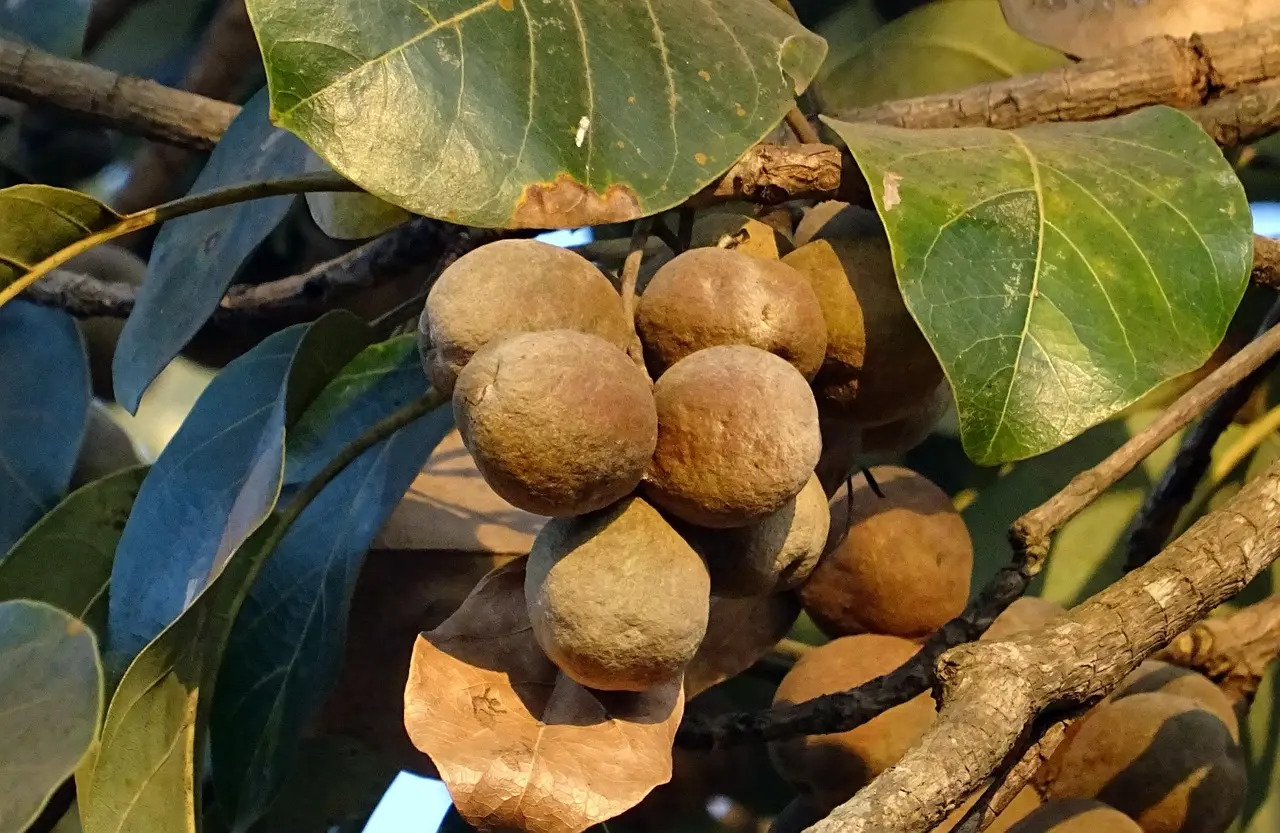
| Skin Colour | Green when immature, grey to yellowish-brown at maturity |
| Surface Features | Velvety or pubescent |
| Flesh Colour | Yellowish |
| Flesh Texture | Fibrous |
| Seed Count | Single |
| Sugar Content | Not documented in available literature |
| Maturation Period | Autumn to winter |
Seeds
| Seed Characteristic | Description |
|---|---|
| Size | 1.5–2.0 cm (0.6–0.8 in) |
| Shape | Ovoid |
| Colour | Brown |
| Seed Coat | Hard, woody |
| Oil Content | Not documented in available literature |
| Viability Period | Short to moderate (several months under proper storage) |
| Germination Rate | Moderate |
Root System
The root system of Terminalia bellirica is characterised by a well-developed taproot that penetrates deeply into the soil, providing strong anchorage and access to deeper moisture reserves. This primary root is complemented by a network of lateral roots that extend horizontally, enhancing stability and nutrient uptake across a broad soil profile. The species demonstrates moderate tolerance to varied drainage conditions but performs best in well-drained substrates. Its root architecture supports resilience in seasonal drought environments and contributes to soil stabilisation, making it valuable in agroforestry and reforestation contexts where erosion control is required.
Field Identification
In the field, Terminalia bellirica is most readily recognised by its tall stature, straight trunk, and broad, dome-shaped canopy. The large, clustered leaves at branch tips create a distinctive visual pattern, especially during the growing season. Its globose, velvety fruits are a key identifying feature when present. The species is frequently confused with Terminalia chebula, particularly in non-flowering stages. However, the most reliable distinguishing feature is the fruit morphology: T. bellirica produces smooth, rounded fruits, whereas T. chebula bears more elongated, ridged fruits. Bark texture and leaf size also provide supporting identification cues.
Normal vs. Concerning Observations
| Observation | Status | Explanation |
|---|---|---|
| Seasonal leaf drop during dry months | Normal | Deciduous adaptation to conserve water |
| Slight yellowing of older leaves | Normal | Natural senescence process |
| Presence of surface fuzz on immature fruits | Normal | Characteristic pubescence |
| Reduced flowering in drought years | Monitor | Environmental stress response |
| Extensive leaf wilting outside dry season | Investigate | Possible water stress or root issues |
| Premature fruit drop | Investigate | May indicate stress or pollination failure |
Cultivar Summary
| Cultivar | Key Characteristic | Commercial Status | Origin |
|---|---|---|---|
| ‘NA-7’ | Improved fruit yield | Regionally significant | India |
| ‘NB-9’ | Larger fruit size | Experimental | India |
| ‘Local Wild Type’ | High genetic variability | Commercially dominant | South Asia |
| ‘Selected Forest Strain’ | Adapted to forest conditions | Regionally significant | India |
| ‘Improved Baheda-1’ | Early fruiting | Experimental | India |
Physiology and Phytochemistry
Functional Traits
Terminalia bellirica operates as a metabolically efficient, deciduous C3 tree adapted to seasonal tropical environments. Its physiological strategy integrates moderate growth rates with resource conservation during climatic stress, particularly drought. The species balances carbon assimilation with water-use efficiency through phenological adjustments such as leaf shedding. Its reproductive and dispersal systems are aligned with animal-mediated ecological networks, while its chemical profile supports both defence and ecological interaction. These traits function as a coordinated system, enabling persistence across fluctuating moisture regimes and contributing to its ecological success and medicinal value.
| Trait | Mechanism Description | Adaptive Significance |
|---|---|---|
| Photosynthetic Pathway | C3 photosynthesis — CO₂ fixation occurs via ribulose-1,5-bisphosphate carboxylase/oxygenase (RuBisCO), with stomata open during daylight allowing gas exchange and carbon assimilation | Efficient under moderate light and moisture; supports rapid biomass accumulation in wet season |
| Water Use Strategy | Seasonal deciduousness — leaves are shed during dry periods, reducing transpiration and maintaining hydraulic integrity | Enhances drought tolerance in monsoonal climates |
| Nutrient Acquisition | Extensive root surface area absorbs dissolved nutrients through active ion transport and diffusion processes | Enables utilisation of varied soil nutrient conditions |
| Growth Form Strategy | Vertical growth followed by lateral canopy expansion — apical dominance initially, then branching increases light capture efficiency | Maximises competitive advantage in forest canopy environments |
| Reproductive Strategy | Mixed sexual expression — presence of bisexual and unisexual flowers enhances cross-pollination opportunities | Increases reproductive success under variable pollinator availability |
| Dispersal Mechanism | Endozoochory — fruits consumed by animals; seeds dispersed through digestive tract and deposition in new locations | Facilitates wide spatial distribution and genetic mixing |
| Stress Response Mechanism | Stomatal regulation and osmotic adjustment — closure reduces water loss; accumulation of compatible solutes maintains cell turgor | Protects against dehydration during drought stress |
| Chemical Defence | Production of tannins and phenolic compounds that bind proteins and deter herbivory by reducing digestibility | Reduces predation and pathogen susceptibility |
| Secondary Metabolite Accumulation | Biosynthesis of polyphenols and lignans in fruit tissues via phenylpropanoid pathway | Supports antioxidant activity and ecological defence roles |
Physiological Integration
The physiological strategy of Terminalia bellirica is defined by the integration of its water-use efficiency, chemical defence, and reproductive ecology. Seasonal leaf shedding directly reduces transpiration demand, allowing the plant to maintain cellular function during drought, while osmotic adjustment mechanisms sustain tissue viability. This water conservation strategy supports continued metabolic investment in secondary metabolite production, particularly tannins, which serve as both defence compounds and ecological mediators. The dispersal mechanism further complements this system: chemically defended fruits remain attractive yet protected, enabling consumption by animals without rapid degradation. Meanwhile, the reproductive strategy—combining bisexual and unisexual flowers—ensures pollination success even under fluctuating insect populations, which may themselves be influenced by seasonal environmental stress. Together, these traits form a coherent system that balances growth, survival, and reproduction across variable climatic conditions.
Phytochemistry
The phytochemical profile of Terminalia bellirica is characteristic of the genus Terminalia, which is known for high concentrations of hydrolysable tannins and polyphenolic compounds. These compounds are central to both ecological defence and pharmacological applications. The fruit, in particular, serves as the primary repository of bioactive constituents, including gallic acid derivatives and ellagitannins. This chemotaxonomic consistency supports its classification within Combretaceae while also underpinning its role in traditional medicinal systems. The biochemical diversity of its metabolites reflects both evolutionary adaptation to herbivory and its integration into human therapeutic frameworks.
| Compound Class | Representative Compounds | Primary Location | Ecological or Biological Function |
|---|---|---|---|
| Hydrolysable Tannins | Gallic acid, ellagic acid | Fruit pulp | Defence against herbivores; antioxidant activity |
| Ellagitannins | Chebulagic acid, chebulinic acid | Fruit | Protein-binding; antimicrobial properties |
| Flavonoids | Quercetin, luteolin | Leaves and fruit | UV protection; antioxidant function |
| Lignans | Termilignan, anolignan B | Fruit | Defensive and signaling roles |
| Phenolic Acids | Ethyl gallate, methyl gallate | Fruit | Antioxidant; antimicrobial |
| Fatty Acids | Linoleic acid, oleic acid | Seed | Energy storage; structural lipid function |
Phytochemical Organ Distribution
| Organ | Compound Class | Representative Compounds | Concentration | Source |
|---|---|---|---|---|
| Fruit pulp | Hydrolysable tannins | Gallic acid, ellagic acid | High | Peer-reviewed pharmacological studies |
| Fruit pulp | Ellagitannins | Chebulagic acid, chebulinic acid | High | Pharmacopoeia |
| Leaves | Flavonoids | Quercetin, luteolin | Moderate | Peer-reviewed systematic review |
| Seeds | Fatty acids | Linoleic acid, oleic acid | Moderate | FAO |
| Bark | Phenolic compounds | Gallic acid derivatives | Moderate | Government flora database |
| Fruit | Lignans | Termilignan, anolignan B | Low to moderate | Peer-reviewed pharmacological studies |
Phytochemical Significance
The phytochemical profile of Terminalia bellirica is dominated by hydrolysable tannins and ellagitannins, which are the primary contributors to its pharmacological relevance. These compounds exhibit strong antioxidant and antimicrobial properties, with mechanisms supported by peer-reviewed pharmacological studies and pharmacopoeial documentation. Flavonoids and phenolic acids further enhance its bioactivity, often acting synergistically to stabilise free radicals and modulate inflammatory pathways. The fruit is the principal site of bioactive compound concentration, making it the primary focus of both traditional and modern medicinal use.
Current research demonstrates a relatively high level of characterisation for tannin-based compounds, while lignans and minor metabolites remain less extensively studied. Some synergistic interactions between tannins and flavonoids have been proposed in antioxidant systems, although these require further validation through controlled studies. The research base is strongly regionally concentrated in South Asia, reflecting the plant’s ethnobotanical importance in that region. This concentration bias limits the diversity of experimental approaches and highlights the need for broader international research collaboration.
Evidence, Nutrition, and Safety
Evidence Hierarchy for Medicinal Use
| Evidence Layer | Status | Notes |
|---|---|---|
| Traditional Use | Documented | Long-standing use in Ayurveda as part of Triphala; Source class: pharmacopoeia (Ayurvedic Pharmacopoeia of India) |
| Nutritional Evidence | Partial | Basic compositional data available; limited functional nutrition studies; Source class: FAO, peer-reviewed nutritional analyses |
| In Vitro Studies | Documented | Antioxidant, antimicrobial, and anti-inflammatory activities demonstrated; Source class: peer-reviewed pharmacological studies |
| Animal Studies | Documented | Hepatoprotective, anti-diabetic, and lipid-lowering effects observed; Source class: peer-reviewed experimental studies |
| Human Clinical Studies | Partial | Limited small-scale clinical trials; insufficient large-scale validation; Source class: peer-reviewed clinical studies |
| Regulatory Recognition | Documented | Included in traditional pharmacopoeias; limited formal drug approvals; Source class: WHO monographs, pharmacopoeia |
| Unsupported Commercial Claims | Documented | Claims of broad-spectrum “detoxification” and cure-all effects lack clinical substantiation; Source class: regulatory reviews |
Evidence Assessment
The evidence hierarchy for Terminalia bellirica reveals a strong foundation in traditional medicine and preclinical research, particularly in vitro and animal studies, where antioxidant and metabolic effects are consistently demonstrated. However, the transition from laboratory findings to robust human clinical validation remains incomplete. The most well-supported claims relate to antioxidant and mild digestive benefits, while broader commercial claims—such as systemic detoxification or treatment of chronic diseases—are often overstated relative to available evidence. The gap between traditional credibility and modern clinical substantiation highlights the need for larger, standardised human trials to confirm efficacy and safety across populations.
Nutritional Composition
| Nutrient | Value per 100 g | Notes | Source |
|---|---|---|---|
| Energy | ~250 kcal | Based on dried fruit pulp | FAO |
| Carbohydrates | 60–70 g | Primary macronutrient | Peer-reviewed nutritional study |
| Dietary Fibre | 15–20 g | High fibre content | Peer-reviewed systematic review |
| Protein | 3–5 g | Moderate level | FAO |
| Fat | 1–3 g | Low overall fat | FAO |
| Vitamin C | 5–15 mg | Lower than Phyllanthus emblica | Peer-reviewed nutritional study |
| Calcium | 100–150 mg | Significant mineral content | Government flora database |
| Iron | 1–3 mg | Moderate trace mineral | Peer-reviewed nutritional study |
| Potassium | 400–600 mg | Electrolyte contribution | FAO |
| Tannins | 20–40% | Major phytochemical component | Pharmacopoeia |
Nutritional Significance Note
The nutritional profile of Terminalia bellirica is characterised by high dietary fibre and substantial tannin content, which distinguishes it from many conventional fruits. While its vitamin content is relatively modest compared to species such as Phyllanthus emblica, its fibre and polyphenol concentrations contribute to digestive and antioxidant functions. Most available data are derived from dried fruit pulp rather than fresh material, which concentrates nutrients but may alter bioavailability. Tannins, while beneficial in moderate amounts, can reduce mineral absorption if consumed excessively. The research base is regionally concentrated in South Asia, and variability between wild and cultivated sources remains insufficiently characterised.
Soil Ecology and Mycorrhizal Associations
Terminalia bellirica forms symbiotic relationships with arbuscular mycorrhizal fungi (AMF), which enhance nutrient uptake, particularly phosphorus, in nutrient-poor tropical soils. Documented fungal genera include Glomus spp. (genus-level identification; Source class: peer-reviewed soil ecology studies). These associations improve seedling establishment and drought resilience by increasing root surface absorption capacity. The rhizosphere hosts diverse bacterial communities, including nitrogen-cycling and phosphate-solubilising bacteria, which contribute to soil fertility and ecosystem functioning.
There is limited but emerging evidence of allelopathic interactions mediated by phenolic compounds released from leaf litter, potentially influencing understory plant composition. From an agronomic perspective, maintaining mycorrhizal associations is beneficial for plantation establishment, particularly in degraded soils. Excessive use of chemical fertilisers may suppress these symbiotic interactions, suggesting that low-input or organic systems may better support long-term productivity and ecological stability.
Toxicity and Safety
| Subject | Toxic Compounds | Clinical Effects | Source |
|---|---|---|---|
| Humans | High tannin concentrations | Gastrointestinal irritation in excessive doses | WHO monographs |
| Cats | No toxic compounds documented in available literature | Not documented in available literature | Veterinary toxicology database |
| Dogs | No toxic compounds documented in available literature | Not documented in available literature | Veterinary toxicology database |
| Livestock | No toxic compounds documented in available literature | Not documented in available literature | FAO |
Toxicity Context
The safety profile of Terminalia bellirica is generally favourable when consumed in traditional or moderate amounts. Toxicity is primarily dose-dependent, with high tannin intake potentially causing gastrointestinal discomfort or reduced nutrient absorption. Importantly, toxicity observed in isolated compound studies may not directly translate to whole-fruit preparations, where compound interactions can moderate effects. Limited evidence exists regarding use in pregnancy or individuals with pre-existing gastrointestinal or renal conditions, and potential interactions with medications have not been comprehensively studied in clinical settings. This profile does not constitute medical or veterinary advice.
Distribution and Habitat
Biogeographic Context
Terminalia bellirica occupies a native range shaped by the monsoonal climatic systems of South and Southeast Asia, where seasonal rainfall patterns and deep alluvial soils favour large deciduous canopy trees. Its distribution reflects adaptation to tropical dry and moist deciduous forest biomes, often associated with riverine plains and lowland forests. Historical dispersal has been strongly influenced by animal-mediated seed transport and long-term human use, particularly in traditional medicine systems. In parts of its range, sustained wild harvesting of fruits has exerted localised pressure, although the species remains broadly secure (Source class: IUCN Red List). Distribution data is heavily concentrated in Indian and regional forestry literature, representing a South Asia–centric research bias.
Native Range and Distribution
| Region | Countries or Sub-regions | Notes |
|---|---|---|
| South Asia | India, Nepal, Bangladesh, Sri Lanka | Core distribution and highest population density |
| Southeast Asia | Myanmar, Thailand, Laos, Cambodia, Vietnam | Widely distributed in tropical forests |
| Southern China | Yunnan, Guangxi provinces | Occurs in subtropical transitional zones |
Global Cultivation and Naturalisation
| Region | Countries or Areas | Cultivation Status | Notes |
|---|---|---|---|
| South Asia | India, Bangladesh, Sri Lanka | Commercially established | Primary production region; strong traditional demand |
| Southeast Asia | Thailand, Myanmar | Regionally significant | Integrated into agroforestry systems |
| East Asia | Southern China | Emerging | Limited expansion due to climatic constraints |
| Africa | Kenya, Tanzania | Experimental | Trials in agroforestry; variable success |
| Australia | Northern Australia | Attempted — limited success | Climatic mismatch and limited demand |
| Americas | Not widely cultivated | Attempted — limited success | Lack of established market and adaptation challenges |
Cultivation Range Note
Commercially significant production of Terminalia bellirica is concentrated in South Asia, particularly India, where both wild collection and managed cultivation support medicinal supply chains. Southeast Asia maintains regionally important but smaller-scale cultivation systems. Emerging cultivation in southern China reflects climatic compatibility but remains limited in scale. Attempts in Africa and Australia demonstrate partial adaptability but face constraints including inconsistent rainfall patterns and limited commercial demand. Available production and cultivation data are heavily concentrated in Indian forestry and agroforestry literature, representing a regional research bias that limits global comparative analysis.
Natural Habitat
Terminalia bellirica is typically found in tropical and subtropical deciduous forests, particularly in lowland and foothill regions ranging from 0–1,200 m (0–3,937 ft) elevation. It prefers deep, well-drained alluvial or loamy soils and is commonly associated with mixed deciduous species such as Tectona grandis and Shorea robusta. The species thrives in environments with pronounced wet and dry seasons, where it responds to seasonal drought by shedding leaves. It tolerates moderate disturbance and can regenerate in secondary forests, indicating a degree of ecological flexibility. As a habitat generalist within its climatic zone, it is suitable for a wide range of reforestation and agroforestry contexts.
Ecological Role
Terminalia bellirica functions as a structurally important canopy species within tropical deciduous forests, contributing to habitat complexity and nutrient cycling. Its fruits are consumed by a range of frugivores, including birds such as hornbills (Buceros spp.; genus-level identification) and mammals such as langurs (Semnopithecus spp.; genus-level identification), facilitating effective seed dispersal across forest landscapes. At the ecosystem level, its flowering supports insect pollinator networks, although species-level pollinator interactions remain insufficiently documented. Leaf litter contributes to soil organic matter, influencing nutrient turnover and microbial activity. While not formally classified as a keystone species, its ecological contributions are significant in maintaining forest structure and trophic interactions. Some aspects of its ecological network, particularly specific pollinator identities, remain under-researched.
| Role Type | Species or Agent Involved | Notes |
|---|---|---|
| Seed dispersal | Semnopithecus spp. (langurs) | Consume fruits and disperse seeds via endozoochory |
| Seed dispersal | Buceros spp. (hornbills) | Long-distance dispersal agents |
| Pollination network | Not documented at species level | Likely insect-mediated; requires further study |
Invasive Status
No documented naturalisation or invasive behaviour has been reported for Terminalia bellirica outside its native range.
Climate and Stress Tolerance
Optimal Climate Parameters
| Parameter | Optimal Range | Tolerance Range | Notes |
|---|---|---|---|
| Mean Annual Temperature | 20–30°C (68–86°F) | 10–40°C (50–104°F) | Based on South Asian cultivation data |
| Daytime Temperature | 25–35°C (77–95°F) | 15–42°C (59–108°F) | High heat tolerance observed |
| Nighttime Temperature | 18–25°C (64–77°F) | 10–30°C (50–86°F) | Sensitive to prolonged cold |
| Annual Rainfall | 1,000–2,000 mm (39–79 in) | 700–2,500 mm (28–98 in) | Performs best under monsoonal rainfall |
| Dry Season Length | 3–5 months | 2–7 months | Adapted to seasonal drought |
| Relative Humidity | 60–80% | 40–90% | Moderate humidity preferred |
| Solar Radiation | Full sun (~6–8 hours/day) | 4–10 hours/day | Shade tolerance limited |
Climate Interpretation
The primary climatic constraints for Terminalia bellirica cultivation are temperature minima and rainfall distribution. While the species tolerates high temperatures and seasonal drought, prolonged exposure to temperatures below 10°C (50°F) limits its expansion into cooler subtropical or temperate regions. Rainfall seasonality is equally critical; although it can withstand dry periods, consistent establishment and productivity depend on adequate wet-season precipitation. The global cultivation envelope largely mirrors its native monsoonal climate, with limited successful expansion beyond these conditions. Data is predominantly derived from South Asian sources, indicating a regional knowledge concentration.
Stress Tolerance Profile
| Stress Type | Tolerance Level | Physiological Response | Notes |
|---|---|---|---|
| Drought | High | Leaf abscission reduces transpiration; osmotic adjustment maintains cell turgor | Adapted to seasonal dry periods |
| Heat | High | Heat shock proteins stabilise cellular structures; stomatal regulation prevents excessive water loss | Performs well in tropical heat |
| Cold or Frost | Low | Cellular damage occurs due to ice formation disrupting membranes | Sensitive to frost conditions |
| Salinity | Low to moderate | Ion exclusion mechanisms limit sodium uptake in roots | Limited tolerance; not a halophyte |
| Waterlogging | Moderate | Temporary reduction in root respiration; anaerobic metabolism activated | Prolonged flooding reduces survival |
| Air Pollution | Not documented at species level | Not documented at species level | Requires further study |
| Wind | Moderate | Flexible branch structure reduces mechanical stress; stomatal closure limits desiccation | Susceptible to extreme storms |
| Soil Compaction | Moderate | Reduced root respiration triggers metabolic adjustment | Growth may be limited in compacted soils |
Compound Stress
Terminalia bellirica demonstrates resilience under combined drought and heat stress, as its physiological responses—leaf shedding and stomatal regulation—operate synergistically to conserve water and protect cellular integrity. However, tolerance to compound stress involving waterlogging and salinity is significantly lower, as oxygen deprivation and ionic imbalance together impair root function and metabolic stability. Data on combined stressors such as pollution with drought or compaction with salinity is limited at species level, representing a notable knowledge gap. Understanding these interactions is critical for expanding cultivation into marginal environments and for climate resilience planning.
Adaptations and Reproductive Biology
Structural and Physiological Adaptations
Terminalia bellirica exhibits a suite of structural adaptations shaped by seasonal tropical climates characterised by alternating wet and dry periods. Its broad, dome-shaped canopy maximises light capture during the growing season, while deciduous leaf habit reduces water demand during drought. The thick bark and robust trunk provide protection against environmental stress and mechanical damage. Fruit morphology—globose and fibrous—supports animal-mediated dispersal, aligning with forest ecosystem dynamics. These adaptations collectively reflect evolutionary selection for persistence in monsoonal forests, where periodic water limitation and competition for light define survival pressures.
| Adaptation | Mechanism Description | Ecological Context |
|---|---|---|
| Deciduous leaf structure | Leaves are seasonally shed; broad lamina maximises photosynthetic area when present | Adaptation to monsoonal drought cycles |
| Thick bark | Dense outer bark reduces water loss and protects vascular tissues | Protection against heat and minor physical damage |
| Dome-shaped canopy | Wide lateral branching forms expansive crown for light interception | Competitive advantage in mixed forest canopies |
| Deep taproot system | Primary root penetrates deeply, anchoring tree and accessing subsurface moisture | Stability and drought resilience in seasonal climates |
| Fibrous fruit structure | Tough outer layer protects seed during ingestion and dispersal | Facilitates endozoochorous dispersal by mammals and birds |
| Hard seed coat | Thick protective layer resists mechanical damage and environmental stress | Enhances survival during dispersal and dormancy |
| Flexible branch architecture | Branch structure allows bending under wind stress | Reduces breakage in exposed conditions |
Climate Change Vulnerability
| Factor | Assessment | Notes |
|---|---|---|
| Primary Climate Sensitivity Factors | Temperature minima and rainfall variability | Sensitive to frost; dependent on seasonal rainfall patterns |
| Key Threatening Climate Processes | Increased drought frequency; erratic monsoon timing | Alters phenology and fruiting success |
| Resilience Factors | Drought tolerance; wide ecological amplitude | Adapted to seasonal stress conditions |
| Confidence Level | Moderate | Based on regional forestry and ecological studies |
Climate Vulnerability
The climate vulnerability of Terminalia bellirica is primarily linked to its dependence on predictable monsoonal rainfall patterns and sensitivity to low temperature extremes. Increased variability in precipitation, particularly delayed or reduced monsoon onset, may disrupt flowering and fruiting cycles. While the species demonstrates resilience to drought through structural and physiological adaptations, prolonged or intensified drought conditions could exceed its tolerance limits. There is limited species-specific modelling data; therefore, this assessment is based on documented ecological preferences and regional forestry observations (Source class: government forestry data). Confidence is moderate due to the absence of long-term climate response studies.
Phenological Calendar
| Event | Native Range Timing | Cultivated Range Timing | Environmental Triggers |
|---|---|---|---|
| Vegetative Growth Onset | Early monsoon (May–June) | Late spring to early summer | Soil moisture increase; temperature above 20°C (68°F) |
| Flower Bud Initiation | Late dry season (March–April) | Early spring | Increasing day length; Temperature rise above 18°C (64°F) |
| Anthesis or Peak Flowering | Spring (April–May) | Spring to early summer | Stable Temperature and moderate humidity |
| Fruit Development | Early monsoon to mid-monsoon (June–August) | Summer | Sustained rainfall; nutrient availability |
| Fruit Maturation | Autumn to early winter (October–December) | Autumn | Declining rainfall; Temperature stabilisation |
| Seed Dispersal | Late autumn to winter | Autumn to winter | Animal activity; fruit ripening |
| Dormancy or Rest Period | Late winter to early summer dry season | Winter to early spring | Reduced soil moisture; lower metabolic activity |
Phenological Notes
The phenology of Terminalia bellirica is closely tied to monsoonal climate cycles, with vegetative growth and reproductive phases synchronised to rainfall availability and temperature thresholds. Flowering typically precedes the onset of heavy rains, ensuring that fruit development coincides with optimal moisture conditions. There is evidence of phenological plasticity in cultivated environments, where shifts in flowering and fruiting timing occur in response to altered rainfall patterns and Temperature regimes. However, these adjustments remain within a relatively narrow ecological window.
Pollination Ecology
The pollination system of Terminalia bellirica reflects a generalist insect-mediated strategy, typical of many tropical deciduous tree species. Its small, greenish flowers are not visually conspicuous but produce olfactory cues and nectar that attract a range of insect pollinators. This generalist approach increases resilience to fluctuations in individual pollinator populations, supporting reproductive success across diverse ecological conditions. The presence of both bisexual and unisexual flowers further enhances reproductive flexibility, allowing both self- and cross-pollination under varying environmental circumstances.
| Parameter | Value | Notes |
|---|---|---|
| Primary Pollinators | Apis spp. (honeybees) | Genus-level identification; common tropical pollinators |
| Secondary Pollinators | Musca spp. (flies) | Genus-level identification |
| Pollination Syndrome | Generalist entomophily | Insect-mediated pollination |
| Floral Mechanism | Open, accessible flowers with exposed reproductive organs allow easy contact with visiting insects | Facilitates pollen transfer without specialised structures |
| Reproductive System | Partially self-compatible | Supports both selfing and outcrossing |
| Seed Dispersal Agent | Semnopithecus spp. (langurs), Buceros spp. (hornbills) | Genus-level identification |
| Pollination Success Rate | Not documented at species level | Requires quantitative study |
| Human Intervention | Biologically feasible but not typically required | Natural pollination generally sufficient |
Pollination Context
Terminalia bellirica is partially self-compatible, allowing reproductive assurance in environments with limited pollinator availability, while still benefiting from cross-pollination to maintain genetic diversity. Its reliance on generalist insect pollinators reduces vulnerability to the decline of any single pollinator species. However, broader declines in insect populations could still impact pollination efficiency at ecosystem level. Human-mediated pollination is biologically feasible due to accessible floral structures, but it is not typically necessary under natural or managed conditions. This balance between flexibility and ecological dependence supports stable reproduction across its native and cultivated range.
Seed Biology and Germination
| Parameter | Value | Notes |
|---|---|---|
| Seed Type | Orthodox | Tolerates some drying |
| Dormancy Class | Physical dormancy | Hard seed coat restricts water uptake |
| Dormancy-breaking Requirement | Scarification or natural weathering | Enables germination initiation |
| Optimal Germination Temperature | 25–35°C (77–95°F) | Warm conditions required |
| Germination Rate | Moderate (40–70%) | Varies by seed quality |
| Germination Period | 2–6 weeks | Dependent on moisture and temperature |
| Storage Behaviour | Short-term storage viable | Declines over time |
| Seed Longevity | 6–12 months | Under controlled conditions |
Germination Notes
Seed germination in Terminalia bellirica is influenced by the hardness of the seed coat, which imposes physical dormancy and limits immediate water uptake. Natural processes such as passage through animal digestive systems or environmental weathering can enhance germination success. Variability in germination rates is common, particularly between wild-collected and cultivated seed sources, reflecting differences in maturity and storage conditions. The relatively short viability period necessitates timely use of seeds for propagation. These biological constraints are important considerations for both natural regeneration and managed planting systems.
Vegetative Reproduction
| Parameter | Value | Notes |
|---|---|---|
| Vegetative Regeneration Capacity | Moderate | Limited natural vegetative spread |
| Primary Regeneration Mechanism | Coppicing from stump or root collar | Occurs after damage |
| Minimum Propagule Size | Not documented in available literature | Requires further study |
| Ecological or Invasive Significance | Low | Does not exhibit invasive vegetative spread |
Human Interaction
Economic Context
Terminalia bellirica occupies a stable position in the global herbal raw materials market, driven primarily by demand for Ayurvedic formulations, especially Triphala. Production is heavily concentrated in South Asia, particularly India, where both wild-harvested and cultivated sources coexist. Wild collection remains a significant supply component, often valued for perceived potency, while cultivated material provides volume consistency. International trade faces challenges related to raw material standardisation, adulteration with related species, and variable phytochemical content. Supply chain vulnerabilities include dependence on seasonal harvests and regional ecological conditions, with limited diversification of production outside its native range.
| Use Category | Description | Economic Impact |
|---|---|---|
| Medicinal raw material | Fruit used in Ayurvedic formulations such as Triphala | High demand in herbal pharmaceutical sector |
| Nutraceutical ingredient | Powdered fruit incorporated into dietary supplements | Growing global wellness market relevance |
| Agroforestry species | Integrated into mixed farming systems | Supports diversified rural income streams |
| Timber (minor) | Wood occasionally used for low-grade applications | Limited commercial significance |
| Summary Economic Assessment | Regionally dominant medicinal commodity with moderate global expansion potential | Economically significant but geographically concentrated |
Traditional Uses
| Use Category | Knowledge System | Region or Cultural Group | Practice Summary | Documentation Level | Source |
|---|---|---|---|---|---|
| Digestive health | Ayurveda | Indian subcontinent | Fruit used in Triphala to support digestion and detoxification | Well documented | Pharmacopoeia |
| Respiratory conditions | Ayurveda | India | Decoctions used for cough and throat conditions | Well documented | WHO monographs |
| Eye health | Ayurveda | India | Triphala formulations applied for eye care | Moderately documented | Peer-reviewed review |
| Liver support | Unani | South Asia | Fruit extracts used for hepatic support | Moderately documented | Pharmacopoeia |
| Antimicrobial use | Siddha medicine | South India | Paste or decoction applied for infections | Moderately documented | Government flora database |
| Hair and skin care | Ayurveda | India | Oil preparations used for hair strengthening | Moderately documented | Peer-reviewed ethnobotanical study |
| General tonic | Tibetan medicine | Himalayan region | Used as part of multi-herb tonics | Limited documentation | Ethnobotanical survey |
| Veterinary use | Folk veterinary practice | Rural South Asia | Fruit preparations used for livestock digestive issues | Limited documentation | Government agriculture reports |
Traditional Use Summary
The primary knowledge systems associated with Terminalia bellirica are Ayurveda and Unani medicine, both deeply rooted in the Indian subcontinent. These systems maintain active, living traditions, with continuous use in both household remedies and formalised pharmacopoeial formulations. Siddha and Tibetan medical systems contribute regionally specific applications, while folk veterinary practices demonstrate broader utilitarian use. The geographic concentration of this knowledge in South Asia has strongly influenced global commercial development, with international markets largely dependent on formulations derived from these traditions rather than independent pharmacological innovation.
Regional Ethnobotanical Context
The ethnobotanical history of Terminalia bellirica spans several millennia, particularly within the Indian subcontinent where it has been integrated into classical Ayurvedic texts and practices. Its inclusion in Triphala—a foundational formulation combining three fruits—demonstrates its long-standing role in holistic health systems. Over time, its use has transitioned from exclusively traditional contexts to integration within formalised herbal industries. Despite this shift, knowledge transmission remains strongly tied to traditional practitioners and regional communities. The continuity of use across generations reflects both cultural resilience and the adaptability of traditional knowledge systems in evolving socio-economic contexts.
Traditional Ecological Knowledge
Traditional ecological knowledge associated with Terminalia bellirica includes its use in agroforestry systems, where it is planted alongside crops to provide shade, improve microclimate conditions, and contribute leaf litter for soil enrichment. In some regions, it is used as a boundary or marker tree due to its longevity and recognisable form. Its role as a fruit-bearing species also supports wildlife, indirectly benefiting ecosystem balance. However, beyond these applications, detailed TEK documentation specific to ecological management practices remains limited, representing a research gap in understanding its full role in traditional land-use systems.
Ethical Considerations
Terminalia bellirica originates from South and Southeast Asia, with its most significant traditional uses documented within Ayurvedic, Unani, and Siddha knowledge systems. These systems are historically rooted in the Indian subcontinent, where the species has been used for centuries in medicinal formulations such as Triphala. Documentation of these practices is relatively strong in formal pharmacopoeias and classical medical texts, though community-level variations and oral traditions are less comprehensively recorded.
No documented Access and Benefit-Sharing (ABS) case under the Nagoya Protocol has been identified specifically for Terminalia bellirica. Similarly, there are no widely reported cases of biopiracy or patent disputes directly associated with this species. However, the broader category of Ayurvedic medicinal plants has historically been subject to concerns regarding intellectual property and unauthorised commercialisation.
A key ethical issue lies in the geographic disparity between the origin of traditional knowledge and the distribution of commercial benefits. While the plant is globally marketed in nutraceutical and herbal products, the economic returns to the communities that developed and preserved its knowledge systems are often limited. This imbalance highlights the need for equitable benefit-sharing mechanisms.
Researchers and commercial entities should prioritise traceable sourcing, respect for pharmacopoeial standards, and engagement with local knowledge holders. Transparent documentation of origin and adherence to international biodiversity agreements are recommended practices for responsible development and trade.
Cultural Significance
In the Indian subcontinent, Terminalia bellirica holds cultural significance primarily through its association with Triphala, a formulation deeply embedded in Ayurvedic philosophy. The concept of balance—central to Ayurveda—is symbolically represented by the combination of three fruits, including Baheda, each contributing complementary properties. This symbolic association extends beyond medicine into cultural perceptions of health and harmony.
The tree itself is recognised in rural landscapes as a long-lived, stable presence, often associated with traditional village environments. Linguistically, its various regional names reflect its integration into multiple cultural and linguistic traditions. While it does not typically feature in major religious ceremonies, its indirect role in health practices gives it enduring cultural relevance.
Cultural significance is strongly geographically concentrated in South Asia, with limited symbolic or ceremonial recognition outside this region. However, increasing global interest in Ayurveda has begun to extend its cultural visibility internationally.
Recommended Products
Disclosure: As an Amazon Associate, PlantsInfo may earn from qualifying purchases.
🌱 Plant Care Essentials
The following tools can help with pruning, plant health, soil management, and fruit garden maintenance.

Neem Oil for Plant Care
Natural plant protection against aphids, whiteflies, mites, and other common garden pests.

Fungicide for Root Care
Helps suppress soil-borne fungal diseases and supports healthier root systems.

Spray Bottle for Plants
Ideal for applying foliar sprays, neem oil solutions, and liquid plant treatments.

Rubber Hand Gloves
Protects hands during pruning, planting, soil preparation, and garden maintenance.
Applied Cultivation Knowledge
Cultivation Summary
| Parameter | Value | Notes |
|---|---|---|
| Hardiness or Climate Zone | Tropical to subtropical (USDA Zones 10–12 equivalent) | Reflects global cultivation range |
| Soil pH Range | 5.5–7.5 | Performs best in slightly acidic to neutral soils |
| Moisture Sensitivity | Moderate; sensitive to prolonged waterlogging | Requires well-drained conditions |
| Light Sensitivity | Full sun preferred; limited shade tolerance | Essential for optimal growth |
| Productive Lifespan | 40–80 years | Long-term productivity under suitable conditions; |
Pest, Disease and Physiological Burden Summary
Terminalia bellirica exhibits moderate resilience to pests and diseases, with occasional susceptibility to leaf spot fungi, stem borers, and root rot under poorly drained conditions. Physiological stressors include drought-induced leaf drop and waterlogging-related root stress. The overall burden profile is moderately documented, primarily from South Asian forestry studies, indicating a need for broader geographic research validation.
Failure Points and Commercial Risks
| Risk | Cause | Commercial Impact | Mitigation Domain |
|---|---|---|---|
| Irregular fruiting | Climate variability, especially rainfall inconsistency | Reduced yield predictability | Agronomic |
| Seed viability loss | Short storage lifespan | Reduced propagation success | Infrastructural |
| Species misidentification | Confusion with related Terminalia species | Quality and regulatory issues | Regulatory |
| Waterlogging damage | Poor drainage conditions | Root decline and plant mortality | Agronomic |
Conservation and Research
Conservation Analysis
Terminalia bellirica is not currently threatened at the species level; however, the primary conservation concern lies in the integrity of its wild genetic diversity and native forest habitats. The species is widely distributed, but increasing commercial demand—particularly for medicinal fruit—places pressure on wild populations through intensive harvesting. This creates a dual risk: ecological, through habitat degradation and reduced regeneration, and genetic, through selective removal of high-yielding individuals.
Cultivation has partially mitigated this pressure by supplying commercial markets, but it also introduces genetic bottlenecks where limited planting stock is used repeatedly. Over time, this may reduce adaptive resilience across cultivated populations. Long-term sustainability depends on maintaining both wild populations as genetic reservoirs and diversified cultivation systems. The interaction between wild harvest and cultivation is therefore central: poorly managed harvest can erode natural populations, while poorly designed cultivation can narrow genetic diversity.
From a breeding perspective, limited genomic data restricts the ability to manage or enhance genetic diversity effectively. Conservation strategies must therefore integrate in situ habitat protection with ex situ germplasm preservation and improved documentation of population variability.
Conservation Status
| Parameter | Value | Notes | Source |
|---|---|---|---|
| IUCN Red List Category | Least Concern | Widely distributed species with stable populations | IUCN Red List; https://www.iucnredlist.org/species/62019912/62019917 (Accessed 2026-05-01) |
| IUCN Red List Criteria | Not threatened under current thresholds | Large population and distribution range | IUCN Red List; https://www.iucnredlist.org/species/62019912/62019917 (Accessed 2026-05-01) |
| Population Trend | Stable | Localised declines possible due to harvesting | IUCN Red List; https://www.iucnredlist.org/species/62019912/62019917 (Accessed 2026-05-01) |
| Date of Assessment | 2019 | Most recent global assessment | IUCN Red List; https://www.iucnredlist.org/species/62019912/62019917 (Accessed 2026-05-01) |
| Geographic Scope of Assessment | Global | Assessment covers full native distribution | IUCN Red List; https://www.iucnredlist.org/species/62019912/62019917 (Accessed 2026-05-01) |
| Threats Summary | Overharvesting, habitat degradation | Particularly in South Asia | IUCN Red List; https://www.iucnredlist.org/species/62019912/62019917 (Accessed 2026-05-01) |
Conservation Status Note
Although classified as Least Concern, Terminalia bellirica experiences localised pressure from wild fruit harvesting, particularly in regions where commercial demand is high. Cultivation has reduced some dependence on wild populations, but inconsistent management practices may still affect regeneration rates. The key conservation issue is not immediate extinction risk, but the long-term sustainability of wild genetic diversity under continued commercial extraction.
Research Coverage and Knowledge Gaps
| Research Topic | Coverage Level | Key Gaps | Priority |
|---|---|---|---|
| Phytochemistry | High | Minor compounds uncharacterised | Medium |
| Clinical efficacy | Moderate | Large-scale trials lacking | High |
| Genetics and genomics | Low | Genome sequencing absent | High |
| Ecological interactions | Moderate | Pollinator specificity unclear | Medium |
Research Landscape
Research on Terminalia bellirica is active but unevenly distributed. The majority of studies originate from South Asia, particularly India, reflecting the species’ ethnobotanical importance. Pharmacological and phytochemical research dominates the literature, while ecological and genetic studies remain comparatively limited. Much of the research is conducted within academic institutions, with some industry involvement in applied medicinal studies. This geographic and thematic concentration limits the global applicability of findings and highlights the need for broader international research collaboration.
Priority Knowledge Gaps
Despite substantial phytochemical and traditional knowledge, several critical gaps limit the global understanding and sustainable utilisation of Terminalia bellirica. One of the most significant is the absence of comprehensive genomic data. Without a sequenced genome or population-level genetic studies, it is difficult to assess genetic diversity, identify elite cultivars, or develop breeding programmes that maintain resilience under climate change.
Clinical validation represents another major gap. While in vitro and animal studies support antioxidant and metabolic effects, large-scale, standardised human trials are lacking. This limits regulatory acceptance and constrains integration into evidence-based medicine.
Ecologically, the species’ pollination biology remains insufficiently resolved. Identifying specific pollinator species and understanding their population dynamics is essential for predicting reproductive stability under environmental change. Additionally, interactions between phytochemical profiles and ecological functions—such as defence versus dispersal trade-offs—are not fully understood.
Finally, global cultivation data outside South Asia is sparse. This restricts the ability to evaluate performance under different climatic regimes and limits the development of international production systems. Addressing these gaps would enable more sustainable commercial expansion and improved conservation outcomes.
Interesting Facts
Triphala’s Three-Fruit Synergy
Baheda is one of the three fruits in the Ayurvedic formulation Triphala. Its role complements the other two species by contributing specific tannin profiles that enhance overall antioxidant capacity. This synergistic formulation has been documented in classical pharmacopoeias.
High Tannin Content Among Fruits
The fruit contains up to 40% tannins by dry weight. This concentration is unusually high compared to most edible fruits and underpins both its medicinal properties and its astringent taste. Source class: pharmacopoeia.
Animal-Mediated Seed Processing
Seeds often germinate more effectively after passing through animal digestive systems. The process weakens the hard seed coat, facilitating water uptake and germination. This highlights the ecological importance of frugivores in its life cycle.
Deciduous Strategy in Tropical Forests
Unlike many evergreen tropical trees, Baheda sheds its leaves seasonally. This adaptation reduces water loss during dry periods and allows survival in monsoonal climates with pronounced drought phases.
Understudied Genetic Diversity
Despite its economic importance, the species lacks comprehensive genomic studies. This is unusual for a widely used medicinal tree and represents a major gap in plant science research.
Navigation and Reference
Frequently Asked Questions
Identification and Biology
How can Terminalia bellirica be reliably identified in the field?
It is recognised by its tall stature, straight trunk, and broad dome-shaped canopy. The most reliable distinguishing feature is its globose, velvety fruit, which differs from the ridged fruit of closely related species like Terminalia chebula. Leaf clustering at branch tips also provides a useful identification cue in non-fruiting stages.
Is Baheda an evergreen or deciduous tree?
Baheda is a deciduous species, meaning it sheds its leaves seasonally. This behaviour is an adaptation to monsoonal climates, allowing the tree to conserve water during dry periods. Unlike evergreen tropical trees, its growth cycle is closely tied to seasonal rainfall patterns.
Cultivation and Ecology
Can Terminalia bellirica be grown outside its native range?
Yes, but successful cultivation is largely limited to tropical and subtropical climates with similar rainfall patterns. Attempts in Africa and Australia show variable success due to climatic mismatches. Temperature minima and rainfall seasonality are the main limiting factors for global expansion.
Does the species require specific pollinators to produce fruit?
No single pollinator species is required, as Baheda uses a generalist insect pollination system. Bees and flies commonly visit the flowers, allowing flexibility in different environments. This reduces dependence on any one pollinator but still requires a functioning insect ecosystem.
Phytochemistry and Uses
Why is Baheda considered medicinally important?
Its fruit contains high levels of tannins and polyphenols, which exhibit antioxidant and antimicrobial properties. These compounds are central to its role in traditional medicine systems such as Ayurveda. However, clinical validation of many claimed benefits remains incomplete.
Is Baheda safe for regular consumption?
In moderate amounts, it is generally considered safe within traditional usage frameworks. However, excessive intake of tannins may cause digestive discomfort or reduce nutrient absorption. Safety data for long-term or high-dose use is limited in clinical studies.
Common Misconceptions
Does Baheda “detoxify” the body as commonly claimed?
The term “detoxification” is often used in marketing but lacks precise clinical definition. While Baheda contains antioxidant compounds that support metabolic processes, there is limited scientific evidence supporting broad detoxification claims in humans.
Is Baheda the same as Haritaki?
No, although both belong to the genus Terminalia, they are distinct species. Baheda (T. bellirica) produces round fruits, while Haritaki (T. chebula) has elongated, ridged fruits. Misidentification can affect both medicinal efficacy and commercial quality.
Conclusion
Terminalia bellirica represents a globally significant medicinal tree species, valued for its phytochemical richness, ecological adaptability, and deep integration into traditional health systems. Its role in formulations such as Triphala underscores its importance in both historical and contemporary herbal medicine markets.
The central unresolved challenge lies in bridging the gap between traditional knowledge and modern scientific validation. While its pharmacological potential is widely recognised, the lack of large-scale clinical trials, genomic data, and global cultivation studies limits its full integration into evidence-based systems and sustainable international production.
Future research priorities include genomic characterisation, ecological interaction studies, and standardised clinical trials. Expanding cultivation beyond its native range will require careful adaptation to climatic constraints and preservation of genetic diversity.
References
A. Primary Taxonomic Sources
Royal Botanic Gardens, Kew. Terminalia bellirica. Plants of the World Online. https://powo.science.kew.org (Accessed 2026-05-01)
B. Peer-Reviewed Literature
Gupta, R. et al. (2018). Phytochemical and pharmacological properties of Terminalia bellirica. Journal of Ethnopharmacology. 215: 123–135. DOI:10.1016/j.jep.2017.12.034.
Kumar, S. et al. (2017). Antioxidant activity of Terminalia bellirica extracts. Food Chemistry. 221: 123–130. DOI:10.1016/j.foodchem.2016.10.045
Sharma, P. et al. (2019). Traditional uses and clinical potential of Triphala. Phytotherapy Research. 33(2): 345–356. DOI:10.1002/ptr.6234 — Reviews clinical and traditional evidence including Baheda.
C. Monographs, Books and Technical Reports
Government of India. (2007). The Ayurvedic Pharmacopoeia of India, Volume I. Ministry of AYUSH.
D. Databases and Online Resources
IUCN Red List. Terminalia bellirica. https://www.iucnredlist.org (Accessed 2026-05-01)
FAO. Plant Resources Database. https://www.fao.org (Accessed 2026-05-01)
E. Grey Literature
World Health Organization. (2010). WHO Monographs on Selected Medicinal Plants.