Patharchatta Benefits, Traditional Uses and Research
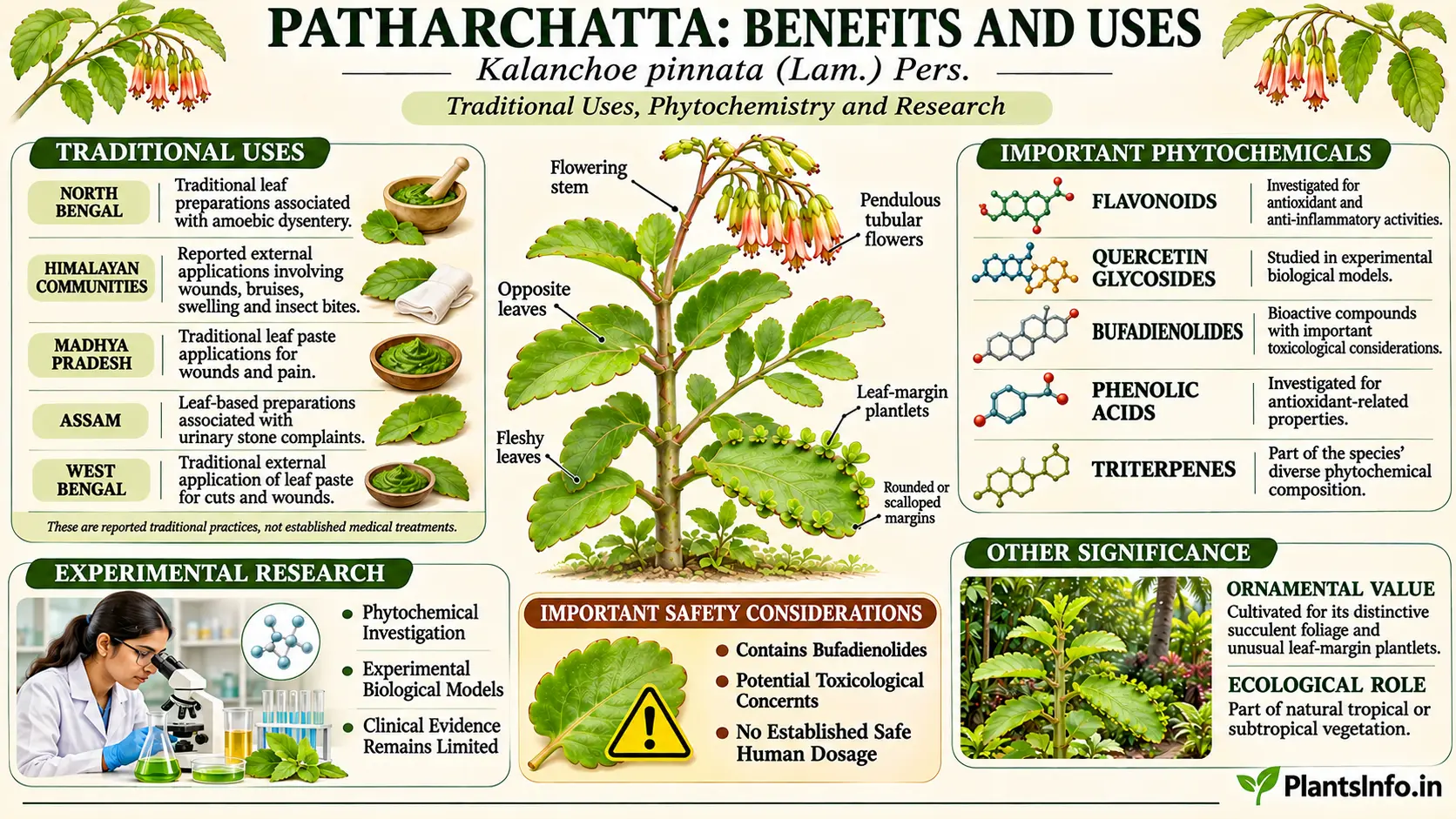
Kalanchoe pinnata has documented traditional, ornamental and ecological significance, and its chemical constituents have attracted scientific research. However, experimental findings do not establish the plant as a clinically proven treatment or confirm a safe dosage for human use.
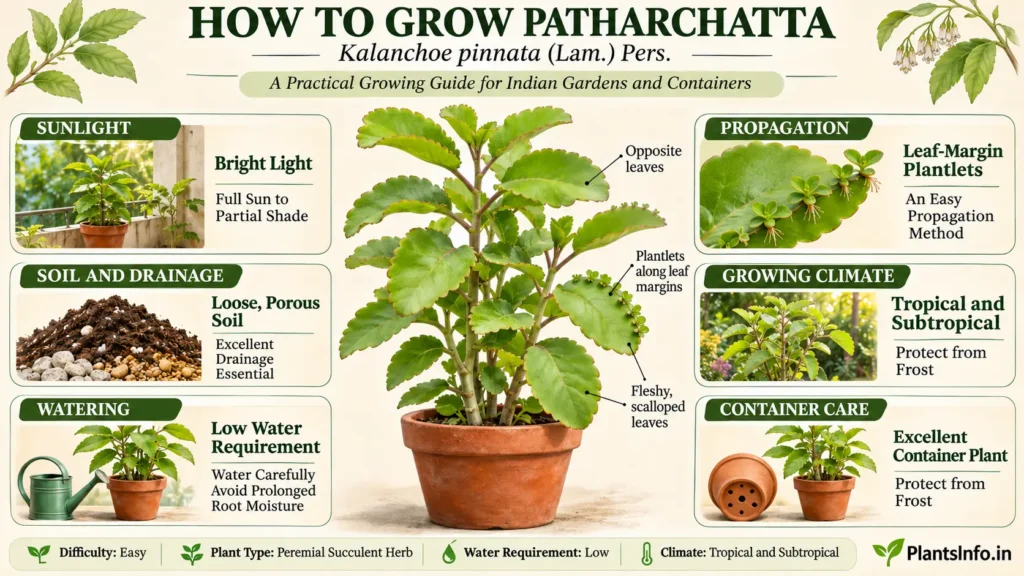
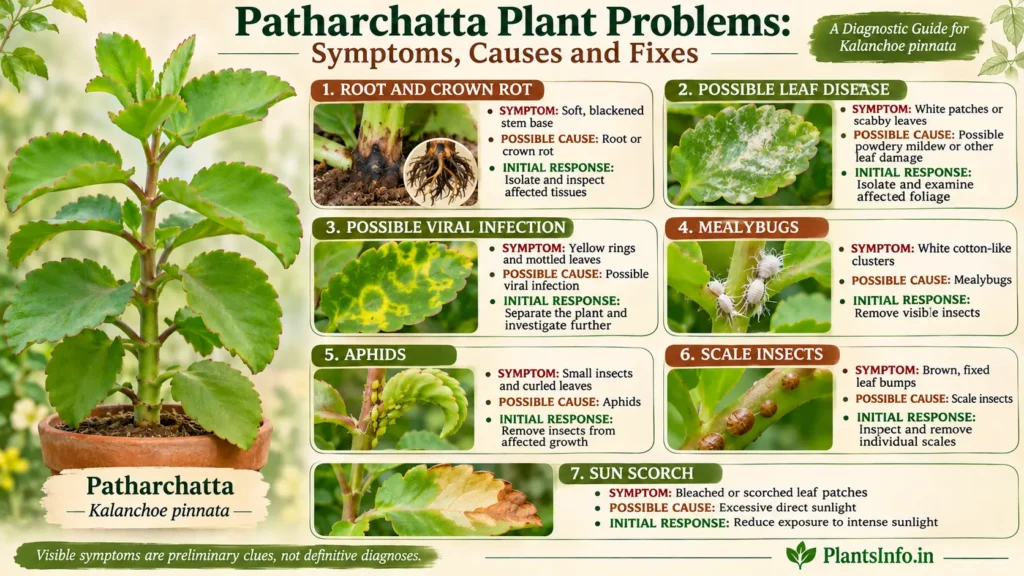
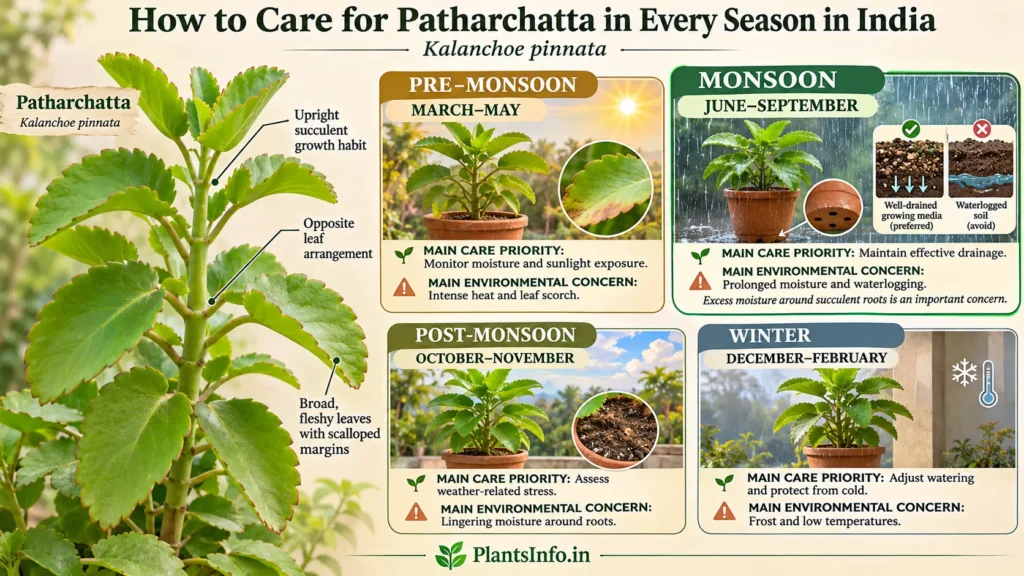
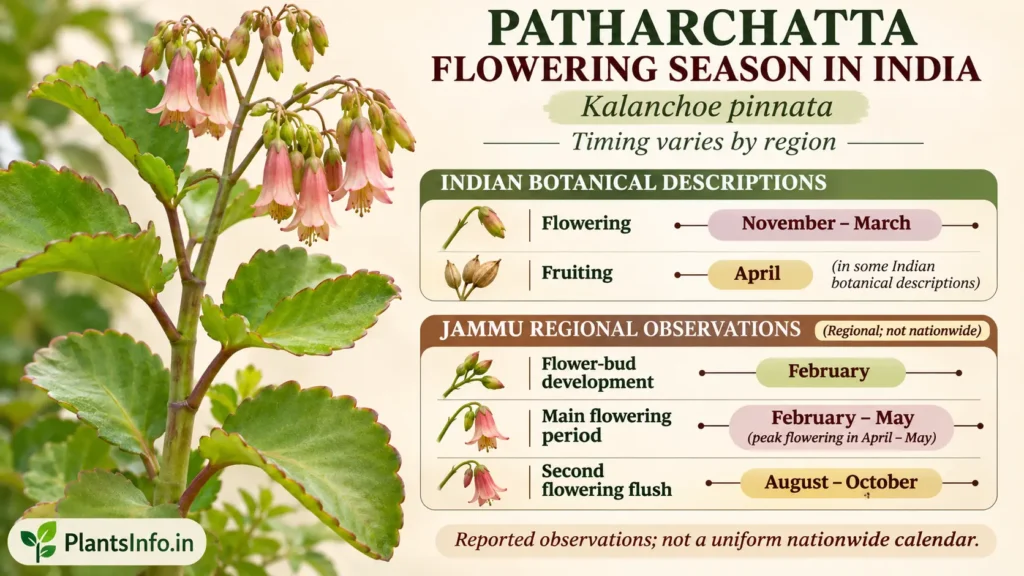
See also: Kalanchoe pinnata plant profile, how to grow it, common problems, seasonal care, and its flowering season.
Introduction
The medicinal reputation of Kalanchoe pinnata is closely associated with its use in regional traditional practices. Its chemical composition adds another dimension to its botanical significance, particularly because the species contains both extensively investigated phytochemicals and bufadienolides that warrant toxicological attention.
Recommended Products
Disclosure: As an Amazon Associate, PlantsInfo may earn from qualifying purchases.
🌱 Growing Essentials
The following products can help with container gardening, potting, root development, soil management, and healthy plant growth.

Organic Potting Soil Mix
Provides nutrients, structure, and healthy growing conditions for container plants.

Coco Peat Growing Medium
Enhances moisture retention while maintaining excellent root-zone aeration.

Grow Bags for Plants
Improve drainage, root aeration, and vegetable production in limited spaces.

Plastic Pots for Plants
Ideal containers for seedlings, ornamentals, herbs, and balcony gardens.
Traditional Medicinal Uses and Phytochemical Significance
Traditional Medicinal Applications in India
Ethnobotanical records describe regional medicinal practices involving the leaves of Kalanchoe pinnata. Reported applications include external preparations for skin-related complaints and traditional internal uses.
| Region or tradition | Reported traditional application |
|---|---|
| North Bengal | Leaf preparations associated with traditional treatment of amoebic dysentery |
| Himalayan communities | External applications involving wounds, bruises, swelling and insect bites |
| Madhya Pradesh | Leaf paste traditionally applied for wounds and pain |
| Assam | Leaf-based preparations associated with urinary stone complaints |
| West Bengal | External application of leaf paste for cuts and wounds |
These entries describe reported regional practices, not clinically established treatments. They should not be interpreted as evidence that all the practices belong to classical or codified Ayurveda. Preparation methods and applications may also differ between communities.
Important Phytochemical Constituents
Phytochemical investigations have identified several groups of secondary metabolites in Kalanchoe pinnata.
| Compound group | Research significance |
|---|---|
| Flavonoids | Investigated for antioxidant and anti-inflammatory activities |
| Quercetin glycosides | A subgroup of flavonoids studied in experimental biological models |
| Bufadienolides | Pharmacologically active compounds with important toxicological considerations |
| Phenolic acids | Investigated for antioxidant-related properties |
| Triterpenes | Contribute to the species’ diverse phytochemical composition |
Quercetin glycosides have attracted research interest in investigations involving oxidative processes, inflammation, and wound-related models. Findings involving isolated compounds or laboratory extracts cannot automatically be applied to preparations made from the whole plant.
What Does Modern Research Investigate?
Research involving Kalanchoe pinnata has examined several biological activities:
- Wound-healing potential: Experimental investigations have examined leaf extracts and individual constituents in wound-related models.
- Anti-inflammatory activity: Certain extracts and flavonoids have demonstrated activity in experimental investigations.
- Antioxidant activity: Researchers have investigated compounds associated with oxidative processes.
- Antimicrobial activity: Laboratory studies have examined selected extracts against microorganisms.
- Metabolic effects: Experimental investigations have explored glucose-related and other metabolic responses.
Most findings come from laboratory experiments and animal studies. The available human research does not establish broad therapeutic effectiveness.
Medical information disclaimer: This information describes traditional practices and scientific research. It is not medical advice or a recommendation to use the plant for treating a health condition. Consult a qualified healthcare professional about medical concerns. Do not replace prescribed treatment with plant-based preparations.
Ornamental and Landscape Value
The fleshy foliage, distinctive leaf margins and upright growth of Kalanchoe pinnata provide structural interest in tropical and subtropical gardens. Mature plants can also produce clusters of pendulous, bell-shaped flowers.
Its ornamental characteristics make it suitable for informal succulent collections, naturalistic garden arrangements, decorative containers, and educational botanical displays. Its visual interest comes primarily from its foliage and distinctive reproductive structures rather than elaborate floral displays.
Ecological Role
Kalanchoe pinnata has a documented association with the Red Pierrot butterfly (Talicada nyseus), which uses the species as a larval host plant. The caterpillars feed within leaf tissue and can produce characteristic translucent or water-soaked patches.
This association is documented in Singapore. Its occurrence and ecological importance should not automatically be generalised across all Indian regions.
The species also produces small plantlets along its leaf margins. Detached leaves may establish new plants, contributing to vegetative spread beyond cultivated locations.
Safety and Toxicological Considerations
An important chemical consideration is the presence of bufadienolides in Kalanchoe pinnata. These compounds belong to a group of pharmacologically active substances associated with effects on cardiac function.
Bufadienolides are known to interact with the sodium–potassium ATPase system, a mechanism relevant to their biological and toxicological activity. Certain compounds in this group can cause serious cardiac effects.
However, the toxicological properties of the broader bufadienolide group should not automatically be treated as proof of the precise risk associated with every preparation or exposure to K. pinnata. Evidence involving isolated compounds, concentrated extracts, or other species also requires careful interpretation.
For responsible handling:
- Do not assume that fresh leaves or homemade extracts are safe to consume.
- Avoid preparing concentrated leaf juices or extracts for self-medication.
- Do not use the plant as a replacement for prescribed treatment.
- Prevent livestock from consuming substantial quantities of the plant.
- Do not assume that traditional topical or internal preparations have established safe doses.
Reliable, standardised dosage and human safety limits for general home use have not been established.
Conclusion
Kalanchoe pinnata is a botanically significant species whose traditional medicinal reputation requires careful distinction from demonstrated clinical evidence. Its phytochemical composition, ornamental characteristics, and documented ecological associations make it relevant to several areas of botanical interest, while its bufadienolide content warrants responsible handling.