Patharchatta Flowering Season in India: When It Blooms
Kalanchoe pinnata does not follow one uniform flowering schedule throughout India. Published botanical descriptions and regional observations indicate differences in flowering and fruiting periods, making local records more useful than a single nationwide calendar.
See also: Kalanchoe pinnata plant profile, how to grow it, common problems, seasonal care, and its benefits.
Introduction
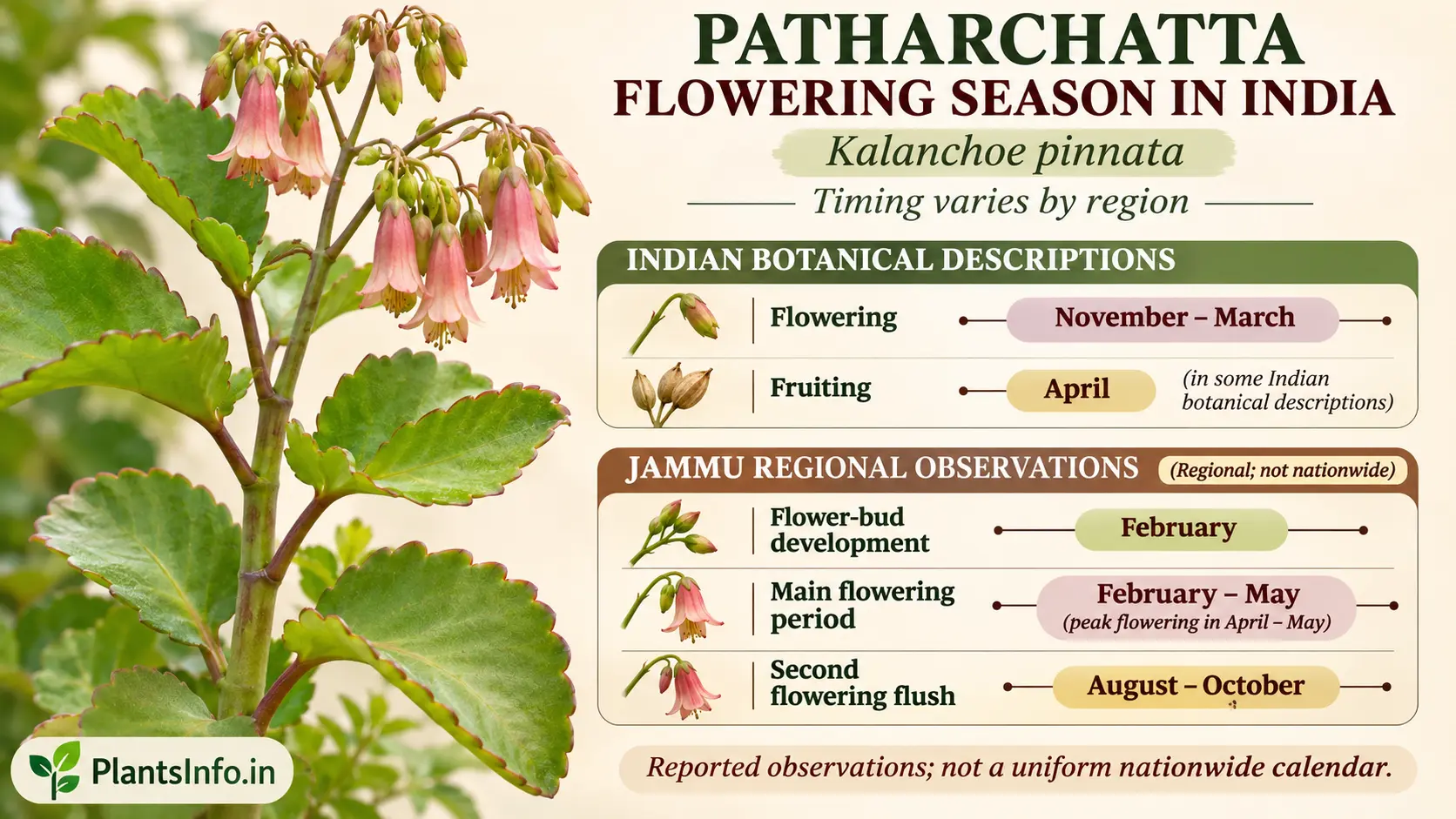
The pendulous flowers of Patharchatta emerge in branched clusters above its fleshy foliage. Their appearance provides a useful way to observe the plant’s reproductive cycle, although the timing recorded in botanical descriptions differs between locations.
Recommended Products
Disclosure: As an Amazon Associate, PlantsInfo may earn from qualifying purchases.
🌱 Growing Essentials
The following products can help with container gardening, potting, root development, soil management, and healthy plant growth.
Organic Potting Soil Mix
Provides nutrients, structure, and healthy growing conditions for container plants.
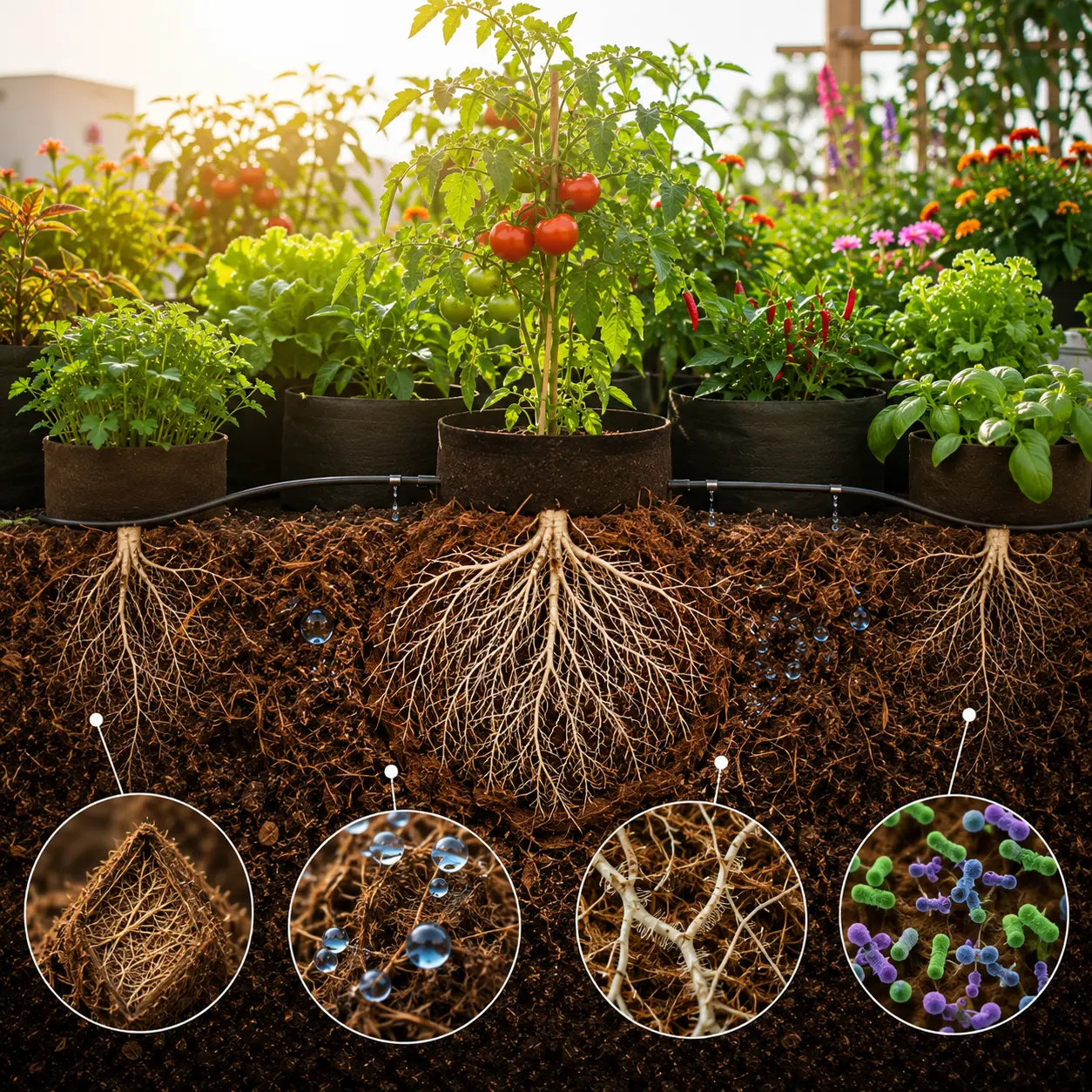
Coco Peat Growing Medium
Enhances moisture retention while maintaining excellent root-zone aeration.

Grow Bags for Plants
Improve drainage, root aeration, and vegetable production in limited spaces.

Plastic Pots for Plants
Ideal containers for seedlings, ornamentals, herbs, and balcony gardens.
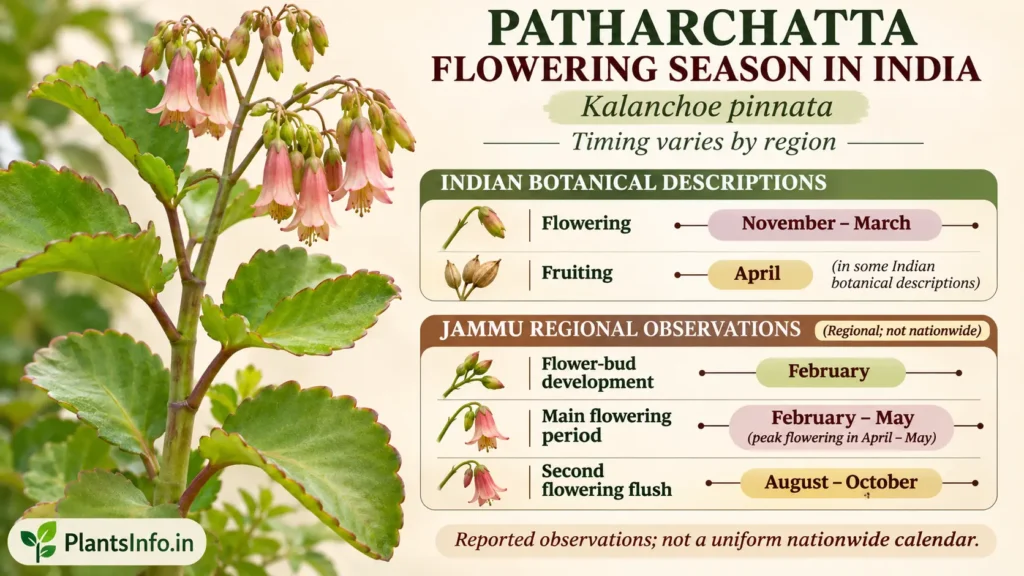
Biological Timing at a Glance
| Biological stage | Reported period |
|---|---|
| Flowering in Indian botanical descriptions | November–March |
| Flower-bud development in Jammu | February |
| Main flowering period in Jammu | February–May, with peak flowering in April–May |
| Second flowering flush in Jammu | August–October |
| Fruiting | April in some Indian botanical descriptions |
These are reported observations rather than a verified nationwide reproductive calendar. The Jammu observations represent regional findings and should not be applied automatically to plants growing elsewhere.
Flowering Season in Detail
When Do the Flowers Appear?
The available Indian botanical descriptions and regional reproductive observations document different flowering patterns. This variation is important when interpreting flowering records because observations from one location cannot establish the reproductive schedule of the species across its entire Indian range.
A reproductive study involving plants at two sites in Jammu documented flower-bud development, flowering progression, and a later flush of inflorescences. The observations indicate that flowering can occur in more than one period under the conditions recorded in that region.
Regional Variation
| Regional record | Flowering observation |
|---|---|
| Indian botanical descriptions | November–March |
| Jammu, Jammu and Kashmir | February–May, with peak flowering in April–May |
| Jammu, second flowering flush | August–October |
The difference between these records demonstrates why regional observations should be kept separate. The available information does not establish whether the Jammu pattern occurs consistently in other parts of India.
What Triggers Flowering?
The available observations do not establish one universal flowering trigger for Kalanchoe pinnata. Temperature, humidity, and seasonal environmental conditions differ between recorded flowering periods, but the evidence considered here does not identify a single factor as the principal cause of flowering across the species’ Indian range.
How Long Do the Flowers Last?
A reliable species-wide duration for individual flowers or the complete flowering period has not been established in the available regional records. A recorded flowering window should not be interpreted as the lifespan of an individual flower.
Fruiting Season
When Do Fruits Develop?
Some Indian botanical descriptions report fruiting in April, following the flowering period. The precise interval between flowering, fruit set, and fruit maturity is not consistently documented across Indian regions.
What Does the Mature Fruit Look Like?
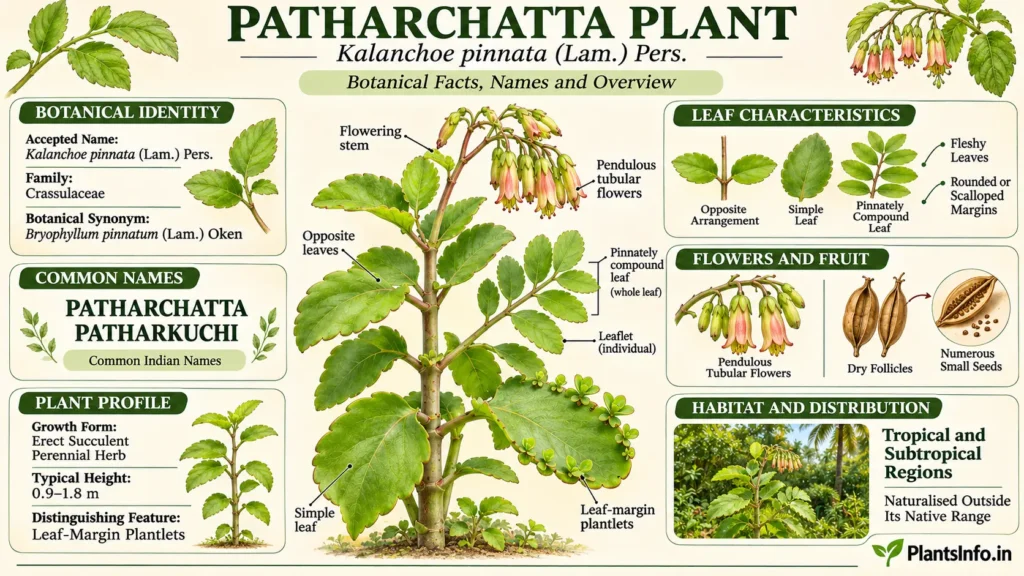
The fruit is described as a small, dry structure enclosed by persistent floral parts. It is not fleshy and contains numerous small seeds.
A consistent colour or tactile indicator for determining seed maturity has not been established in the regional descriptions consulted. The available records therefore do not support a universal visual maturity test.
Fruiting and Seed Production
Although the species produces seeds, the contribution of sexual reproduction to population establishment can vary. The presence or absence of mature fruits alone does not establish whether a plant is capable of reproducing.
Best Time to Plant
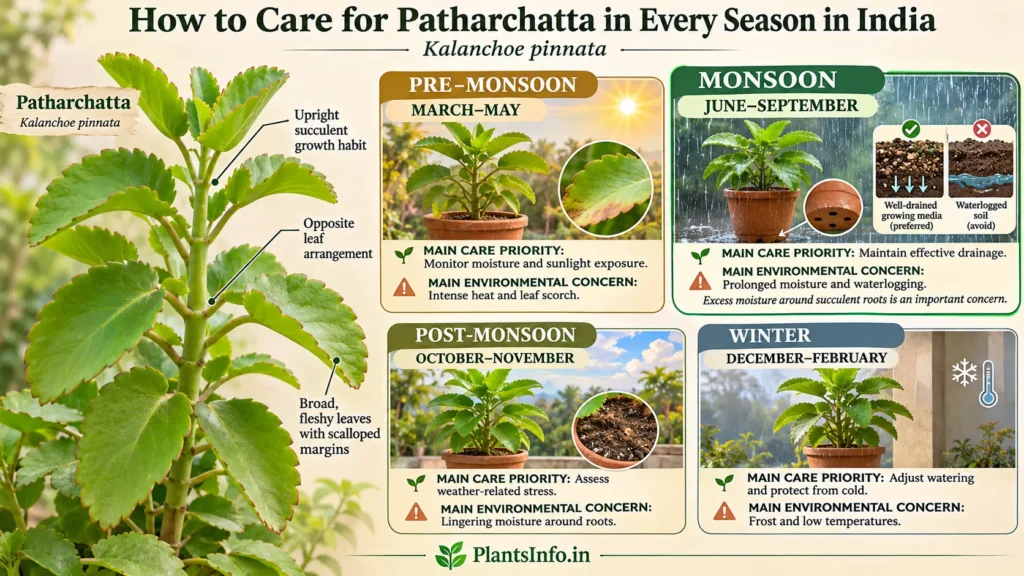
The monsoon is a practical planting window in much of India because seasonal moisture can support establishment during active growth. Early monsoon conditions are preferable to periods of prolonged waterlogging.
Post-monsoon planting can be a secondary option in regions where temperatures remain warm, and the growing medium does not stay excessively wet. These are practical seasonal recommendations, not experimentally established flowering-induction periods.
No separate, evidence-based planting calendar has been established for container-grown and ground-grown plants.
Conclusion
The reproductive observations for Kalanchoe pinnata vary between the Indian botanical descriptions and the regional Jammu study. These records provide useful evidence of regional variation, but further observations from other Indian locations are needed before a nationwide flowering and fruiting calendar can be established.