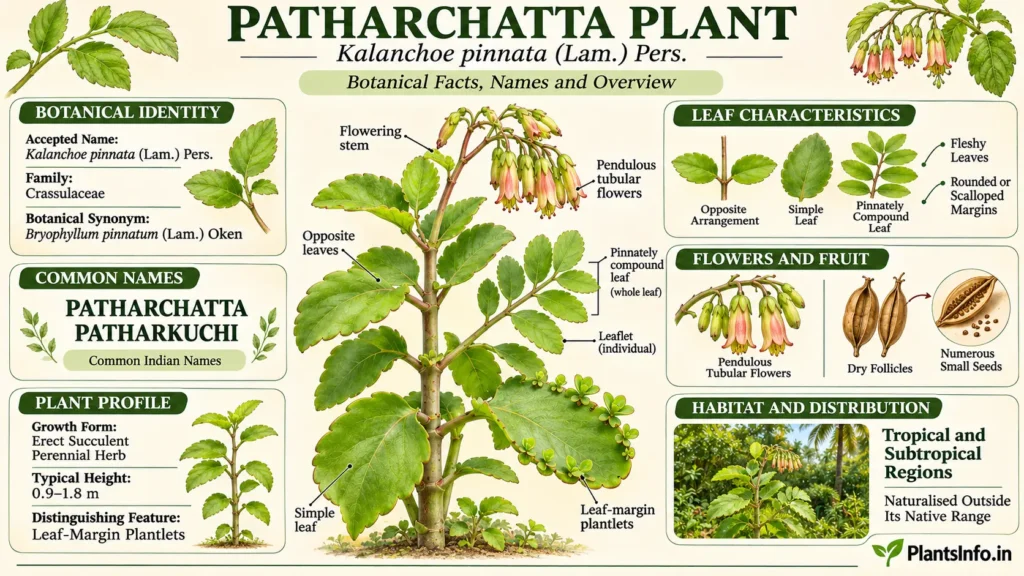
How to Care for Patharchatta in Every Season in India

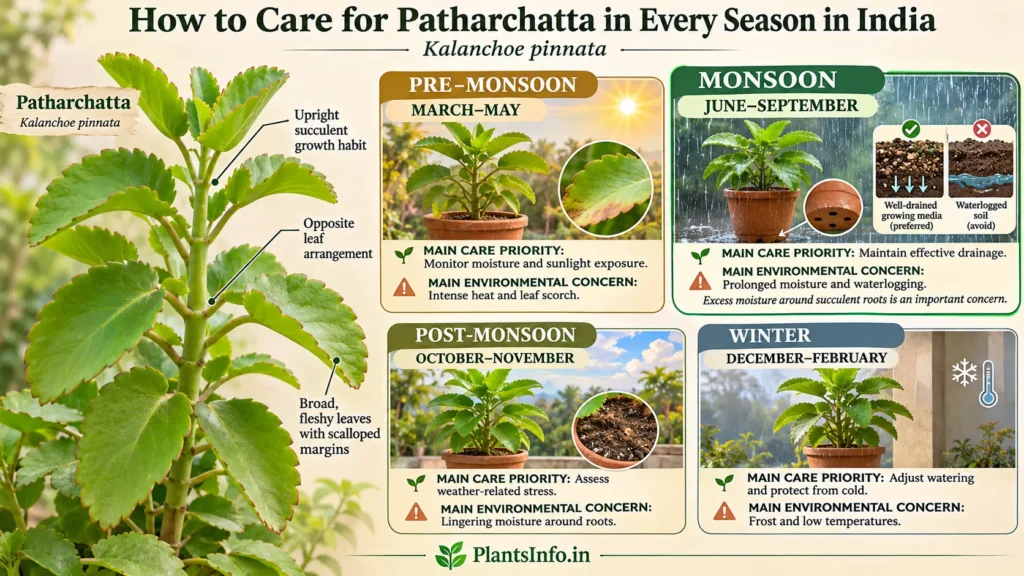
Patharchatta (Kalanchoe pinnata) requires seasonal adjustments in watering, exposure, and protection across India. The monsoon generally demands the greatest attention because prolonged rainfall and waterlogged growing media can damage its succulent roots, while summer heat and winter cold require different forms of protection.
See also: Kalanchoe pinnata plant profile, how to grow it, common problems, its flowering season, and its benefits.
Quick Seasonal Overview
| Season | Main Care Priority | Main Environmental Concern |
|---|---|---|
| Pre-monsoon (March–May) | Monitor moisture and sunlight exposure | Intense heat and leaf scorch |
| Monsoon (June–September) | Maintain effective drainage | Prolonged moisture and waterlogging |
| Post-monsoon (October–November) | Assess weather-related stress | Lingering moisture around roots |
| Winter (December–February) | Adjust watering and protect from cold | Frost and low temperatures |
Pre-monsoon Care (March–May)
As temperatures rise, moisture can disappear from containers more quickly, particularly on exposed terraces. Watering frequency may need to increase compared with cooler months, but decisions should depend on the actual moisture condition of the growing medium rather than a fixed schedule.
Recommended Products
Disclosure: As an Amazon Associate, PlantsInfo may earn from qualifying purchases.
🌱 Growing Essentials
The following products can help with container gardening, potting, root development, soil management, and healthy plant growth.
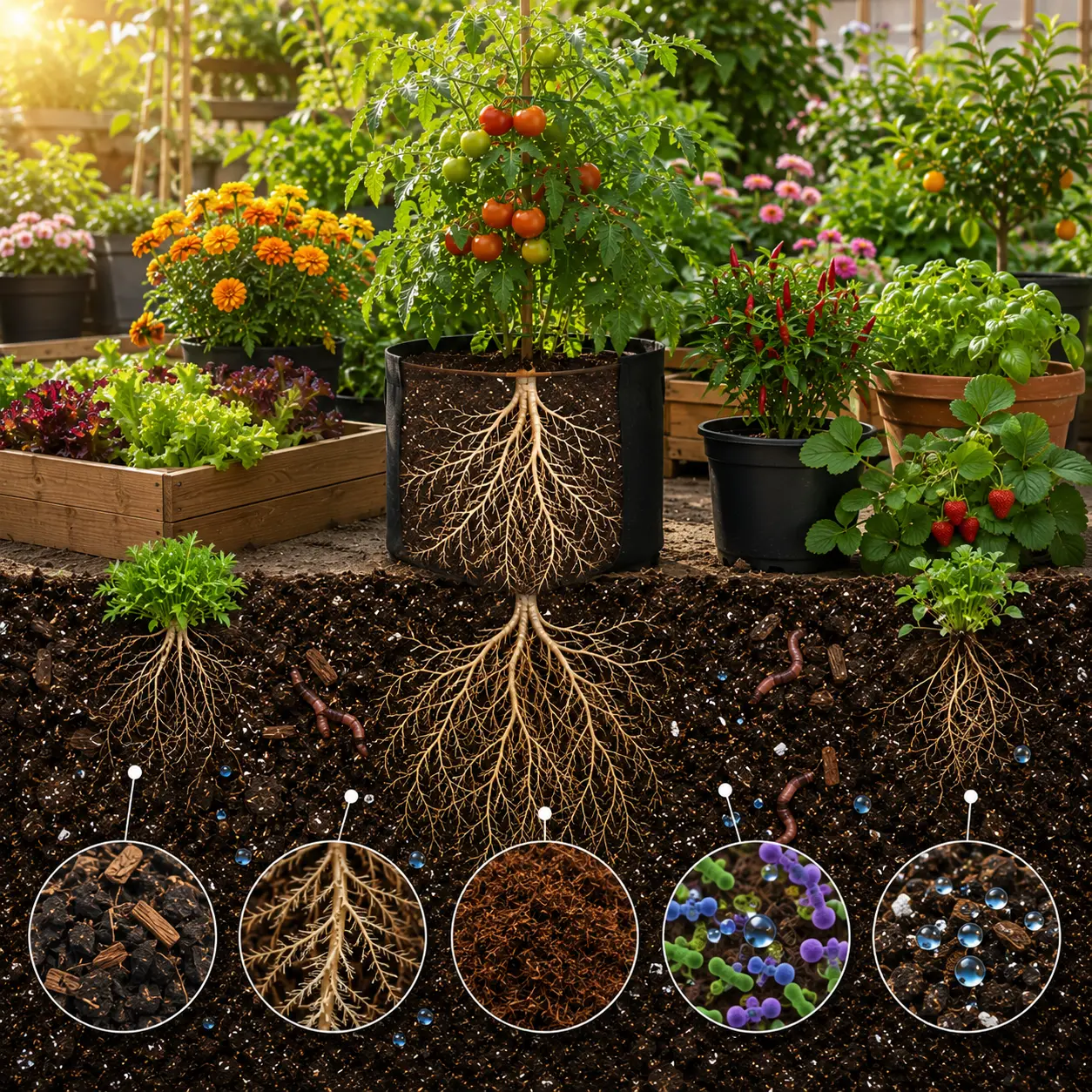
Organic Potting Soil Mix
Provides nutrients, structure, and healthy growing conditions for container plants.
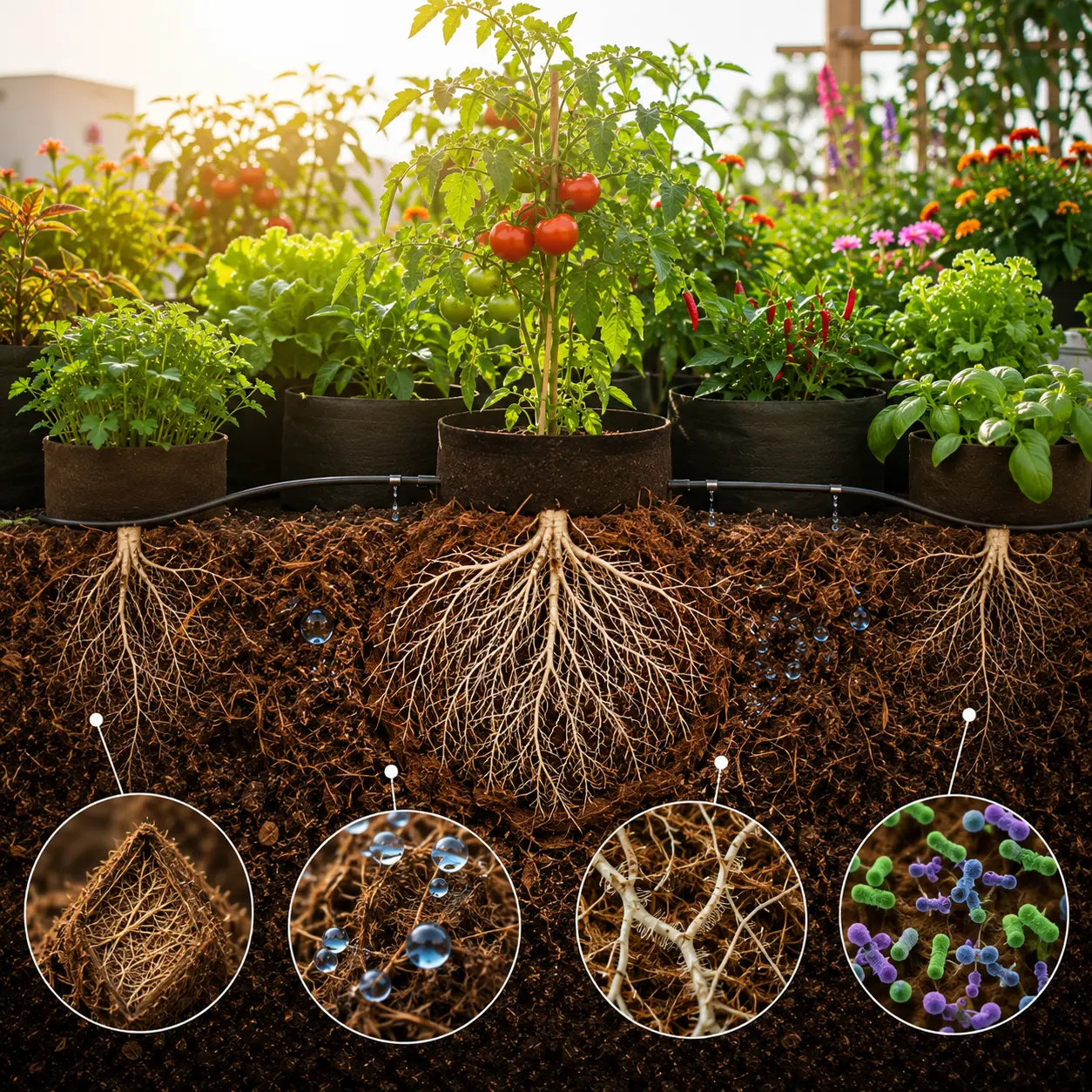
Coco Peat Growing Medium
Enhances moisture retention while maintaining excellent root-zone aeration.

Grow Bags for Plants
Improve drainage, root aeration, and vegetable production in limited spaces.

Plastic Pots for Plants
Ideal containers for seedlings, ornamentals, herbs, and balcony gardens.
Fertiliser use can continue conservatively while the plant is actively growing. During prolonged extreme heat, however, feeding should be reduced rather than increased in an attempt to compensate for environmental stress.
Intense afternoon sunlight can cause leaf scorch, particularly when plants have previously grown in partial shade. Assess the plant’s exposure and provide temporary protection if leaves show signs of heat-related damage.
Monsoon Care (June–September)
Prolonged moisture around the roots is the principal concern during the Indian monsoon. Frequent rainfall, high humidity and poorly drained containers can create conditions unsuitable for this succulent.
Reduce supplementary watering substantially when rainfall is regular. Avoid allowing containers to remain saturated, and pause fertiliser applications during extended wet periods, particularly when growing-medium moisture remains excessive, or growth is visibly restricted.
Maintain sufficient air circulation around plants, especially in sheltered locations where humidity can remain high. Check that containers and outdoor planting areas do not accumulate standing rainwater.
Post-monsoon Care (October–November)
After the main rainy period, assess whether prolonged moisture has affected the plant or its growing environment. Conditions may become more favourable as persistent rainfall declines, although the timing differs across India.
Normal feeding can gradually resume when active growth and suitable growing conditions return. Avoid assuming that the end of the main monsoon period means the growing medium has dried sufficiently, particularly in coastal and humid regions.
Inspect the growing medium and container drainage for signs of lingering moisture. Continue adjusting watering to local rainfall and actual growing conditions.
Winter Care (December–February)
Patharchatta is adapted to warm environments and can be damaged by prolonged exposure to low temperatures. In colder parts of North India and at higher elevations, frost may injure leaves and growing tips.
Water requirements generally decline during cooler conditions because moisture evaporates more slowly and growth may become less active. Adjust watering accordingly and avoid persistently wet growing media.
Limit fertilisation when growth slows substantially. In regions experiencing cold nights, container-grown plants benefit from a sheltered position away from direct exposure to cold winds.
Protection During Extreme Weather
Heatwaves
During exceptional heatwaves, move container-grown plants away from intense afternoon exposure, particularly when they have previously been kept in partial shade. Temporary protection from extreme radiant heat can help limit leaf scorch and dehydration stress.
Frost and Cold Snaps
In frost-prone areas, move movable containers into sheltered locations before severe cold conditions arrive. Ground-grown plants in exposed locations may require temporary frost protection, as prolonged freezing conditions are unsuitable for this species.
Heavy Monsoon Rain and Coastal Storms
Before exceptionally heavy rainfall, relocate movable containers to sheltered positions where they cannot remain submerged or saturated. Following cyclonic rain and strong winds, inspect plants for physical damage and clear accumulated debris from the surrounding growing area.
Conclusion
Successful seasonal care for Patharchatta depends on adjusting moisture, sunlight exposure, and weather protection to local conditions. A flexible approach is more appropriate than following a rigid nationwide watering or maintenance schedule.
🌿 About Kalanchoe pinnata
🌿 View Complete Kalanchoe pinnata Plant Profile →🌱 Growing Guide
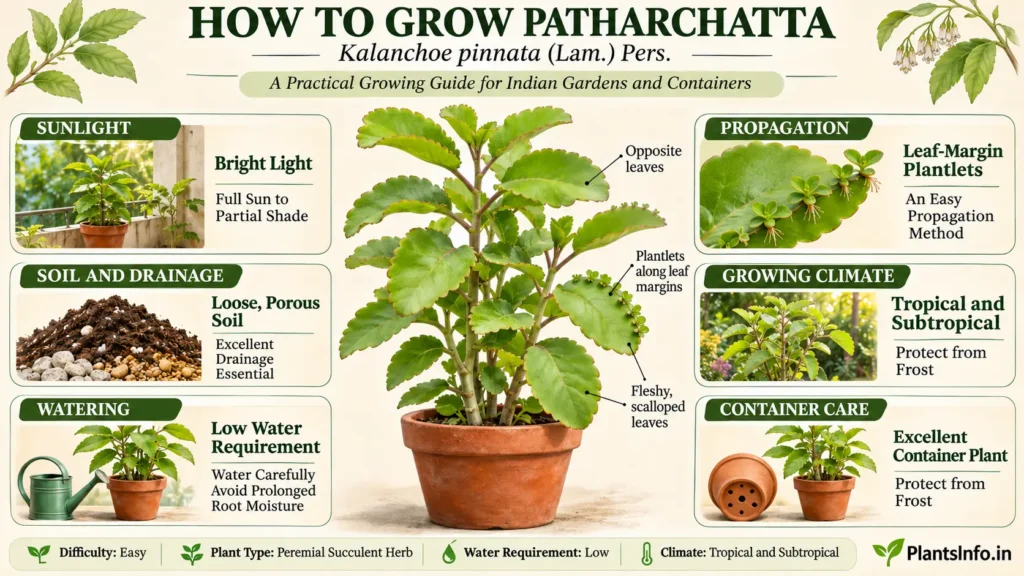
Practical guidance on planting, growing conditions, and routine plant care.
⚠️ Problems & Diseases
Information on common plant problems, diseases, and their identification.
🍂 Seasonal Care
Season-specific guidance for maintaining plant health and growth.
🌸 Flowering Season
Information about flowering periods, seasonal patterns, and bloom development.
🍃 Benefits
An overview of documented uses, benefits, and relevant plant characteristics.

🧬 Varieties
Explore recognised varieties, cultivars, and related forms of this plant.
📊 Quick Facts
A concise reference to important botanical and cultivation facts.