Complete Marble Queen Money Plant (Epipremnum aureum) Guides
Growing Guide
Problems & Diseases
Seasonal Care
Introduction
Marble Queen Money Plant is a popular variegated cultivar of Epipremnum aureum, widely recognized for its marbled green-and-cream foliage and adaptable growth habit. It is commonly maintained as an ornamental foliage plant in indoor and semi-indoor environments, where its trailing or climbing stems contribute to decorative greenery. The plant is valued primarily for its leaf patterning, longevity, and ability to persist across a range of environmental conditions.
Classification
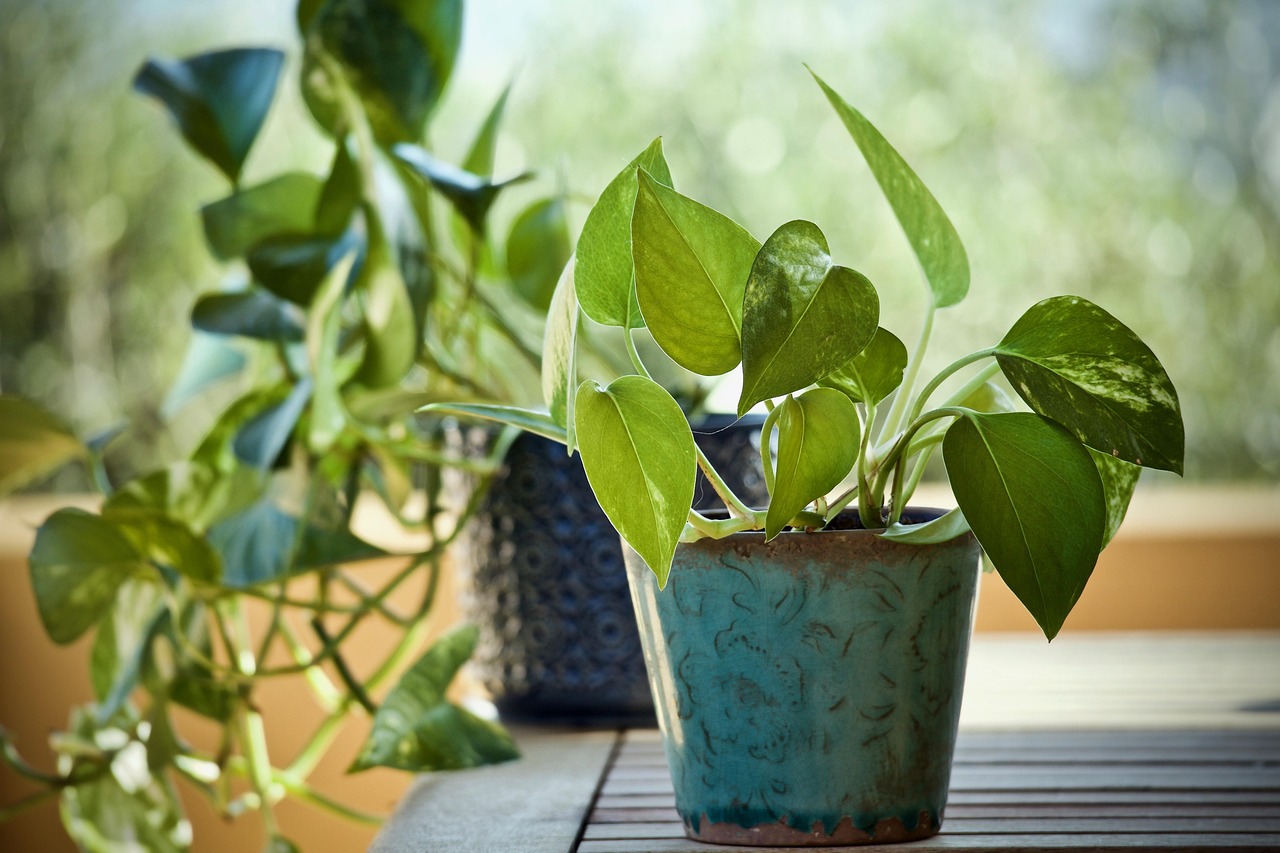
Characterized by heart-shaped leaves with irregular white to pale cream variegation, Marble Queen Money Plant exhibits slower and more compact growth compared to solid-green forms of money plant. Its visual appeal and tolerance of indoor settings have contributed to its widespread presence in homes, offices, and public interiors across tropical and temperate regions.
Quick Plant Information
| Attribute | Details |
|---|---|
| Common Names | Marble Queen Money Plant, Marble Queen Pothos |
| Scientific Name | Epipremnum aureum ‘Marble Queen’ |
| Family | Araceae |
| Plant Type | Evergreen foliage plant |
| Lifespan | Perennial |
| Native Region | South Pacific Islands |
| Growth Habit | Trailing, climbing |
| Average Height | 1–3 m (with support) |
| Leaf Characteristics | Heart-shaped, variegated green and cream |
| Flower Color | Rarely flowers; pale spathe |
| Sunlight Requirement | Bright, indirect light |
| Water Requirement | Moderate |
| Soil Type | Well-drained, organic-rich soil |
| Toxicity | Toxic to pets and humans if ingested |
Botanical Characteristics
Marble Queen Money Plant is a variegated selection within the species Epipremnum aureum, belonging to the aroid family. The plant develops slender, flexible stems that produce aerial roots at the nodes, allowing attachment to vertical surfaces or support structures. Leaves are alternately arranged and typically ovate to cordate, with a leathery texture and pointed apex.
The defining characteristic of this cultivar is its marbled variegation, where creamy white and light green patterns contrast against a darker green background. The extent of variegation may vary between individual leaves, resulting in a visually diverse canopy. Due to reduced chlorophyll in variegated tissue, overall growth tends to be slower than in non-variegated forms.
Flowering is extremely uncommon in cultivated conditions. When it occurs, the inflorescence follows the typical aroid structure, consisting of a spathe and spadix, though this feature is rarely observed outside of natural habitats or mature wild specimens.
Native Habitat and Distribution
The parent species Epipremnum aureum originates from tropical regions of the South Pacific, particularly island ecosystems characterized by warm temperatures, high humidity, and forested environments. In its native range, the plant grows as a climbing vine, ascending tree trunks, and spreading across the forest understory.
Marble Queen Money Plant, as a cultivated variety, does not occur naturally in the wild but is distributed globally through the horticultural trade. It has become established as an indoor ornamental plant across Asia, Europe, North America, and parts of Africa, especially in urban and indoor landscapes.
Its adaptability to container growth and interior environments has enabled widespread cultivation far beyond its native climatic range.
Common Varieties or Types
Within the broader group of money plants (Epipremnum aureum cultivars), several varieties are distinguished primarily by leaf coloration and variegation patterns. Marble Queen is notable for its high proportion of light-colored variegation and contrasting marbled appearance.
Other related cultivars may display golden, neon, or speckled foliage, while Marble Queen remains one of the most visually striking due to its bold white patterning. Compared to greener forms, Marble Queen typically exhibits denser foliage and shorter internodes under similar conditions.
These cultivated variations demonstrate the genetic flexibility of the species and its capacity for ornamental selection.
Uses and Importance
Marble Queen Money Plant is primarily valued for ornamental and aesthetic purposes. Its trailing vines and decorative foliage make it suitable for interior landscaping, hanging displays, and vertical green arrangements. The plant is commonly featured in residential interiors, commercial spaces, and decorative plant collections.
Beyond visual appeal, the plant contributes to indoor greenery and is often associated with interior plant design due to its tolerance of controlled environments. In cultural contexts, money plants are sometimes symbolically associated with prosperity and positive energy, though such associations vary by region and tradition.
Its enduring popularity reflects both its visual qualities and adaptability.
Growth Behavior and Care
Marble Queen Money Plant exhibits steady vegetative growth, with new leaves emerging sequentially along elongating stems. Growth habit may be trailing when unsupported or climbing when aerial roots encounter suitable surfaces. The plant demonstrates a natural tendency to produce denser foliage under brighter light conditions, which also influences the clarity of leaf variegation.
Leaf production continues year-round in stable indoor environments, with older leaves persisting for extended periods. The plant shows moderate tolerance to variations in moisture and light, though extended extremes may affect leaf size and coloration.
Overall growth behavior is characterized by gradual expansion rather than rapid spread.
Lifecycle / Flowering / Harvesting
As a perennial evergreen plant, Marble Queen Money Plant does not follow a defined seasonal lifecycle when grown indoors. Vegetative growth is continuous under favorable conditions, with no true dormancy phase.
Flowering is exceptionally rare in cultivated specimens and is not considered a defining feature of the plant. Reproductive structures are generally absent, and the plant is maintained primarily for its foliage.
There is no harvesting phase associated with this ornamental plant, as its value lies in sustained foliage display rather than consumable yield.
Environmental or Ecological Value
In natural ecosystems, members of the species Epipremnum aureum contribute to forest structure by climbing and covering tree surfaces, thereby adding to vertical vegetation layers. In cultivated indoor settings, Marble Queen Money Plant serves a primarily aesthetic and environmental role by contributing to interior greenery.
The plant’s dense foliage can influence microclimates within enclosed spaces by increasing visual greenery and plant biomass. While not a primary ecological species in managed environments, it remains an example of how tropical understory plants adapt to human-modified spaces.
Conclusion
Marble Queen Money Plant represents a distinctive variegated form of Epipremnum aureum, valued for its marbled foliage, perennial nature, and adaptability to indoor environments. Its botanical characteristics, slow-growing habit, and visual diversity distinguish it from greener money plant varieties.
As an ornamental foliage plant, it holds enduring relevance in interior landscaping and plant collections worldwide. Its continued cultivation reflects a balance between decorative appeal and long-term durability, making it a consistent presence in plant reference databases.
Frequently Asked Questions (FAQs)
Is Marble Queen Money Plant different from regular money plant?
Marble Queen is a variegated cultivar of money plant, distinguished by its white and green marbled leaves and relatively slower growth.
Does Marble Queen Money Plant produce flowers?
Flowering is extremely rare in cultivated environments and is not commonly observed.
Is Marble Queen Money Plant suitable for indoor environments?
The plant is widely maintained indoors and is known for its adaptability to interior conditions.
Is Marble Queen Money Plant toxic?
The plant contains compounds that may be toxic if ingested by humans or pets.
How large can Marble Queen Money Plant grow?
With adequate support, stems may extend several meters in length over time.
PlantsInfo serves as a centralized plant knowledge platform documenting ornamental, medicinal, and commonly cultivated plant species. Reference entries such as Marble Queen Money Plant contribute to a broader understanding of plant characteristics, growth behavior, and ecological context, supporting accurate botanical awareness across diverse plant categories.