Introduction
The Sponge Gourd plant, scientifically known as Luffa cylindrica (syn. Luffa aegyptiaca), is a fast-growing climbing vine belonging to the cucumber family. It is widely cultivated in tropical and subtropical regions for its elongated fruits, which are consumed when immature and valued for their fibrous interior when fully matured.
Classification
- Plant Type
- Vine
- Lifecycle
- Annual
- Native Region
- Asia
- Plant Family
- Cucurbitaceae
Botanically, sponge gourd is a member of the Cucurbitaceae family, which includes gourds, melons, cucumbers, and squashes. The plant is notable for its rapid vegetative growth, large lobed leaves, and yellow flowers. Its mature fruit develops a complex fibrous vascular structure that has long been used in various traditional and commercial applications.
Due to its dual role as both a vegetable and a source of natural fiber, the sponge gourd holds agricultural, ecological, and cultural significance in many parts of Asia, Africa, and the Americas.
Quick Plant Information
| Field | Information |
|---|---|
| Common Name(s) | Sponge Gourd, Luffa, Loofah, Dishcloth Gourd, Vegetable Sponge |
| Scientific Name | Luffa cylindrica (syn. Luffa aegyptiaca) |
| Family | Cucurbitaceae |
| Plant Type | Climbing vine |
| Lifespan | Annual |
| Growth Habit / Form | Vigorous, trailing or climbing vine with tendrils |
| Native Range | South and Southeast Asia |
| Climate Adaptation / Habitat Type | Tropical and subtropical regions |
| Leaf Type | Broad, palmately lobed leaves |
| Flower Color(s) | Bright yellow |
| Fruit Type | Pepo (elongated gourd) |
| Evergreen / Deciduous | Seasonal annual |
Botanical Description
Stem
The sponge gourd plant develops long, angular, green stems that are soft and herbaceous. The stems are ridged and equipped with branched tendrils that enable the vine to climb over surrounding vegetation or structures. Internodes are elongated, contributing to the plant’s spreading growth pattern.
Leaves
Leaves are large, alternate, and palmately lobed, typically divided into five to seven broad lobes. The surface is slightly rough in texture and supported by long petioles. Veination is prominent and radiates outward from the leaf base. The foliage forms a dense canopy during active growth.
Flowers
The plant produces unisexual flowers (monoecious), meaning male and female flowers occur on the same plant. Flowers are bright yellow and funnel-shaped. Male flowers usually appear in clusters, while female flowers are solitary and characterized by a small developing ovary at the base. Flowering is conspicuous due to the contrast between the vibrant blooms and green foliage.
Fruits
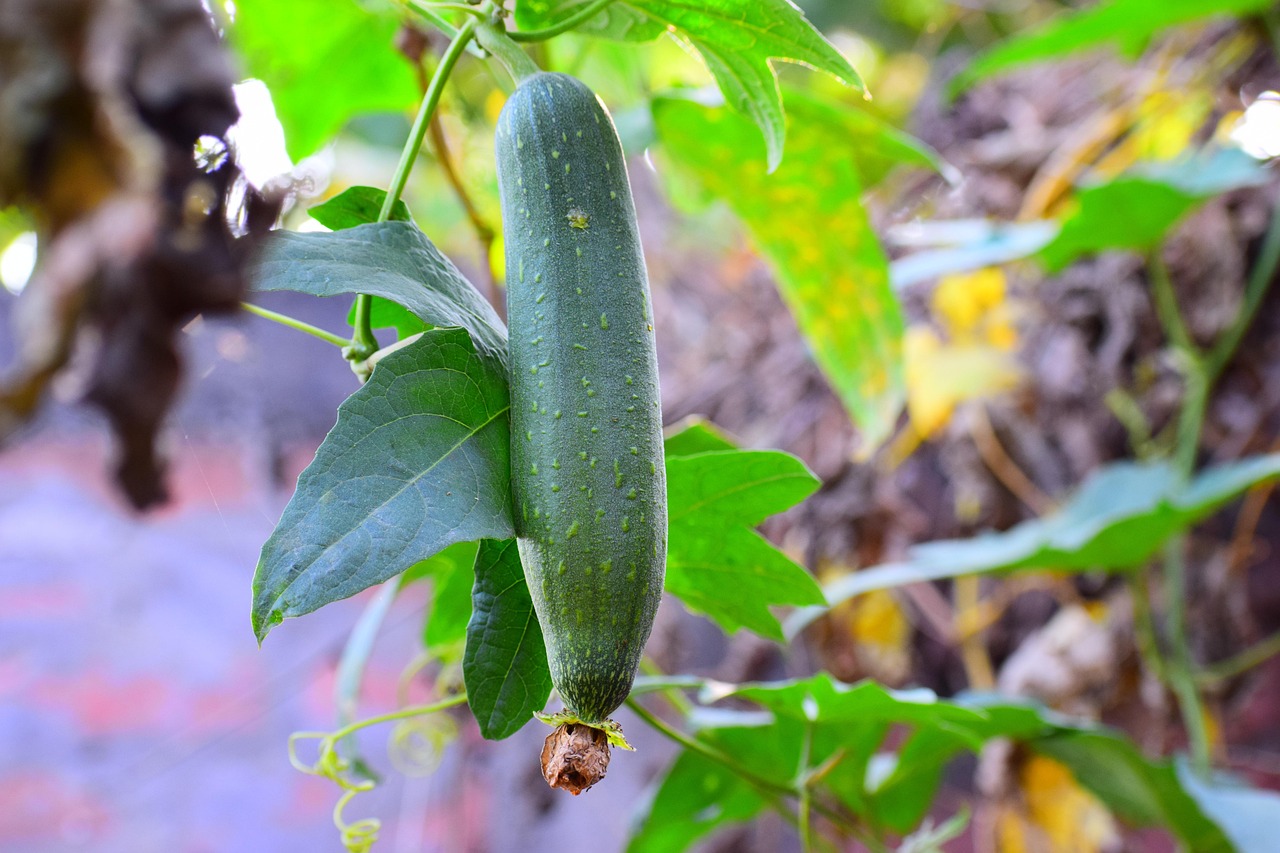
The fruit is an elongated cylindrical pepo, often reaching a significant length depending on variety. When immature, the fruit has smooth green skin and soft internal flesh. As it matures, the internal tissue transforms into a dense, interwoven fibrous network composed primarily of vascular bundles. The outer skin dries and hardens, enclosing the fibrous structure and numerous flattened black seeds.
Roots
Sponge gourd develops a moderately deep taproot system with lateral branching roots. The root structure supports rapid vegetative growth and fruit development during its annual life cycle.
Plant Classification & Growth Habit
Sponge gourd is classified as an annual herbaceous vine within the Cucurbitaceae family. As a cucurbit, it shares structural characteristics with related plants such as pumpkins, cucumbers, and melons, including tendrils, large lobed leaves, and pepo-type fruits.
Its growth habit is vigorous and climbing. The vine spreads horizontally across the ground or ascends vertically using tendrils. The plant exhibits indeterminate growth, continuing to produce vegetative growth and flowers throughout its active season.
Being an annual, the entire life cycle—from germination to seed production—occurs within a single growing season.
Common Types / Varieties / General Classifications
Sponge gourd is generally categorized into two primary cultivated species:
• Smooth Luffa (Luffa aegyptiaca / Luffa cylindrica)
Characterized by smooth-skinned, elongated fruits. This type is widely cultivated for both vegetable use and fiber production.
• Ridge Gourd (Luffa acutangula)
Distinguished by pronounced longitudinal ridges along the fruit surface. While closely related, it is botanically distinct and often classified separately.
Within Luffa cylindrica, variations may occur in fruit length, diameter, and fiber density, but these differences are generally morphological rather than taxonomically distinct.
Native Range & Distribution
The sponge gourd is believed to have originated in South and Southeast Asia, where it has been cultivated for centuries. From its region of origin, it spread across tropical Asia, Africa, and eventually to the Americas through trade and agricultural exchange.
Today, it is widely grown in:
• South Asia (India, Bangladesh, Sri Lanka)
• Southeast Asia (Thailand, Vietnam, Philippines)
• East Asia (China)
• Parts of Africa
• Central and South America
• Warmer regions of North America
It is typically associated with warm, frost-free climates and seasonal rainfall patterns. In temperate regions, it is cultivated as a seasonal annual crop.
Cultural, Culinary, and Traditional Context
In many Asian cuisines, immature sponge gourd fruits are incorporated into traditional dishes, particularly in South Asian and Southeast Asian culinary traditions. The vegetable is commonly included in curries, stir-fries, and soups.
When allowed to mature fully and dry, the fibrous interior is processed into natural sponges, commonly referred to as “loofahs.” These have been historically used for household cleaning and bathing purposes. The fibrous network consists of interconnected vascular bundles that remain intact after the surrounding tissues decompose or are removed.
Beyond culinary and household uses, sponge gourd cultivation also contributes to small-scale agricultural economies in various tropical regions. Its adaptability and rapid growth have made it a common feature in home gardens and local markets.
Interesting Facts
• The term “loofah” originates from the Arabic word “luffa,” reflecting its historical cultivation in the Middle East.
• The mature fruit’s internal fiber structure is composed primarily of xylem vessels arranged in a lattice-like pattern.
• Sponge gourd flowers are pollinated primarily by insects.
• Despite being called a “gourd,” the fruit is botanically classified as a pepo, similar to cucumbers and pumpkins.
• The plant’s rapid growth rate allows it to cover large areas during a single growing season.
FAQs
Is sponge gourd the same as loofah?
Yes. The terms “sponge gourd” and “loofah” refer to the same plant species, Luffa cylindrica. “Loofah” commonly describes the mature dried fiber obtained from the fruit.
Is sponge gourd a fruit or a vegetable?
Botanically, it is a fruit (a pepo). In culinary contexts, the immature fruit is treated as a vegetable.
Is sponge gourd related to cucumber?
Yes. Sponge gourd belongs to the Cucurbitaceae family, which includes cucumbers, melons, pumpkins, and squashes.
Is ridge gourd the same as sponge gourd?
Ridge gourd (Luffa acutangula) is a closely related but distinct species. Both belong to the same genus but differ in fruit surface characteristics.
Recommended Products
Disclosure: As an Amazon Associate, PlantsInfo may earn from qualifying purchases.
🌱 Plant Care Essentials
The following tools can help with pruning, plant health, soil management, and fruit garden maintenance.

Neem Oil for Plant Care
Natural plant protection against aphids, whiteflies, mites, and other common garden pests.

Fungicide for Root Care
Helps suppress soil-borne fungal diseases and supports healthier root systems.

Spray Bottle for Plants
Ideal for applying foliar sprays, neem oil solutions, and liquid plant treatments.

Rubber Hand Gloves
Protects hands during pruning, planting, soil preparation, and garden maintenance.
Conclusion
The sponge gourd (Luffa cylindrica) is a fast-growing annual vine recognized for its elongated fruits and distinctive fibrous interior. As a member of the Cucurbitaceae family, it shares structural features with other gourds and cucumbers while maintaining unique botanical characteristics.
Its dual role as a vegetable when immature and as a source of natural fiber when mature has contributed to its widespread cultivation across tropical and subtropical regions. With its prominent leaves, yellow flowers, and elongated pepo fruits, the sponge gourd remains a notable species within both agricultural and botanical contexts.
The Plants Info database presents structured, reference-based plant profiles designed for educational learning and botanical understanding. Each entry, including the Sponge Gourd plant, is organized to support clear identification and factual study within a comprehensive plant database.