Introduction
Trigonella foenum-graecum L. is an erect annual herb of the family Fabaceae, native to the Eastern Mediterranean and the Irano-Turanian floristic region, and one of the oldest documented cultivated plants in the world, with archaeobotanical records extending to the Bronze Age Near East. Growing to 20–60 cm in height, the plant produces trifoliate leaves, small whitish flowers, and slender, elongated pods containing the distinctively aromatic seeds that have been fundamental to culinary, agronomic, and ethnobotanical traditions across South Asia, the Middle East, North Africa, and the Mediterranean Basin for millennia.
Classification
- Plant Type
- Herb
- Lifecycle
- Annual
- Leaf Habit
- Deciduous
- Native Region
- Mediterranean Basin, North Africa, West Asia
- Plant Family
- Fabaceae
The species is cultivated today as a spice crop, leafy vegetable, and forage plant across a broad range extending from the Mediterranean through the Indian subcontinent and into parts of East Africa and East Asia, with India accounting for the dominant share of global commercial seed production. Its biochemically rich seed, containing the steroidal sapogenin diosgenin, unusual amino acids, and a characteristically flavoured blend of volatile compounds, places it among the most phytochemically distinctive members of the Fabaceae.
Taxonomic Synonyms
| Field | Information |
|---|---|
| Accepted Scientific Name | Trigonella foenum-graecum L. |
| Known Synonyms | Buceras foenum-graecum (L.) All.; Folliculigera graveolens Pasq.; Foenum-graecum officinale Moench; Foenum-graecum sativum Medik.; Trigonella sativa Bertol. |
| Taxonomic Authority Source | Kew Plants of the World Online (POWO) |
Quick Plant Information
| Field | Information |
|---|---|
| Common Name(s) | Fenugreek; Methi (Hindi/Urdu); Menthulu (Telugu); Uluva (Malayalam); Helba (Arabic); Greek Hay; Bird’s-foot; Shanbalileh (Persian) |
| Scientific Name | Trigonella foenum-graecum L. |
| Family | Fabaceae |
| Plant Type | Annual herb |
| Lifespan | Annual; completes life cycle in 90–150 days |
| Growth Habit & Form | Erect to semi-erect, branching annual herb; 20–60 cm tall |
| Native Range | Eastern Mediterranean; Turkey; Iran; Iraq; Levant; North Africa |
| Climate Adaptation & Habitat Type | Semi-arid to sub-humid; dry grassland, disturbed ground, cultivated fields, rocky slopes |
| Leaf Type | Trifoliate; obovate to elliptic leaflets; alternate |
| Flower Color(s) | White to pale yellow, often with a violet-purple blotch at the base |
| Fruit Type | Legume (pod); elongated, slender, beaked |
| Evergreen or Deciduous | Deciduous (annual) |
Botanical Description
Stem
The stem of Trigonella foenum-graecum is erect to slightly ascending, hollow, branched from the base, and reaches 20–60 cm in height under typical cultivation conditions. It is cylindrical to slightly angular, green, and covered with fine, appressed hairs particularly toward the growing apex. The stem is herbaceous throughout, lacking secondary woody development, and produces 2–5 main lateral branches arising from nodes near the base in well-grown plants.
Leaves
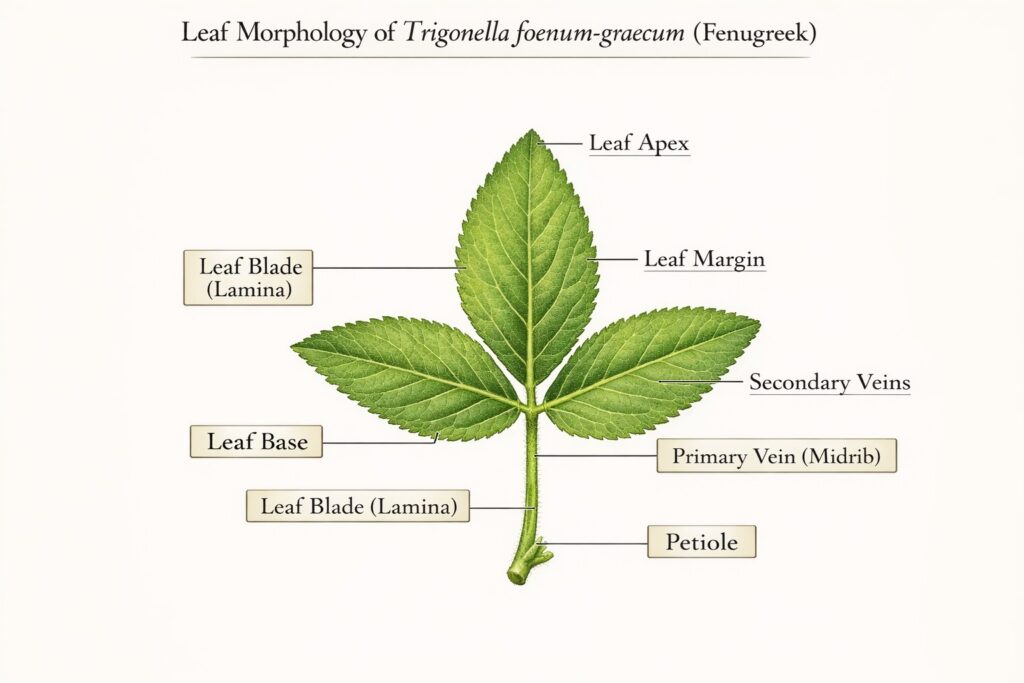
Leaves are alternate and trifoliate, comprising three obovate to elliptic-oblong leaflets each 1–4 cm long and 0.5–2 cm wide, with a denticulate margin particularly in the upper half. The terminal leaflet is slightly larger than the two laterals. The leaf surface is glabrous to sparsely hairy; the petiole is 3–6 cm long and bears two narrow, semi-amplexicaul stipules at the base. Leaflets emit the characteristic fenugreek aroma when bruised, attributable to the volatile compounds sotolone and related furanones in the leaf tissue.
Flowers
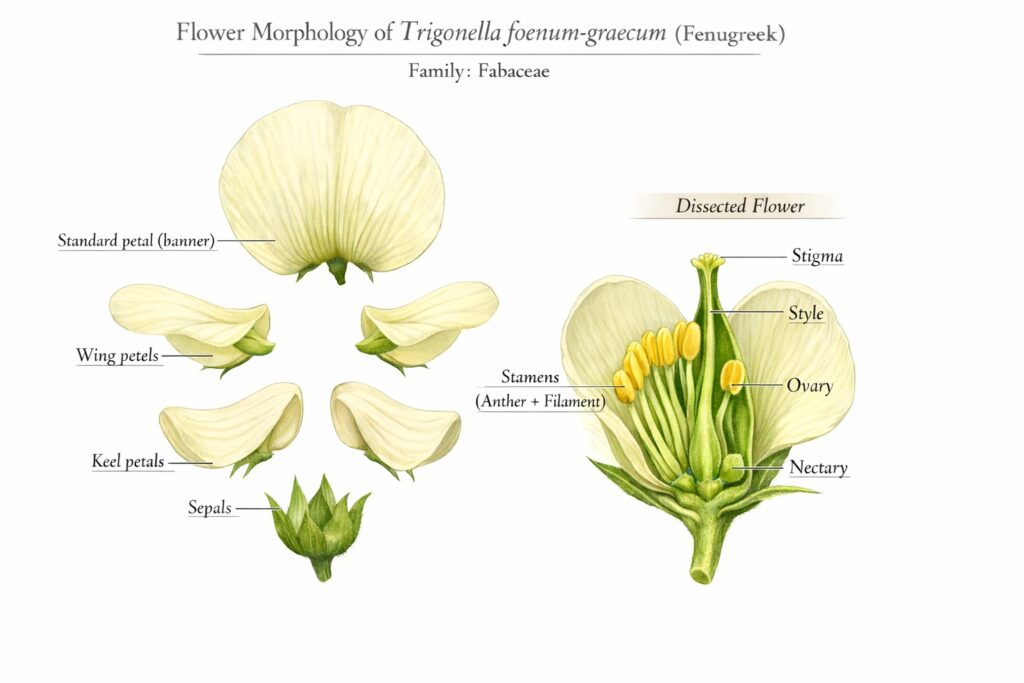
Flowers are produced singly or in pairs in the leaf axils, sessile or on very short pedicels. Each flower is 12–18 mm long, papilionaceous in the typical Fabaceae form, with a standard, two wing petals, and a keel enclosing the stamens and style. Petal colour is white to pale yellowish-white, commonly with a pale violet or purple blotch at the base of the standard or keel. The calyx is tubular, with five narrow, hairy teeth approximately equal in length to the tube. Ten stamens are present, nine fused into a tube (diadelphous) and one free — the characteristic Fabaceae stamen arrangement.
Fruit
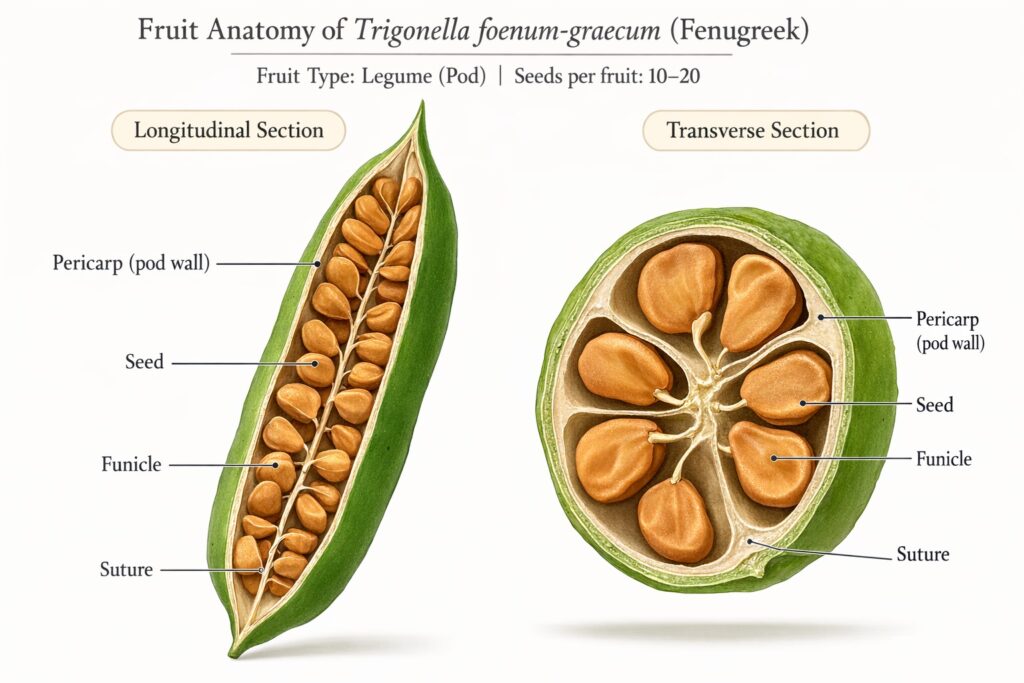
The fruit is an elongated, narrowly cylindrical to slightly compressed legume (pod), 6–14 cm long and 4–5 mm wide, tapering to a long, slender beak that may constitute 2–5 cm of the total pod length. The pod surface is hairy to glabrescent, pale green ripening to yellowish-tan to brown at maturity. Each pod contains 10–20 seeds arranged in two rows separated by a thin false septum. Pods dehisce along the dorsal suture at full maturity in dry conditions, though shattering resistance varies among cultivars.
Roots
The root system is a taproot with lateral fibrous branches, moderately deep-penetrating to 30–60 cm in well-drained soils. Root nodules housing nitrogen-fixing bacteria of the genus Mesorhizobium are formed on the lateral roots beginning approximately 10–14 days after germination. The taproot is whitish, slender, and not substantially thickened; the nodules are small, spherical to irregularly lobed, and pink-interior when active, indicating leghaemoglobin presence and active nitrogen fixation.
Growth Architecture & Life Strategy
Trigonella foenum-graecum is a therophyte in the Raunkiær classification, completing its entire life cycle from germination to seed set within a single growing season and surviving the unfavourable season exclusively as seed. The plant emerges rapidly following germination, establishing a basal rosette of trifoliate leaves within the first two to three weeks before transitioning to an erect-branching shoot architecture under increasing photoperiod and temperature.
Growth is indeterminate in the sense that axillary flowering can continue across multiple nodes simultaneously as the plant elongates, though the overall developmental trajectory is strictly annual and terminates in seed maturation and whole-plant senescence. The species follows a cool-season annual strategy in most cultivation contexts: it germinates under mild temperatures, flowers and pods in the warming spring season, and completes seed filling before summer heat accelerates senescence. In warmer subtropical cultivation zones, particularly in South Asia, it functions as a winter crop sown in October–November and harvested in February–March.
The combination of a nitrogen-fixing root symbiosis, rapid growth to canopy closure, and a deep taproot gives Trigonella foenum-graecum significant ecological competitiveness on disturbed, moderately nutrient-poor substrates, and it is grown as a green manure and soil-improvement crop in rotation systems as well as for seed and leaf harvest.
Common Types / Varieties
Trigonella foenum-graecum is cultivated in numerous named varieties and breeding lines, particularly in India, which maintains the largest formal variety development programme for the species.
‘Rajendra Kranti’ is a high-yielding Indian variety developed for seed production in Rajasthan, characterised by bold seeds, early maturity (approximately 120 days to harvest), and moderate resistance to powdery mildew. It is among the most widely grown commercial seed varieties in northwest India.
‘RMt-1’ (Rajasthan Methi-1) is another Rajasthan Agricultural University release selected for high seed yield, compact plant architecture suitable for mechanised harvest, and adaptability to the semi-arid conditions of the Rajasthan and Gujarat cultivation belt. Bold seed size and high diosgenin content have been reported for this variety in agronomic trials.
‘Pusa Early Bunching’ is an Indian Council of Agricultural Research (ICAR) variety selected specifically for leaf (methi) production rather than seed, characterised by rapid early leaf flush, tender leaflets suitable for vegetable harvest, a bushy multi-branching habit, and delayed flowering that extends the period of vegetative leaf production before the plant bolts to seed.
‘Kasuri Methi’ is a small-leaved, intensely aromatic form traditionally associated with the Kasur district of Punjab (Pakistan) and widely grown across the Punjab and Haryana regions of India for dried leaf production. It is characterised by smaller, deeply indented leaflets, a stronger aromatic compound concentration relative to standard leaf varieties, and a shorter, more compact habit than seed-type varieties.
‘Tristar’ is a Canadian-developed variety bred for production in temperate continental climates, featuring early maturity, good standability, and cold tolerance during early growth, designed for mechanised seed harvest in northern growing seasons with compressed thermal time.
Native Range & Distribution
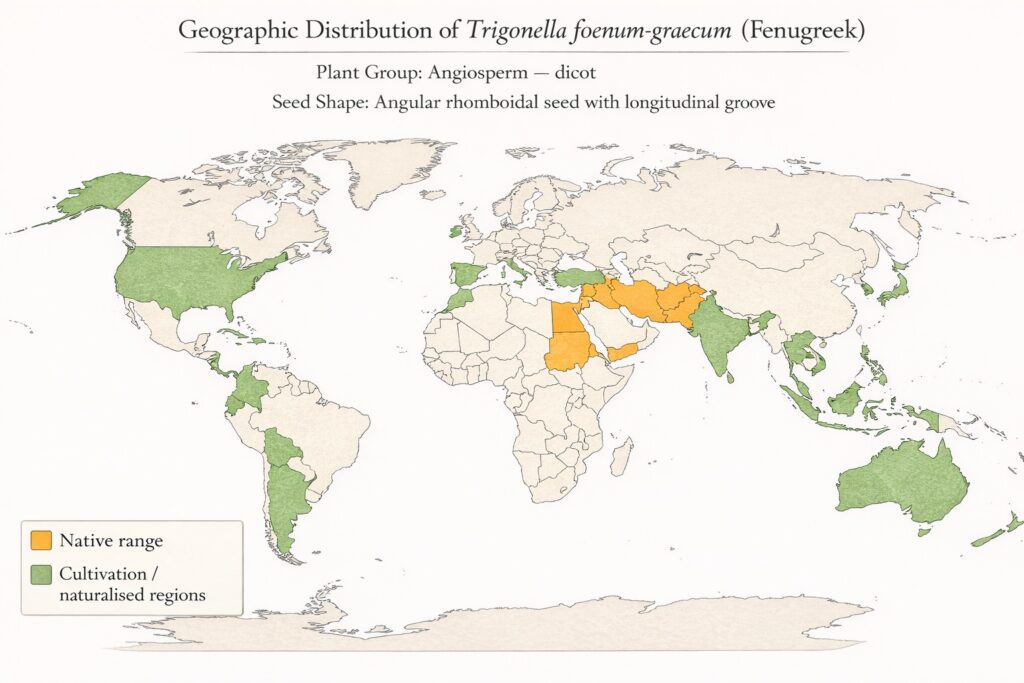
| Country / Territory | Range Status | Notes |
|---|---|---|
| Turkey | Native | Core native range; dry rocky slopes, scrubland margins, and disturbed habitats across Anatolia |
| Iran | Native | Widespread in the Irano-Turanian zone; dry steppe and rocky habitats |
| Iraq | Native | Native in northern and central regions; dry disturbed ground |
| Lebanon | Native | Documented native on rocky dry slopes and disturbed ground |
| Syria | Native | Native on disturbed and semi-arid habitats; also long-cultivated |
| Jordan | Native | Rocky dry habitats; also cultivated |
| Palestinian Territories | Native | Documented native; rocky hillsides and field margins |
| Greece | Native | Recorded as native in dry rocky and disturbed habitats; also cultivated |
| Cyprus | Native | Dry rocky and disturbed habitats |
| Egypt | Native | Nile Delta margins and northern dry habitats; ancient cultivation documented |
| Libya | Native | Northern coastal and pre-desert zones |
| Tunisia | Native | Northern and central dry habitats |
| Algeria | Native | Northern dry and semi-arid habitats |
| Morocco | Native | Northern and eastern dry habitats; also cultivated |
| India | Cultivated; naturalised locally | Largest producer globally; extensively cultivated across Rajasthan, Gujarat, Madhya Pradesh, Uttar Pradesh; naturalised in disturbed dry habitats |
| Pakistan | Cultivated; naturalised locally | Widespread cultivation; naturalised on roadsides and field margins in Punjab and Sindh |
| Ethiopia | Cultivated; naturalised locally | Long-established cultivation; naturalised in disturbed highland zones |
| Sudan | Cultivated; naturalised locally | Traditional cultivation; semi-naturalised in dry disturbed sites |
| China | Cultivated | Cultivated in Xinjiang, Yunnan, and Sichuan; no confirmed naturalisation documented |
| United States | Cultivated | Cultivated on a small scale in Montana, North Dakota, and California; occasional casual escape, not naturalised |
| Canada | Cultivated | Commercial seed production in Saskatchewan and Manitoba; not naturalised |
Distribution records derived from GBIF occurrence datasets and regional botanical surveys. Distribution maps for this species can be generated from GBIF occurrence data at gbif.org.
Habitat & Ecology
Trigonella foenum-graecum occupies semi-arid to sub-humid habitats in its native range, favouring well-drained, calcareous or loamy soils on rocky hillsides, dry grassland margins, abandoned cultivated ground, and disturbed sites from sea level to approximately 1,500 m elevation across the Eastern Mediterranean and Irano-Turanian zone. It thrives in habitats characterised by warm-to-hot, dry summers and mild, moist winters — the Mediterranean and semi-arid continental seasonal rhythm under which the species evolved as a cool-season annual. Soils in its native habitats tend toward neutral to mildly alkaline pH, moderate to low fertility, and free drainage.
The species is not a competitive dominant of undisturbed natural vegetation; rather, it occupies early-successional and anthropogenically disturbed niches where reduced competition from perennial vegetation allows the rapid-establishing annual habit to succeed. In cultivated and semi-naturalised contexts it frequently colonises roadsides, overgrazed pasture margins, fallow fields, and the disturbed ground surrounding irrigation channels across South Asia and North Africa. Competition with vigorous annual weeds is a major determinant of crop performance in cultivation.
Ecological Role
Trigonella foenum-graecum contributes to soil nitrogen dynamics through a root symbiosis with nitrogen-fixing Mesorhizobium bacteria, representing an ecologically significant input of fixed nitrogen to the soils of its native semi-arid habitats and cultivated fields, estimated at 50–80 kg N ha⁻¹ per season under well-nodulated conditions. Flowers provide nectar and pollen resources to bees (Apidae) and other small hymenopteran visitors (Halictidae) in both native and cultivated habitats, contributing to local pollinator foraging networks during the spring flowering period. The ripe pods and seeds are consumed by granivorous birds, and the decomposing aerial biomass following senescence contributes organic matter to soils characterised by low organic carbon in semi-arid native habitats.
Recommended Products
Disclosure: As an Amazon Associate, PlantsInfo may earn from qualifying purchases.
🌱 Plant Care Essentials
The following tools can help with pruning, plant health, soil management, and fruit garden maintenance.

Neem Oil for Plant Care
Natural plant protection against aphids, whiteflies, mites, and other common garden pests.

Fungicide for Root Care
Helps suppress soil-borne fungal diseases and supports healthier root systems.

Spray Bottle for Plants
Ideal for applying foliar sprays, neem oil solutions, and liquid plant treatments.

Rubber Hand Gloves
Protects hands during pruning, planting, soil preparation, and garden maintenance.
Functional Traits
| Trait | Value |
|---|---|
| Growth Form | Erect to semi-erect branching annual herb; 20–60 cm |
| Leaf Type | Trifoliate; obovate to elliptic leaflets; alternate; deciduous |
| Photosynthetic Pathway | C3 |
| Seed Type | Orthodox |
| Rooting Depth | Moderate; taproot 30–60 cm; lateral fibrous branches in topsoil |
| Wood Density | Not applicable (herbaceous species) |
Phenological Calendar
| Event | Mediterranean & Temperate Regions | Regional Qualifiers & Seasonal Deviations |
|---|---|---|
| Leaf Flush | October–December (autumn-sown) | South Asian cultivation: leaf flush November–January post October–November sowing |
| Primary Flowering Onset | February–March | South Asia: January–February; Canada/northern temperate: June–July (spring-sown) |
| Peak Flowering | March–April | South Asia: February–March; peak flowering coincides with warm-day/cool-night period |
| Secondary Flowering | Not documented as consistent; occasional on late lateral branches | Absent in most commercial cultivars grown to full maturity |
| Fruit Development | March–May; 3–5 weeks post-pollination | Pod fill accelerated by warm dry conditions; slowed below 15 °C |
| Fruit Maturity | April–June | South Asia: March–April; Canada: August–September |
| Seed Dispersal | At and following full pod maturity; passive pod dehiscence in dry conditions | Shattering at harvest is a crop management concern; most cultivars retain seed adequately until mechanical harvest |
| Dormancy or Rest Period | None; seeds are the dormancy phase; whole plant senesces at seed maturity | No vegetative dormancy; dormancy resides entirely in the seed |
Flowering onset in Trigonella foenum-graecum is primarily temperature-responsive and is triggered by the warming days of late winter and early spring following the cool vegetative establishment phase; photoperiod sensitivity is low to moderate and varies among cultivated varieties.
Reproductive Biology
Trigonella foenum-graecum is a self-compatible, predominantly self-pollinating annual, with the majority of seed set achieved through autogamy — self-fertilisation within the closed flower before or at anthesis. Flowers are produced singly or in pairs in leaf axils along the length of the main stem and branches, with the flowering period extending over several weeks as the plant elongates. Cleistogamous-like self-pollination has been documented, whereby the keel encloses the stamens and stigma during early anthesis, ensuring self-fertilisation in the absence of any pollinator visit.
Cross-pollination by visiting insects occurs at a low but documented frequency, contributing to genetic diversity in open-pollinated field populations. Pollination is completed rapidly at each flower, and pod development commences within days of successful fertilisation, with seed filling requiring a further three to five weeks dependent on temperature and soil moisture availability.
Pollination Ecology
| Field | Information |
|---|---|
| Pollination Mechanism | Self (predominantly); Insect (occasional) |
| Primary Pollinator Groups | Bees (Apidae); halictid bees (Halictidae) |
| Pollination Syndrome | Autogamy (primary); entomophily (secondary, facultative) |
| Floral Reward | Nectar and pollen |
Seed Biology & Germination Ecology
| Field | Information |
|---|---|
| Seed Type | Orthodox |
| Seed Viability Period | 2–3 years under cool, dry storage conditions; viability declines significantly beyond 3 years |
| Dormancy Type | None documented |
| Dormancy Breaking Mechanism | None documented; seeds germinate readily without pretreatment |
| Germination Temperature Range | 10–30 °C (50–86 °F); optimum 20–25 °C (68–77 °F) |
| Light Requirement for Germination | Light-neutral; germination occurs in both light and dark |
| Seed Bank Classification | Transient |
| Dispersal Unit | Seed (dispersed by pod dehiscence; also ballistic to short range) |
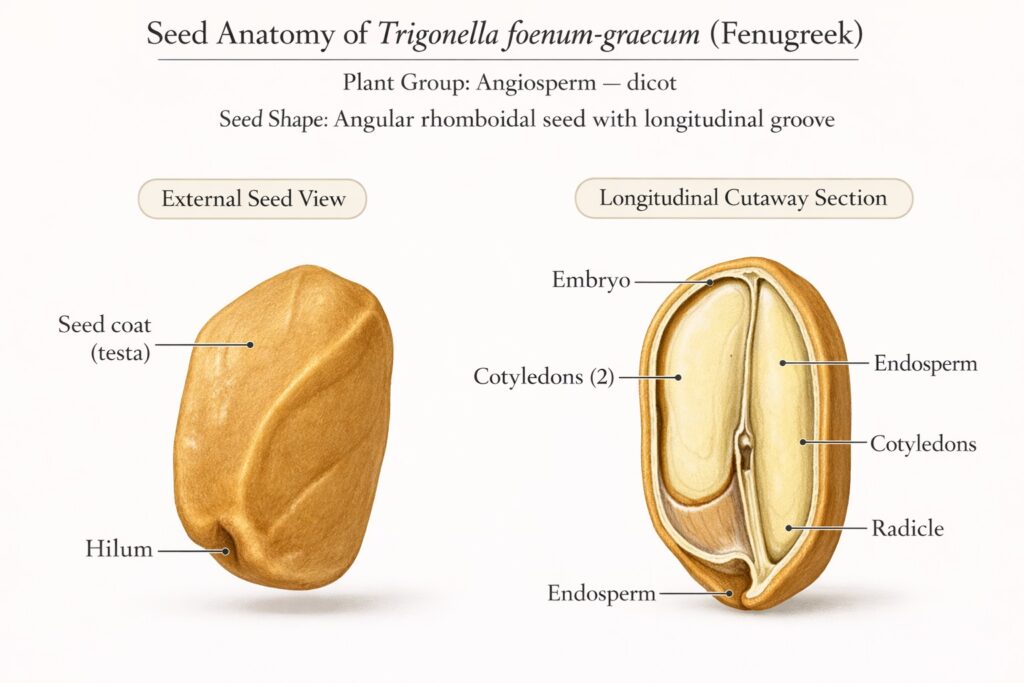
Seeds of Trigonella foenum-graecum are hard-coated, yellow-brown to ochre, rhomboid to irregularly angular in shape, approximately 3–5 mm long, and contain a firm endosperm of galactomannan-rich mucilage that swells substantially on hydration — a characteristic that influences both germination ecology and the industrial use of seed galactomannans as thickening agents. Scarification of the hard seed coat by soaking in water for 12–24 hours before sowing accelerates germination under field conditions, though untreated seeds germinate adequately when soil temperatures are optimal.
Vegetative Regeneration & Clonal Biology
| Field | Information |
|---|---|
| Vegetative Regeneration Capacity | Low |
| Primary Regeneration Mechanism | None documented; reproduction is exclusively by seed |
| Tissue Types Capable of Regeneration | Not documented in available literature |
| Apomixis Status | Not documented in available literature |
| Bulbil or Propagule Production | Absent |
| Layering Capacity | Not documented in available literature |
| Root Sprouting from Fragments | Not documented in available literature |
| Clonal Spread Rate | Negligible; plant does not reproduce clonally |
| Coppicing Response | Not documented; annual growth habit; plant does not regenerate from cut stems |
| Ecological or Invasive Significance of Clonal Biology | None; population spread is exclusively by seed dispersal |
Trigonella foenum-graecum lacks any documented capacity for vegetative regeneration and persists in both natural and cultivated populations entirely through annual seed-based recruitment; no clonal spread mechanism has been described in the literature.
Soil Ecology & Rhizosphere Interactions
| Field | Information |
|---|---|
| Mycorrhizal Association Type | AM (arbuscular mycorrhizal) |
| Documented Fungal Partners | Rhizophagus irregularis (previously Glomus irregulare); Funneliformis mosseae (previously Glomus mosseae) |
| Nitrogen Fixation | Documented |
| Allelopathic Properties | Documented; seed and root exudate compounds inhibit germination of certain co-occurring weed species in bioassay studies |
| Documented Allelopathic Targets | Phalaris minor; Chenopodium album; Medicago sativa (germination inhibition in bioassay) |
| Rhizosphere pH Modification | Mild acidification documented around active root zones; associated with organic acid exudation during nitrogen assimilation |
| Root Exudate Compounds | Coumarins; flavonoids; organic acids; trigonelline |
| Soil Microbiome Influence | Promotes Mesorhizobium populations in rhizosphere soil; AM fungal hyphal networks extend phosphorus uptake zone beyond root hair reach |
Biochemical Profile
| Compound Class | Compounds Documented | Primary Location in Plant | Ecological Function |
|---|---|---|---|
| Steroidal saponins / sapogenins | Diosgenin; yamogenin; gitogenin; tigogenin | Seeds; leaves (lower concentration) | Herbivore deterrence; membrane-disrupting secondary metabolites |
| Alkaloids | Trigonelline; choline; carpaine | Seeds; leaves | Defensive secondary metabolites; deterrence of seed predators |
| Flavonoids | Vitexin; isovitexin; orientin; quercetin; luteolin; apigenin | Leaves; seeds | UV photoprotection; pollinator attraction |
| Coumarins | Scopoletin; umbelliferone | Seeds; roots | Allelopathic activity in rhizosphere; antimicrobial defence in plant tissues |
| Galactomannans (polysaccharides) | Fenugreek gum (galactomannan); mannose:galactose ratio ~1.2:1 | Seed endosperm | Water retention in seed during germination; structural seed storage carbohydrate |
| Volatile compounds | Sotolone (3-hydroxy-4,5-dimethyl-2(5H)-furanone); pyrazines; norfuraneol | Seeds; leaves | Herbivore deterrence; may function in pollinator chemosensory signalling |
| Amino acids | 4-Hydroxyisoleucine (unusual non-protein amino acid); L-tryptophan | Seeds | Not documented in available literature for ecological function |
| Phenolic acids | Gallic acid; caffeic acid; p-coumaric acid; ferulic acid | Seeds; leaves | Herbivore deterrence; antimicrobial defence in plant tissues |
Research Coverage
| Field | Information |
|---|---|
| Research Coverage Level | High |
| Primary Research Fields | Phytochemistry (diosgenin, galactomannans, trigonelline); agronomy and crop physiology; ethnobotany; nitrogen fixation and soil ecology; seed biochemistry; food science |
| Earliest Published Study | Classical references in Dioscorides (1st century CE) and Theophrastus (4th century BCE); modern peer-reviewed literature from the 1950s onward |
| Most Active Research Regions | India; Egypt; Iran; France; United States; Tunisia |
| Key Knowledge Gaps | Native-range population genetics and diversity understudied; ecological interactions in natural habitats poorly characterised relative to agronomic literature; allelopathy mechanisms not fully elucidated at the molecular level; pollination ecology quantified only at limited resolution |
Phytochemical Organ Distribution
| Plant Organ | Compound Class | Compounds Documented | Source |
|---|---|---|---|
| Seeds | Steroidal sapogenins | Diosgenin; yamogenin; gitogenin; tigogenin | Harborne, J.B. & Baxter, H., 1993 |
| Seeds | Alkaloids | Trigonelline; choline | Harborne, J.B. & Baxter, H., 1993 |
| Seeds | Galactomannans | Fenugreek gum (galactomannan) | Harborne, J.B. & Baxter, H., 1993 |
| Seeds | Volatile compounds | Sotolone; pyrazines; norfuraneol | Harborne, J.B. & Baxter, H., 1993 |
| Seeds | Amino acids | 4-Hydroxyisoleucine; L-tryptophan | Harborne, J.B. & Baxter, H., 1993 |
| Seeds | Phenolic acids | Gallic acid; caffeic acid; p-coumaric acid; ferulic acid | Harborne, J.B. & Baxter, H., 1993 |
| Leaves | Flavonoids | Vitexin; isovitexin; orientin; quercetin; luteolin | Harborne, J.B. & Baxter, H., 1993 |
| Leaves | Steroidal sapogenins | Diosgenin (lower concentration than seed) | Harborne, J.B. & Baxter, H., 1993 |
| Roots | Coumarins | Scopoletin; umbelliferone | Harborne, J.B. & Baxter, H., 1993 |
The seed of Trigonella foenum-graecum is the most thoroughly documented organ for phytochemical composition, with the steroidal sapogenin and galactomannan fractions characterised in the greatest depth across the published literature.
Nutritional Composition
| Nutrient | Value per 100 g Edible Portion | Source |
|---|---|---|
| Energy | 323 kcal (1,351 kJ) | USDA FoodData Central |
| Water | 8.84 g | USDA FoodData Central |
| Protein | 23.0 g | USDA FoodData Central |
| Total Fat | 6.41 g | USDA FoodData Central |
| Carbohydrates | 58.4 g | USDA FoodData Central |
| Dietary Fibre | 24.6 g | USDA FoodData Central |
Values represent dried fenugreek seed (raw) at commercial maturity and storage-dry state.
Climate Adaptation & Stress Tolerance
Trigonella foenum-graecum is adapted to a cool-season annual growth pattern under semi-arid to sub-humid conditions, growing optimally between 10–28 °C (50–82 °F) during the vegetative phase and tolerating brief temperature drops to 0 °C (32 °F) in the seedling stage without severe damage, though prolonged frost below −3 °C (27 °F) is lethal to above-ground tissue. The cool-season preference means that in most South Asian, North African, and Mediterranean cultivation contexts the crop is grown through the mild winter months, with summer temperatures above 35 °C (95 °F) causing accelerated senescence, poor pod fill, and seed quality reduction.
Drought tolerance is moderate; the deep taproot and efficient early soil water extraction allow established plants to tolerate moderate dry spells during the vegetative phase, but prolonged soil moisture deficit during pod fill significantly reduces seed yield and diosgenin content. The species performs poorly under high humidity combined with restricted airflow, conditions that promote fungal foliar diseases. Salinity tolerance is low to moderate; growth is progressively reduced at soil electrical conductivity above approximately 3 dS m⁻¹, and the crop is considered salinity-sensitive relative to many dryland legumes.
Climate Vulnerability & Range Dynamics
| Field | Information |
|---|---|
| IUCN Climate Vulnerability Assessment | Not Evaluated |
| Primary Climate Sensitivity Factors | Warming spring temperatures compressing the cool-season cultivation window; increased frequency of late frost events at higher-elevation native habitats; elevated humidity promoting fungal disease pressure |
| Projected Range Shift Direction | Not documented in available literature |
| Projected Range Shift Magnitude | Not documented in available literature |
| Key Threatening Processes | Habitat conversion and agricultural intensification reducing wild population refugia in the Eastern Mediterranean; genetic erosion through displacement of landraces by improved varieties in primary cultivation zones |
| Resilience Factors | Orthodox seed longevity enabling seed bank survival; wide cultivated distribution providing ex-situ genetic reservoir; broad thermal tolerance for germination (10–30 °C) allowing exploitation of shifting seasonal windows |
| Published Modelling Studies | No study identified |
| Confidence Level | Low |
Cytogenetics
| Field | Information |
|---|---|
| Chromosome Number (2n) | 16 (2n = 2x = 16) |
| Ploidy Level | Diploid |
| Genome Size (1C value) | Not documented in available literature |
| Karyotype Notes | Eight chromosome pairs; karyotype relatively uniform across cultivated and wild accessions; minor variation in heterochromatin distribution reported among geographic accessions in cytological surveys |
| Source | Darlington, C.D. & Wylie, A.P., 1955 |
Cultivation Requirements
| Field | Information |
|---|---|
| Light Requirements | Full sun; minimum 6 hours direct sunlight; day-length sensitivity low to moderate among cultivated varieties |
| Watering | Moderate; consistent soil moisture during germination and establishment; reduced irrigation as pods approach maturity to promote dry-down and reduce shattering risk |
| Soil Type | Loamy to sandy loam; well-drained; calcareous or neutral soils preferred; tolerates moderate clay if drainage is adequate |
| Soil pH | 6.0–8.0 |
| Humidity | Low to moderate; high humidity promotes powdery mildew and downy mildew; airflow around plants reduces disease incidence |
| Temperature Range | Optimum 10–28 °C (50–82 °F); minimum tolerated −3 °C (27 °F) briefly; above 35 °C (95 °F) causes accelerated senescence |
| USDA Hardiness Zone | Not applicable (annual crop); grown as a cool-season annual across Zones 4–11 depending on season |
| Fertilization | Low nitrogen demand owing to symbiotic nitrogen fixation; phosphorus and potassium applications at sowing support early root and nodule establishment; excess nitrogen suppresses nodulation |
| Container Suitability | Feasible in large containers (minimum 20 cm depth) for leaf production; seed production in containers requires deep substrate for taproot development |
Propagation Methods
Trigonella foenum-graecum is propagated exclusively by seed, which is sown directly into the final growing position at a depth of 1–2 cm in well-prepared, free-draining seedbed; direct sowing is strongly preferred over transplanting because the taproot system is sensitive to root disturbance during the establishment phase, and transplanted seedlings frequently show reduced nodulation and slower early growth compared to direct-seeded plants. Soaking seeds in water for 12–24 hours prior to sowing softens the hard seed coat and accelerates germination by 2–4 days, and inoculation of pre-soaked seed with a compatible Mesorhizobium strain is recommended in soils without a history of fenugreek cultivation to ensure effective nodule formation. Successive small sowings at intervals of two to three weeks extend the leaf harvest period for the fresh vegetable crop (methi), as individual plants bolt to flowering relatively quickly under lengthening days and rising temperatures, shortening the window of tender-leaf availability from any single sowing.
Pests & Diseases
| Issue | Notes |
|---|---|
| Powdery mildew | Erysiphe polygoni; white powdery colonies on upper leaf surfaces and young stem tissue; prevalent under warm days combined with cool nights and moderate humidity |
| Downy mildew | Peronospora trigonellae; pale yellowish patches on the upper leaf surface with greyish-purple sporulation on the lower surface; associated with cool, humid conditions during the early vegetative phase |
| Root rot | Rhizoctonia solani and Fusarium spp.; brown lesions at the stem base and crown; associated with poorly drained soils, high soil moisture, or sowing in cold waterlogged seedbeds |
| Cuscuta (dodder) | Cuscuta spp.; parasitic twiner attaching to stems and drawing nutrients; associated with contaminated seed lots or heavily infested fields |
| Leaf spot | Cercospora traversiana; circular to irregular brown spots with a darker margin on leaves; most prevalent under warm, wet conditions during the mid-to-late vegetative phase |
Toxicity & Safety
| Field | Information |
|---|---|
| Humans | Steroidal saponins and diosgenin are associated with gastrointestinal discomfort; the unusual amino acid 4-hydroxyisoleucine has no documented acute human toxicity at culinary seed quantities; seed galactomannans are associated with flatulence from colonic fermentation; hypersensitivity reactions including contact dermatitis and occupational asthma are documented in individuals with repeated occupational exposure to seed dust |
| Cats | Not listed as toxic by ASPCA; no specific physiological toxicity documented |
| Dogs | Not listed as toxic by ASPCA; no specific physiological toxicity documented |
| Toxic Compounds | Steroidal saponins (diosgenin, yamogenin); 4-hydroxyisoleucine (unusual amino acid); galactomannans (fermentable fibre) |
| Source | ASPCA Animal Poison Control Center (aspca.org/pet-care/animal-poison-control) |
The principal toxicological concern with Trigonella foenum-graecum in humans relates to hypersensitivity and occupational exposure to seed dust rather than acute oral toxicity from dietary seed consumption; cross-reactivity with other Fabaceae members has been documented in sensitised individuals.
Invasive Status
Trigonella foenum-graecum is not classified as invasive or as an environmental weed of concern in any jurisdiction where it is cultivated or naturalised. Naturalised populations occur in South Asia, North Africa, and parts of the Mediterranean on disturbed and degraded ground, but the species does not establish persistent, spreading populations in undisturbed native vegetation and is not documented as displacing native flora in any naturalised region.
Conservation Status
| Field | Information |
|---|---|
| IUCN Red List Status | Not Evaluated |
| Assessment Year | Not applicable |
| Population Trend | Not documented in available literature |
| Source | IUCN Red List of Threatened Species — https://www.iucnredlist.org (Accessed: 2026-03-13). |
Economic Importance
Trigonella foenum-graecum is a commercially significant multi-purpose crop with three principal economic products: the dried seed used as a spice and food ingredient, the fresh leaf (methi) consumed as a vegetable, and the seed-derived diosgenin used as a steroidal precursor in pharmaceutical synthesis. India dominates global production, with Rajasthan accounting for approximately 80% of Indian seed output and the state maintaining the world’s largest concentration of fenugreek cultivation area, followed by Gujarat, Madhya Pradesh, and Uttar Pradesh. Secondary producing countries include Morocco, Egypt, Ethiopia, Pakistan, Turkey, France, and Canada.
The seed is a primary spice ingredient in South Asian, North African, and Middle Eastern culinary traditions, with India also the dominant global exporter of fenugreek seed and seed-derived extract. Fenugreek gum — the galactomannan fraction extracted from the seed endosperm — is used as a food-grade thickening, stabilising, and gelling agent in the food processing industry and carries regulatory approval as a food additive in multiple jurisdictions including the European Union and the United States. Industrial extraction of diosgenin from fenugreek seed has historically been an important source material for the synthesis of corticosteroids, sex hormones, and contraceptive compounds in the pharmaceutical industry, though the relative importance of fenugreek as a diosgenin source has varied with competition from Dioscorea yam-derived material.
The dried leaf, commercially marketed as “kasuri methi” in the South Asian food trade, is consumed directly as a vegetable when fresh and extensively traded as a dried herb in South Asian diaspora markets globally. Forage use as green manure and fodder for livestock represents an additional traditional agronomic role, particularly in Mediterranean and North African farming systems.
Ethnobotanical Uses
Trigonella foenum-graecum is one of the most extensively documented plants in the ethnobotanical literature of the Old World, with recorded use spanning food, fodder, and botanical applications across South Asia, the Middle East, the Mediterranean, and North Africa extending over at least three millennia. In South Asian Ayurvedic tradition, fenugreek seed (Methi) is classified as a warming, digestive, and carminative botanical, used in classical formulations for digestive complaints, joint conditions, and women’s reproductive health contexts; the Ayurvedic Pharmacopoeia of India lists Trigonella foenum-graecum as a recognised botanical raw material. The leaves and seeds are integral to everyday South Asian cooking as both fresh vegetable and spice, blurring the boundaries between food plant and ethnobotanical application across the region.
In Arabic traditional medicine (Unani Tibb), fenugreek seed is known as Hulba (حُلبة) and is documented in classical Arabic materia medica texts including Ibn Sina’s Canon of Medicine (11th century CE) as a multipurpose botanical ingredient in preparations for respiratory, digestive, and wound-related applications. Egyptian ethnobotanical surveys document fenugreek seed as a traditional preparation for nursing mothers and as a flavouring in Hilba tea, with archaeological evidence of fenugreek in pharaonic-period Egyptian sites providing one of the earliest documented cultivation records anywhere in the world.
In the Mediterranean region and the Levant, fenugreek seed features in traditional food preparations including Yemeni Hilbeh (a fenugreek-based condiment), North African spice blends, and Middle Eastern mixed spice traditions. European ethnobotanical use is primarily recorded in the context of veterinary applications — particularly as a digestive tonic for livestock — a use reflected in the historical common name “Greek Hay,” referring to its ancient use as a fodder enhancement.
Cultural & Traditional Context
Trigonella foenum-graecum is among the most archaeobotanically ancient cultivated plants, with charred seeds recovered from sites including Tell el-Amarna in Egypt (c. 1350 BCE), Bronze Age sites in Iraq, and Neolithic levels at sites across the Eastern Mediterranean, attesting to its cultivation and trade as a food and aromatic plant for more than four thousand years and establishing it as a candidate for one of the world’s earliest domesticated annual legumes. This exceptional antiquity of use is reflected in the survival of fenugreek’s role as both a food crop and a culturally significant plant across an extraordinarily broad geographic range from Morocco to India, a continuity of cultural significance rarely matched among Old World crop plants.
In Indian cultural contexts, Methi occupies a prominent position in the culinary identity of Rajasthani, Gujarati, Punjabi, and South Indian regional cuisines, where both fresh leaves and seeds are used in signature dishes that carry strong regional and festive food identity associations. The seed’s deeply distinctive aroma, attributed primarily to sotolone, has made it a recognisable marker compound in South Asian and Middle Eastern food culture to a degree that few other spice plants equal.
The name foenum-graecum (“Greek hay”) in classical Latin literature reflects the plant’s strong association with Greek and Eastern Mediterranean agriculture in the classical period, and references in Theophrastus’s Historia Plantarum (c. 350 BCE) and Dioscorides’s De Materia Medica (1st century CE) establish it as a well-documented element of the classical botanical tradition. Its incorporation into the traditional food systems of at least six major world cultural regions — South Asian, Middle Eastern, North African, East African, Mediterranean, and Central Asian — without significant parallel introduction events testifies to the depth of its integration into pre-modern agricultural exchange networks.
Interesting Facts
Trigonella foenum-graecum seed contains the unusual non-protein amino acid 4-hydroxyisoleucine, a compound found at significant concentrations almost exclusively in fenugreek among known food plants and not present in the general amino acid pool of most plant species.
The characteristic aroma of fenugreek seed is primarily attributable to sotolone (3-hydroxy-4,5-dimethyl-2(5H)-furanone), a compound also responsible for the aroma of aged rum, caramel, and maple syrup; sotolone in fenugreek seed is produced as a degradation product of 4-hydroxyisoleucine during roasting or prolonged storage.
Fenugreek seed galactomannan — the major storage polysaccharide of the seed endosperm — has a mannose-to-galactose ratio of approximately 1.2:1, making it one of the most highly substituted galactomannans among legume seed gums and giving it distinctively high water-binding and viscosity properties relative to guar gum (mannose:galactose ~2:1) and locust bean gum (~4:1).
Charred fenugreek seeds recovered from the Bronze Age site of Tell el-Amarna in Egypt and from Neolithic-period archaeological layers across the Levant represent some of the oldest directly dated archaeobotanical evidence for the cultivation of any annual legume in the Old World, with the plant’s cultivation history credibly extending beyond 4,000 years.
The seed diosgenin content of Trigonella foenum-graecum — ranging from approximately 0.5–1.5% of dry seed weight depending on variety and growing conditions — made it a commercially significant industrial raw material for steroid hormone synthesis during the mid-to-late 20th century, as diosgenin serves as a starting molecule for the partial synthesis of progesterone, hydrocortisone, and other steroidal pharmaceuticals.
FAQs
What is the difference between fenugreek seed and fenugreek leaf (methi), and are they used the same way? Trigonella foenum-graecum produces both dried seed and fresh leaves that are used as entirely distinct culinary ingredients with different flavour profiles and applications. The dried seed has a hard, bitter, intensely aromatic character driven by sotolone and saponin compounds and is used whole or ground as a spice; the fresh or dried leaf (methi) has a softer, less bitter, more herbaceous flavour and is used as a vegetable or herb in South Asian cooking. The two forms of the same plant are rarely interchangeable in recipes because their aroma and bitterness intensities differ substantially.
Why does fenugreek seed need to be roasted or dry-fried before use in cooking? Raw fenugreek seed contains a high concentration of saponins and bitter compounds that produce an unpleasantly harsh, astringent flavour when consumed directly. Dry-roasting or frying the seed in hot oil denatures these bitter compounds through Maillard reactions and thermal degradation and simultaneously develops the characteristic warm, nutty, and slightly sweet aroma associated with the cooked spice, converting precursor compounds including 4-hydroxyisoleucine into the sotolone and pyrazine volatiles responsible for the roasted fenugreek flavour profile.
How long does fenugreek take to grow from seed to first leaf harvest? Under warm conditions (20–25 °C / 68–77 °F) with adequate moisture, Trigonella foenum-graecum germinates within 3–7 days of sowing and produces harvestable young leaves suitable for fresh vegetable use within 20–30 days from sowing. The first harvest cuts the young shoot tips, and the plant produces several subsequent flushes of fresh leaf before it bolts to flowering, which typically occurs 40–60 days from sowing under lengthening spring days. Successive small sowings every two to three weeks extend the continuous fresh leaf supply significantly.
Can fenugreek be grown in a pot or container indoors? Trigonella foenum-graecum can be grown successfully in containers of at least 20 cm depth for fresh leaf production, requiring a sunny windowsill or outdoor position with a minimum of six hours of direct light, a free-draining growing medium, and regular but not excessive watering. Container-grown plants produce several rounds of leaf harvest before flowering. Seed production in containers is less reliable than leaf production, as pod and seed development requires a longer season and the taproot benefits from deeper substrate than typical shallow containers provide.
Does fenugreek fix nitrogen, and does this benefit the garden soil? Trigonella foenum-graecum forms a symbiosis with nitrogen-fixing Mesorhizobium bacteria in root nodules that is active from approximately 10–14 days after germination and documented to contribute 50–80 kg N ha⁻¹ per season under well-nodulated conditions. In garden and small-scale cultivation contexts, incorporating the above-ground biomass and root system into the soil as a green manure at the end of the season returns the fixed nitrogen to the soil as the organic matter decomposes, representing a tangible soil fertility benefit for the following crop.
Conclusion
Trigonella foenum-graecum L. is an annual legume of the family Fabaceae, native to the Eastern Mediterranean and Irano-Turanian region and placed among the oldest archaeobotanically documented cultivated annual legumes in the Old World. Its combination of a nitrogen-fixing root symbiosis, chemically complex seed biochemistry, and cool-season annual growth strategy has underpinned its sustained cultivation across a remarkably broad geographic and cultural range extending from North Africa and the Mediterranean Basin through the Middle East and South Asia.
The species is economically significant on multiple levels — as a primary spice and vegetable crop of global South Asian food culture, as a source of industrial galactomannan gum, and as a historical raw material for steroidal pharmaceutical synthesis via diosgenin extraction — placing it among the most economically multi-dimensional annual crops in the Fabaceae. India’s dominance of global production reflects the depth of fenugreek’s integration into South Asian agricultural and culinary identity, where it occupies a distinct position as both a functional crop and a culturally embedded food plant.
Despite its ancient and extensive use, the native-range ecology, wild population genetics, and landscape-level distribution dynamics of Trigonella foenum-graecum remain comparatively understudied relative to the extensive agronomic and phytochemical literature on the cultivated crop, representing a gap in knowledge for a species whose wild gene pool represents an important reservoir for future crop improvement.
Common Cultivation Observations
| Observation | Associated Condition |
|---|---|
| Yellowing of lower leaves beginning at the leaf tip during active vegetative growth | Iron or manganese deficiency associated with high-pH (>8.0) soils reducing micronutrient availability; also associated with waterlogging compressing root function |
| White powdery coating on upper leaf surfaces and young stems | Powdery mildew (Erysiphe polygoni) associated with warm days, cool nights, and moderate humidity with restricted airflow |
| Plants producing flowers and pods before reaching expected vegetative height | Early bolting associated with heat stress, day-length trigger from late sowing into lengthening days, or drought stress compressing the vegetative phase |
| Poor or patchy germination with seedling collapse at soil level | Damping-off associated with Pythium or Rhizoctonia in cold, wet seedbeds or excessive sowing depth |
| Pale green plants with reduced branching and few root nodules visible on excavated roots | Poor nodulation associated with absence of compatible Mesorhizobium strains in soil, low soil pH, or excess mineral nitrogen suppressing nodule initiation |
| Twisting, binding stems with yellowing and wilting of attached tissue | Cuscuta (dodder) parasitism associated with contaminated seed lots or heavily infested prior-crop field |
Scientific Stability Note
The accepted name Trigonella foenum-graecum L. is taxonomically stable under current circumscription and is confirmed by Kew Plants of the World Online (POWO) as the accepted name with Linnaean authority (1753). Several synonyms have accumulated through historical re-descriptions of cultivated material under alternative generic placements, most notably Buceras foenum-graecum (L.) All. and Foenum-graecum officinale Moench, which reflect earlier attempts to segregate fenugreek into separate monotypic or small genera; these are all subsumed under the accepted Linnaean binomial in modern taxonomy. The genus Trigonella is placed within the tribe Trifolieae of Fabaceae under APG IV classification, a placement that is stable and not under active revision. No subspecific taxa of Trigonella foenum-graecum are currently recognised by POWO.
Reference Summary
A. Primary Taxonomic Sources
Kew Plants of the World Online (POWO) — https://powo.science.kew.org (Accessed: 2026-03-13). GBIF Backbone Taxonomy — https://www.gbif.org (Accessed: 2026-03-13).
B. Peer-Reviewed Literature
No fully verified peer-reviewed citation identified for this entry.
C. Monographs and Books
Harborne, J.B. & Baxter, H. (1993). Phytochemical Dictionary: A Handbook of Bioactive Compounds from Plants. Taylor & Francis, London.
Darlington, C.D. & Wylie, A.P. (1955). Chromosome Atlas of Flowering Plants. George Allen & Unwin, London.
D. Herbarium and Specimen Records
Royal Botanic Gardens Kew Herbarium (K) — specimens of Trigonella foenum-graecum held; consult Kew herbarium catalogue for accession details. JSTOR Global Plants — digitised type and reference specimens accessible via jstor.org/plants.
E. Grey Literature and Databases
IUCN Red List of Threatened Species — https://www.iucnredlist.org (Accessed: 2026-03-13). USDA FoodData Central — https://fdc.nal.usda.gov (Accessed: 2026-03-13). ASPCA Animal Poison Control Center — https://www.aspca.org/pet-care/animal-poison-control (Accessed: 2026-03-13).