How Can You Grow Philodendron at Home: Complete Care Guide for Indian Gardens
Quick Answer: Philodendron is one of the easiest indoor plants you can grow in India. It thrives in indirect light, needs water only when the top inch of soil dries out, and does well in any warm, humid Indian home — no garden required.
See also: Philodendron Plant plant profile, its flowering season, its benefits, and quick facts.
Run your hand across a philodendron leaf — it’s glossy, cool, and almost waxy to the touch. That smooth surface is the plant’s way of soaking up every trace of filtered light, which is exactly why it thrives in Indian flats where direct sunlight is a rare luxury. Indian home gardeners grow it primarily for its bold, tropical-looking foliage that transforms a bare shelf or corner within weeks.
Recommended Products
Disclosure: As an Amazon Associate, PlantsInfo may earn from qualifying purchases.
🌱 Growing Essentials
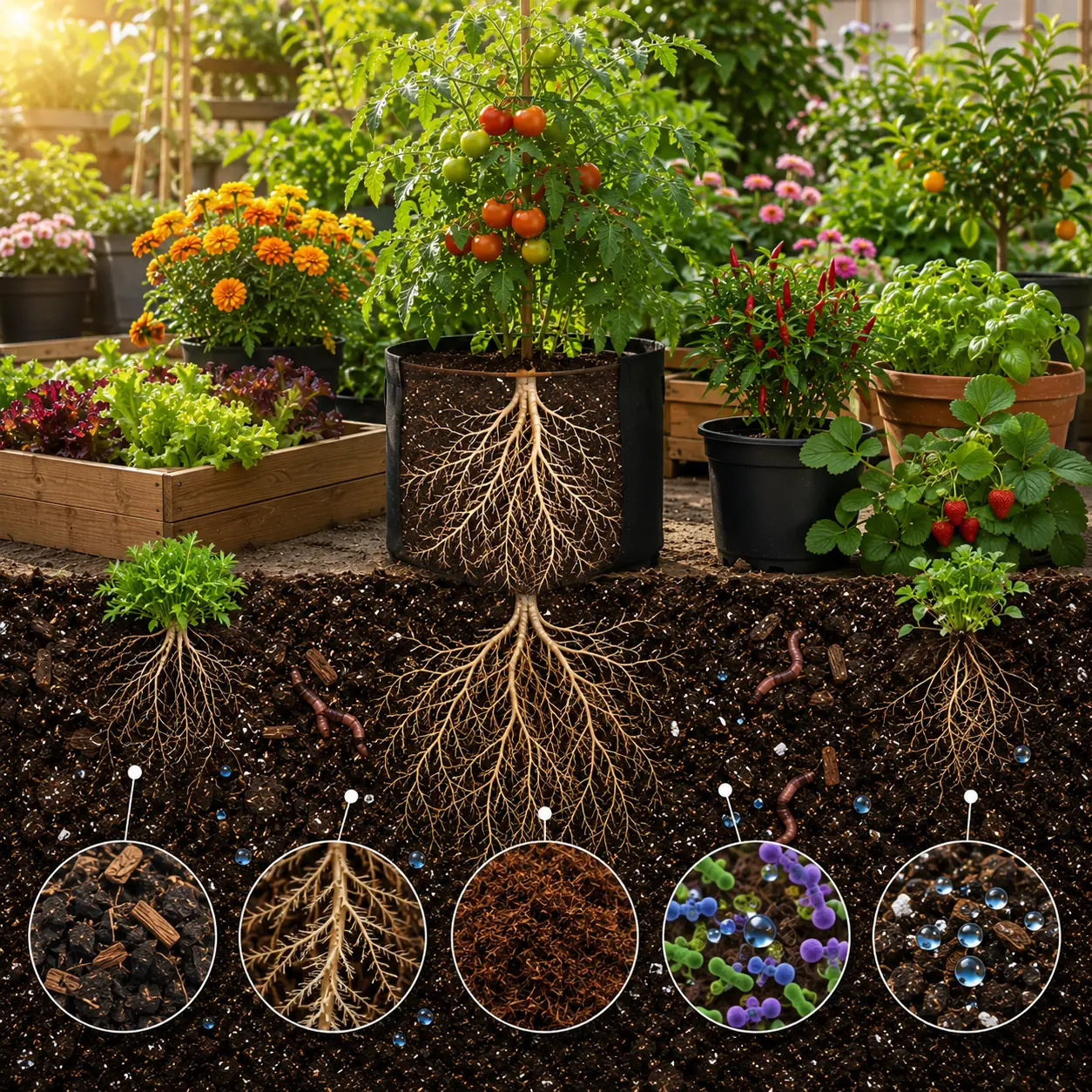
The following products can help with container gardening, potting, root development, soil management, and healthy plant growth.
Organic Potting Soil Mix
Provides nutrients, structure, and healthy growing conditions for container plants.
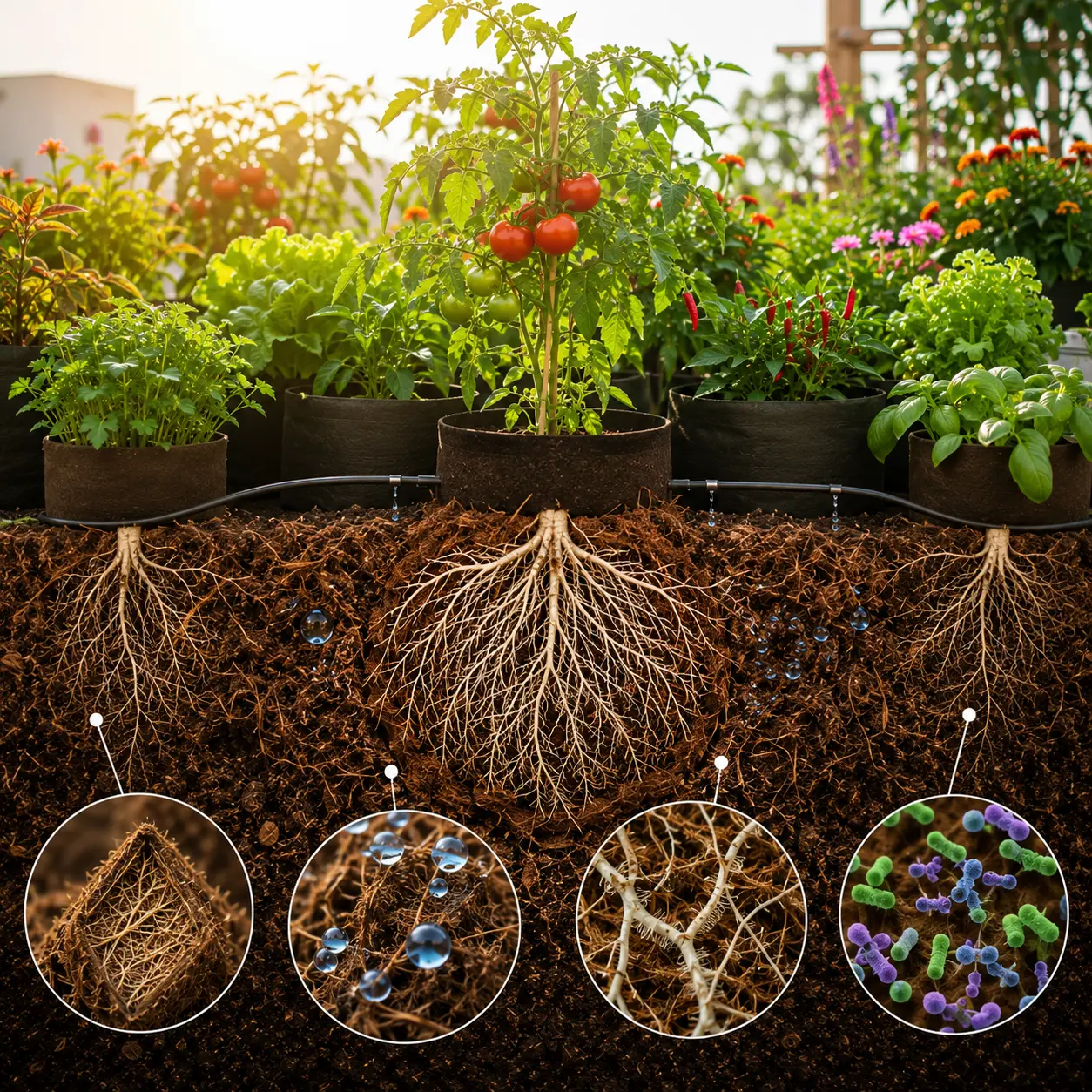
Coco Peat Growing Medium
Enhances moisture retention while maintaining excellent root-zone aeration.

Grow Bags for Plants
Improve drainage, root aeration, and vegetable production in limited spaces.

Plastic Pots for Plants
Ideal containers for seedlings, ornamentals, herbs, and balcony gardens.
Difficulty level: Easy. The one thing beginners almost always get wrong? Overwatering — more philodendrons die from too much water than from neglect.
Quick Facts
| Attribute | Detail |
|---|---|
| Common names | Philodendron, Heartleaf Philodendron, Sweetheart Plant |
| Scientific name | Philodendron hederaceum (most common indoor species) |
| Plant type | Tropical perennial; vining or self-heading |
| Mature size | Vining: 2–3 m indoors; upright: up to 1.2 m |
| Sunlight | Bright indirect light; tolerates low light |
| Water needs | All of India thrives in warm, humid conditions year-round |
| Best season to plant | Monsoon or pre-monsoon (March–September) |
| Suitable states | All of India — thrives in warm, humid conditions year-round |
Choosing the Right Spot
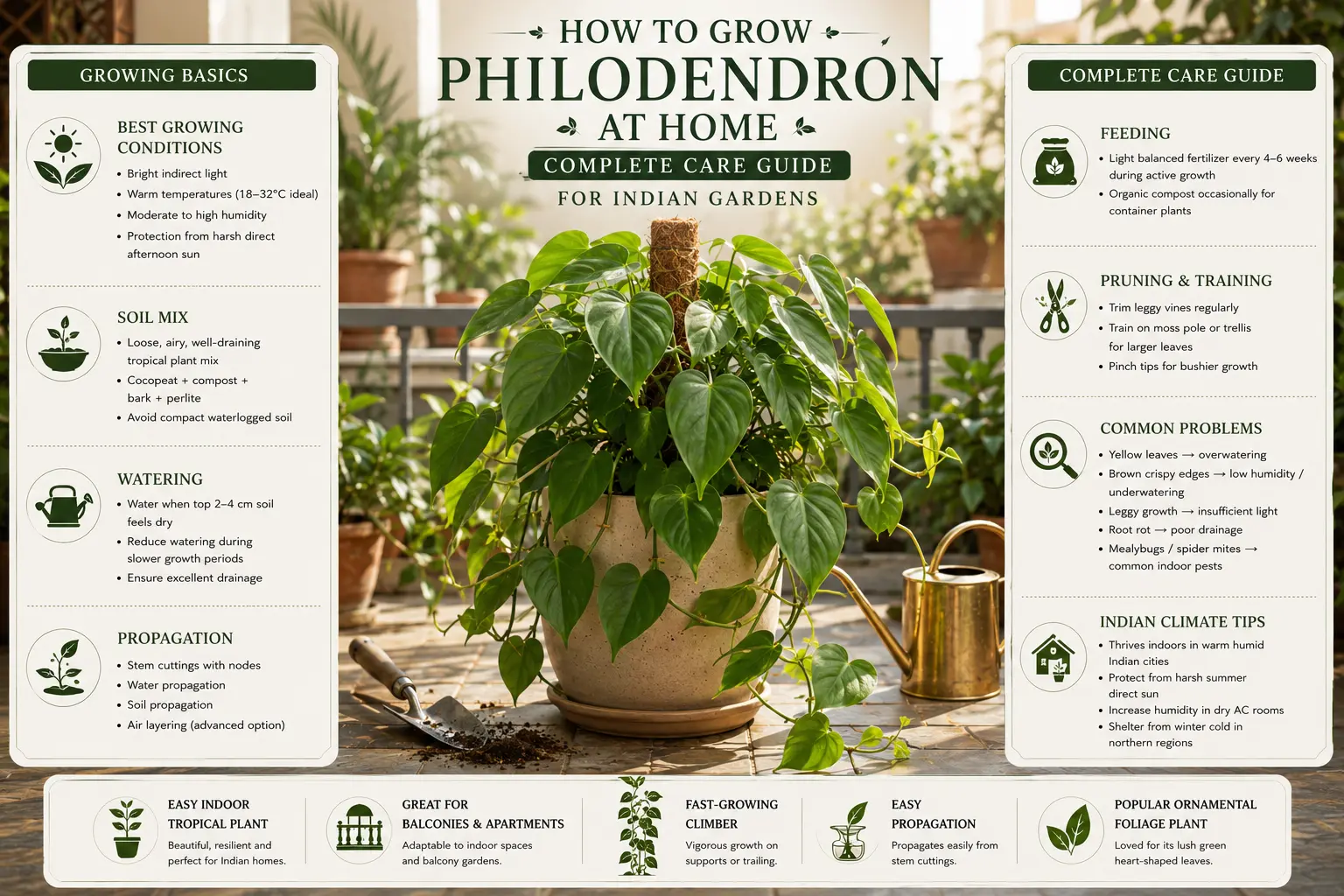
Philodendron does best near a north- or east-facing window in Indian homes, where it receives bright light without the harsh afternoon sun burning its leaves. In cities like Mumbai, Chennai, or Kolkata, the ambient humidity already suits this plant beautifully. It works equally well in containers on a balcony (with some shade) or indoors on a shelf — but avoid placing it directly in front of a south- or west-facing window during summer, when the intensity can scorch the leaves.
Soil and Potting Mix
Use a well-draining potting mix with good aeration — a combination of regular garden soil, coarse river sand, and vermicompost in roughly equal parts works well. The target pH range is 5.5–7.0. If you’re using heavy black cotton soil from the garden directly, the plant’s roots will stay waterlogged and rot within weeks. The single most common soil mistake Indian gardeners make is using straight garden soil in a pot — it compacts over time and suffocates the roots.
Planting — Season and Method
The best time to plant philodendron in India is during the monsoon or just before it (June–August), when humidity is high, and temperatures are warm — ideal conditions for root establishment. A sapling is far more practical than trying from seed, which is unreliable and slow. Plant in a pot with drainage holes, set the root ball so the top sits about 2 cm below the pot rim, and water thoroughly once after planting. Space multiple plants at least 30 cm apart.
Watering
For the first 4–6 weeks, water every 4–5 days or when the top 2–3 cm of soil feels dry to the touch. Mature plants need water roughly once a week in summer and once every 10–14 days in winter. A specific sign of overwatering to watch for: stems turning soft and mushy at the base — this is root rot beginning, not just yellowing leaves. During the monsoon, reduce watering significantly and ensure the pot drains freely after rain.
Fertiliser
Feed with vermicompost or well-rotted cow dung mixed into the top layer of soil once every 6–8 weeks during the growing season (monsoon through post-monsoon). For faster leaf growth, a liquid NPK fertiliser (20:20:20) diluted to half strength, applied monthly from March to October, works well. An organic alternative popular in Indian gardens: mustard cake (sarson ki khali), soaked in water for 24 hours and applied around the base every 6 weeks.
Common Problems and Fixes
Yellow leaves are almost always overwatering — let the soil dry out completely before the next watering, and check that the pot drains well.
Leggy, sparse growth with widely spaced leaves signals insufficient light, not underwatering, as many beginners assume. Move the plant closer to a window.
Mealybugs appear as white cottony patches in leaf axils. Wipe them off with a cotton ball dipped in neem oil solution (5 ml neem oil + 1 litre water + a few drops of dish soap) and repeat every 7 days until clear.
When Will You See Results?
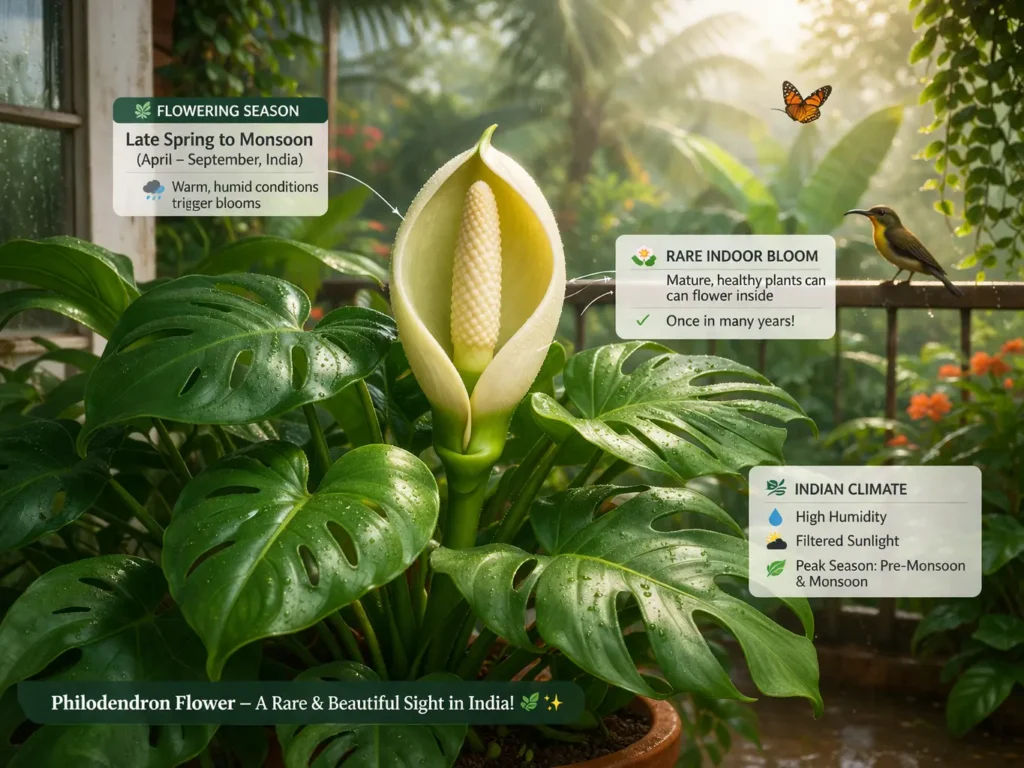
In the first year, expect rapid leaf growth — a healthy philodendron can push out a new leaf every 2–4 weeks during the warm months. Vining varieties will begin trailing noticeably within 3–4 months. Flowers are extremely rare indoors and require many years of maturity, so enjoy the foliage — that’s the real show with this plant.