Banana Flowering Season: When and What to Expect in India
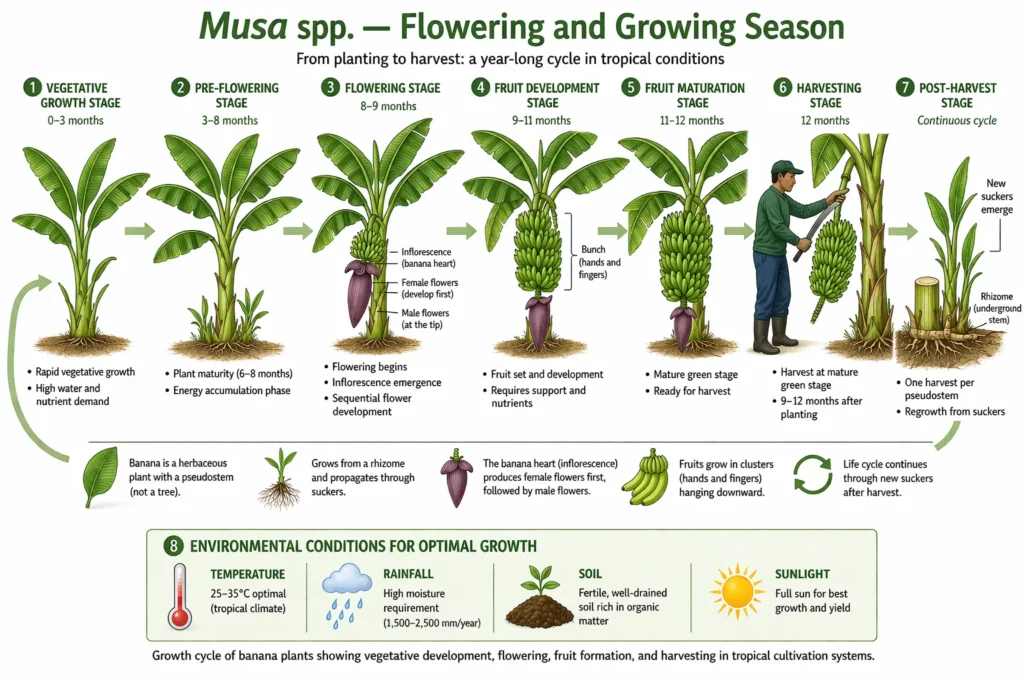
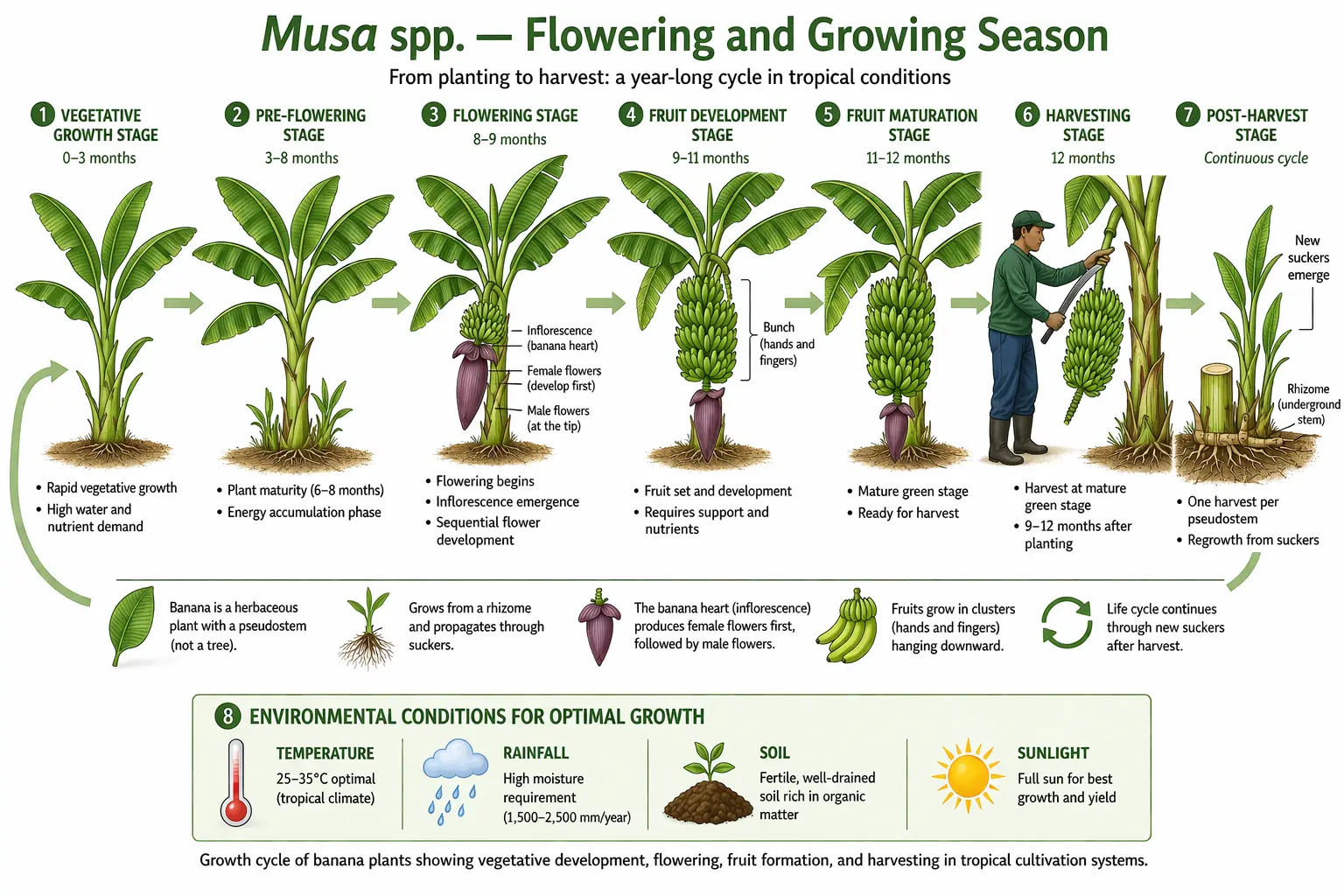
Quick Answer: Bananas flower 7–9 months after planting and fruit matures 90–120 days later, making the total crop cycle 10–13 months depending on variety and season. In India, flowering and fruiting occur year-round across different regions, but planting during monsoon onset (June–July) or spring (February–March) aligns the harvest with peak market demand.
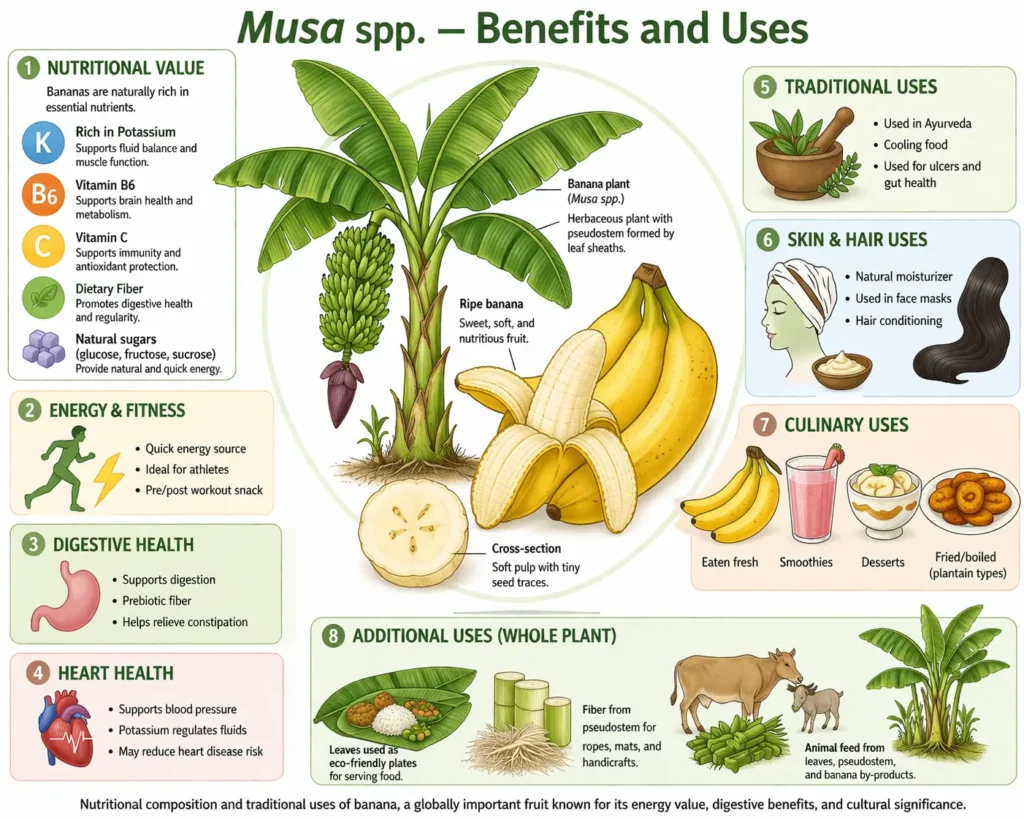
See also: Banana Plant plant profile, how to grow it, common problems, its benefits, and its varieties.
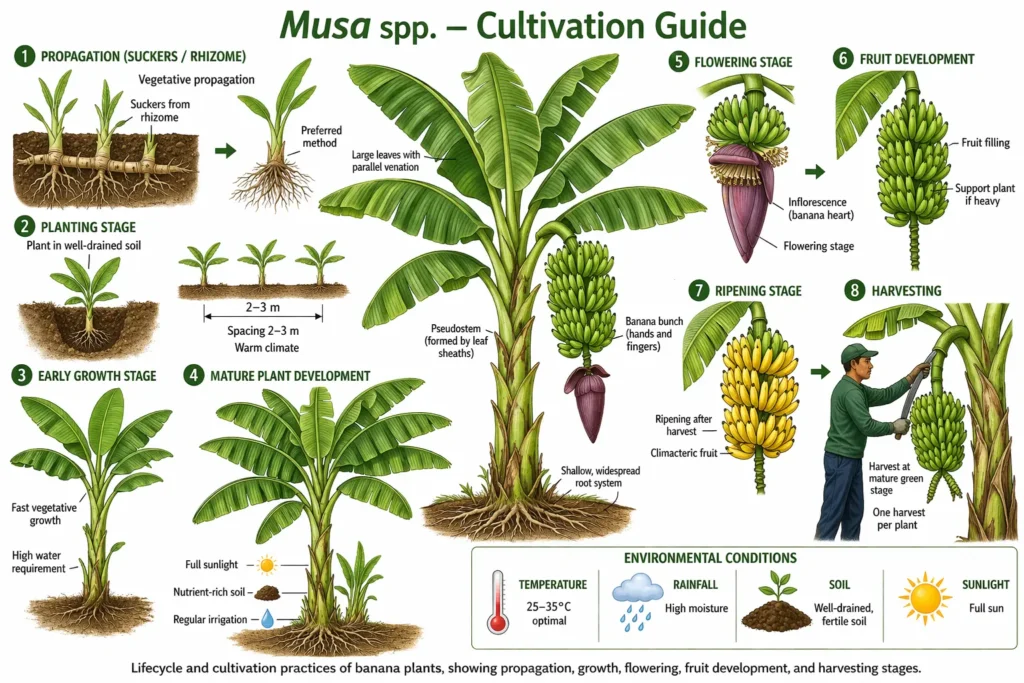
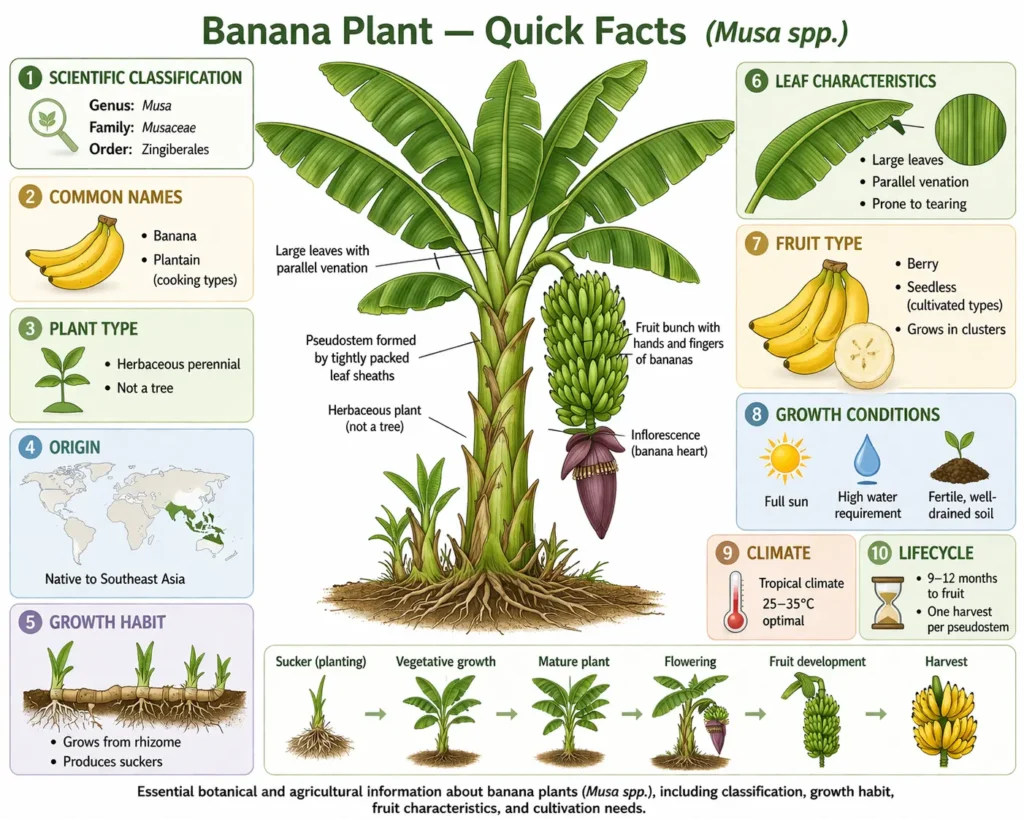
The banana flower is unmistakable when it finally appears. After months of steady leaf production, the plant slows down, and then one morning, you notice a pointed bud emerging from the crown. Over the next few days, it descends on a thick stalk, the purple bracts peel back, and rows of small flowers reveal themselves. This moment — 7 to 9 months after you planted the sucker — marks the shift from vegetative growth to fruiting.
Recommended Products
Disclosure: As an Amazon Associate, PlantsInfo may earn from qualifying purchases.
🌱 Growing Essentials
The following products can help with container gardening, potting, root development, soil management, and healthy plant growth.
Organic Potting Soil Mix
Provides nutrients, structure, and healthy growing conditions for container plants.
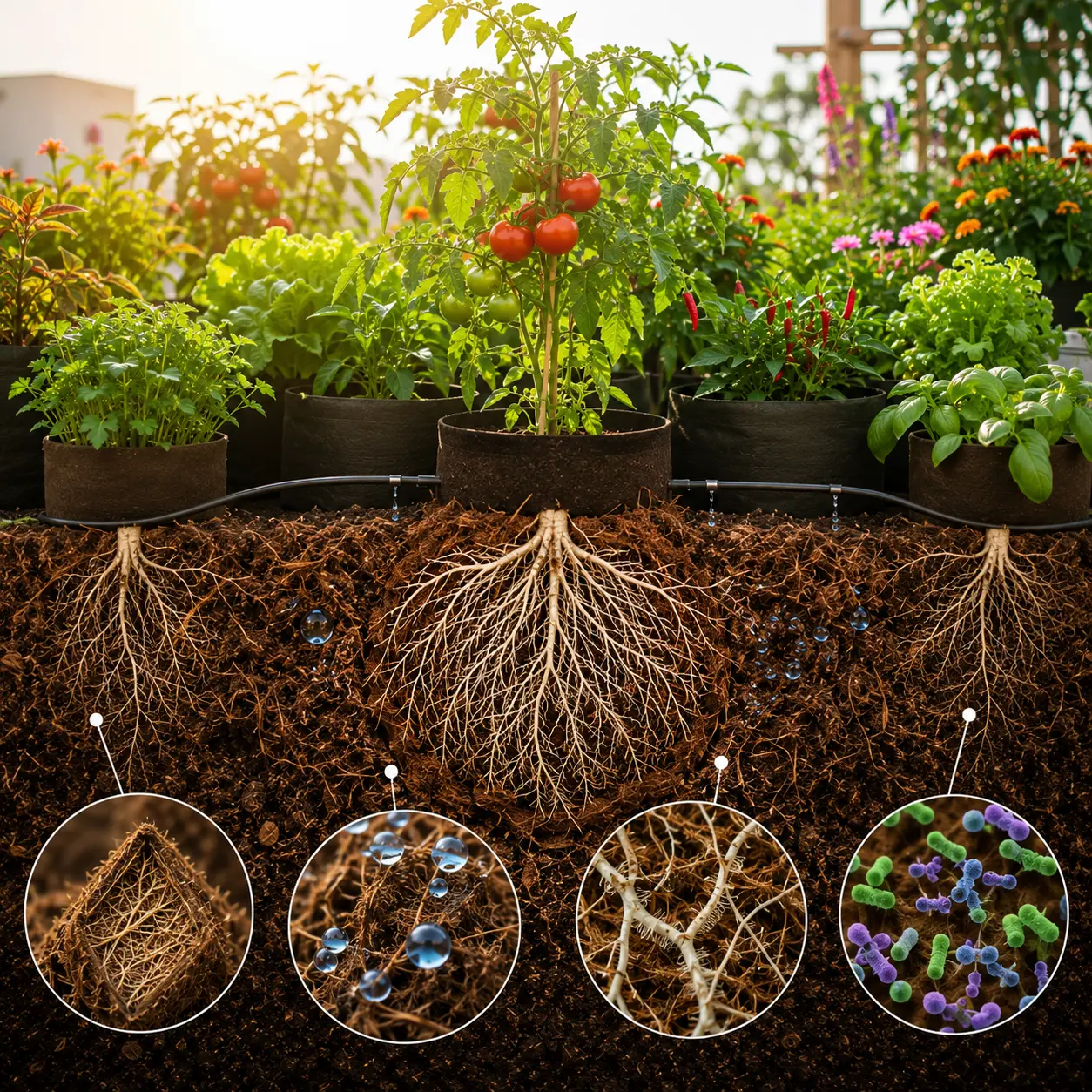
Coco Peat Growing Medium
Enhances moisture retention while maintaining excellent root-zone aeration.

Grow Bags for Plants
Improve drainage, root aeration, and vegetable production in limited spaces.

Plastic Pots for Plants
Ideal containers for seedlings, ornamentals, herbs, and balcony gardens.
Bananas are day-neutral, meaning they don’t require specific day length to flower. Temperature and plant maturity trigger flowering instead. This allows year-round cultivation in most of India, though regional climate patterns influence when it’s best to plant for optimal bunch quality.
India’s Seasons and This Plant
| Season (months) | What the plant is doing |
|---|---|
| Pre-monsoon (Mar–May) | High vegetative growth if water is adequate; heat stress slows growth above 38°C; good time for flowering if planted 7–8 months earlier during post-monsoon |
| Monsoon (Jun–Sep) | Peak vegetative growth with abundant rainfall; ideal planting window; plants started in February–March begin flowering; risk of wind damage and fungal issues |
| Post-monsoon (Oct–Nov) | Growth slows, especially in north India; temperatures below 12°C cause stress; harvest continues for monsoon plantings; good planting window in south India and irrigated areas. |
| Winter (Dec–Feb) | Growth slows, especially in north India; temperatures below 12°C cause stress; harvest continues for monsoon plantings; good planting window in south India and irrigated areas |
Flowering Season in Detail
Banana flowering is not seasonal in the traditional sense — it happens based on plant maturity rather than time of year. However, the season in which flowering occurs dramatically affects bunch quality.
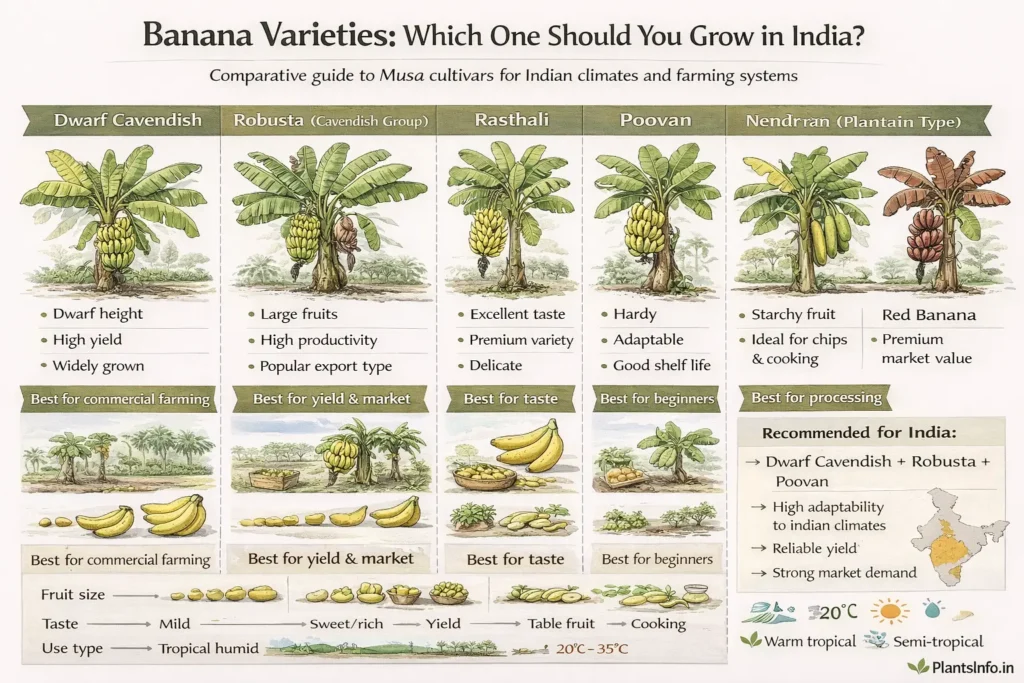
Buds appear when the pseudostem reaches full height, and the plant has produced 30–45 leaves. In warm, well-watered conditions, this takes 6–7 months for fast varieties like Grand Naine or Dwarf Cavendish, 8–9 months for Robusta and Poovan, and 9–10 months for Nendran and hill varieties.
The inflorescence emerges from the centre as a tightly closed purple or red bud. It descends over 7–14 days until fully extended, then the bracts begin opening. Female flowers (which develop into fruit) appear first in the upper hands, followed by hermaphrodite flowers, and finally male flowers at the bottom, which remain functional but don’t contribute to fruit.
Peak bloom period lasts 2–3 weeks as successive hands of flowers open. Regional variation is significant: in coastal humid zones, flowering may happen slightly earlier due to consistent moisture and warmth. In north India, plants avoid flowering during December–January cold spells; if a plant approaches the flowering stage in November, it often delays until February warmth returns.
Flowering triggers: warm temperatures (25–30°C ideal), adequate water supply, and completion of the vegetative phase. Drought stress or nutrient deficiency can delay flowering by weeks or even months.
Fruiting Season
Fruit sets immediately after flowers open. The small green fingers appear within days, pointing downward at first, then beginning to curve upward as they fill.
Fruit development from flowering to harvest takes 90–120 days, depending on variety and season. Dwarf Cavendish and Grand Naine mature in 85–100 days. Robusta and Poovan take 100–120 days. Nendran needs 110–130 days. In cooler months (December–February), development slows, and the timeline extends by 2–3 weeks.
Ripening indicators: fingers lose their sharp, angular ridges and become fully rounded, the small dried flower remnants at the fingertip fall off, and the ridges between fingers become less prominent. The skin remains green but develops a slight yellow tinge on the angles. When you press a finger gently, it feels firm but less rigid than in early development.
The entire bunch doesn’t ripen simultaneously on the plant. Top hands mature first, followed by middle and lower hands. Commercial harvest takes the whole bunch when the top hand reaches maturity. For home use, you can harvest individual hands as they mature and let the rest continue developing.
What happens if you miss the harvest window: overripe fruit on the plant splits open at the tip, attracts birds and insects, and begins fermenting. If this starts, harvest immediately and use within 2–3 days.
Best Time to Plant
In India, two windows work best for banana planting, aligned with seasonal patterns.
Monsoon planting (June–July): This is the primary window across most banana-growing regions. Planting at monsoon onset ensures natural rainfall for establishment, vigorous growth through warm monsoon months, flowering in January–April (depending on variety), and harvest in April–July when market prices are typically higher. This timing avoids the stress of flowering during peak summer heat or winter cold in northern India.
Spring planting (February–March): Suitable in regions with assured irrigation and moderate summer temperatures. Plants establish in spring warmth, grow vigorously through pre-monsoon and monsoon, flower in September–December, and harvest during December–March. This cycle works well in South India and Maharashtra. However, in north India, flowering during winter (December–January) risks cold damage to developing bunches.
Why these seasons work: banana roots establish best when soil temperature is 20–30°C and moisture is consistent. Planting during peak summer heat (April–May) stresses young plants even with irrigation. Planting during winter (November–January) in north India exposes young plants to cold damage.
For container growing, timing is less critical if you can control water and protect from temperature extremes. However, planting in June–July still offers the advantage of natural humidity and longer warm months ahead.
Month-by-Month Calendar
| Month | Season | What to Do |
|---|---|---|
| January | Winter | Spring planting window begins; flowering continues for July–August plantings; growth resumes as the temperature rises |
| February | Winter → Spring | Good planting month with irrigation; bunch development is active for plants flowering in December–January; harvest season for monsoon plantings |
| March | Spring | Last month for spring planting; flowering common for August plantings; harvest peak for June–July plantings; provide shade if the temperature exceeds 38°C |
| April | Pre-monsoon | Wait for monsoon; no new planting; bunch maturation slow in extreme heat; maintain consistent water for flowering plants. |
| May | Pre-monsoon | Primary planting window begins; fertilise established plants; monsoon moisture supports vigorous growth; October–November plantings are flowering. |
| June | Monsoon onset | Continue planting; February–March plantings flower now; remove excess suckers; watch for fungal issues in high humidity. |
| July | Monsoon | Plants 7–9 months old are flowering; bunch development begins for June–July plantings; growth is vigorous with reduced rainfall |
| August | Monsoon | Last month for monsoon planting; April plantings flower; provide propping for tall varieties bearing heavy bunches |
| September | Post-monsoon | Flowering continues; harvest begins for February–March plantings; weather is ideal for bunch filling; plan spring planting |
| October | Post-monsoon | Winter chill slows growth in the north; protect young plants; harvest from March–April plantings; flowering may pause until February in cold zones |
| November | Post-monsoon | Bunch maturation active; harvest peak for spring plantings; growth begins slowing in north India |
| December | Winter | Winter chill slows growth in the north; protect young plants; harvest from March–April plantings; flowering may pause until February in cold zones. |
What Can Go Wrong Seasonally?
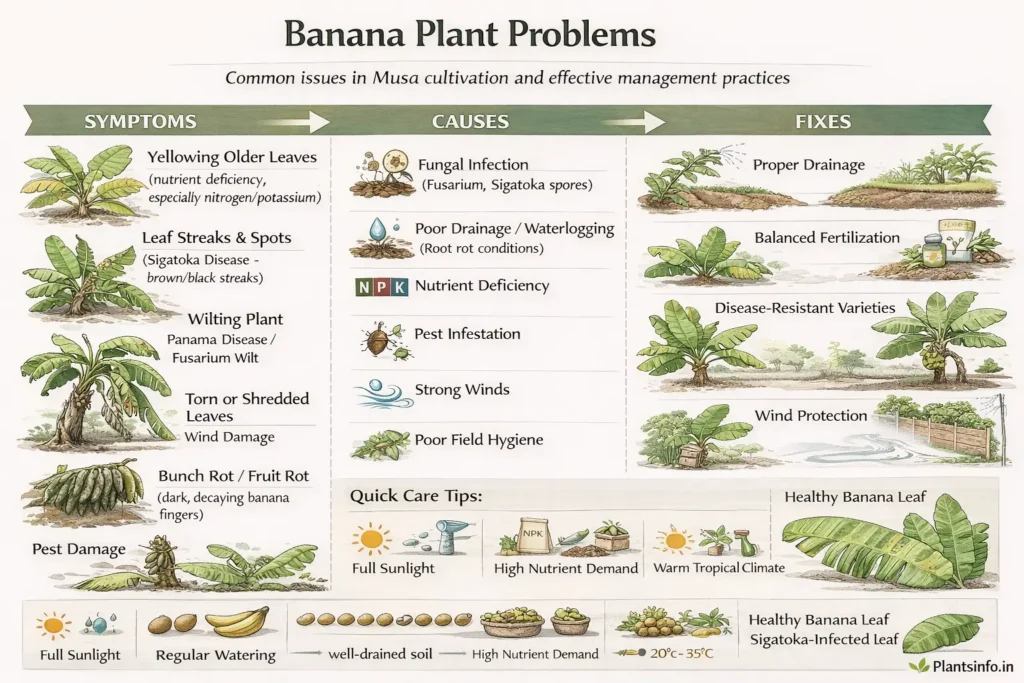
Monsoon wind damage (June–August): Strong winds above 60–70 km/hr snap pseudostems or uproot plants. Prop tall varieties before the bunch emerges. If a plant leans but the pseudostem isn’t broken, stake it immediately on the leaning side.
Summer heat stress (April–June): Temperatures above 38°C cause leaf scorching, slow bunch development, and reduce fruit size. Apply a 10–15 cm mulch layer and increase irrigation frequency. If possible, provide 30% shade cloth over plants flowering during peak summer.
Winter chill damage (December–February, north India): Temperatures below 12°C damage leaves and slow fruit development. If the cold is severe (below 8°C), bunches can suffer. Wrap the pseudostem loosely with jute bags for young plants. For flowering plants, cover bunches with perforated plastic sleeves to trap warmth.
Waterlogging during heavy monsoon (July–September): Prolonged waterlogging (water standing for more than 12 hours) causes root rot. Create drainage channels around plants in low-lying areas. If yellowing starts from the lower leaves and roots smell foul, improve drainage immediately.
The commonly mistaken problem: leaf tearing during monsoon wind is often confused with nutrient deficiency or disease. It’s not. Banana leaves naturally shred in the wind — the plant is adapted for this. Torn leaves still photosynthesise. Only remove them if more than 75% of the blade is damaged.
Post-Harvest or Post-Bloom Care
After harvesting the bunch, cut the pseudostem to 60 cm height (mattocking). Don’t cut it flush to the ground — the remaining stump holds nutrients that feed the next sucker for 6–8 weeks as it decomposes.
Select one strong follower sucker (sword type preferred) that’s at least 60–90 cm tall at harvest time. Remove all other suckers by cutting at ground level. This follower becomes your next fruiting plant, producing a bunch 8–10 months later.
In the 4–6 weeks after harvest, apply 5–10 kg of well-rotted compost or vermicompost around the retained sucker. This replenishes nutrients depleted by the previous crop.
Prune any diseased or dead leaves from the follower sucker. Monitor for pest buildup — aphids and beetles often concentrate on young growth after harvest when the canopy opens up.
Dormancy and Off-Season Care
Bananas don’t undergo true dormancy, but growth slows dramatically in winter, especially in regions where the temperature drops below 15°C.
Signs of seasonal slowdown (not distress): leaf production slows to one every 2–3 weeks instead of weekly, leaves are narrower and shorter than during active growth, and lower old leaves yellow and dry naturally. This is normal winter behaviour in subtropical zones.
Signs of actual distress that need intervention: new leaves are pale yellow or white (nutrient deficiency), leaves develop brown edges and tips not associated with wind damage (water stress or salt buildup), or the pseudostem softens at the base (root rot or disease).
Expect revival when the temperature rises above 20°C consistently. In February–March, you’ll notice faster leaf emergence and the plant resuming vigorous growth. This is the time to apply fertiliser and increase irrigation as the plant heads toward flowering.
Conclusion
Banana cultivation works with India’s seasons rather than against them. Plant during the monsoon for natural establishment, or plant in spring with irrigation for an off-season harvest advantage. Either way, the plant will tell you when it’s ready to flower — you just provide the water, food, and a little patience.