How to Grow Chikoo: Complete Care Guide for Indian Gardens
Chikoo is a low-maintenance, long-lived fruit tree that grows well across most of India. It tolerates heat, drought, and poor soil better than most fruit trees. The biggest mistake beginners make is expecting fruit quickly — chikoo from seed can take 7–8 years to bear, while a grafted sapling will fruit in 3–4 years.
See also: Chikoo plant profile, common problems, its flowering season, its benefits, and its varieties.
Pull a ripe chikoo off the tree and press it gently — if it gives slightly under your thumb and the skin turns from green-grey to dull brown, it’s ready. That small skill takes most home gardeners a full season to learn, and it’s the difference between a gritty, astringent mouthful and one of the sweetest fruits India grows.
Recommended Products
Disclosure: As an Amazon Associate, PlantsInfo may earn from qualifying purchases.
🌱 Growing Essentials
The following products can help with container gardening, potting, root development, soil management, and healthy plant growth.
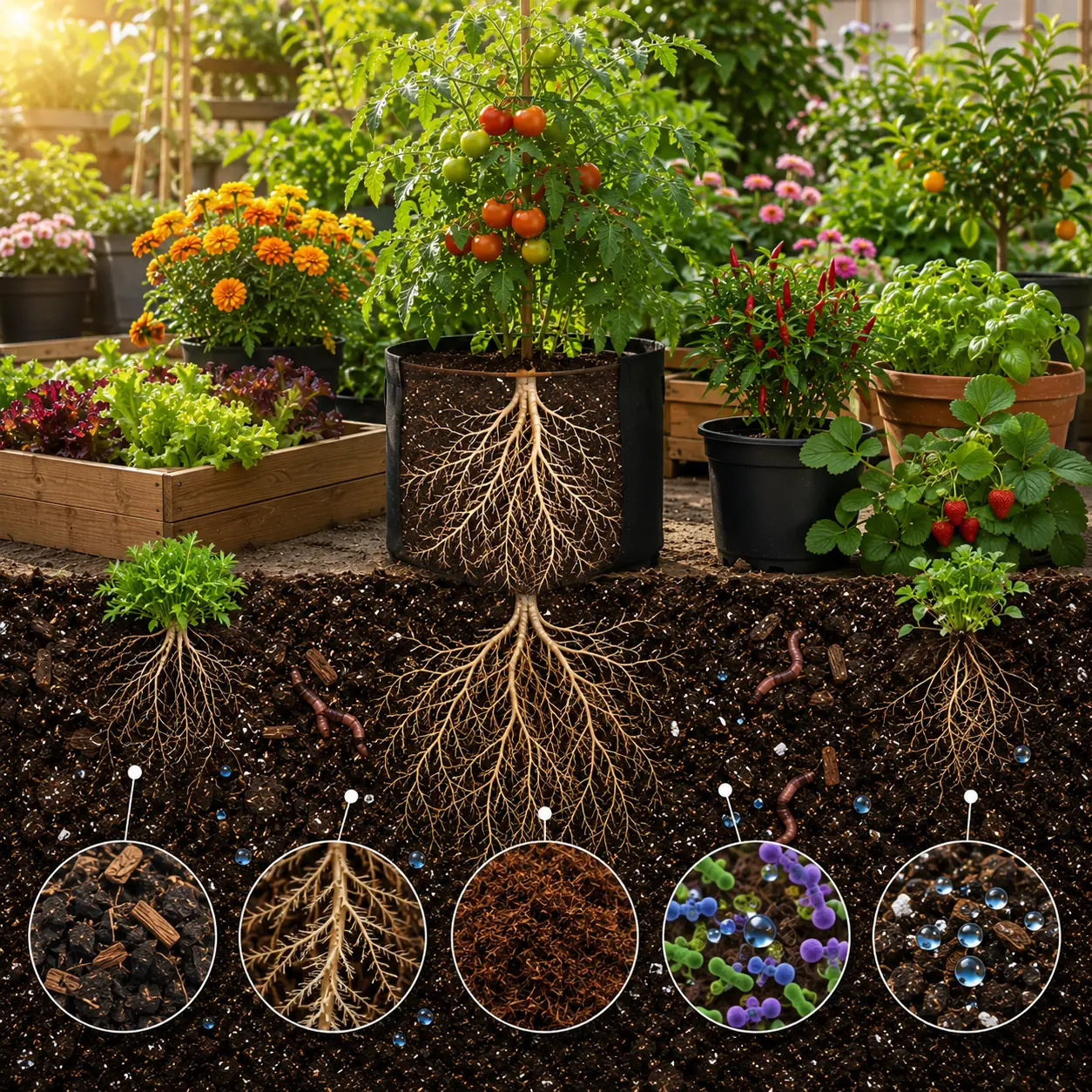
Organic Potting Soil Mix
Provides nutrients, structure, and healthy growing conditions for container plants.
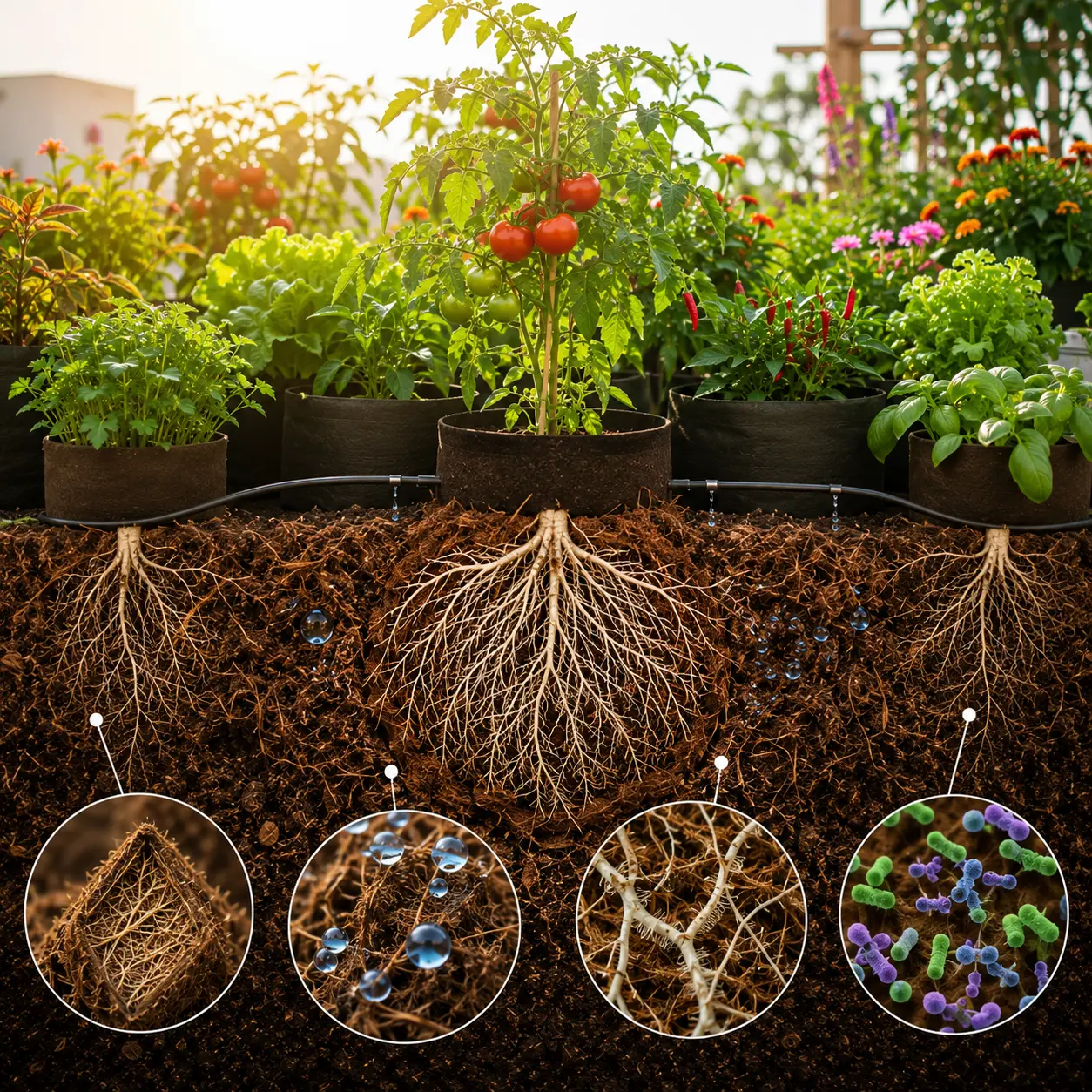
Coco Peat Growing Medium
Enhances moisture retention while maintaining excellent root-zone aeration.

Grow Bags for Plants
Improve drainage, root aeration, and vegetable production in limited spaces.

Plastic Pots for Plants
Ideal containers for seedlings, ornamentals, herbs, and balcony gardens.
Chikoo (Manilkara zapota) is a favourite in home gardens across Maharashtra, Gujarat, Karnataka, and Andhra Pradesh — prized for its reliable cropping, minimal pest problems, and the deep shade its canopy provides. Difficulty level: Easy to Moderate. The tree largely looks after itself once established; the challenge is patience in the first few years. See all its uses and benefits →
Quick Facts
| Attribute | Detail |
|---|---|
| Common names | Chikoo, Sapota, Sapodilla, Chiku |
| Scientific name | Manilkara zapota |
| Plant type | Evergreen fruit tree |
| Mature size | 9–15 m (kept to 4–6 m with pruning) |
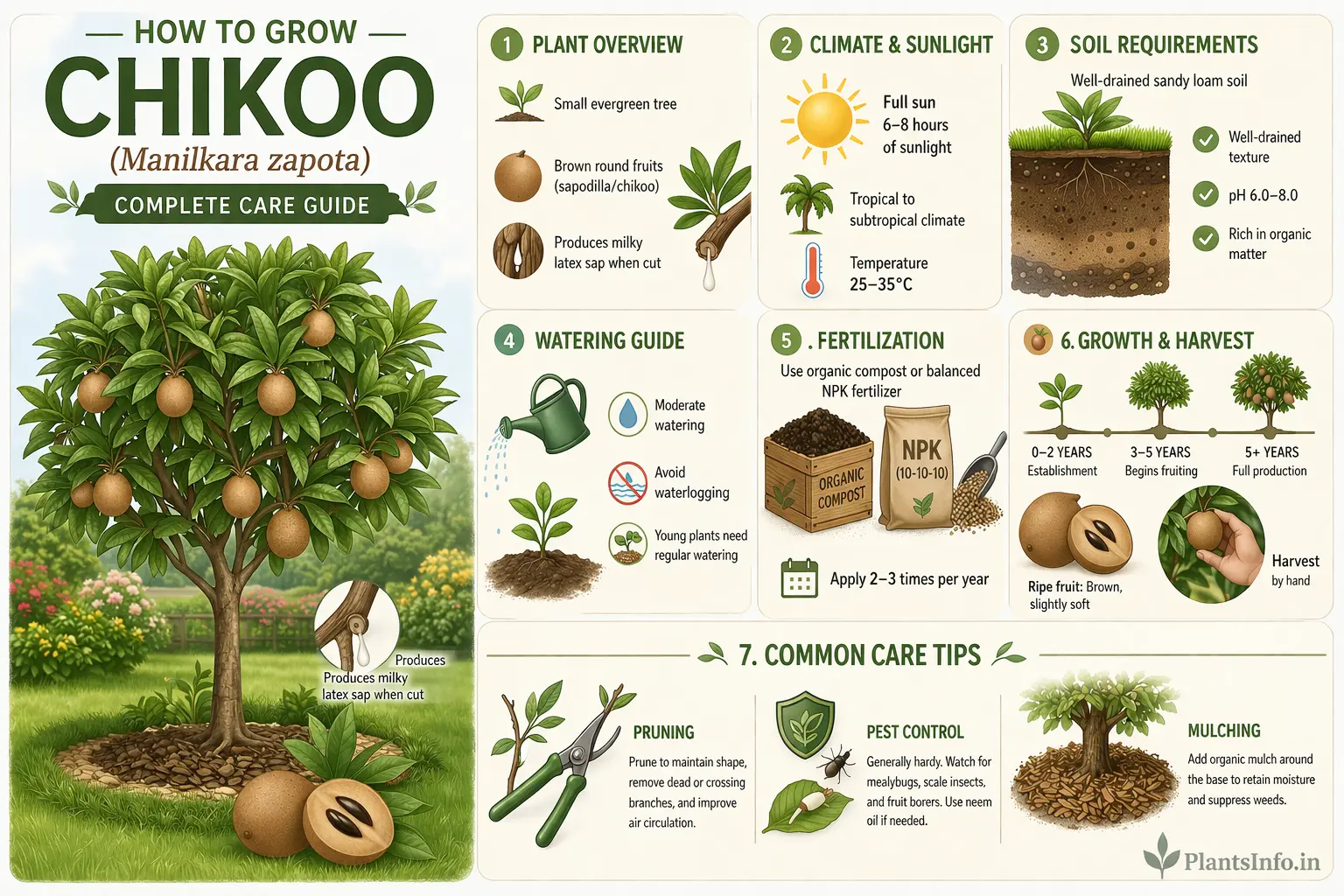
| Sunlight | Full sun — minimum 6 hours direct |
| Water needs | Low to moderate; drought-tolerant once established |
| Best season to plant | Monsoon onset (June–July) or post-monsoon (October) |
| Suitable states | Maharashtra, Gujarat, Karnataka, AP, Telangana, Tamil Nadu, Kerala, West Bengal |
Choosing the Right Spot
Chikoo needs at least 6 hours of direct sunlight. A south- or west-facing open spot works best. In North India, avoid frost pockets — young trees are cold-sensitive below 2°C, though mature trees in Delhi and Lucknow gardens do survive mild winters.
Leave at least 6–8 metres from walls, boundary structures, or other large trees. The root system spreads wide, and the canopy will eventually match it. For smaller urban plots, a grafted dwarf variety kept pruned to 4 metres is manageable.
Container growing is possible, but not ideal for chikoo. A pot limits the root run and reduces both fruit size and tree lifespan. If space is tight, choose a grafted tree in a 24-inch or larger container, and accept that it will need repotting every 2–3 years.
Soil and Potting Mix
Chikoo is remarkably forgiving about soil — it grows in sandy loam, red laterite soil, alluvial plains, and even coastal sandy soils. The ideal pH range is 6.0–8.0. It is one of the few fruit trees that tolerates mildly alkaline conditions.
What it cannot tolerate is waterlogging. If your garden soil is heavy clay that holds water after rain, raise the planting area by 30–45 cm or mix in coarse river sand and compost before planting.
For regular garden soil, add one part well-rotted farmyard manure or vermicompost before planting. This is sufficient — chikoo does not need a rich soil to establish. The common mistake Indian gardeners make is applying too much fertiliser at planting, which burns young feeder roots.
Planting — Season and Method
The best time to plant is at the start of the monsoon (June–July), when rainfall reduces the need for manual watering and the warm, humid conditions encourage root establishment. Post-monsoon planting (October–November) works well in South India, where winters are mild.
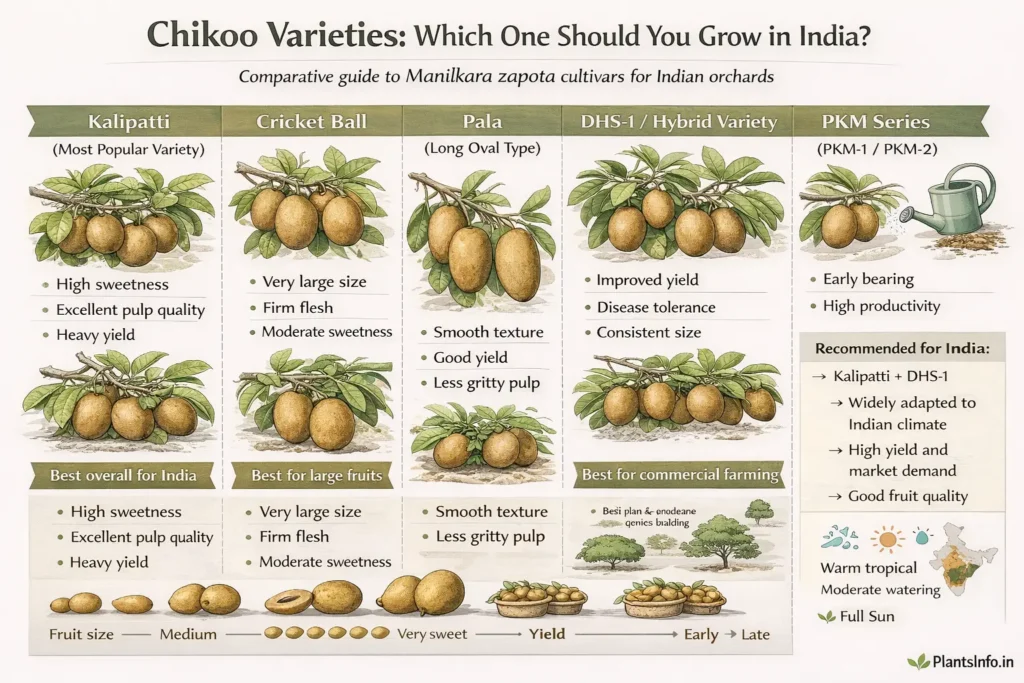
Always plant from a grafted sapling, not from seed. Seed-grown trees take 7–8 years to fruit and show high variability. A grafted sapling from a reputable nursery will fruit in 3–4 years and produce consistent quality. Recommended varieties for home gardens: Cricket Ball, Kalipatti (popular in Maharashtra), and PKM 1 (Tamil Nadu).
Dig a pit 60 cm × 60 cm × 60 cm. Fill the base with a mix of topsoil, vermicompost (2 kg), and neem cake (250 g). Place the sapling so the graft union sits above soil level — burying the graft junction is a common planting error that leads to poor performance. Water deeply immediately after planting and mulch with dry leaves or straw to a depth of 5–7 cm.
Watering
For the first 4–6 weeks, water every 2–3 days in the morning. The goal is consistent moisture without the soil ever sitting wet. Once the tree shows new leaf growth, reduce to every 4–5 days.
A mature chikoo tree is drought-tolerant and needs watering only during the dry summer months (March–May). In active growing and fruiting periods, deep watering once a week is sufficient.
The clearest overwatering sign specific to chikoo is fruit cracking — when soil moisture fluctuates dramatically after a dry period, the sudden intake of water causes the fruit skin to split. This is different from yellowing leaves (which could indicate several things) and is a more reliable signal to adjust your irrigation schedule.
During the monsoon, most established trees need no supplemental watering. In heavy-rainfall coastal areas, ensure drainage channels divert standing water away from the root zone.
Fertiliser
Chikoo responds well to organic feeding applied in two rounds each year: once at the start of the monsoon (June) and once post-monsoon (October–November).
Each application per mature tree: 10–15 kg farmyard manure or vermicompost + 1 kg neem cake + 500 g mustard cake. Mix into the soil in a ring around the drip line, not directly at the trunk base. For young trees in the first 2 years, halve these quantities.
For chemical supplementation, a balanced NPK fertiliser (15:15:15) at 200–300 g per application works well once the tree is fruiting. Apply before the monsoon flush for best results.
One organic alternative that works particularly well for chikoo: banana peel compost or wood ash (potassium-rich) applied during fruit development helps improve sugar content and skin quality.
Common Problems and Fixes
Leaf webbing and rolled leaves: This is almost always the chikoo leaf webber moth (Nephopteryx eugraphella). Prune and destroy affected shoots immediately. A neem oil spray (5 ml per litre of water) applied in the evening is effective if caught early. This is commonly misdiagnosed as spider mite damage — the rolled leaf and silk webbing distinguish it.
Fruit drop before ripening: Usually caused by irregular watering or a sudden dry spell after wet conditions. Maintain consistent soil moisture during fruit development. A drip irrigation system during summer pays for itself in reduced drop.
Sooty mould on leaves: A secondary problem following mealy bug or scale insect infestation. The mould itself doesn’t harm the tree, but the insects underneath do. Remove with a strong jet of water and follow up with diluted neem oil. Check under leaves and along new shoots for the insects first.
When Will You See Results?
A grafted chikoo sapling planted in June will show strong new growth by September of the same year. By year 2, the tree will be well-established with a developed canopy. Expect the first flowers to appear in year 3 in South India; year 3–4 in western and central India.
Chikoo flowers and fruits almost year-round in tropical climates, with two peak seasons: a major fruiting in late winter to summer (February–May) and a secondary crop in autumn (September–November). In the cooler parts of Maharashtra and Gujarat, the winter crop tends to be sweeter.
Year 1 is about establishment, not production. A tree that looks like it’s doing nothing in its first dry season is likely putting energy into deep roots — this is exactly what you want. Resist the urge to fertilise heavily or overwater in response.
Propagation
The most practical propagation method for home gardeners is purchasing grafted saplings. For those who want to try propagation at home, air layering (gootee) during February–March gives the best success rate — expect roots in 6–8 weeks.
Softwood cuttings are possible, but success rates are low (20–30%) without rooting hormone. Budding and grafting are used commercially and require practice. Seeds germinate readily but, as noted, produce variable, slow-bearing trees.
Pruning and Training
Chikoo needs minimal pruning. The main tasks are: removing dead or crossing branches after the summer crop, and thinning the canopy every 2–3 years to improve light penetration.
If training for a smaller garden, begin shaping in year 2 by removing vertical shoots that compete with the central leader and directing lateral branches outward. Do this after harvest, in May–June, before the monsoon flush.
Avoid heavy pruning in winter — this encourages new growth that is vulnerable to any cold spells. Never cut more than 25% of the canopy in a single season.
Harvesting
Chikoo has no clear external colour change to signal ripeness — the skin stays dull brown regardless. The reliable cues are: slight softening under gentle thumb pressure, a dry (not milky) cut when scratched with a fingernail, and a dull rather than green surface sheen.
Harvest by hand, twisting gently. Use a cloth bag or basket — chikoo bruises easily, and bruised fruit rots within a day. Do not pull the fruit off; if it resists, it isn’t ready.
Store at room temperature; ripe chikoo keeps 3–5 days. Do not refrigerate unripe fruit — cold halts ripening and the texture turns gritty.
Seasonal Protection
Young trees (under 2 years) need protection from frost in North India. A light cloth covering overnight and a thick mulch layer over the root zone are usually sufficient. Established trees handle brief cold spells well.
In extreme summer heat above 45°C — common in Rajasthan and parts of UP — white-wash the trunk to prevent sunscald and increase watering frequency during peak heat weeks.
Chikoo is one of the more rewarding long-term additions to an Indian garden — low demands, long life, and generous crops once it finds its footing.