Chikoo Fruit: Nutritional Benefits and Culinary Uses
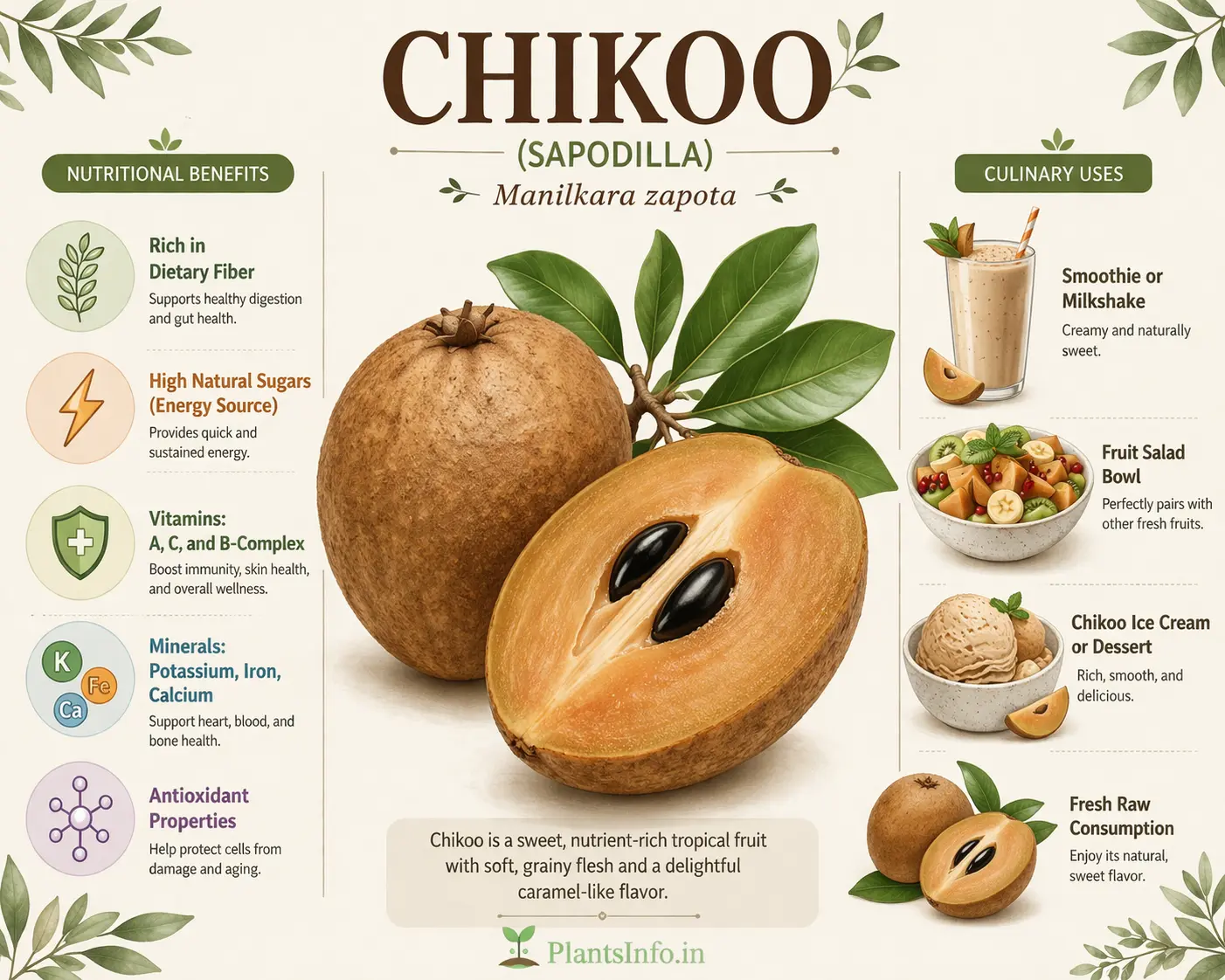
Quick Answer: Chikoo is one of India’s most nutritionally dense sweet fruits — rich in natural sugars, dietary fibre, and key minerals. Beyond eating it fresh, it is used in milkshakes, ice creams, jams, and traditional remedies for digestion and energy.
See also: Chikoo plant profile, how to grow it, common problems, its flowering season, and its varieties.
Bite into a properly ripened chikoo, and there is almost nothing quite like it — a texture somewhere between a pear and a fig, and a flavour that tastes like brown sugar dissolved in cream. That sweetness isn’t accidental: chikoo has one of the highest natural sugar contents among common Indian fruits, which is both its gift and the reason people with diabetes are advised to moderate their intake.
Recommended Products
Disclosure: As an Amazon Associate, PlantsInfo may earn from qualifying purchases.
🌱 Growing Essentials
The following products can help with container gardening, potting, root development, soil management, and healthy plant growth.
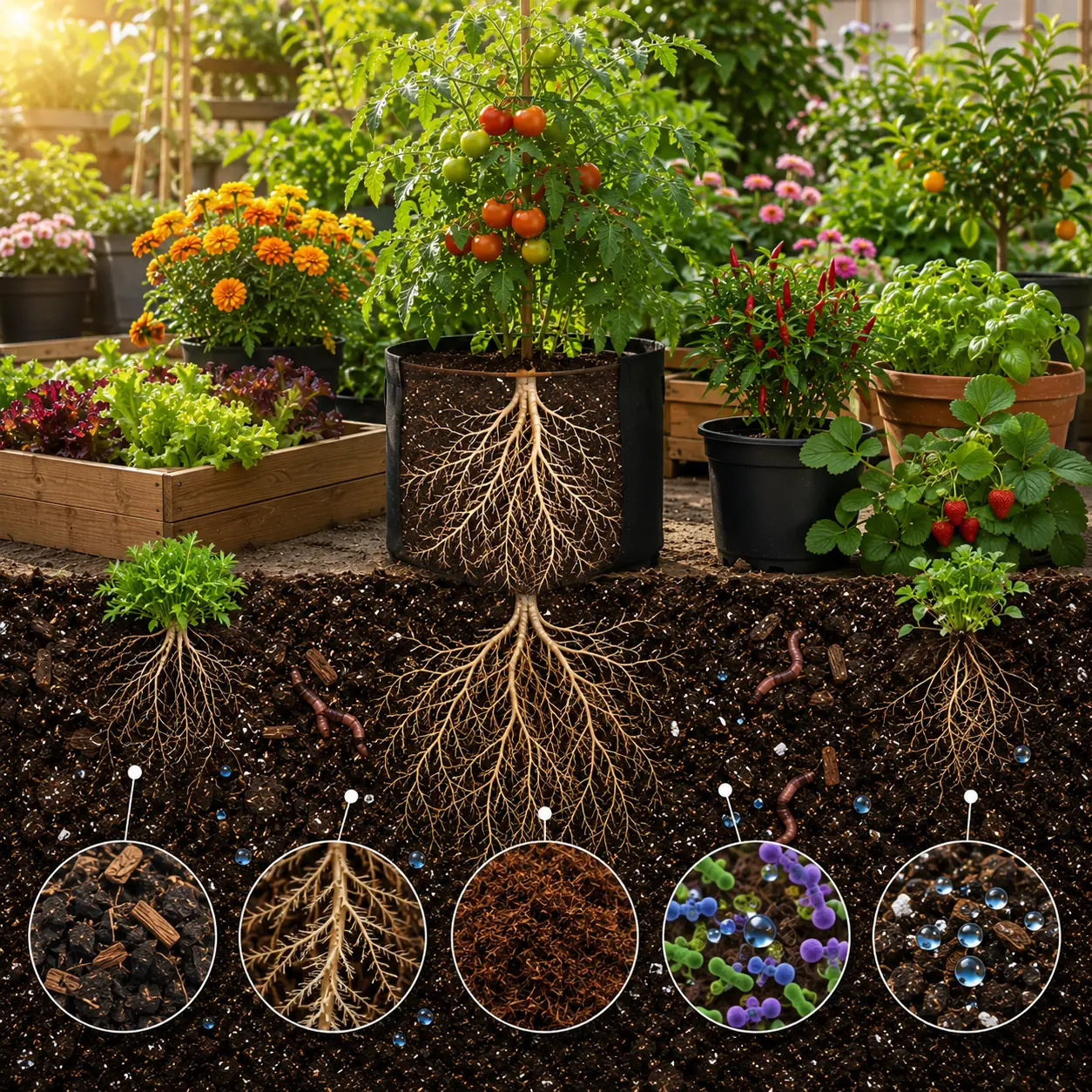
Organic Potting Soil Mix
Provides nutrients, structure, and healthy growing conditions for container plants.
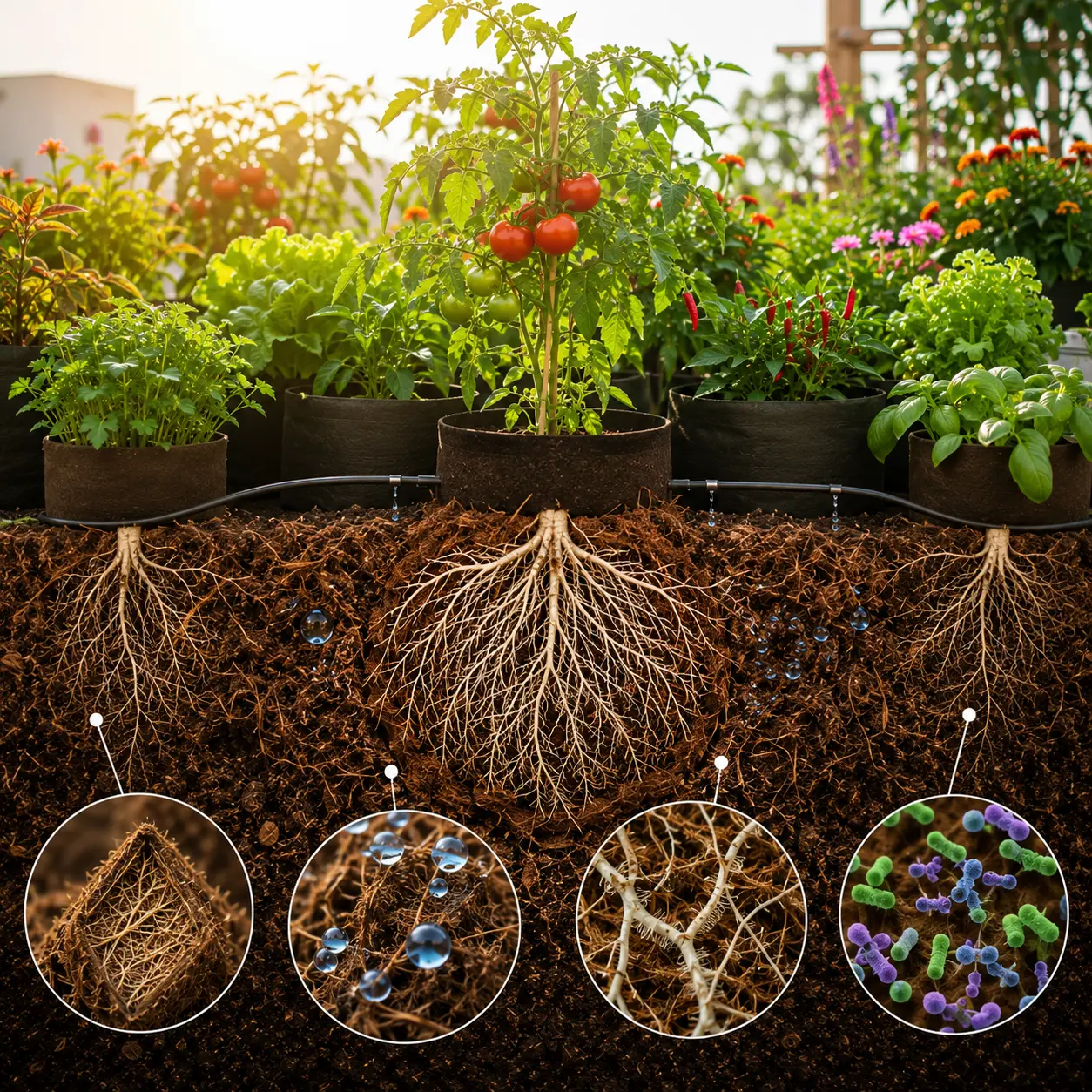
Coco Peat Growing Medium
Enhances moisture retention while maintaining excellent root-zone aeration.

Grow Bags for Plants
Improve drainage, root aeration, and vegetable production in limited spaces.

Plastic Pots for Plants
Ideal containers for seedlings, ornamentals, herbs, and balcony gardens.
Chikoo (Manilkara zapota) is primarily a food plant, and that’s where this article focuses. Its culinary reach across India is wider than most people realise — and its traditional medicinal uses, while secondary, are worth knowing.
Nutritional Profile and Food Value
Chikoo (sapodilla) is an energy-dense fruit providing approximately 83 kcal per 100 g, with ~20 g carbohydrates (mainly sucrose, glucose, and fructose) and ~5 g dietary fibre, along with measurable amounts of vitamin C, vitamin A, potassium, and copper. Values vary with cultivar and ripeness.
The high fibre content is practically useful: it supports digestive regularity and slows sugar absorption, which partially offsets the high sugar load. Traditional Ayurvedic and folk medicine uses chikoo specifically as a digestive tonic — a cup of ripe chikoo pulp is a common home remedy for loose stools and general digestive discomfort in Maharashtra and Gujarat households.
Chikoo (sapodilla) is sometimes traditionally recommended during pregnancy in parts of coastal and western India; however, its iron and folate content is relatively low and does not make it a significant source of these nutrients. Its benefits are better attributed to energy density, fibre, and palatability, and any dietary inclusion during pregnancy should be guided by a healthcare provider.
This information is based on traditional Ayurvedic knowledge and published research. It is not a substitute for medical advice. Consult a qualified healthcare professional before using any plant-based remedy for health conditions.
How Chikoo Is Eaten Across India
Fresh consumption is the dominant use — the fruit eaten out of hand, halved and scooped, or sliced into fruit salads. But the regional preparations vary significantly.
In Maharashtra and Gujarat, chikoo milkshake (chikoo shake) is a summer staple — blended with chilled milk and a pinch of cardamom, it is sold by street vendors and served in nearly every juice bar. Chikoo ice cream is a distinct regional flavour with a devoted following in Pune and Nashik.
In Karnataka and Tamil Nadu, chikoo jam and chikoo halwa are traditional household preparations for surplus fruit. The halwa — made with ripe pulp, ghee, and jaggery — is sometimes made for festivals, though it is not as widely known outside the region.
Chikoo (sapodilla) is commercially processed into dried slices, pulp for ice cream and beverage industries, and flavouring for sweets and dairy products. In India, the Dahanu–Bordi belt in Palghar district, Maharashtra, is one of the country’s प्रमुख chikoo-producing regions and supports a small but established processing sector, particularly focused on pulp and value-added products.
Medicinal and Traditional Uses
Chikoo’s traditional medicinal uses are secondary to its food value but worth noting. The bark and unripe fruit contain tannins and latex (chicle), which have been used in folk medicine as anti-diarrhoeal and anti-inflammatory agents.
The leaves are used in some traditional preparations for fever and cough, though the evidence base for these uses is largely anecdotal. Research into chikoo’s antioxidant compounds — particularly quercetin and luteolin found in the leaves — is ongoing but preliminary.
The seed contains saponins and should not be consumed — seeds are hard and bitter and are always discarded.
Ecological Role
Chikoo is a significant ecological contributor in the gardens and groves where it grows. Its dense canopy provides deep shade, reducing soil temperature and moisture loss around it — making it a useful companion for shade-tolerant vegetables and herbs.
The flowers are small, inconspicuous, and highly attractive to bees and small pollinators. A flowering chikoo tree is consistently one of the busiest spots in a garden for pollinator activity. Fruit-eating birds — particularly bulbuls, mynas, and parakeets — visit the tree during ripening, which extends the garden’s biodiversity value beyond just the fruit it yields for human use.
The tree’s deep taproot system and dense surface feeder roots stabilise soil effectively, making it a practical choice for erosion-prone garden slopes or field boundaries in coastal Maharashtra and Konkan regions.
Practical Value for Home Gardeners
A single mature chikoo tree can yield 100–200 kg of fruit per year once it reaches peak production — substantially more than a household can consume, which makes it a source of regular income from selling surplus at local markets, a practice common in rural Gujarat and Maharashtra.
At home, the wood of pruned branches is hard and dense — it makes excellent firewood and is sometimes used for small woodworking projects. The latex from the bark has traditional use as a natural adhesive, though this is rarely practised today.
For home gardeners, the tree’s strongest practical argument is reliability: it fruits with minimal intervention, resists most common pests, and remains productive for 40–50 years. Few fruit trees offer that combination.
How to Use Chikoo at Home
Fresh eating: Allow to fully ripen at room temperature (2–4 days after purchase if bought firm). Halve and scoop, or peel and slice. Discard seeds.
Chikoo milkshake: Blend 2 ripe chikoo (peeled, seeded) with 200 ml chilled whole milk and a pinch of cardamom. No added sugar needed if the fruit is ripe.
Chikoo pulp for storage: Peel, seed, and blend ripe fruit. Freeze in small portions. Keeps well for 3–4 months and works directly in ice cream, smoothies, or halwa.
Avoid consuming more than 2–3 fruits in a sitting if you are monitoring blood sugar. The natural sugar content is high, and unlike many fruits, chikoo is easy to overconsume because the flavour doesn’t become sour or sharp with ripeness.
Chikoo earns its place in the Indian garden as a generous, low-maintenance tree with genuine nutritional value and wide culinary use.