Chikoo Flowering Season: When and What to Expect in India

Quick Answer: Chikoo flowers and fruits almost year-round in tropical India, but has two distinct peak fruiting seasons — a main crop from February to May and a secondary crop in September to November. Timing shifts by 4–6 weeks depending on your region.
See also: Chikoo plant profile, how to grow it, common problems, its benefits, and its varieties.
Unlike most fruit trees that follow a single annual cycle, chikoo is a near-continuous bearer in warm climates. If your tree is healthy and established, there is almost no month when it has no fruit at all — but the quality and quantity vary significantly by season, and knowing the peaks helps you plan both care and harvest.
Recommended Products
Disclosure: As an Amazon Associate, PlantsInfo may earn from qualifying purchases.
🌱 Growing Essentials
The following products can help with container gardening, potting, root development, soil management, and healthy plant growth.
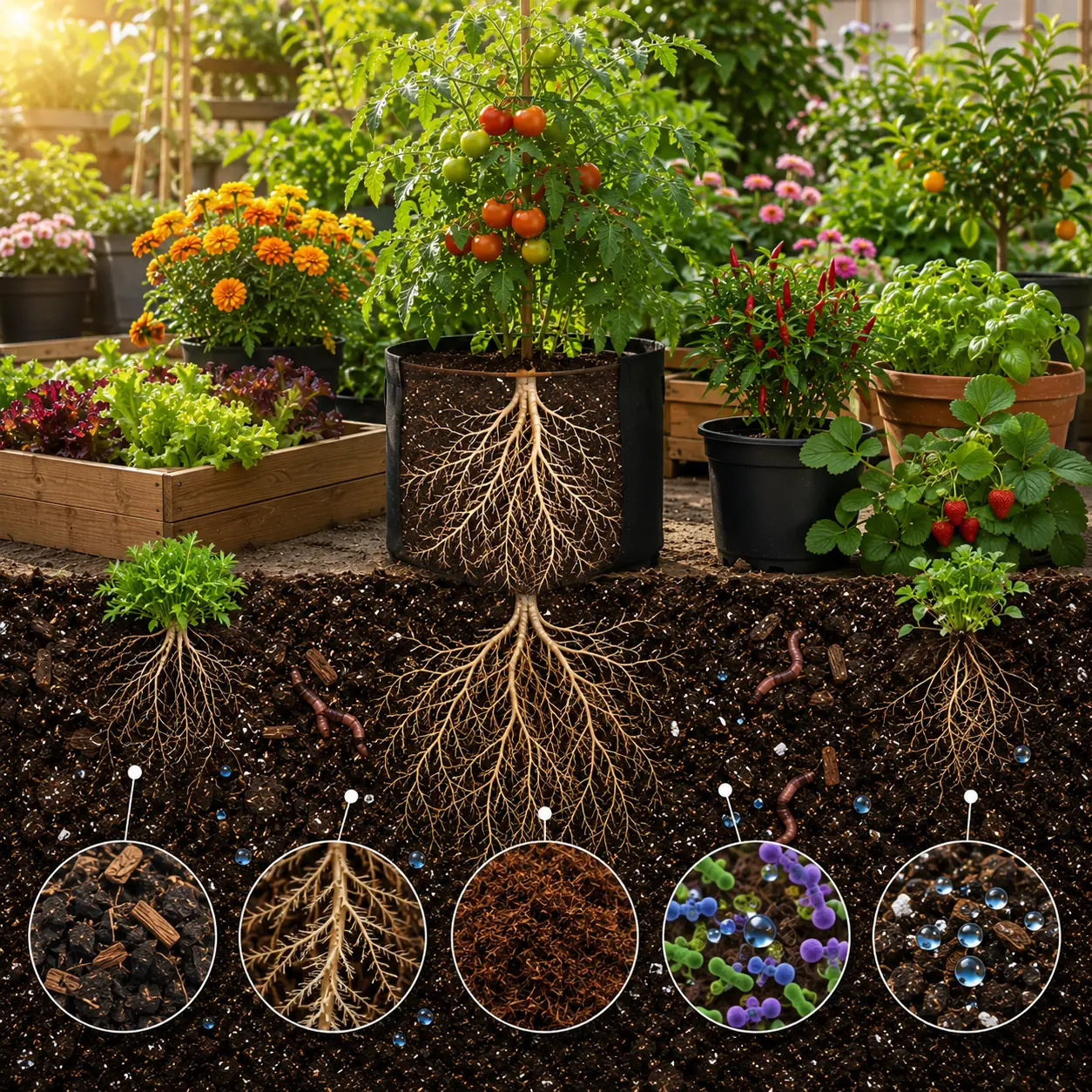
Organic Potting Soil Mix
Provides nutrients, structure, and healthy growing conditions for container plants.
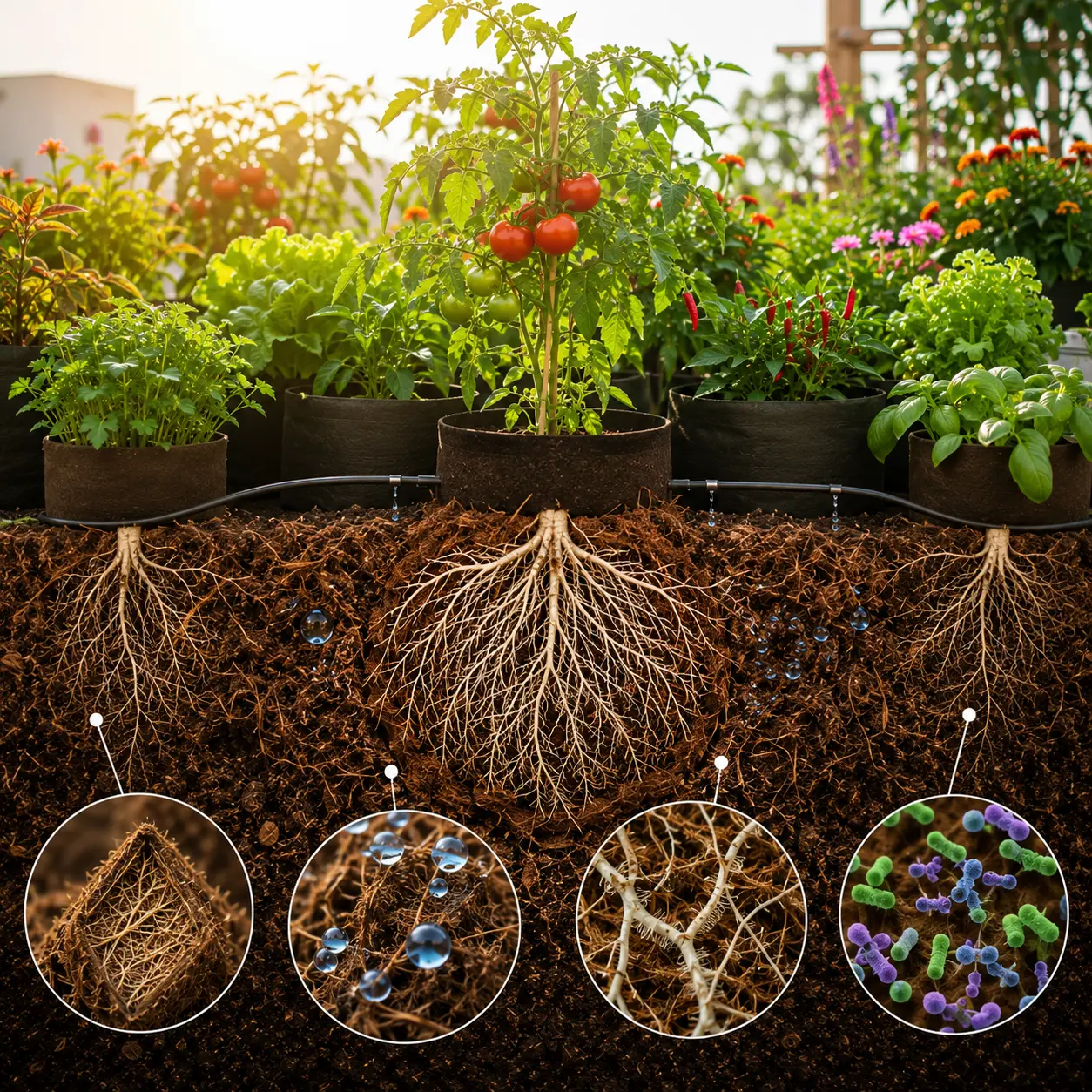
Coco Peat Growing Medium
Enhances moisture retention while maintaining excellent root-zone aeration.

Grow Bags for Plants
Improve drainage, root aeration, and vegetable production in limited spaces.

Plastic Pots for Plants
Ideal containers for seedlings, ornamentals, herbs, and balcony gardens.
Regional note: In North India (Delhi, Lucknow), the season runs 4–6 weeks later than Maharashtra and Gujarat due to cooler winters.
India’s Seasons and This Plant
| Season (months) | What the plant is doing |
|---|---|
| Pre-monsoon (Mar–May) | Peak main crop fruiting; heaviest harvest window; new flower buds forming for next cycle |
| Monsoon (Jun–Sep) | Active vegetative growth; secondary flowering mid-monsoon; secondary crop developing |
| Post-monsoon (Oct–Nov) | Secondary crop harvest; canopy consolidation; good time to prune lightly |
| Winter (Dec–Feb) | Slow growth in North India; fruit sweetness peaks due to cooler nights; flowering begins for main crop in South India |
Flowering Season in Detail
Chikoo flower buds appear inconspicuously — small, pale, and tucked among the leaf clusters at branch ends. On a well-established tree, you will often notice a faint honey-like fragrance before you spot the flowers themselves.
The main flowering flush in South India begins in November–December, with peak bloom in December–January. In Maharashtra and Gujarat, the main flush runs from January to February. In both cases, these flowers develop into the primary summer crop (February–May).
A secondary flowering occurs during the monsoon — typically July–August — leading to the autumn crop (September–November).
Individual flowers are short-lived, but because a mature tree carries flowers at multiple stages simultaneously, the fragrance and pollinator activity continue for weeks. The key trigger for flowering is a period of mild moisture stress followed by warm temperatures — this is why the natural break between post-monsoon and the first cool weeks of winter prompts the main flowering flush. Gardeners who water too heavily through October can inadvertently delay this trigger.
Flowers are primarily pollinated by small bees, thrips, and midges. The small flower size favours these tiny pollinators over larger bees.
Fruiting Season
After pollination, fruit development takes approximately 4–6 months. This slow development is characteristic of chikoo, and one reason the main crop, set from December–January flowers, arrives in April–May.
Ripening indicators: the skin transitions from a greenish-grey tone to a uniform dull brown; the surface sheen goes from slightly glossy to fully matte; and the fruit yields to gentle pressure without feeling mushy. The latex that oozes from a scratch changes from milky-white to clear as the fruit ripens — this is the most reliable indicator and is the one experienced pickers use first.
The main crop harvest window typically runs 6–8 weeks. If fruit is left on the tree past peak ripeness, it drops, bruises, and over-ripe fruit develops a fermented, unpleasant flavour quickly.
The secondary (monsoon) crop is generally smaller in yield, but the fruit is equally good in quality. In very wet years, excessive rain during fruit set can cause cracking and premature drop.
Chikoo benefits and uses → — for what to do with a large harvest.
Best Time to Plant
The best planting window is the monsoon onset, from June to July. Rainfall reduces establishment stress, and the tree can develop roots actively through the warm, humid months before the first cool season.
The second-best option is October, post-monsoon, in South India and coastal regions where winters are mild. This gives the sapling time to settle before the dry summer.
Avoid planting in March–May: the summer heat and low humidity stress young trees before they have established a root system. In North India, avoid planting from November to February — cold-sensitive saplings will stall or suffer frost damage.
Container-grown trees can be planted any time if you can manage consistent watering; June–July timing still gives the best outcome.
Month-by-Month Care Calendar
| Month | Season | Key Task |
|---|---|---|
| January | Winter | Monitor flower buds; no fertiliser; minimal watering in North India |
| February | Late winter | Main flowering in Maharashtra/Gujarat; ensure pollinators are present; light watering |
| March | Pre-monsoon | Fruit development active; water regularly; no pruning |
| April | Pre-monsoon | Main crop ripening; begin harvest checks; monitor for leaf webber |
| May | Summer | Peak harvest month; continue watering; apply post-harvest fertiliser after last pick |
| June | Monsoon onset | Fruit development is active; water regularly; no pruning |
| July | Monsoon | Secondary flowering; vegetative flush; reduce manual watering; neem spray for pests |
| August | Monsoon | Secondary fruit set; ensure drainage around root zone; light pruning of dead wood only |
| September | Post-monsoon | Secondary crop developing; reduce watering as rains taper |
| October | Post-monsoon | Secondary crop harvest; best time to prune lightly; apply second fertiliser round |
| November | Post-monsoon/early winter | Flowering begins in South India; reduce watering; no fertiliser |
| December | Winter | Main flowering flush (South India); mulch for cold protection in North India |
What Can Go Wrong Seasonally?
Summer fruit drop (April–May): Sudden dry spells during the main ripening season cause the tree to shed immature fruit. A deep weekly watering and surface mulch during this period significantly reduces the drop. This is often mistaken for a disease problem, but the cause is almost always water stress.
Monsoon root rot in heavy soils: Prolonged waterlogging during July–August causes feeder roots to suffocate. If you see sudden yellowing of leaves across the entire canopy mid-monsoon, check if water is pooling around the base. Improve drainage immediately by creating a shallow channel away from the root zone. This is often misdiagnosed as a nutrient deficiency.
Delayed flowering in over-watered trees: If a tree has been watered heavily through October–November without a dry break, it may delay or skip its main flowering flush. A controlled dry period of 3–4 weeks in October — reducing watering to once every 10 days — mimics the natural moisture stress that triggers bud initiation.
Post-Harvest Care
After the main summer harvest ends in May, the tree enters its most active vegetative phase, coinciding with monsoon onset. This is the time to: apply the second organic fertiliser round (vermicompost + neem cake), undertake any structural pruning, and remove dead or crossing branches.
Avoid leaving unharvested, over-ripe fruit on the tree — it attracts fruit flies and promotes fungal issues in the humid monsoon conditions that follow immediately after the summer crop.