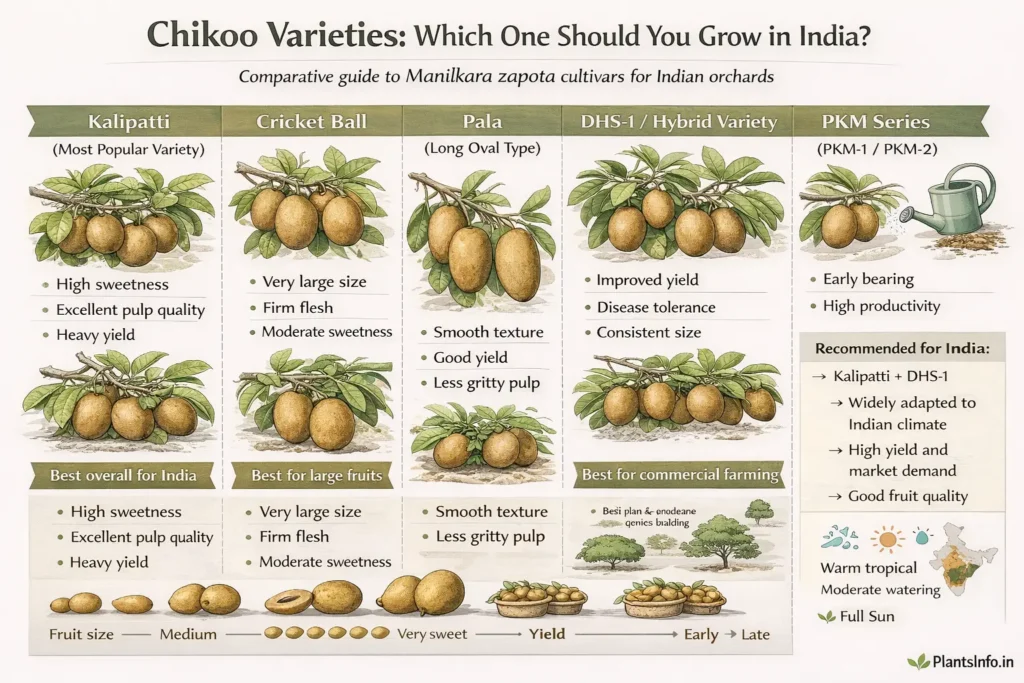
Chikoo Plant: Key Facts, Names, and What You Should Know

Most people know chikoo as a fruit from the market — brown-skinned, slightly gritty-looking, easy to overlook. What few people realise is that the tree behind that fruit is one of the oldest cultivated fruit trees in South and Southeast Asia, and it has been growing in Indian soil for well over four centuries.
See also: Chikoo plant profile, how to grow it, common problems, its flowering season, and its benefits.
Names in Different Languages
| Language | Name |
|---|---|
| English | Sapodilla, Sapota |
| Hindi | Chikoo, Chiku |
| Bengali | Sofeda (সফেদা) |
| Tamil | Sapota, Chikoo |
| Telugu | Sapota (సపోట) |
| Marathi | Chikoo (चीकू) |
| Kannada | Sapota (ಸಪೋಟ) |
| Malayalam | Sapotta (സപ്പോട്ട) |
| Gujarati | Chikoo (ચીકુ) |
| Punjabi | Chikoo (ਚੀਕੂ) |
| Scientific name | Manilkara zapota |
| Family | Sapotaceae |
Most searched name: “Chikoo” dominates search volume across India; “Sofeda” is the primary search term in West Bengal and Bangladesh.
Recommended Products
Disclosure: As an Amazon Associate, PlantsInfo may earn from qualifying purchases.
🌱 Growing Essentials
The following products can help with container gardening, potting, root development, soil management, and healthy plant growth.
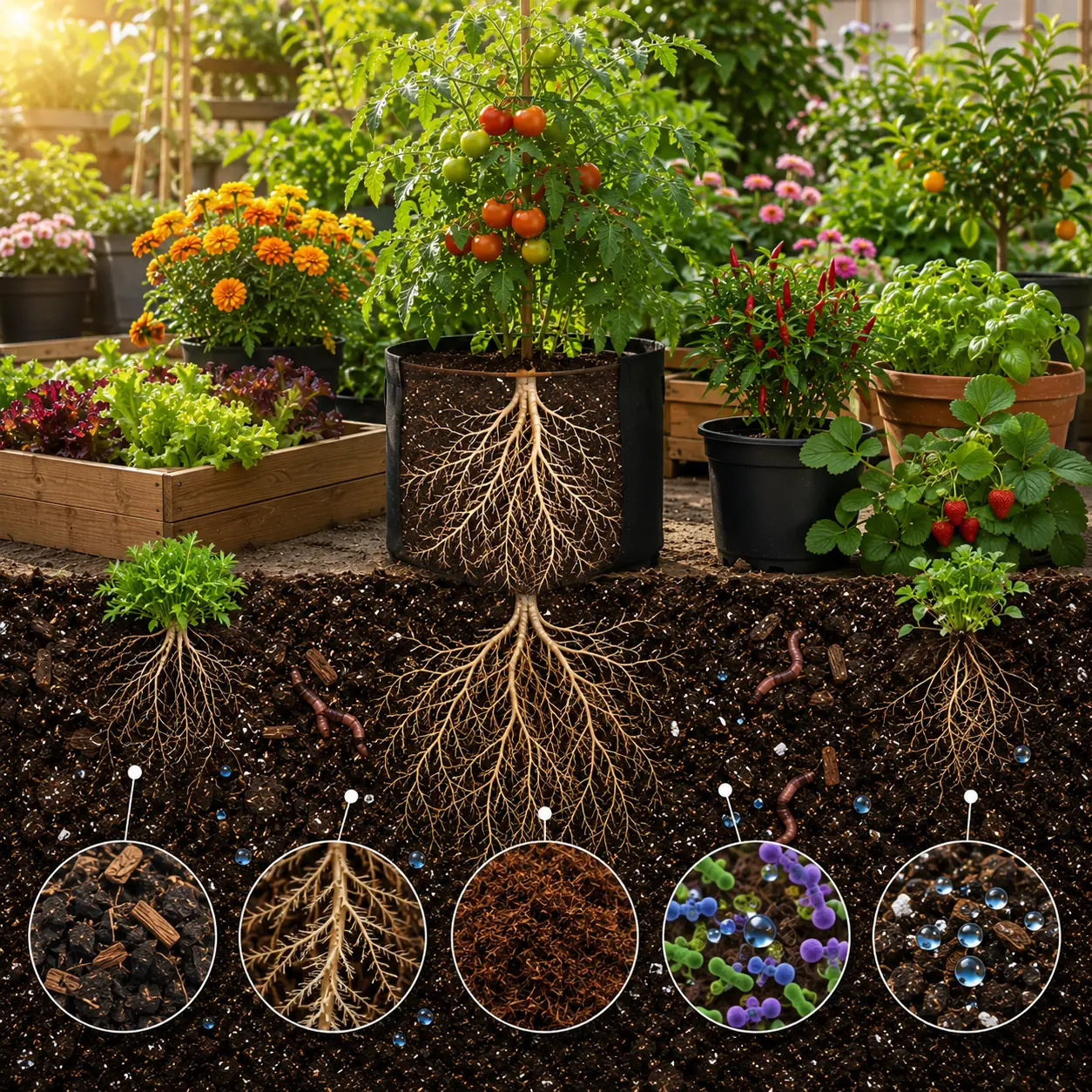
Organic Potting Soil Mix
Provides nutrients, structure, and healthy growing conditions for container plants.
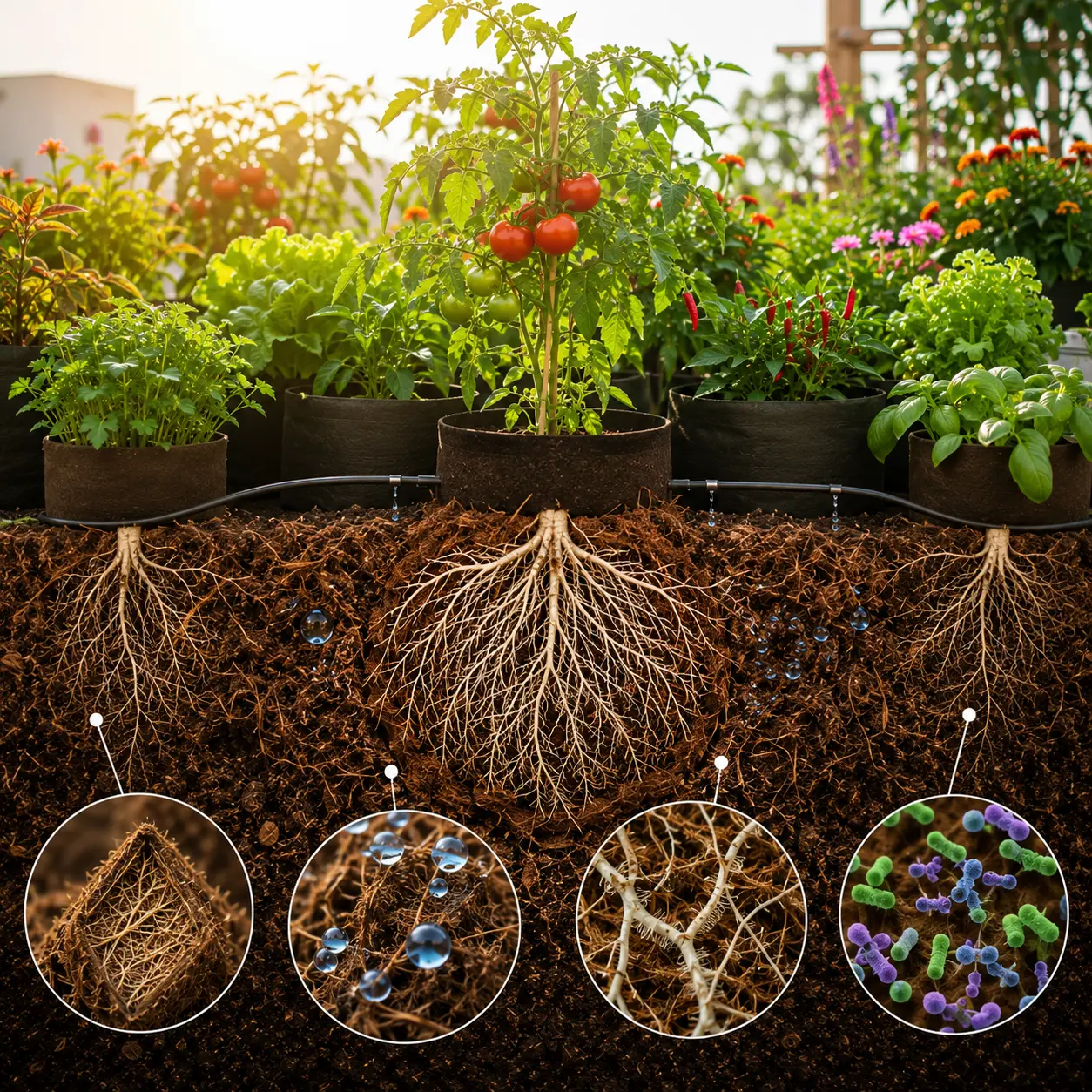
Coco Peat Growing Medium
Enhances moisture retention while maintaining excellent root-zone aeration.

Grow Bags for Plants
Improve drainage, root aeration, and vegetable production in limited spaces.

Plastic Pots for Plants
Ideal containers for seedlings, ornamentals, herbs, and balcony gardens.
What Does It Look Like?
Chikoo is a medium to large evergreen tree, reaching 9–15 metres at full maturity, though most orchard and garden trees are kept to 4–6 metres with regular pruning. The canopy is dense and rounded, providing deep, unbroken shade.
The leaves are glossy, dark green, oval-shaped, and cluster at the ends of branches — they look almost waxy and stay on the tree year-round. When a leaf or branch is broken, a white milky latex oozes out immediately — this is one of chikoo’s most unmistakable features and distinguishes it from any look-alike at a glance.
Flowers are small, bell-shaped, and pale creamy-white — easy to miss unless you look closely, but highly fragrant up close. Fruit is oval to round, 5–10 cm across, with rough brown skin that looks almost like a kiwi from a distance. The flesh inside is pale brown to tan, soft when ripe, grainy in texture, and intensely sweet.
Where Does It Grow in India?
Chikoo is not native to India — it originated in southern Mexico and Central America and arrived in India during the Portuguese colonial period, likely in the 16th–17th century. It has since naturalised completely and is now grown commercially in at least 14 Indian states.
The largest commercial production is concentrated in Maharashtra (especially Palghar and Raigad districts), Gujarat (Surat, Valsad, Navsari), Karnataka, and Andhra Pradesh. Tamil Nadu, Kerala, and West Bengal have significant but smaller cultivation areas.
The tree thrives from sea level up to about 1,200 metres altitude. It prefers a tropical to subtropical climate with a distinct dry season — this dry period actually improves fruit quality and sweetness. It is well-adapted to both coastal humid zones and semi-arid inland areas. It does not grow well above 1,500 metres or where temperatures drop below freezing regularly.
What Is It Used For?
Chikoo is grown primarily for its fruit, eaten fresh or processed into milkshakes, ice cream, jam, and dried snacks across India.
The bark latex (chicle) was historically the primary ingredient in natural chewing gum before synthetic alternatives replaced it globally.
The wood is extremely hard and dense and is used for furniture, tool handles, and firewood in producing regions.
The leaves and bark have traditional uses in folk medicine for digestive complaints and fever, though these applications are secondary to the fruit’s food value.
The tree is also planted as a shade tree and windbreak in agricultural settings, particularly in coastal Maharashtra and Gujarat.
Is It Easy to Grow?
Chikoo is one of the more beginner-friendly fruit trees for Indian conditions — it tolerates heat, dry spells, and poor soil better than mango, guava, or most citrus. The difficulty is primarily patience: a grafted sapling takes 3–4 years to first fruit, and the tree needs space.
It is best suited to South and West India in open ground. Gardeners in North India can grow it successfully in cities like Delhi and Lucknow, but young trees need cold protection in winter. It is not recommended above 1,200 metres or in areas with regular frost.