
Aloe Vera Plant Problems: Symptoms, Causes, and Fixes
Aloe Vera Plant Problems: Symptoms, Causes, and Fixes
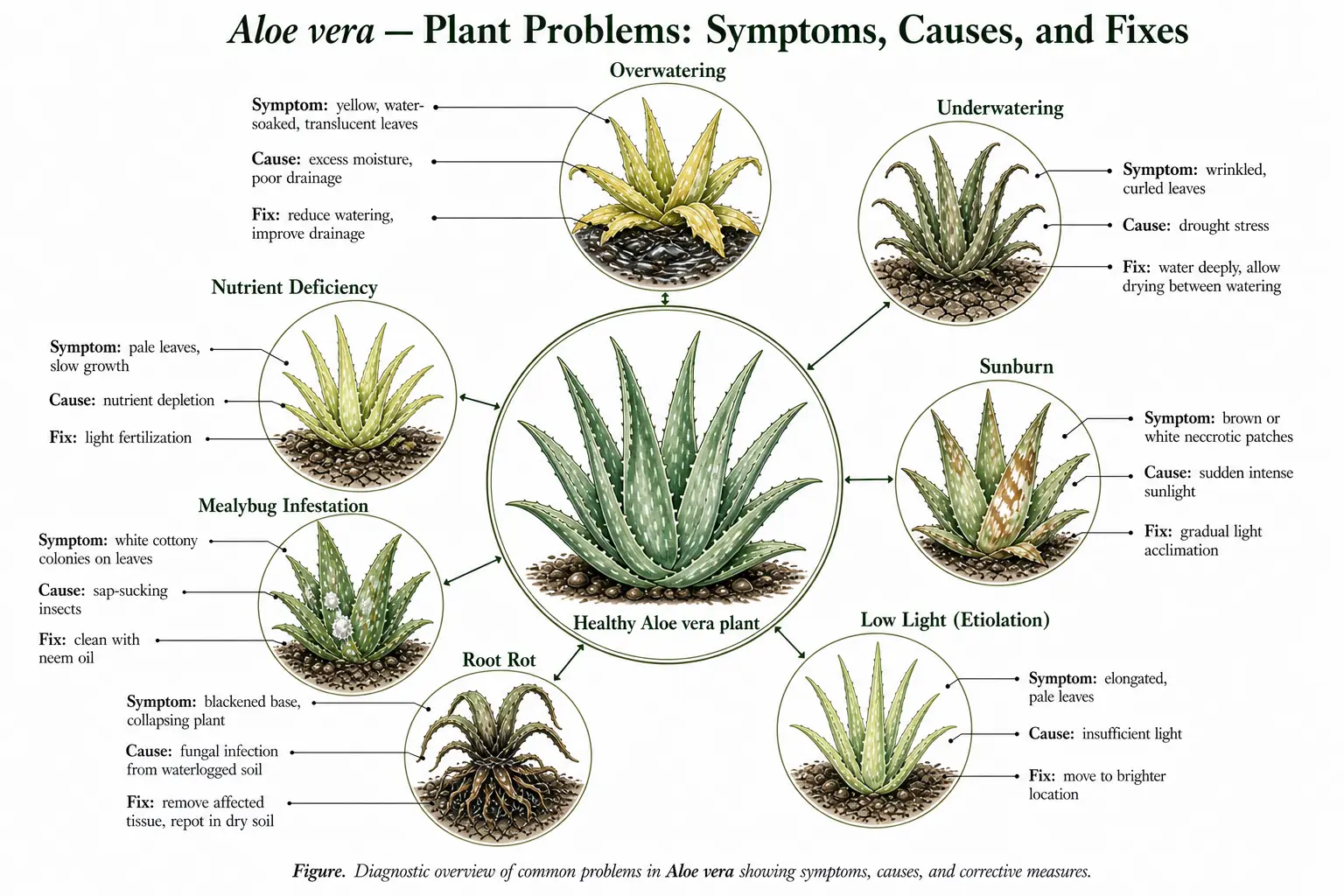
Quick Answer: Aloe vera is one of the hardiest plants you can grow, but it has one fatal weakness: too much water. The vast majority of aloe problems — soft leaves, brown rot, collapsing rosettes — trace back to overwatering or poor drainage. Get the watering right and most other problems solve themselves.
See also: Aloe Vera (Ghritkumari) Plant plant profile, how to grow it, its flowering season, its benefits, and its varieties.
Pick up an aloe leaf and squeeze it gently at the base. If it feels soft, watery, or gives without resistance, your plant is already in trouble — and the cause is almost certainly sitting in the pot, not in the air around it. Aloe vera signals distress slowly and then suddenly; the good news is that the signals are readable if you know what to look for.
Recommended Products
Disclosure: As an Amazon Associate, PlantsInfo may earn from qualifying purchases.
🌱 Growing Essentials
The following products can help with container gardening, potting, root development, soil management, and healthy plant growth.

Organic Potting Soil Mix
Provides nutrients, structure, and healthy growing conditions for container plants.
Coco Peat Growing Medium
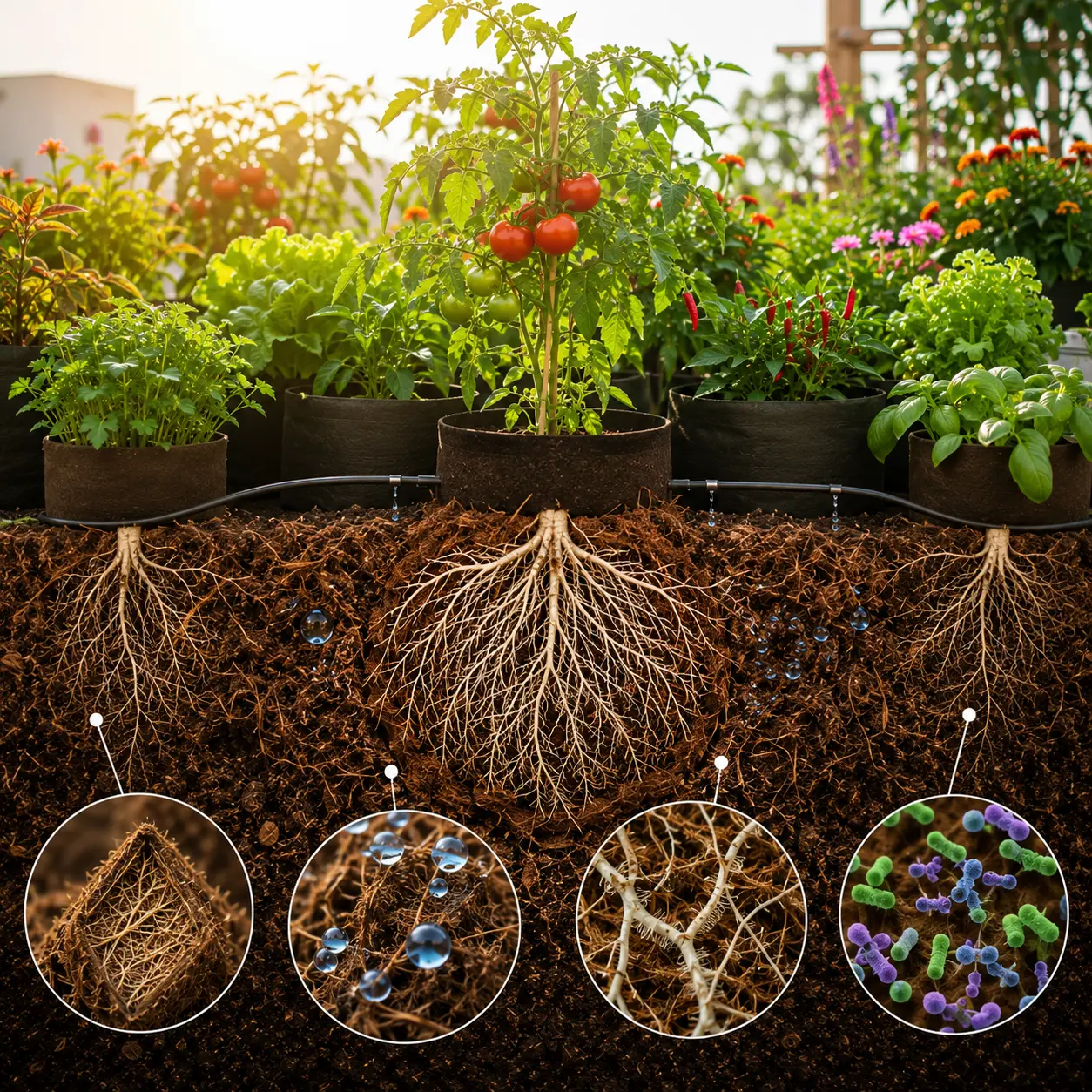
Enhances moisture retention while maintaining excellent root-zone aeration.

Grow Bags for Plants
Improve drainage, root aeration, and vegetable production in limited spaces.

Plastic Pots for Plants
Ideal containers for seedlings, ornamentals, herbs, and balcony gardens.
Quick Diagnosis
| Symptom | Most Likely Cause | First Action |
|---|---|---|
| Soft, mushy leaves at base | Root rot or basal rot | Unpot immediately; inspect roots |
| Brown, wet rot at stem | Basal stem rot (fungal) | Cut above rot line; dry and repot |
| Leaves turning yellow | Overwatering or nutrient washout | Let soil dry completely; withhold water |
| Leaves turning brown and dry | Underwatering or excess sun | Move to shade; water deeply once |
| Reddish or orange leaf tint | Sunburn or phosphorus stress | Move to filtered light |
| Wrinkled, thin leaves | Underwatering | Water thoroughly; allow full drainage |
| White cottony patches on leaves | Mealybug infestation | Wipe with rubbing alcohol |
| Brown spots with yellow border | Fungal leaf spot | Remove affected leaves; improve airflow |
| Leaves curling inward | Heat stress or severe underwatering | Move from heat source; water once |
| Plant leaning or falling over | Root rot, pot too small, or top-heavy growth | Check roots; repot if needed |
Diseases
Aloe vera is genuinely disease-resistant under correct growing conditions. The diseases it develops are almost always consequences of a single primary error: water sitting where it shouldn’t.
Root Rot (Pythium and Fusarium species) Root rot is the leading cause of aloe death in Indian homes and gardens. The plant looks fine until it doesn’t — then leaves at the base go soft and translucent, the stem smells faintly sour, and the entire rosette becomes unstable. Roots will be brown-black, slippery, and hollow rather than white and firm. The cause is consistently the same: water retained in soil or pots without adequate drainage, compounded by India’s warm temperatures that accelerate fungal activity. If caught early — fewer than half the roots affected — cut all rotted tissue with sterilised scissors, dust the cuts with powdered charcoal or cinnamon, and repot in a completely dry, gritty mix. Do not water for at least ten days after repotting. If the rot has reached the central stem, the plant cannot be saved, but healthy offsets or leaf sections can be propagated.
Basal Stem Rot (Fusarium species) Distinct from root rot in its location, basal stem rot begins at the soil line and moves upward through the central stem. The first visible sign is a soft, darkened patch at the very base of the rosette — often mistaken for a watering mark or soil stain. Unlike root rot, which starts underground, basal rot is visible early if you look at the stem rather than just the leaves. Cut cleanly above the rot line with a sterilised blade. Allow the cut surface to callous in dry air for three to five days before replanting. This disease is most common during and immediately after India’s monsoon season, when the soil stays wet for extended periods.
Aloe Rust (Phakopsora pachyrhizi-related fungal infection) Rust on aloe appears as small, circular, orange-brown spots on the upper leaf surface, sometimes with a corresponding pale patch underneath. It spreads in humid, warm conditions with poor air circulation — exactly the conditions of an Indian monsoon. Unlike the bacterial and Fusarium diseases above, rust is manageable with a copper-based fungicide applied every ten days for three applications. Remove heavily spotted leaves before treating. Rust does not kill aloe plants but disfigures them and spreads to nearby succulents if untreated.
Bacterial Soft Rot (Pectobacterium species) Bacterial soft rot produces a distinctive symptom: leaves that become water-soaked, slimy, and collapse rapidly — sometimes an entire leaf within 48 hours. The tissue smells distinctly unpleasant. There is no cure once the bacteria spread systemically. Remove all affected leaves immediately with sterilised tools, isolate the plant, and avoid any overhead watering. If the infection has reached the central growing point, the plant is lost. Bacterial soft rot is most often introduced through physical damage — a torn leaf, a pest wound, or careless repotting — that creates an entry point.
Pest Problems
Mealybugs:
The most common aloe pest in Indian conditions, mealybugs cluster in the tight spaces between leaves and at the base of the rosette, where they are easy to miss until the infestation is well established. They appear as white, cottony masses — sometimes mistaken for dust or fungal growth until you look closely and see the insects within. They cause leaf yellowing and stunted growth by draining sap continuously.
For light infestations, a cotton swab dipped in rubbing alcohol applied directly to each mass is effective. For widespread infestation, spray the entire plant — including the undersides of leaves and the base — with neem oil solution (5 ml neem oil + 2 ml liquid soap per litre of water) every five to seven days for three weeks. Mealybugs reappear reliably if even a small colony survives, so persistence matters more than intensity of treatment.
Aloe Mites (Eriophyes aloinis)
Aloe mites are microscopic and invisible to the naked eye. Their presence is identified by the damage they cause: abnormal, warty or gall-like growths on leaves, distorted new growth at the centre of the rosette, and a generally stunted, misshapen appearance. This damage is permanent — affected tissue does not recover. There is no reliable organic treatment; remove and destroy all affected parts. Systemic miticides can suppress populations but rarely eliminate them. Aloe mites are frequently mistaken for a genetic abnormality or virus by Indian gardeners unfamiliar with them — the key diagnostic clue is that the distortion is progressive and worsening, not stable.
Scale Insects
Scale on aloe appears as small, flat, brown or tan bumps adhered to leaf surfaces — typically on the upper side of older outer leaves. They are almost always mistaken for part of the plant’s texture until you try to scrape one off, and it moves or detaches as a separate body.
Scale insects cause yellowing and a sticky residue on leaf surfaces. Scrape colonies off manually with a soft toothbrush, then treat with neem oil spray. Repeat after ten days. Scale spreads slowly but persistently; a single missed colony will re-establish within weeks.
This information is for general guidance only. Always read product labels before applying any pesticide or fungicide. Follow state agriculture department guidelines for food crops. Keep children and pets away during and after application.
Environmental and Care Mistakes
Overwatering — The Universal Aloe Mistake
Aloe vera in Indian conditions needs water roughly once every 10 to 14 days in summer, once every 3 to 4 weeks in winter, and almost none during the monsoon if grown outdoors or on an open balcony. The mistake is not dramatic — it’s simply watering on a fixed weekly schedule regardless of soil condition.
Push a finger or a wooden skewer 4–5 cm into the soil. If there is any moisture at that depth, do not water. This mistake is nearly universal among first-time aloe growers, and it is the starting point for root rot, basal rot, and yellowing leaves.
Pots Without Drainage or Decorative Sleeve Pots
Aloe in a pot without a drainage hole will develop root rot within one to two monsoon seasons, regardless of how carefully the gardener waters. The problem is not always visible from above — water accumulates silently at the base.
Decorative pots used as sleeves around a draining nursery pot are acceptable, but any water that collects in the sleeve must be emptied within thirty minutes of watering. This single structural mistake accounts for a significant portion of aloe deaths reported by Indian home gardeners.
Wrong Soil — Garden Soil in Pots
Regular garden soil, including the dark, water-retaining soil sold at roadside nurseries across India, is not suitable for aloe in containers. It compacts over time, restricts drainage, and stays wet far longer than aloe can tolerate.
The correct mix is two parts coarse sand or perlite to one part regular soil, or a readymade cactus and succulent mix available in most Indian garden centres. Many first-time growers use whatever soil is at hand — this is the second most common structural mistake after the drainage hole issue.
Excess Direct Summer Sun
Aloe vera tolerates full sun in mild climates but bleaches and scorches under the intense UV of Indian summer afternoons, particularly in north-facing cities where May temperatures regularly exceed 42°C. Scorched aloe turns reddish-orange or develops dry, papery brown patches on the side facing the sun.
This is often misdiagnosed as a nutrient deficiency or disease. Move the plant to a spot with morning sun and afternoon shade between March and June. The discoloured leaves will not recover, but new growth will emerge correctly.
Prevention Protocol
Before the monsoon arrives — typically May to early June depending on your region — move outdoor aloe plants under a covered ledge or roof overhang where rain cannot saturate the soil repeatedly over weeks. Monsoon rain combined with poor drainage is the primary seasonal trigger for root rot.
Check the base of the rosette monthly. Gently push away the outermost leaves and look at the stem at soil level. Any darkening, softness, or unusual smell at that point is an early warning that needs immediate attention — not a wait-and-see situation.
Repot every two years into a fresh, gritty mix, even if the plant appears healthy. Old soil compacts and loses drainage over time; this is invisible from above and accumulates silently until a single wet period triggers rot.
When dividing or repotting, allow any cut surfaces — including pup separations — to dry and callous in open air for 24 to 48 hours before placing in soil. Planting freshly cut aloe directly into moist soil is an invitation for bacterial entry.
Inspect any new plant or pup for mealybug colonies at the leaf bases before bringing it near existing plants. Quarantine new acquisitions for two weeks. Mealybugs spread between pots on hands, tools, and through physical contact between leaves.
When to Give Up on a Plant
An aloe vera plant cannot be saved when the central growing point — the tight cluster of new leaves at the very heart of the rosette — has turned brown, soft, and collapsed. The central point is the only source of new growth; once it is destroyed by rot, no amount of treatment restores the plant. The outer leaves may remain green and firm for days or weeks after the centre is dead, which creates false hope.
Before discarding, check the stem below the rot line. If firm, healthy tissue exists below the damaged section, cut cleanly through it, allow the cut surface to dry for three to five days, and attempt to root the healthy portion in dry cactus mix. Success is not guaranteed, but is worth attempting.
Healthy pups — the offsets growing at the base — can almost always be separated and grown on independently, even if the mother plant is lost. Remove them cleanly, let them callous, and pot them separately.
Do not replant aloe immediately in soil that held a plant with confirmed Fusarium or Pythium root rot. Discard the old soil entirely, sterilise the pot with diluted bleach solution, and allow it to dry completely before reuse.
Frequently Asked Questions
The gel inside my aloe leaves has turned pink or red — is it still safe to use?
Discolouration of the inner gel is usually caused by oxidation after cutting, sun exposure, or stress and does not necessarily indicate disease. However, gel that smells unpleasant, is slimy rather than clear and viscous, or comes from leaves showing external rot signs, should not be used. Fresh, healthy aloe gel is clear to pale yellow-green.
My aloe has brown tips but otherwise looks healthy — what’s wrong?
Brown leaf tips on an otherwise healthy aloe most commonly indicate fluoride or salt accumulation in the soil from tap water or fertiliser buildup. Flush the pot thoroughly with water once, allow it to drain completely, and switch to filtered or rainwater if possible. This symptom alone does not indicate a serious problem.
Can root rot in aloe spread to other succulents in the same tray?
Pythium and Fusarium spores can spread through shared water drainage or contaminated soil, particularly if multiple pots share a common drainage tray that pools water. Keep aloe with suspected root issues isolated, and do not allow drainage water from a sick plant to flow into a healthy plant’s pot.
Aloe vera wants to thrive — it is built for neglect, drought, and heat. The problems in this guide almost all begin with giving it more care than it needs. When in doubt, do less.


