Safed Musli Benefits: What Ayurveda and Modern Research Say
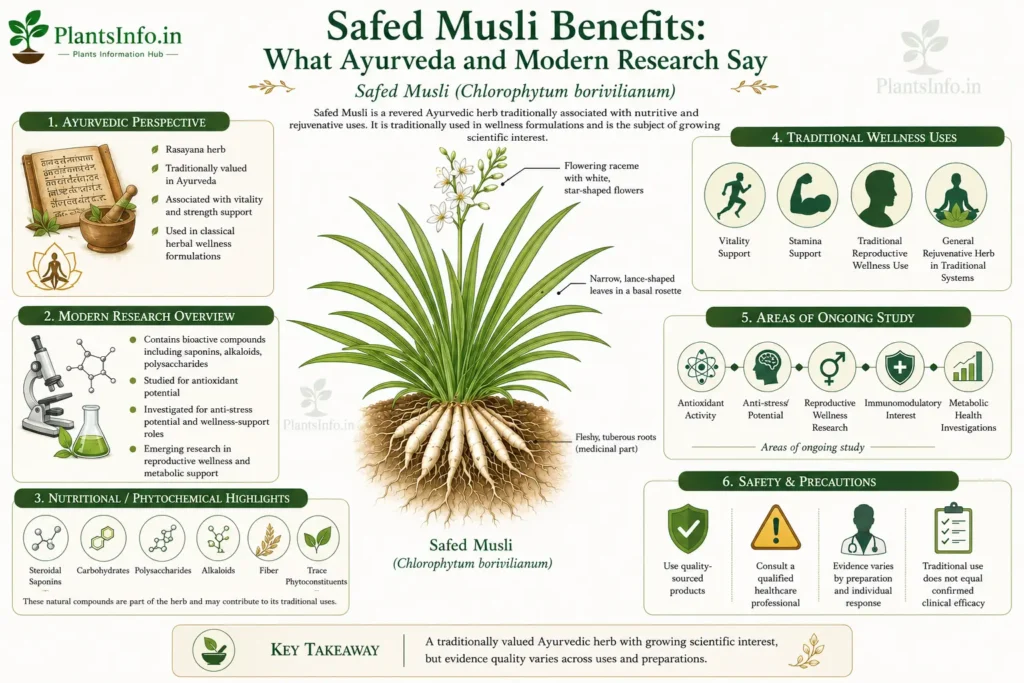
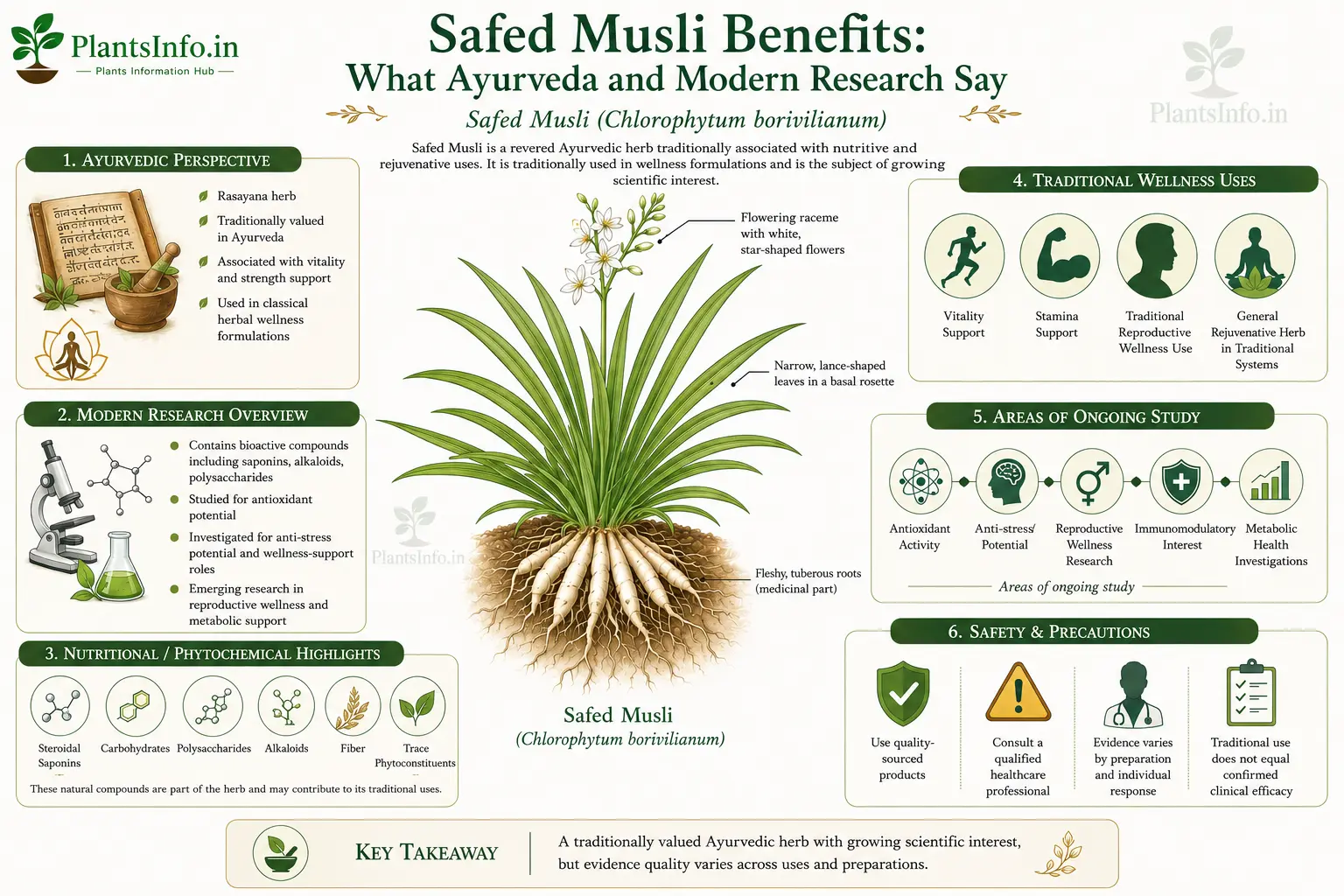
Quick Answer: Safed Musli is Ayurveda’s pre-eminent vajikarana rasayana — a rejuvenative tonic for vitality, reproductive health, and stamina. Its fleshy white tubers contain steroidal saponins and immunomodulatory polysaccharides that research has begun to validate. It is used most widely as a general adaptogen, energy tonic, and support for reproductive function.
See also: Safed Musli plant profile, how to grow it, common problems, its flowering season, and its varieties.
The name tells you exactly what traditional practitioners thought of this plant. Divya Aushadhi — divine medicine. Safed means white; musli refers to the tuber root used as a tonic. The plant earned this name not from a single use but from a sustained pattern of results over thousands of years of practice in communities that had no incentive to preserve a myth. What makes the contemporary story more interesting is that modern research is finding plausible mechanisms behind claims that seemed only aspirational a generation ago.
Recommended Products
Disclosure: As an Amazon Associate, PlantsInfo may earn from qualifying purchases.
🌱 Growing Essentials
The following products can help with container gardening, potting, root development, soil management, and healthy plant growth.
Organic Potting Soil Mix
Provides nutrients, structure, and healthy growing conditions for container plants.
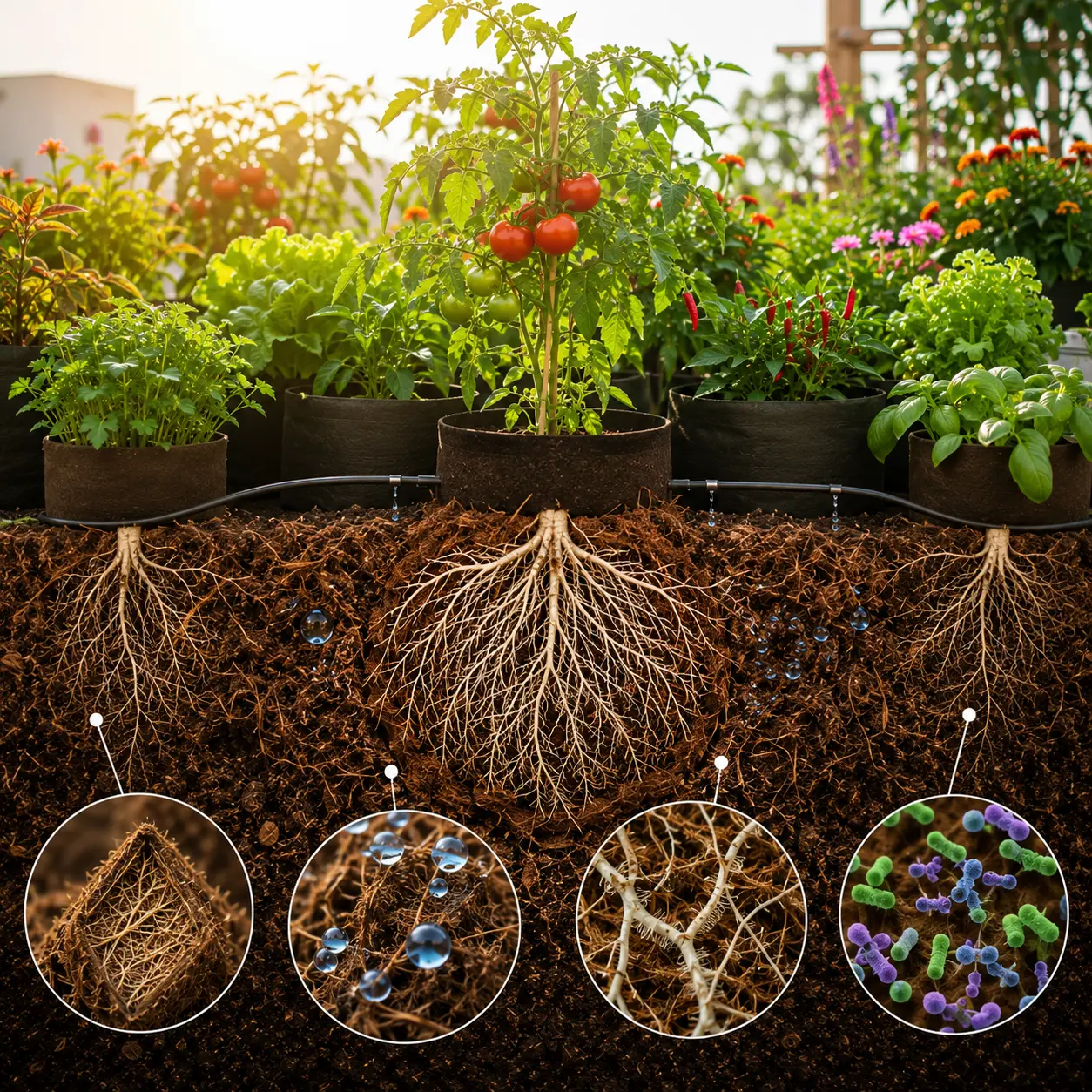
Coco Peat Growing Medium
Enhances moisture retention while maintaining excellent root-zone aeration.

Grow Bags for Plants
Improve drainage, root aeration, and vegetable production in limited spaces.

Plastic Pots for Plants
Ideal containers for seedlings, ornamentals, herbs, and balcony gardens.
Vitality, Adaptogenic, and Reproductive Health — Primary Medicinal Use
Safed Musli occupies a specific category in Ayurvedic pharmacology — Vajikarana Rasayana. A vajikarana herb enhances reproductive capacity, libido, and sexual vitality; a rasayana is a rejuvenative that restores vitality and promotes longevity. The combination places Safed Musli among the highest-value single herbs in the classical system, alongside Ashwagandha and Shatavari.
Classical texts, including the Bhavaprakasha, describe Safed Musli as a potent nourisher of the Shukra dhatu — the reproductive tissue in Ayurvedic anatomy — and list it among preparations for sexual debility, oligospermia, premature ejaculation, and general loss of vitality. The Rasaratna Samuccaya references it in rejuvenative formulations. It is one of over 100 Ayurvedic formulations in which dried tubers are listed as constituents.
The primary bioactive compounds responsible for these properties are steroidal saponins, including borivilianosides, present at 2–15% of dry tuber weight. These saponins are understood to support endocrine function by modulating the hypothalamic-pituitary axis, contributing to hormonal balance in both men and women. Research suggests they also stimulate nitric oxide synthesis, which has implications for circulatory health and reproductive function.
Research on reproductive outcomes is among the most clinically developed areas. A study cited in the Journal of Ethnopharmacology found improvements in sperm count and motility parameters in men with oligospermia following 90 days of supplementation with standardised Safed Musli root extract. Animal studies consistently show pro-fertility effects, including increased testicular weight and sperm production. Human trial data remains limited in scale, and findings should be understood as preliminary.
The adaptogenic dimension of Safed Musli is increasingly well-documented. Its saponins appear to act on the HPA (hypothalamic-pituitary-adrenal) axis, moderating the cortisol stress response. Research suggests regular use may improve tolerance of physical and psychological stress, consistent with Ayurveda’s description of it as a general vitaliser rather than a single-use remedy. A trial in Phytotherapy Research reported a 12% improvement in aerobic capacity (VO₂ max) and faster exercise recovery in subjects receiving standardised Safed Musli powder — findings that align with its traditional use as a strengthening tonic for physical depletion.
Traditional practice among ethnic communities of the Aravalli Hills in Rajasthan (Meena community), Maharashtra (Pawra and Thakar), and Madhya Pradesh (Korku and Bharia) has incorporated Safed Musli for generations as a daily health supplement — not as a medicine for acute illness, but as a long-term vitaliser taken consistently to maintain health and endurance.
This information is based on traditional Ayurvedic knowledge and published research. It is not a substitute for medical advice. Consult a qualified healthcare professional before using any plant-based remedy for health conditions.
Immunomodulatory and Anti-inflammatory Properties
Safed Musli’s immunomodulatory activity is the second most-researched dimension of its pharmacology. Polysaccharides extracted from the tubers have been shown in laboratory studies to enhance macrophage activity and natural killer cell function, consistent with Ayurveda’s classification of the plant as a general immunity tonic (rasayana). Research at Banaras Hindu University documented macrophage-stimulating activity in vitro, lending mechanistic support to traditional claims.
Saponins isolated from Safed Musli roots demonstrated significant anti-inflammatory effects in published research, showing inhibition of inflammatory mediators, including histamine and prostaglandins. This supports its traditional use for arthritis, joint pain, and inflammatory conditions — uses documented among tribal communities in the Dhule and Nandurbar districts of Maharashtra.
Nutritional Profile
Safed Musli tubers are nutritionally dense. The dried root contains proteins, carbohydrates, dietary fibre, phytosterols (including β-sitosterol), and modest amounts of vitamins A, B complex, and C. The saponin content — 2–15% of dry weight, depending on variety and growing conditions — is the most pharmacologically significant component. Alkaloids, flavonoids, and glycosides are also present and contribute to the plant’s broad activity profile.
This nutritional density is one reason Safed Musli is included in formulations such as Chyawanprash, Musli Pak, and various commercial herbal tonics — it functions simultaneously as a medicine and a food supplement.
Cultural and Folk Significance
Safed Musli does not carry pan-India religious significance, but its value to India’s tribal and indigenous communities is documented and deep. The Meena community of Rajasthan, the Mizo of Mizoram, and the Pawra and Thakar communities of Maharashtra have all incorporated this plant into traditional health systems for generations — not as a commercial extract, but as a food and household remedy. In Maharashtra’s Dhule and Nandurbar districts, rural communities initiated Safed Musli cultivation independently, indicating awareness of both its health and economic value long before commercial interest arose.
The Sanskrit and Hindi names contain a direct botanical description: safed (white) and musli (fleshy root used as a tonic). The names Divya Aushadhi (divine medicine) and Dholi Musli (white tonic root) reflect the same recognition of exceptional value.
Ecological Role
Safed Musli is an understorey plant in the tropical deciduous and dry forests of central India. It plays a small but specific role in forest floor ecology — its sparse white flowers attract pollinating insects, and its tubers form part of the food resource for forest-floor organisms. As a geophyte (underground storage organ plant), it contributes to soil organic matter through its annual cycle of growth and die-back.
The plant’s conservation status is of genuine concern. Decades of wild harvesting to meet commercial demand — estimated at over 500 tonnes of dried root annually in India — have severely depleted natural populations in Chhattisgarh, MP, Gujarat, and Maharashtra. Home cultivation and farm-based production are not merely economically practical choices; they directly reduce pressure on endangered wild populations.
Practical Value for Home Gardeners
For a home gardener in India, growing Safed Musli delivers two distinct practical benefits: a supply of fresh, uncontaminated tubers for household use — avoiding the adulteration problem that is endemic in the commercial dried root market — and participation in the conservation of a genuinely endangered medicinal plant.
Commercial Safed Musli powder is one of the most frequently adulterated medicinal herb products in India, with common adulterants including starch, other Chlorophytum species, and powdered yam. Home-grown, home-dried tubers are the only reliable way to ensure authenticity.
How to Prepare or Use at Home
Dried root powder: The most widely used preparation. Grind dried, peeled tubers to a fine powder. Standard dose: 3–6 g daily in one or two doses, mixed with warm milk and a small amount of honey or mishri (rock sugar). This is the traditional milk anupana preparation for vajikarana use. Milk is considered the ideal vehicle for Safed Musli because it enhances the absorption of fat-soluble saponins.
Decoction: Boil 10 g of dried root pieces in 400 ml water until reduced by half. Strain and drink warm, with honey. A variation common in rural Maharashtra adds cinnamon and ginger to the decoction.
Musli Pak: A classical Ayurvedic jam preparation combining Safed Musli powder with sugar, ghee, and warming spices. This is the traditional long-course preparation for general debility and post-illness recovery.
Do not exceed 6 g of dried powder per day without guidance from a qualified Ayurvedic practitioner. Traditional texts recommend taking it as a course of 30–90 days, followed by an equivalent rest period, rather than as a continuous, indefinite supplement.
What to Avoid
Pregnancy and breastfeeding: Safed Musli’s hormonal-modulating activity makes it unsuitable for use during pregnancy without direct medical supervision. Classical texts recommend it specifically for reproductive health in non-pregnant adults.
Pitta-dominant individuals: Though broadly balancing, Safed Musli has mild heating properties (ushna veerya in some classifications). Those with a strong Pitta constitution may experience mild gastric discomfort or excess heat. Using it with cool anupana (coconut milk or cooled milk) mitigates this.
People with liver or kidney disease: Consult a healthcare professional before use; there is insufficient safety data for these populations.
Interaction with medications: No major drug interactions are currently documented, but its blood-sugar-modulating properties are relevant for people on diabetes medications. Monitor as appropriate.
Adulteration warning: Commercial Safed Musli products are among the most frequently adulterated medicinal herb preparations in India. Always verify the source — look for products with saponin content ≥5% stated on the certificate of analysis, or better still, grow and prepare your own.
Key Takeaways
- Safed Musli is classified as Vajikarana Rasayana in Ayurveda — one of a small group of herbs specifically prescribed for reproductive health, vitality, and long-term rejuvenation.
- Its primary bioactive compounds — steroidal saponins at 2–15% dry weight — are the same class of compounds responsible for its aphrodisiac, immunomodulatory, and adaptogenic activity.
- Research supports reproductive health and adaptogenic claims with preliminary clinical data; findings are promising, but human trials remain limited in scale.
- Commercial products are heavily adulterated; home-grown tubers are the most reliable source of authentic Safed Musli.
- Traditional dosage is 3–6 g dried powder daily with warm milk, taken in courses of 30–90 days with rest periods between courses.
Grow it, dry it, take it in warm milk — this is the preparation that tribal communities of central India have relied on for generations, and it remains the most reliable form of the plant available to any home gardener.