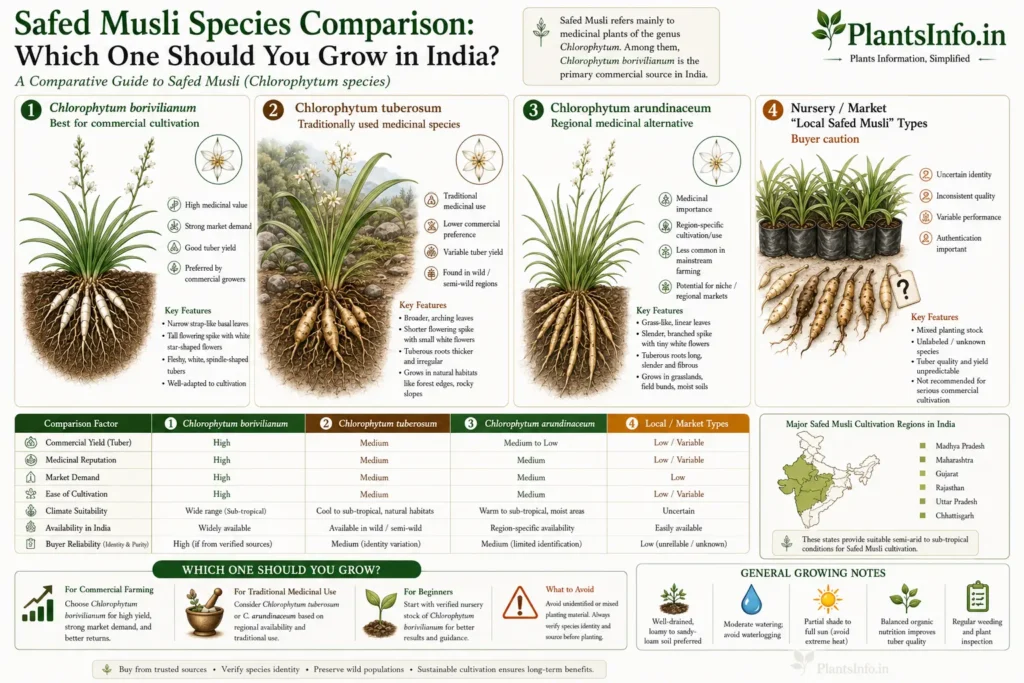
Safed Musli Plant Problems: Symptoms, Causes, and Fixes
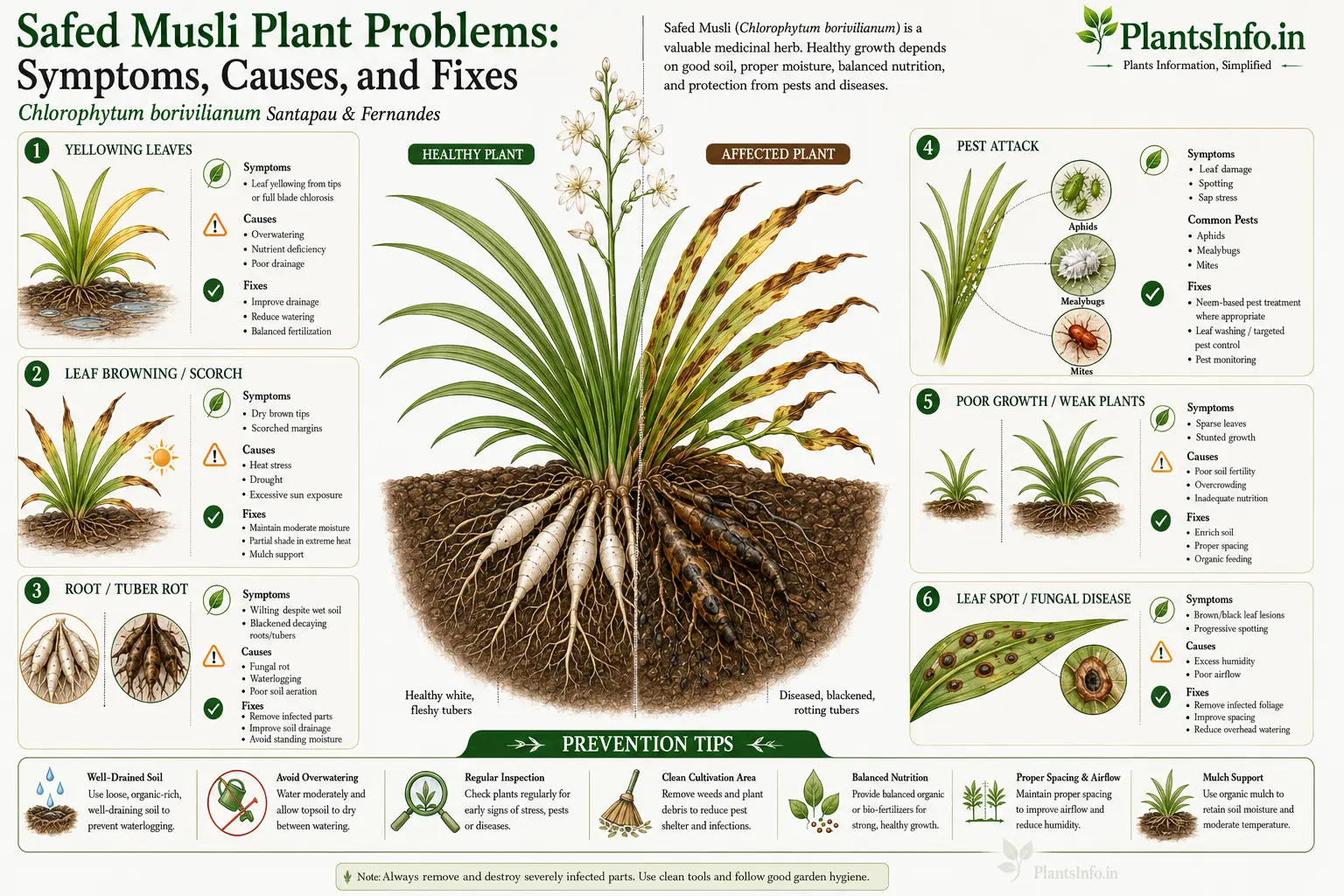
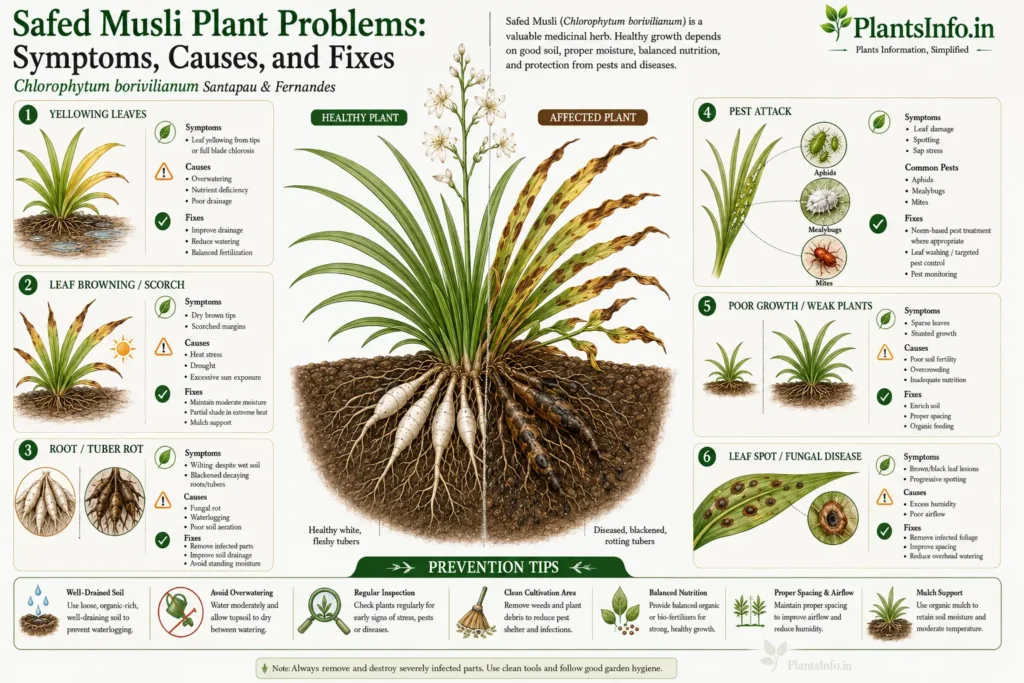
Quick Answer: Safed Musli’s three main problems are leaf blight (a fungal disease during the monsoon), tuber and collar rot (from waterlogged soil), and leaf-eating caterpillars. All three are manageable when caught early. Most are preventable with raised bed planting and good drainage — the two most important things any Safed Musli grower can do.
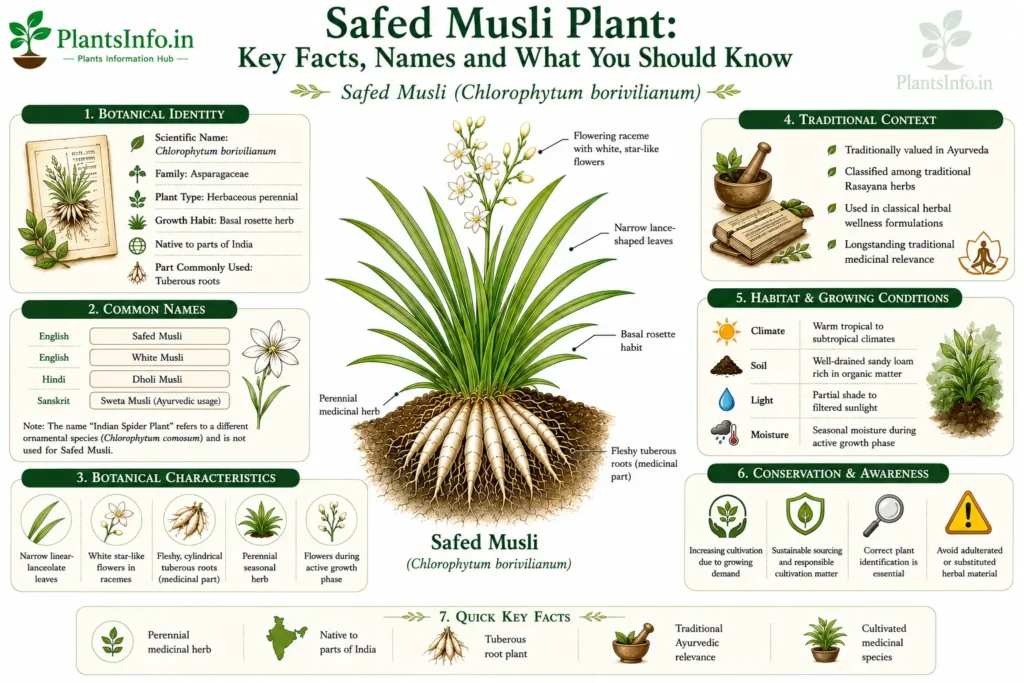
See also: Safed Musli plant profile, how to grow it, its flowering season, its benefits, and its varieties.
Safed Musli earns its reputation as a valuable crop, but it is not without vulnerability. Unlike Guduchi or Vasaka — which self-protect through bitterness and chemical deterrence — Safed Musli is a soft-tissued, moisture-loving tuber crop grown during the Indian monsoon. That combination creates real disease pressure. The grower who understands this and builds prevention into their planting system will lose very little; the grower who plants flat in unimproved soil and waters on a fixed schedule will face frustration from the first season.
Recommended Products
Disclosure: As an Amazon Associate, PlantsInfo may earn from qualifying purchases.
🌱 Growing Essentials
The following products can help with container gardening, potting, root development, soil management, and healthy plant growth.
Organic Potting Soil Mix
Provides nutrients, structure, and healthy growing conditions for container plants.
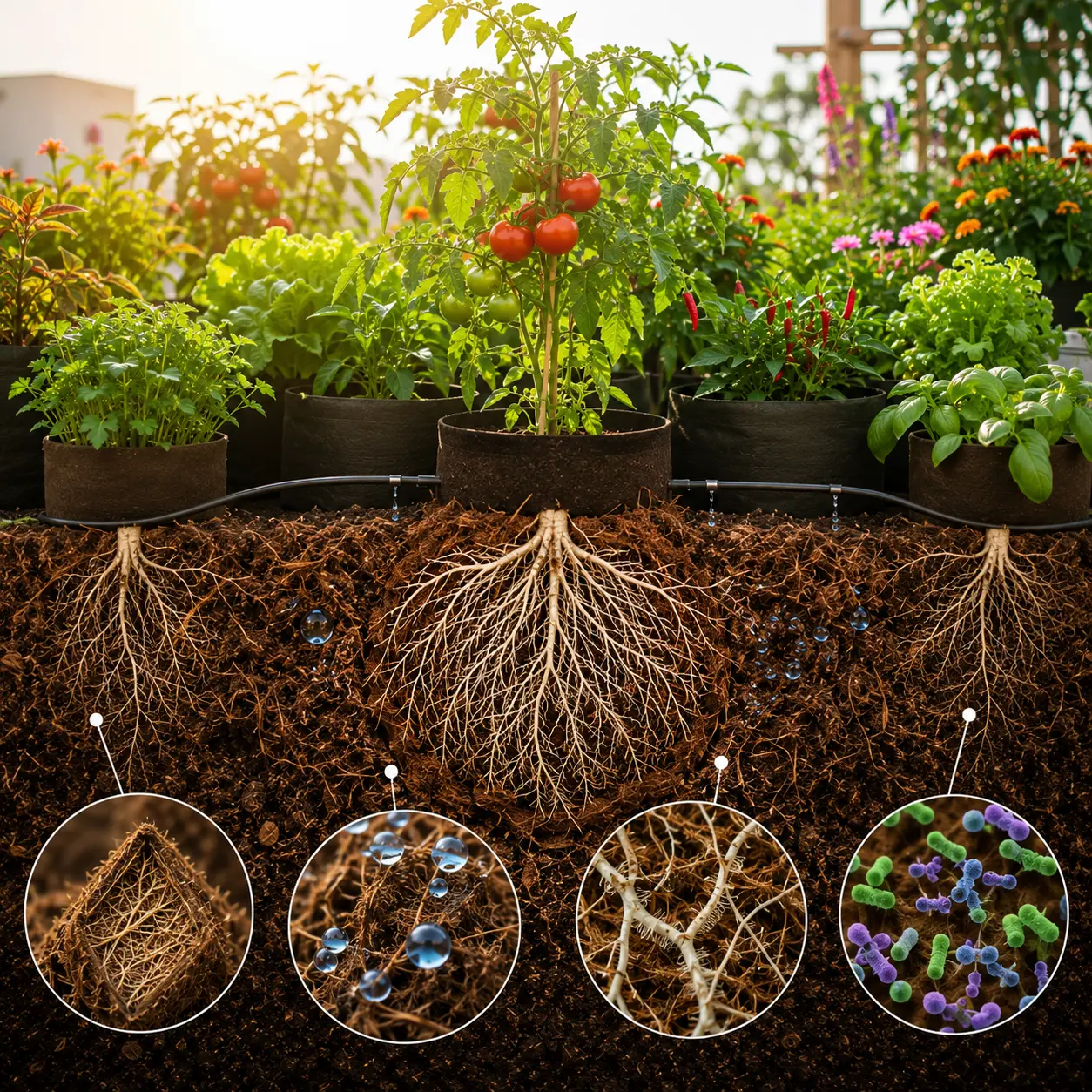
Coco Peat Growing Medium
Enhances moisture retention while maintaining excellent root-zone aeration.

Grow Bags for Plants
Improve drainage, root aeration, and vegetable production in limited spaces.

Plastic Pots for Plants
Ideal containers for seedlings, ornamentals, herbs, and balcony gardens.
Quick Diagnosis
| Symptom | Most Likely Cause | First Action |
|---|---|---|
| Necrotic (dead) spots at leaf tips spreading inward | Leaf blight (Macrophomina or Colletotrichum) | Remove affected leaves; apply Mancozeb or Bavistin spray |
| Red, orange, or yellow spots on leaf surface | Red spot (fungal) | Apply Bavistin 1 g/litre solution; repeat at 25 days |
| Whole plant wilting; crown soft and dark at soil level | Collar rot from waterlogging | Lift plant; trim rot; improve drainage immediately |
| Tubers soft, discoloured, or hollow at harvest | Tuber rot during growing season | Assess drainage failure; no recovery for affected tubers |
| Leaves with ragged holes and chewed margins | Leaf-eating caterpillars | Manual removal; apply neem oil spray or permitted insecticide |
| Leaves yellowing uniformly in October–November | Normal seasonal die-back | No action needed — this is harvest signal |
| Stunted above-ground growth; no tuber development | Tubers planted too deep or compacted soil | No in-season fix; improve soil preparation for next season |
Diseases
Leaf Blight (Macrophomina phaseolina, Colletotrichum species)
Leaf blight is the most economically significant disease of Safed Musli in Indian growing conditions. Research conducted at the ICAR-Directorate of Medicinal and Aromatic Plants Research in Anand, Gujarat, documented Macrophomina phaseolina as a primary causal agent, producing characteristic necrotic spots at the tips and outer margins of leaves that progressively expand to cover large portions of the leaf surface. When severe, the entire leaf dries out, giving the field a burned or blighted appearance.
Colletotrichum capsici has also been recorded as a leaf blight pathogen on Safed Musli, producing somewhat different spot morphology — spots with distinct colour zones — but the same progressive necrotic pattern. Both pathogens are active during the high-humidity monsoon months of August–October.
Leaf blight cannot be fully cured once established, but can be arrested. Remove and destroy all visibly infected leaves immediately. Apply a metalaxyl + mancozeb combination fungicide (at label concentration) for Macrophomina-type blight. For Colletotrichum blight, Bavistin (carbendazim) at 1 g per litre applied twice at 25-day intervals is the standard treatment used in Indian commercial cultivation. Prevention through wide spacing, raised beds for airflow, and avoidance of overhead irrigation substantially reduces the incidence of both pathogens.
Red Spot (Alternaria and related fungi)
Red spots present as distinct red, orange, or yellow circular spots scattered across the leaf surface, smaller and more defined than leaf blight lesions. It is caused by Alternaria species and is most active during warm, humid post-monsoon conditions.
The disease is generally less severe than leaf blight but can reduce leaf area and weaken the plant during the critical tuber-filling weeks of October. Treatment with Bavistin at 1 g per litre, applied twice at 25-day intervals, is effective. Propiconazole (0.1%) and Dithane M-45 (0.25%) have also shown good control in research trials on Alternaria and Colletotrichum in this crop.
Collar Rot and Tuber Rot
Collar rot presents as a soft, water-soaked, dark discolouration at the stem base and crown, usually accompanied by rapid wilting of the entire plant. It is caused by soil-borne pathogens — primarily Pythium and Sclerotinia species — that proliferate in waterlogged conditions. Tuber rot, where individual root fingers turn soft, brown, and hollow, is a related condition affecting the storage organ directly.
Neither condition can be reversed once fully established. A plant with advanced collar rot should be removed, the surrounding soil treated with Trichoderma viride biocontrol powder, and the bed left to dry before any replanting. This disease is the leading cause of complete crop failure in Safed Musli growing, and it is almost always preventable: raised bed or ridge planting that ensures crown drainage after heavy rain is the single most effective protection.
For commercial fields, pre-treatment of planting material by soaking crowns in Trichoderma viride suspension for 20–30 minutes before planting is a recommended and widely practised biological control measure.
This information is for general guidance only. Always read product labels before applying any pesticide or fungicide. Follow state agriculture department guidelines for food crops. Keep children and pets away during and after application.
Pest Problems
Leaf-Eating Caterpillars
Caterpillars are the primary insect pest of Safed Musli. They feed on the fresh green leaf tissue, leaving ragged holes and chewed margins. Activity peaks during the monsoon when new leaf growth is most abundant and soft. Heavy infestations can defoliate a plant significantly during the critical August–September period, reducing the photosynthetic capacity available for tuber development.
Organic fix: Hand-pick caterpillars in the morning when they are most active on the leaf surface. Apply a neem oil spray (5–7 ml per litre of water) on the leaf surfaces, including undersides, twice weekly during active infestation.
Chemical option: Metacid (methyl parathion) at 0.2% concentration is the treatment listed in standard Indian commercial cultivation guides for this pest. Apply strictly according to label instructions. Given that the plant is grown for its roots (not leaves), the leaf spray does not directly contaminate the medicinal part, but observe the pre-harvest interval on the product label.
Aphids and Mites (minor, occasional)
Aphid clusters and spider mites may appear on Safed Musli during dry spells within the monsoon season, particularly in North India. Both are less common than caterpillar damage and generally self-limiting once monsoon humidity returns.
Organic fix: Neem oil spray at standard dilution, applied directly to affected leaf surfaces. For aphids, a strong water spray directed at colonies is often sufficient for a small home garden planting.
Mite damage — fine bronzing and stippling on leaf surfaces with no chewed margins — is commonly mistaken for a fungal disease. The absence of discolouration and the presence of fine webbing on the underside of the leaf confirm mites rather than a pathogen.
Termites (in dry soils)
Termites occasionally attack Safed Musli tubers in light, sandy soils during dry pre-monsoon months when the stored crowns are in the ground. Signs are hollow or partly consumed tubers discovered at harvest.
Prevention: Work neem cake into the soil at bed preparation. For severe termite pressure, a soil drench with the recommended termiticide at planting time is an option for commercial beds. Home garden plantings rarely have significant termite problems if good organic soil is used.
Environmental and Care Mistakes
Flat-Bed Planting in Monsoon Conditions
This is the single most universal mistake among first-time Safed Musli growers in India. Flat-bed planting allows monsoon rain to pool at the crown zone, and even two to three days of standing water at the tuber level is sufficient to trigger collar rot in a plant that has no natural defences against sustained waterlogging.
The fix for the current season is to improve drainage by mounding soil around existing plants if they are not yet established. The fix for future seasons is to build raised beds or ridges before planting — minimum 15–20 cm raised above the surrounding soil level.
Planting Too Deep
The tuber crown should sit approximately 4–6 cm below the soil surface with the bud pointing upward. Deeper planting — 10 cm or more — significantly delays sprouting and reduces root development. Novice growers who plant deeper out of concern about dislodgement in rain produce shorter, lighter tuber clusters at harvest.
There is no in-season correction for this mistake. Plant correctly in the following season.
Harvesting Too Early
Early harvest is one of the most common quality errors in Safed Musli cultivation. The temptation to dig up plants in September or October — when the panicles have finished flowering, and leaves are beginning to yellow — is understandable, but premature harvest yields tubers that are thinner, lighter, and carry measurably lower saponin content.
The visual standard for harvest is the complete death and drying of all above-ground parts. In most of Central India, this is November to December. Waiting costs nothing and gains everything in terms of final tuber weight and quality.
Watering During Dormancy
Dormant stored crowns between December and June are alive but require completely dry conditions. Growers who forget the plant is dormant and continue to water the empty bed or container — or who store crowns in a moist environment — cause the crown bud to rot before the next planting season, destroying the following year’s planting material.
Once a crown bud has rotted in storage, it cannot be salvaged. Prevention: Store all harvested crowns in a cool, dry, well-ventilated environment with a small amount of dry sand or soil around them. Inspect monthly and remove any showing rot immediately before it spreads to adjacent crowns.
Prevention Protocol
Build raised beds or ridges 15–20 cm above the surrounding soil level before every planting season. This single structural choice prevents the majority of collar rot and tuber rot losses.
Treat planting crowns with Trichoderma viride suspension (10 g per litre of water, soak for 20–30 minutes) before planting. This biological treatment significantly reduces crown rot losses in the field.
Apply neem cake to the soil at bed preparation, both as nutrition and as a biological soil-health amendment that suppresses pathogen pressure.
Inspect all plants every seven to ten days from August through October for early leaf blight. Removing infected leaves immediately and applying fungicide early prevents the rapid spread characteristic of monsoon-season blight.
Maintain wide spacing (15 × 15 cm minimum) and avoid overhead irrigation — both measures reduce the leaf surface humidity that favours blight development.
When to Give Up on a Plant
A Safed Musli plant with complete collar rot — where the stem base is hollow, soft, and completely discoloured at or below soil level — will not recover. Remove it promptly. Do not compost the removed plant material, as both Macrophomina phaseolina and Pythium can persist in compost and reinfect the following season.
Treat the affected bed area with a Trichoderma viride soil drench or a diluted copper-based fungicide before replanting. Do not replant Safed Musli in severely infected bed sections for at least one growing season.
Tubers that are already soft, hollow, or malodorous at harvest are not salvageable — do not attempt to dry and use them medicinally, and do not use them as planting crowns for the following season.
Frequently Asked Questions
Is it safe to eat tubers from a plant that has leaf blight?
Yes, if the tubers themselves are firm, white inside, and show no soft or discoloured patches. Leaf blight is a foliar disease caused by pathogens that attack the above-ground parts; they do not typically translocate into healthy tuber tissue. Inspect each tuber individually before drying.
My plants look healthy in August, but the tubers at harvest are tiny. What went wrong?
Likely causes: planting too deep (below 6 cm), soil too compacted or poorly drained for tuber expansion, or insufficient organic matter in the bed. A healthy above-ground plant does not guarantee good tuber development — it is the soil quality and structure that determines the underground outcome.
The leaves are yellowing in October. Should I harvest now?
Not yet. October yellowing is the beginning of natural die-back. Wait until the above-ground parts are completely yellow, dried, and collapsed — typically November to December in most of central India. Premature harvest sacrifices several weeks of continued tuber-filling.
Safed Musli rewards the grower who respects its seasonal rhythm. Address drainage before planting, inspect regularly through the monsoon, and harvest only when the plant has finished its work above ground.