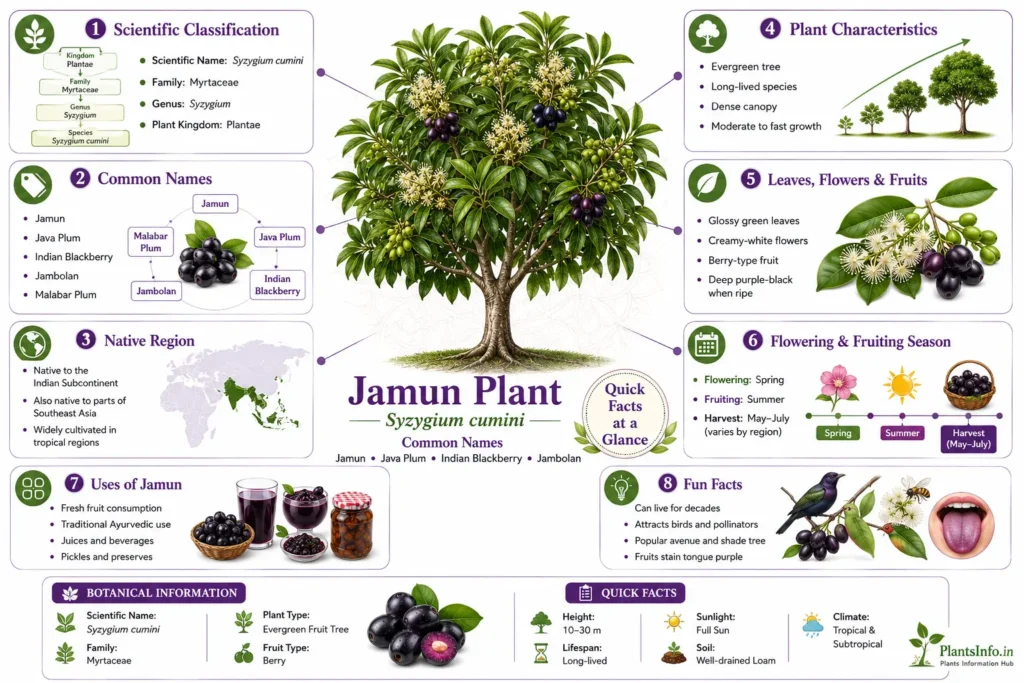
Jamun Flowering Season: When and What to Expect in India
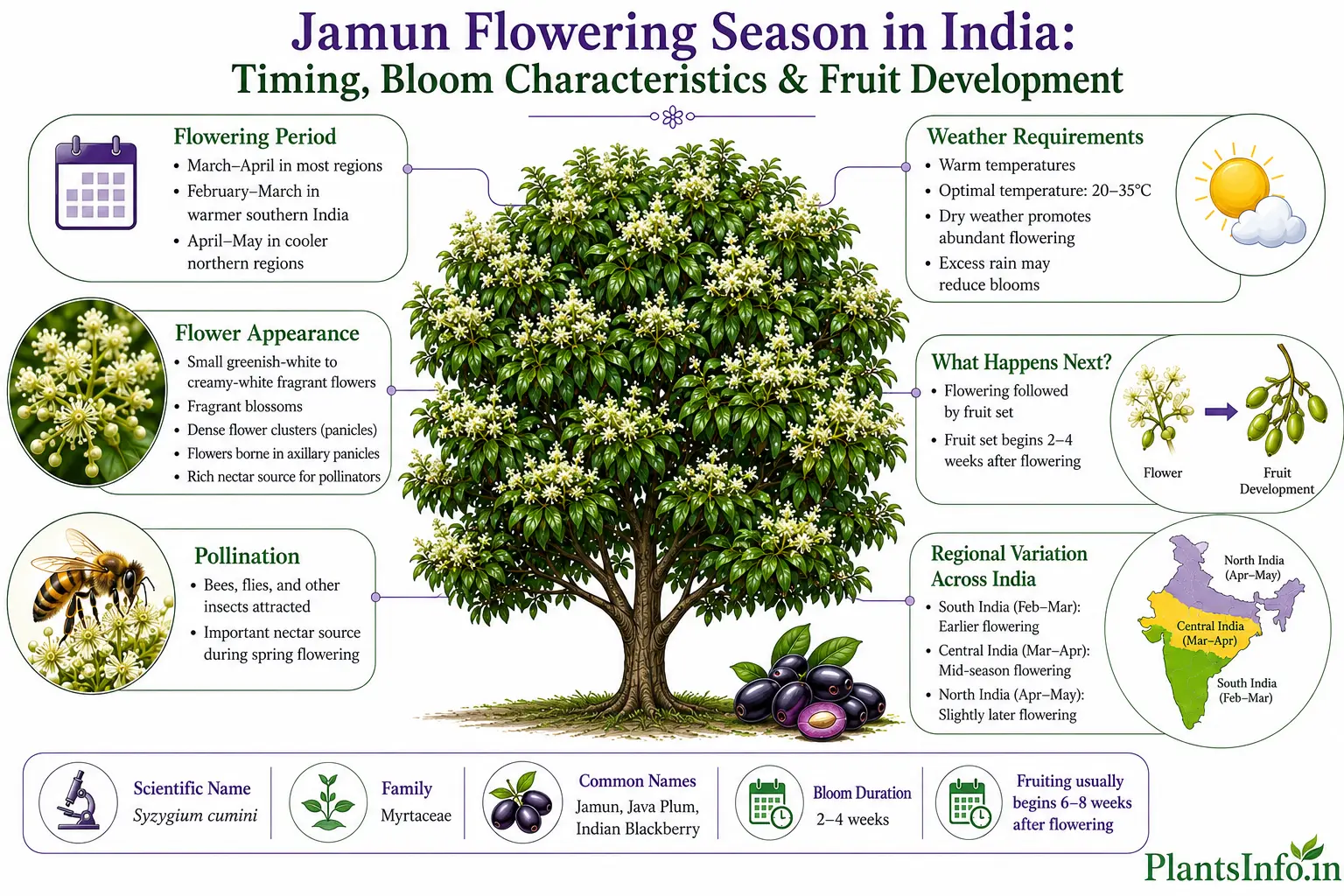
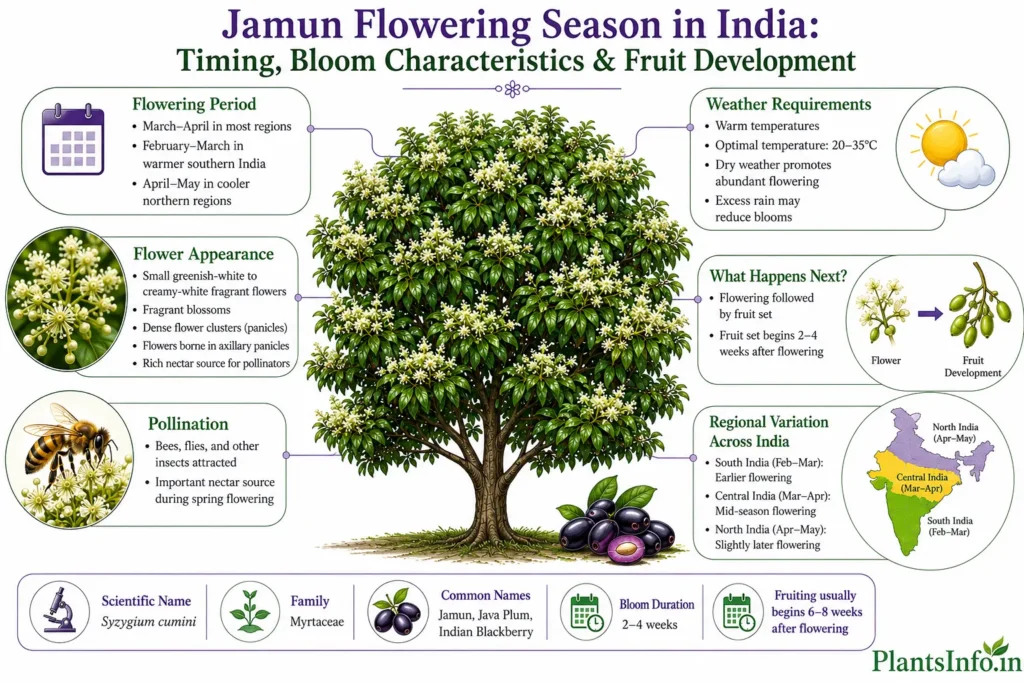
Quick Answer: Jamun flowers between March and April across most of India, with fruit ripening from June to August — a timeline that means the harvest lands squarely in the monsoon season. Timing shifts by 3–4 weeks between northern plains and southern peninsular regions.
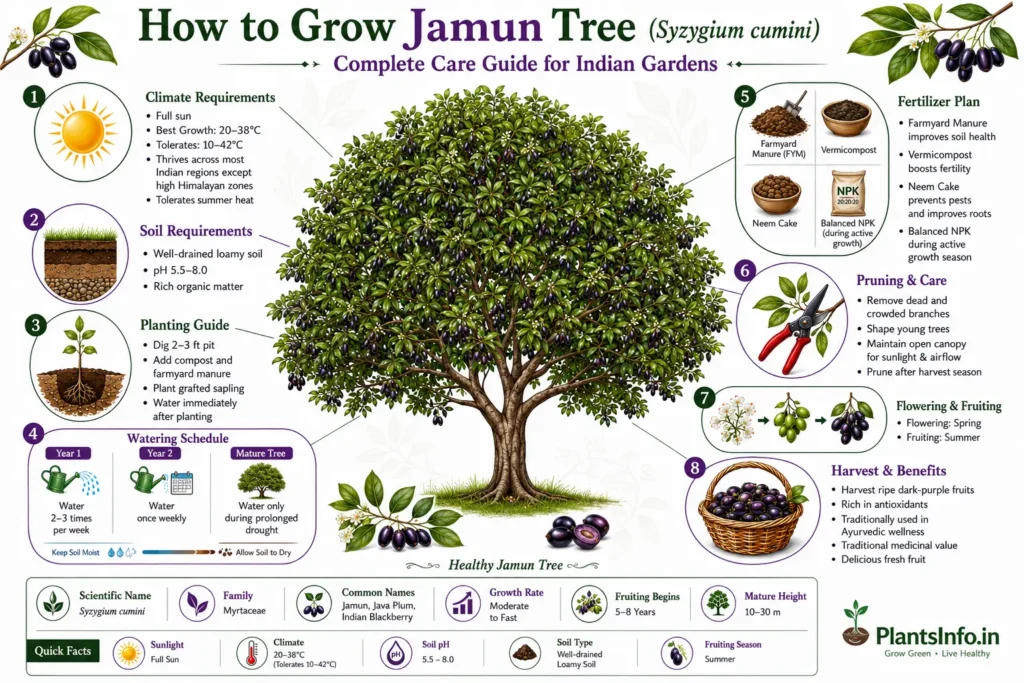
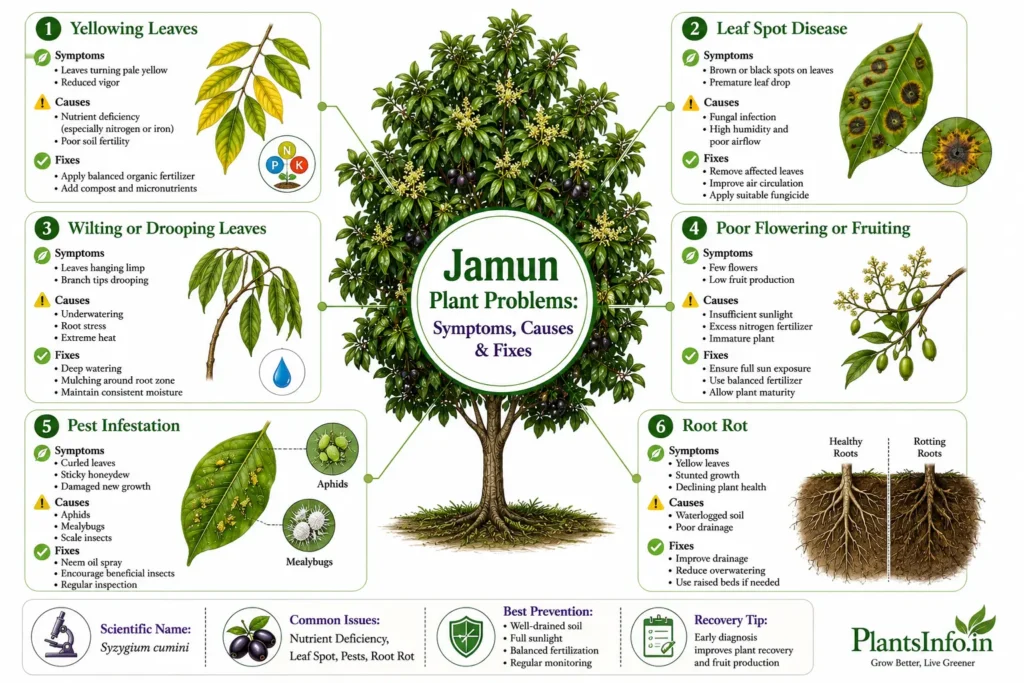
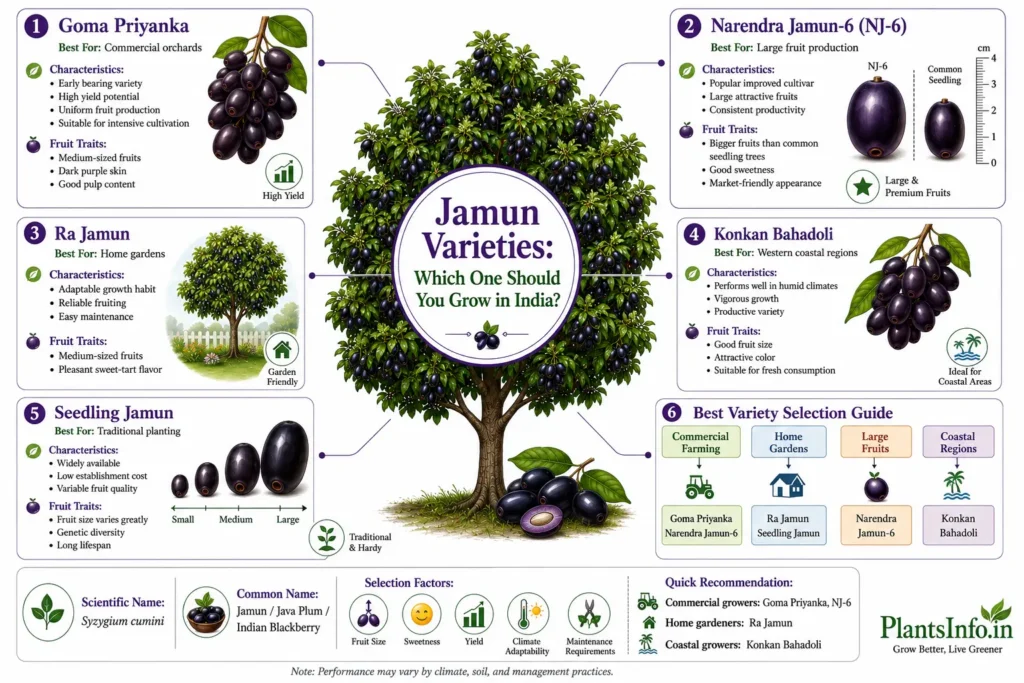
See also: Jamun plant profile, how to grow it, common problems, its benefits, and its varieties.
Walk past a jamun tree in late March, and you may not notice anything unusual — the flower clusters are small and cream-coloured against a dense green canopy. Come back in July, and the pavement beneath is stained dark purple, birds are loud in the branches, and the season is already half over. The window is shorter than most gardeners expect.
Recommended Products
Disclosure: As an Amazon Associate, PlantsInfo may earn from qualifying purchases.
🌱 Growing Essentials
The following products can help with container gardening, potting, root development, soil management, and healthy plant growth.
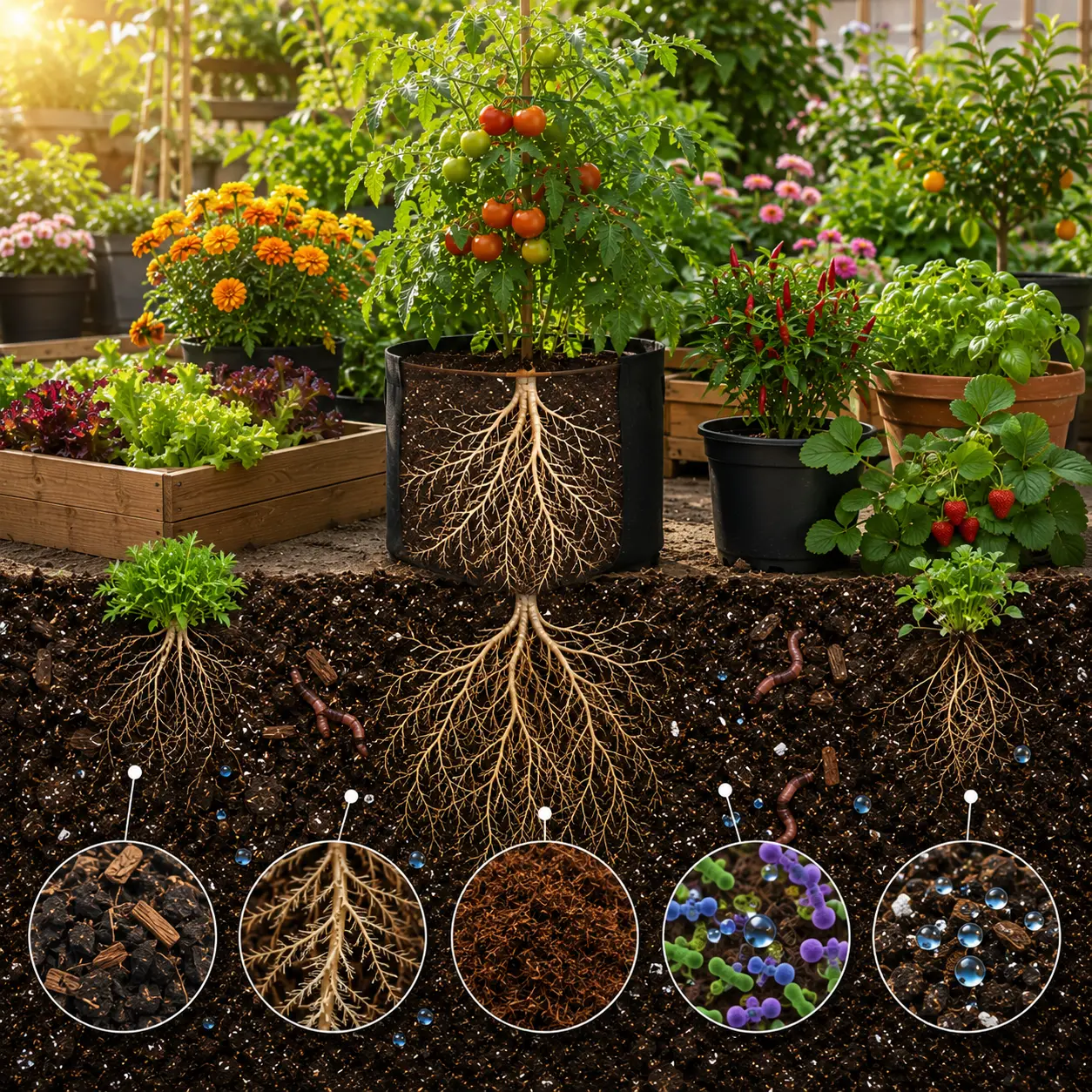
Organic Potting Soil Mix
Provides nutrients, structure, and healthy growing conditions for container plants.
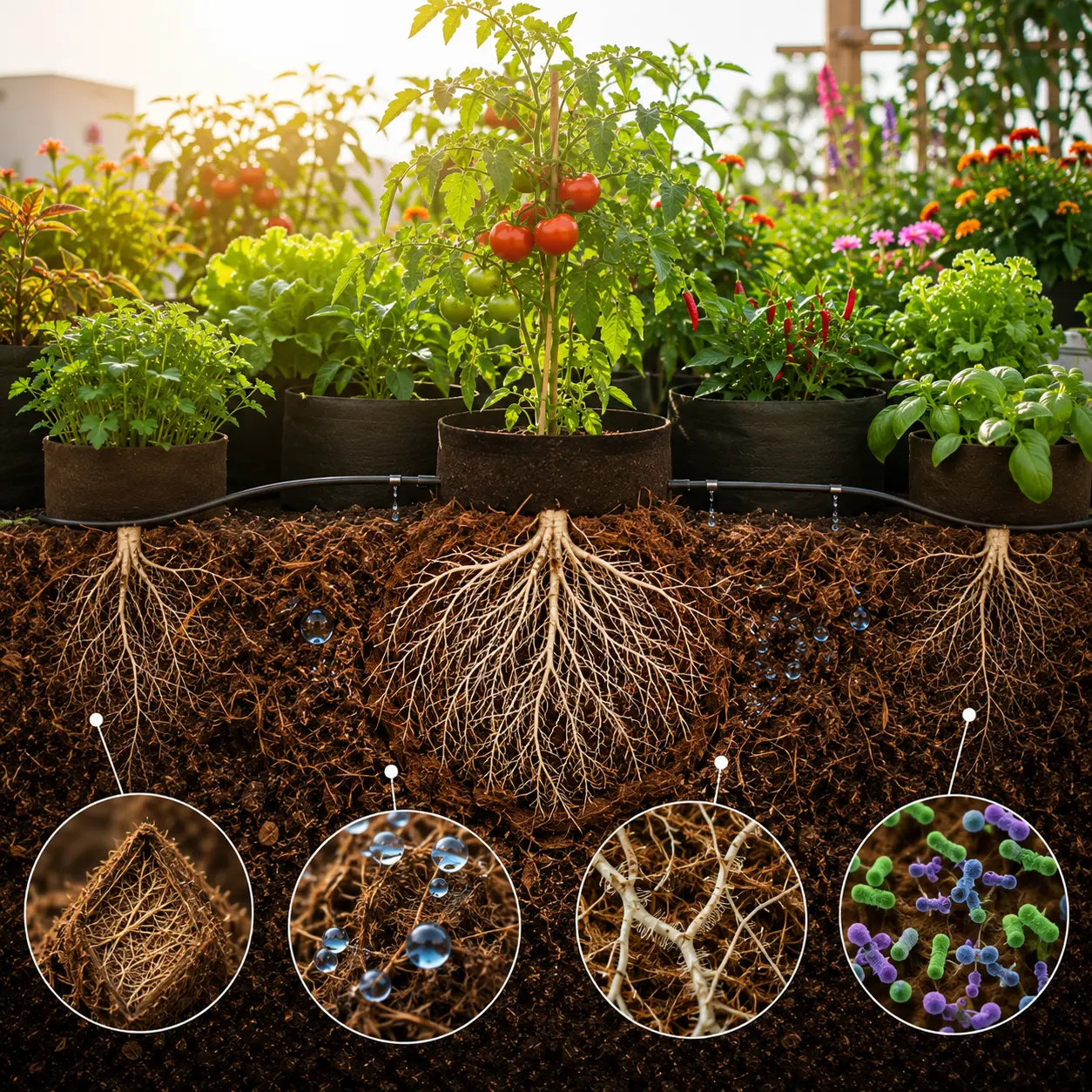
Coco Peat Growing Medium
Enhances moisture retention while maintaining excellent root-zone aeration.

Grow Bags for Plants
Improve drainage, root aeration, and vegetable production in limited spaces.

Plastic Pots for Plants
Ideal containers for seedlings, ornamentals, herbs, and balcony gardens.
India’s Seasons and This Plant
| Season (months) | What the plant is doing |
|---|---|
| Pre-monsoon (Mar–May) | Flowering; fruit setting and early development |
| Monsoon (Jun–Sep) | Active fruiting and harvest; peak ripening Jun–Aug |
| Post-monsoon (Oct–Nov) | Vegetative recovery; new shoot growth |
| Winter (Dec–Feb) | Slow growth; rest period; flower bud initiation begins late Feb |
Flowering Season in Detail
Flower buds begin forming on jamun trees from late February in South India and by mid-March in northern and central plains. The buds appear at the same branch nodes that bore fruit the previous season — experienced growers look at these positions to forecast yield before flowering opens.
Peak bloom spans 3–4 weeks, typically late March to mid-April in the Gangetic plains and February to March in Tamil Nadu, Kerala, and coastal Karnataka, where warmer winters accelerate the cycle. In hill regions above 800 m, flowering may not begin until April and is often less prolific.
Individual flowers are small — 4–5 mm across — with white to pale pink petals and numerous prominent stamens that give the cluster a brush-like appearance. Each flower lasts only 2–3 days, but a large tree produces thousands of flowers over the bloom period, so the overall display lasts several weeks.
Flowering is triggered primarily by a combination of shortening cool nights and rising daytime temperatures — the temperature shift between winter and pre-monsoon is the key signal. Trees that have not experienced a sufficiently cool winter rest period sometimes produce sparse or irregular flowering; this is most commonly observed in coastal Tamil Nadu and Kerala, where winters are mild.
Bee pollination is the primary mechanism. Jamun does not require hand pollination under normal conditions.
Fruiting Season
Fruit sets within 2–3 weeks of successful pollination, with small green fruitlets visible on the branch clusters by April–May. The development phase runs through May and into June, when the pre-monsoon heat accelerates ripening.
Ripening indicators are unambiguous: fruit colour progresses from green to red to deep purple-black. At full ripeness, the fruit yields to light pressure and separates from the cluster with minimal force. A faint sweet-sour fragrance develops at the harvest stage. Unripe jamun is firm, green-red, and intensely astringent — the stain colour at this stage is red rather than purple.
Peak harvest in most of peninsular India falls in June–July; in the northern plains, July–August is more typical. The harvest window for a single tree spans 3–5 weeks, but individual clusters ripen unevenly, requiring repeat harvesting every few days.
Missing the window has a predictable outcome: overripe fruit ferments on the branch or falls, attracting fruit flies, bats, and birds. A tree left unharvested for a week in peak season is often effectively harvested by wildlife before the gardener returns.
Best Time to Plant
Monsoon onset — June to July — is the ideal planting window for jamun across most of India. Established rainfall reduces transplant stress, moderate temperatures prevent sapling scorch, and the tree has a full growing season ahead before dry weather returns. In regions with heavy or poorly distributed monsoon rainfall (parts of Assam, coastal Konkan), plant in the second half of the monsoon to avoid waterlogging a freshly planted sapling.
The second-best planting window is February–March, before the pre-monsoon heat builds. Trees planted in this window establish more slowly and need careful irrigation through April–May, but they enter their first monsoon with a few months of root development behind them.
Container-grown saplings can be transplanted to the ground in either window. Bare-root planting should be restricted to the monsoon window only.
Month-by-Month Calendar
| Month | Season | What to Do |
|---|---|---|
| January | Winter | Dormant rest period; flower bud development occurring internally |
| February | Winter/Pre-monsoon | Bud initiation visible in South India; observe for early flower clusters |
| March | Pre-monsoon | Flowering begins in South India; monitor for pollinator activity |
| April | Pre-monsoon | Peak flowering in North and Central India; fruit setting underway in South |
| May | Pre-monsoon/Summer | Fruit development; green fruitlets visible; no intervention needed |
| June | Monsoon onset | Harvest begins in South India; monitor ripening daily |
| July | Monsoon | Peak harvest in most regions; harvest every 3–4 days |
| August | Monsoon | Late harvest in North India; season ending in South |
| September | Monsoon | Fruiting season complete; tree in vegetative recovery |
| October | Post-monsoon | New shoot growth; post-season assessment |
| November | Post-monsoon | Pruning window opens; remove dead wood if needed |
| December | Winter | Rest period begins; no intervention needed |
What Can Go Wrong Seasonally?
Sparse flowering after a mild winter is the most commonly misdiagnosed problem in South Indian jamun gardens. Growers assume pest damage or nutritional deficiency, but the root cause is insufficient winter chilling. The fix is patience — the following year’s flowering typically recovers without intervention if the winter is cooler. Nothing can be done to correct the current season’s outcome once buds have set sparsely.
Premature fruit drop in May–June occurs when pre-monsoon heat spikes above normal before the fruit has fully developed. Small, hard, red fruitlets dropping in quantity before monsoon onset are a heat response, not a disease. Mulching the root zone and one deep watering per week during the spike period reduces the severity in subsequent years.
Post-harvest branch dieback is sometimes mistaken for disease when it appears in September–October. Jamun commonly sheds a small number of fruiting branchlets after a heavy season — this is a natural self-thinning response and does not require treatment. If dieback is extensive or accompanied by canker lesions, see the Jamun Problems Guide.
Post-Harvest Care
Once the harvest season ends in August–September, jamun enters a visible recovery phase. New vegetative shoots emerge from the branch tips, and the canopy refreshes with a flush of new growth before winter slows activity.
This post-harvest period is the correct time to prune — remove dead fruiting wood, crossing branches, and any growth that has reduced light penetration into the canopy interior. Pruning detail belongs in the Growing Guide; the timing note here is that November, not summer, is when pruning delivers the best results for the following season’s flowering.
The tree needs no special post-harvest intervention. Reduce watering gradually as temperatures fall through October and November, and allow the natural winter rest to proceed.
After the first harvest, a jamun tree rarely needs reminding of what to do next.