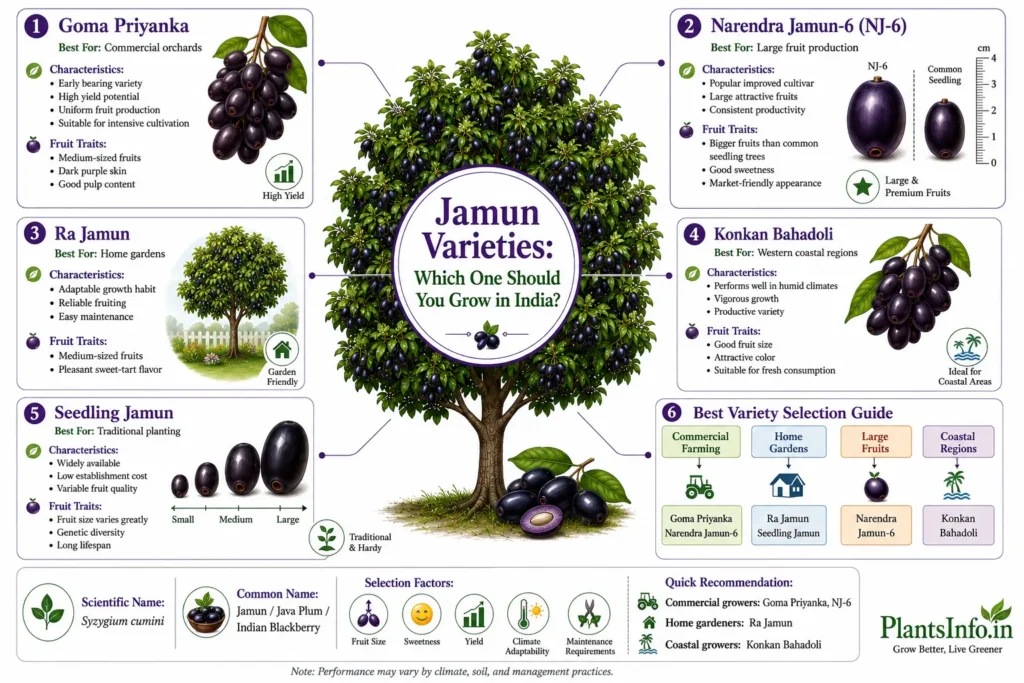
Jamun Varieties: Which One Should You Grow in India?
Quick Answer: Most Indian home gardeners grow whatever grafted jamun sapling their local nursery stocks — which is usually an unnamed selection or a locally popular type. Choosing a named, improved variety suited to your space and climate can mean earlier fruiting, larger fruit, and significantly better yield.
See also: Jamun plant profile, how to grow it, common problems, its flowering season, and its benefits.
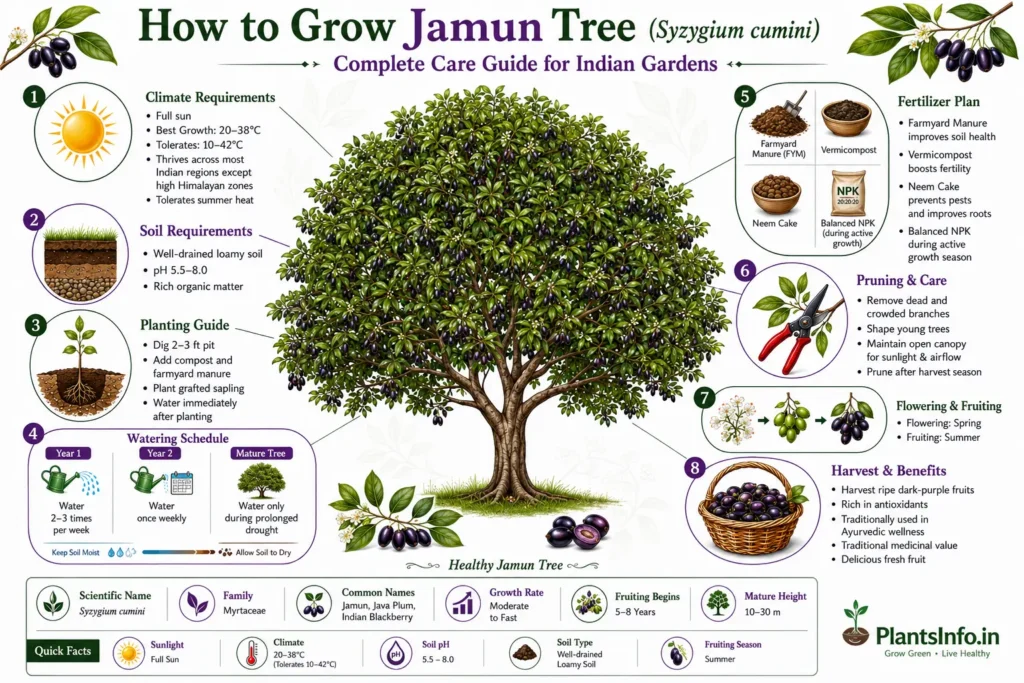
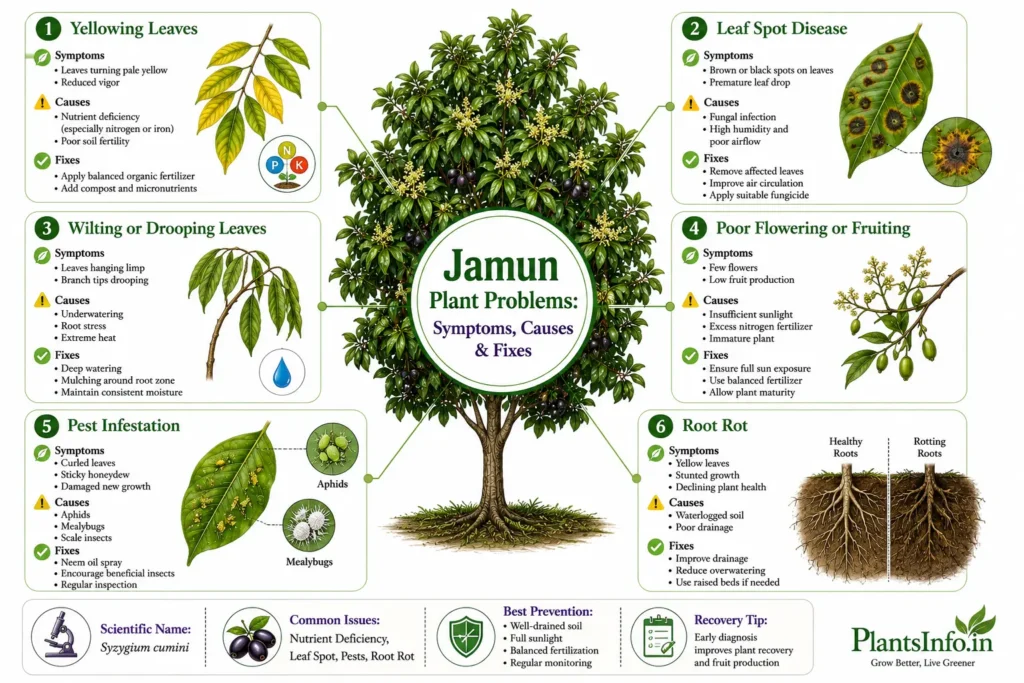
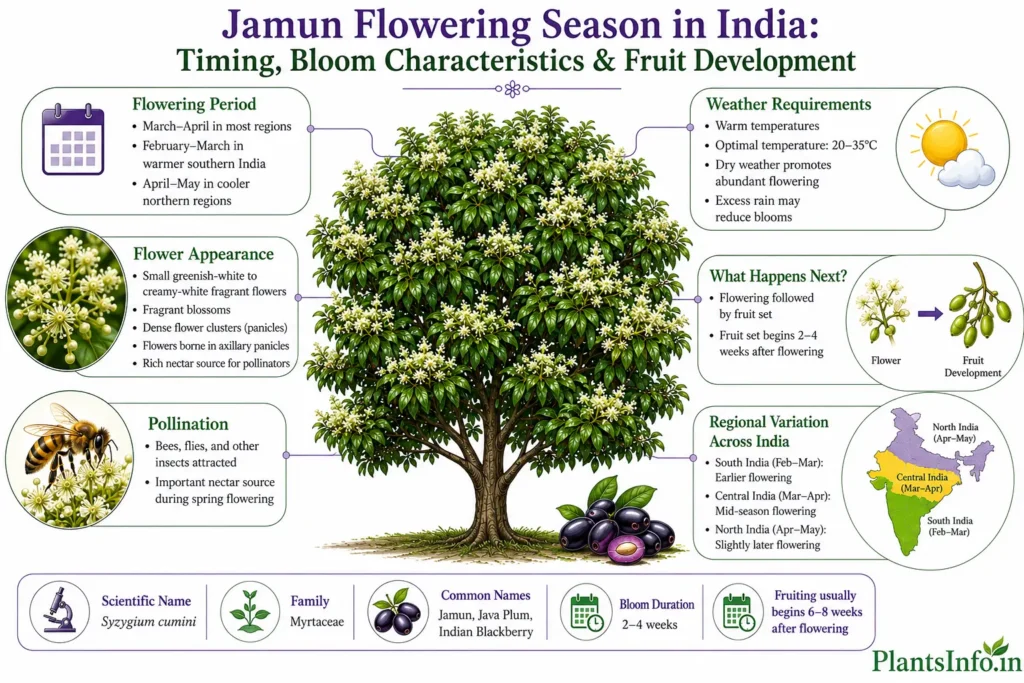
Walk into most Indian nurseries and ask for a jamun sapling — you will get one. Ask which variety it is, and the answer is frequently vague. That gap between what is available and what is optimal is exactly what this guide addresses. The most important factor separating jamun varieties for a home gardener is tree size — because a variety that matures at 15 metres is a fundamentally different commitment from one that can be managed at 4–5 metres with pruning.
Recommended Products
Disclosure: As an Amazon Associate, PlantsInfo may earn from qualifying purchases.
🌱 Growing Essentials
The following products can help with container gardening, potting, root development, soil management, and healthy plant growth.
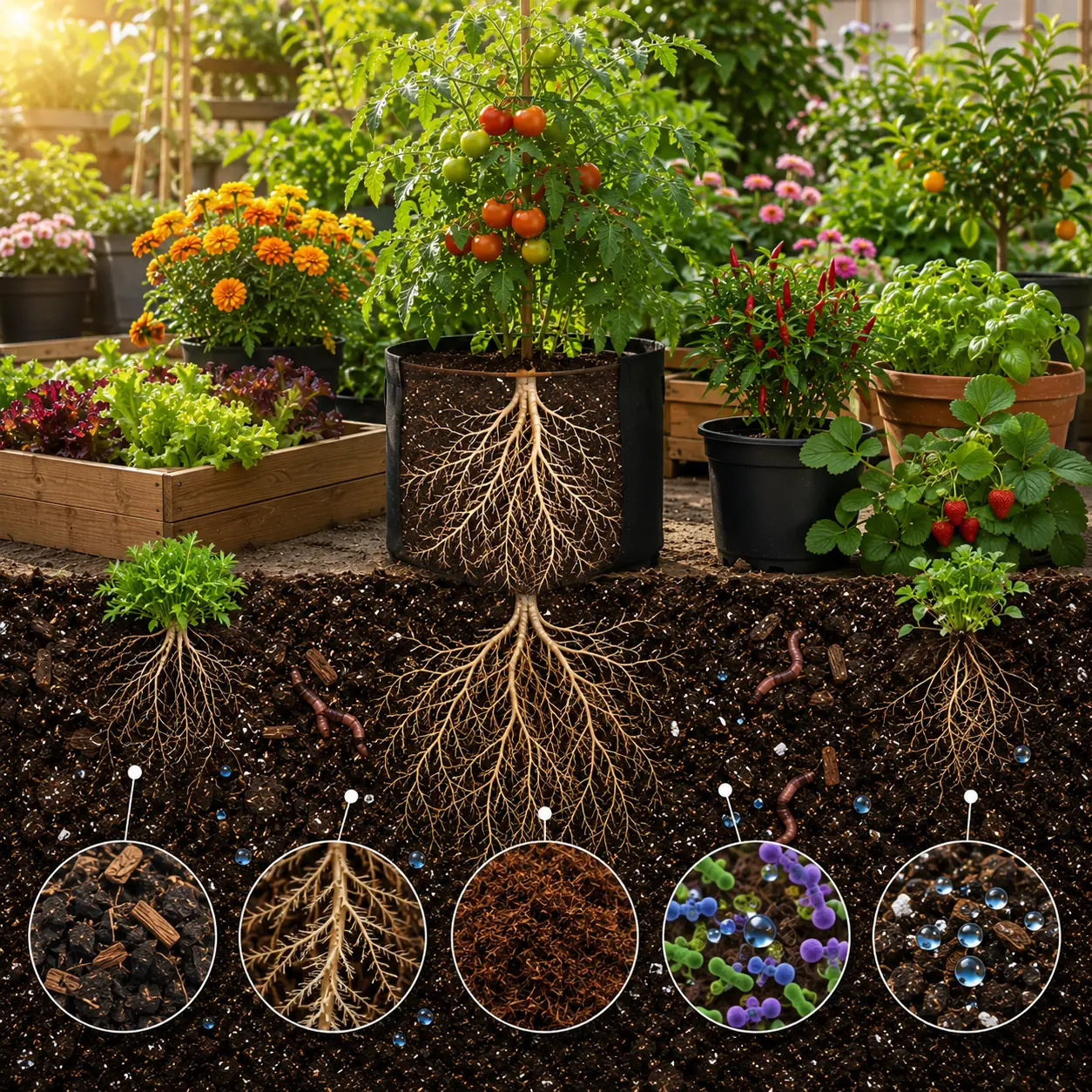
Organic Potting Soil Mix
Provides nutrients, structure, and healthy growing conditions for container plants.
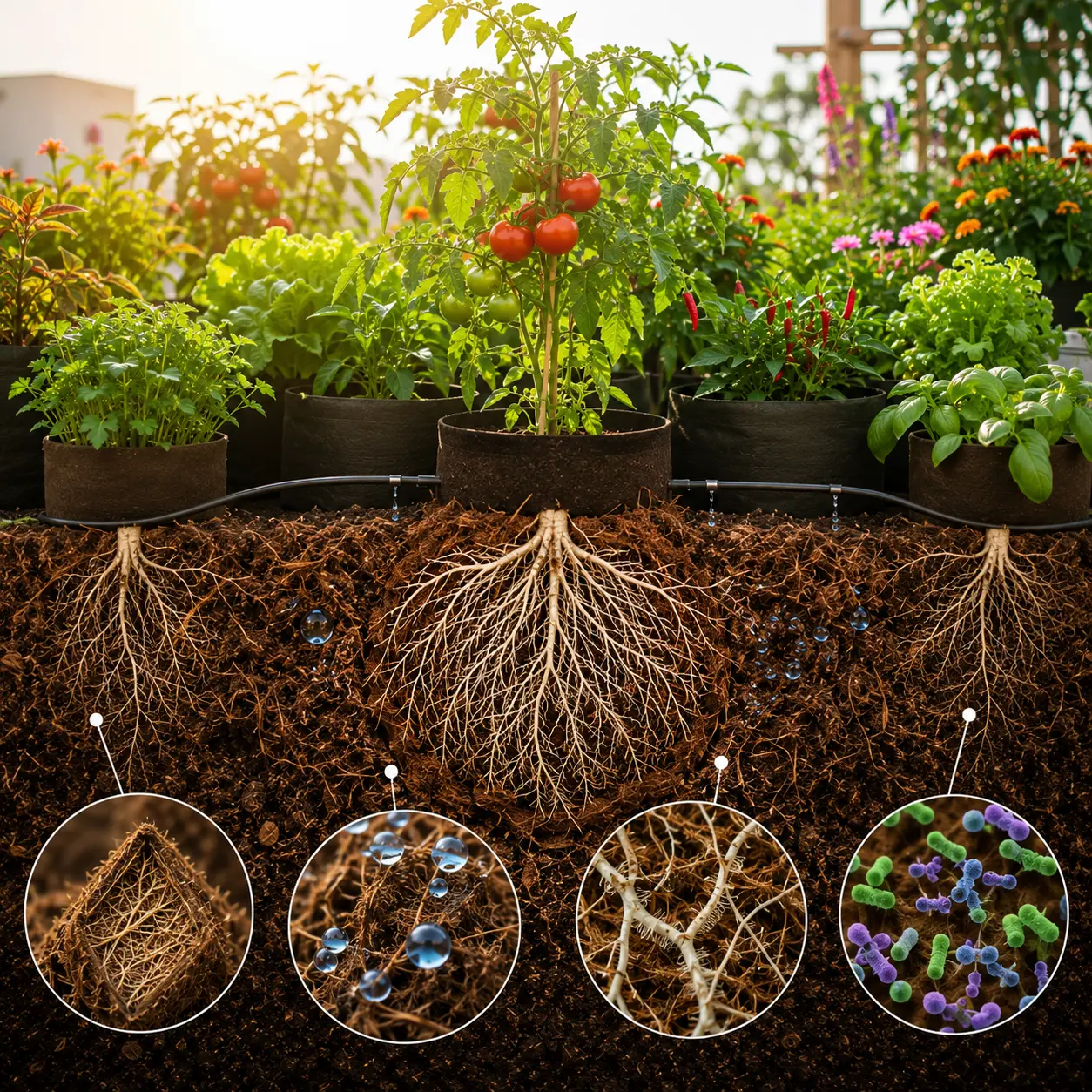
Coco Peat Growing Medium
Enhances moisture retention while maintaining excellent root-zone aeration.

Grow Bags for Plants
Improve drainage, root aeration, and vegetable production in limited spaces.

Plastic Pots for Plants
Ideal containers for seedlings, ornamentals, herbs, and balcony gardens.
Quick Variety Selector
| Variety | Type | Plant Size | Best For | Commonly Associated Regions |
|---|---|---|---|---|
| Raja Jamun | Named nursery selection | Large | Large gardens, fruit production | Parts of North and Central India |
| CISH Jamun-1 | Improved selection | Medium | Home gardens, reliable fruiting | North India, especially Uttar Pradesh |
| Narendra Jamun-6 | Improved selection | Medium | Home gardens, processing, consistent quality | Uttar Pradesh, Bihar, Jharkhand |
| Konkan Bahadoli | Regional selection | Large | Coastal gardens, traditional use | Konkan region of Maharashtra |
| Narendra Jamun-7 | Improved selection | Medium | Earlier ripening, home use | North and Central India |
| Local / Desi (seedling type) | Open-pollinated landrace | Large | Rootstock, rural planting, low-cost propagation | Widely grown throughout India |
Varieties in Detail
Raja Jamun
Raja Jamun is among the best-known named jamun selections marketed in parts of North India. Trees sold under this name are generally valued for producing relatively large, fleshy fruit with a balance of sweetness and the characteristic astringency associated with jamun. The trees are vigorous and eventually develop into large specimens, making them better suited to open-ground planting than long-term container culture.
The principal attraction of Raja Jamun is fruit size and market appeal. However, gardeners should be aware that “Raja Jamun” is often used as a nursery trade name, and the characteristics of trees sold under this label may vary between sources. Purchasing grafted plants from reputable nurseries improves the likelihood of obtaining true-to-type material.
CISH Jamun-1
Developed by the Central Institute for Subtropical Horticulture (CISH), Lucknow, CISH Jamun-1 is one of the better-documented improved jamun selections available in India. It was selected for dependable productivity, manageable tree size, and relatively early fruiting from grafted plants. The fruit is generally medium-sized with good eating quality and a balanced sugar-acid profile.
For home gardeners, the primary advantage of CISH Jamun-1 is its documented performance and relatively predictable growth characteristics. Availability can be limited outside government-supported distribution channels, and buyers should verify plant sources carefully because unnamed seedlings are occasionally sold under improved-variety labels.
Narendra Jamun-6
Narendra Jamun-6 was developed by Narendra Deva University of Agriculture and Technology (NDUAT), Uttar Pradesh. It is recognised for producing medium to large fruit with a favourable pulp-to-seed ratio, making it suitable for both fresh consumption and processing.
Compared with many traditional seedling-grown trees, Narendra Jamun-6 generally offers more consistent fruit quality and a somewhat more manageable growth habit. It has demonstrated good performance in parts of eastern Uttar Pradesh and neighbouring regions, although availability remains limited outside specialised nurseries and institutional distribution networks.
Konkan Bahadoli
Konkan Bahadoli is a regional jamun selection associated with the Konkan coastal belt of Maharashtra. Unlike formally released cultivars, it is primarily maintained through local propagation and traditional cultivation practices. Trees grown under this name are often valued for their dark-coloured fruit and richly pigmented juice, which is widely used in regional food products, including jambhul vinegar.
Performance data for Konkan Bahadoli outside its native coastal environment are limited. Growers in drier inland areas may observe differences in fruit size, flavour, and productivity compared with trees grown under humid coastal conditions.
Narendra Jamun-7
Narendra Jamun-7 is another improved selection developed by NDUAT. It is often noted for ripening somewhat earlier than Narendra Jamun-6 under comparable growing conditions, which may be advantageous in regions where growers prefer an earlier harvest window.
Fruit size, quality, and tree growth characteristics are broadly similar to those of Narendra Jamun-6. As with other institutionally released jamun selections, availability may be limited outside the regions where the variety was originally developed and promoted.
Head-to-Head Comparison
Raja Jamun vs. CISH Jamun-1
Raja Jamun is often valued for its relatively large fruit size and strong visual appeal, making it a popular choice among growers seeking impressive fruit for fresh consumption. However, because the name is frequently used in the nursery trade and may refer to different selections in different regions, fruit size and tree characteristics can vary between sources.
CISH Jamun-1 offers a different advantage: it is a documented improved selection with published performance data and generally more predictable growth characteristics. Its moderate growth habit and dependable fruiting make it particularly attractive for home gardens where ease of management is an important consideration.
For gardeners with limited space who prioritise reliability and manageable tree size, CISH Jamun-1 is often the more practical choice. For those with ample space who are specifically seeking large fruit, a well-sourced Raja Jamun may be appealing. Neither selection is particularly well-suited to long-term container fruit production, as both eventually develop into substantial trees.
Improved Varieties vs. Local Desi Selections
Improved jamun selections such as CISH Jamun-1 and Narendra Jamun-6 are typically propagated vegetatively and selected for desirable traits, including more consistent fruit quality, earlier bearing from grafted plants, and improved pulp-to-seed ratio. These characteristics can make them attractive choices for gardeners seeking predictable performance.
Local desi types, by contrast, are often seedling-grown and may display greater variation in fruit size, flavour, productivity, and growth habit. While this variability can be a disadvantage for commercial production, locally adapted seedling trees may perform well under regional growing conditions and are often readily available at low cost.
For gardeners seeking uniformity and known characteristics, improved varieties generally offer advantages. Local seedling types remain useful for rootstock production, large rural plantings, conservation plantings, and situations where varietal uniformity is less important.
How to Choose for Your Space
Container or Terrace Garden
Jamun is naturally a large, long-lived tree and is generally not considered ideal for long-term container fruit production. However, grafted plants can sometimes be maintained in large containers with regular pruning and root management. If container growing is the only option, select the most compact grafted plant available, use the largest practical container, and expect lower yields than ground-planted trees.
Small Ground Plot
For smaller gardens, improved selections such as CISH Jamun-1 and Narendra Jamun-6 are often preferred because of their relatively manageable growth habit and predictable performance. Regular post-harvest pruning helps maintain a practical canopy size, although all jamun trees eventually require adequate growing space.
Larger Garden or Backyard
Where space is not a limitation, larger-growing selections such as Raja Jamun or regional types like Konkan Bahadoli can be excellent choices. Mature jamun trees provide shade, wildlife habitat, and substantial fruit production for many decades.
Commercial or Production-Oriented Planting
For commercial cultivation, variety selection should be based on local performance data, fruit quality requirements, market preferences, and the availability of genuine planting material. Improved selections with documented performance are often preferred where consistency and predictability are important, while locally adapted selections may offer advantages under specific regional conditions.
Regional Suitability
North India (Uttar Pradesh, Bihar, Madhya Pradesh, Rajasthan)
Improved jamun selections such as CISH Jamun-1, Narendra Jamun-6, and Narendra Jamun-7 were developed and evaluated primarily in northern India and are generally considered well-suited to the climatic conditions of the region. Named nursery selections such as Raja Jamun are also widely grown. Northern India, particularly the Gangetic plains, has been an important centre for jamun selection, evaluation, and cultivation.
South India (Tamil Nadu, Karnataka, Kerala, Andhra Pradesh, Telangana)
Both local seedling selections and improved varieties are grown in southern India. However, published performance data for many northern-developed cultivars under southern growing conditions remain limited. Gardeners interested in improved varieties should seek locally tested planting material where possible. Regional nursery selections often perform well because they have been propagated under local climatic conditions for many years.
Coastal Regions (Konkan, Malabar Coast, Odisha Coast)
Jamun generally performs well in humid coastal environments, provided drainage is adequate. Regional selections adapted to local conditions are often preferred, while varieties such as Konkan Bahadoli are associated with parts of the Maharashtra coast. High humidity can increase the risk of fungal diseases such as anthracnose, making regular monitoring, good sanitation, and timely disease management particularly important.
Hill Stations and Higher Elevations
Jamun can be grown successfully across a range of elevations, although growth, flowering, and fruiting performance may vary with local climate. In cooler hill regions, locally adapted trees are often a reliable choice because they have demonstrated performance under regional conditions. Gardeners considering improved cultivars at higher elevations may benefit from seeking planting material that has been tested locally or sourced from nearby growing areas.
Desi vs. Improved Varieties
There are currently no widely available commercial F1 hybrid jamun varieties in Indian nursery trade channels. Most named jamun cultivars and selections, including CISH and Narendra releases, are improved selections maintained through vegetative propagation rather than true F1 hybrids.
As with most fruit trees, seed-grown offspring do not reliably reproduce the characteristics of the parent tree. Fruit quality, size, productivity, and growth habit may vary considerably among seedlings. For this reason, named varieties are typically propagated by grafting or other vegetative methods to preserve their desirable traits.
The practical implication for gardeners is straightforward: if you wish to maintain the characteristics of a named variety such as CISH Jamun-1 or Narendra Jamun-6, propagate it through grafting rather than seed. Seed propagation remains useful for producing rootstocks and for situations where genetic variation is acceptable.
Watch Out for Mislabelling
Varietal misidentification can occur in the nursery trade, particularly for fruit trees that require many years to reveal their characteristics. In the case of jamun, buyers may occasionally encounter seedling-grown plants sold under the names of improved varieties without supporting documentation or verified propagation records.
Because fruit size, flavour, productivity, and growth habit cannot be confirmed until a tree reaches bearing age, purchasing planting material from reputable sources is important. Named varieties should ideally be propagated vegetatively through grafting or other recognised clonal methods to preserve their characteristics.
One useful indicator is the presence of a graft union. A grafted sapling typically shows a visible union or change in stem structure above the rootstock, often several centimetres above the soil line. While the presence of a graft union suggests vegetative propagation, it does not by itself guarantee varietal authenticity. Buyers should consider it one part of the verification process rather than definitive proof of identity.
When available, obtain planting material from recognised horticultural institutions, agricultural universities, government nurseries, or reputable specialist fruit-tree nurseries that maintain propagation records. Ask whether the plant is grafted, request information about its source, and retain any labels or documentation provided at the time of purchase.
Ultimately, choosing a jamun variety is a long-term decision. A well-selected and properly sourced tree can provide shade, wildlife value, and fruit production for decades, making it worthwhile to invest time in obtaining reliable planting material.