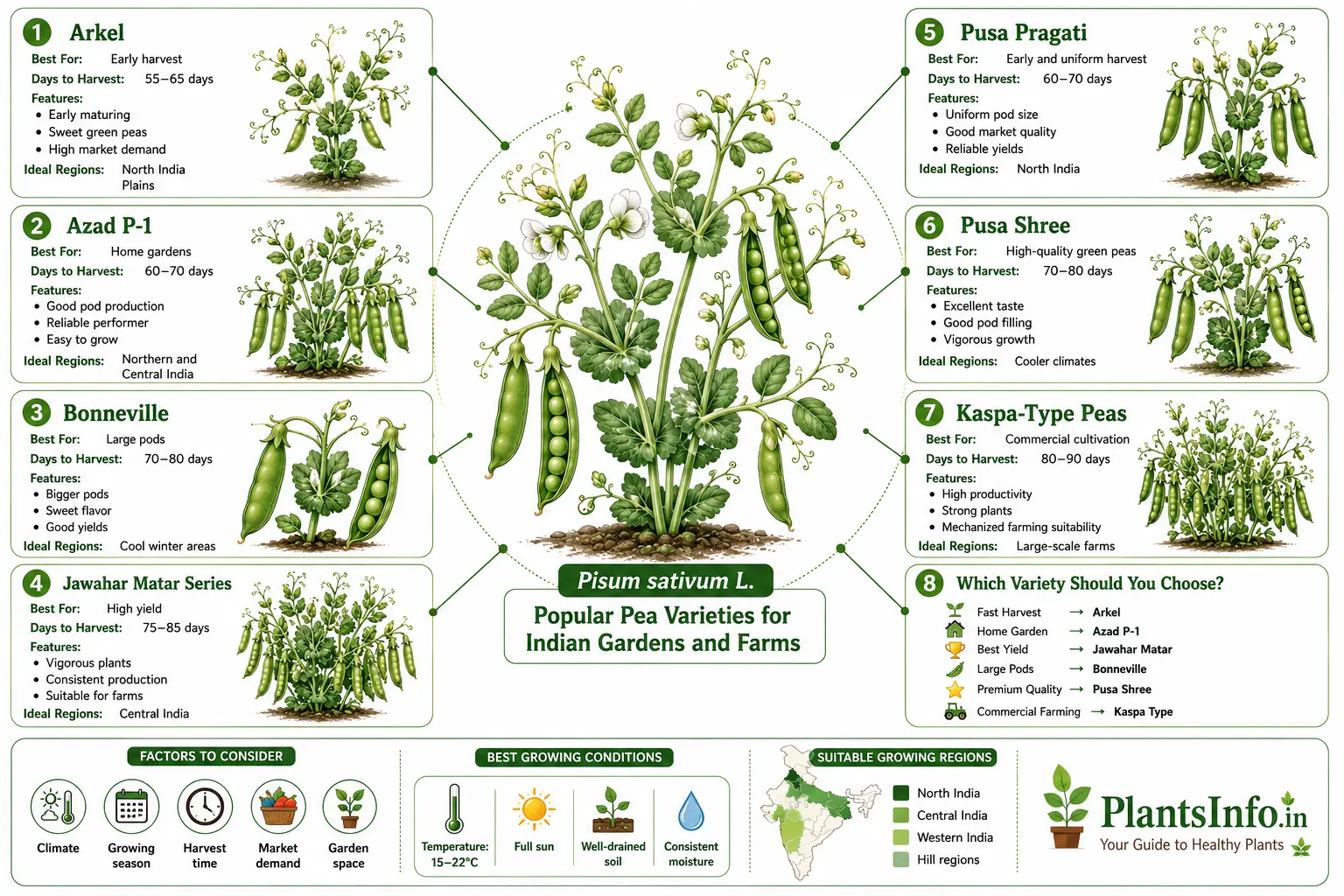
Matar Varieties: Which One Should You Grow in India?
For many Indian home gardeners, the most important factor when choosing a pea variety is not yield or flavour but maturity time. In regions with a relatively short cool season, an early-maturing variety can mean the difference between a successful harvest and a crop affected by rising temperatures before pod production is complete. Yet many gardeners simply purchase whichever seed packet is available without considering how variety selection influences harvest timing, plant size, yield potential, and overall performance.
See also: Pea Plant plant profile, how to grow it, common problems, its flowering season, and its benefits.
This guide compares some of the most commonly available pea varieties in India to help gardeners choose the option best suited to their climate, available space, and growing goals.
Recommended Products
Disclosure: As an Amazon Associate, PlantsInfo may earn from qualifying purchases.
🌱 Growing Essentials
The following products can help with container gardening, potting, root development, soil management, and healthy plant growth.
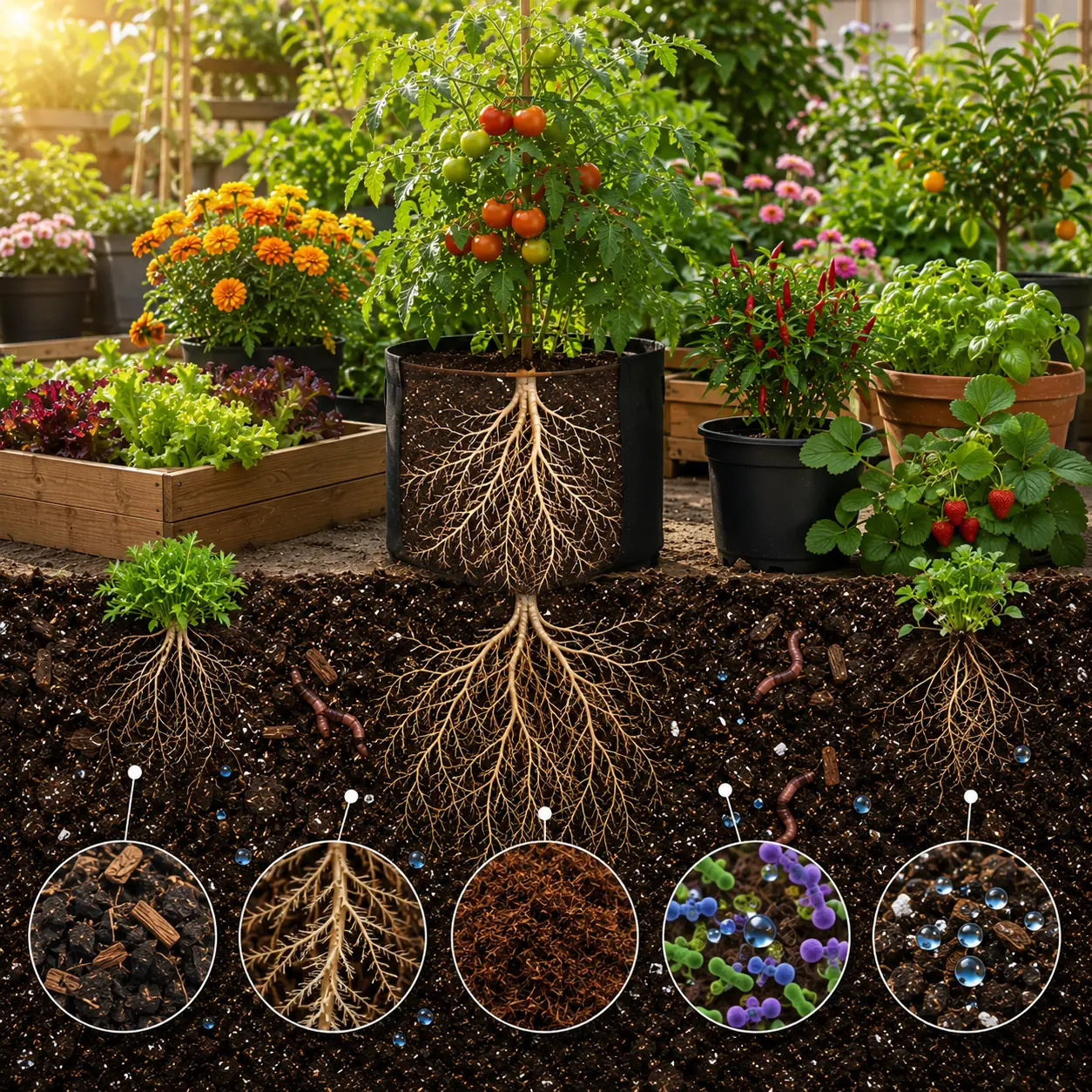
Organic Potting Soil Mix
Provides nutrients, structure, and healthy growing conditions for container plants.
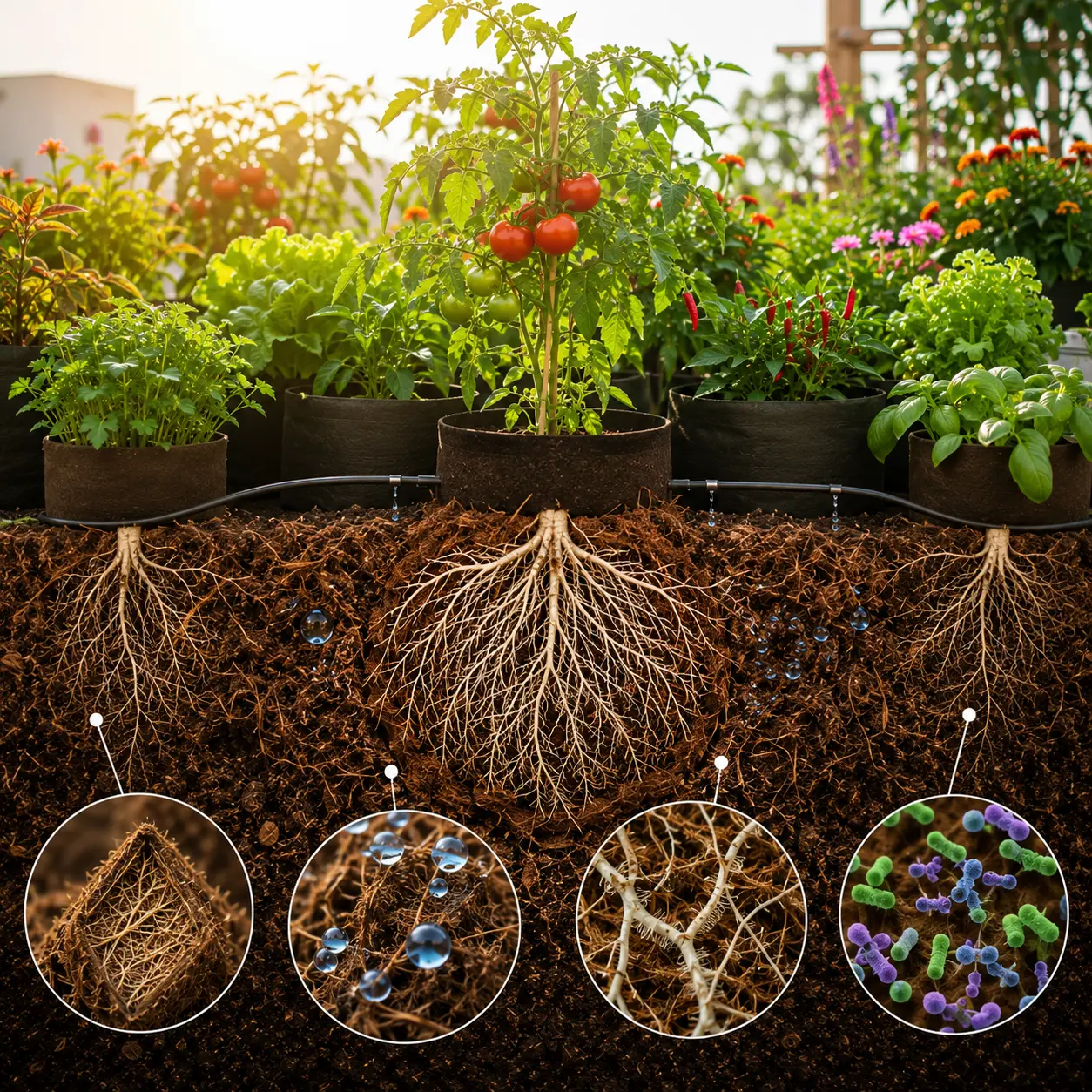
Coco Peat Growing Medium
Enhances moisture retention while maintaining excellent root-zone aeration.

Grow Bags for Plants
Improve drainage, root aeration, and vegetable production in limited spaces.

Plastic Pots for Plants
Ideal containers for seedlings, ornamentals, herbs, and balcony gardens.
Quick Variety Selector
| Variety | Type | Plant Size | Best For | Generally Suited To |
|---|---|---|---|---|
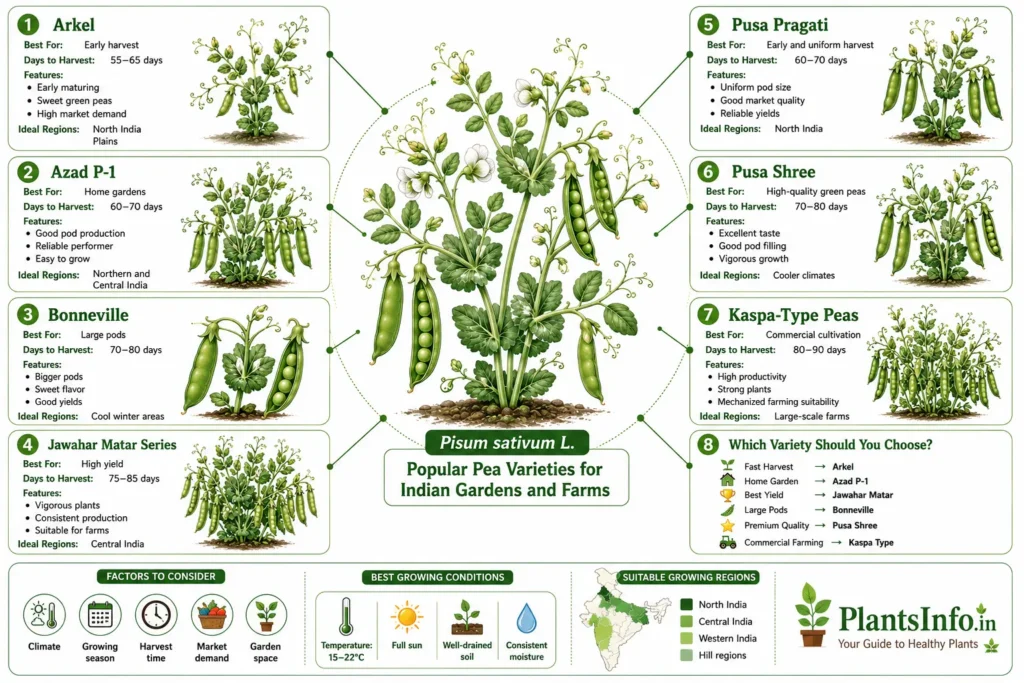
| Arkel | Improved | Compact | Containers, early harvests | Northern, central, and many subtropical regions with shorter winters |
| Bonneville | Improved | Medium | Home gardens, reliable yields | Northern and central Indian plains |
| Pusa Pragati | Improved | Medium | High yields, home and small-scale production | North Indian growing regions |
| Lincoln | Open-pollinated | Medium to large | Flavour-focused growing, seed saving | Hill regions and areas with longer cool seasons |
| Azad Pea-1 | Improved | Compact | Early sowing and short-season production | Uttar Pradesh and similar agro-climatic regions |
| Local or Desi Types | Traditional | Variable | Traditional flavour, seed saving | Locally adapted growing regions |
Varieties in Detail
Arkel
Arkel is a widely cultivated early-maturing pea variety that has long been popular among Indian home gardeners. It is valued for reaching harvest relatively quickly after sowing, making it particularly useful in regions where the cool growing season is limited. Its compact growth habit makes it well-suited to containers, raised beds, and smaller garden spaces, where extensive support structures may not be practical.
The primary advantage of Arkel is its earliness, allowing gardeners to harvest pods before temperatures begin to rise significantly. However, compared with some mid- and late-season varieties, the harvest period is typically shorter, resulting in fewer weeks of pod production.
Bonneville
Bonneville is a mid-season pea variety known for producing well-filled pods and dependable yields under suitable growing conditions. It grows to a moderate height and generally benefits from light staking or support to keep vines upright and improve harvesting access.
Its main strength is a relatively extended harvest period compared with wide early varieties, allowing gardeners to collect pods over a longer portion of the season. Because it requires a slightly longer period of cool weather to reach full productivity, it is generally better suited to regions with a reliable winter growing season than areas with very short cool periods.
Pusa Pragati
Pusa Pragati is an improved variety developed through Indian agricultural research programmes and is grown by both home gardeners and small-scale producers. Plants are typically medium-sized and capable of producing a good pod set when grown under favourable conditions.
One of its key advantages is its yield potential, particularly when provided with adequate fertility, moisture, and cool-season growing conditions. In many situations, it can produce higher yields than some traditional varieties, although performance varies with climate, management practices, and seed quality. It generally performs best in the northern plains and similar agro-climatic regions where it was developed and evaluated.
Lincoln
Lincoln is an older open-pollinated pea variety valued by many gardeners for its eating quality and suitability for seed saving. Plants typically grow taller than compact varieties such as Arkel and benefit from reliable staking or trellising throughout the season.
Because Lincoln is open-pollinated, gardeners can save seed from healthy plants and replant it in future seasons while maintaining varietal characteristics. Its longer maturity period means it is generally best suited to hill regions or areas with extended cool weather, where plants have sufficient time to complete their growth cycle and produce a prolonged harvest.
Head-to-Head Comparison
Arkel vs Bonneville
For many home gardeners, the choice between Arkel and Bonneville comes down to available space and the length of the local cool growing season. Arkel is generally more compact and reaches maturity earlier, making it well-suited to containers, balconies, terraces, and regions where winter conditions are relatively short.
Bonneville typically produces larger plants and requires a slightly longer growing period before harvest. In return, it often provides a longer harvesting window under suitable conditions and may produce larger pods. Where the climate allows the crop to mature fully, Bonneville can provide strong seasonal yields, while Arkel remains a practical option for gardeners seeking an earlier harvest.
Both varieties are commonly available through Indian seed suppliers and garden retailers. Gardeners with limited growing space often prefer Arkel because of its compact growth habit, while those with dedicated garden beds and a reliable cool season may find Bonneville better suited to their needs.
Improved Varieties vs Local Desi Types
Improved pea varieties such as Arkel, Bonneville, and Pusa Pragati are typically selected for traits including uniform growth, predictable maturity, and consistent pod production. As a result, they often provide more standardised performance across a range of growing conditions than many traditional local types.
Local or desi varieties, however, remain valuable for their regional adaptation, cultural significance, and suitability for seed saving. Characteristics such as plant size, pod quality, flavour, and maturity period can vary considerably depending on the seed source and local growing history.
Improved varieties are often preferred by gardeners seeking predictable harvest timing and uniform pod production, while local varieties may appeal to those interested in preserving traditional germplasm, maintaining seed-saving practices, or growing plants that have adapted to local conditions over many generations. Neither approach is inherently superior; the best choice depends on the gardener’s objectives, local climate, and growing conditions.
How to Choose for Your Space
For container gardens, balconies, and terraces, compact early-maturing varieties such as Arkel are often the most practical choice. Their relatively modest growth habit makes them easier to manage in grow bags, pots, and raised containers, while their shorter maturity period helps ensure a harvest before temperatures rise significantly.
For small garden plots, medium-sized varieties such as Bonneville can offer a balance between plant size, productivity, and harvest duration. With appropriate support and spacing, they can make efficient use of limited growing space while providing a sustained harvest.
Gardeners with larger beds or backyard vegetable gardens may choose to grow a combination of varieties. Taller or longer-season cultivars such as Lincoln, Pusa Pragati, and Bonneville can be accommodated more easily where space is available. Combining early- and mid-season varieties can also help spread harvesting over a longer period.
Regional Suitability
Pea performance depends on local climate, sowing date, elevation, and seasonal weather conditions. However, some general patterns can help guide variety selection.
In North Indian states such as Uttar Pradesh, Punjab, Haryana, and neighbouring regions, improved varieties including Arkel, Bonneville, Pusa Pragati, and Azad Pea-1 are commonly grown during the winter season and generally perform well when planted within the recommended sowing window.
In hill regions, including parts of Himachal Pradesh and Uttarakhand, the longer duration of cool weather can favour varieties with a longer maturity period, including Lincoln and other medium- to long-season cultivars.
In central India and many subtropical parts of southern India, where the cool growing season may be shorter, early-maturing varieties such as Arkel and Azad Pea-1 are often preferred. Their shorter growth cycle can help ensure harvests are completed before temperatures become unfavourable for pod production.
Local adaptation can vary considerably. Gardeners are often encouraged to trial more than one variety over successive seasons to determine which performs best under their specific growing conditions.
Conclusion
Choosing the right pea variety is often just as important as proper planting and care. While factors such as flavour, yield, and plant size all influence variety selection, maturity time is frequently the most important consideration in Indian growing conditions. Matching a variety’s growth cycle to the length of your local cool season can significantly improve harvest success.
Early varieties such as Arkel and Azad Pea-1 are often favoured where winters are brief, while Bonneville, Pusa Pragati, and Lincoln may be better suited to regions with longer periods of cool weather. By selecting a variety that matches your climate, available space, and gardening goals, you can maximise both productivity and harvest quality throughout the pea-growing season.
Conclusion
No single pea variety is the best choice for every Indian garden. The ideal selection depends on your local climate, the length of the cool growing season, available space, and whether your priority is early harvests, extended production, flavour, or seed saving.
For many home gardeners, early-maturing varieties such as Arkel and Azad Pea-1 are practical choices where winters are short or growing space is limited. Gardeners with longer cool seasons may benefit from varieties such as Bonneville, Pusa Pragati, or Lincoln, which can provide a longer harvest period or stronger yield potential under suitable conditions.
Ultimately, the most important factor is matching the variety’s maturity period to your local growing conditions. Experimenting with two or more varieties over successive seasons can help identify which performs most reliably in your garden, leading to healthier plants and more consistent harvests year after year.