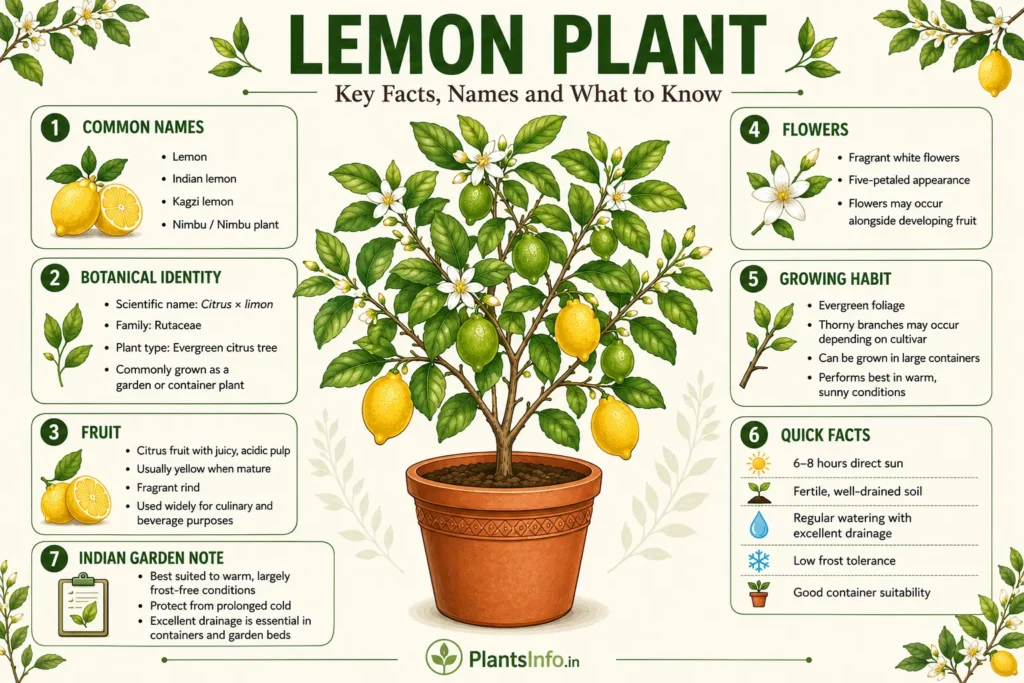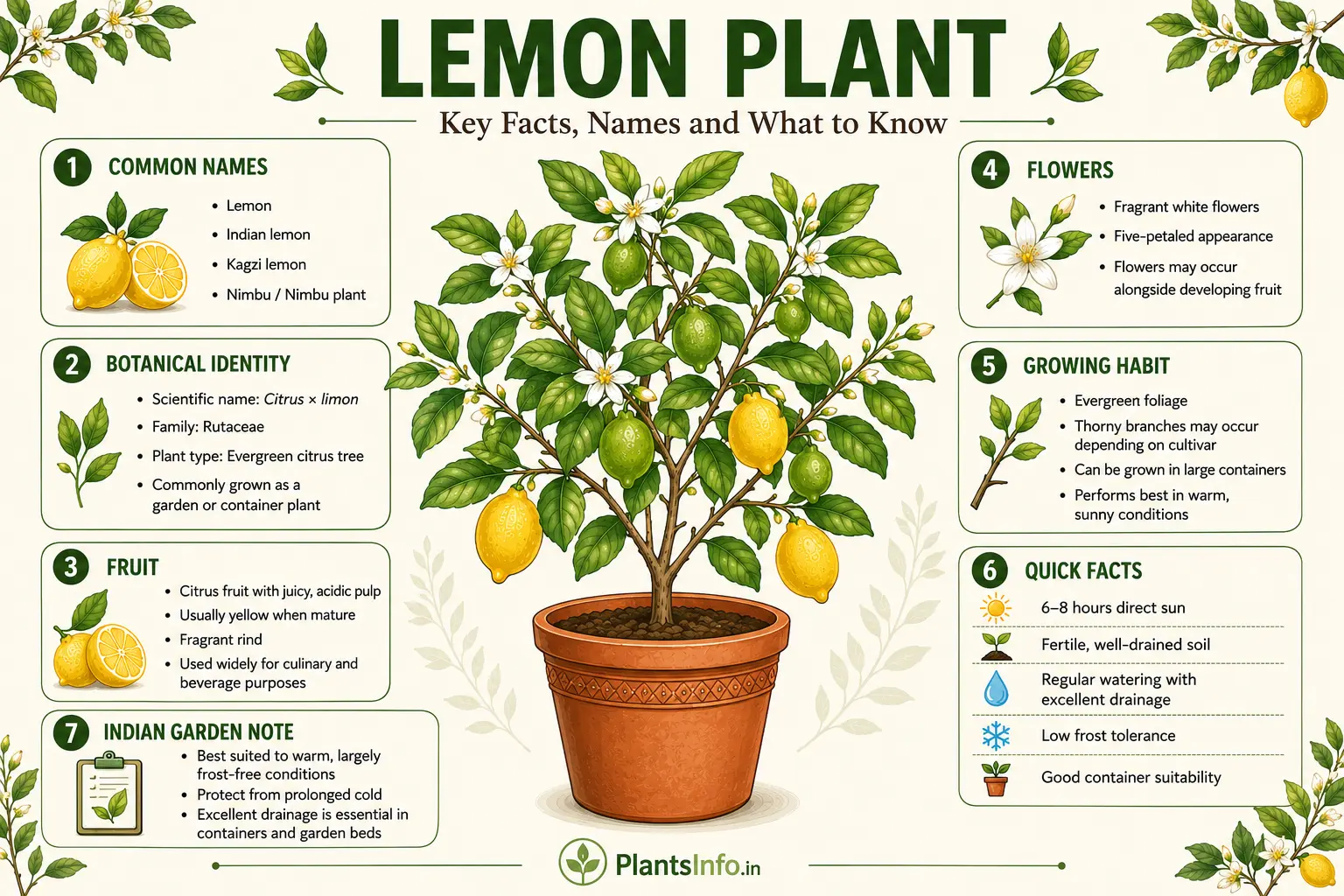
Lemon Plant: Key Facts, Names and What to Know
A lemon tree is easy to recognise by its fragrant leaves, white flowers, and yellow pointed fruit. In India, however, “nimbu” and related regional names can refer to different citrus types, so botanical identity matters.
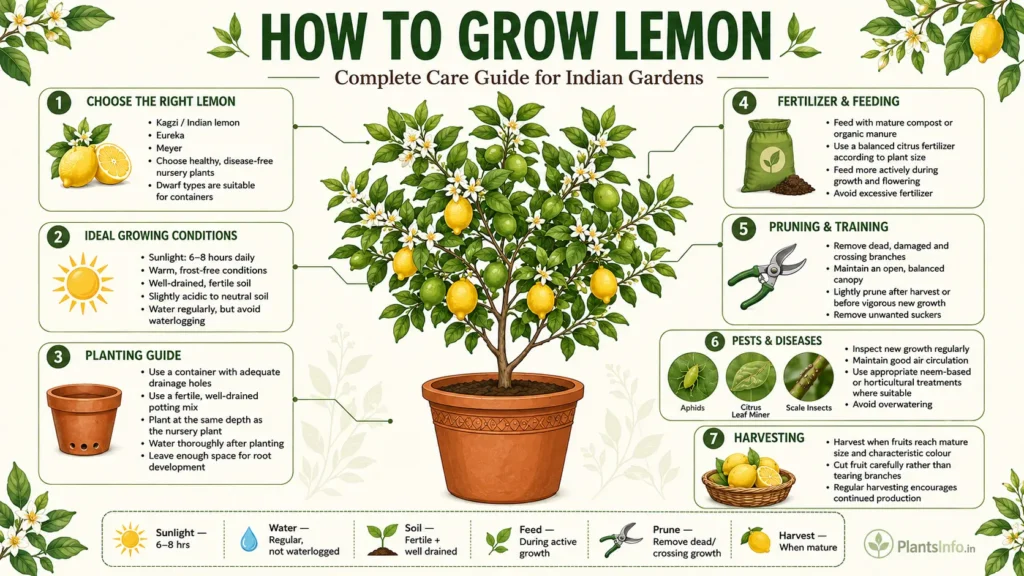
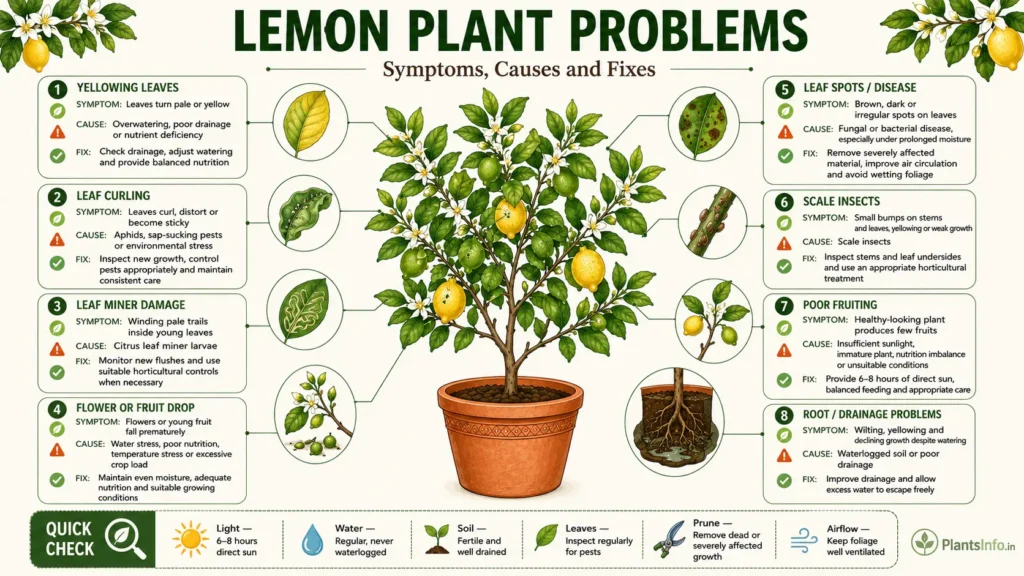
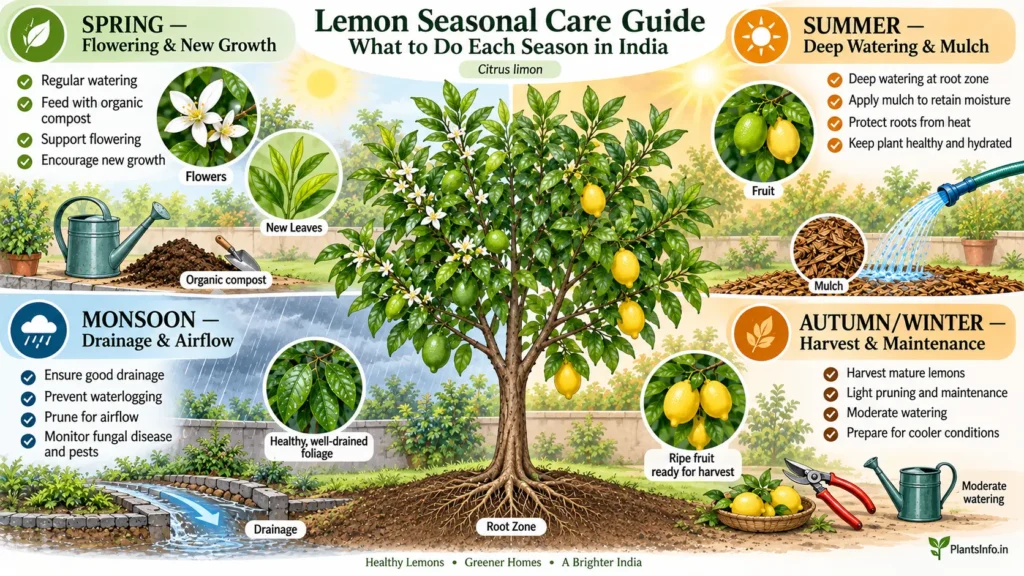
See also: Lemon (Citrus limon) Plant plant profile, how to grow it, common problems, seasonal care, and its flowering season.
Quick Facts
| Feature | Typical characteristic |
|---|---|
| Growth form | Small evergreen tree or thorny shrub |
| Leaves | Green, aromatic, oval to elongated, finely toothed |
| Flowers | White, fragrant, sometimes purplish outside |
| Fruit | Yellow when ripe, oval to elongated, juicy and acidic |
| Distinguishing feature | Yellow pointed fruit with a small nipple-like tip |
Names in Different Languages

| Language | Name |
| English | Lemon |
| Hindi | Nimbu, Bara nimbu, Pahari nimbu |
| Bengali | Lebu, Pati-nebu, Bara-nebu |
| Tamil | Elumichai, Malai elumichai |
| Telugu | Nimma, Pedda nimma |
| Marathi | Limbu, Nimbu |
| Kannada | Nimbe, Nimbe hannu |
| Malayalam | Cherunaranga, Cherunaregam |
| Gujarati | Limbu |
| Punjabi | Nimbu |
| Scientific name | Citrus × limon; Citrus limon is also widely used in Indian horticultural references |
| Family | Rutaceae |
“Nimbu” is the most widely recognisable Hindi and North Indian name, while regional names vary considerably across India.
Recommended Products
Disclosure: As an Amazon Associate, PlantsInfo may earn from qualifying purchases.
🌱 Growing Essentials
The following products can help with container gardening, potting, root development, soil management, and healthy plant growth.
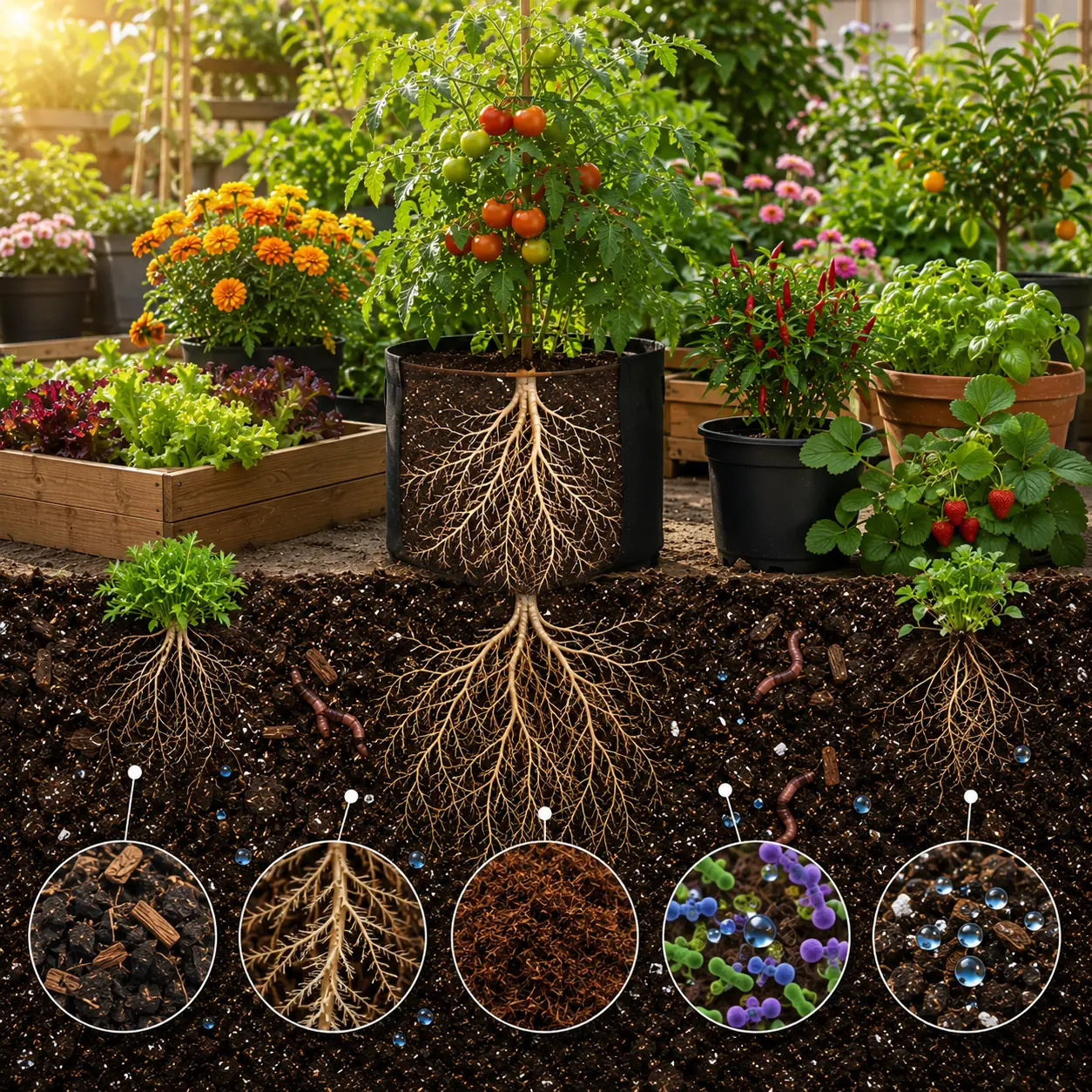
Organic Potting Soil Mix
Provides nutrients, structure, and healthy growing conditions for container plants.
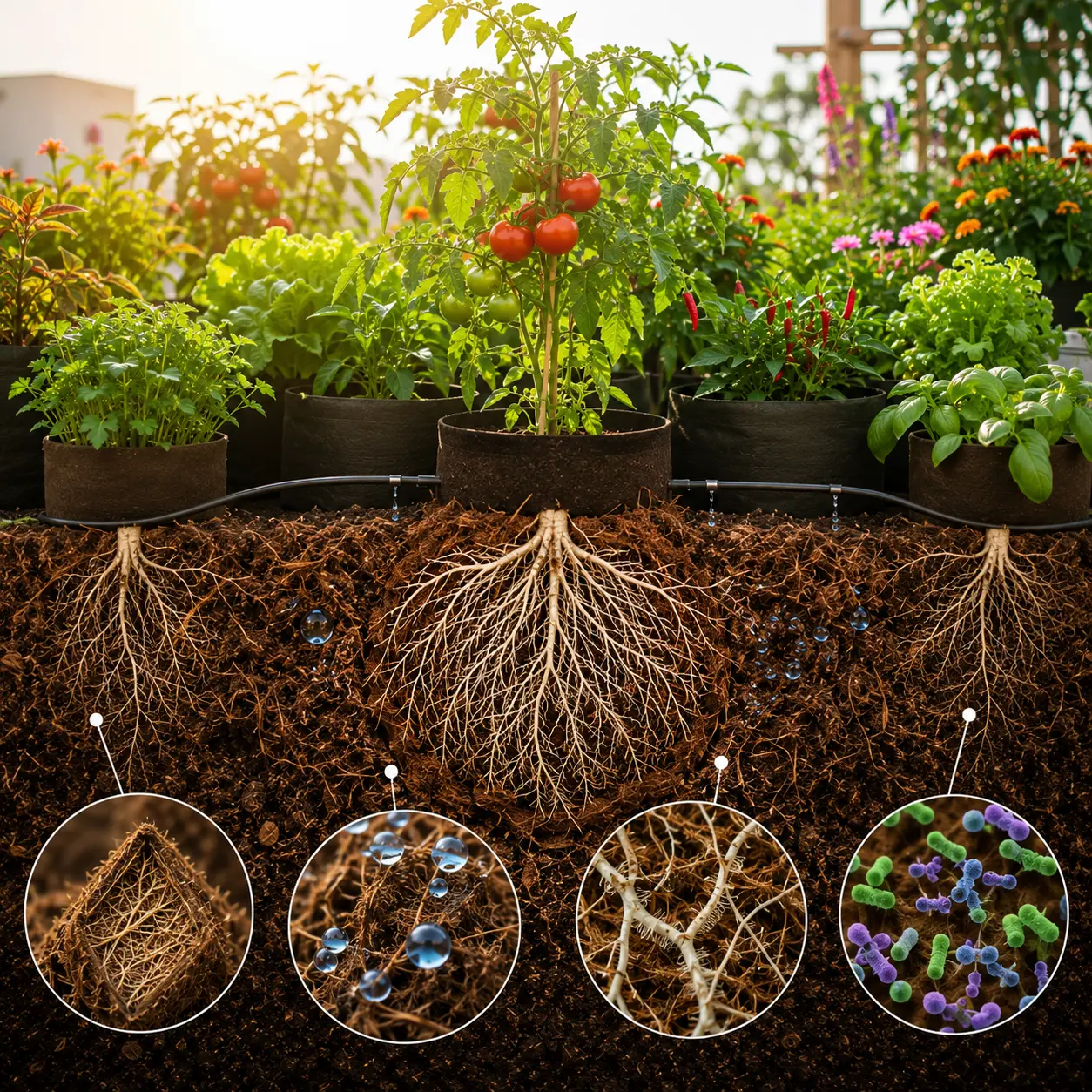
Coco Peat Growing Medium
Enhances moisture retention while maintaining excellent root-zone aeration.

Grow Bags for Plants
Improve drainage, root aeration, and vegetable production in limited spaces.

Plastic Pots for Plants
Ideal containers for seedlings, ornamentals, herbs, and balcony gardens.
What Does It Look Like?
Lemon is generally a small evergreen tree or thorny shrub, commonly around 2.5–3 m in cultivated form, although larger plants can occur under favourable conditions. Branches may carry sharp thorns, especially on vigorous growth.
The leaves are green, aromatic and elongated, with fine teeth along the edges. Young leaves can show a reddish tint before becoming darker green.
The flowers are white and fragrant, sometimes with a purplish tinge on the outside of the petals. They may occur singly or in small groups beside the leaves during the warm growing period.
The fruit begins green and becomes yellow as it ripens. It is usually oval or elongated, with juicy segmented flesh and a small pointed, nipple-like projection at the tip.
Where Does It Grow in India?
Lemon is primarily a cultivated citrus rather than a plant with a straightforward native wild range in India. Indian references record it across tropical and subtropical regions, including Assam, West Bengal, Uttar Pradesh, and parts of peninsular India.
Citrus cultivation occurs from lowland plains into hill regions. National horticultural guidance gives a broad citrus suitability range of about 500–1,000 m above sea level, while lemon itself is also cultivated outside that range where climate is suitable; exact altitude suitability varies with region and cultivar.
Lemon favours warm conditions and is generally associated with frost-free or mildly frost-prone areas rather than severe winter climates. It occurs in commercial and rural production areas as well as household gardens.
In towns and cities, lemon is also commonly maintained as a garden fruit plant where the local climate permits.
What Is It Used For?
Food: The ripe fruit is eaten mainly for its acidic juice and is used fresh in household foods and drinks.
Culinary: Lemon juice and zest are used in drinks, chutneys, pickles, marinades, and prepared dishes.
Food processing: Lemon is used in products such as lemonade, squash, and sherbet.
Traditional use: Lemon appears in classical Indian Ayurvedic literature, while medicinal details belong to the Benefits Guide.
Household gardening: The tree is valued as an edible garden plant as well as for its fragrant flowers and evergreen foliage.
In Mythology and Ancient Texts
Classical Ayurvedic traditions refer to lemon-related citrus under names including Jambira and Nimbuka. References associated with the Charaka Samhita and Sushruta Samhita place these fruits within traditional fruit classifications, although historical citrus names do not always map perfectly onto modern botanical species.
Later Ayurvedic literature also preserves descriptions and uses of Jambira or Nimbuka, showing that citrus fruits under these names had a documented place in the medical-literary tradition.
Is It Easy to Grow?
Lemon is generally a moderately easy fruit tree for Indian gardens where winters are not severe. It can suit both household gardens and larger cultivated spaces, although its mature size and preference for warm conditions make location suitability important.
Special Flags
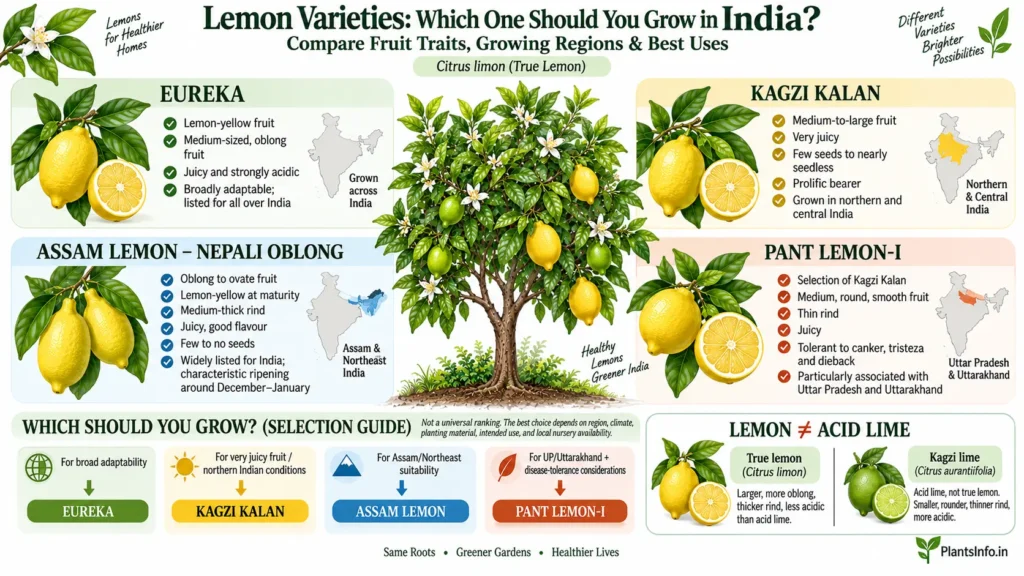
Commonly confused with acid lime.
Lemon is often confused with acid lime (Citrus aurantiifolia) because both may be called “nimbu” or “limbu” in India. A mature lemon typically has a larger, more elongated yellow fruit with a pointed tip, whereas acid lime generally has a smaller, more rounded fruit.
Frequently Asked Questions
Are thorns normal on a lemon tree?
Yes. Lemon branches can carry sharp thorns, particularly on vigorous young growth, so their presence does not by itself indicate a problem.
Conclusion
Knowing the name, shape, and regional identity of lemon makes it much easier to distinguish the true fruit from India’s many citrus plants sold under overlapping common names.