META DESCRIPTION: Diagnose common lemon plant problems in India, including citrus greening, canker, root rot, psylla, leaf miner, and environmental stress.
Quick Answer: Citrus greening and root-zone problems are among the more serious issues affecting lemon in India, while citrus psylla and leaf miner commonly attack tender growth. Many problems are manageable when caught early, but confirmed greening infection is generally incurable and prevention is therefore especially important.
Recommended Products
Disclosure: As an Amazon Associate, PlantsInfo may earn from qualifying purchases.
🌱 Growing Essentials
The following products can help with container gardening, potting, root development, soil management, and healthy plant growth.
Organic Potting Soil Mix
Provides nutrients, structure, and healthy growing conditions for container plants.
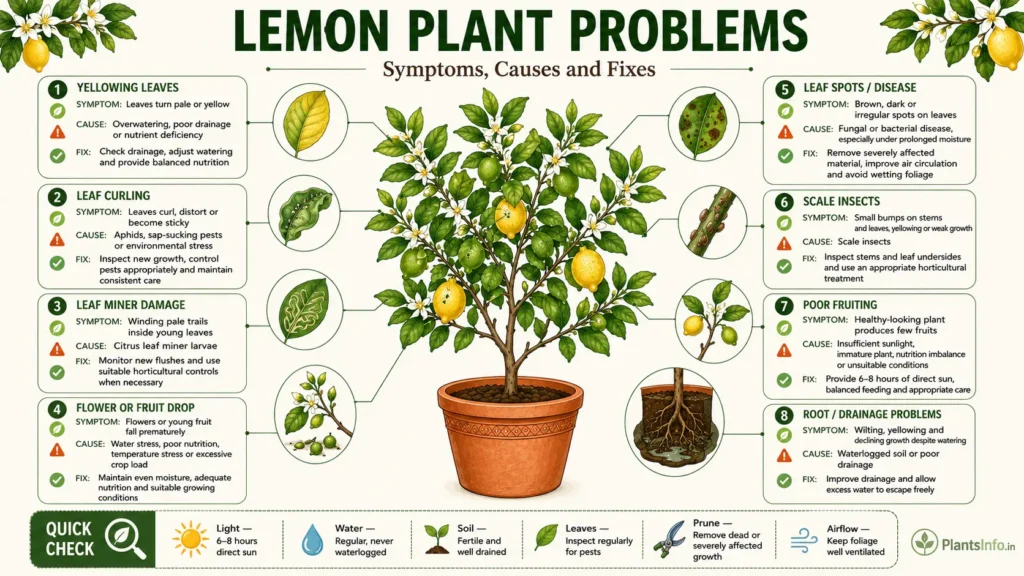
A lemon leaf can reveal a problem long before the whole tree looks unhealthy. The location, age, and pattern of the affected growth often provide the first useful clue. Most lemon problems are preventable through sound planting material, observation, and timely intervention, although some diseases cannot be reversed once established.
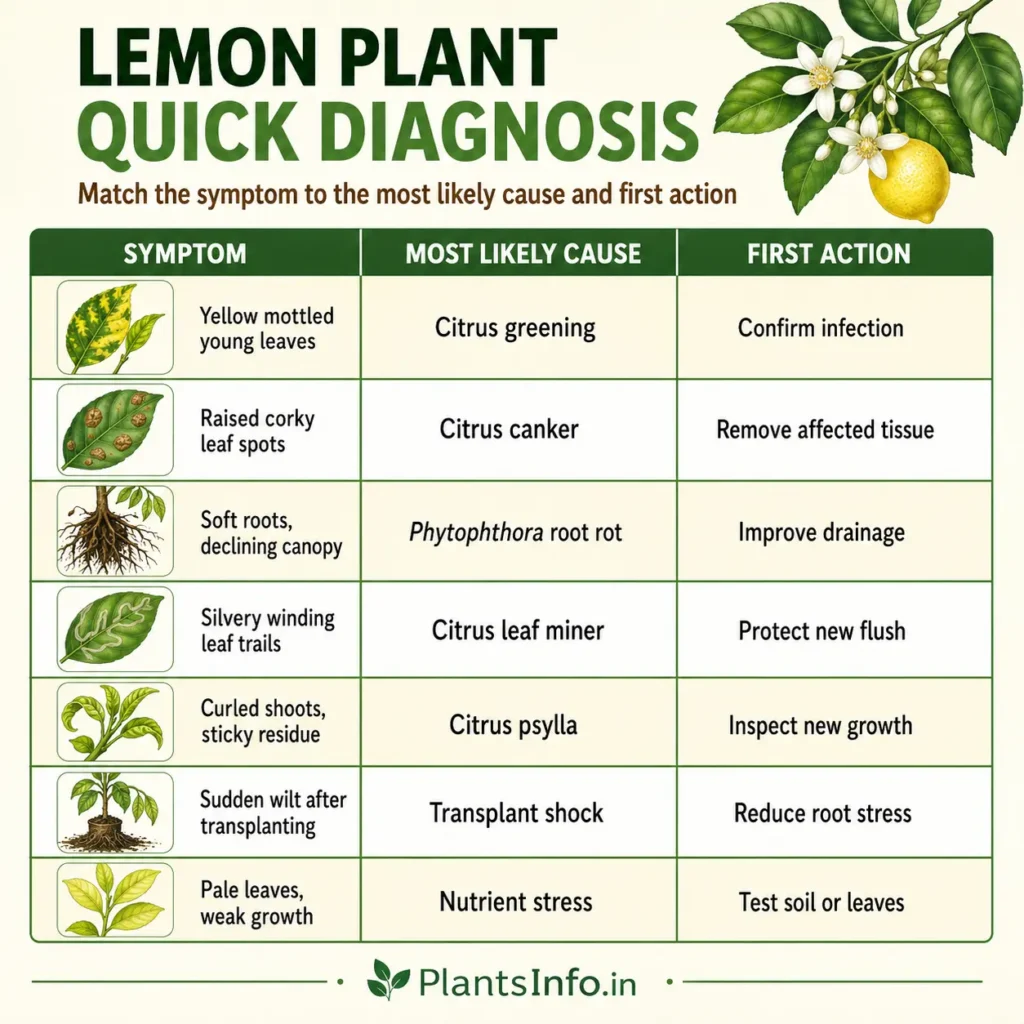
Quick Diagnosis
Symptom
Most Likely Cause
First Action
Yellow mottled young leaves
Citrus greening
Confirm infection
Raised corky leaf spots
Citrus canker
Remove affected tissue
Soft roots, declining canopy
Phytophthora root rot
Improve drainage
Silvery winding leaf trails
Citrus leaf miner
Protect new flush
Curled shoots, sticky residue
Citrus psylla
Inspect new growth
Sudden wilt after transplanting
Transplant shock
Reduce root stress
Pale leaves, weak growth
Nutrient stress
Test soil or leaves
Diseases
Citrus Greening
Citrus greening, or Huanglongbing (HLB), can produce uneven yellowing or mottling, particularly on leaves associated with new growth. Infected trees may also produce small or poorly coloured fruit, distorted fruit, and reduced juice quality. The disease is associated with Candidatus Liberibacter bacteria and is spread by citrus psylla.
There is no dependable curative treatment that restores an infected tree to normal health. Management centres on clean planting material, early identification, vector management and removal of confirmed infected trees.
Prevention: Start with authenticated, disease-free planting material.
Citrus Canker
Citrus canker produces raised, corky lesions on leaves, shoots and fruit, often with a yellow halo around affected areas. It is a bacterial disease that can spread between susceptible tissues under favourable conditions.
Established infections require management rather than a simple one-time cure. Sanitation and suitable copper-based disease-management products are used within citrus protection programmes.
Prevention: Avoid moving infected citrus material between plants.
Phytophthora Root and Foot Rot
Phytophthora root and foot rot can cause declining foliage, weak growth and deterioration of the roots. Damage around the lower trunk or crown may also occur, particularly where soil remains excessively wet.
Early cases may respond when the underlying root-zone conditions are corrected, but severe root and crown destruction can kill the tree.
Prevention: Choose planting sites and containers that do not retain excess water.
Citrus Tristeza
Citrus tristeza is a viral disease associated with decline and poor growth. Depending on the virus strain and rootstock combination, affected trees can experience serious deterioration.
A virus-infected tree cannot be cured with a fungicide or insecticide. Management therefore depends heavily on clean planting material and appropriate rootstock–scion combinations.
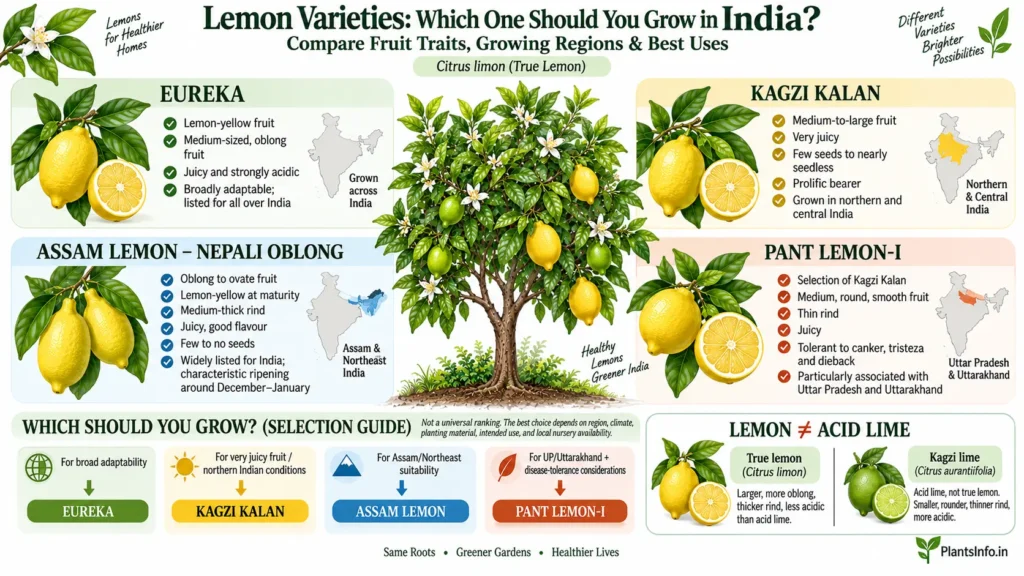
Prevention: Obtain citrus plants from reliable sources using verified planting material.
Pest Problems
Citrus Psylla
Adult psylla are small, mottled insects, while young nymphs cluster around tender shoots and new leaves. Feeding can distort young growth, and the pest is particularly important because it can transmit citrus greening.
Organic option: Encourage natural enemies such as Tamarixia radiata and conserve beneficial insects.
Chemical option: Use only a currently registered citrus insecticide according to its label.
Citrus Leaf Miner
The clearest identification clue is a narrow, silvery or translucent winding trail beneath the leaf surface, usually on tender new leaves. Heavy attack can distort young foliage and reduce the quality of new flush.
Organic option: Neem-based products or Bacillus thuringiensis may be used within suitable citrus IPM programmes.
Chemical option: Use only a currently registered product according to its citrus label.
Citrus Blackfly
Adult and immature blackflies occur mainly on the underside of leaves, where sap feeding can weaken foliage and produce honeydew. The honeydew encourages black sooty mould, so blackfly is the pest most commonly mistaken for a disease.
Organic option: Conserve natural enemies such as chrysopid predators.
Chemical option: Use a locally registered citrus insecticide only when monitoring indicates treatment is warranted.
This information is for general guidance only. Always read product labels before applying any pesticide or fungicide. Follow state agriculture department guidelines for food crops. Keep children and pets away during and after application.
Environmental and Care Mistakes
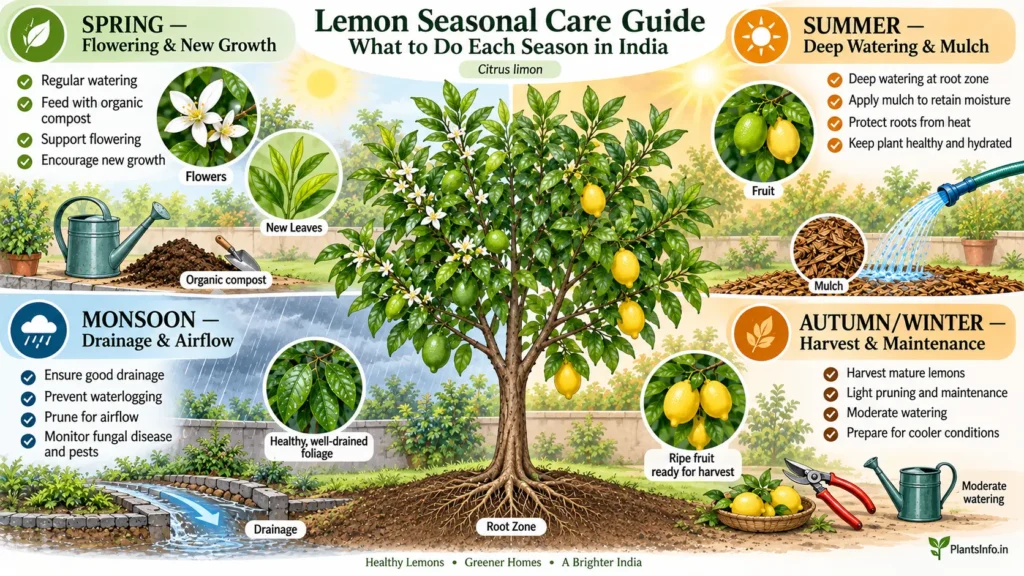
Overwatering and Poor Drainage
Persistent wetness can weaken roots and increase the risk of root and foot rot. Baseline watering and drainage — see the Growing Guide.
Excessive Shade
A lemon kept in inadequate light may develop weak, sparse growth and reduced productivity. Light requirements — see the Growing Guide.
Transplant Shock
Recently moved plants can temporarily wilt, shed leaves, or stop producing vigorous new growth because their root system has been disturbed. Transplant recovery — see the Growing Guide.
Root Competition
Grass, weeds, or aggressive nearby plants can compete with lemon roots for moisture and nutrients, contributing to weak growth. Root-zone management — see the Growing Guide.
For first-time growers, overwatering is one of the most common avoidable mistakes.
Prevention Protocol
Quarantine new citrus plants: Keep newly purchased citrus separate from established citrus for an observation period before placing the plants together.
Disinfect cutting tools between trees: Clean pruning tools before moving from one citrus plant to another to reduce the chance of transferring contaminated plant material.
Inspect the graft or bud union: Before purchase and periodically afterward, look for abnormal swelling, damage, or unusual growth around the joining point.
Avoid exchanging cuttings casually: Do not take budwood, cuttings, or other propagation material from an unknown or declining citrus tree.
Record recurring symptoms: Note when unusual symptoms first appear and whether they affect new or mature growth; this makes later diagnosis more reliable.
When to Give Up on a Plant
A lemon tree with confirmed citrus greening and progressive whole-tree decline is unlikely to recover. Remove severely infected plants rather than maintaining a persistent infection source beside healthy citrus, and address the underlying risk before replanting citrus in the same location.
Where severe root disease caused the original loss, do not immediately replace the plant without first addressing the site conditions that allowed the problem to develop.
Frequently Asked Questions
Is pesticide-treated lemon safe to eat?
Only use products currently registered for edible citrus and follow the label’s harvest interval exactly. Never assume that a pesticide approved for another crop is suitable for lemons.
Should I keep a newly purchased lemon plant away from existing citrus?
Yes. Keeping new plants separate during an initial observation period can help prevent an unnoticed pest or disease problem from spreading to established citrus.
Conclusion
A lemon tree is easiest to protect when unusual changes are treated as clues rather than ignored until decline becomes severe.