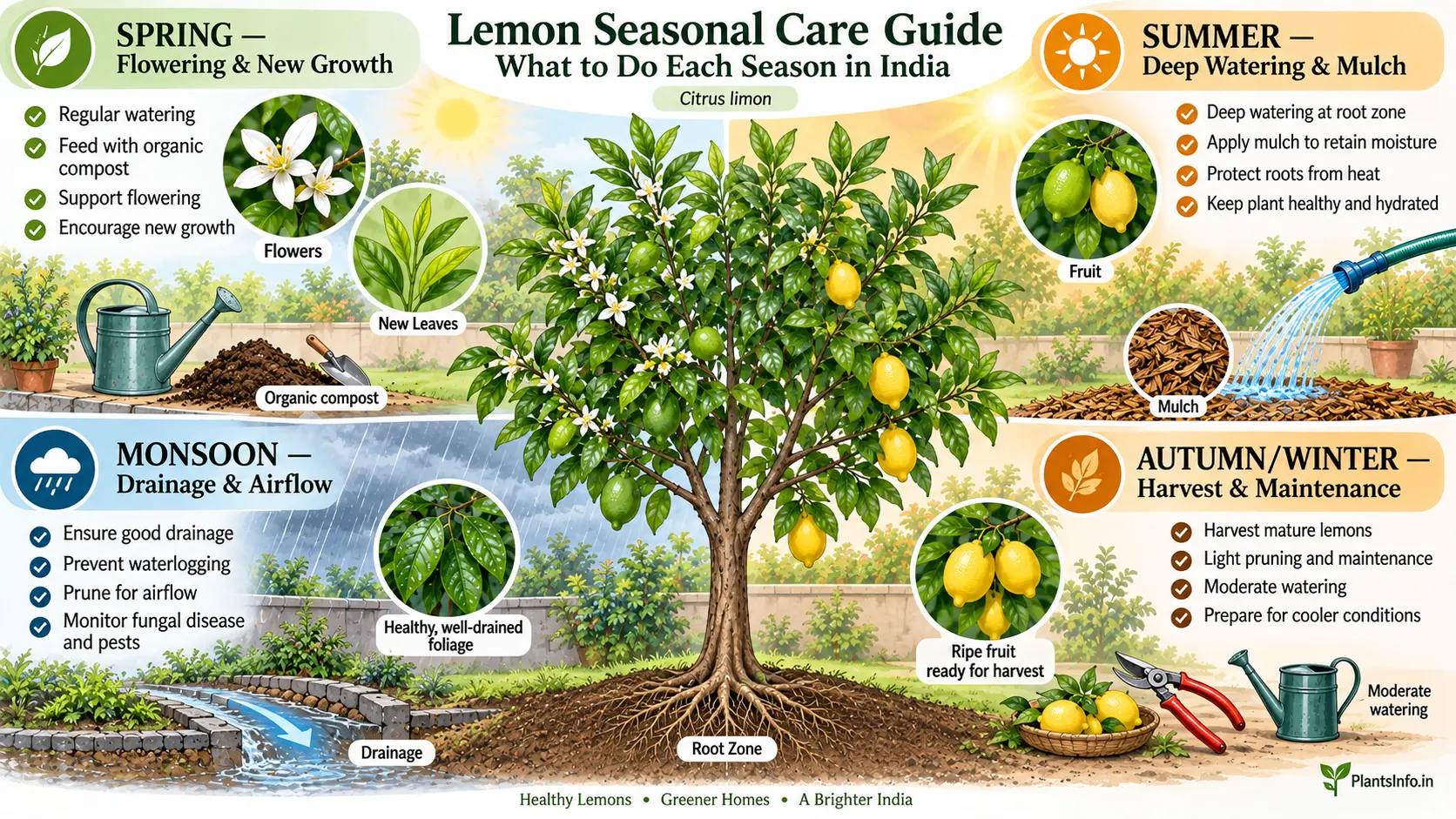
Lemon Seasonal Care Guide: What to Do Each Season in India
Quick Answer
Quick Answer: Lemon (Citrus limon) is most vulnerable during Pre-monsoon heat and moisture stress, when rapidly drying soil can place extra pressure on young plants and developing growth. Seasonal care should therefore change with heat, rainfall, and cold rather than follow one fixed routine.
See also: Lemon (Citrus limon) Plant plant profile, how to grow it, common problems, its flowering season, and its varieties.
Introduction
A lemon tree can remain evergreen while its care needs change noticeably through the year. The most useful seasonal habit is to watch weather conditions rather than let the calendar alone determine what the plant needs.
Recommended Products
Disclosure: As an Amazon Associate, PlantsInfo may earn from qualifying purchases.
🌱 Growing Essentials
The following products can help with container gardening, potting, root development, soil management, and healthy plant growth.

Organic Potting Soil Mix
Provides nutrients, structure, and healthy growing conditions for container plants.
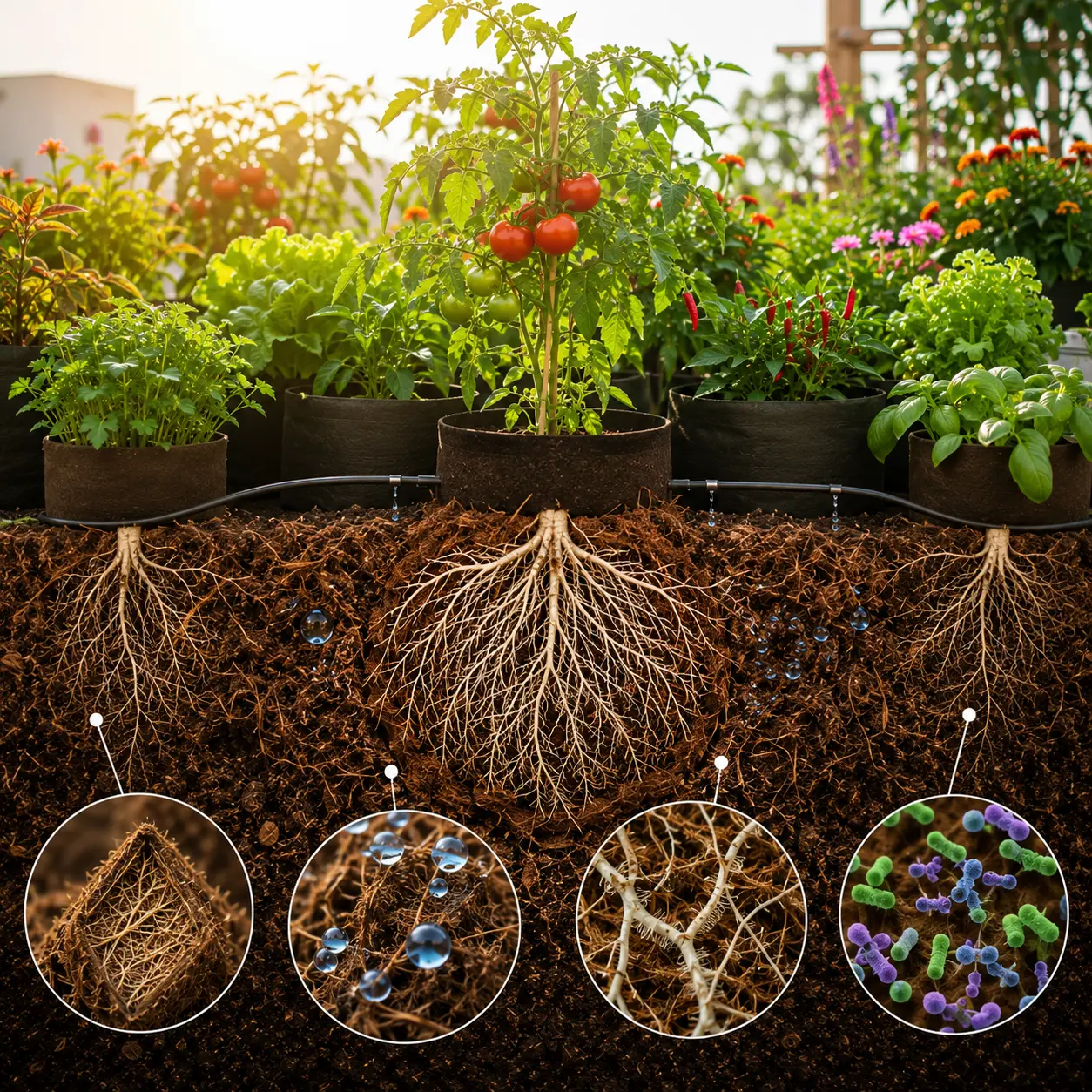
Coco Peat Growing Medium
Enhances moisture retention while maintaining excellent root-zone aeration.

Grow Bags for Plants
Improve drainage, root aeration, and vegetable production in limited spaces.

Plastic Pots for Plants
Ideal containers for seedlings, ornamentals, herbs, and balcony gardens.
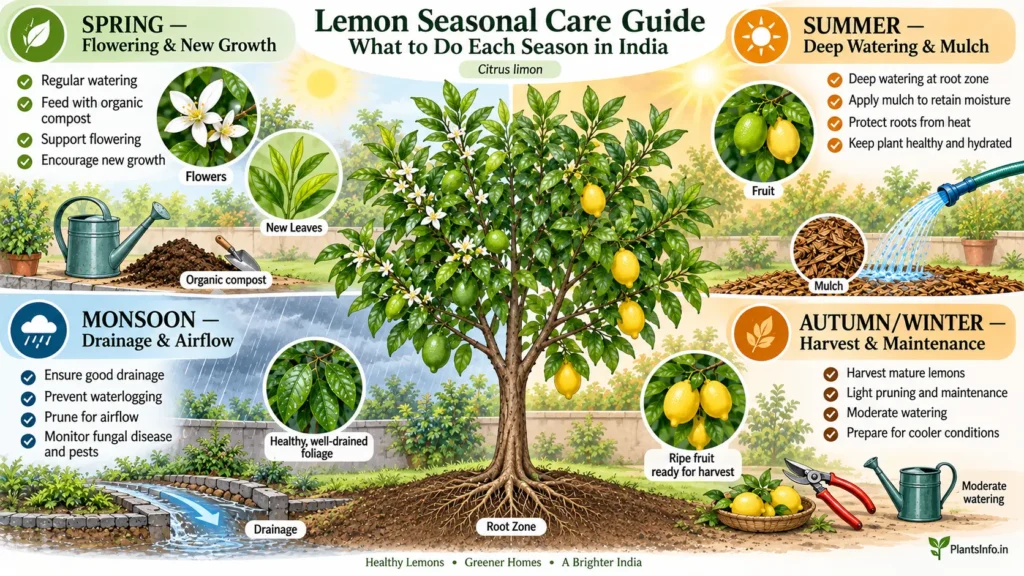
Quick Seasonal Overview
| Season | Care Focus | Watch Out For |
|---|---|---|
| Pre-monsoon (Mar–May) | Closer moisture monitoring | Heat and rapid drying |
| Monsoon (Jun–Sep) | Drainage and rainfall adjustment | Waterlogging |
| Post-monsoon (Oct–Nov) | Gradual return to normal care | Residual soil moisture |
| Winter (Dec–Feb) | Reduced watering and cold protection | Frost and cold snaps |
Pre-Monsoon Care (Mar–May)
As temperatures rise, check lemon plants more frequently because exposed soil can lose moisture rapidly. Young container plants are especially prone to quick changes in root-zone moisture.
Watering frequency may need to increase compared with cooler periods, but the adjustment should follow actual soil drying rather than a fixed daily schedule.
Fertilising can continue during active growth, with applications adjusted to plant growth and local conditions rather than increased simply because temperatures are rising.
A lemon tree under prolonged heat and moisture stress may shed some developing growth or show reduced vigour.
Heat-stress management — see the Growing Guide.
Monsoon Care (Jun–Sep)
Once regular rainfall begins, the priority shifts from supplying moisture to preventing excess moisture from remaining around the roots. Lemon performs poorly where water stands repeatedly, or the root zone remains saturated.
Irrigation should be reduced or omitted when rainfall is already maintaining adequate moisture. Fertilising should also be conservative during periods when soil remains saturated; avoid treating heavy rainfall as a reason for additional feeding.
Root and foot rot risk increases where excessive moisture persists.
Root and foot rot diagnosis and treatment — see the Problems Guide.
Drainage technique — see the Growing Guide.
Post-Monsoon Care (Oct–Nov)
As rainfall becomes less frequent, reassess soil moisture before returning to the watering frequency used during drier periods. Avoid making an abrupt change while the root zone is still holding substantial moisture.
This period is also useful for assessing the plant after prolonged rainfall and removing debris that has accumulated around the planting area.
Where a lemon plant needs repotting or transplanting, Post-monsoon can be a suitable window in regions where temperatures remain favourable.
Repotting and transplanting method — see the Growing Guide.
Fertilising can return to the normal active-growth programme once the soil is no longer persistently wet and the plant is actively growing.
Winter Care (Dec–Feb)
Lemon is sensitive to severe cold and frost, particularly when young. In frost-prone parts of India, cold protection becomes important when temperatures approach freezing.
Watering frequency can be reduced compared with the hotter months because cooler conditions generally lower moisture demand. Allow the root zone to become moderately drier between waterings without allowing a container plant to remain severely dry for extended periods.
In regions with occasional frost, protect young outdoor plants before forecast cold snaps; container-grown plants can be moved to a sheltered position when practical.
Frost-protection technique — see the Growing Guide.
Extreme Weather Protection
Heatwave response
During an exceptional heatwave, increase monitoring rather than automatically increasing irrigation. Young container plants can be temporarily protected from intense exposure during the most severe conditions.
Do not compensate for extreme heat by keeping the root zone continuously saturated.
Frost and cold-snap response
When a frost or unusually severe cold snap is forecast, protect young lemon plants before temperatures fall sharply. Container plants can be moved to a sheltered location, while exposed young plants can receive temporary overnight protection.
Heavy Monsoon or cyclone response
After exceptionally heavy rainfall, check whether water is draining away from the root zone rather than adding irrigation. In cyclone-prone areas, secure young container plants and inspect exposed plants after strong winds have passed.
Post-storm disease concerns — see the Problems Guide.
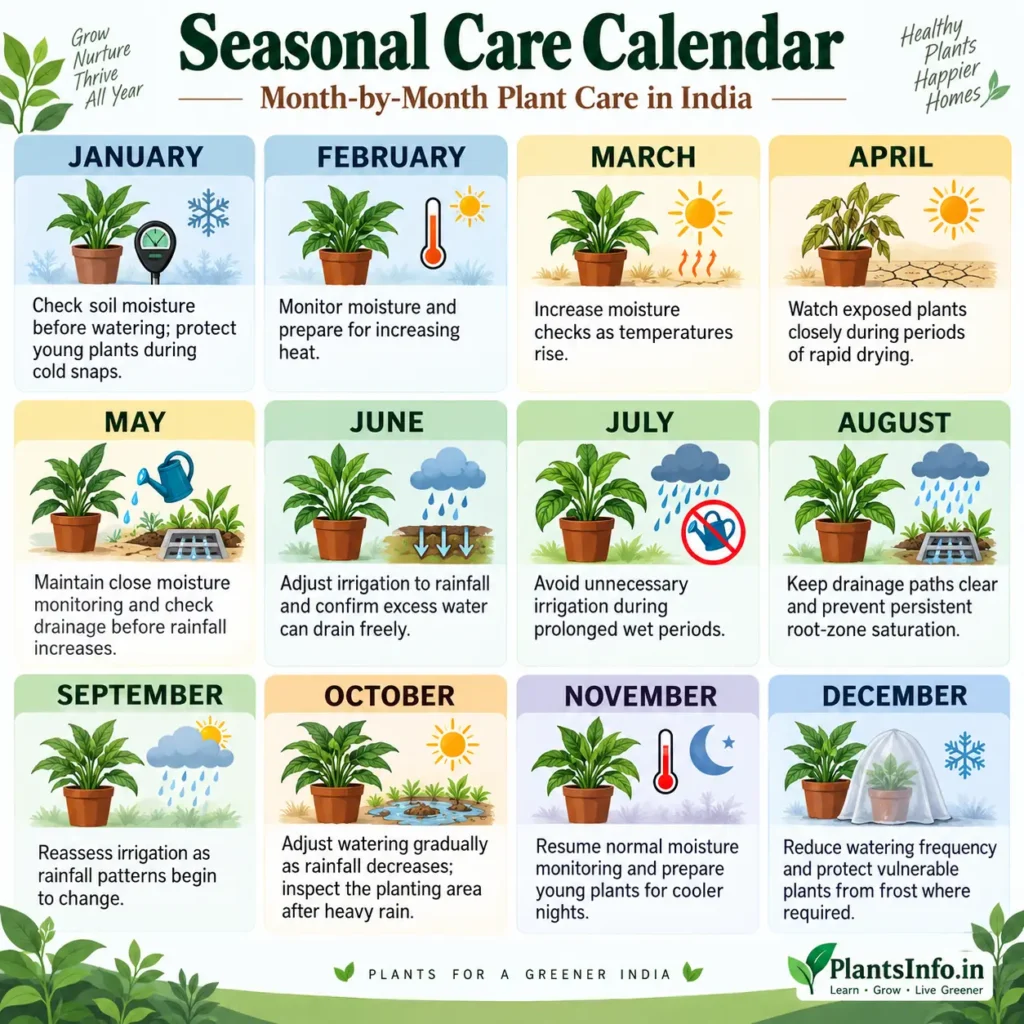
Seasonal Care Calendar
| Month | Care Task |
| January | Check soil moisture before watering; protect young plants during cold snaps. |
| February | Monitor moisture and prepare for increasing heat. |
| March | Increase moisture checks as temperatures rise. |
| April | Watch exposed plants closely during periods of rapid drying. |
| May | Maintain close moisture monitoring and check drainage before rainfall increases. |
| June | Adjust irrigation to rainfall and confirm excess water can drain freely. |
| July | Avoid unnecessary irrigation during prolonged wet periods. |
| August | Keep drainage paths clear and prevent persistent root-zone saturation. |
| September | Reassess irrigation as rainfall patterns begin to change. |
| October | Adjust watering gradually as rainfall decreases; inspect the planting area after heavy rain. |
| November | Resume normal moisture monitoring and prepare young plants for cooler nights. |
| December | Reduce watering frequency and protect vulnerable plants from frost where required. |
Seasonal Mistakes to Avoid
- Not reducing irrigation at Monsoon onset: continuing the dry-period schedule can leave the lemon root zone excessively wet.
- Increasing fertiliser simply because temperatures rise: heavy feeding during environmental stress can add unnecessary pressure to the plant.
- Waiting for frost damage before protecting young plants: cold protection should begin before a forecast severe cold event.
Conclusion
A lemon tree is easier to manage when its care follows the weather, with each seasonal transition treated as a cue to reassess rather than repeat the same routine.