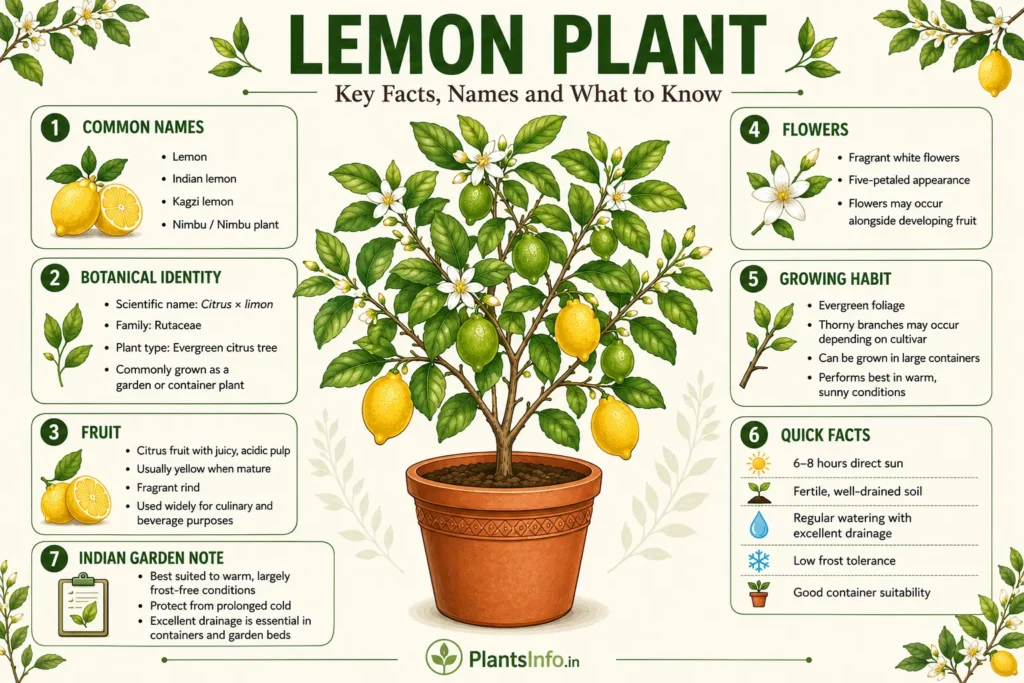
Lemon Varieties: Which One Should You Grow in India?
Quick Answer
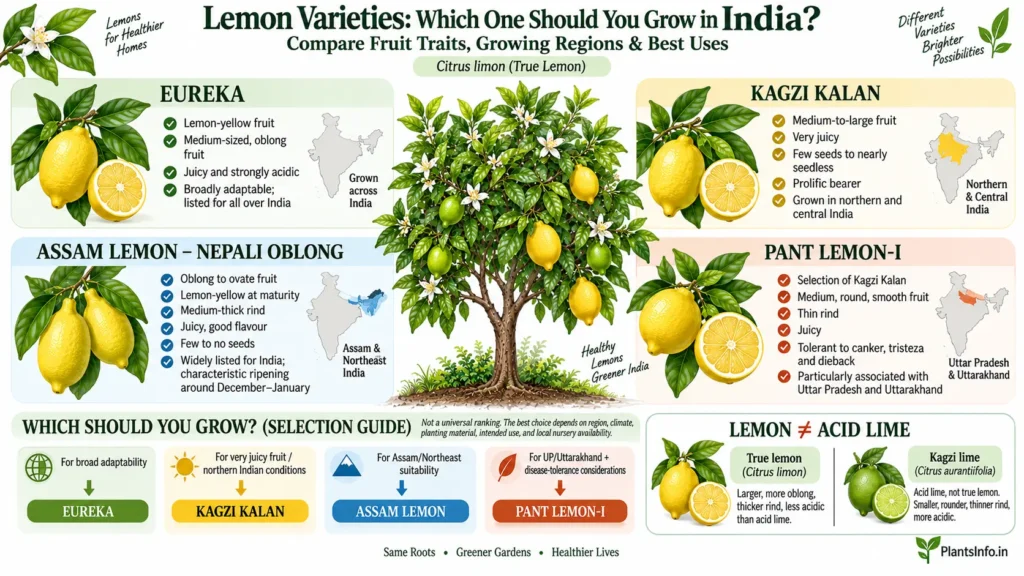
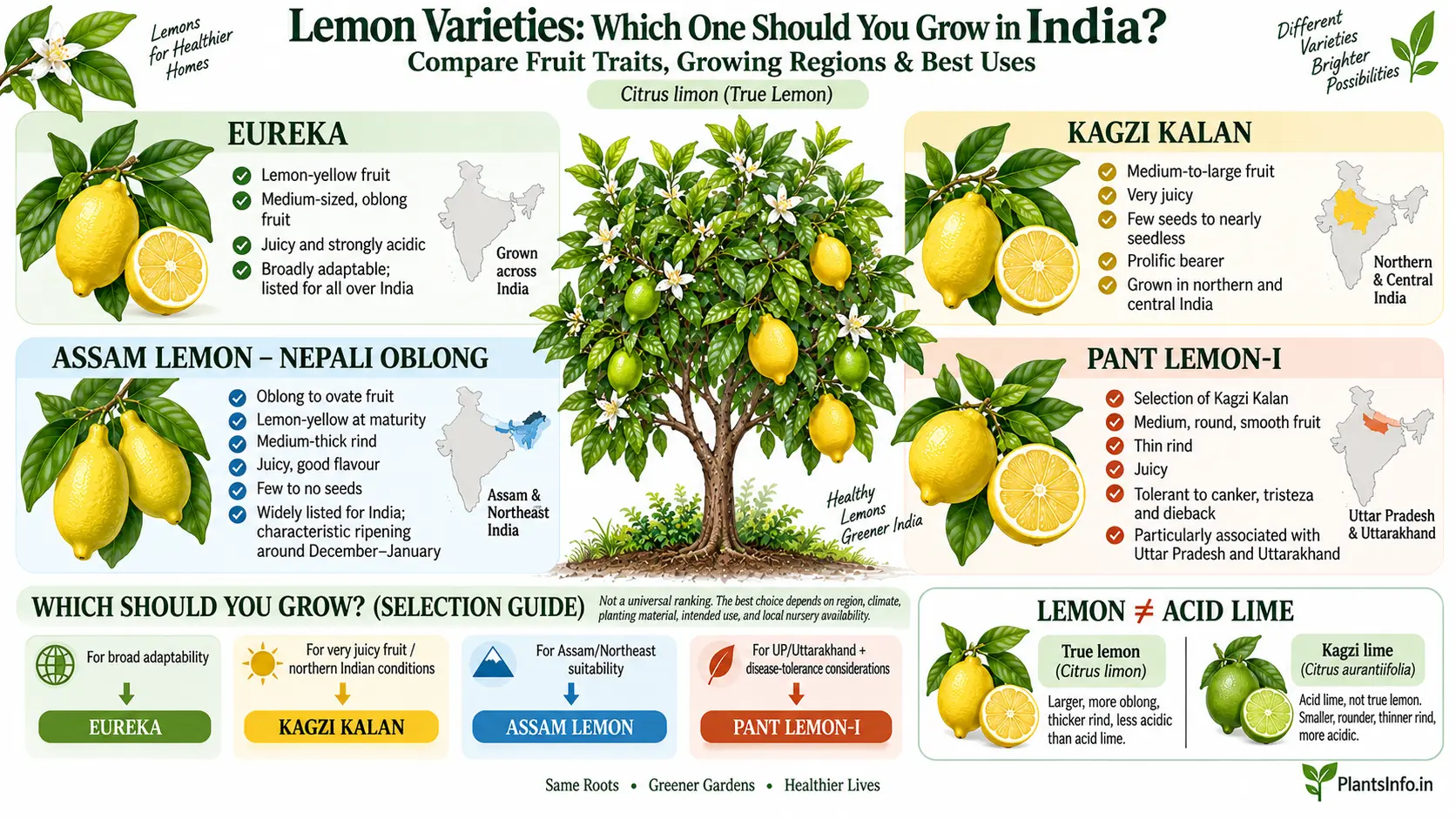
Quick Answer: For an Indian home gardener, climate fit is the factor that most separates lemon varieties. Kagzi Kalan is a practical broad-region choice, Assam Lemon is especially relevant in the Northeast, while Pant Lemon-I is particularly suited to Uttar Pradesh and Uttarakhand.
See also: Lemon (Citrus limon) Plant plant profile, how to grow it, common problems, seasonal care, and its flowering season.
Introduction
A lemon may look familiar across a nursery bench, but its fruit can differ in rind, juice, seediness, flavour, and growth habit. Most gardeners buy whichever named plant is available rather than checking whether the cultivar suits their space and region; this guide helps make that choice deliberately.
Recommended Products
Disclosure: As an Amazon Associate, PlantsInfo may earn from qualifying purchases.
🌱 Growing Essentials
The following products can help with container gardening, potting, root development, soil management, and healthy plant growth.
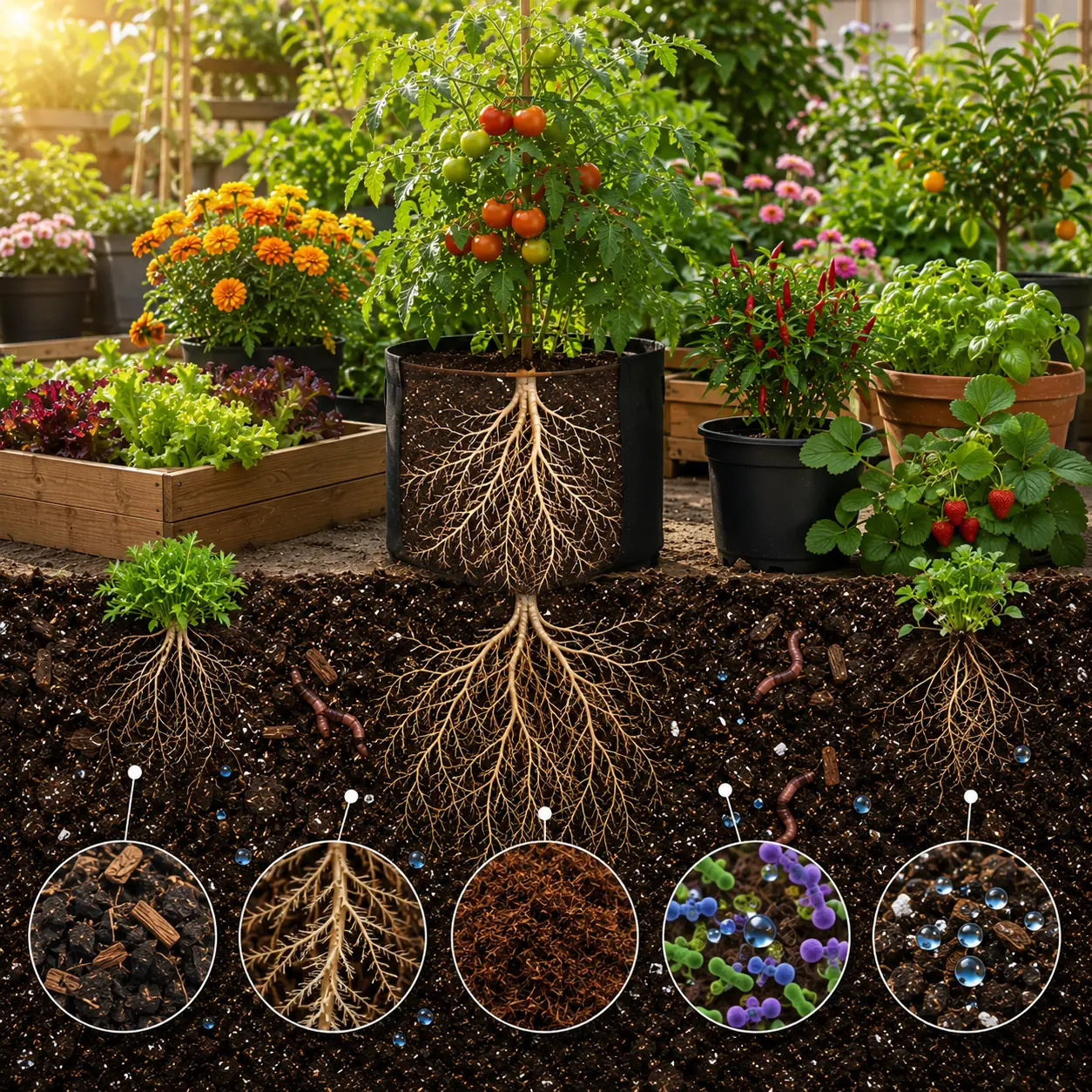
Organic Potting Soil Mix
Provides nutrients, structure, and healthy growing conditions for container plants.
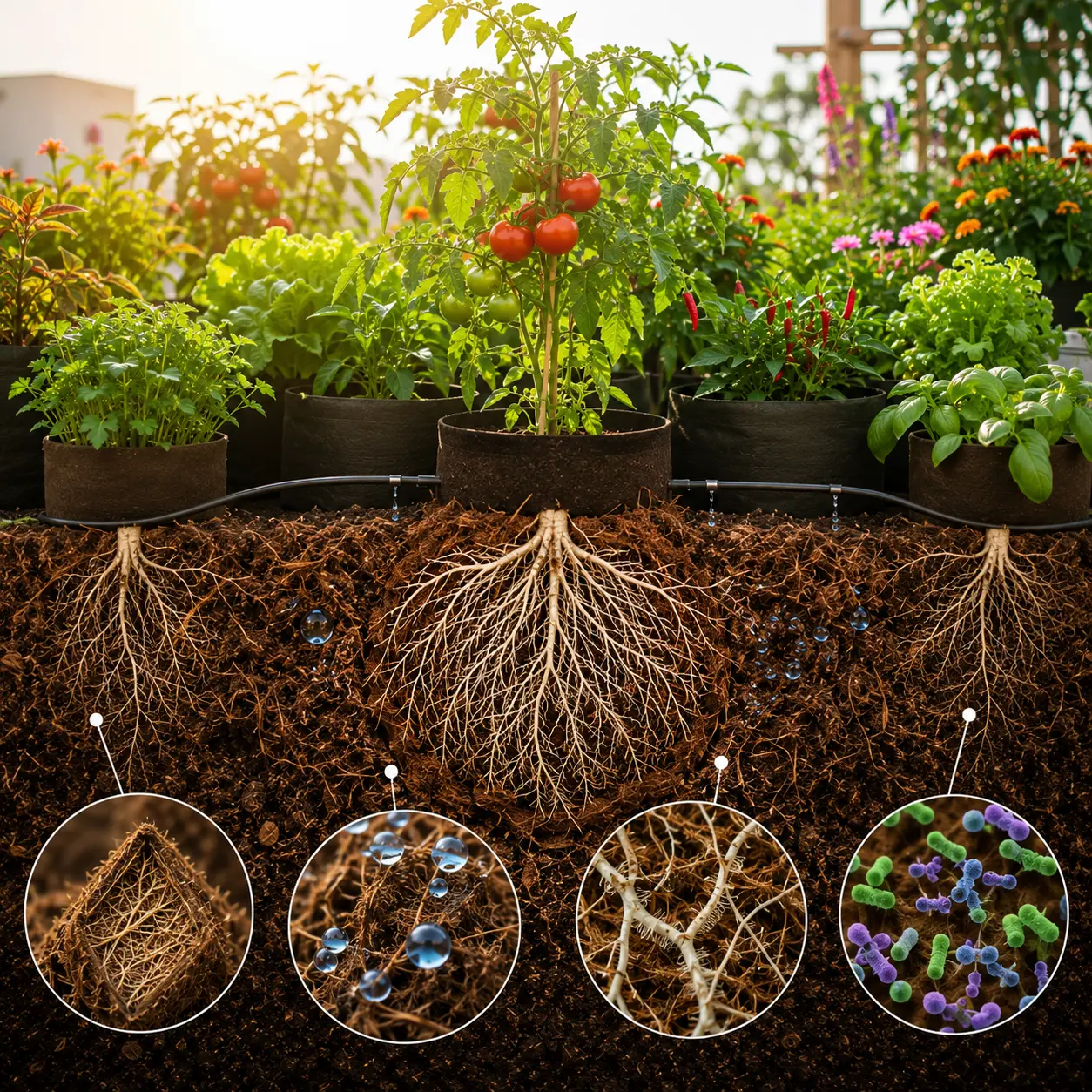
Coco Peat Growing Medium
Enhances moisture retention while maintaining excellent root-zone aeration.

Grow Bags for Plants
Improve drainage, root aeration, and vegetable production in limited spaces.

Plastic Pots for Plants
Ideal containers for seedlings, ornamentals, herbs, and balcony gardens.
Quick Variety Selector
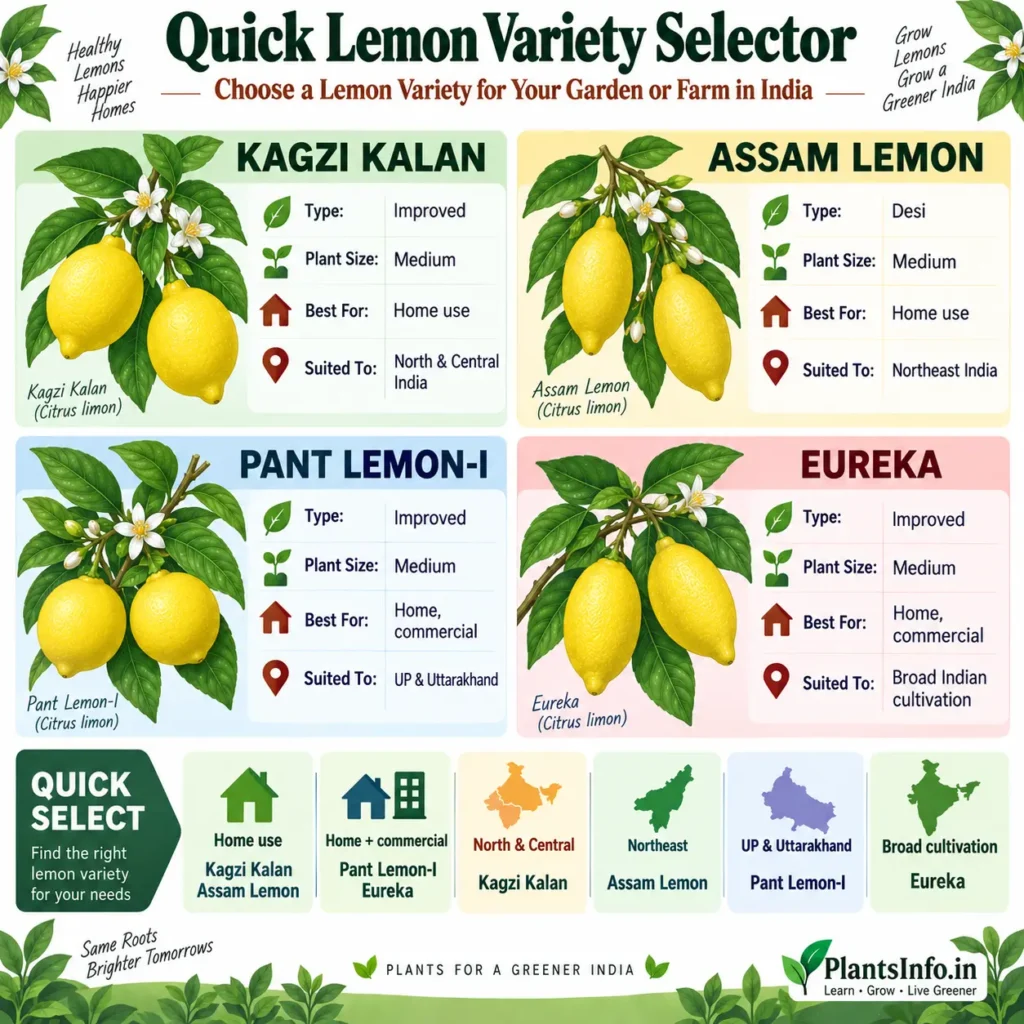
| Variety | Type | Plant Size | Best For | Suited To |
|---|---|---|---|---|
| Kagzi Kalan | Improved | Medium | Home use | North & Central India |
| Assam Lemon | Desi | Medium | Home use | Northeast India |
| Pant Lemon-I | Improved | Medium | Home, commercial | UP & Uttarakhand |
| Eureka | Improved | Medium | Home, commercial | Broad Indian cultivation |
Varieties in Detail
Kagzi Kalan
Kagzi Kalan is a long-established Indian lemon selection included among the recognised lemon cultivars grown in India. Its fruits are juicy and relatively thin-skinned, making the variety useful for household consumption and processing. Its broad recommendation across several North and Central Indian states is its main advantage for gardeners who want a recognised Indian cultivar rather than an unidentified nursery plant. Its weakness is that a more regionally targeted selection can be preferable in areas such as Uttar Pradesh and Uttarakhand. For a home gardener in much of North India, its combination of familiarity and regional availability makes it a strong default choice.
Assam Lemon
Assam Lemon is a regionally important lemon cultivar associated particularly with Assam and the Northeast. It is known for aromatic, juicy fruit and is valued for household and market use in its home region. Its strongest advantage is its established regional identity and suitability to Northeast growing conditions; its main weakness for gardeners elsewhere is that correctly identified planting material may be harder to find. It is a sensible choice when the gardener is in the Northeast or can obtain authenticated planting material from a reliable source.
Pant Lemon-I
Pant Lemon-I is an improved lemon selection associated with the Pantnagar region and is particularly recommended for Uttar Pradesh and Uttarakhand. It produces medium-sized, juicy fruit and is notable for its documented tolerance to several important citrus diseases. Its strength is regional adaptation within its recommended belt, while its weakness is that its main advantage is less relevant outside that target region. Gardeners in Uttar Pradesh or Uttarakhand should give it priority when genuine planting material is available.
Eureka
Eureka is an established international lemon cultivar included in Indian horticultural variety listings. It is valued for acidic, juicy fruit and has a broad cultivation profile rather than being tied to one Indian region. Its strength is its familiar fruit character and wide applicability; its weakness is that a locally established cultivar can be easier to source and better adapted to a particular region. It is a reasonable choice for gardeners who specifically want Eureka and can verify the cultivar identity.
Head-to-Head Comparison
Kagzi Kalan vs Pant Lemon-I
Pant Lemon-I wins for a gardener in Uttar Pradesh or Uttarakhand; Kagzi Kalan wins for broader North Indian home use. Both are medium-sized lemon types suitable for ordinary garden space, so neither has a decisive space advantage, and reliable evidence does not establish a universal growth-speed winner. Kagzi Kalan has strong household appeal through its juicy fruit and wider regional history, while Pant Lemon-I is the more targeted choice where its improved characteristics and regional recommendation matter. For yield, Pant Lemon-I has documented production performance in evaluation work, but that does not make it universally higher-yielding in every garden. Nursery availability also favours the cultivar that is locally recognised in its target region.
Assam Lemon vs Eureka
Assam Lemon wins for a Northeast-focused home gardener; Eureka wins when a broadly recognised international cultivar is specifically wanted. Both can occupy medium garden space, and neither has a defensible universal growth-speed advantage from the available cultivar information. Assam Lemon has the stronger regional identity and aromatic fruit character, while Eureka offers a familiar acidic, juicy lemon profile. For household use, Assam Lemon has an advantage where authentic regional planting material is readily available; Eureka becomes more attractive when the gardener specifically wants its cultivar characteristics and can source genuine material. Yield superiority should not be assumed without local trial data.
How to Choose for Your Space
Container or terrace garden
Choose Kagzi Kalan when authentic planting material is available, and the priority is dependable household use rather than a highly specialised regional cultivar.
Small ground plot under 100 sq ft
Choose Kagzi Kalan for a general North or Central Indian home garden; choose Assam Lemon instead when the garden is in the Northeast, and genuine Assam Lemon material is available.
Larger garden or backyard
Choose Pant Lemon-I in its Uttar Pradesh–Uttarakhand belt when its regional advantages are relevant; elsewhere, Kagzi Kalan or Eureka can be considered according to local availability and intended use.
Regional Suitability
North India: Kagzi Kalan is a strong general choice, while Pant Lemon-I is particularly suited to Uttar Pradesh and Uttarakhand.
South India: Eureka can be considered where its recognised cultivar characteristics are desired, but locally established lemon material may be preferable where available.
Coastal regions: Choose a cultivar with established local performance and reliable planting material rather than assuming that one named lemon is best for every coastal district.
Northeast India: Assam Lemon is the clearest regional choice where authentic material is available.
Hill stations: Lemon cultivation becomes more climate-sensitive as cold increases; Kagzi Kalan and Pant Lemon-I have documented relevance in parts of the northern hill belt, but severe frost-prone sites are poor candidates.
Watch Out for Mislabeling
Citrus is particularly prone to name confusion because lemon and lime are often sold under overlapping local names. Check the scientific name and exact cultivar on the nursery label, and do not assume that a plant sold simply as “Kagzi” is necessarily the named lemon cultivar you want.
For reliable sourcing, prefer state horticulture nurseries, KVK-linked outlets, accredited nurseries, or recognised citrus research channels.
Where to Source These Varieties in India
For named lemon cultivars, look first through state horticulture departments, KVK-linked nurseries, accredited nursery channels, and recognised citrus research institutions. When buying, verify the cultivar name, planting-material identity and nursery credentials rather than relying only on the common name.
Conclusion
For lemon, climate fit should lead the choice: start with the cultivar recognised for your region, then use fruit character, space and planting-material availability to make the final selection.