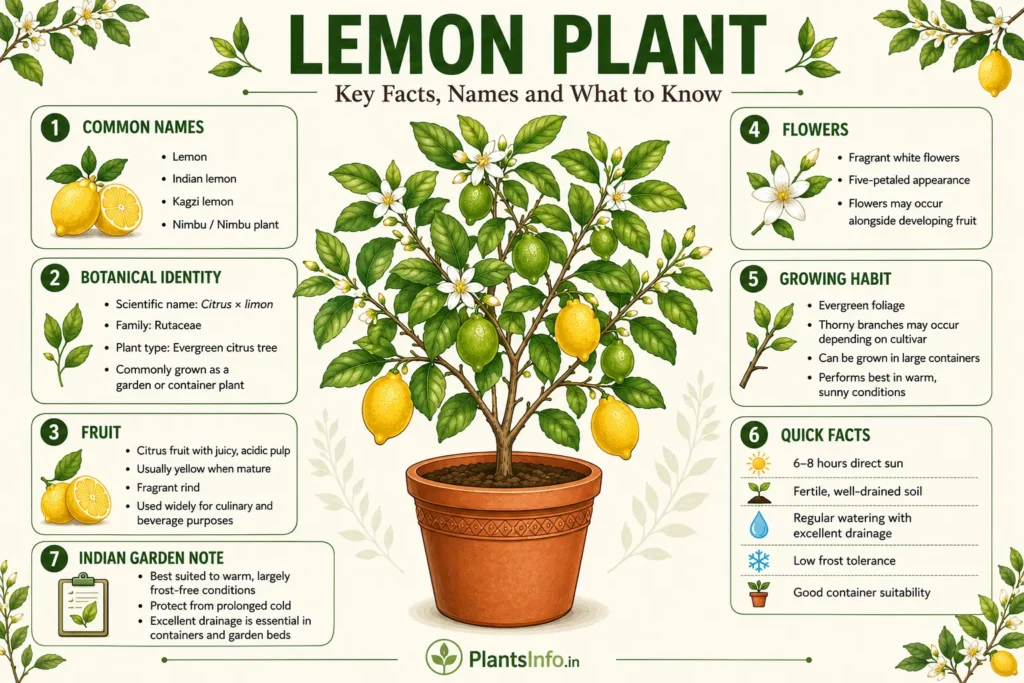
Lemon Flowering Season: When and What to Expect
Quick Answer
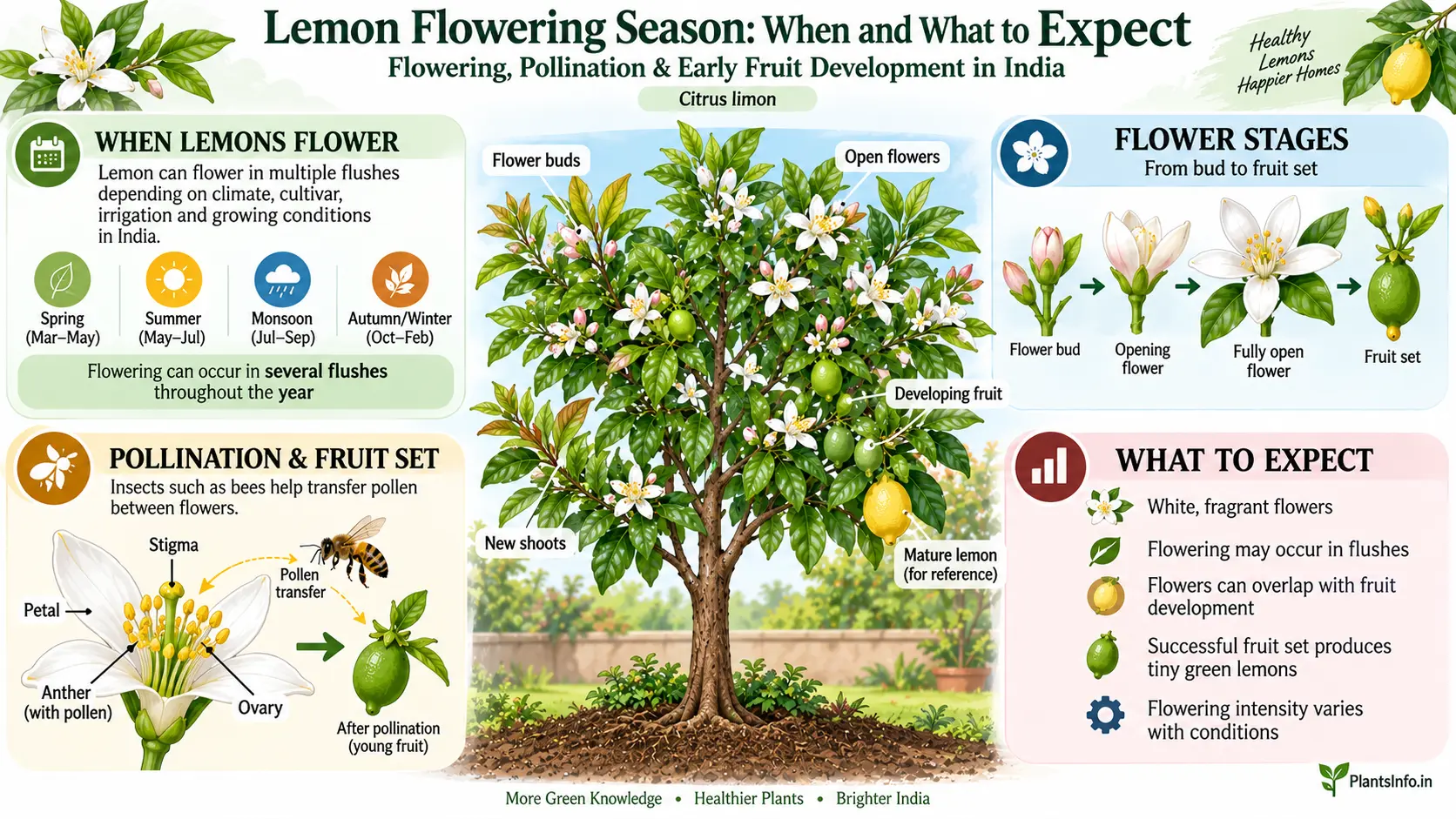
Quick Answer: Lemon (Citrus limon) can flower over an extended period in India rather than following one fixed annual bloom. In warm conditions, flowering may occur through much of the year, while particular regions and cultivars can show stronger flushes from late Winter into Pre-monsoon; fruit generally takes about 5–6 months to mature after flowering.
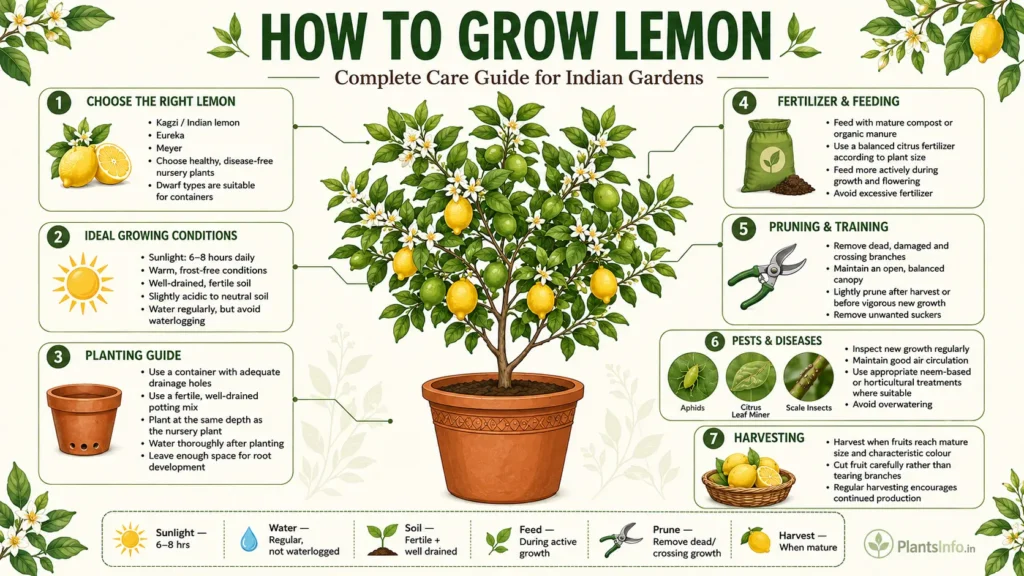
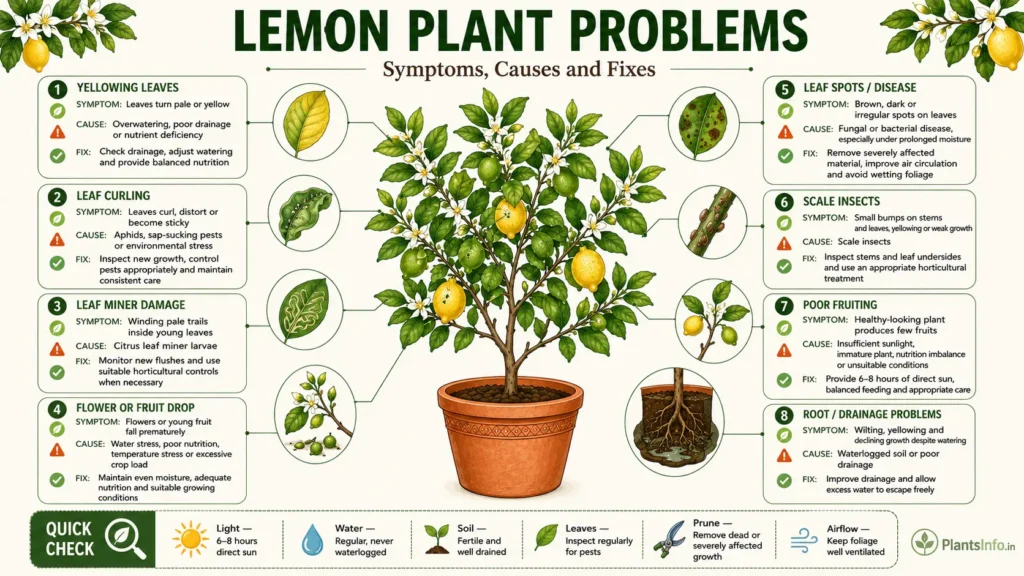
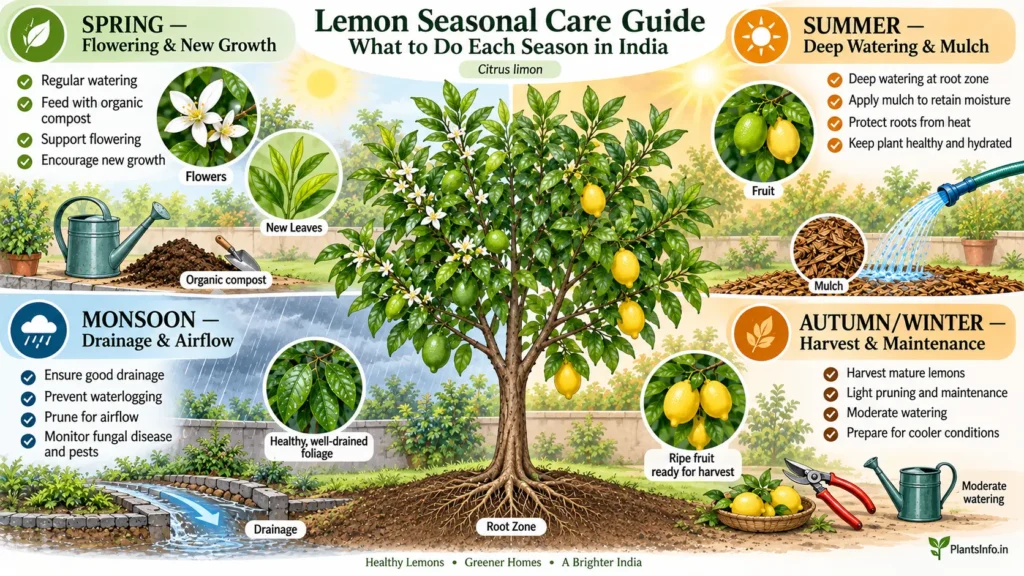
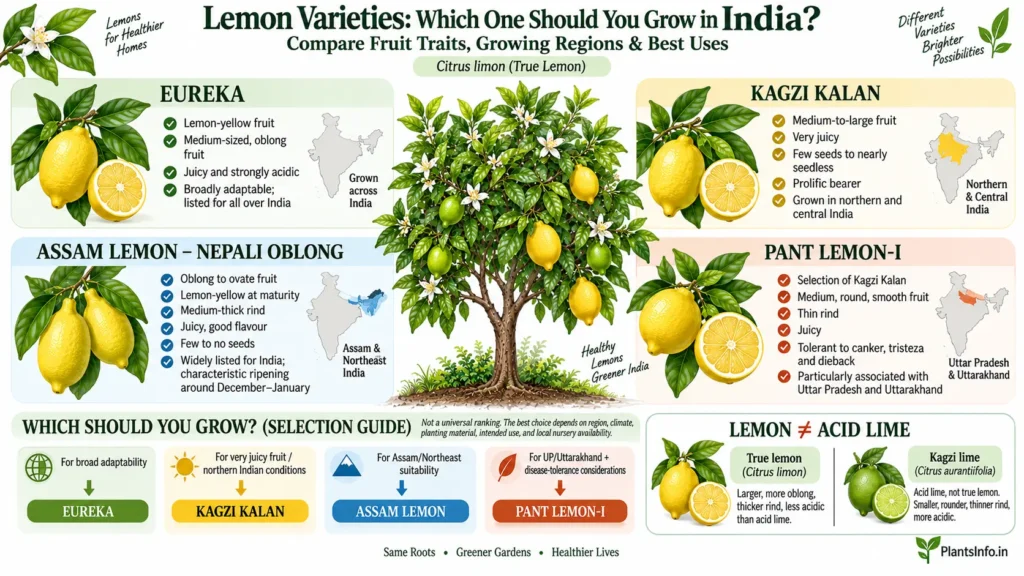
See also: Lemon (Citrus limon) Plant plant profile, how to grow it, common problems, seasonal care, and its varieties.
Biological Timing at a Glance
| Biological stage | Typical period |
|---|---|
| Flower initiation | Extended; often late Winter to Pre-monsoon, with additional flushes possible |
| Peak flowering | Region- and cultivar-dependent; February–May is a common strong period |
| Fruit set | Shortly after flowering, with overlapping crops possible |
| Fruit development | Roughly 5–6 months from flowering to maturity |
| Ripening/harvest | Varies with flowering flush; multiple harvest periods can occur |
Introduction
A lemon tree can carry fragrant flowers beside developing fruit, making its seasonal rhythm less tidy than that of many single-crop fruit trees. Timing varies significantly across India because climate, cultivar, and flowering flush all influence when a particular crop develops.
Recommended Products
Disclosure: As an Amazon Associate, PlantsInfo may earn from qualifying purchases.
🌱 Growing Essentials
The following products can help with container gardening, potting, root development, soil management, and healthy plant growth.
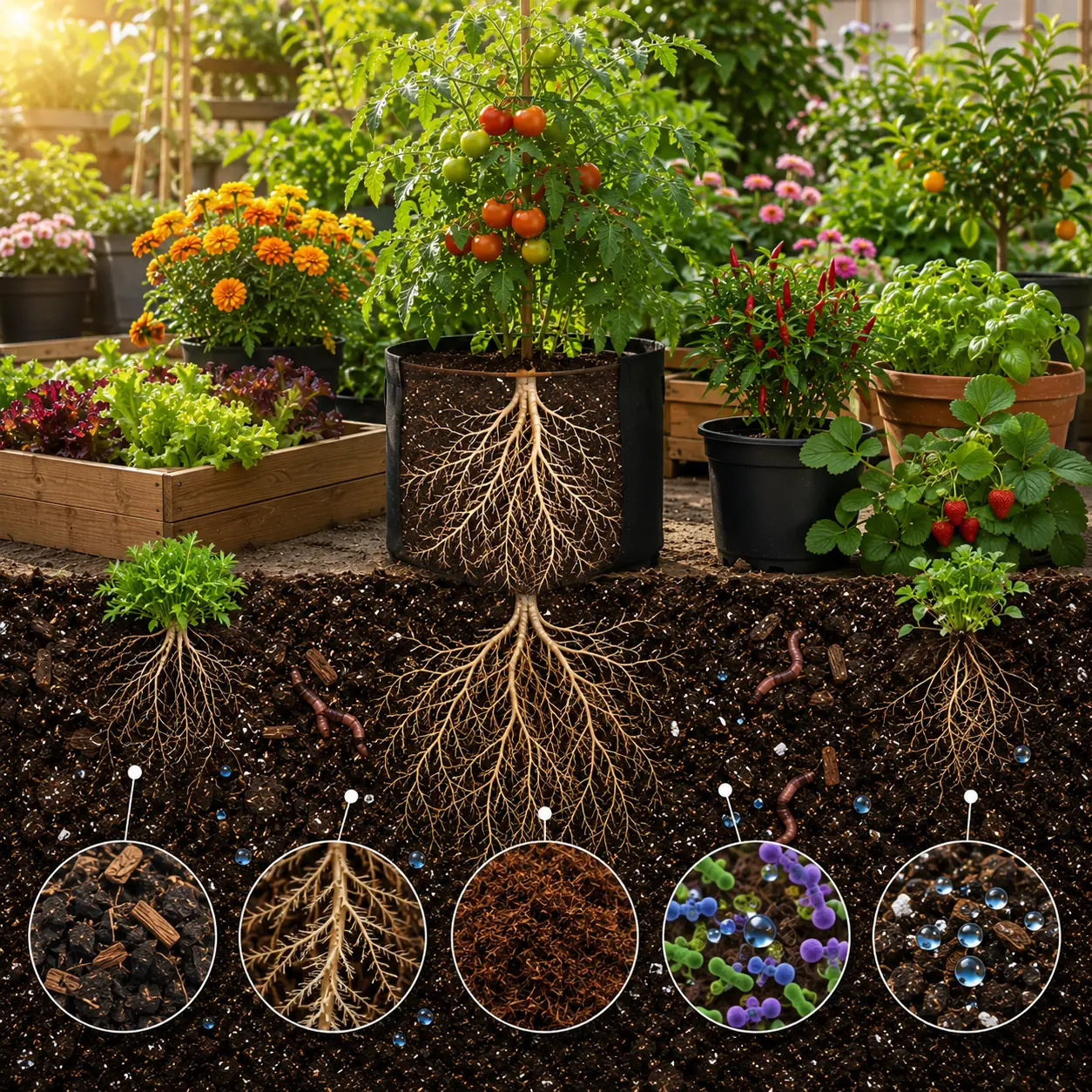
Organic Potting Soil Mix
Provides nutrients, structure, and healthy growing conditions for container plants.
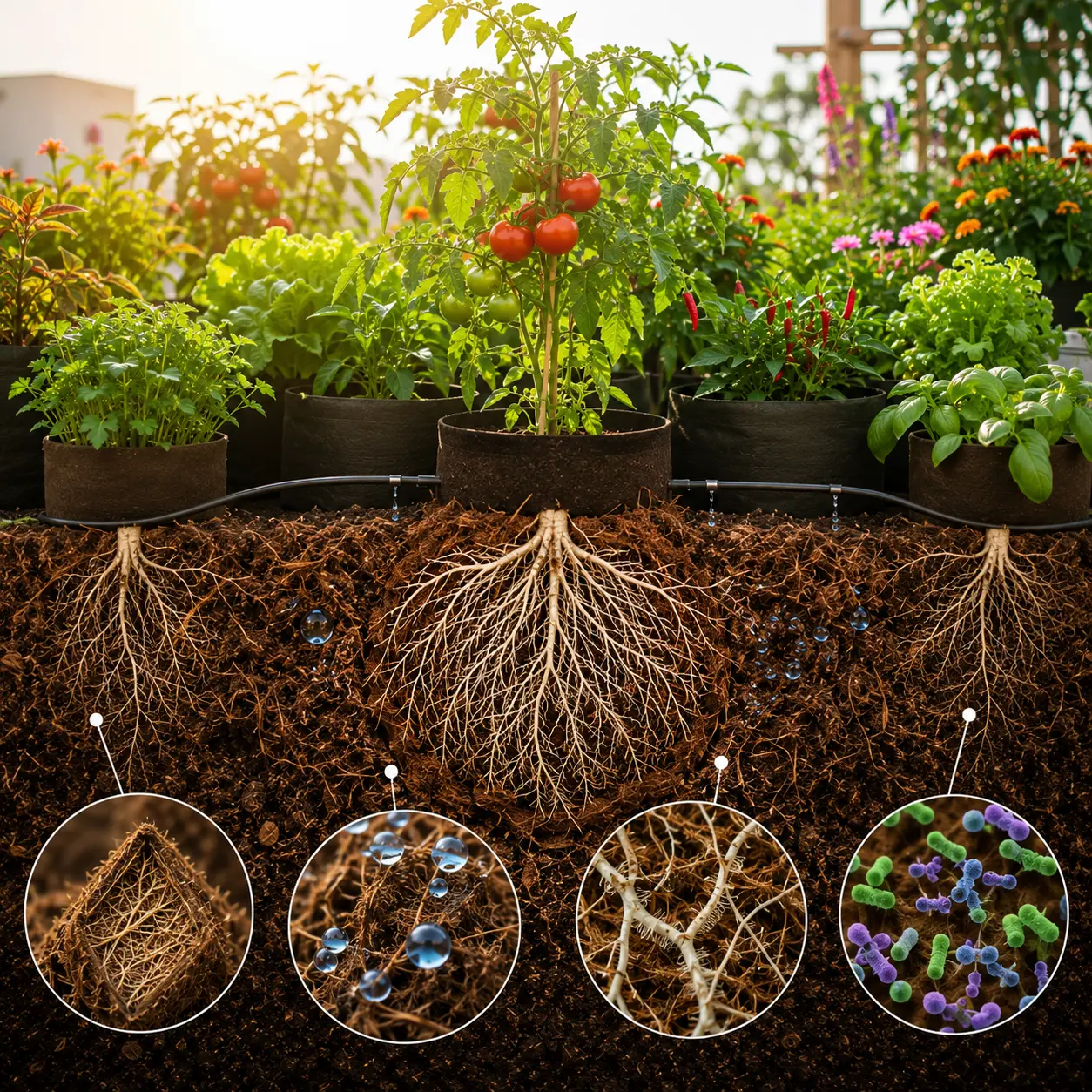
Coco Peat Growing Medium
Enhances moisture retention while maintaining excellent root-zone aeration.

Grow Bags for Plants
Improve drainage, root aeration, and vegetable production in limited spaces.

Plastic Pots for Plants
Ideal containers for seedlings, ornamentals, herbs, and balcony gardens.
India’s Seasons and This Plant
| Season (months) | What the plant is doing |
| Pre-monsoon (Mar–May) | Strong flowering and fruit development can overlap; early flowers may already have developing fruit |
| Monsoon (Jun–Sep) | Additional flowering flushes may occur, particularly in regions where lemon behaves as a continuous or multi-flush bloomer |
| Post-monsoon (Oct–Nov) | Flowers, fruitlets and developing fruit may occur together depending on the earlier flowering flush |
| Winter (Dec–Feb) | Flower initiation or flowering can become prominent, particularly before the stronger late-Winter to Pre-monsoon bloom |
Flowering Season in Detail
Lemon does not behave everywhere as a single-season flowering tree. Indian observations show that cultivars such as Konkan Seedless and Kagzi Kalan can bloom almost throughout the year, while Hill lemon has a more concentrated February–March flowering period.
Buds can develop into flowers during several flushes, with stronger flowering often occurring from late Winter into Pre-monsoon in regions where flowering is more concentrated. In warm areas, additional flushes can continue through the Monsoon and beyond.
Individual citrus flowers are relatively short-lived compared with the plant’s overall flowering period: open-flower activity can persist for several days, while the flowering flush itself may extend for weeks depending on cultivar and temperature.
Temperature and the tree’s physiological state are important flowering influences. Rainfall and associated changes in plant water status can also affect flowering in Indian citrus, while day length alone does not explain the flowering pattern.
Pollination: lemon flowers are generally bisexual, with both stamens and pistils present, so a separate male and female tree is not normally required for fruit set.
Fruiting Season
Fruit set follows flowering, so lemon fruiting can extend across much of the year when several flowering flushes occur. Under subtropical northern Indian conditions, lemon fruit generally requires about 5–6 months from flowering to maturity.
As the fruit approaches maturity, its colour changes from green toward yellow and its characteristic citrus aroma becomes more evident. Fruit from different flowering flushes can therefore reach maturity at different times.
A practical harvest window is roughly 5–6 months after the relevant flowering flush, with the exact period varying by cultivar and region. If fruit remains on the tree beyond its preferred maturity stage, its appearance and quality can continue to change, and the harvest period may no longer be uniform.
In northern India, flowering can be associated with different production flushes known as Ambe, Mrig and Hasta bahars.
Best Time to Plant
Monsoon (Jun–Sep) is a practical primary planting window for lemon in much of India because warm conditions and seasonal moisture support establishment.
Winter (Dec–Feb) can provide a second planting window where winter temperatures remain mild. In colder areas, the suitable window becomes narrower because low temperatures can slow establishment.
The Monsoon window is biologically favourable because newly planted trees enter active root establishment during a naturally moist period. Container and ground planting generally follow similar seasonal timing, although exposed containers can experience sharper temperature extremes.
Month-by-Month Calendar
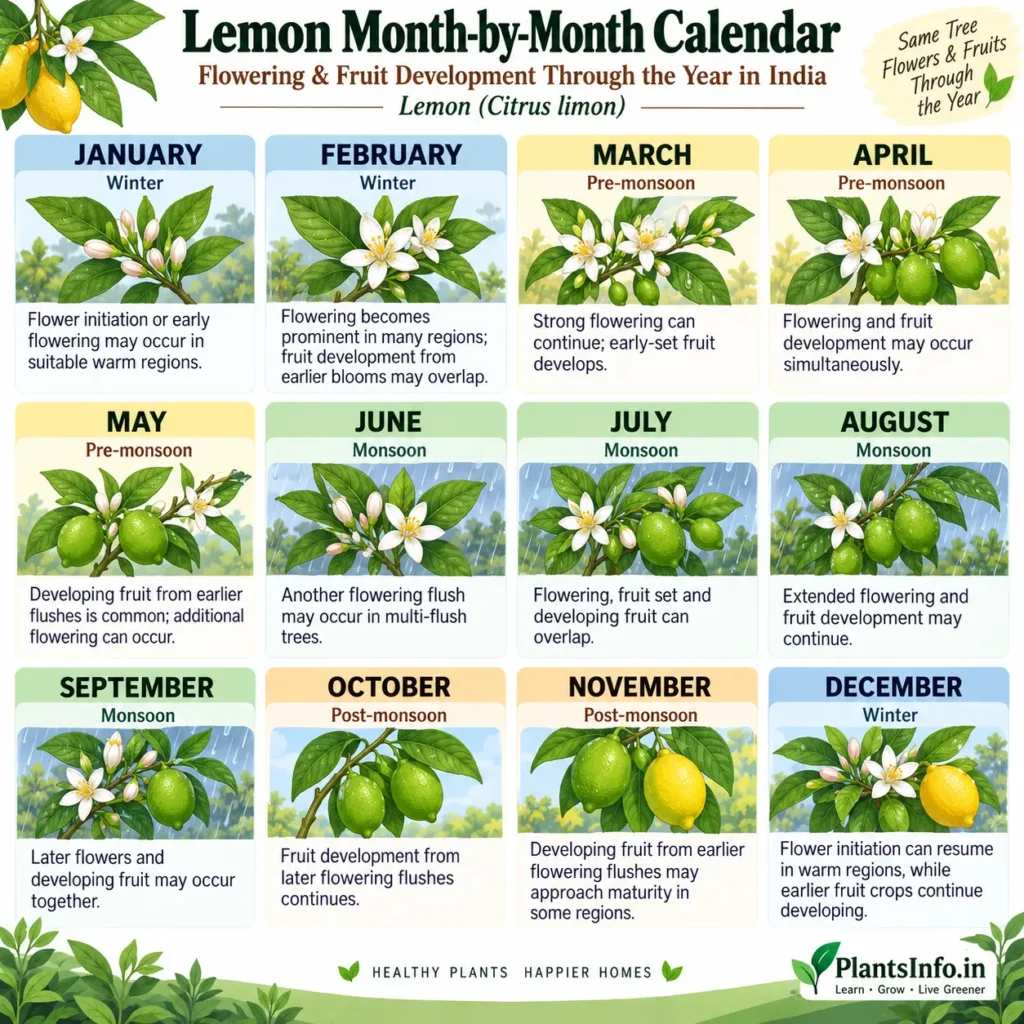
| Month | Season | What the Plant Is Doing |
| January | Winter | Flower initiation or early flowering may occur in suitable warm regions |
| February | Winter | Flowering becomes prominent in many regions; fruit development from earlier blooms may overlap |
| March | Pre-monsoon | Strong flowering can continue; early-set fruit develops |
| April | Pre-monsoon | Flowering and fruit development may occur simultaneously |
| May | Pre-monsoon | Developing fruit from earlier flushes is common; additional flowering can occur |
| June | Monsoon | Another flowering flush may occur in multi-flush trees |
| July | Monsoon | Flowering, fruit set and developing fruit can overlap |
| August | Monsoon | Extended flowering and fruit development may continue |
| September | Monsoon | Later flowers and developing fruit may occur together |
| October | Post-monsoon | Fruit development from later flowering flushes continues |
| November | Post-monsoon | Developing fruit from earlier flowering flushes may approach maturity in some regions |
| December | Winter | Flower initiation can resume in warm regions, while earlier fruit crops continue developing |
What Can Go Wrong Seasonally?
Irregular flowering during Pre-monsoon
Extreme heat or unusual moisture conditions during Pre-monsoon (Mar–May) can disturb the normal sequence of flowering.
Fruit drop during stressful weather
Severe environmental stress during Pre-monsoon or Monsoon can coincide with fruitlet loss, which may be mistaken for a disease problem.
Confusing lemon with acid lime timing
Lemon and acid lime can have overlapping flowering and fruiting periods, so regional and cultivar differences should not be treated as evidence that the two crops follow an identical calendar.
Post-Harvest or Post-Bloom Care
After a flowering flush has produced fruit, the tree can simultaneously carry developing fruit while beginning another cycle of vegetative growth and flower initiation. This overlap helps explain why lemon can remain productive across several periods rather than having one sharply defined crop season.
Conclusion
Lemon’s flowering calendar is best understood as a sequence of overlapping flushes shaped by region, cultivar, and climate rather than one fixed annual bloom.