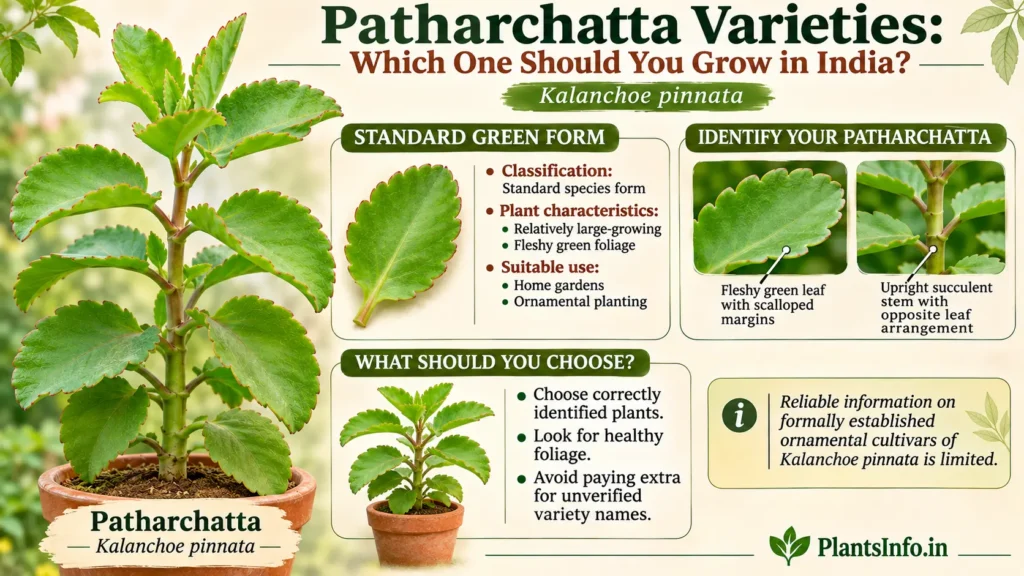
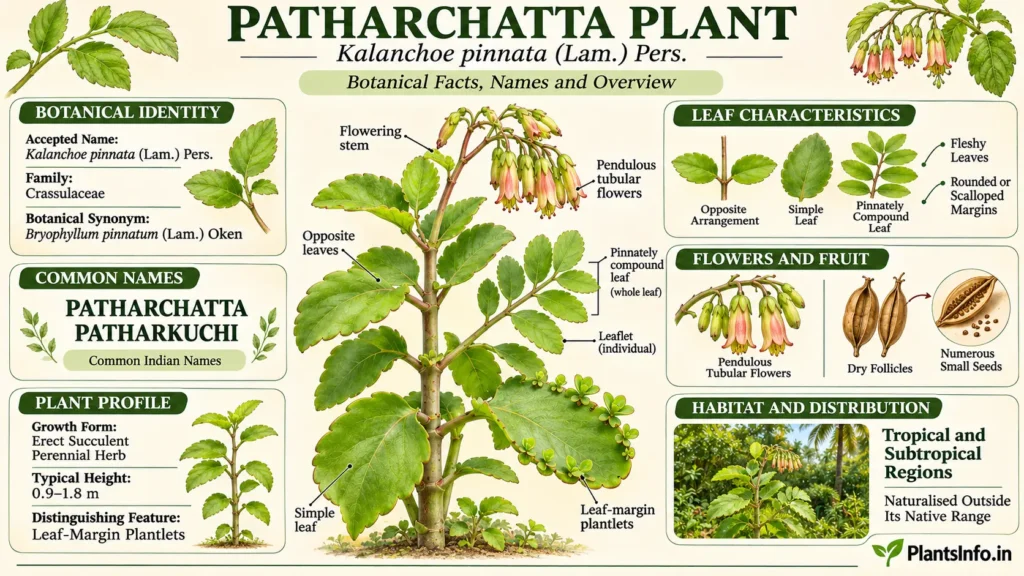
How to Grow Patharchatta (Kalanchoe pinnata)
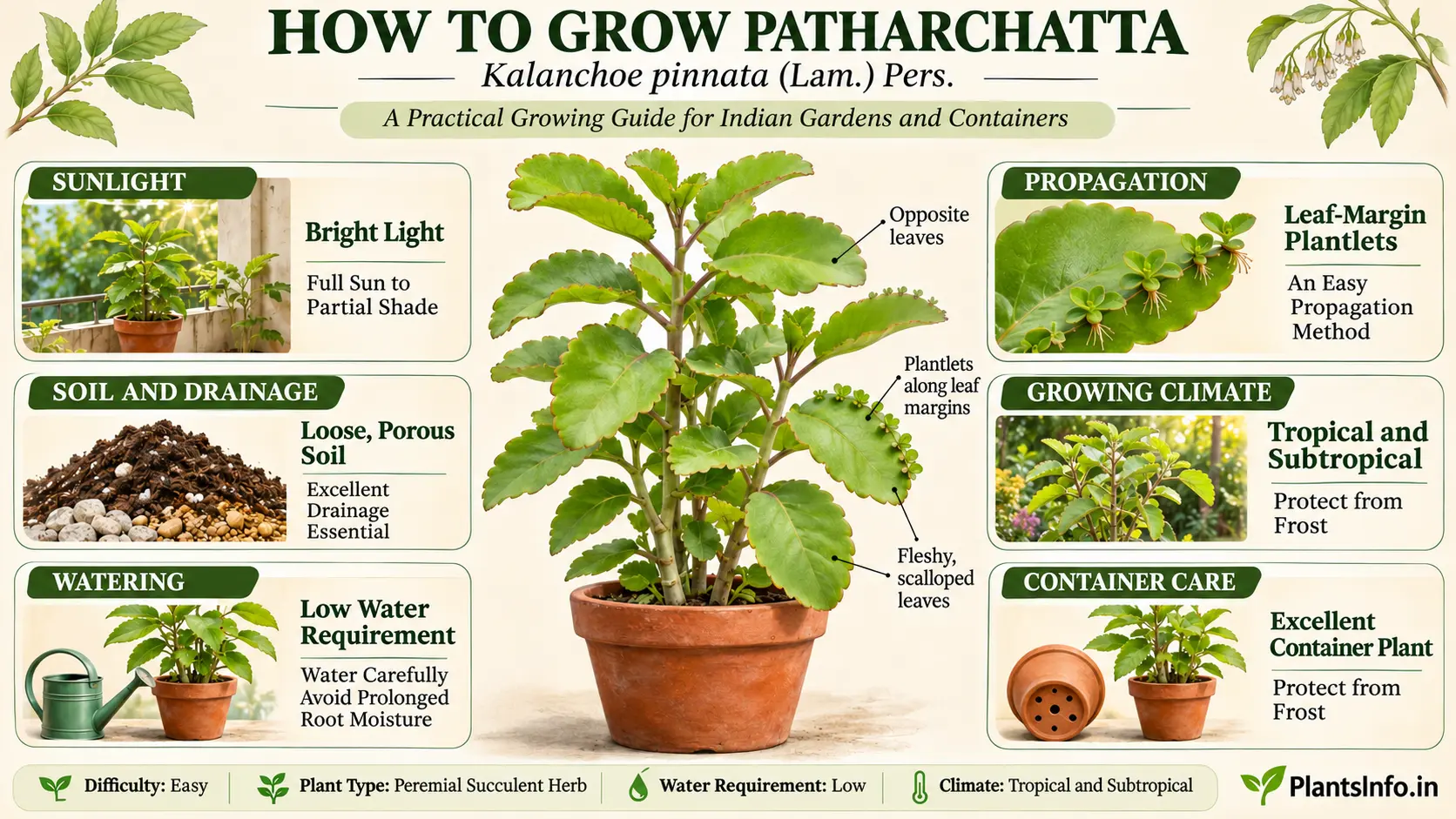
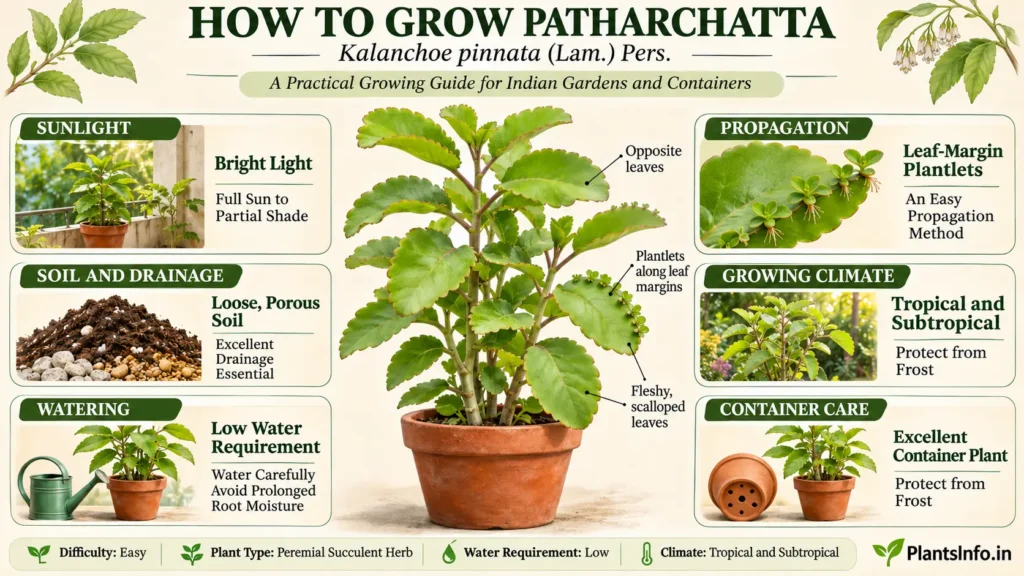
Kalanchoe pinnata, commonly known as Patharchatta, is an easy-to-grow succulent suitable for Indian gardens, balconies and containers. It requires bright light, a porous growing medium and careful watering, as prolonged moisture around the roots can cause serious damage.
See also: Kalanchoe pinnata plant profile, common problems, seasonal care, its flowering season, and its benefits.
The fleshy leaves of this succulent have an unusual feature: small plantlets can develop along their scalloped margins. These miniature plants provide a particularly convenient way to propagate the species.
Recommended Products
Disclosure: As an Amazon Associate, PlantsInfo may earn from qualifying purchases.
🌱 Growing Essentials
The following products can help with container gardening, potting, root development, soil management, and healthy plant growth.
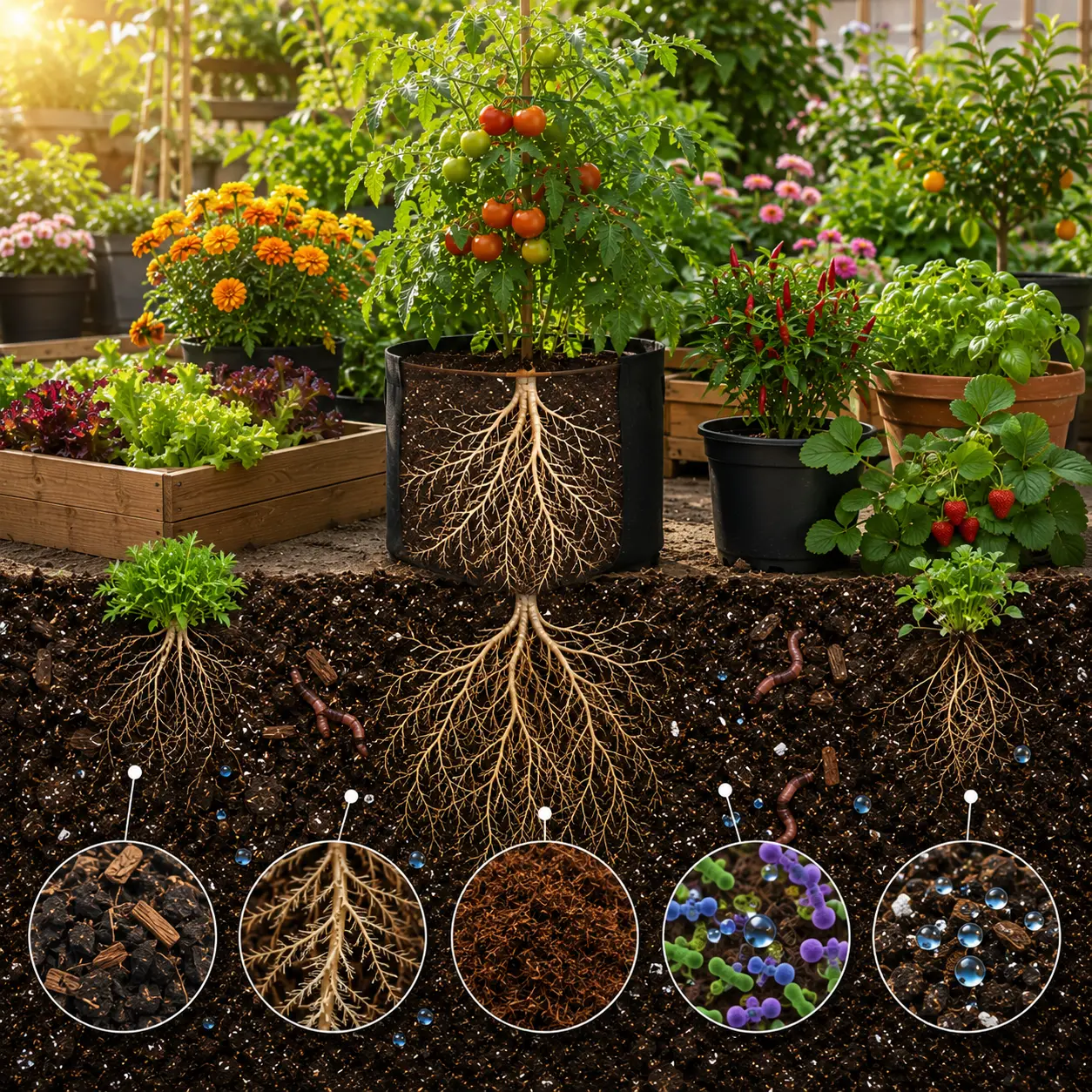
Organic Potting Soil Mix
Provides nutrients, structure, and healthy growing conditions for container plants.
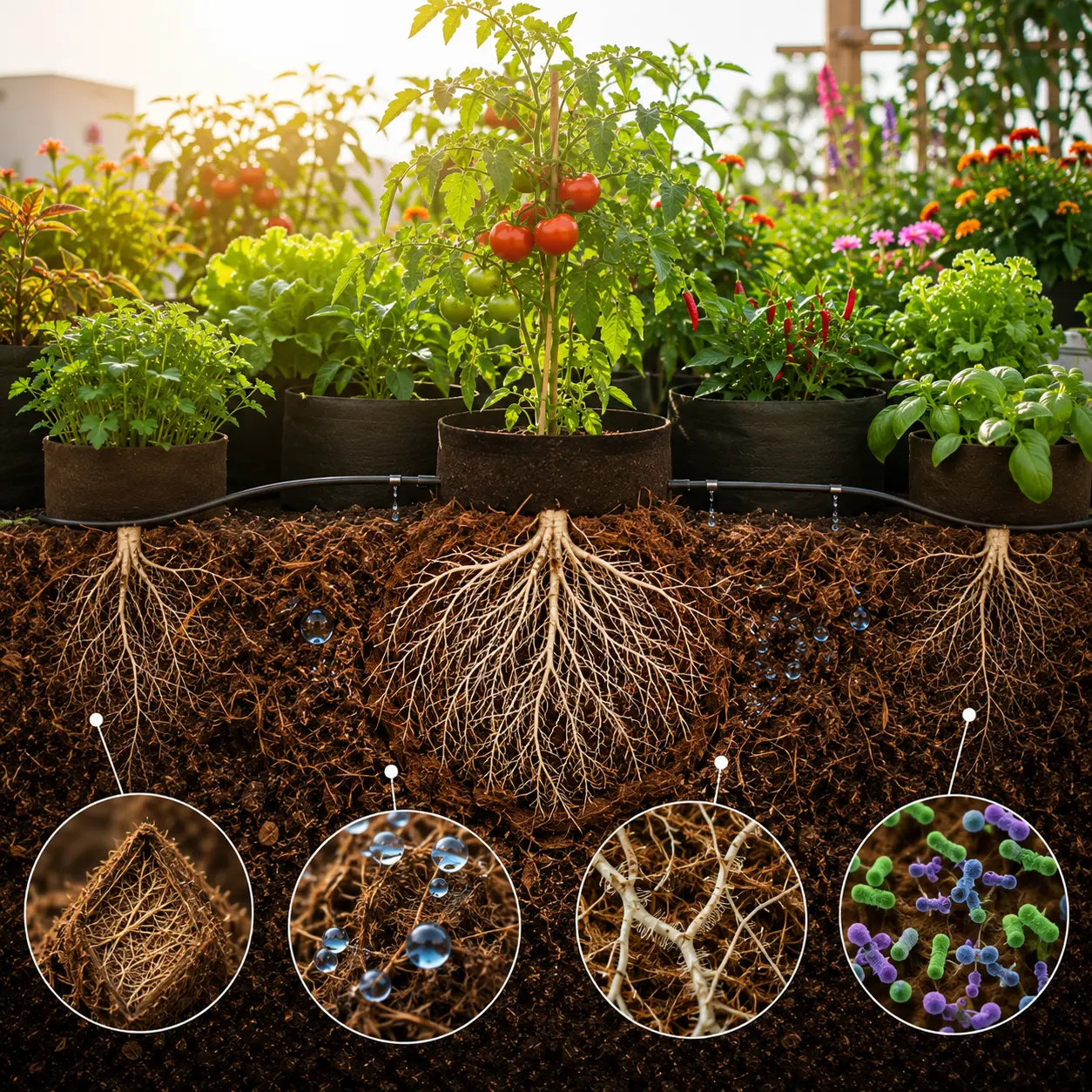
Coco Peat Growing Medium
Enhances moisture retention while maintaining excellent root-zone aeration.

Grow Bags for Plants
Improve drainage, root aeration, and vegetable production in limited spaces.

Plastic Pots for Plants
Ideal containers for seedlings, ornamentals, herbs, and balcony gardens.
Difficulty level: Easy.
One common beginner mistake is treating Patharchatta like an ordinary leafy houseplant and keeping its growing medium continuously moist.
At a Glance
| Characteristic | Details |
|---|---|
| Common names | Patharchatta, Cathedral Bells, Air Plant, Miracle Leaf |
| Scientific name | Kalanchoe pinnata (Lam.) Pers. |
| Family | Crassulaceae |
| Plant type | Perennial succulent herb |
| Mature size | Approximately 0.9–1.8 m under favourable conditions |
| Climate | Tropical and subtropical |
| Sunlight | Bright light; full sun to partial shade |
| Water requirement | Low |
| Soil | Loose, porous and well-drained |
| Drainage | Essential |
| Container suitability | Excellent |
| Drought tolerance | Good |
| Frost tolerance | Poor; protect from frost |
Choosing the Right Spot
Choose a location that receives bright natural light for several hours daily. Kalanchoe pinnata adapts to both full sun and partial shade, although the amount of direct sunlight should be appropriate for the local climate.
For Indian home gardens:
- Balconies: A bright, open balcony with morning sunlight is suitable.
- Terraces: Open terraces provide good light, provided containers have effective drainage.
- Garden beds: Choose a raised or naturally well-drained location.
- Indoors: Place the plant near a bright window rather than in a dark corner.
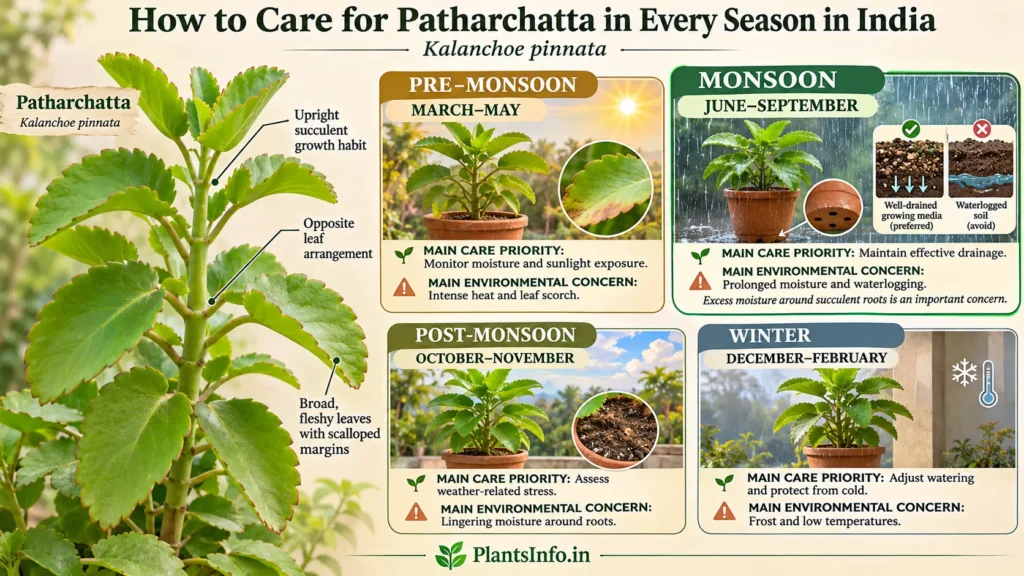
In hot regions of Rajasthan, Gujarat and interior peninsular India, morning sunlight with some protection from intense afternoon exposure is a practical arrangement.
Container cultivation is preferable where unwanted spread into surrounding garden areas is a concern. Detached leaves can produce new plantlets, allowing the species to establish in neighbouring pots and planting spaces.
Soil and Potting Mix
The most important soil characteristic is rapid drainage. Heavy, compacted soil can retain excessive moisture around the roots and create unsuitable growing conditions.
An illustrative potting mixture for Indian container cultivation is:
| Component | Proportion by volume |
|---|---|
| Garden soil or sandy loam | 40% |
| Coarse horticultural sand or pumice | 30% |
| Leaf mould or mature compost | 20% |
| Perlite or fine horticultural grit | 10% |
This is a practical starting mixture rather than a scientifically established optimum for the species. The finished medium should remain loose and porous rather than becoming dense after watering.
When using ordinary garden soil, incorporate suitable coarse material to improve drainage and aeration. Avoid fine construction sand, which can sometimes increase compaction instead of improving the physical structure of the medium.
A common mistake is using a rich, clay-heavy garden mixture without sufficient coarse material. Such soil can remain wet around the roots for extended periods.
Planting
Plantlets and Stem Cuttings
Plantlets produced along the leaf margins are the most convenient starting material for home gardeners. Stem cuttings provide another practical propagation option.
For planting:
- Select a healthy, established plantlet or firm stem cutting.
- Prepare a small pot with unobstructed drainage holes.
- Fill it with the prepared succulent potting mixture.
- Place the plantlet upright, keeping its base in contact with the growing medium.
- For stem cuttings, insert the lower portion into the medium without burying the leaves.
- Water lightly and allow excess water to drain.
Avoid burying the entire plantlet or placing a small cutting in an unnecessarily large container.
Planting in Garden Beds
Select a location with naturally free-draining soil. Allow sufficient space for the mature plant and consider its potential spread through detached leaves and marginal plantlets.
Where unwanted establishment outside the intended planting area is a concern, container cultivation provides better control.
Watering
Kalanchoe pinnata stores water in its fleshy leaves and stems. Its irrigation requirements are therefore lower than those of many conventional foliage plants.
Newly Planted Material
During the initial establishment period:
- Water lightly after planting.
- Allow the growing medium to dry before watering again.
- Avoid keeping the pot standing in collected drainage water.
- Check moisture below the surface rather than relying only on the appearance of the topsoil.
Established Plants
Water thoroughly when the growing medium has dried sufficiently. The interval depends on container size, sunlight exposure, temperature, humidity, and soil composition.
Avoid following a rigid watering schedule without considering these conditions. Excessive moisture is particularly problematic when the growing medium retains water around the roots.
Fertiliser
Patharchatta does not require heavy fertilisation. Excessive feeding can encourage unnecessarily soft growth and is not a substitute for suitable growing conditions.
For container-grown plants, a modest nutrient supply is generally sufficient.
| Fertiliser option | Suggested use |
|---|---|
| Mature vermicompost | Small quantity as an organic nutrient source |
| Well-decomposed compost | Occasional light application |
| Balanced NPK fertiliser | Diluted application according to the product label |
Avoid applying fresh mustard cake or concentrated fertiliser directly around the roots. Do not use heavy fertiliser applications to compensate for poor light, unsuitable soil or other growing problems.
Propagation
One of the most useful characteristics of Kalanchoe pinnata is its ability to produce plantlets along the margins of mature leaves. These plantlets can develop into independent plants, making vegetative propagation relatively straightforward.
Propagation Through Leaf Plantlets
This is the most convenient method for many home gardeners.
- Select a mature leaf carrying well-developed marginal plantlets.
- Allow the plantlets to develop sufficiently before separating them.
- Gently detach individual plantlets without damaging their developing roots.
- Place each plantlet in a small container containing porous potting medium.
- Maintain light moisture while the plantlets establish.
- Move established plants to their permanent growing locations.
Propagation Through Stem Cuttings
Stem cuttings provide another straightforward method.
- Select a healthy, firm stem.
- Take a suitable cutting using a clean cutting tool.
- Allow the cut surface to dry before planting.
- Insert the lower portion into a well-drained growing medium.
- Water sparingly while roots develop.
Both methods are practical, although marginal plantlets make this species particularly easy to multiply.
Container Growing
Kalanchoe pinnata is well suited to container cultivation. Pots also help restrict unwanted spread into surrounding garden spaces.
Choosing a Container
- Select a pot with unobstructed drainage holes.
- Choose a container slightly larger than the root system.
- Terracotta pots are a practical option because their porous walls allow moisture to evaporate.
- Avoid excessively large containers that hold unnecessary quantities of growing medium around a small plant.
Repotting
Repot when the plant outgrows its container or its roots become crowded. Use fresh, porous growing medium and a suitably sized replacement pot.
A container that is substantially larger than the existing root system can make moisture management more difficult, particularly while the plant is establishing.
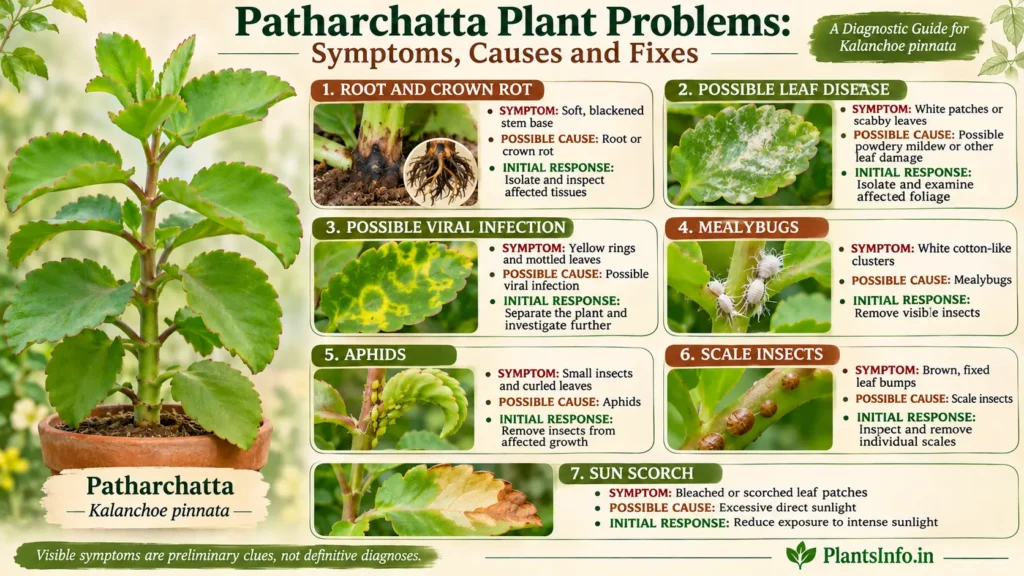
Common Problems
The following issues may occur during home cultivation:
- Root deterioration: Prolonged moisture around the roots can cause decay, particularly in compacted or poorly drained growing media.
- Caterpillar damage: Feeding by butterfly larvae can damage leaf tissue and affect the appearance of foliage.
- Unwanted spread: Detached leaves and marginal plantlets can establish new plants in neighbouring pots and garden areas.
These problems should be distinguished from ordinary changes in leaf appearance associated with ageing or environmental conditions.
Common Growing Mistakes
Planting Plantlets Too Deeply
Small leaf-margin plantlets should not be buried beneath the growing medium. Deep planting can interfere with establishment and expose delicate foliage to prolonged moisture.
Using an Excessively Large Container
A large pot contains more growing medium than a small plant initially requires. This can make moisture management difficult, particularly while the root system is still developing.
Moving Plants Abruptly into Intense Sunlight
A plant previously maintained in partial shade may experience leaf damage when suddenly exposed to strong direct sunlight. Gradual adjustment is preferable when changing its growing location.
Safety and Responsible Cultivation
Kalanchoe pinnata contains bufadienolides, compounds associated with cardiac toxicity. Avoid ingestion and keep the plant out of reach of children and pets.
The species can also produce numerous plantlets from detached leaves. Prevent unwanted establishment in neighbouring growing areas and avoid discarding viable plant material where it could spread into unmanaged habitats.
Establishment and Growth
Newly planted material needs time to establish its root system. The speed of development varies with the condition of the starting material and the surrounding growing environment.
Successful establishment is generally indicated by firm foliage, stable attachment to the growing medium, and the appearance of new growth. Plantlets can subsequently develop into larger independent plants under suitable conditions.
Conclusion
Kalanchoe pinnata is a rewarding succulent for Indian home gardens, particularly for gardeners interested in vegetative propagation. Its unusual leaf-margin plantlets, adaptable growth habit, and relatively modest cultivation requirements make it an interesting addition to a well-managed plant collection.