Bougainvillea Plant Problems: Symptoms and Fixes

Excess moisture around the roots is one of the common causes of trouble in cultivated bougainvillea, particularly in containers and poorly drained soil. Yellowing leaves, leaf drop and declining growth may follow, but the underlying problem can often be managed when identified before severe root damage develops.
See also: Bougainvillea Comm. ex Juss. plant profile, how to grow it, seasonal care, its flowering season, and its benefits.
Introduction
A bougainvillea can lose leaves or produce weak growth even when its stems remain alive. Not every decline is caused by a disease: fungal infections, sap-feeding insects, and unsuitable growing conditions can produce overlapping symptoms. Examining the affected plant parts and surrounding conditions helps distinguish them.
Recommended Products
Disclosure: As an Amazon Associate, PlantsInfo may earn from qualifying purchases.
🌱 Growing Essentials
The following products can help with container gardening, potting, root development, soil management, and healthy plant growth.
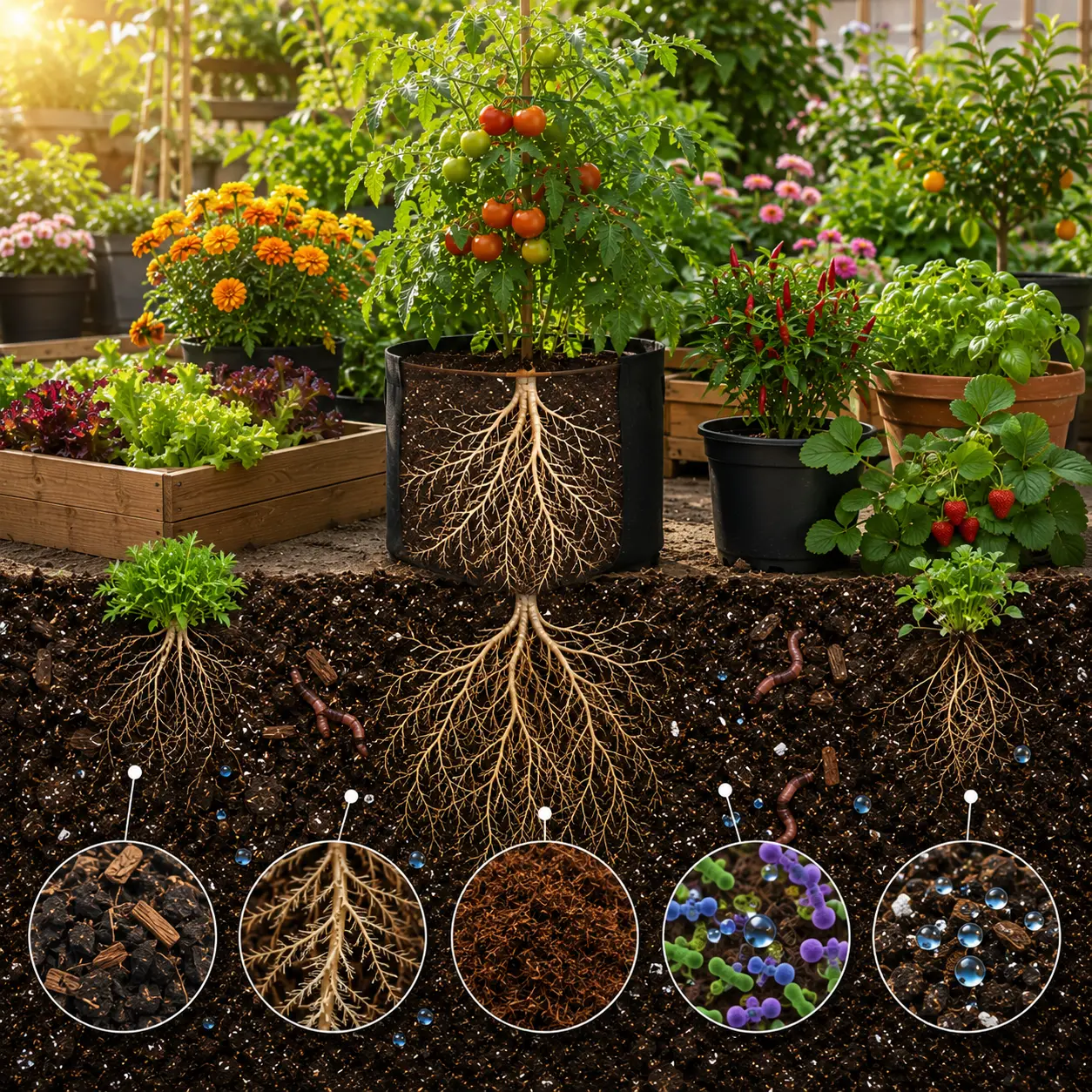
Organic Potting Soil Mix
Provides nutrients, structure, and healthy growing conditions for container plants.
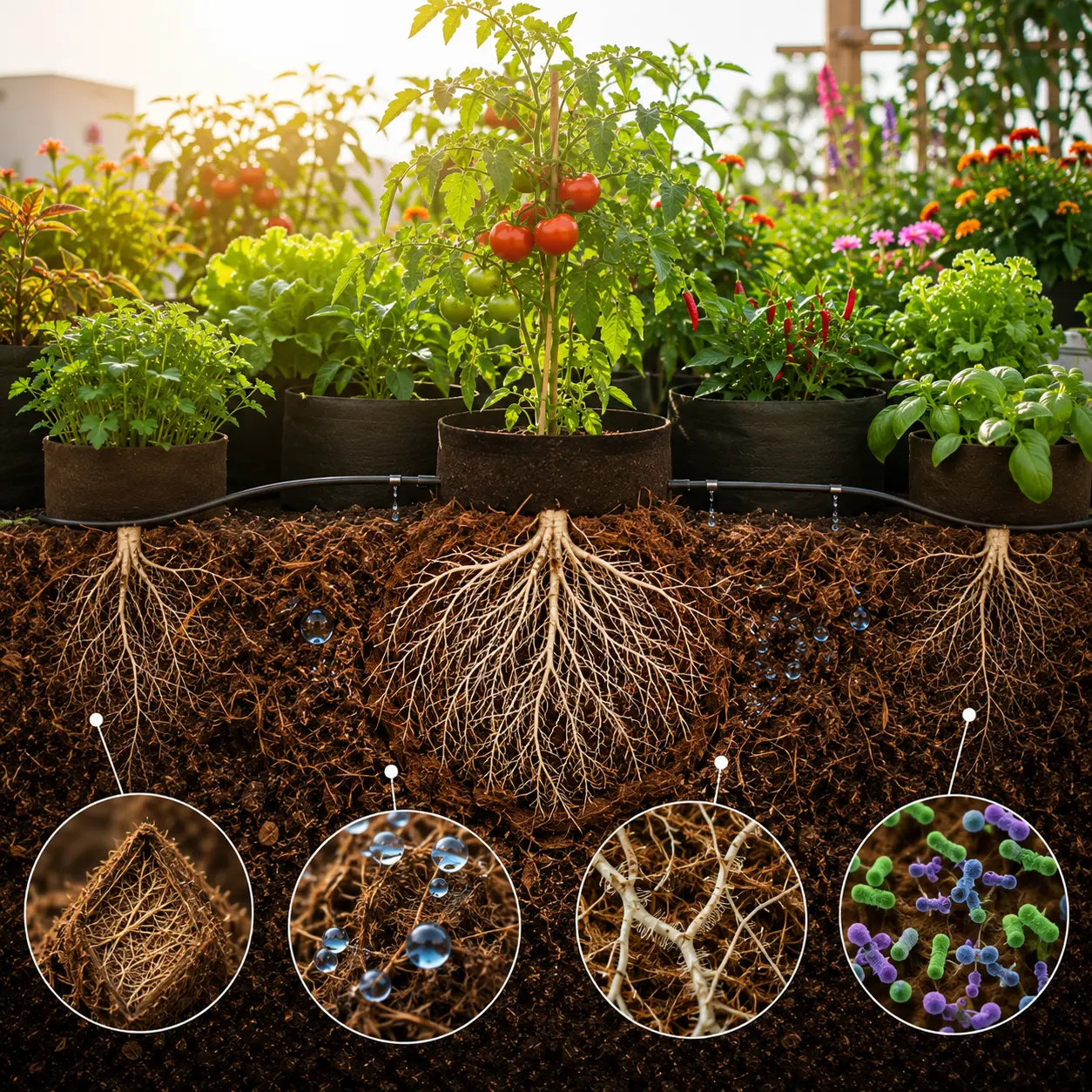
Coco Peat Growing Medium
Enhances moisture retention while maintaining excellent root-zone aeration.

Grow Bags for Plants
Improve drainage, root aeration, and vegetable production in limited spaces.

Plastic Pots for Plants
Ideal containers for seedlings, ornamentals, herbs, and balcony gardens.
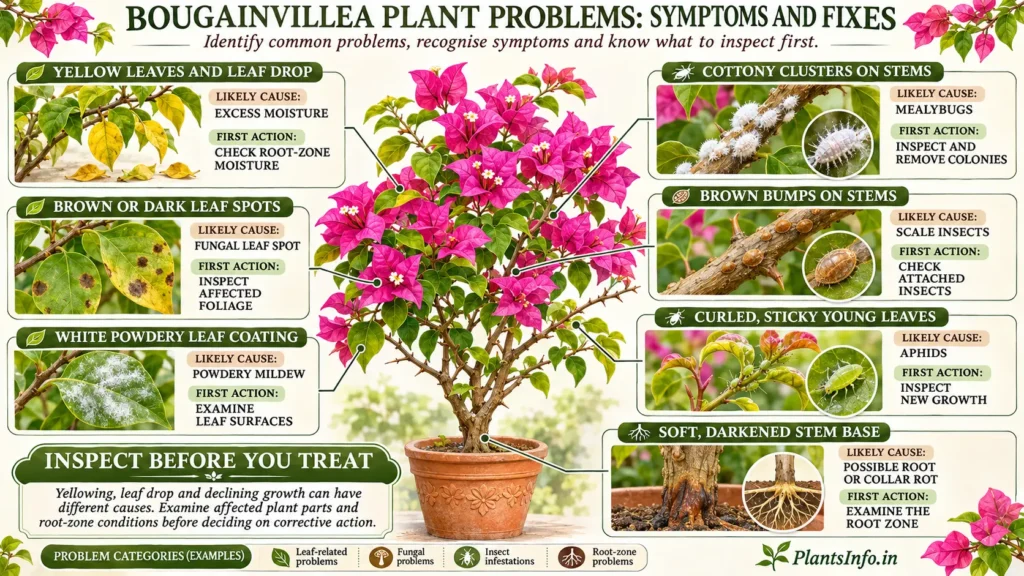
Quick Diagnosis
| Symptom | Most Likely Cause | First Action |
|---|---|---|
| Yellow leaves and leaf drop | Excess moisture | Check root-zone moisture |
| Brown or dark leaf spots | Fungal leaf spot | Inspect affected foliage |
| White powdery leaf coating | Powdery mildew | Examine leaf surfaces |
| Cottony clusters on stems | Mealybugs | Inspect and remove colonies |
| Brown bumps on stems | Scale insects | Check attached insects |
| Curled, sticky young leaves | Aphids | Inspect new growth |
| Soft, darkened stem base | Possible root or collar rot | Examine the root zone |
Diseases
Fungal Leaf Spot
Fungal leaf spot may appear as small brown, tan, or dark lesions on leaves. As affected areas enlarge, individual spots may merge, causing sections of foliage to turn brown and die.
The condition is associated with fungal infection, often favoured by prolonged leaf wetness, humid conditions and poor air circulation. Similar leaf damage can have other causes, so the appearance of spots alone does not confirm a fungal infection.
Remove heavily affected leaves and dispose of fallen infected material. Improve air circulation around the plant and avoid prolonged wetting of foliage. Fungicide treatment may be considered for persistent, correctly identified infections, but it should not replace sanitation and environmental management.
Chemical safety: Use fungicides only when the product is legally registered and specifically labelled for the intended ornamental-plant use. Follow all label directions, including application rates, protective equipment, re-entry instructions, and environmental precautions. Do not assume that a product approved for another crop or purpose is suitable for bougainvillea.
Powdery Mildew
Powdery mildew appears as a white or greyish powder-like coating on leaf surfaces and sometimes on young shoots. In more severe cases, affected leaves may become distorted, yellow or prematurely shed.
It is caused by powdery mildew fungi. Unlike many other fungal diseases, infection does not necessarily require water to remain on the leaf surface; humid conditions and restricted air movement can favour its development.
Remove severely affected foliage and improve air circulation. The disease is generally manageable, although recurring infections may require a suitable labelled fungicide. Avoid assuming that every white deposit is powdery mildew; mineral residues and other surface deposits can look similar.
Root and Collar Rot
Root or collar rot can develop when the growing medium remains excessively wet for extended periods. Affected plants may show declining growth, yellowing foliage, wilting despite moist soil, and soft or darkened tissue near the base of the stem.
Several soil-borne pathogens can cause root or collar rot, so the precise organism cannot be identified from above-ground symptoms alone. A soft or darkened stem base is a warning sign that warrants examination of the roots and surrounding growing medium. Severe infections may destroy much of the root system and can be difficult to reverse.
Remove a severely affected plant if the main stem base and most of the roots have become soft and decayed. For less advanced cases, assess the damaged roots and growing medium before deciding whether recovery is possible. Avoid reusing contaminated potting material.
Pest Problems
Mealybugs
Mealybugs are small, soft-bodied insects covered with a white, waxy, cotton-like coating. They often gather around leaf joints, young shoots, and stems, where they feed on plant sap. Heavy infestations can cause weak growth, leaf distortion, and leaf drop.
For small infestations, remove colonies manually or use a directed spray of insecticidal soap or horticultural oil according to its label. A suitable labelled insecticide may be considered for persistent infestations where permitted. Avoid spraying flowering plants when pollinators are actively visiting them.
Scale Insects
Scale insects appear as small, fixed brown, grey or pale bumps attached to stems and leaves. Their protective coverings can make them look like natural growths rather than insects. They feed on plant sap and may cause yellowing, reduced vigour and premature leaf drop.
Remove small colonies manually or use horticultural oil labelled for scale insects. For persistent infestations, a suitable insecticide may be considered only where its registration and label permit the intended use. Check the plant carefully because scale insects can remain attached to older woody stems.
Aphids
Aphids are small, soft-bodied insects that commonly cluster on tender shoots and the undersides of young leaves. They feed on sap, causing new growth to curl or become distorted. Their sugary honeydew can also leave foliage sticky and encourage the growth of sooty mould.
Dislodge small colonies with a directed stream of water or use insecticidal soap according to its label. A suitable labelled aphid-control insecticide may be considered when infestations are persistent and damaging.
Pest identification note: Scale insects and mealybugs can be mistaken for fungal growth or stem abnormalities. Their presence is indicated by individual insects or attached colonies rather than a spreading fungal lesion.
Environmental and Care Mistakes
Excessive Watering and Poor Drainage
Yellowing leaves, premature leaf drop, and weak growth can develop when roots remain in saturated soil. This reduces oxygen availability around the roots and may also encourage root-rotting organisms.
Allow excess water to drain freely and correct blocked drainage. If the growing medium remains persistently saturated, replacing it with a more suitable, freely draining medium may be necessary.
Insufficient Sunlight
A bougainvillea receiving inadequate direct sunlight may develop elongated, weak shoots and sparse foliage, with less vigorous overall growth. The problem is sometimes mistaken for a nutritional deficiency.
Move a container-grown plant to a brighter location where appropriate. For an established plant in the ground, assess whether surrounding structures or vegetation are creating excessive shade.
Transplant Shock
Leaf drop, temporary wilting, and reduced growth may follow relocation or transplanting. Disturbance to the root system and a sudden change in environmental conditions can temporarily reduce the plant’s ability to maintain its foliage.
Avoid repeated relocation or unnecessary disturbance while the plant recovers. Severe or continuing decline, particularly with darkened stem bases, should not automatically be attributed to transplant shock.
Excessive Nitrogen Fertilisation
Applying too much nitrogen-rich fertiliser in the expectation of obtaining more flowers can produce abundant leafy shoots with relatively weak flowering performance.
Stop excessive fertiliser applications and allow the plant to resume balanced growth. Review the fertiliser formulation before applying further nutrients.
Prevention Protocol
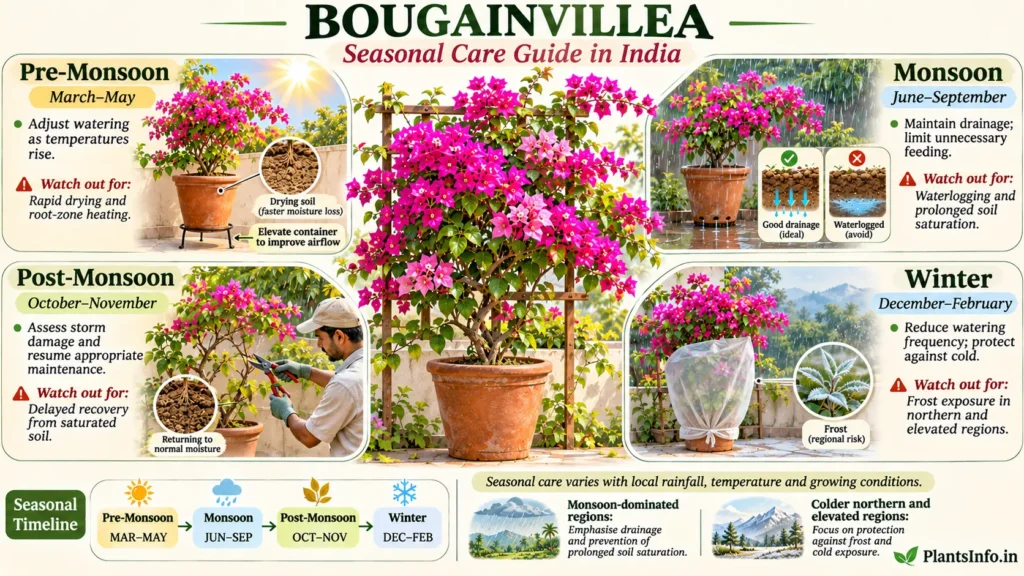
- Before monsoon onset: Check that garden beds and containers drain freely, particularly where water tends to collect.
- During humid periods: Keep sufficient space around the plant to reduce prolonged humidity within dense foliage.
- Throughout the year: Inspect young shoots, leaf joints and older stems for early signs of sap-feeding insects.
- After leaf drop: Remove fallen foliage and plant debris that may harbour disease-causing organisms.
- When purchasing plants: Examine nursery specimens for cottony insect colonies, scale-like bumps and unusual leaf spotting before bringing them home.
When to Give Up on a Plant
Bougainvillea can often recover from leaf loss and moderate environmental stress, but a plant with extensive root and collar rot may be beyond recovery.
Warning signs include a severely decayed stem base, widespread soft and blackened roots, and progressive collapse of the main woody structure. Remove a plant in this condition and discard the affected growing medium rather than reusing it for another bougainvillea.
Frequently Asked Questions
Is leaf drop always a sign of disease in bougainvillea?
No. Leaf drop can result from root-zone stress, relocation, temperature changes, or insect infestation, as well as disease. The condition of the stems, roots, and remaining foliage helps distinguish these possibilities.
Are white patches on bougainvillea always powdery mildew?
No. Mealybugs, mineral deposits, and other surface residues can resemble white fungal growth. Powdery mildew generally appears as a spreading powder-like coating, whereas mealybugs form identifiable cottony colonies.
Can insecticidal products harm pollinators visiting bougainvillea?
Yes. Some insecticides can harm bees and other beneficial insects. Follow the product label, avoid treating actively flowering plants when pollinators are visiting, and prefer targeted treatments where appropriate.
Conclusion
Most bougainvillea problems become easier to manage when symptoms are identified early, and their actual causes are distinguished. Regular inspection and attention to the plant’s immediate growing conditions can prevent many avoidable losses.