Bougainvillea Plant: Names, Facts and Indian Range
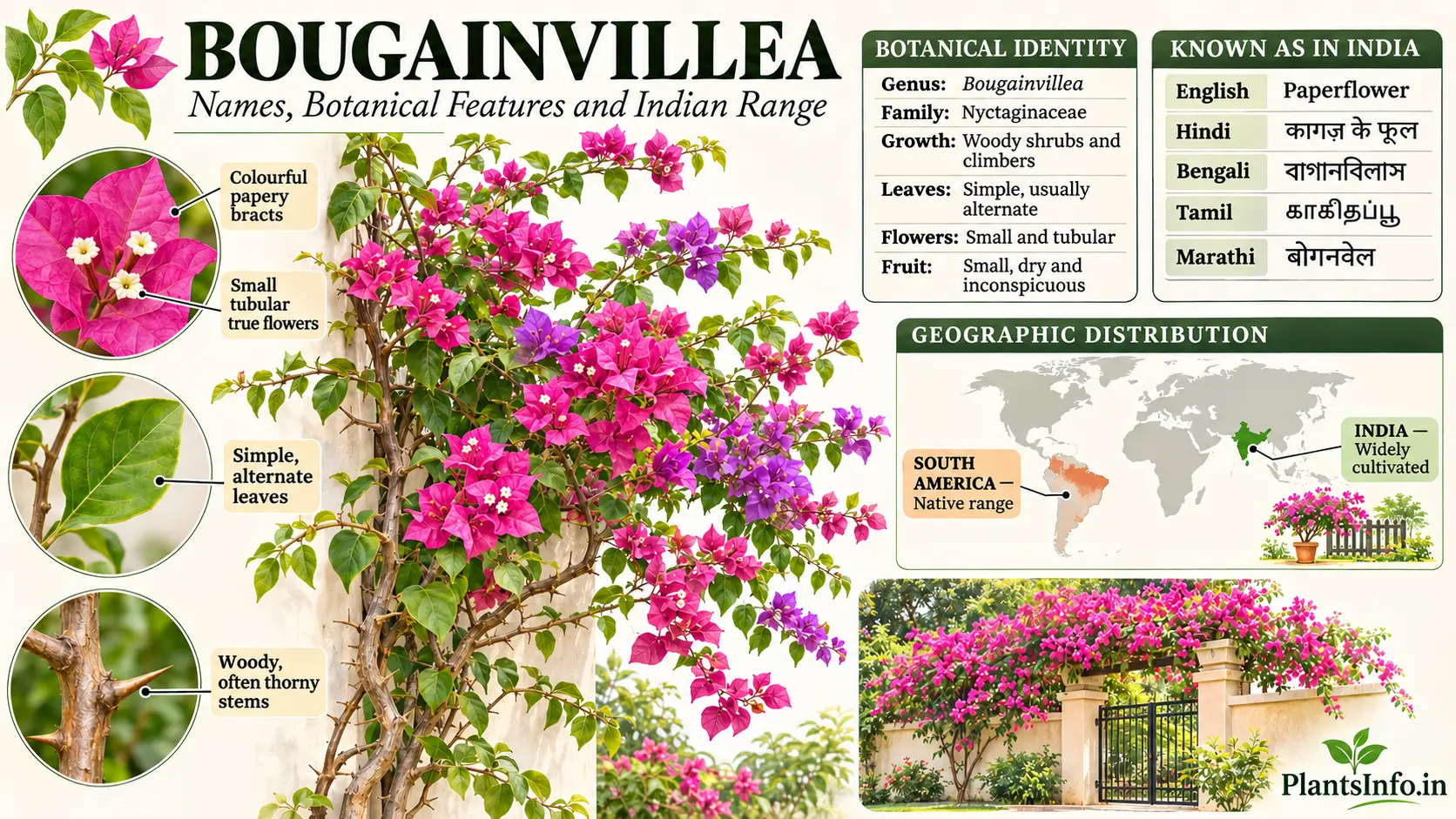
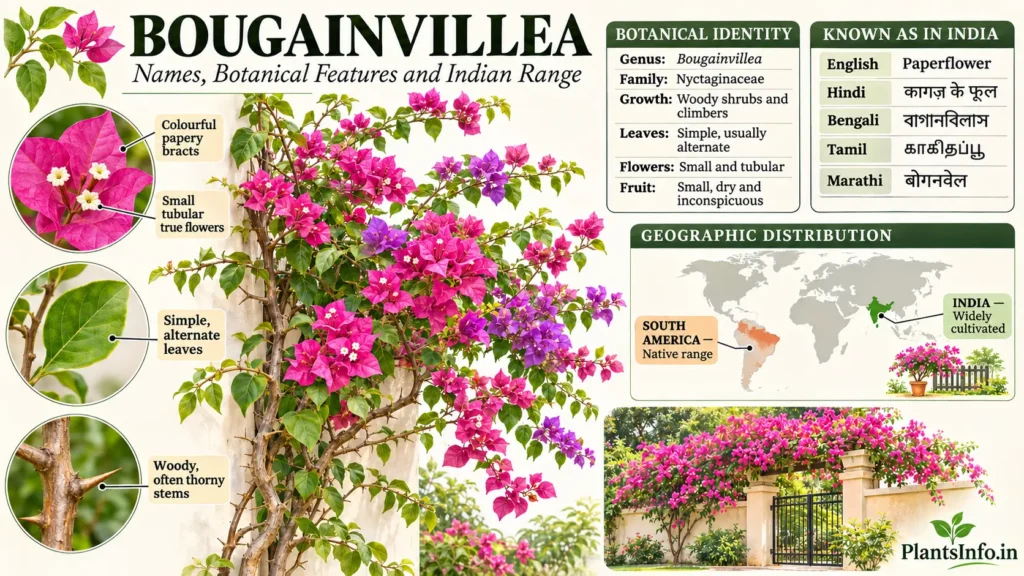
Bougainvillea Comm. ex Juss. is a genus of woody, often thorny shrubs and climbers in the family Nyctaginaceae, native to South America. In India, its members are widely cultivated in tropical and subtropical regions, particularly in gardens, along boundaries and in urban landscapes.
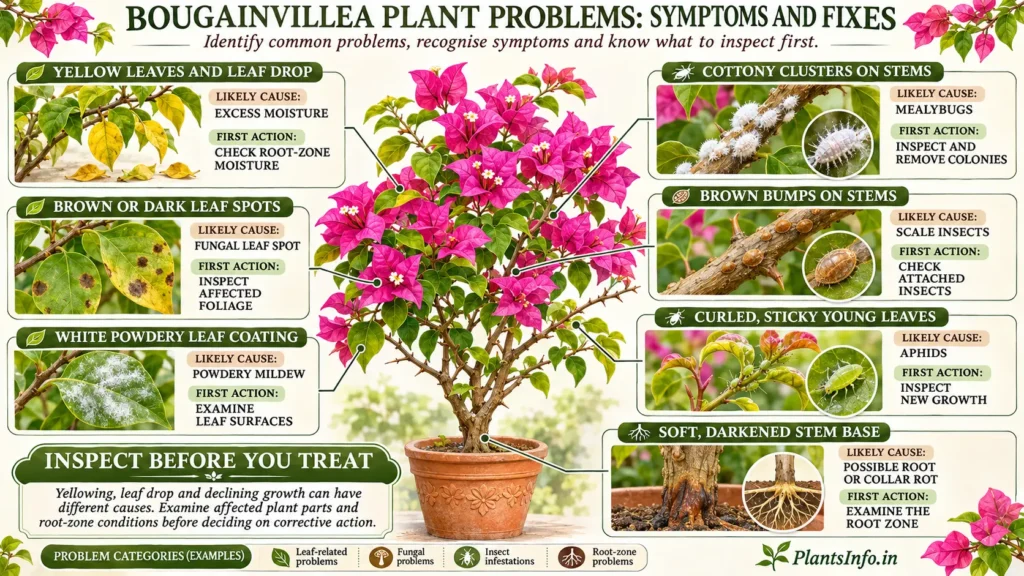
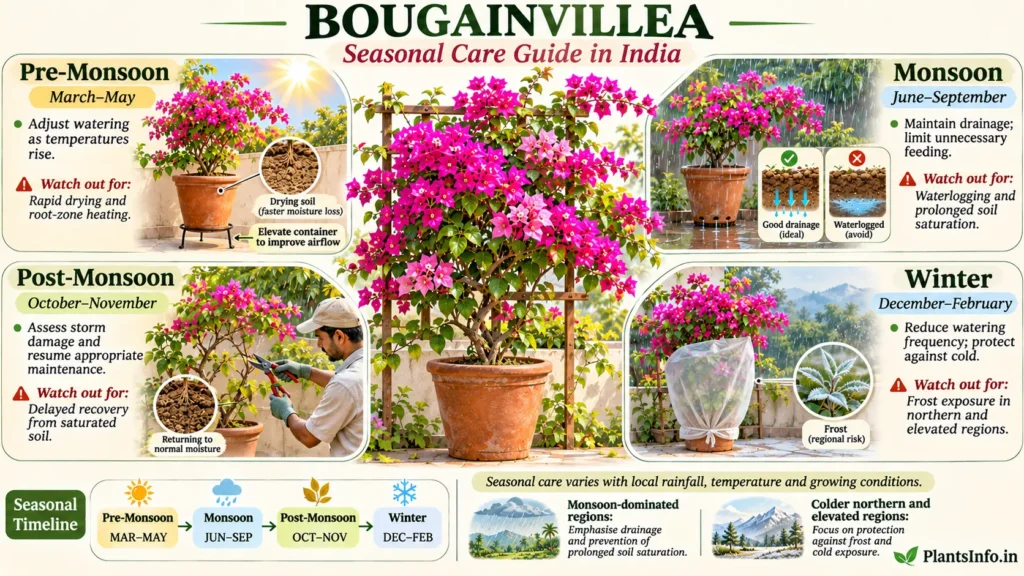
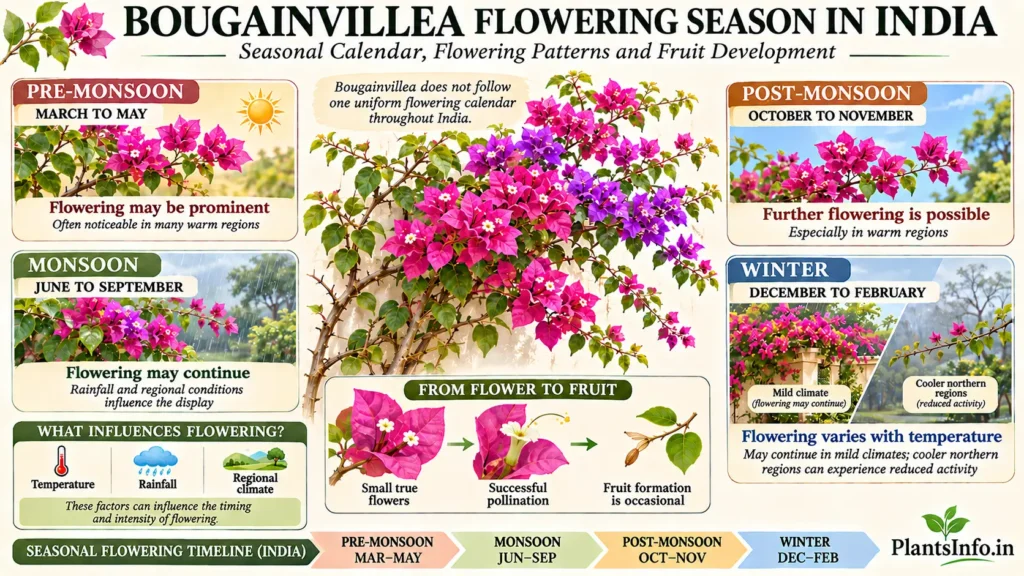
See also: Bougainvillea Comm. ex Juss. plant profile, how to grow it, common problems, seasonal care, and its flowering season.
Introduction
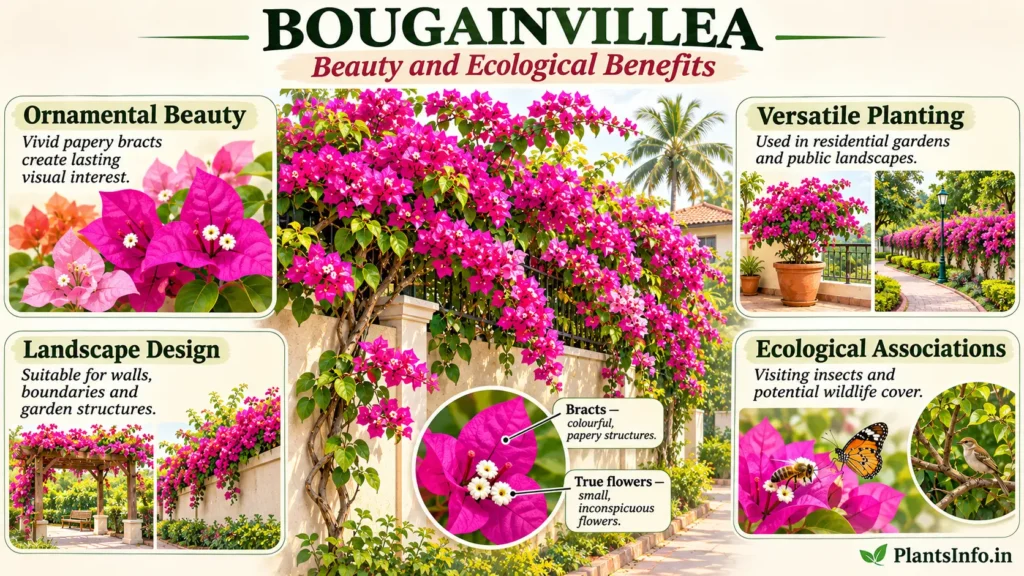
Bright pink, purple, and orange displays often make bougainvillea appear to have large flowers. In reality, much of the colour comes from modified leaves surrounding small, comparatively inconspicuous flowers. This feature is one of the genus’s most recognisable botanical characteristics.
Recommended Products
Disclosure: As an Amazon Associate, PlantsInfo may earn from qualifying purchases.
🌱 Growing Essentials
The following products can help with container gardening, potting, root development, soil management, and healthy plant growth.
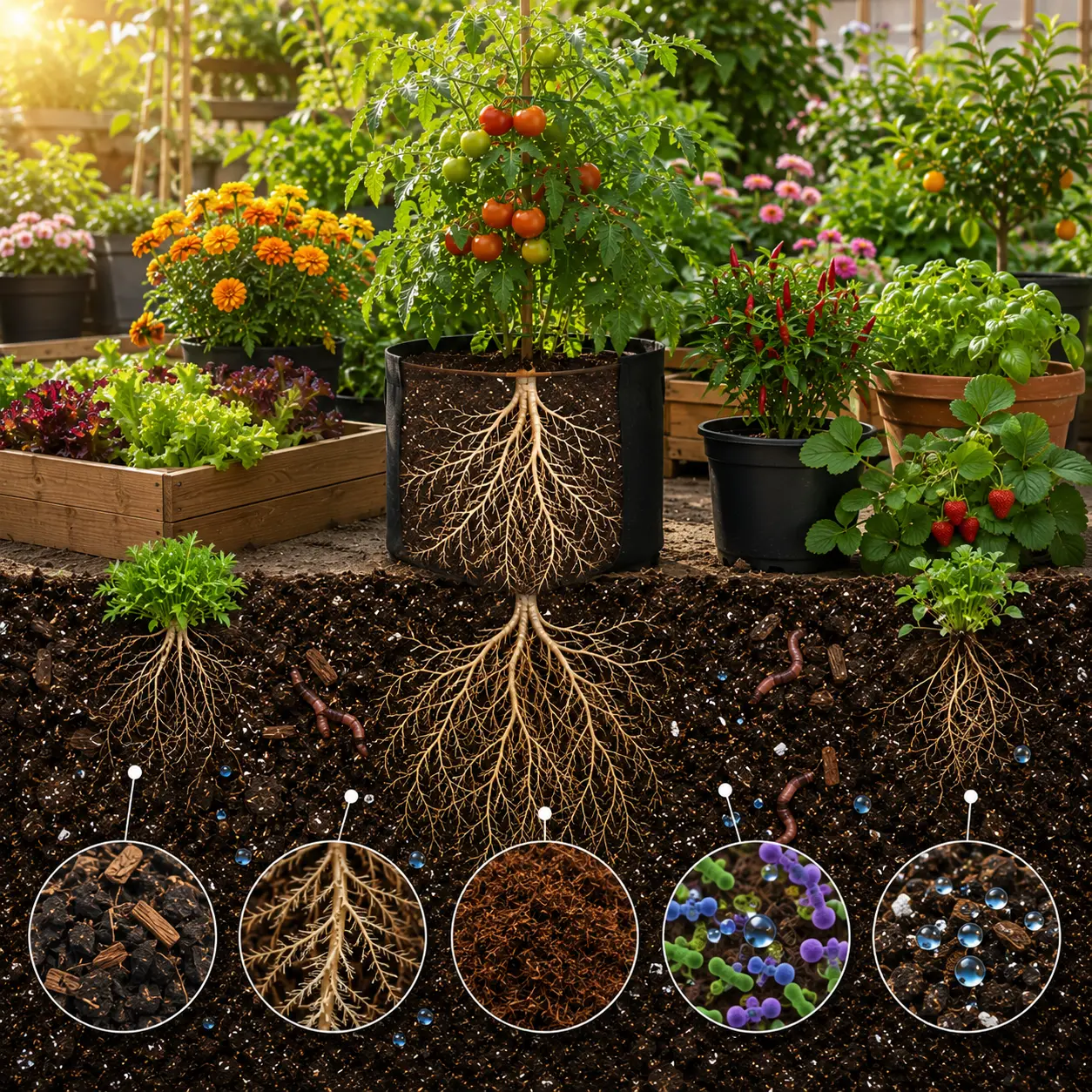
Organic Potting Soil Mix
Provides nutrients, structure, and healthy growing conditions for container plants.
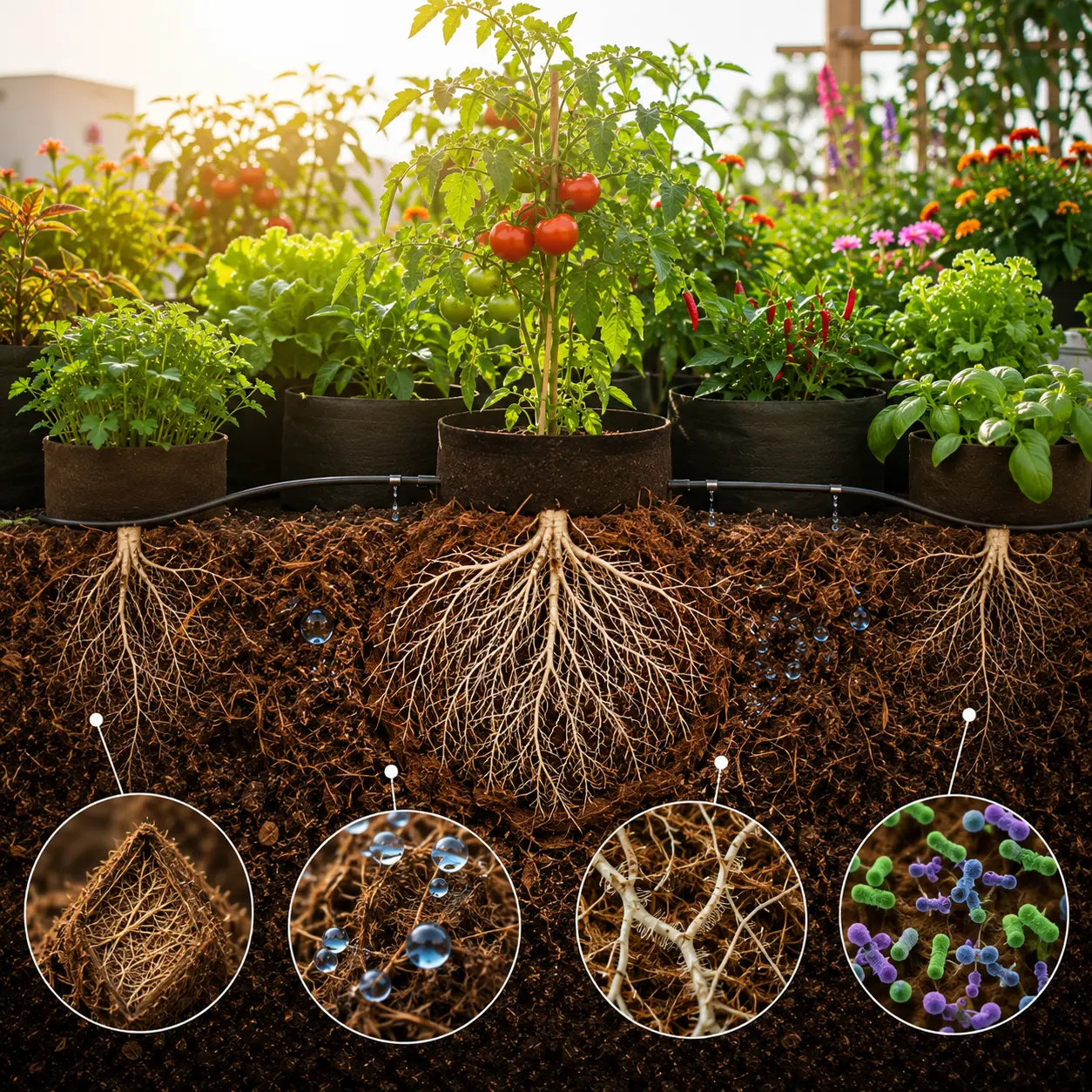
Coco Peat Growing Medium
Enhances moisture retention while maintaining excellent root-zone aeration.

Grow Bags for Plants
Improve drainage, root aeration, and vegetable production in limited spaces.

Plastic Pots for Plants
Ideal containers for seedlings, ornamentals, herbs, and balcony gardens.
Quick Facts Table
| Feature | Typical characteristic |
|---|---|
| Growth form | Woody shrubs, scandent shrubs and climbing plants |
| Leaves | Simple, usually alternate, with entire margins |
| Flowers | Small, tubular and generally arranged in groups of three |
| Fruit | Small, dry and inconspicuous |
| Distinguishing feature | Colourful, papery bracts surrounding the small flowers |
| Family | Nyctaginaceae |
| Native range | South America |
Names in Different Languages
| Language | Common name |
|---|---|
| English | Bougainvillea, Paperflower |
| Hindi | कागज़ के फूल (Kagaz ke Phool) |
| Bengali | বাগানবিলাস (Baganbilas) |
| Tamil | காகிதப்பூ (Kagithapoo) |
| Telugu | బౌగెన్విల్లా (Bougainvillea) |
| Marathi | बोगनवेल (Boganvel) |
| Kannada | ಬೋಗನ್ವಿಲ್ಲಾ (Bougainvillea) |
| Malayalam | ബോഗൻവില്ല (Bougainvillea) |
| Gujarati | બોગનવેલ (Boganvel) |
| Punjabi | ਬੋਗਨਵਿਲੀਆ (Bougainvillea) |
| Scientific name | Bougainvillea Comm. ex Juss. |
| Family | Nyctaginaceae |
Bougainvillea and Paperflower are widely recognisable English names, while regional names vary across India.
What Does It Look Like?
Growth Form and Size
Members of Bougainvillea are woody plants that may grow as spreading shrubs, arching bushes or climbing forms. Their stems can become several metres long when supported by suitable structures. Mature size varies considerably among species, cultivated selections and growing conditions.
Many plants develop woody branches with sharp thorns. These help distinguish bougainvillea from several commonly grown soft-stemmed ornamental climbers.
Leaves
The leaves are generally simple and arranged alternately along the stems. They are usually oval to broadly ovate, with smooth margins and a pointed or slightly rounded tip. Leaf size and shape vary among species and cultivated plants.
Flowers and Bracts
The true flowers are small, tubular and commonly occur in groups of three. Each group is typically surrounded by three conspicuous bracts.
These bracts may be magenta, pink, purple, red, orange, yellowish or white, depending on the plant. Their papery appearance is responsible for the familiar common name Paperflower.
Fruit
The fruit is small, dry and generally inconspicuous compared with the colourful bracts. It develops after successful pollination and is not a prominent ornamental feature.
Main Identification Feature
The combination of woody, often thorny stems, simple leaves and clusters of small flowers surrounded by colourful papery bracts is the most useful visual feature for recognising Bougainvillea.
Where Does It Grow in India?
Native and Cultivated Distribution
The genus Bougainvillea is native to South America. Its natural geographical range is outside India, and the plants commonly seen in Indian gardens are cultivated introductions rather than native Indian species.
It is now widely grown across India, especially in regions with warm tropical and subtropical climates.
Distribution Across Indian Regions
| Indian region | Occurrence and landscape context |
|---|---|
| Western India | Commonly cultivated in residential gardens and urban landscapes |
| Southern India | Widely grown in gardens, institutional grounds and public spaces |
| Eastern India | Cultivated in home gardens and ornamental landscapes |
| Northern plains | Found in gardens, parks and landscaped urban areas |
| Central India | Used in residential and public ornamental planting |
| Himalayan and colder regions | Cultivation is more dependent on local climatic conditions and suitable sheltered sites |
These regional descriptions refer to cultivation, not the genus’s native distribution or continuous natural occurrence.
Climate and Altitude
Bougainvillea is best represented in warm tropical and subtropical environments. Its cultivation is widespread in lowland and moderately elevated areas of India where temperatures are generally suitable. Colder high-altitude environments are less favourable for outdoor cultivation.
Urban and Rural Distribution
In urban areas, bougainvillea is frequently seen in gardens, parks, institutional landscapes and along boundary walls. In rural settings, it may occur in household gardens, farm compounds and other ornamental plantings.
What Is It Used For?
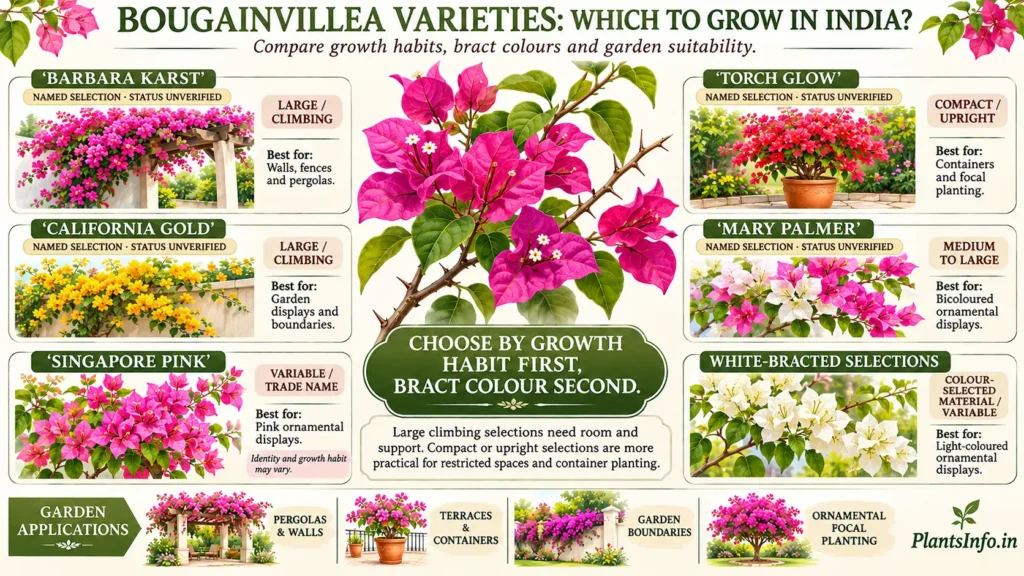
The principal uses of Bougainvillea are ornamental and landscape-related.
- Garden decoration: Cultivated for its colourful bracts and attractive woody growth.
- Boundary landscaping: Planted along walls, fences and property boundaries for ornamental coverage.
- Vertical landscaping: Used on arches, pergolas and other garden structures.
- Public landscaping: Found in parks, institutional grounds, roadside landscapes, and other designed outdoor spaces.
- Container decoration: Grown in pots and large containers for terraces, courtyards and other outdoor spaces.
Is It Easy to Grow?
Bougainvillea is generally considered an easy-to-grow ornamental genus in warm Indian climates. Its suitability is greatest in regions with adequate sunlight and space for its woody, spreading or climbing growth. Its sharp thorns and potentially substantial mature size are relevant considerations when selecting a planting location.
Special Flags
- Thorns: Many bougainvillea plants have sharp thorns on their woody stems, which can cause puncture injuries during contact or handling.
- Identification caution: The colourful structures commonly called flowers are bracts; the actual flowers are the small structures surrounded by them.
Frequently Asked Questions
Is bougainvillea native to India?
No. The genus is native to South America. Its widespread presence in Indian gardens and landscapes results from cultivation and introduction.
Are bougainvillea flowers actually flowers?
The colourful structures commonly mistaken for petals are modified leaves called bracts. The actual flowers are small and usually occur in groups surrounded by these bracts.
Is bougainvillea a shrub or a climber?
It can grow in different forms, including spreading shrubs, arching bushes, and climbing plants. Its growth habit varies among species and cultivated selections.
Conclusion
From residential courtyards to large public landscapes, bougainvillea has become a familiar feature of India’s ornamental plant collections.