Bougainvillea Seasonal Care Guide in India
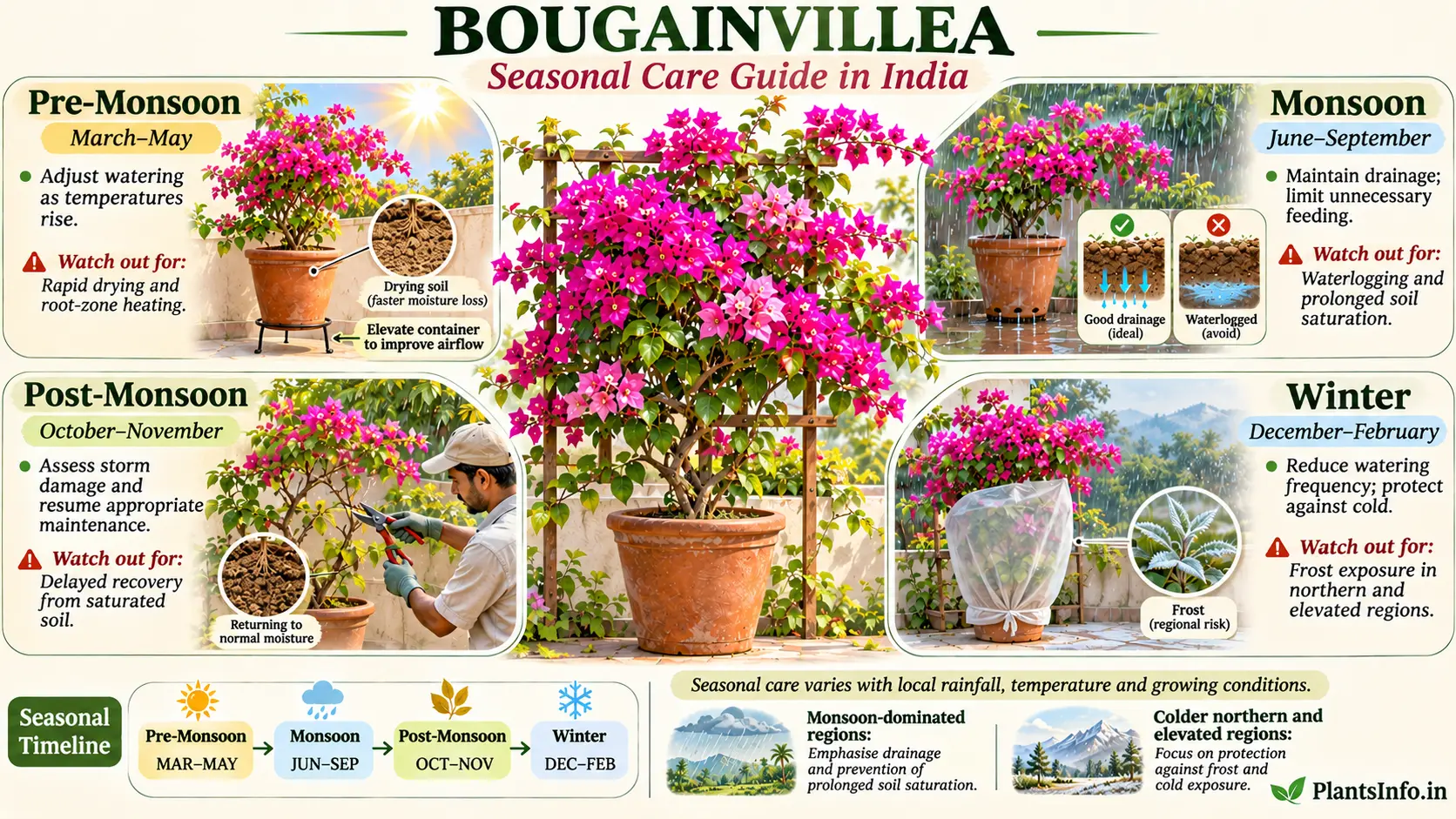
For bougainvillea grown in regions with substantial monsoon rainfall, the Monsoon (Jun–Sep) can be particularly challenging because prolonged soil saturation threatens root health. In colder parts of India, however, winter frost can be the more serious seasonal risk.
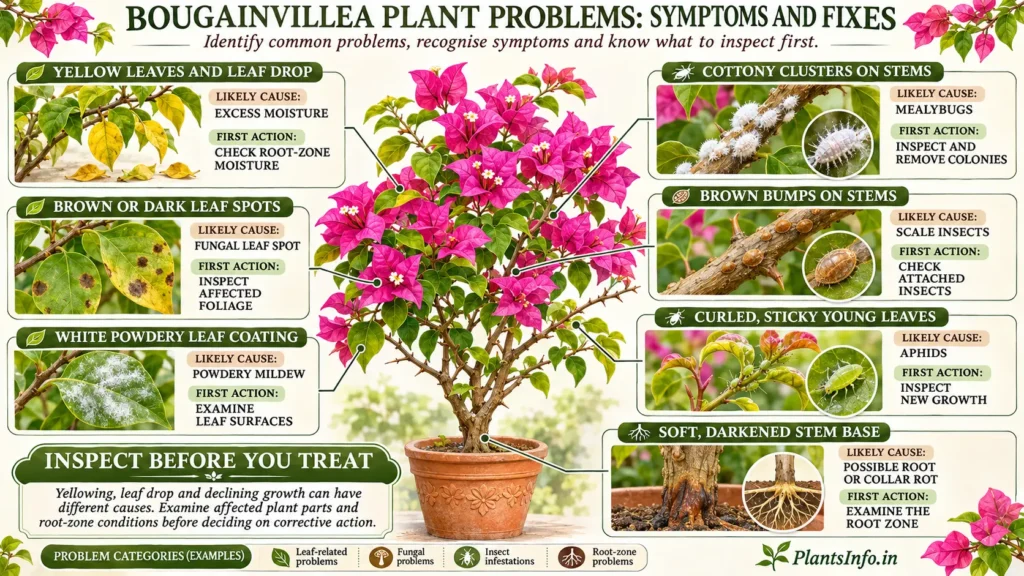
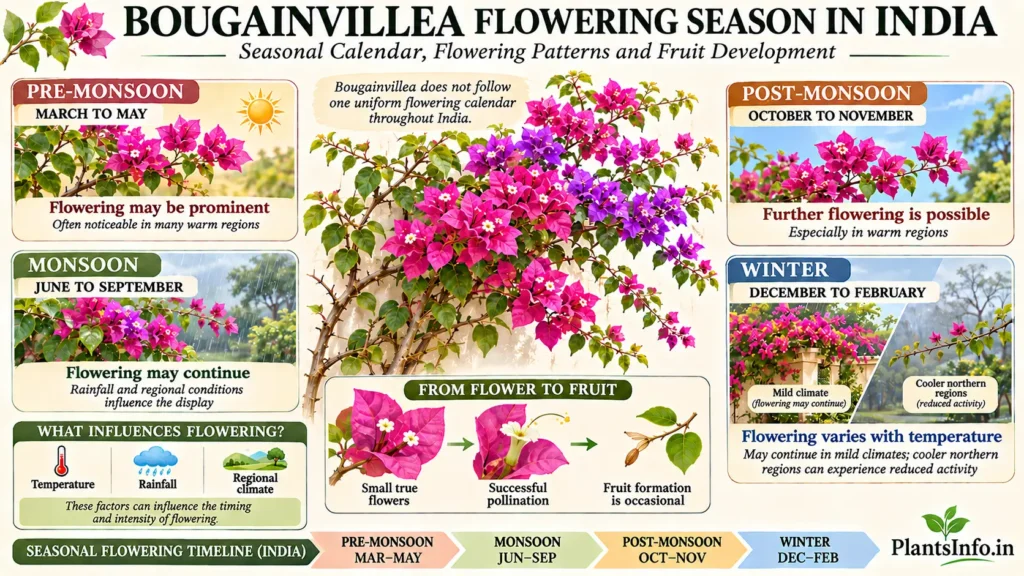
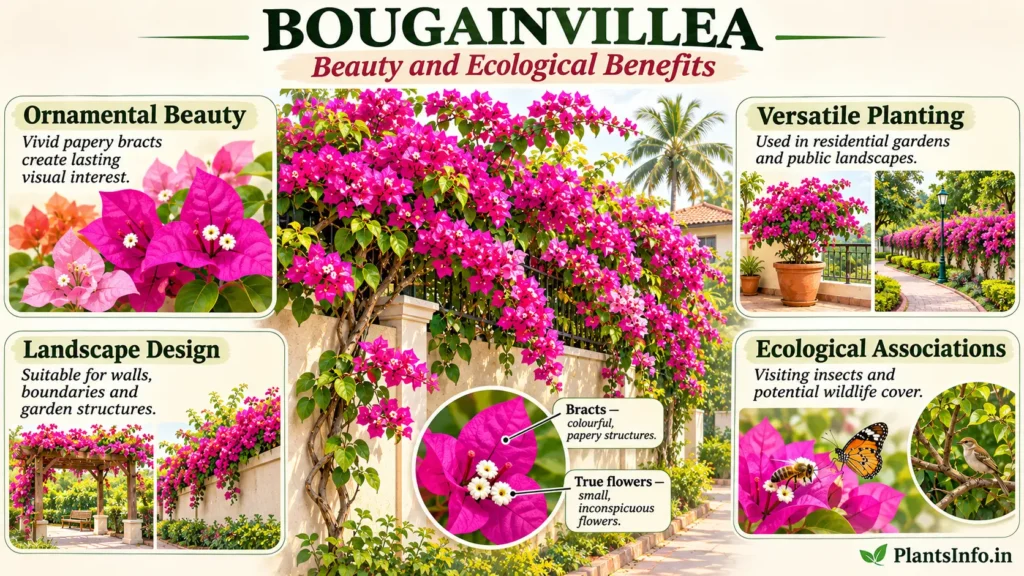
See also: Bougainvillea Comm. ex Juss. plant profile, how to grow it, common problems, its flowering season, and its benefits.
Seasonal care should respond to local rainfall, soil moisture, and temperature rather than follow a rigid monthly routine.
Recommended Products
Disclosure: As an Amazon Associate, PlantsInfo may earn from qualifying purchases.
🌱 Growing Essentials
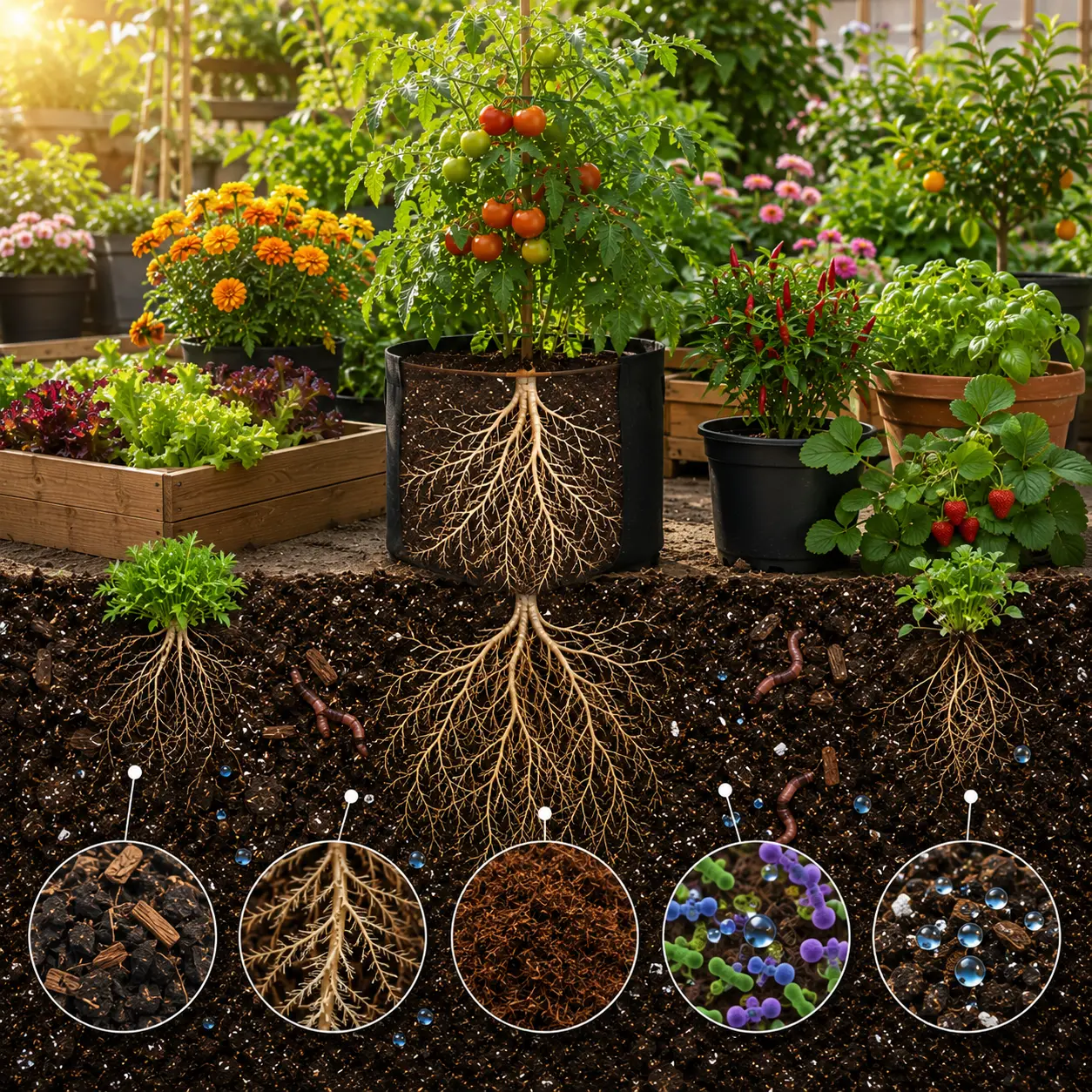
The following products can help with container gardening, potting, root development, soil management, and healthy plant growth.
Organic Potting Soil Mix
Provides nutrients, structure, and healthy growing conditions for container plants.
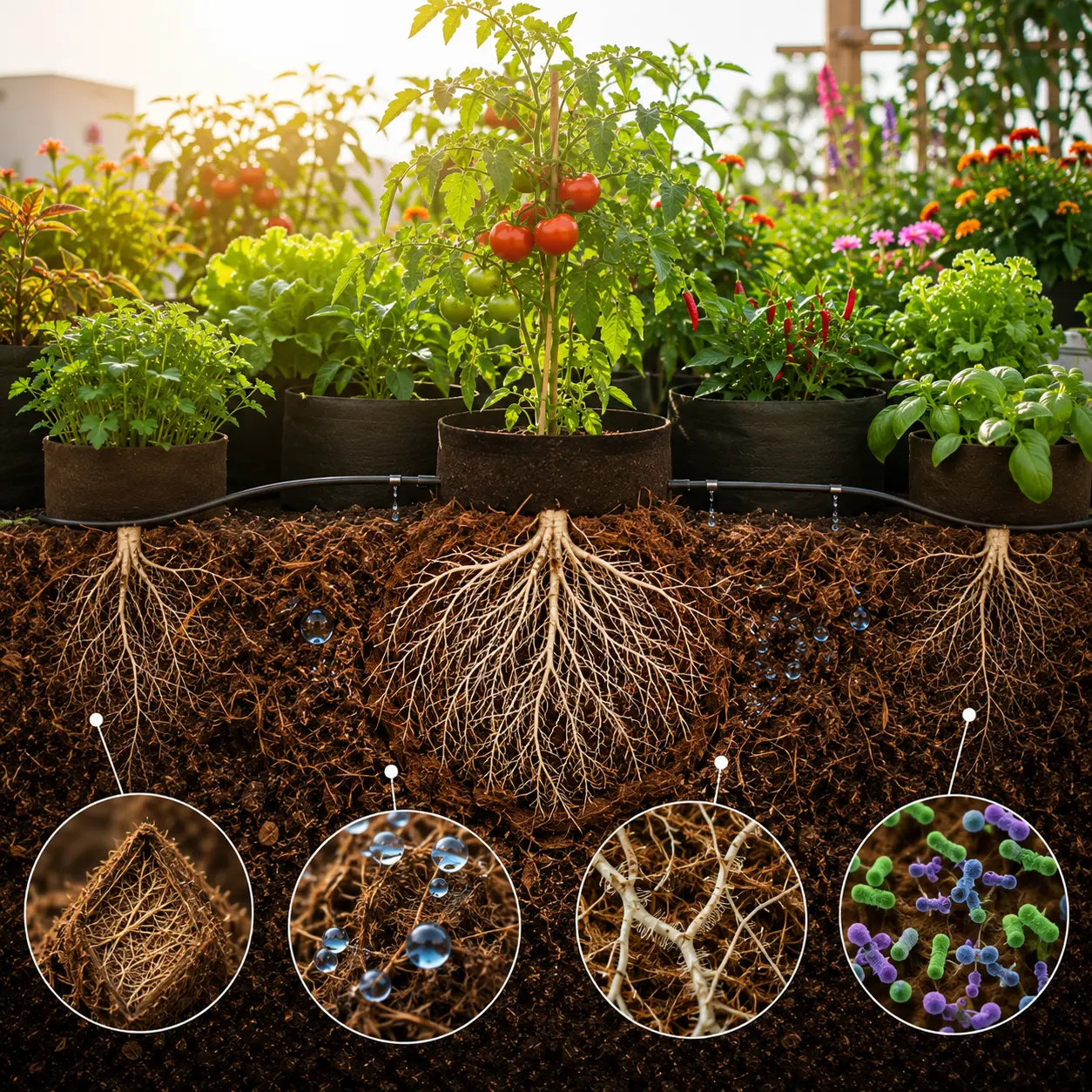
Coco Peat Growing Medium
Enhances moisture retention while maintaining excellent root-zone aeration.

Grow Bags for Plants
Improve drainage, root aeration, and vegetable production in limited spaces.

Plastic Pots for Plants
Ideal containers for seedlings, ornamentals, herbs, and balcony gardens.
Introduction
Bougainvillea is adapted to warm conditions and can tolerate periods of dry weather once established. Its care requirements change mainly with rainfall, temperature, and local exposure. Container-grown plants may need different attention from established plants growing in the ground.
Quick Seasonal Overview
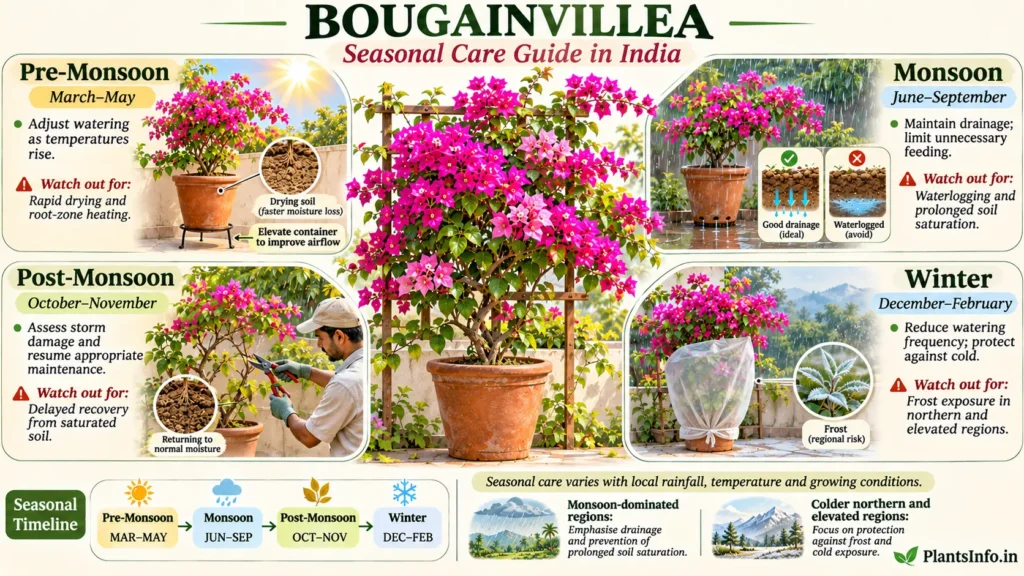
| Season | Care Focus | Watch Out For |
|---|---|---|
| Pre-monsoon (Mar–May) | Adjust watering as temperatures rise; protect container roots | Rapid drying and excessive root-zone heating |
| Monsoon (Jun–Sep) | Maintain drainage; limit unnecessary feeding | Waterlogging and prolonged soil saturation |
| Post-monsoon (Oct–Nov) | Assess storm damage and resume appropriate maintenance | Delayed recovery from saturated soil |
| Winter (Dec–Feb) | Reduce watering frequency; protect against cold | Frost exposure in northern and elevated regions |
Pre-Monsoon Care (Mar–May)
As temperatures rise, container-grown bougainvillea may need more frequent watering because pots lose moisture faster than open-ground soil. Check soil moisture rather than following a fixed daily schedule. Established plants in the ground generally need less frequent irrigation than plants in small containers.
Avoid increasing fertiliser simply because temperatures are rising. Excessive feeding, particularly with nitrogen-rich products, can encourage foliage growth at the expense of a balanced plant structure.
Heat-stress risk: Small containers and exposed terrace pots can become very hot, placing additional stress on roots.
Action point: Check container moisture more frequently during prolonged hot, dry spells.
Monsoon Care (Jun–Sep)
Drainage is the main priority during the rainy months. Check that garden beds, containers and surrounding ground allow excess rainwater to escape. Remove saucers that collect standing water beneath pots.
Pause routine fertilising during prolonged periods of heavy rainfall, particularly when the soil remains saturated. Avoid adding fresh compost or other moisture-retaining material around an already wet root zone.
Persistent wet conditions can increase the risk of fungal problems. In coastal areas, strong winds and heavy rain may also damage unsupported branches and climbing structures.
Post-Monsoon Care (Oct–Nov)
After the main rainy period, assess the plant for physical damage. Remove broken or dead branches and check whether climbing stems have become loose or tangled. Inspect trellises, wall supports, and containers for damage.
Resume feeding only after the soil has drained, and the plant has recovered from prolonged wet conditions. Avoid heavy applications where growth is already slowing.
In warm regions, this period can be suitable for repotting or transplanting when necessary. In colder northern and elevated areas, avoid late-season disturbance that could leave the plant exposed to approaching cold weather.
Winter Care (Dec–Feb)
Watering requirements generally decrease in cooler conditions because soil dries more slowly. Reduce watering frequency rather than automatically reducing every watering to a small quantity. Allow the root zone to dry more between watering events than during hot weather.
Check container moisture before watering, especially after consecutive cold or cloudy days. Avoid maintaining the same irrigation schedule used during hot weather.
Bougainvillea is sensitive to frost. In parts of northern India and higher-altitude locations, cold nights can damage exposed plants. Container-grown specimens are easier to protect because they can be moved to a sheltered, bright position.
Avoid routine fertilising when growth has slowed substantially. Heavy feeding during this period is unlikely to be useful and may encourage growth vulnerable to cold conditions.
Extreme Weather Protection
Exceptional heatwaves: During unusually intense heat, protect exposed containers from excessive root-zone heating. Prevent severe moisture depletion, but avoid unnecessarily shading the entire plant, which requires substantial sunlight.
Unexpected frost and cold snaps: When temperatures fall unexpectedly, provide temporary protection to exposed plants, particularly young specimens and container-grown plants. Protect above-ground growth as well as the root zone, and move portable containers to a sheltered, bright location where possible.
Cyclones and severe storms: Before severe weather, secure climbing structures and move portable containers away from exposed locations. Remove loose objects that could strike branches or damage the plant. After the storm, assess structural damage and remove broken or unsafe branches.
Seasonal Care Calendar
| Month | Care Task |
|---|---|
| January | Check for cold damage; water less frequently where soil remains moist |
| February | Inspect supports; remove dead or damaged growth if present |
| March | Check container moisture more frequently as temperatures rise |
| April | Monitor exposed pots for excessive drying and root-zone heating |
| May | Check garden beds and containers for effective drainage before the rainy period |
| June | Clear blocked drainage outlets and check for water accumulation |
| July | Avoid unnecessary fertilising while soil remains saturated |
| August | Check climbing supports after severe rain or strong winds |
| September | Assess storm damage and clear blocked drainage |
| October | Remove broken growth; assess whether repotting is necessary |
| November | Prepare exposed plants for cooler nights in colder regions |
| December | Check for cold exposure; reduce watering where soil drying slows |
Seasonal Mistakes to Avoid
- Pre-monsoon to Monsoon: Continuing the hot-weather irrigation routine after rainfall increases can leave the root zone excessively wet.
- Post-monsoon to Winter: Applying heavy fertiliser to a plant entering a period of slower growth can encourage unnecessary new growth.
- Winter to Pre-monsoon: Keeping winter watering intervals unchanged as temperatures rise can leave container-grown plants short of moisture.
Regional Seasonal Variation
- Northern India: Winter frost protection may be necessary, while late-season transplanting should be approached cautiously.
- Southern tropical India: Cold protection is generally less important, but prolonged monsoon rainfall and poorly drained soil remain significant concerns.
- Coastal India: Strong winds, intense rainfall and cyclone-related weather make secure supports and freely draining containers particularly important.
- Hill regions: Cooler temperatures and local frost exposure may extend the period when plants need winter protection.
Conclusion
Adjust watering, drainage, and cold protection to local weather conditions rather than following a fixed care schedule throughout the year.