Bougainvillea Plant: Beauty and Ecological Benefits
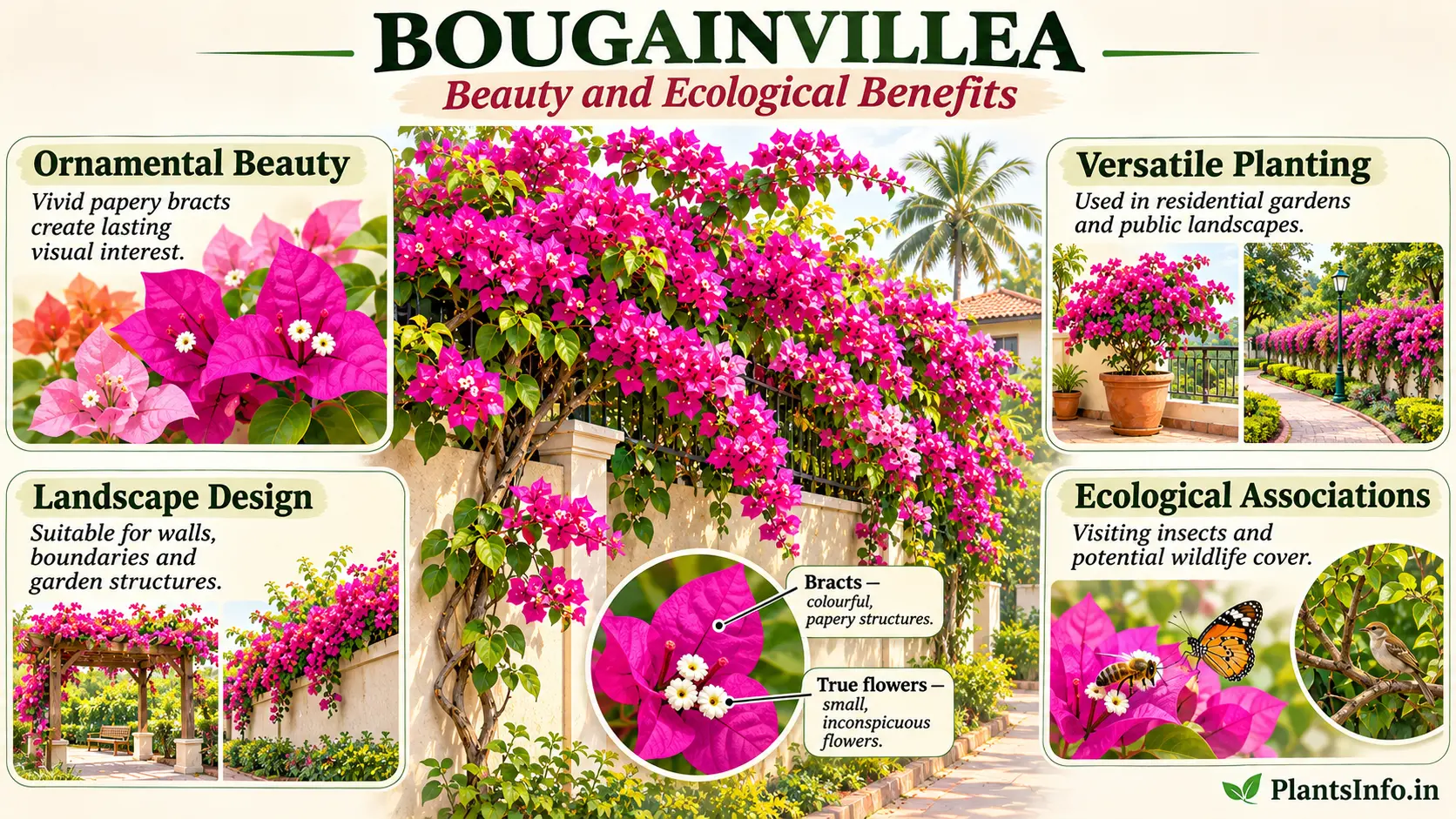
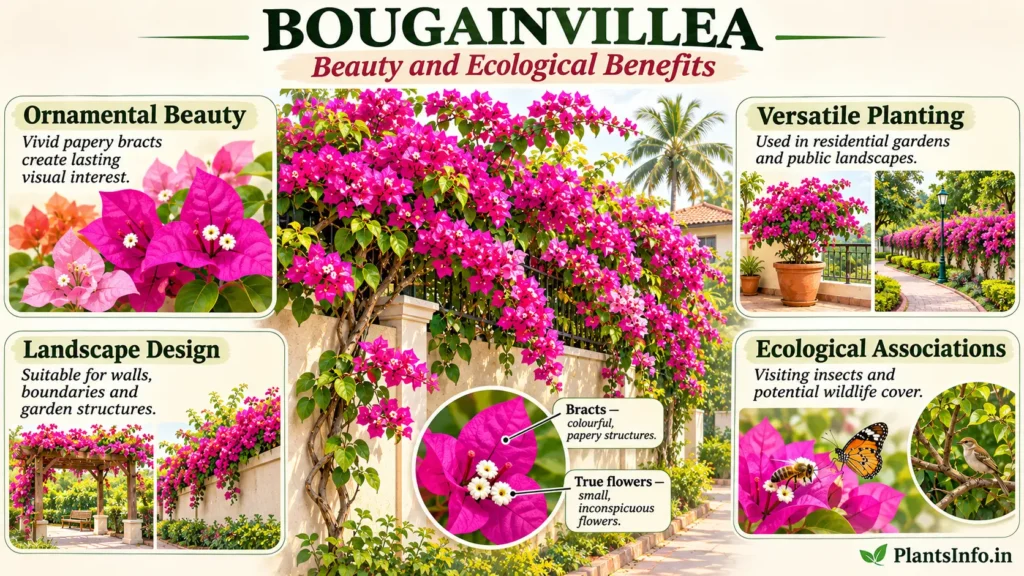
Bougainvillea is primarily valued as an ornamental plant for its vivid, papery bracts, varied colours and versatility in landscape design. It creates visual interest in gardens, boundaries, terraces and public spaces, while its small flowers may also attract visiting insects.
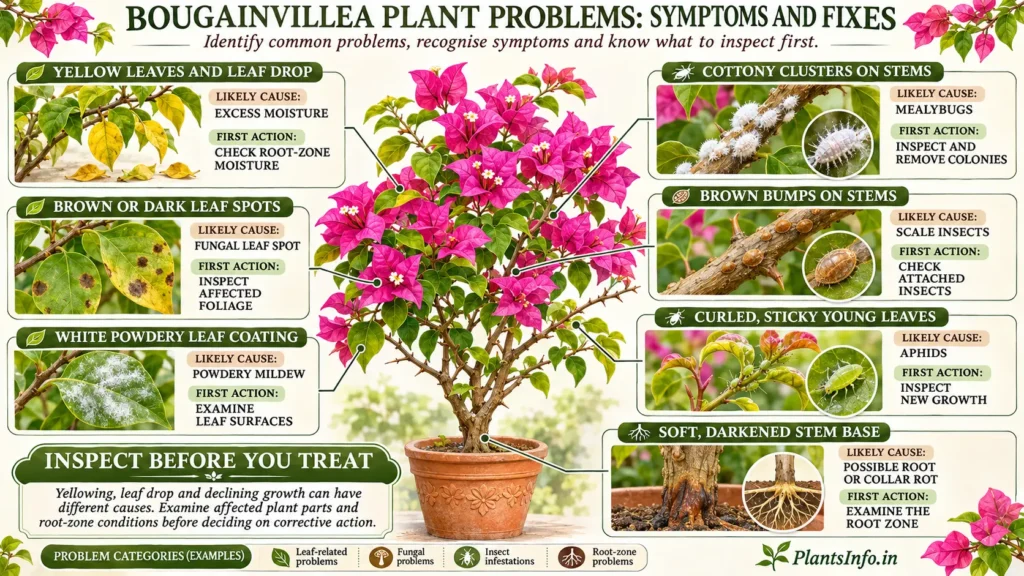
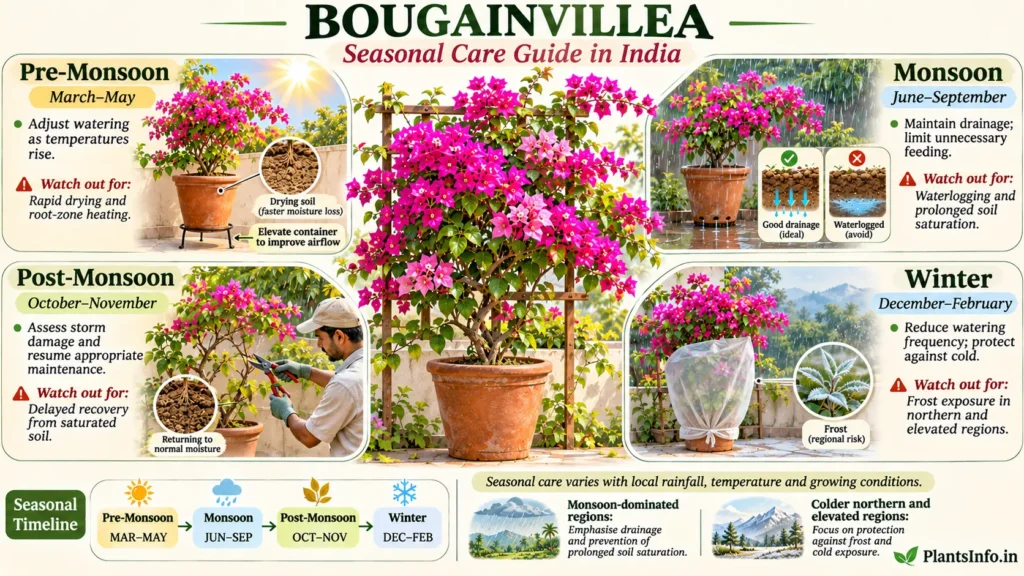
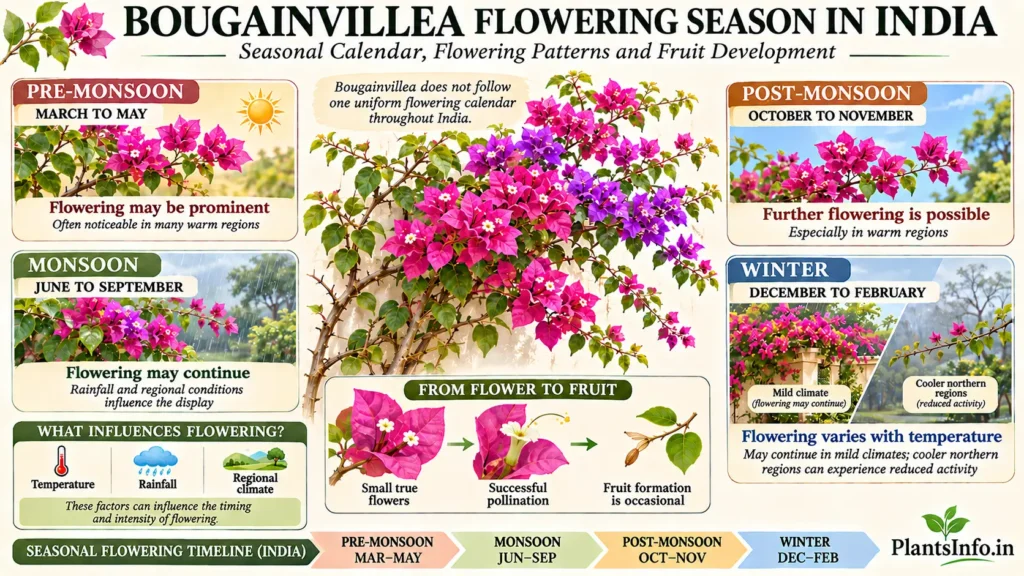
See also: Bougainvillea Comm. ex Juss. plant profile, how to grow it, common problems, seasonal care, and its flowering season.
Uses at a Glance
| Domain | Main use or role | Context |
|---|---|---|
| Food | No major established food use | Primarily an ornamental genus |
| Culinary | No widely recognised culinary role | Not commonly grown for cooking |
| Traditional | No widely established traditional use claimed here | Its principal recognised role is ornamental |
| Ornamental | Garden and landscape decoration | Residential gardens, boundaries and public spaces |
| Ecological | Flower visitation and physical cover | Contribution depends on local conditions and planting context |
Introduction
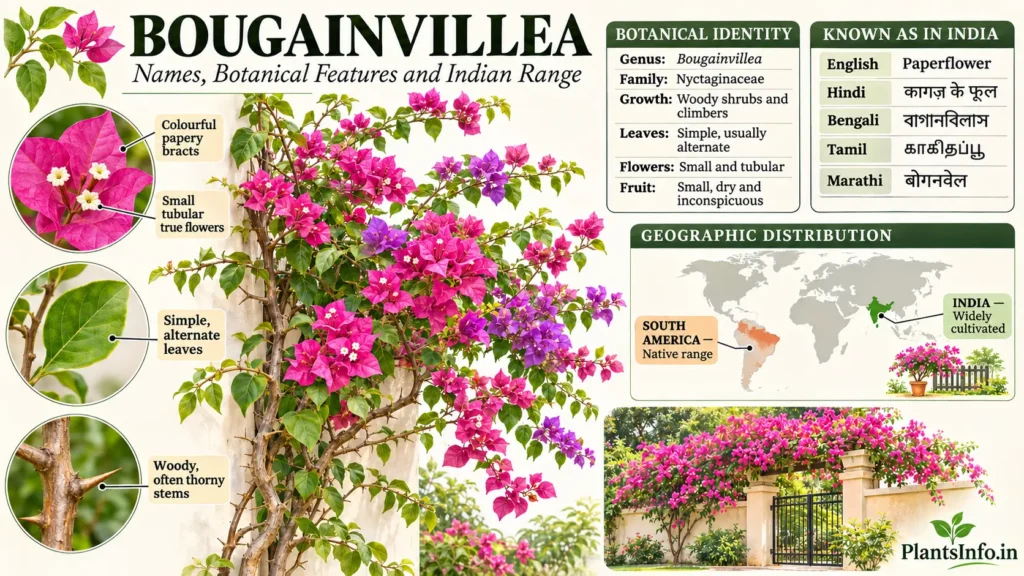
The most conspicuous part of a bougainvillea display is not its flower. The vivid pink, purple, red, orange, or white structures commonly mistaken for petals are modified leaves called bracts. The actual flowers are small and comparatively inconspicuous, making bougainvillea an interesting example of how structures beyond petals contribute to a plant’s visual appeal.
Recommended Products
Disclosure: As an Amazon Associate, PlantsInfo may earn from qualifying purchases.
🌱 Growing Essentials
The following products can help with container gardening, potting, root development, soil management, and healthy plant growth.

Organic Potting Soil Mix
Provides nutrients, structure, and healthy growing conditions for container plants.

Coco Peat Growing Medium
Enhances moisture retention while maintaining excellent root-zone aeration.

Grow Bags for Plants
Improve drainage, root aeration, and vegetable production in limited spaces.

Plastic Pots for Plants
Ideal containers for seedlings, ornamentals, herbs, and balcony gardens.
Ornamental Value of Bougainvillea
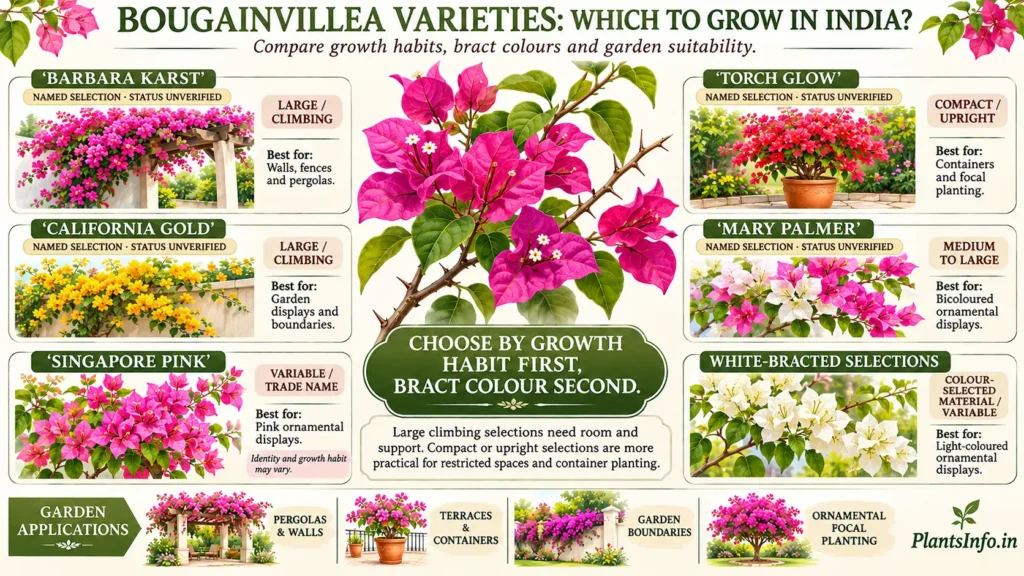
Bougainvillea’s principal ornamental value comes from its colourful bracts, contrasting foliage and flexible growth structure. The bracts occur around small flowers and vary among species and cultivated selections, creating displays in shades of:
- Magenta and deep pink
- Purple and violet
- Red and scarlet
- Orange and coral
- White and cream
- Yellow and golden tones
The combination of colourful bracts and green foliage creates a distinctive appearance. Its woody, often thorn-bearing stems also contribute to its structural character.
Seasonal visual interest
Under favourable warm conditions, bougainvillea can produce repeated or extended displays of colourful bracts. The intensity and duration of these displays vary with the species, cultivated selection and regional growing conditions. This capacity for recurring colour makes the genus useful in landscapes where a prolonged ornamental display is desirable.
Landscape applications in India
Bougainvillea is used in a range of Indian landscape settings:
| Landscape setting | Ornamental contribution |
|---|---|
| Compound and boundary walls | Adds colour and visual coverage to otherwise plain surfaces |
| Arches and pergolas | Creates prominent displays over garden structures |
| Garden entrances | Provides a strong visual feature at gateways and pathways |
| Public landscapes | Adds colour to parks, institutional grounds and roadside landscapes |
| Residential gardens | Serves as a focal plant or part of a larger ornamental composition |
| Large terraces | Introduces vertical interest into designed outdoor spaces |
Its distinctive appearance makes it particularly suitable for landscapes where bold colour and visible structural growth are preferred over subtle foliage-based planting.
Ecological Role
Although bougainvillea is primarily cultivated for ornamental purposes, its flowers and mature growth structure can also have ecological value in managed landscapes.
Insects and flower visitation
The small flowers, rather than the colourful bracts, are the reproductive structures. Bees and other flower-visiting insects may visit these flowers. The extent of insect activity can vary with flowering condition, surrounding vegetation and the availability of other floral resources.
Shelter and structural cover
Mature, dense growth can provide physical cover for small animals and birds in managed landscapes. Its branching structure may also offer perching opportunities.
However, these functions should not be equated with the ecological contribution of native plants specifically adapted to support local wildlife. The value of bougainvillea planting depends on the surrounding habitat, local species, and availability of other resources.
Practical Value for Home Gardeners
Bougainvillea offers several possibilities when planning the visual structure of residential outdoor spaces.
- Creating visual boundaries: Its dense growth can contribute to the visual separation of outdoor areas. Thorn-bearing stems should be considered when positioning plants near walkways and frequently used spaces.
- Planning vertical displays: Its spreading and climbing growth forms can be incorporated into the design of walls, arches, and other structures.
- Managing limited space: Compact or appropriately trained forms can introduce vertical interest in courtyards and terraces where ground space is restricted.
- Choosing a visual position: Placement against a plain wall or near an entrance can make the contrasting bract colours more prominent.
- Combining landscape colours: Different bract colours can be considered alongside surrounding foliage and other ornamental plants when planning a coordinated garden composition.
The main design consideration is to allow sufficient space for the selected plant’s growth form while positioning it where its ornamental display can be appreciated.
Conclusion
Bougainvillea remains a distinctive feature of ornamental horticulture, combining conspicuous bract displays with a versatile growth structure suited to many designed outdoor landscapes.