Introduction
Solanum melongena L., commonly known as eggplant, aubergine, or brinjal, is a member of the Solanaceae. It is currently accepted as a species by Plants of the World Online, with a native range extending across tropical and subtropical Asia and the western Indian Ocean region.
Classification
- Plant Type
- Herb
- Lifecycle
- Perennial
- Leaf Habit
- Evergreen
- Native Region
- South Asia, Southeast Asia
- Plant Family
- Solanaceae
The species is principally associated with wet tropical environments in its documented native range and is significant as a cultivated vegetable whose long history of human association has shaped its present distribution. Its closest wild relatives are concentrated within the Old World, particularly Asia and Africa, and the distinction between cultivated eggplant and related wild taxa has been an important taxonomic issue.
Eggplant has a long cultivation history in Asia and is now grown widely across tropical, subtropical, and suitable temperate regions. Its cultural and agricultural significance is therefore global, although the precise history of domestication and relationships among its wild relatives have been subject to competing taxonomic and phylogeographic interpretations. This profile addresses the species’ identity, biology, evidence base, human relationships, and broader scientific significance within the subsequent profile sections.
Quick Plant Information
| Field | Value |
|---|---|
| Accepted Name | Solanum melongena L. |
| Family | Solanaceae |
| Common Names | Eggplant; aubergine; brinjal |
| Life Form | Shrub |
| Native Range | Western Indian Ocean, tropical and subtropical Asia |
| Conservation Status | IUCN Red List: Not assessed. |
| Uses Category | Food; medicinal use |
The accepted name, family, life form, native range, treatment, and documented uses are supported by Kew’s current species record. The absence of a formal conservation-status entry reflects the present evidence baseline rather than an inferred threat category.
Identity
Classification and Taxonomy
| Rank | Taxon |
|---|---|
| Kingdom | Plantae |
| Phylum | Streptophyta |
| Class | Equisetopsida |
| Subclass | Magnoliidae |
| Order | Solanales |
| Family | Solanaceae |
| Genus | Solanum |
| Species | Solanum melongena L. |
| Subspecies | Solanum melongena subsp. cumingii (Dunal) J.Samuel |
| Subspecies | Solanum melongena subsp. melongena |
The classification follows the current Kew Plants of the World Online treatment. Kew currently accepts two infraspecific taxa under S. melongena: subsp. cumingii and subsp. melongena.
Related Species of Significance
| Species | Relationship | Distinguishing Note |
|---|---|---|
| Solanum insanum L. | Closely related wild eggplant relative; historically treated inconsistently in relation to S. melongena | Wild, generally more prickly and associated with disturbed habitats; its delimitation from cultivated eggplant has been taxonomically contentious. |
| Solanum incanum L. | Close wild relative | Distinct from S. insanum in modern species-level treatments; important in comparative and eggplant-breeding research. |
| Solanum aethiopicum L. | Related cultivated eggplant | African cultivated eggplant with documented breeding relevance to S. melongena. |
| Solanum macrocarpon L. | Related cultivated eggplant | African cultivated eggplant associated with the broader cultivated-eggplant complex. |
The S. melongena complex has a substantial history of nomenclatural and species-concept confusion. Modern morphological and molecular work recognizes S. insanum and S. incanum as distinct taxa, while S. aethiopicum and S. macrocarpon provide important cultivated relatives for comparative and breeding purposes.
Taxonomic Context
Taxonomic confusion is particularly relevant around the wild relatives of S. melongena. Historical literature has applied names such as S. insanum, S. incanum, and S. cumingii inconsistently, while modern treatments have revised species boundaries using morphological and molecular evidence. Current Kew treatment places S. insanum under S. melongena subsp. cumingii, illustrating that nomenclatural treatment can differ among taxonomic authorities and publications.
Cytogenetics
| Parameter | Value |
|---|---|
| Chromosome number | 2n = 24 |
| Ploidy level | Diploid |
| Genome size | Not documented in available literature. |
The chromosome complement of S. melongena is consistently reported as 2n = 24. Cytogenetic studies of cultivated material have confirmed the diploid complement, while genome-size measurements vary among cultivars and therefore should not be collapsed into a single species-wide value.
Scientific Stability and Nomenclature
Solanum melongena L. is currently an accepted name in the Kew taxonomic backbone, with the nomenclatural authority L. and the original publication in Species Plantarum in 1753. Current treatments retain the species while recognizing two accepted subspecies.
The principal nomenclatural complication for researchers is not instability of the accepted species name itself, but historical inconsistency in the naming and circumscription of its wild relatives. In particular, literature using S. insanum, S. incanum, S. cumingii, or informal S. melongena groups may not correspond directly to current species concepts; therefore, older experimental and germplasm records require taxonomic checking before comparison.
Growth Habit and Architecture
Solanum melongena is an erect, much-branched herb to shrub with substantial variation among cultivated forms. Authoritative species treatments describe plants ranging from relatively compact forms to plants approaching 2 m, with a generally upright architecture and a long taproot. The cultivated species is morphologically diverse, and plant habit, stature, branching, and pigmentation vary among landraces and cultivars.
| Field | Value |
|---|---|
| Life form | Erect annual herb to shrub |
| Mature height | 0.2–2 m |
| Stem type | Erect, branched, herbaceous when young; older stems becoming woody |
| Surface texture | Stellate-pubescent when young, becoming partly glabrescent with age |
| Branching pattern | Much-branched; sympodial |
| Root morphology overview | Long taproot with lateral roots |
| Distinguishing architectural feature | Large-leaved, erect cultivated plant with strongly variable fruiting architecture |
The combination of erect branching, large leaves, stellate pubescence, and conspicuous fruit makes the cultivated plant readily recognizable in the field. Architectural variation is particularly pronounced among cultivated germplasm rather than representing a single uniform plant form.
Stem
The stem provides useful structural and diagnostic characters. Young stems are typically green to green-brown and covered with stellate hairs; older portions become more glabrescent and may develop darker brown surface coloration. Prickles are absent in many cultivated forms but can occur, particularly in less-selected or semi-wild material.
| Field | Value |
|---|---|
| Stem type | Erect, branched |
| Cross-section shape | Terete |
| Surface texture | Stellate-pubescent when young; older stems often glabrescent |
| Young colour | Green to green-brown |
| Mature colour | Green-brown to dark brown |
| Thorn/spine status | Usually unarmed in cultivated forms; prickles may occur |
| Internal structure | Not documented in available literature. |
Leaves
The leaves are simple, alternate, relatively large, and characteristically lobed. Their stellate pubescence, variable pigmentation, and rounded to obtuse lobes are useful recognition features. Leaf morphology varies among cultivated germplasm, so individual leaf dimensions should not be treated as universal species-level constants.
| Field | Value |
|---|---|
| Presence | Present |
| Leaf type | Simple |
| Size | Approximately 10–23 cm long and 9–15 cm wide in the Solanaceae Source treatment |
| Colour | Green to yellow-green; pigmentation varies among cultivated material |
| Arrangement | Alternate |
| Special features | Broadly ovate blade, rounded lobes, stellate pubescence; petiole may occasionally bear prickles |
Flowers
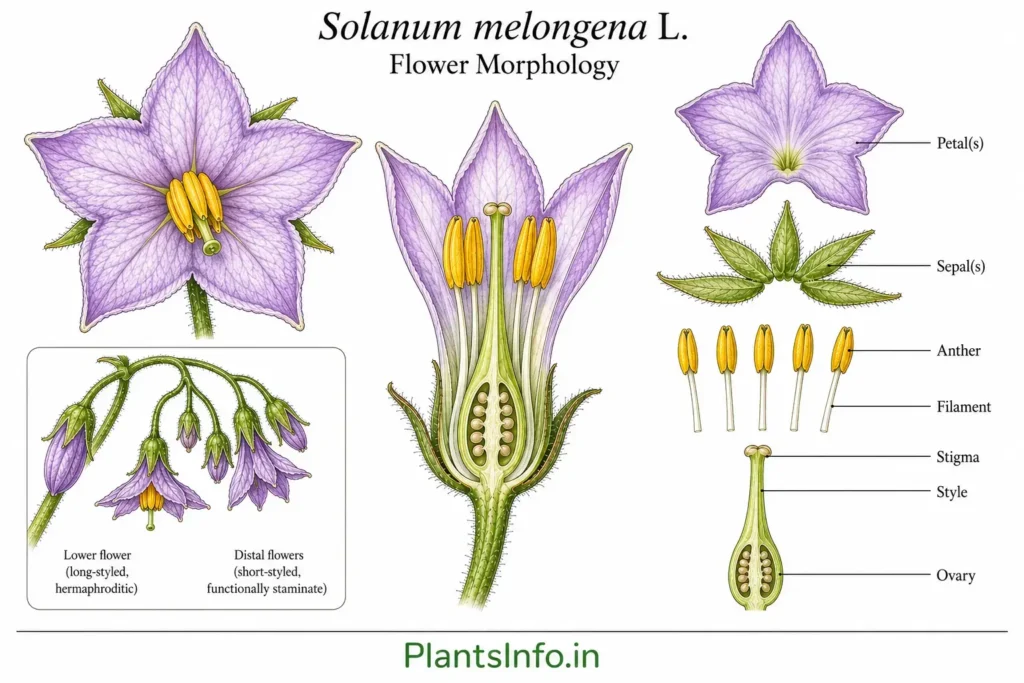
Flowers are structurally conspicuous and variable in merosity. The lower flower of an inflorescence is typically long-styled and hermaphroditic, while distal flowers are commonly short-styled and functionally staminate. Corollas range from white through mauve to purple. The anthers are connivent and poricidal, while the calyx is persistent and may bear prickles in some forms.
| Field | Value |
|---|---|
| Inflorescence type | Unbranched, apparently terminal or lateral inflorescence with 1–8 flowers |
| Flower diameter | Approximately 2.4–5 cm |
| Sepals | Stellate-pubescent, lobed; calyx enlarges around the developing fruit |
| Petals | White to mauve or purple, stellate, broadly lobed |
| Stamens | Five, equal; connivent anthers with terminal pores |
| Pistil | Present in long-styled hermaphroditic flowers |
Fruit
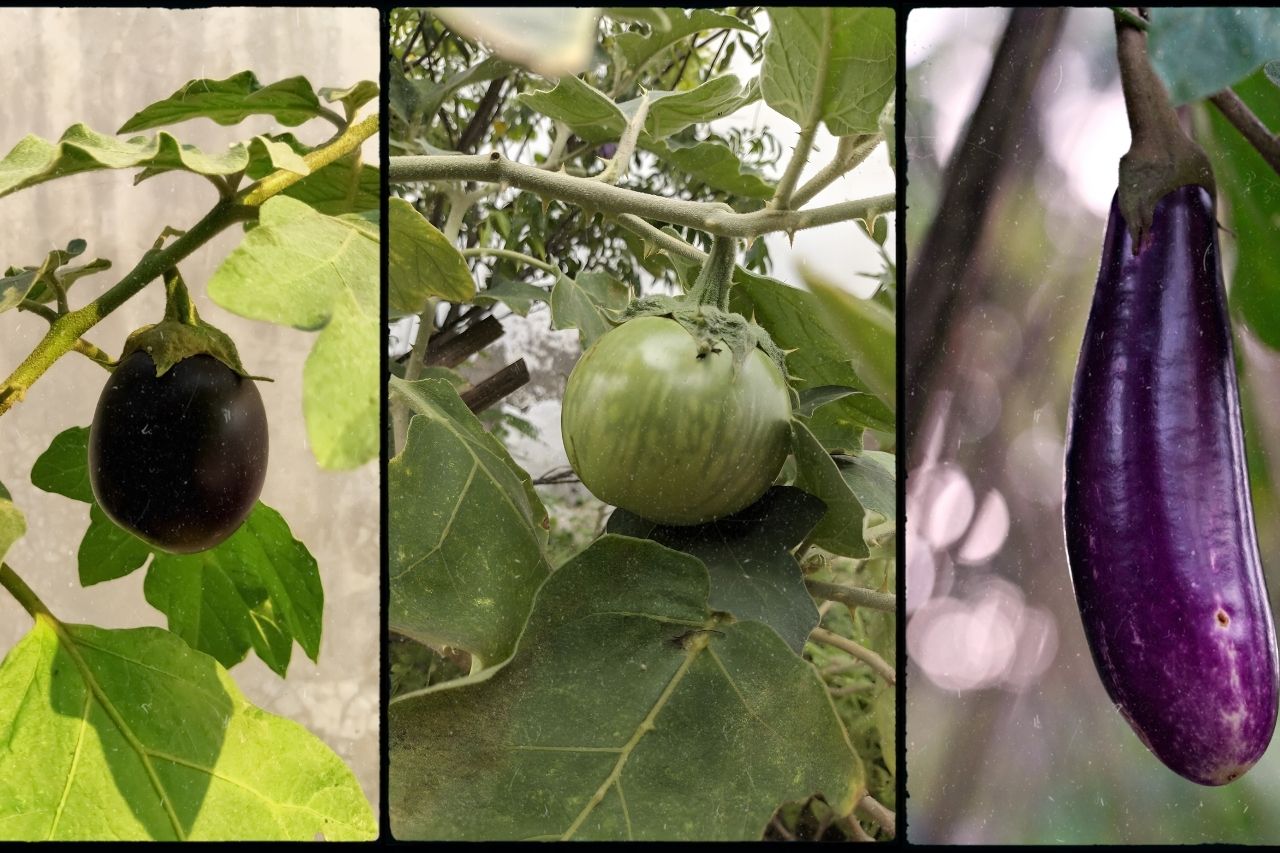
The fruit is a fleshy berry and is one of the most variable morphological features of the species. Cultivated forms range widely in shape and colour, reflecting extensive selection during domestication.
| Field | Value |
|---|---|
| Fruit type | Fleshy berry |
| Shape | Globular, ovoid, ellipsoid, oblong, or variously curved |
| Length | Approximately 3–35 cm |
| Diameter | Approximately 2–20 cm |
| Skin colour | White, green, pink, mauve, purple, or black |
| Surface features | Generally smooth and glabrous |
| Flesh colour/texture | Fleshy; colour and texture vary among cultivars |
| Seed count | Approximately 100–200 per berry |
Seeds
Seeds are numerous and flattened-reniform, with an orange-brown to pale-brown colour. Their size is relatively consistent in the principal species-level morphological treatment.
| Field | Value |
|---|---|
| Size | Approximately 2.9–3.2 mm long × 2.2–2.5 mm wide |
| Shape | Flattened-reniform |
| Colour | Orange-brown to pale brown |
| Seed coat | Not further characterized in the available species treatment |
Root System
The species develops a long taproot accompanied by lateral roots. The root system provides the principal below-ground structural axis of the plant, while the visible architecture is dominated by the erect branched shoot system. A species-level morphological source specifically describes the taproot as extending deeply into the ground; detailed quantitative measurements of rooting depth and lateral spread are not established here.
Recommended Products
Disclosure: As an Amazon Associate, PlantsInfo may earn from qualifying purchases.
🌱 Plant Care Essentials
The following tools can help with pruning, plant health, soil management, and fruit garden maintenance.

Neem Oil for Plant Care
Natural plant protection against aphids, whiteflies, mites, and other common garden pests.

Fungicide for Root Care
Helps suppress soil-borne fungal diseases and supports healthier root systems.

Spray Bottle for Plants
Ideal for applying foliar sprays, neem oil solutions, and liquid plant treatments.

Rubber Hand Gloves
Protects hands during pruning, planting, soil preparation, and garden maintenance.
Field Identification
A cultivated Solanum melongena can generally be recognized by its erect, branched habit; large, alternate, broadly ovate and lobed leaves with stellate pubescence; conspicuous white to purple flowers; persistent calyx; and large, fleshy berries of highly variable shape and colour.
Single best distinguishing feature: the combination of large cultivated berries with highly variable fruit shape and colour and the generally reduced or absent prickles of cultivated plants is particularly characteristic.
Normal vs. Concerning Observations
| Observation | Status | Notes |
|---|---|---|
| Stellate hairs on young stems and leaves | Normal | Characteristic species morphology. |
| Variation in fruit shape and colour | Normal | Extensive variation is documented among cultivated forms. |
| Occasional stem or calyx prickles | Normal | Prickles occur in some cultivated or less-selected material. |
| Short-styled, functionally male distal flowers | Normal | Documented floral organization within the species. |
| Purple pigmentation of stems, leaves, or flowers | Normal | Pigmentation varies among cultivated germplasm. |
| Fasciated or unusually merous flowers | Monitor | Increased floral-part number is documented in cultivated eggplant; unusual expression should be interpreted against cultivar background. |
Cultivar Summary
Named cultivars and selections are extensively documented. The following examples illustrate major morphological variation without attempting to represent the full global cultivar diversity.
| Cultivar | Key Characteristic | Commercial Status | Origin |
|---|---|---|---|
| Pusa Purple Long | Early-maturing, long-fruited; glossy light-purple fruit | Regionally significant | India |
| Pusa Purple Round | Round-fruited cultivar with deep-purple fruit | Regionally significant | India |
| Pusa Purple Cluster | Tall, compact plant producing clustered deep-purple fruits | Regionally significant | India |
| Pusa Kranti | Dwarf, spreading habit with dark-purple elongated fruit | Regionally significant | India |
| Black Beauty | Bushy plant producing large egg-shaped purple-black fruit | Commercially dominant | Not documented in available literature. |
Functional Traits
Solanum melongena exhibits a physiologically flexible response to water limitation rather than a single uniform drought strategy. Studies across genotypes document both relatively conservative water-use responses and faster-growing, higher-water-use strategies. Under water deficit, stomatal regulation reduces transpiration but also constrains photosynthetic carbon assimilation; recovery involves restoration of photosynthetic activity and hydraulic function. Genotypic variation is therefore a major component of the species’ physiological response.
| Trait | Mechanism Description | Ecological Context |
|---|---|---|
| Photosynthetic carbon fixation | Water deficit reduces photosynthetic activity through restrictions associated with declining water status and stomatal regulation. | Documented under experimental drought; magnitude varies among genotypes. |
| Water-use regulation | Stomatal control restricts transpirational water loss as plant water status declines. | Eggplant can maintain comparatively favorable leaf water status under drought, although this may reduce carbon gain. |
| Osmotic adjustment | Accumulation of compatible solutes, including proline and soluble sugars, contributes to maintenance of cellular water relations under stress. | Documented under drought and salinity; response differs among genotypes. |
| Antioxidant response | Activities of enzymes including superoxide dismutase, catalase, ascorbate peroxidase, and glutathione reductase respond to oxidative stress associated with water limitation. | Response is genotype- and stress-dependent. |
| Salinity response | Ion homeostasis, osmotic adjustment, altered stomatal conductance, and antioxidant activity contribute to differential salt responses. | Cultivars vary substantially in salinity sensitivity and in their ability to retain Na⁺ in roots. |
| Stress-associated secondary metabolism | Water stress can increase phenolics and flavonoids while photosynthetic pigments decline. | Documented in experimental drought treatments and interpreted as part of the biochemical stress response. |
Physiological Integration
The available evidence indicates that water relations, carbon assimilation, and stress biochemistry are tightly coupled in S. melongena. Restricting water loss through stomatal regulation can preserve tissue water status but simultaneously limits photosynthetic carbon gain. Genotypes differ in where they balance this trade-off: some maintain safer water status at the expense of biomass accumulation, whereas others sustain greater growth while accepting greater hydraulic risk.
Stress responses also extend beyond stomatal regulation. Drought and salinity alter pigment concentrations, osmolyte accumulation, antioxidant activity, and secondary metabolism. The resulting phenotype is therefore an integrated response rather than a single tolerance mechanism. Current experiments demonstrate these interactions particularly clearly among cultivars, so they should not be generalized as a single fixed physiological strategy for the species.
Phytochemistry
The phytochemical profile of Solanum melongena comprises phenolic acids, flavonoids, anthocyanins, steroidal glycoalkaloids, and other specialized metabolites. Phenolic compounds are particularly well characterized in the fruit, with chlorogenic acid and related caffeoylquinic acids repeatedly reported among the principal phenolic constituents. Anthocyanins, especially delphinidin derivatives such as nasunin and delphinidin-3-rutinoside, are characteristic of the peel of strongly pigmented fruit. Steroidal glycoalkaloids, including solamargine and solasonine, are also documented, with their distribution varying among organs, developmental stages, and genotypes.
| Compound Class | Representative Compounds | Primary Location | Documented Biological Significance |
|---|---|---|---|
| Phenolic acids | Chlorogenic acid, caffeic acid, p-coumaric acid, ferulic acid | Fruit, particularly flesh and peel; also reported in other organs | Associated with phenolic metabolism and redox activity; specific ecological functions remain incompletely resolved. |
| Anthocyanins | Nasunin; delphinidin-3-rutinoside | Primarily fruit peel | Responsible for characteristic pigmentation in many purple or dark-coloured cultivars; antioxidant activity has been demonstrated in experimental systems. |
| Flavonoids | Quercetin derivatives, rutin, luteolin derivatives, kaempferol derivatives | Leaves, stems, fruit, and other tissues | Components of specialized secondary metabolism; species-specific ecological functions remain incompletely characterized. |
| Steroidal glycoalkaloids | Solamargine, solasonine, solasodine | Fruit and vegetative organs; distribution varies among tissues | Characteristic Solanum metabolites with documented biological activity; their specific ecological roles in S. melongena remain incompletely resolved. |
The chemical literature is broad but unevenly distributed across plant organs. Fruit, particularly peel and flesh, has received substantially more analytical attention than roots, stems, and other vegetative tissues. Multi-organ metabolomic studies nevertheless demonstrate clear tissue-level differences, with leaves, stems, roots, and fruits containing distinct combinations of phenolics, flavonoids, terpenoids, glycoalkaloids, saponins, and other specialized metabolites.
Phytochemical Organ Distribution
Direct multi-organ analyses demonstrate substantial differences in metabolite composition among tissues. These differences support organ-specific chemical partitioning, but quantitative comparisons should be interpreted cautiously because measured concentrations depend on genotype, developmental stage, tissue definition, extraction procedure, analytical platform, and reporting basis.
| Organ | Compound Class | Representative Compounds | Concentration |
|---|---|---|---|
| Fruit peel | Anthocyanins | Nasunin; delphinidin-3-rutinoside | Not standardized at species level; abundance varies with genotype, fruit maturity, and pigmentation. |
| Fruit flesh | Phenolic acids | Chlorogenic acid and related caffeoylquinic acids | Not standardized at species level; concentration varies among cultivars and developmental stages. |
| Leaf | Phenolic compounds | Hesperidin, fumaric acid, vanillin, pyrocatechol, p-coumaric acid, p-hydroxybenzoic acid | Quantitative concentrations are genotype-dependent; direct values vary among the four varieties examined. |
| Leaf | Flavonoids | Quercetin glycosides, rutin, luteolin-7-glucoside | Not established as a single species-wide concentration. |
| Stem | Flavonoid glycosides | Quercetin 3-O-glucoside, quercetin 3-O-malonyl glucoside, rutin | Not established as a single species-wide concentration. |
| Root | Steroidal glycoalkaloids | Khasianine, solamargine, solasonine, solasodine | Quantitative concentrations vary among tissues and genotypes; no universal species-wide value is established. |
| Root | Terpenoids | Monoterpenoids and sesquiterpenoids | Not established as a single species-wide concentration. |
| Root | Saponins | Documented saponin fractions | Not established as a single species-wide concentration. |
The available evidence is sufficient to establish organ-specific chemical partitioning, but not to define a universal concentration profile for S. melongena. Differences among cultivars and genotypes can be substantial, and comparisons between studies may also be affected by extraction procedures and analytical methods. A multi-variety study further demonstrates variation in phenolic composition among organs and genotypes.
Phytochemical Significance
Phenolic acids constitute a major component of the documented fruit phytochemical profile, with chlorogenic acid and related caffeoylquinic acids repeatedly identified among the principal compounds. In pigmented fruit, delphinidin-derived anthocyanins are particularly characteristic of the peel. Nasunin and delphinidin-3-rutinoside are among the principal anthocyanins characterized in eggplant peel, and differences in their abundance contribute to variation among fruit colour types.
Steroidal glycoalkaloids represent another characteristic chemical group. Solamargine and solasonine are established constituents of S. melongena, while metabolomic studies have identified additional steroidal glycoalkaloids and related metabolites in vegetative tissues. Their occurrence contributes to the specialized chemical profile of the genus Solanum, although their specific ecological functions in S. melongena remain incompletely demonstrated.
Chemical characterization is substantially more developed for fruit phenolics and anthocyanins than for whole-plant metabolite organization. Research has concentrated particularly on fruit flesh and peel, pigmentation, cultivar variation, and experimentally measured antioxidant properties. Comparatively fewer studies provide standardized quantitative profiles across roots, stems, leaves, and fruit within the same biological material.
The presence or experimentally demonstrated activity of individual phytochemicals should not be interpreted as evidence of a corresponding ecological, nutritional, or therapeutic effect in humans. In particular, the biological activity of isolated compounds or extracts does not necessarily represent the activity of normally consumed whole fruit.
No species-specific synergistic or antagonistic interaction among the major phytochemical groups is sufficiently established to support a definitive conclusion.
Evidence Hierarchy for Medicinal and Health-Related Claims
| Evidence Layer | Status | Notes |
|---|---|---|
| Traditional Use | Documented | Solanum melongena has documented food and ethnomedicinal use, including reported use in traditional health practices. |
| Nutritional Evidence | Documented | Nutritional composition of edible eggplant is well characterized through food-composition data. |
| In Vitro Studies | Documented | Species-specific extracts and isolated compounds have been investigated in cell-based studies, including studies of steroidal glycoalkaloids. |
| Animal Studies | Documented | Experimental studies have evaluated eggplant preparations and isolated constituents in animal models for several biological endpoints. |
| Human Clinical Studies | Documented | Human randomized and placebo-controlled studies have examined eggplant preparations, including effects on blood lipids and blood pressure. Results are mixed and preparation-specific. |
| Regulatory Recognition | Absent | No species-specific therapeutic indication or medicinal approval is established here. |
| Unsupported Commercial Claims | Documented | Commercial and traditional claims concerning cholesterol reduction and other therapeutic effects have exceeded the strength of available clinical evidence in some contexts. |
Evidence Assessment
The strongest evidence base concerns nutritional consumption and experimentally characterized constituents rather than established therapeutic efficacy. Human studies of eggplant preparations have produced inconsistent results: some trials reported modest effects on selected cardiovascular measurements, whereas other controlled studies did not demonstrate an effect distinguishable from placebo or dietary intervention. The evidence therefore does not support treating eggplant or its preparations as an established treatment for hyperlipidemia or other diseases.
Preclinical evidence is considerably broader than clinical evidence. In vitro and animal investigations have examined antioxidant, metabolic, vascular, anti-inflammatory, and other biological endpoints, but these findings should not be equated with demonstrated human efficacy. The principal evidence gap is the limited number and heterogeneous design of well-controlled human studies using standardized preparations.
Commercial claims that position eggplant preparations as treatments for dyslipidemia or other diseases therefore require particular caution. The available clinical literature does not establish a sufficiently consistent therapeutic effect to support such claims.
Nutritional Composition
The following values refer to raw eggplant and are normalized to 100 g edible material.
| Nutrient | Value per 100 g | Notes |
|---|---|---|
| Energy | 25 kcal | Low-energy-density food |
| Water | 92.3 g | Predominant component |
| Protein | 0.98 g | Modest contribution |
| Total carbohydrate | 5.88 g | Predominantly non-protein carbohydrate |
| Dietary fiber | 3.0 g | Substantial relative to total energy content |
| Total sugars | 3.53 g | Included within total carbohydrate |
| Total lipid | 0.18 g | Very low |
| Calcium | 9 mg | Modest contribution |
| Iron | 0.23 mg | Modest contribution |
| Magnesium | 14 mg | Modest contribution |
| Phosphorus | 24 mg | Modest contribution |
| Potassium | 229 mg | Principal mineral contribution |
| Sodium | 2 mg | Very low |
| Vitamin C | 2.2 mg | Modest contribution |
| Folate | 22 µg | Modest contribution |
| Vitamin K | 3.5 µg | Present in small quantity |
Nutritional Significance
Fresh eggplant is characterized nutritionally by high water content, low energy density, low fat, modest carbohydrate, and a useful contribution of dietary fiber. It is not an exceptionally protein-rich or micronutrient-dense food, but its combination of low energy density and fiber contributes to its nutritional role as a vegetable food.
The nutritional profile varies with cultivar, maturity, growing conditions, and analytical dataset. Cooking also changes nutrient concentration on a weight basis through water loss, while preparation methods that incorporate substantial oil can markedly increase the energy density of the finished food. The raw composition should therefore not be transferred directly to cooked preparations without accounting for processing.
The available evidence does not justify a single species-wide nutritional profile encompassing all cultivated and wild forms. Most standardized composition data concern commonly consumed cultivated fruit.
Soil Ecology and Mycorrhizal Associations
Evidence for soil biological interactions is moderate and substantially stronger for arbuscular mycorrhizal fungi and rhizosphere microbial communities than for species-specific allelopathy.
Solanum melongena forms associations with arbuscular mycorrhizal fungi. Experimental studies demonstrate root colonization and changes in plant nutrient acquisition and physiological performance associated with AMF inoculation. Reported responses include altered phosphorus and mineral uptake, but the magnitude and direction of benefits depend on fungal identity, soil conditions, genotype, and experimental environment.
Rhizosphere bacterial communities are also documented. Species-level studies have identified plant-growth-promoting and potentially disease-suppressive bacterial communities associated with eggplant. Reported bacterial functions include nutrient mobilization, production of growth-promoting substances, and antagonism toward soil-borne pathogens. Genera including Bacillus and Pseudomonas have been investigated in this context.
The strongest soil-biological evidence concerns plant–microbe associations under experimental conditions. It does not establish a single characteristic eggplant microbiome applicable across soils or production systems.
Evidence for allelopathy and a defined phytochemical mechanism of species-specific allelopathic action is insufficient for a strong general conclusion. Continuous-cropping studies report changes in soil microbial communities and soil condition, but these observations involve multiple interacting biological and management factors and should not be reduced to a single allelopathic mechanism.
Toxicity and Safety
| Subject | Toxic Compounds | Clinical Effects |
|---|---|---|
| Humans | Steroidal glycoalkaloids including solasonine and solamargine are documented constituents | No generalized poisoning syndrome is established for normally consumed eggplant, but glycoalkaloid exposure is concentration-dependent and experimental studies demonstrate biological activity. |
| Cats | No species-specific evidence identified. | No species-specific evidence identified. |
| Dogs | No species-specific evidence identified. | No species-specific evidence identified. |
| Livestock | No species-specific evidence identified. | No species-specific evidence identified. |
Eggplant contains steroidal glycoalkaloids, and concentrations differ among tissues, genotypes, developmental stages, and fruit maturity. Species-specific studies have found higher solasonine concentrations in some vegetative and reproductive tissues than in physiologically ripe fruit. This variability is important because the presence of a bioactive glycoalkaloid does not by itself establish clinically significant poisoning from ordinary dietary consumption.
Experimental studies of isolated eggplant glycoalkaloids demonstrate cytotoxic and membrane-active effects, but those findings cannot be directly translated into toxicity from normally consumed eggplant. Toxicity therefore needs to be distinguished between whole-food exposure and concentrated extracts or isolated constituents.
A reported food-poisoning case involving eggplant grafted onto Datura metel was attributable to tropane alkaloids from the Datura rootstock rather than demonstrating ordinary eggplant toxicity. This distinction is important when interpreting isolated poisoning reports associated with the crop.
Toxicity Context
Toxicological interpretation is dose- and preparation-dependent. Whole-food exposure, concentrated extracts, isolated steroidal glycoalkaloids, and plant material from unusual genotypes should not be treated as equivalent exposures.
Species-specific evidence is insufficient here to establish definitive human toxicity thresholds for all eggplant tissues or cultivars. Vulnerable populations, pregnancy-specific effects, clinically important drug interactions, and renal- or hepatic-impairment considerations are likewise not sufficiently documented to support species-specific conclusions.
The strongest safety conclusion supported by the available evidence is therefore limited: eggplant contains biologically active steroidal glycoalkaloids whose concentrations vary substantially, while ordinary food use should not be equated with toxicity demonstrated for concentrated compounds or unrelated toxic Solanum species.
This profile does not constitute medical or veterinary advice.
Biogeographic Context
Solanum melongena has a broad Old World distribution, but its present biogeographic pattern reflects both the distribution of closely related wild forms and a long history of human selection, cultivation, and dispersal. Current taxonomic treatment places the species in the western Indian Ocean and tropical and subtropical Asia, encompassing parts of South and Southeast Asia, China, and adjacent island regions.
The geographic history of cultivated eggplant should not, however, be equated directly with the full species-level native range. The cultivated lineage is particularly associated with mainland Southeast Asia and the southern China–Indochina region, which is also central to current interpretations of eggplant domestication. Historical taxonomic treatments of wild and semi-wild forms further complicate attempts to reconstruct an original distribution.
The present distribution therefore cannot be explained by climate alone. Human-mediated movement has greatly expanded cultivation beyond the species’ probable ancestral distribution, while semi-wild populations and closely related wild taxa provide additional biogeographic complexity. The evidence base is also strongly cultivation-biased: ecological and physiological information is considerably more abundant for agricultural populations than for unmanaged populations.
Native Range and Distribution
| Region | Countries or Sub-regions | Notes |
|---|---|---|
| Southern and southwestern China | Yunnan and adjacent regions | Included within the species-level native-range treatment; the region is particularly important in discussions of cultivated eggplant origins and domestication. |
| Mainland Southeast Asia | Myanmar, Thailand, Laos, Vietnam and adjacent areas | Important component of the species-level distribution and central to the biogeographic history of the cultivated eggplant lineage and its relatives. |
| Indian subcontinent | India, Pakistan and adjoining regions | Included within the broader species-level treatment; interpretation of individual occurrences is complicated by cultivation, naturalisation, and the historical treatment of closely related wild taxa. |
| Maritime Southeast Asia | Malaya, Borneo, Java, Sulawesi, Lesser Sunda Islands and the Philippines | Species-level native-range records extend into parts of the maritime region, although the status and taxonomic identity of individual populations may require local interpretation. |
| Sri Lanka and adjacent Indian Ocean region | Sri Lanka | Included within the current species-level distribution. |
| Western Indian Ocean | Madagascar, Mauritius, Réunion and associated areas | Included within current taxonomic treatments of the species; individual island populations should not automatically be interpreted as part of the cultivated lineage. |
The species-level distribution is therefore considerably broader than the principal geographic region associated with domesticated eggplant. Native-range occurrence should not be treated as synonymous with the geographic origin of the cultivated lineage. This distinction is important because the accepted species encompasses both cultivated and closely related wild or semi-wild forms whose historical treatment has varied among taxonomic authorities.
Global Cultivation and Naturalisation
| Region | Countries or Areas | Cultivation Status | Notes |
|---|---|---|---|
| East and South Asia | China, India and surrounding production regions | Commercially established | Major global production region and an important centre of cultivated diversity. |
| Mediterranean region | Mediterranean Europe and North Africa | Commercially established | Long-established cultivation under warm seasonal conditions. |
| Sub-Saharan Africa | Multiple countries | Commercially established | Cultivation is widespread, although production intensity varies substantially among regions. |
| Middle East | Iraq and neighbouring regions | Commercially established | Long-established food crop with substantial regional culinary importance. |
| Central Asia | Kazakhstan, Tajikistan, Turkmenistan, Uzbekistan | Established but environmentally constrained | Cultivation occurs under comparatively demanding thermal and water regimes. |
| Arabian Peninsula | Saudi Arabia and surrounding areas | Established but environmentally constrained | Production is possible under high-temperature, arid, and saline conditions, but these factors impose important agricultural constraints. |
| Temperate regions outside the traditional production belt | Various regions | Seasonally cultivated | Production is generally constrained by temperature, frost risk, and growing-season length rather than by an inability of the crop to grow outside tropical regions. |
Solanum melongena is now cultivated across much of the world, with particularly strong production concentrations in Asia and the Mediterranean region. Global agricultural distribution is substantially better documented than the distribution and ecology of unmanaged populations because most research concerns commercially important cultivated germplasm.
Introduced and naturalised occurrences have been reported outside the principal native-range region. However, naturalisation should be distinguished from biological invasiveness: an introduced population may persist or reproduce without necessarily demonstrating the ecological impacts required to classify it as an invasive population.
Natural Habitat
Solanum melongena is associated principally with warm tropical and subtropical environments. Current Kew treatment characterizes the species’ primary biome as wet tropical, while S. melongena subsp. cumingii is associated more strongly with seasonally dry tropical environments. This difference illustrates the difficulty of assigning a single habitat envelope to a species containing both cultivated and closely related wild forms.
Documented habitats and occurrence settings include shrubland, savanna-like environments, disturbed terrestrial sites, and human-associated landscapes. The species is therefore not restricted to intact natural vegetation. Its occurrence in disturbed and human-modified environments is particularly relevant when interpreting semi-wild populations and records outside intensively managed cultivation.
A single species-wide quantitative elevation limit cannot be established reliably from the available evidence. Cultivated eggplant occurs from lowland tropical environments to substantially elevated agricultural areas, but cultivation records should not be interpreted as defining the natural elevational envelope of the species.
Ecological Role
Ecological evidence for unmanaged S. melongena is considerably thinner than the agricultural literature.
| Role Type | Species or Agent Involved | Notes |
|---|---|---|
| Food resource | Insects and other fruit- or plant-feeding organisms | Documented interactions exist, but a comprehensive species-level trophic network is not established. |
| Fruit and seed resource | Animal consumers | Fruit consumption can provide opportunities for seed movement, but species-specific dispersal agents are insufficiently resolved for a definitive dispersal network. |
| Crop-wild-relative genetic resource | Solanum germplasm | The species and its close relatives constitute an important reservoir of genetic variation for eggplant improvement; this is an applied biological role rather than a natural ecosystem function. |
No evidence currently supports designation of S. melongena as a keystone or indicator species.
Invasive Status
Naturalised occurrences outside the native range are documented, including records in parts of Africa, Central Asia, the Arabian Peninsula, and island regions. However, the available evidence does not establish a broadly recognized invasive ecological impact for S. melongena. Introduced occurrence should therefore be distinguished from demonstrated invasiveness.
Optimal Climate Parameters
| Parameter | Cultivation-favourable Range | Tolerance Range | Notes |
|---|---|---|---|
| Mean Annual Temperature | Not established at species level | Not established at species level | Cultivation-site records do not provide a reliable basis for defining a species-wide annual-temperature envelope. |
| Annual Rainfall | Not established at species level | Not established at species level | Production occurs under both humid and water-limited conditions, but these observations do not establish a species-wide rainfall envelope. |
| Day Temperature | 25–35 °C | Not established | This range is reported as favourable for crop production under specified cultivation conditions and should not be interpreted as a universal physiological optimum for all genotypes. |
| Night Temperature | 20–27 °C | Not established | Warm night temperatures are favourable for crop performance; lower temperatures can increasingly restrict growth and reproductive development. |
| Dry Season | Not established | Not established | Water limitation can reduce growth and yield, but no universal dry-season duration or species-wide drought threshold is established. |
Climate Interpretation
Temperature is a major environmental constraint on Solanum melongena. The crop is adapted to warm conditions and is generally more sensitive to low temperatures than to moderate increases within its favourable production range. Frost is not tolerated, while prolonged exposure to cool conditions can restrict vegetative growth, flowering, fruit development, and overall productivity.
The species can be cultivated across a substantially broader rainfall regime than its wet-tropical biome classification alone would imply. This is partly because irrigation and other forms of crop management can decouple agricultural water supply from ambient precipitation. Consequently, cultivation in dry environments should not be interpreted as evidence that those environments represent the species’ natural climatic optimum.
The principal climatic limitation to cultivation in colder regions is therefore temperature rather than absolute precipitation. In warm but water-limited environments, however, water availability becomes an increasingly important constraint on crop performance. Experimental drought studies demonstrate substantial genotype-dependent variation in physiological and yield responses, indicating that drought tolerance should not be represented as a single species-wide threshold.
The available evidence does not support assigning a universal upper or lower temperature limit, annual rainfall requirement, or dry-season tolerance period for S. melongena. Climate responses vary with genotype, developmental stage, soil and water availability, production system, and the interaction among environmental stresses.
Stress Tolerance Profile
| Stress Type | Tolerance Level | Physiological Response | Notes |
|---|---|---|---|
| Drought / water deficit | Conditional | Genotypes differ between water-saving and water-spending strategies; some maintain safer hydraulic status, while others sustain growth through greater water use. Photosynthetic activity and biomass generally decline under imposed water deficit. | Strong species-specific experimental evidence exists, but tolerance is highly genotype-dependent. |
| Salinity | Conditional | Tolerant genotypes restrict Na⁺ and Cl⁻ accumulation in leaves while maintaining K⁺, Ca²⁺ and Mg²⁺ balance; antioxidant activity is also maintained more effectively. | Recent comparative work demonstrates substantial variation among genotypes rather than uniform species-level tolerance. |
| Heat | Conditional | Heat exposure alters physiological and yield-related traits, with substantial genotype differences in performance under high temperatures. | Species-specific experimental evidence exists, but no universal upper-temperature tolerance threshold is established. |
| Low temperature | Supported | Growth and production are reduced under low-temperature conditions, and frost is not tolerated. | Supported by authoritative crop-ecology documentation; precise species-wide lethal thresholds are not established here. |
| Excess rainfall / waterlogging | Conditional | Excess moisture can reduce fruit set and production; the response depends on environmental and production conditions. | Documented crop response, but a standardized tolerance threshold is not established. |
Compound Stress Assessment
Evidence for combined stresses is emerging but remains much thinner than the literature on individual stresses. Drought, heat, and salinity frequently co-occur in agricultural environments, yet the available species-specific experiments do not establish a single generalized response to their combination.
The strongest current conclusion is that genotype substantially modifies stress outcomes. Consequently, responses measured under drought alone or salinity alone should not be assumed to predict performance under simultaneous drought–heat or drought–salinity conditions. A standardized species-wide compound-stress tolerance profile remains a research gap.
Structural and Physiological Adaptations
The poricidal anthers require vibration to release pollen efficiently, creating a functional association with buzz-pollinating bees. Floral style polymorphism also creates spatial differences between anthers and stigmas, allowing both self-pollination and opportunities for cross-pollination.
| Adaptation | Mechanism Description | Ecological Context |
|---|---|---|
| Poricidal anther architecture | Pollen is released through terminal pores rather than by ordinary longitudinal anther opening, favouring removal by vibration. | Creates a specialized interaction with pollen-collecting bees capable of buzz pollination. |
| Floral style polymorphism | Flowers differ in style position and associated reproductive function, altering the spatial relationship between stigma and anthers. | Permits reproductive flexibility while maintaining opportunities for insect-mediated pollen transfer. |
| Flexible reproductive strategy | The species can set fruit through self-pollination while insect-mediated pollen transfer can increase reproductive output. | Particularly relevant where pollinator availability varies among environments. |
Climate Change Vulnerability
| Factor | Assessment | Notes |
|---|---|---|
| Primary Climate Sensitivity Factors | Species-specific sensitivity is documented for water deficit and temperature. | Experimental work demonstrates substantial genotype-dependent responses to drought, while temperature affects flowering, fruit development, and fruit set. |
| Key Threatening Climate Processes | Increasing drought and episodes of excessive heat are plausible production threats. | Species-specific drought studies support sensitivity, but a comprehensive future-range vulnerability assessment was not identified. |
| Resilience Factors | Substantial genotype-level physiological variation provides a potential basis for differential resilience. | Different genotypes employ contrasting strategies during water stress and recovery. |
| Confidence Level | Conditional | Evidence is strong for individual stress responses but insufficient for a species-wide quantitative climate-change vulnerability assessment. |
These conclusions should not be interpreted as a formal future climate-risk projection. The available evidence demonstrates sensitivity to individual climatic stresses but does not establish a single species-wide future vulnerability trajectory.
Phenological Calendar
| Event | Native Range Timing | Cultivated Range Timing | Environmental Triggers |
|---|---|---|---|
| Vegetative Growth Onset | Warm-season growth; exact species-wide timing not established | Begins after establishment under suitable warm conditions | Temperature is an important developmental regulator; no universal threshold established here. |
| Flower Bud Initiation | Not documented as a species-wide seasonal interval | Generally after development of approximately 5–12 leaves | Temperature and light affect the number of leaves formed before first flowering. |
| Anthesis or Peak Flowering | Not documented as a species-wide calendar period | Continuous flowering can follow onset of reproductive development | Temperature and light influence developmental timing; exact universal trigger not established. |
| Fruit Development | Begins following successful fertilization | Fruit development continues after flowering; commercial maturity commonly occurs several weeks after anthesis | Temperature and precipitation influence fruit-setting success. |
| Fruit Maturation | Not documented as a species-wide seasonal interval | Approximately 3–6 weeks to commercial ripeness under reported cultivation conditions | Climatic conditions strongly modify development rate. |
| Seed Dispersal | Not documented in sufficient species-specific detail | Usually associated with mature fruit rather than a distinct seasonal dispersal event | No specific environmental trigger adequately established. |
| Dormancy or Rest Period | No fixed species-wide dormancy period established | Continuous growth and flowering can occur under suitable tropical conditions; seasonal interruption occurs in cooler environments | Temperature is a major determinant of cessation or continuation of development. |
Phenological Notes
Eggplant phenology is strongly plastic. Controlled studies demonstrate that temperature and light influence the number of leaves preceding the first fruiting inflorescence and subsequently affect reproductive timing. Fruit-setting ability also varies seasonally, with maximum temperature and precipitation during the early post-anthesis period identified as important influences. In tropical environments, flowering and vegetative growth can continue for extended periods, whereas cooler climates impose a more seasonal pattern.
Pollination Ecology
The reproductive biology of S. melongena combines self-compatibility with substantial dependence on insect-mediated pollen transfer for efficient reproduction in many circumstances. Its poricidal anthers constitute a buzz-pollination syndrome, and vibrating bees are particularly effective at extracting pollen. The species consequently illustrates a distinction between genetic self-compatibility and functional pollination dependence: fruit can develop without an obligate pollinator, yet insect visitation can improve fruit and seed production.
| Parameter | Value | Notes |
|---|---|---|
| Primary Pollinators | Bombus spp. and other vibrating bees | Bumble bees are repeatedly documented as effective buzz pollinators. |
| Secondary Pollinators | Apis spp., Xylocopa spp., Exomalopsis spp. and other bees | Identification varies geographically; some visitors provide less effective pollen transfer than vibrating bees. |
| Pollination Syndrome | Buzz pollination | Poricidal anthers release pollen efficiently when vibrated by appropriate bees. |
| Floral Mechanism | Vibration-mediated pollen release from poricidal anthers | Floral structure limits efficient pollen removal by non-vibrating visitors. |
| Reproductive System | Facultatively xenogamous; self-compatible; andromonoecious floral polymorphism documented | Long-styled flowers are functionally important for female reproduction; short-styled flowers may be functionally male. |
| Reproductive Evidence Status | Documented | Species-specific studies demonstrate self-compatibility, floral polymorphism, pollen-tube formation, and enhanced reproductive performance following effective bee visitation. |
| Human Intervention | Artificial pollination is biologically feasible | This describes reproductive capability only; no pollination-management protocol is provided here. |
Documented bee visitors include Bombus, Xylocopa, Apis, Trigona, Pseudaugochloropsis, Oxaea, and Exomalopsis. Evidence from field experiments indicates that vibrating bees can enhance fruit and seed production relative to spontaneous self-pollination. The identity and importance of individual pollinators vary geographically, so a single global pollinator species should not be assigned.
Pollination Context
Self-compatibility provides reproductive assurance, but spatial separation between anthers and stigmas in some floral morphs can reduce the effectiveness of spontaneous self-pollination. Buzz-pollinating bees overcome this constraint by vibrating pollen from the anthers and transferring it between flowers. The resulting system permits both selfing and outcrossing rather than fitting a strictly selfing or strictly obligate-outcrossing model.
Seed Biology and Germination
| Parameter | Value | Notes |
|---|---|---|
| Seed Type | Orthodox — Supported | Eggplant seeds exhibit conventional desiccation-tolerant storage behaviour in seed-storage studies. |
| Dormancy Class | No pronounced physiological dormancy documented — Conditional | Germination can occur readily under suitable conditions, although genotype and seed condition affect performance. |
| Dormancy-Breaking Requirement | No specific dormancy-breaking treatment established — Conditional | Routine germination does not require a demonstrated species-wide dormancy-breaking mechanism. |
| Optimal Germination Temperature | 22–28 °C — Supported | Species treatment reports this range as favourable for germination. |
| Germination Rate | Not documented as a single species-wide value — Conditional | Published rates vary with cultivar, seed lot and experimental conditions. |
| Germination Period | 8–12 days — Supported | Reported under the stated favourable temperature range. |
| Storage Behaviour | Orthodox — Verified by storage studies | Seeds tolerate drying and show prolonged viability under controlled storage. |
| Seed Longevity | Long-term viability demonstrated under controlled storage — Conditional | Longevity depends strongly on moisture, temperature, initial quality and storage regime; no universal species-wide longevity value is assigned. |
Germination Notes
The available evidence does not support assigning a single germination percentage to S. melongena. Temperature, genotype, seed quality, moisture status, and storage history all influence performance. The orthodox storage behaviour is important biologically because it permits preservation of cultivated genetic resources through conventional seed-storage systems.
Vegetative Reproduction
| Parameter | Value | Notes |
|---|---|---|
| Vegetative Regeneration Capacity | Documented under experimental conditions | Shoot and whole-plant regeneration has been demonstrated from cultured explants. |
| Primary Regeneration Mechanism | Adventitious shoot regeneration from cultured tissue | Hypocotyl, cotyledon and other explants can produce shoots and subsequently rooted plantlets under tissue-culture conditions. |
| Minimum Propagule Size | Not documented in available literature. | No ecologically meaningful minimum naturally detached propagule was established. |
| Ecological or Invasive Significance | Conditional | Experimental regenerative capacity demonstrates biological plasticity but does not establish routine natural vegetative spread in wild or naturalised populations. |
The strongest evidence for vegetative regeneration concerns controlled tissue culture rather than naturally occurring clonal reproduction. Consequently, laboratory regeneration should not be interpreted as evidence that vegetative reproduction is a major natural dispersal mechanism.
Economic Importance
Solanum melongena is a globally important vegetable crop, with production concentrated particularly in Asia and extending through the Mediterranean, Africa, and other warm-climate production regions. International agricultural statistics record eggplant as a distinct vegetable commodity, while agricultural literature identifies China and India among the dominant producing countries.
| Use Category | Description | Economic Impact |
|---|---|---|
| Fresh vegetable production | Fruit is consumed widely as a fresh or cooked vegetable. | Major food-crop importance, particularly across Asia and Mediterranean production systems. |
| Breeding and germplasm | Cultivated diversity and related Solanum germplasm are used in breeding for fruit quality and resistance to biotic and abiotic stresses. | Sustains crop improvement and genetic-resource programs. |
| Seed and planting-material sector | Commercial production relies substantially on selected cultivars and hybrids. | Supports formal seed markets and breeding industries, particularly in intensive production systems. |
| Regional food systems | Eggplant is integrated into diverse regional cuisines and smallholder as well as commercial production systems. | Provides a widely consumed vegetable and contributes to farm livelihoods in producing regions. |
| Summary Economic Assessment | Globally significant cultivated vegetable with especially strong importance in Asian production systems. | Economic significance is well documented, but a single global market-value estimate is not established here. |
Production and trade statistics are substantially better documented than wild-harvested supply. The crop’s long production cycle and susceptibility to pests, diseases, and climatic extremes create recurring supply vulnerabilities.
Traditional Uses
Documented ethnobotanical records establish both food and culturally attributed medicinal uses. These records describe traditional practice and do not establish therapeutic efficacy.
| Use Category | Knowledge System | Region or Cultural Group | Practice Summary | Documentation Level | Source |
|---|---|---|---|---|---|
| Food | Local Himalayan food knowledge | Central Himalaya, India | Fruit used as a vegetable food. | Documented | Ethnobotanical field study |
| Medicinal | Local ethnomedicinal practice | Cachar district, Assam, India | Fruit reported for removing unwanted material from boils. | Documented | Ethnobotanical field study |
| Medicinal | Chinese traditional-use records | China | Roots reported for several conditions, including pruritus, toothache, chilblains, and other traditional indications. | Documented | Ethnobotanical literature |
| Medicinal | Regional ethnomedicinal practice | Morocco | Fruit reported in traditional use for hypercholesterolemic conditions. | Documented | Ethnobotanical literature |
| Medicinal | Regional ethnomedicinal practice | Uzbekistan | Fruit preparations reported for cardiovascular, renal, hepatic, gastrointestinal, and edema-related conditions. | Documented but limited | Regional ethnobotanical review |
The ethnobotanical literature is uneven geographically. Some regions have detailed records, while others have little species-specific documentation despite long cultivation histories.
Traditional Use Summary
Food use is the most geographically extensive and historically persistent human relationship with S. melongena. Medicinal uses are documented in multiple regional knowledge systems, but the specific practices, plant parts, preparations, and attributed indications differ substantially among communities.
Regional Ethnobotanical Context
Eggplant’s ethnobotanical history is closely intertwined with its domestication and movement as a food crop. Its long cultivation history in South and East Asia allowed local varieties and landraces to become embedded in regional food traditions. Historical evidence also indicates that the crop had reached Mediterranean cultural settings by the medieval period.
The transition from localized landraces to modern commercial cultivars has altered the relationship between traditional knowledge and crop diversity. Nevertheless, regional culinary practices continue to preserve substantial morphological and cultural diversity.
Traditional Ecological Knowledge
Documented evidence specifically describing S. melongena as a component of traditional agroforestry, living fences, ecological-indicator systems, or formal community resource-management practices is insufficient for a broader species-level TEK assessment.
Ethical Considerations
No species-specific biopiracy dispute or formally documented intellectual-property conflict was identified in the evidence reviewed for this profile.
This does not establish the absence of ethical concerns. The crop’s extensive genetic diversity, landraces, wild relatives, and use in breeding make attribution of genetic resources and equitable treatment of associated traditional knowledge relevant considerations, but a specific documented dispute is not established here.
Cultural Significance
Beyond its medicinal and food uses, S. melongena has documented historical significance as a cultivated food plant whose movement across Asia, the Middle East, and Europe accompanied major agricultural and culinary transitions. Medieval European botanical manuscripts already recorded the species, indicating that its cultural history extends well beyond its original Asian cultivation centres.
Cultivation Summary
Solanum melongena is biologically suited to warm-season cultivation and is grown across tropical, subtropical, Mediterranean, and selected temperate environments. Cultivated populations show substantial variation in plant architecture, fruit characteristics, maturity behaviour, and stress response.
Its cultivation suitability is constrained primarily by low temperatures, water stress, salinity, and biological pressures. The crop’s relatively long growth period also exposes it to pests and diseases for an extended portion of its production cycle. Seed-based reproduction is well established, while the species also possesses substantial experimental tissue-regeneration capacity. No cultivation protocol or management recommendation is provided here.
Pest, Disease and Physiological Burden Summary
Eggplant has a substantial documented burden of insect pests, pathogens, nematodes, and abiotic stresses. The eggplant fruit and shoot borer, Leucinodes orbonalis, is a particularly important pest in South Asian production, damaging shoots, flowers, and fruit and reducing marketable yield.
Other documented pests include whiteflies, aphids, leafhoppers, mites, and flea or hadda beetles. Major disease problems include bacterial wilt caused by the Ralstonia solanacearum species complex, Verticillium and Fusarium wilts, Alternaria-associated disease, Phytophthora blight, and several fruit and leaf diseases. Root-knot nematodes are also significant.
Physiological burdens include drought, salinity, heat, low-temperature stress, and flooding. These pressures interact with genotype and growing environment, producing substantial variation in yield and fruit quality.
Conservation Analysis
Solanum melongena is not currently treated as a formally threatened species, but cultivated abundance should not be interpreted as evidence that all wild or semi-wild genetic resources are secure. The principal conservation concern is therefore not the disappearance of the cultivated crop itself, but the maintenance of genetic diversity across landraces, semi-wild populations, and especially its crop wild relatives.
The species has undergone extensive domestication and global movement, while modern production increasingly relies on selected cultivars and hybrids. This creates a conservation distinction between crop security and genetic-resource security: the former is supported by widespread cultivation, whereas the latter depends on maintaining diverse germplasm and the wild relatives from which useful resistance and stress-response traits may be obtained.
Conservation Status
| Parameter | Value | Notes |
|---|---|---|
| IUCN Red List Category | Not assessed | Solanum melongena has not been assigned an IUCN Red List category; the consulted taxonomic treatment states that the species is known primarily from cultivation and was not assigned a threat status using IUCN criteria. |
| Population Trend | Not assessed | No formal species-wide IUCN population-trend assessment was identified. |
| Primary Conservation Concern | Genetic-resource erosion rather than demonstrated global extinction risk | The principal concern is maintenance of cultivated diversity and access to wild-relative genetic resources. |
| Major Conservation Approach | Ex situ germplasm conservation and maintenance of crop wild relatives | Genebanks and seed-storage collections provide important safeguards, while in situ protection is particularly relevant to threatened wild relatives. |
| IUCN URL | Species-specific IUCN assessment not available | The species was not identified as having a formal IUCN assessment; the IUCN framework was consulted through authoritative secondary treatments rather than represented by a generic homepage as a species assessment. |
| Access Date | 2026-08-20 |
The absence of an IUCN category should not be interpreted as either secure or threatened status. A separate conservation analysis of eggplant crop wild relatives found that many relatives are poorly represented in genebanks and that numerous wild species are threatened or near-threatened.
Conservation Risk Factors
| Risk Factor | Severity | Evidence Status |
|---|---|---|
| Loss of crop genetic diversity | Significant | Species-specific and crop-genepool evidence documents the conservation importance of maintaining diverse eggplant germplasm. |
| Loss of crop wild relatives | Significant for the wider eggplant genepool | Documented through gap analysis showing poor genebank representation and threatened wild relatives. |
| Habitat loss affecting wild relatives | Significant | Documented for several eggplant crop wild relatives, particularly in eastern Africa. |
| Climate change | Potentially significant | Species-specific studies document drought, heat, and salinity sensitivity, while broader conservation literature identifies climate change as a threat to crop wild relatives. |
| Genetic erosion through narrow breeding use | Conditional | The conservation literature identifies the need to retain broader genetic diversity for future breeding, but a single quantified erosion rate for S. melongena is not established. |
Conservation Assessment
The available evidence does not support classifying S. melongena itself as globally threatened. Its extensive cultivation provides substantial security for continued existence of the domesticated species, but that security is not equivalent to preservation of its full genetic diversity.
Conservation priority is consequently distributed across three connected resources: cultivated landraces, maintained germplasm collections, and wild relatives. The last category carries particularly strong conservation urgency because several eggplant wild relatives have documented restricted or declining populations and inadequate representation in genebanks.
Research Coverage and Knowledge Gaps
| Research Topic | Coverage Level | Key Gaps | Priority |
|---|---|---|---|
| Taxonomy and nomenclature | High | Resolution of historical wild-relative names and species boundaries | Medium |
| Cultivated genetic diversity | High | More comprehensive global representation of landraces and local selections | High |
| Wild-relative diversity | Moderate | Under-collected geographic areas and incomplete genebank representation | Very high |
| Conservation status | Low | Formal species-level assessment and population-trend data | High |
| Climate vulnerability | Moderate | Integrated future-range modelling and genotype-by-environment responses | High |
| Pollination ecology | Moderate | Geographic variation in effective pollinators and reproductive outcomes | Medium |
| Seed biology | Moderate | Standardized long-term longevity comparisons among diverse germplasm | Medium |
| Phytochemical diversity | High | Harmonized multi-organ and multi-genotype characterization | Medium |
| Soil microbiome | Moderate | Geographic and genotype-dependent microbiome structure | Medium |
| Ethnobotany | Moderate | Geographically balanced documentation and knowledge continuity | Medium |
Research Landscape
Research on S. melongena is extensive and continues to expand, particularly in genetics, genomics, breeding, fruit quality, phytochemistry, abiotic stress, and crop protection. Research is disproportionately concentrated on cultivated material and on economically important production regions.
A second concentration occurs around Asia and Mediterranean production systems, while wild-relative research has increasingly emphasized Africa because of its importance for eggplant genetic resources. This geographic concentration affects interpretation: cultivated phenotypes and production environments are substantially better represented than unmanaged populations and their natural ecological relationships.
The research base is therefore broad but uneven. High confidence is possible for many crop-level traits, whereas natural-population ecology, long-term population trends, and species-wide conservation status remain comparatively weakly documented.
Priority Knowledge Gaps
- Formal global conservation assessment of S. melongena populations outside cultivation.
- Comprehensive documentation of landrace diversity and its representation in accessible germplasm collections.
- Improved geographic sampling of semi-wild and wild populations.
- Integrated climate-change projections linking genotype diversity with future environmental conditions.
- Long-term monitoring of genetic erosion within major production regions.
- Better characterization of crop wild-relative populations that remain underrepresented in genebanks.
Interesting Facts
- The accepted species name Solanum melongena L. dates to Linnaeus’s Species Plantarum in 1753.
- Modern taxonomic treatment recognizes two accepted infraspecific taxa.
- The species has two distinct but historically confused namesakes in older literature: Solanum melongena Wall. is not the accepted eggplant name and is treated as a synonym of S. virginianum.
- Eggplant domestication is associated particularly with the China–Myanmar–India region, while its cultivated distribution is now global.
- Its close wild relative Solanum insanum can hybridize readily with cultivated eggplant.
- Conservation concern is considerably greater for several eggplant wild relatives than for the cultivated species itself.
Frequently Asked Questions
Is Solanum melongena the accepted name?
Yes. Solanum melongena L. is currently accepted by the Kew taxonomic backbone.
Is eggplant a species with an IUCN Red List category?
No formal IUCN Red List category was identified for S. melongena. The absence of an assessment should not be interpreted as a conservation-security designation.
Where was eggplant domesticated?
The available evidence places domestication broadly in the region spanning India, Myanmar, and southern China, with the Myanmar–Yunnan region particularly important in current interpretations. The exact domestication history is more complex than a single locality.
Is eggplant genetically diverse?
Yes. Cultivars and landraces display substantial variation in fruit, plant architecture, stress responses, and other traits. Maintaining this diversity is important for crop improvement.
Does eggplant have wild relatives of conservation concern?
Yes. Several crop wild relatives within the eggplant gene pool are poorly represented in genebanks, and a number have been assessed as threatened or near-threatened.
Is eggplant toxic?
Eggplant contains steroidal glycoalkaloids, including solamargine and solasonine. Their concentrations vary among tissues, genotypes, and developmental stages. The presence of these compounds does not by itself establish clinically significant toxicity from ordinary food consumption.
Can eggplant reproduce by self-pollination?
Yes. The species is self-compatible, although insect-mediated pollen transfer can improve reproductive performance and facilitate opportunities for outcrossing.
Conclusion
Solanum melongena is a globally cultivated, taxonomically established vegetable species whose biology combines extensive cultivated diversity with a complex relationship to closely related wild taxa. Its identity, morphology, physiology, chemistry, distribution, reproductive biology, food significance, and ethnobotanical history are comparatively well documented, although evidence quality varies strongly among domains.
The principal unresolved questions concern natural-population ecology, long-term genetic-resource security, species-wide conservation assessment, and the environmental consequences of changing climate and production systems. These limitations are especially important because cultivated abundance can conceal losses of particular landraces or wild-relative diversity.
Taken together, the profile establishes S. melongena as both a major food crop and a scientifically important component of the broader eggplant gene pool. The complete profile series integrates its identity, form, physiology, evidence base, distribution, reproductive biology, human relationships, conservation context, and remaining research needs.
References
A. Primary Taxonomic Sources
- Royal Botanic Gardens, Kew. (2026). Solanum melongena L. Plants of the World Online. Royal Botanic Gardens, Kew.
- International Plant Names Index (IPNI). (2026). Solanum melongena L. International Plant Names Index. Royal Botanic Gardens, Kew, Harvard University Herbaria & Libraries, and Australian National Herbarium.
B. Peer-Reviewed Literature
- Daunay, M.-C., Lester, R. N., & Gebhardt, C. (2001). Genetic resources of eggplant (Solanum melongena L.) and wild relatives. In R. N. Lester & J. R. D. Spottiswoode (Eds.), Plant Genetic Resources of Vegetable Crops. International Society for Horticultural Science.
- Meyer, R. S., Whitaker, B. D., Little, D. P., Wu, S.-B., Kennelly, E. J., Long, C.-L., & Litt, A. (2012). Parallel reductions in phenotypic and genetic diversity accompany the domestication of Asian eggplants. Annals of Botany, 110(5), 1017–1032. https://doi.org/10.1093/aob/mcs106
- Weese, T. L., & Bohs, L. (2010). Eggplant origins: Out of Africa, into Asia. Taxon, 59(1), 49–56. https://doi.org/10.1002/tax.591005
- Knapp, S., Vorontsova, M. S., & Prohens, J. (2013). Wild relatives of the eggplant (Solanum melongena L.: Solanaceae). Plant Genetic Resources, 11(2), 125–135. https://doi.org/10.1017/S1479262112000419
- Prohens, J., & Nuez, F. (Eds.). (2008). Vegetables I: Asteraceae, Brassicaceae, Chenopodiaceae, and Cucurbitaceae. Springer.
- Taher, D., Solberg, S. Ø., Prohens, J., Chou, Y.-Y., Rakha, M., & Wu, T.-H. (2017). World Vegetable Center eggplant collection: Origin, composition, seed dissemination and utilization in breeding. Frontiers in Plant Science, 8, 1484. https://doi.org/10.3389/fpls.2017.01484
C. Physiology, Stress Biology and Crop Science
- Abdelmageed, A. H. A., & Gruda, N. (2009). Influence of environmental conditions on growth and development of eggplant. Plant Production Science, 12(2), 183–190.
- Shamshiri, R. R., Kalantari, F., Ting, K. C., Thorp, K. R., Hameed, I. A., Weltzien, C., Ahmad, D., & Shad, Z. M. (2018). Advances in greenhouse automation and controlled environment agriculture: A transition to plant factories and urban agriculture. International Journal of Agricultural and Biological Engineering, 11(1), 1–22.
- Delfin, E. F., Drobnitch, S. T., & Comas, L. H. (2021). Water use and drought response in eggplant and related Solanum crops. Plant Physiology and Biochemistry.
- Flores-Saavedra, E., et al. (2023). Induction of water stress in major Solanum crops: A review on methodologies and their application for identifying drought-tolerant materials. Scientia Horticulturae, 318, 112105. https://doi.org/10.1016/j.scienta.2023.112105
D. Phytochemistry and Food Chemistry
- Stommel, J. R., & Whitaker, B. D. (2003). Phenolic acid content and composition of eggplant fruit in a germplasm core subset. Journal of Agricultural and Food Chemistry, 51(5), 1541–1545.
- Whitaker, B. D., & Stommel, J. R. (2003). Distribution of hydroxycinnamic acid conjugates in fruit of commercial eggplant cultivars. Journal of Agricultural and Food Chemistry, 51(11), 3448–3454.
- Sadilova, E., Stintzing, F. C., & Carle, R. (2006). Anthocyanins, colour and antioxidant properties of eggplant (Solanum melongena L.) and related species. Food Chemistry, 101(2), 703–711.
- Hanson, P. M., Yang, R.-Y., Wu, J., Chen, C.-C., Ledesma, D., Tsou, S. C. S., & Lee, T.-C. (2006). Variation in antioxidant activity and antioxidants in tomato and eggplant germplasm. Journal of the American Society for Horticultural Science, 131(4), 523–529.
E. Seed Biology and Reproductive Biology
- Baskin, C. C., & Baskin, J. M. (2014). Seeds: Ecology, Biogeography, and Evolution of Dormancy and Germination (2nd ed.). Academic Press.
- Free, J. B. (1993). Insect Pollination of Crops (2nd ed.). Academic Press.
F. Crop Protection
- AVRDC — The World Vegetable Center. (2003). Eggplant Production Guide. Asian Vegetable Research and Development Center.
- CABI. (2026). Solanum melongena and associated pest and disease information. Invasive Species Compendium. Centre for Agriculture and Bioscience International.
G. Monographs and Technical References
- PROSEA Foundation. (1994). Plant Resources of South-East Asia No. 8: Vegetables. Bogor, Indonesia: PROSEA Foundation.
- Grubben, G. J. H., & Denton, O. A. (Eds.). (2004). Plant Resources of Tropical Africa 2: Vegetables. PROTA Foundation.
- Rubatzky, V. E., & Yamaguchi, M. (1997). World Vegetables: Principles, Production, and Nutritive Values (2nd ed.). Chapman & Hall.
H. Databases and Food-Composition Resources
- Food and Agriculture Organization of the United Nations. (2026). FAOSTAT: Crops and livestock products — Eggplant. FAO.
- Food and Agriculture Organization of the United Nations. (2026). Ecocrop: Crop environmental requirements — Solanum melongena. FAO.
- GBIF Secretariat. (2026). Solanum melongena L. GBIF Backbone Taxonomy and occurrence data. Global Biodiversity Information Facility.
- U.S. Department of Agriculture, Agricultural Research Service. (2026). FoodData Central: Eggplant, raw. U.S. Department of Agriculture.
- FAO/INFOODS. (2026). FAO/INFOODS Food Composition Databases. Food and Agriculture Organization of the United Nations.