Vasaka Benefits: What Ayurveda and Modern Research Say
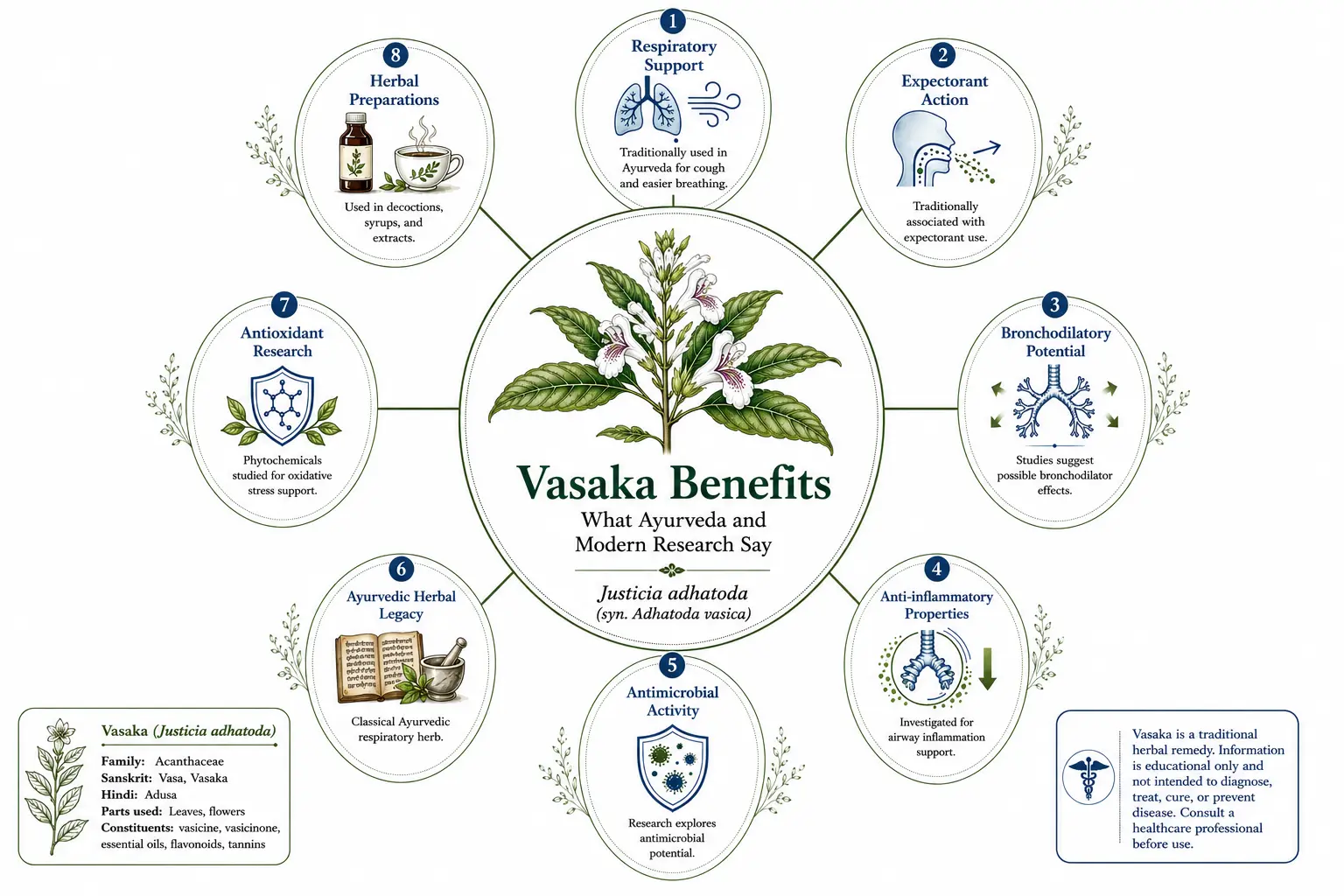
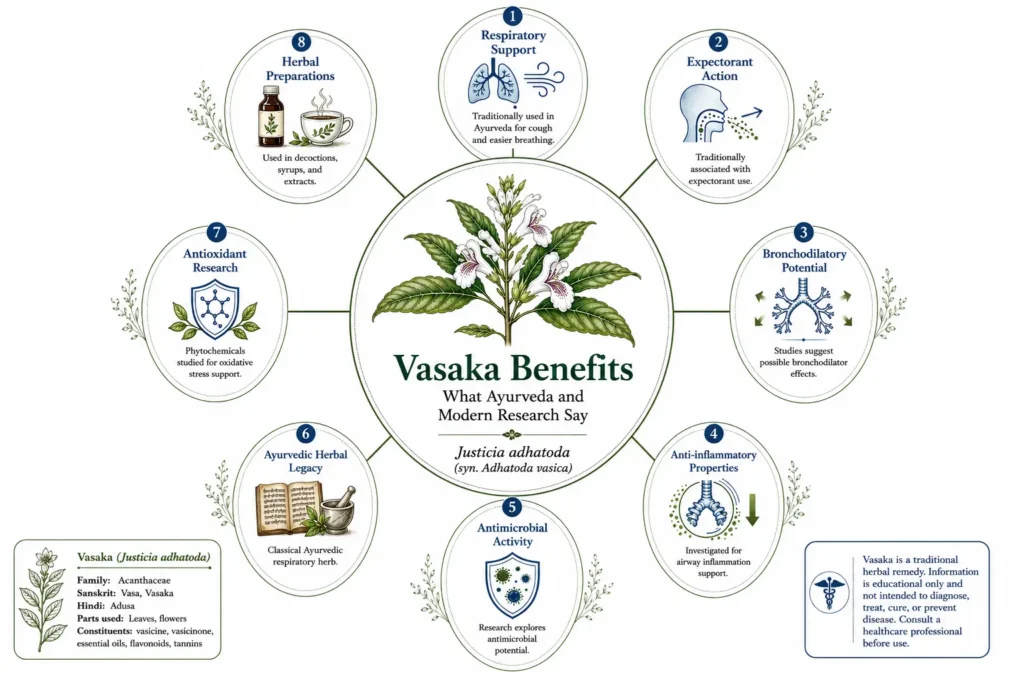
Quick Answer: Vasaka is Ayurveda’s most important single herb for respiratory conditions. Its leaves contain vasicine and vasicinone — alkaloids that act as bronchodilators and expectorants, loosening mucus and widening the airways. It is most widely used for cough, bronchitis, and asthma in the form of fresh leaf juice or decoction.
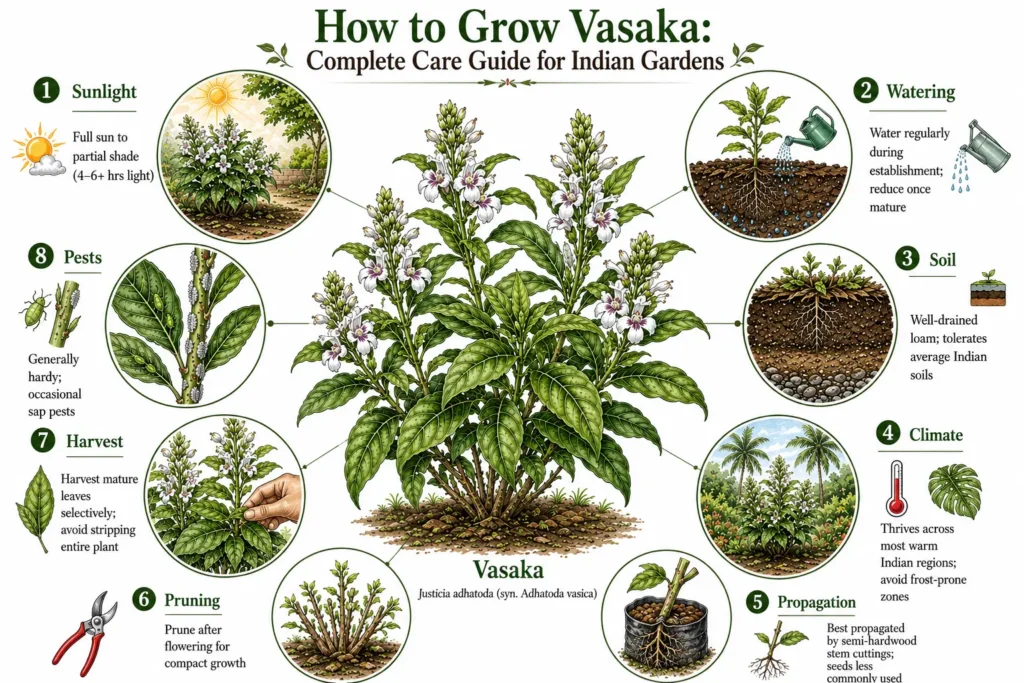
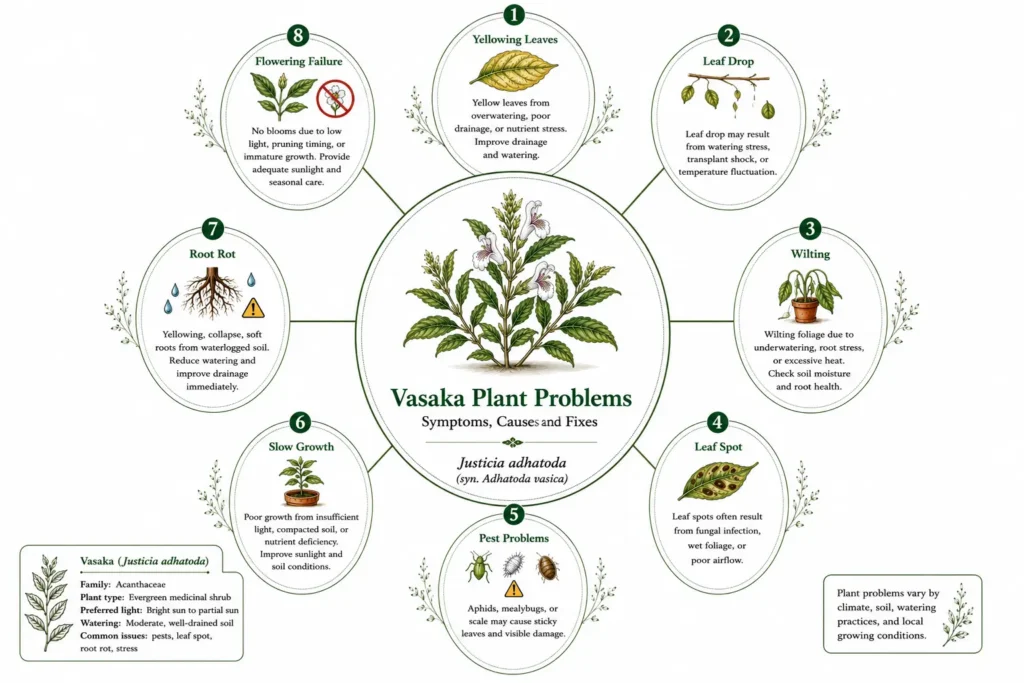
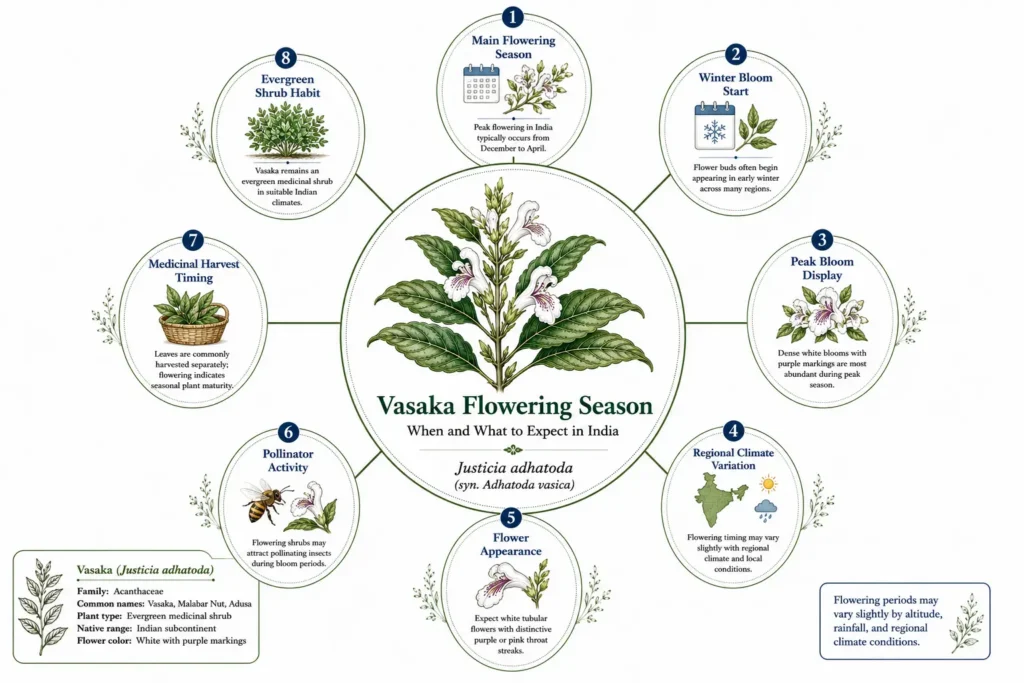
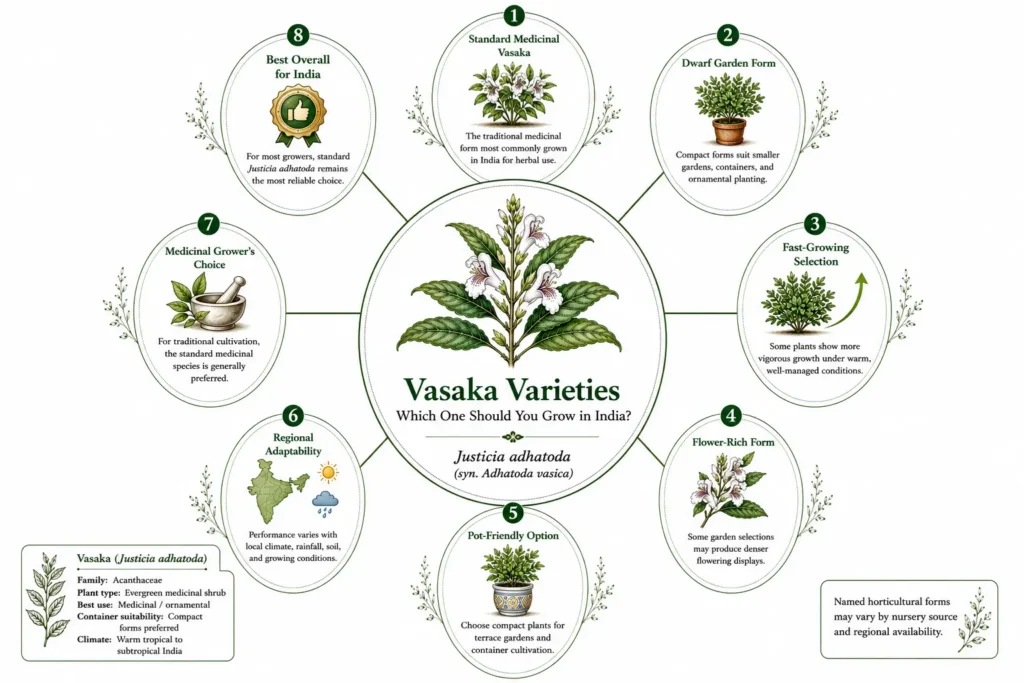
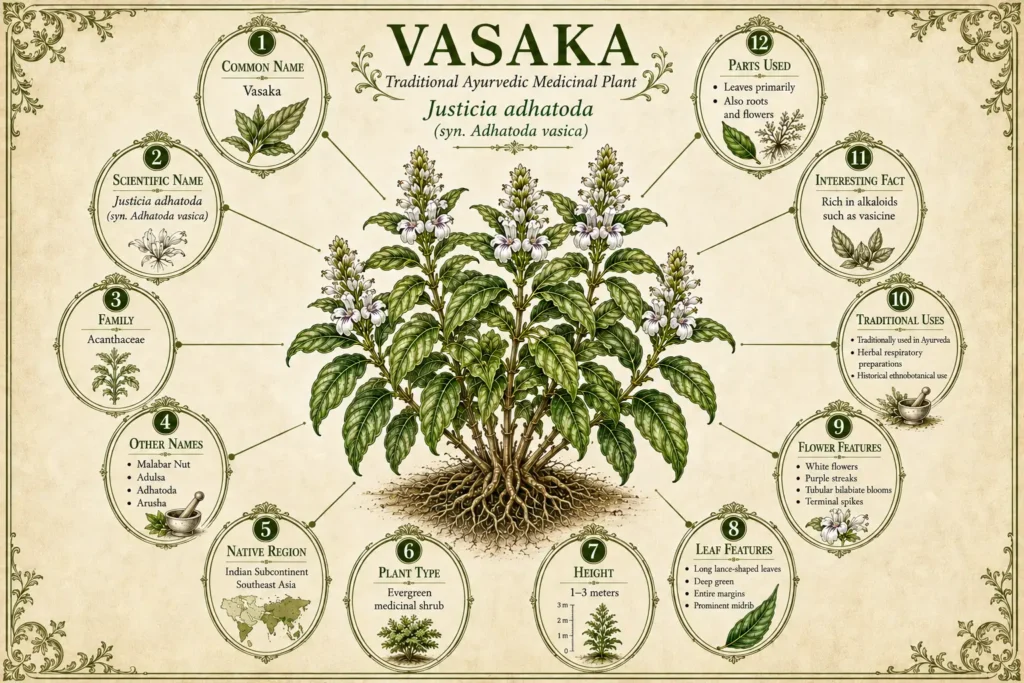
See also: Vasaka plant profile, how to grow it, common problems, its flowering season, and its varieties.
There is a remarkable backstory buried in most cough syrups: bromhexine, the mucolytic agent found in widely sold over-the-counter preparations across India and Europe, was directly developed from research on vasicine — Vasaka’s primary alkaloid. This is not a plant that merely has a reputation for supporting respiratory health. It provided the molecular template for a modern pharmaceutical. That is a different order of credibility, and most people growing Vasaka at home do not know it.
Recommended Products
Disclosure: As an Amazon Associate, PlantsInfo may earn from qualifying purchases.
🌱 Growing Essentials
The following products can help with container gardening, potting, root development, soil management, and healthy plant growth.

Organic Potting Soil Mix
Provides nutrients, structure, and healthy growing conditions for container plants.

Coco Peat Growing Medium
Enhances moisture retention while maintaining excellent root-zone aeration.

Grow Bags for Plants
Improve drainage, root aeration, and vegetable production in limited spaces.

Plastic Pots for Plants
Ideal containers for seedlings, ornamentals, herbs, and balcony gardens.
Respiratory Health — Primary Medicinal Use
Vasaka’s role in respiratory medicine spans more than two thousand years of continuous documented practice in Ayurveda, Siddha, and Unani systems. The Charaka Samhita and Sushruta Samhita both cite it as the primary herb for kasa (cough) and shwasa (breathlessness, asthma). The Charaka Samhita specifically lists it in the kasahara (cough-relieving) and shwasahara (breathlessness-relieving) groups.
The active alkaloids responsible for this action are vasicine and vasicinone, concentrated primarily in the leaves. Vasicine is a quinazoline alkaloid that functions as a bronchodilator — it relaxes the smooth muscle of the bronchial airways, widening them and easing breathing. It also stimulates the glandular cells lining the respiratory tract to increase mucus flow, making thick, sticky sputum easier to expel. Research suggests vasicinone, which is an oxidation product of vasicine, works synergistically with vasicine to enhance both bronchodilation and expectorant action.
Ayurvedic texts describe Vasaka as a pittashamaka herb — cooling and soothing to inflamed tissues despite being effective against Kapha disorders. This apparent paradox (a cooling herb used for mucus-dominant Kapha conditions) is central to its clinical application. Classical texts recommend it specifically when the patient presents with thick, yellow, or greenish sputum, fever with respiratory symptoms, and a sensation of heaviness in the chest — precisely the symptom picture of bacterial bronchitis or productive cough with infection.
The formulation Vasavaleha — a classical herbal jam (leha) with Vasaka leaf juice as the primary ingredient — is listed in both classical Ayurvedic texts and the Indian Pharmacopoeia as a standard preparation for bronchial conditions. Vasarishta, an Ayurvedic fermented formulation, is among the most commonly prescribed commercial preparations for chronic bronchitis and asthma across India today.
One aspect that traditional texts capture but modern research is only beginning to formalise: Vasaka is not simply sedating the cough reflex. It is genuinely clearing the airways. This distinction matters clinically. A cough suppressant makes the symptom go away; Vasaka addresses the underlying obstruction.
Anti-Inflammatory and Antimicrobial Properties
Beyond respiratory use, Vasaka’s phytochemical profile confers significant anti-inflammatory and antimicrobial activity. Research suggests the leaf extract shows activity against a range of bacterial and fungal pathogens, supporting its traditional use in wound care, skin infections, and fever management.
Traditional medicine across Bihar, Bengal, and Maharashtra uses a decoction of the leaves for malarial fever — a use attributed to the plant’s bitter alkaloids, which traditional practitioners noted were effective against intermittent fevers broadly similar to malaria’s cyclical pattern. A related use appears in Siddha medicine, where powdered dry leaves are prepared specifically for malarial conditions in southern India.
The whole plant is described in classical texts as asrajit — blood-purifying — and is used in formulations for bleeding disorders, peptic ulcers, and haemorrhoids. Research has identified wound-healing activity in leaf extracts that lends partial support to this traditional use.
Cultural and Ecological Significance
Vasaka does not carry the same sacred or religious significance as Tulsi or Neem, but it holds an important and specific cultural role. In West Bengal and Odisha, the basak pata (Vasaka leaf) has been a household remedy for generations, passed down within families as the first response to a child’s cough or winter cold. In the Hooghly district of West Bengal, a traditional preparation of boiled leaves, strained and mixed with honey, is still in common domestic use.
The plant’s name carries meaning worth noting. Adhatoda derives from the Tamil ada (goat) and thoda (not touch) — literally, “untouched by goats.” The Sanskrit name Vasaka derives from vasayati acchadayati — the herb that spreads thickly and creates shade. Simhi and Simhasya, two Sanskrit synonyms, refer to the flower’s shape resembling the mouth of a lion. These names are not incidental — they encode a generation’s practical observations about the plant’s growth habit and its distinctive flower form.
Ecological Role
Vasaka forms dense, gregarious stands wherever it establishes. Studies conducted in Rajasthan’s Sariska Tiger Reserve have recorded it as one of the highest-density shrub species in sampled plant communities. This colonising capacity makes it a significant soil-holder in degraded landscapes and rocky slopes where little else grows.
The large white flower spikes attract bees, butterflies, and a range of nectar-feeding insects. The dense shrub architecture provides nesting cover for ground-foraging birds. Its toxicity to ungulates means it creates protected micro-habitats within its stands where more palatable plants can regenerate.
In agroforestry and permaculture applications across India, Vasaka is used as a no-input boundary plant that deters browsing animals while providing a continuous supply of medicinal leaves.
Practical Value for Home Gardeners
For a home gardener in India, Vasaka offers three immediately practical benefits: a continuously available source of fresh leaves for making household decoctions during the cough and cold season, a self-managing boundary shrub that no animal will disturb, and a genuinely attractive flowering plant that contributes to the garden’s pollinator population from February to April.
Unlike many medicinal plants that require strict conditions or seasonal management, Vasaka simply grows. The home-grown leaf, freshly harvested, is the most potent and authenticated form of this herb you will ever have access to.
How to Prepare or Use at Home
Fresh leaf juice (swarasa): Crush or blend 5–10 fresh, mature leaves with a minimal amount of water, strain, and consume 10–15 ml mixed with honey. This is the most direct and bioavailable traditional preparation. Best used for acute cough and bronchial congestion.
Leaf decoction (kaadha): Boil 10–15 fresh leaves or a tablespoon of dried leaf powder in 2–3 cups of water until reduced by half. Strain, add honey to taste, and drink warm. Traditional practice in Bengal adds a small piece of ginger; in Maharashtra, a pinch of black pepper is standard.
Dried leaf powder: 1–3 g daily, mixed with honey. The most convenient form for ongoing support during the winter respiratory season.
The classical dose range for leaf juice in Ayurvedic texts is 10–20 ml; for dry leaf powder, 1–3 g per day. Do not exceed these ranges without guidance from a qualified Ayurvedic practitioner.
What to Avoid
Pregnancy: Vasaka contains vasicine, which has documented uterotonic and abortifacient properties. It stimulates uterine contractions. Pregnant women must not use Vasaka in any medicinal dose under any circumstances. This is the most critical contraindication for this plant.
Breastfeeding: Safety in lactating women has not been adequately studied. Medicinal use is not recommended without direct professional supervision.
Children under five: Not recommended at medicinal doses without a practitioner’s guidance.
People on antidiabetic medications: Vasaka may lower blood glucose levels. Those on diabetes medications should monitor closely and use only under supervision.
Autoimmune conditions: The immune-modulating activity of the plant may be relevant for people with autoimmune diagnoses; professional guidance is advisable.
Dosage caution: Overdose of concentrated Vasaka extracts may cause nausea and vomiting, attributable to the intensity of the bitter alkaloids. Stay within traditional dose ranges.
Key Takeaways
- Vasaka’s primary alkaloid, vasicine, is the molecular basis for the modern pharmaceutical bromhexine — one of the most prescribed mucolytic agents in India.
- Classical Ayurvedic texts cite it as the foremost herb for cough, bronchitis, and breathlessness, and it has been in continuous use for over two thousand years.
- Fresh leaf juice with honey is the most potent and bioavailable home preparation.
- Pregnancy is a strict absolute contraindication due to Vasaka’s uterotonic activity.
- The home-grown, freshly harvested leaf is the most reliably authentic and potent form of this herb available to any Indian home gardener.
Grow it once, harvest it every winter. Vasaka rewards the gardener with a medicine cabinet that never needs restocking.
Disclaimer: This information is based on traditional Ayurvedic knowledge and published research. It is not a substitute for medical advice. Consult a qualified healthcare professional before using any plant-based remedy for health conditions.