Vasaka Flowering Season: When and What to Expect in India
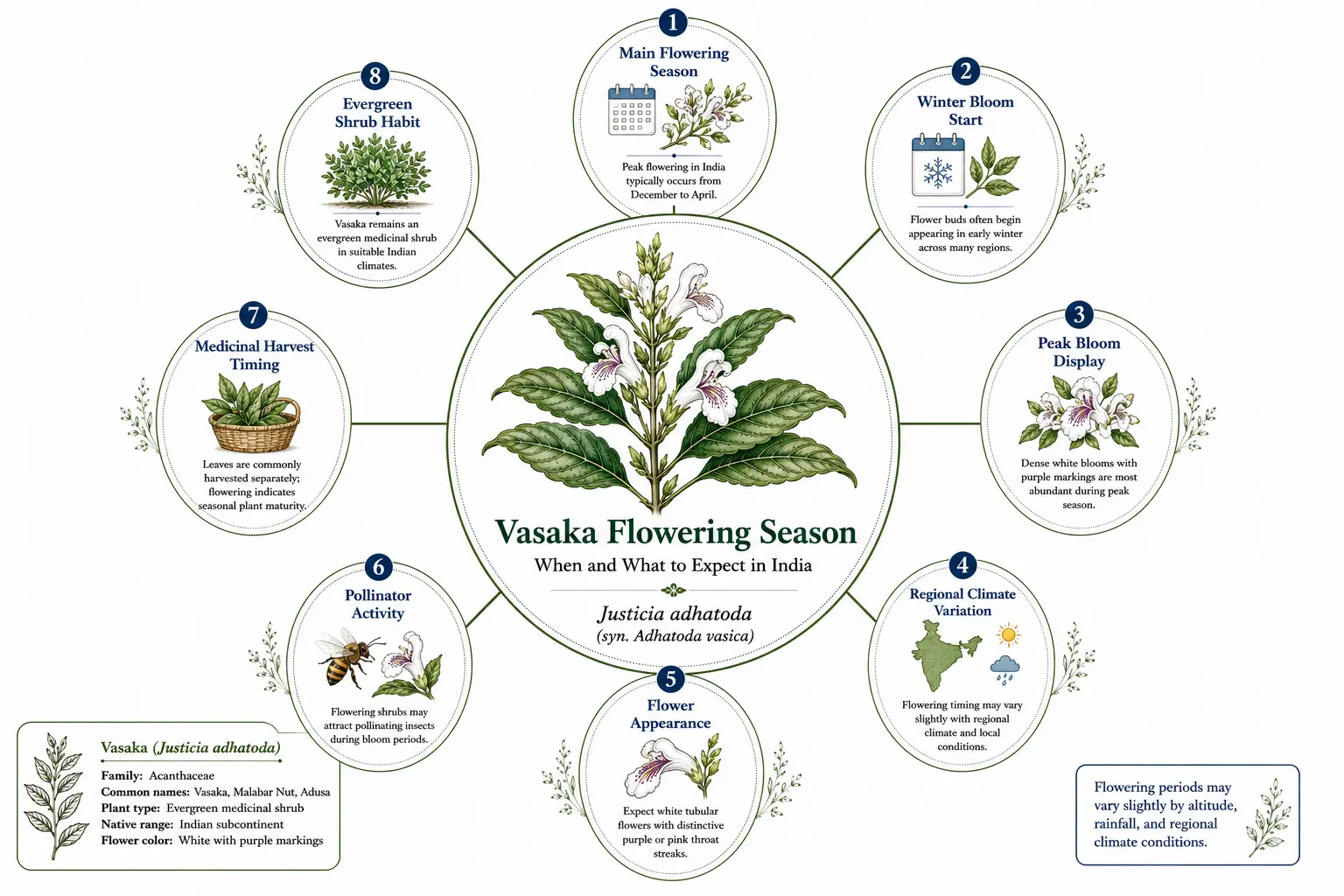
Quick Answer: Vasaka flowers from February to April across most of India, with peak bloom in February and March. Fruiting and seed dispersal follow in April–May. The plant grows most vigorously during the monsoon season and shows a partial slowdown in winter, though it remains evergreen year-round in most parts of India.
See also: Vasaka plant profile, how to grow it, common problems, its benefits, and its varieties.
February in a Vasaka hedge is unmistakable — dense white flower spikes push out simultaneously across the entire shrub, turning a green boundary plant into something genuinely worth stopping to look at. The timing is consistent enough that traditional Ayurvedic practitioners use it as a seasonal marker for the best leaf harvest: just before those first buds appear is when leaf alkaloid concentration peaks.
Recommended Products
Disclosure: As an Amazon Associate, PlantsInfo may earn from qualifying purchases.
🌱 Growing Essentials
The following products can help with container gardening, potting, root development, soil management, and healthy plant growth.
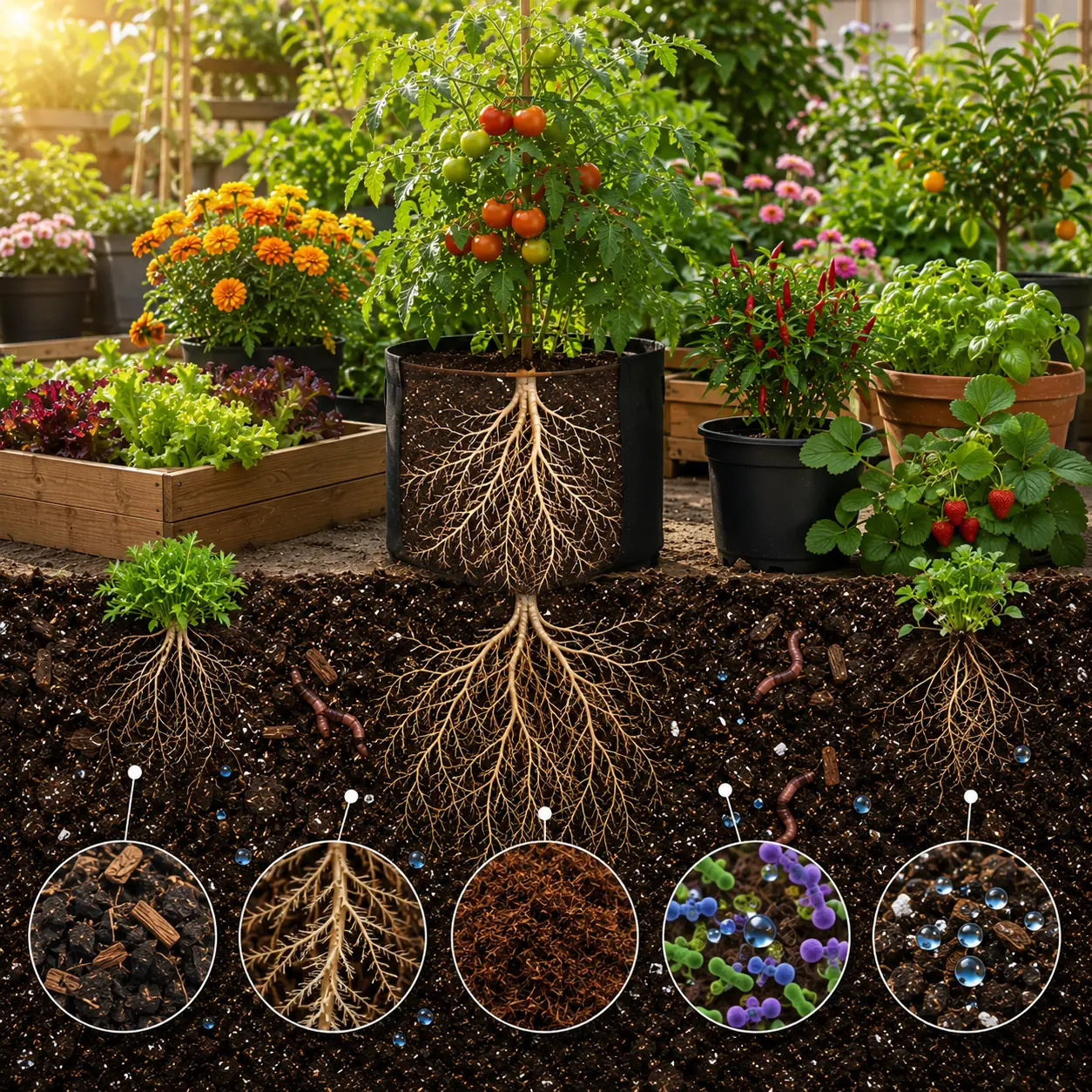
Organic Potting Soil Mix
Provides nutrients, structure, and healthy growing conditions for container plants.
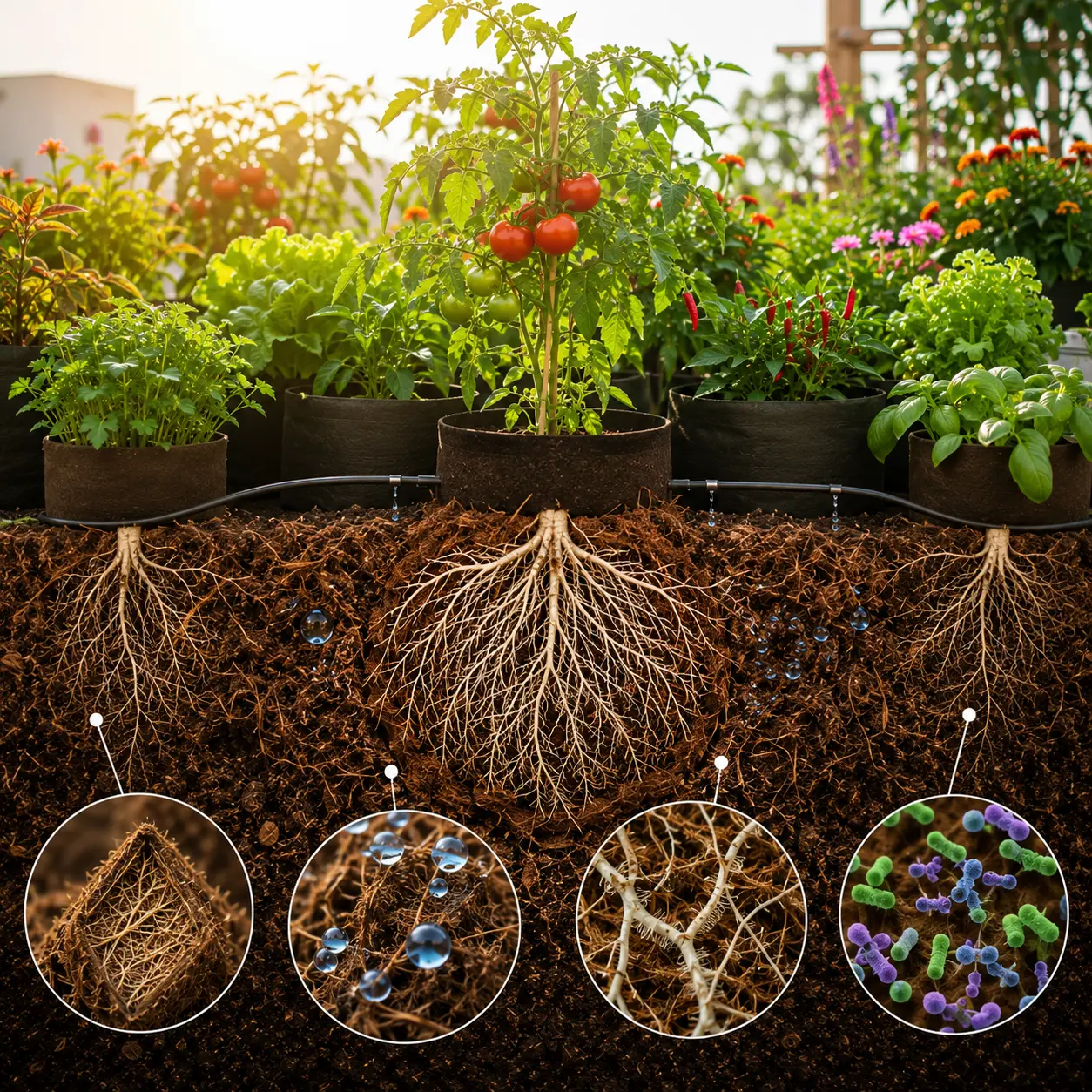
Coco Peat Growing Medium
Enhances moisture retention while maintaining excellent root-zone aeration.

Grow Bags for Plants
Improve drainage, root aeration, and vegetable production in limited spaces.

Plastic Pots for Plants
Ideal containers for seedlings, ornamentals, herbs, and balcony gardens.
India’s Seasons and This Plant
| Season (months) | What the plant is doing |
|---|---|
| Pre-monsoon (Mar–May) | Flowering peaks in March; fruiting and seed dispersal April–May; new vegetative growth beginning |
| Monsoon (Jun–Sep) | Peak vegetative growth; maximum leaf production; stems thickening rapidly |
| Post-monsoon (Oct–Nov) | Growth slowing; foliage dense and mature; best period for leaf harvest |
| Winter (Dec–Feb) | Partial slowdown in North India; flowers emerging in late January–February; plant remains evergreen |
Flowering Season in Detail
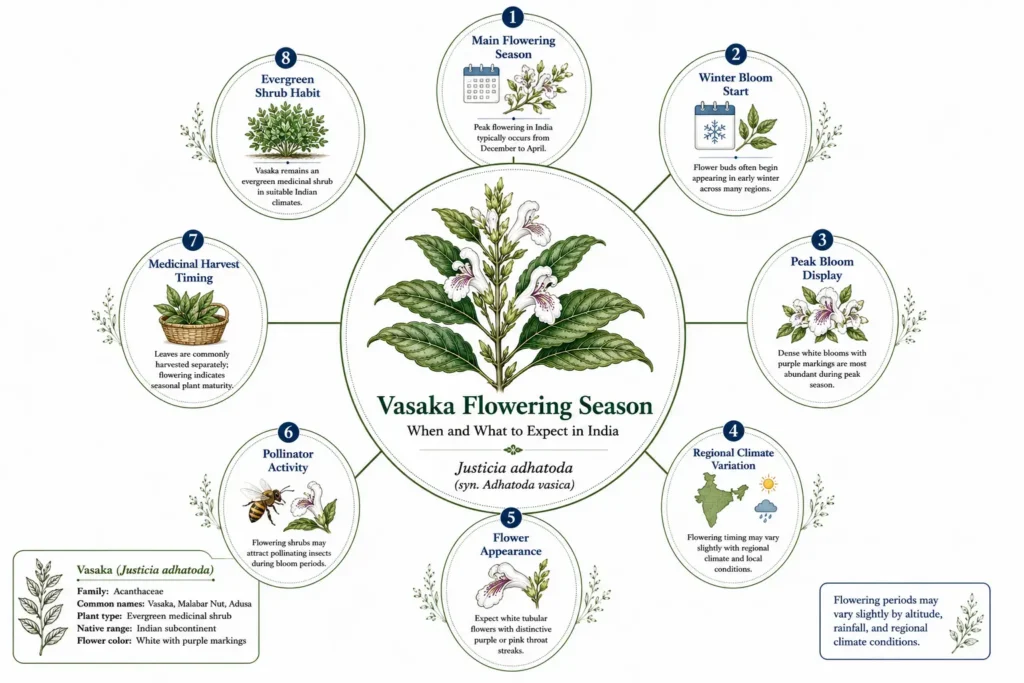
Flower buds appear in late January in South India and coastal areas; in North and Central India, they typically emerge in the first two weeks of February. Peak bloom runs through February and March, with individual flower spikes lasting 10–15 days. The overall flowering window extends 6–8 weeks across the plant.
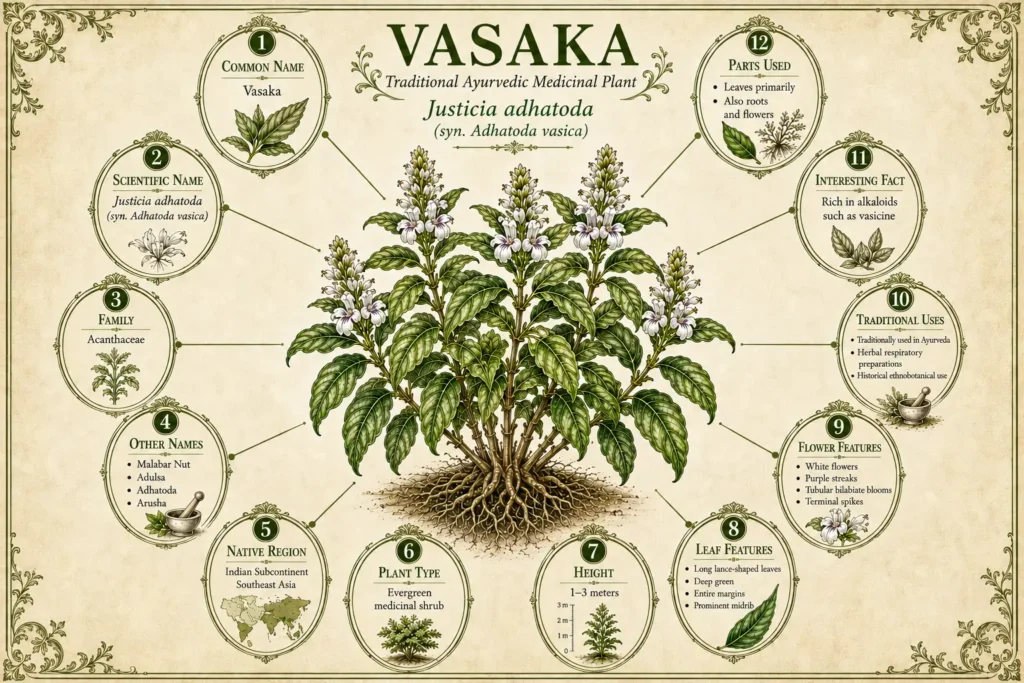
Flowers are white with distinctive purple or pink streaking on the lower lip, arranged in dense axillary and terminal spikes. They are strongly attractive to bees — a flowering Vasaka hedge in February is audible before it is visible, with the consistent hum of foraging activity.
Flowering is triggered by the combination of shorter days and cooler temperatures in late winter. Unlike many plants, Vasaka does not require a specific rainfall trigger — it flowers reliably in dry winters as long as the temperature cycle is present. This makes it one of the most consistent early-spring flowering shrubs in the Indian medicinal garden calendar.
In South India (Tamil Nadu, Kerala, coastal Karnataka), flowering may begin as early as late December–January due to milder winter temperatures. In the Himalayan foothills below 1,300 m, it begins slightly later, mid-February to March.
Fruiting Season
Small, club-shaped capsule fruits set in March–April following flowering. They ripen and turn brown in April–May, at which point they split explosively to scatter the seeds — a ballistic dispersal mechanism characteristic of the Acanthaceae family. The seed capsule makes a faint, audible pop when it splits.
The fruit-set and harvest window is narrow: ripe capsules disperse their seeds within days of ripening, so collecting seed for propagation requires close monitoring from mid-April onward. However, since stem cuttings are always the more practical propagation method, missing the seed window is of no consequence for most home gardeners.
Best Time to Plant
The primary planting window is monsoon onset — late June to mid-July. The combination of warm, consistently moist soil and long days gives stem cuttings optimal rooting conditions. Germination rates for this window consistently run above 80% in Indian conditions.
The second-best window is August–September as heavy rains ease but soil warmth remains. This window allows cuttings to root before the winter slowdown and produces a plant ready for its first full growing season the following monsoon.
Avoid planting in October–November as the plant is heading into its winter slow period, and in December–January when root activity is at its lowest. A cutting planted in the December–January window will survive but will sit largely dormant until March before showing meaningful growth.
Month-by-Month Calendar
| Month | Season | What to Do |
|---|---|---|
| January | Winter | Flower buds forming in South India; observe — no action needed |
| February | Late winter | Peak flowering begins; best leaf harvest just before buds open |
| March | Pre-monsoon | Flowering peak; fruits beginning to set; light shaping prune after flowers fade |
| April | Pre-monsoon | Fruiting; seeds dispersing; new vegetative growth beginning |
| May | Pre-monsoon | Active growth resuming; planting window opens for pre-monsoon cuttings |
| June | Monsoon onset | Best planting window begins; check drainage in containers and beds |
| July | Monsoon | Peak vegetative growth; stems elongating rapidly; no intervention needed |
| August | Monsoon | Continued active growth; second planting window viable |
| September | Late monsoon | Growth slowing slightly; good time for moderate leaf harvest |
| October | Post-monsoon | Substantial leaf harvest possible; foliage at its densest |
| November | Post-monsoon | Reduce watering; note any pest activity on mature foliage |
| December | Early winter | Growth slowing; no fertilising; monitor for scale insect on older stems |
What Can Go Wrong Seasonally?
Pre-monsoon heat scorch: In May, particularly in North and Central India, direct afternoon sun on container plants can cause leaf tip browning and marginal scorch on the largest leaves. This is a cosmetic issue on an otherwise healthy plant — move containers to a slightly shadier afternoon position if it is severe.
Post-monsoon powdery mildew flush: The four to six weeks after the main monsoon rains end, when humidity is still high but airflow improves, are the primary risk window for powdery mildew on densely growing shrubs. Thinning crowded stems after the rains prevents most outbreaks.
False winter dieback alarm: In North India, Vasaka may drop some of its older lower leaves in December–January and show noticeably slower growth. Unlike Guduchi, it does not go fully dormant — it remains green but simply idles. New growth resumes in February without any intervention.
Post-Harvest and Post-Bloom Care
After the main flowering period ends in late March or April, this is the ideal time for a moderate shaping prune — cutting back long, extending branches to encourage bushiness and dense new foliage before the monsoon growth season begins. Spent flower spikes can be removed at this point, but will drop naturally if left.
If you want to collect seeds, stop the post-bloom prune on the sections bearing mature capsules and monitor for the colour change from green to brown. Once brown, collect within three to four days before the capsules split.
Dormancy and Off-Season Care
Vasaka does not truly go dormant in most of India. In the far north (Jammu, Himachal Pradesh foothills) and at higher altitudes, it may show significant leaf drop and near-dormancy in the coldest weeks. Elsewhere, it remains evergreen and simply slows its growth rate during December–January.
Reduce watering during winter across all regions. No fertiliser is needed from November through to early March. The plant is making its own preparations for flowering — it does not need intervention during this period.