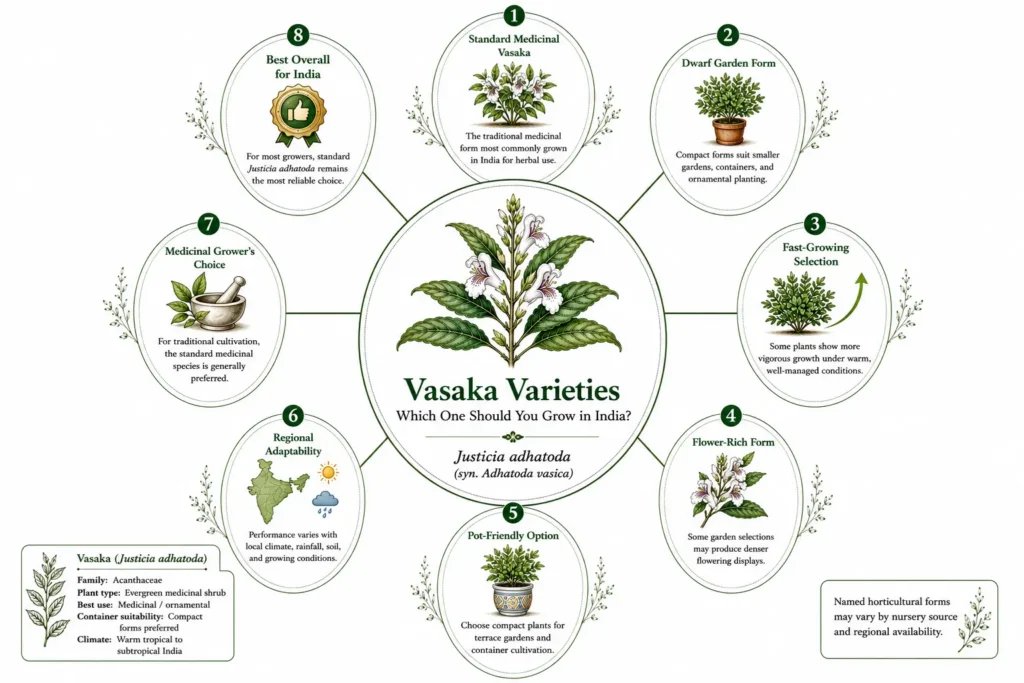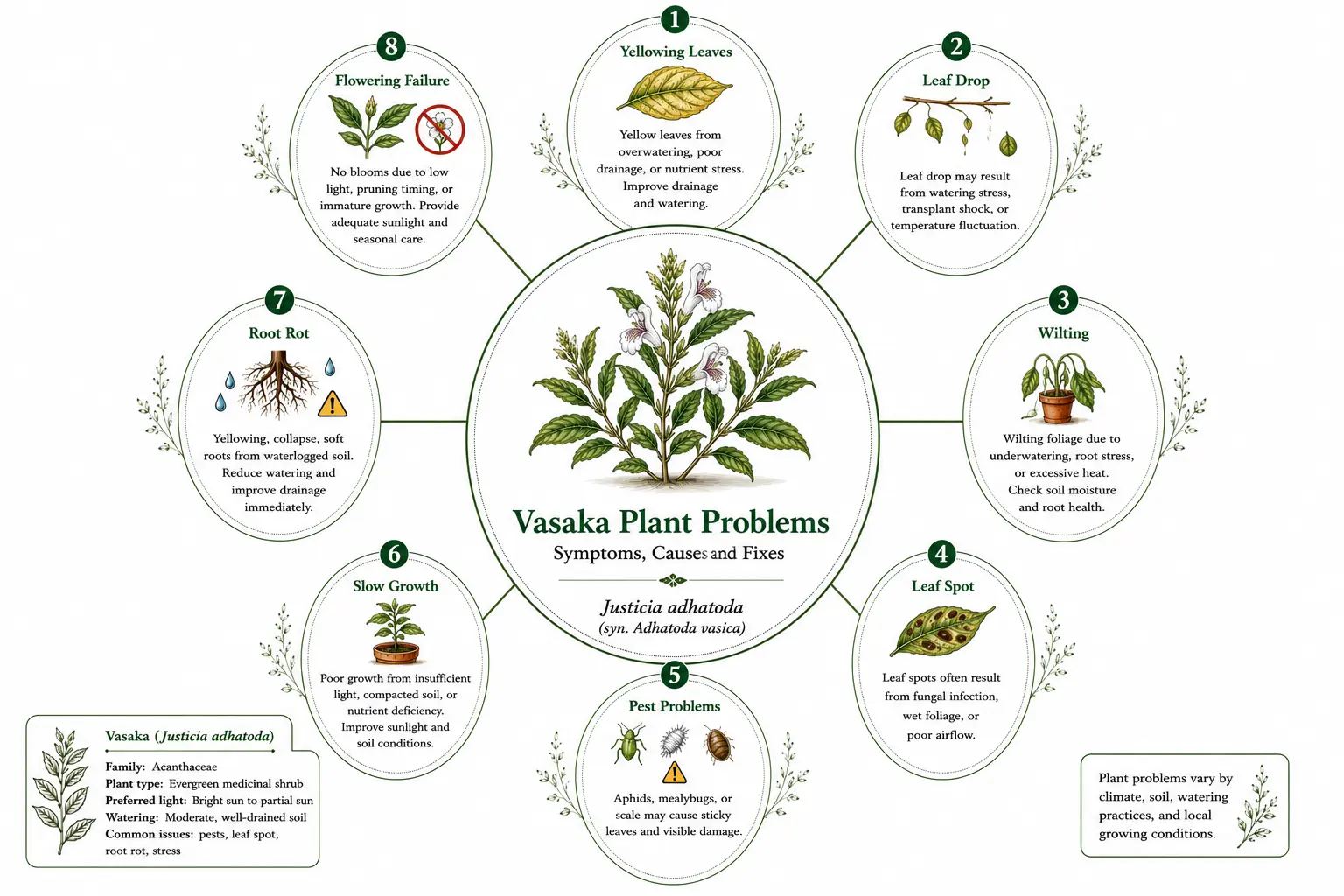
Vasaka Plant Problems: Symptoms, Causes, and Fixes
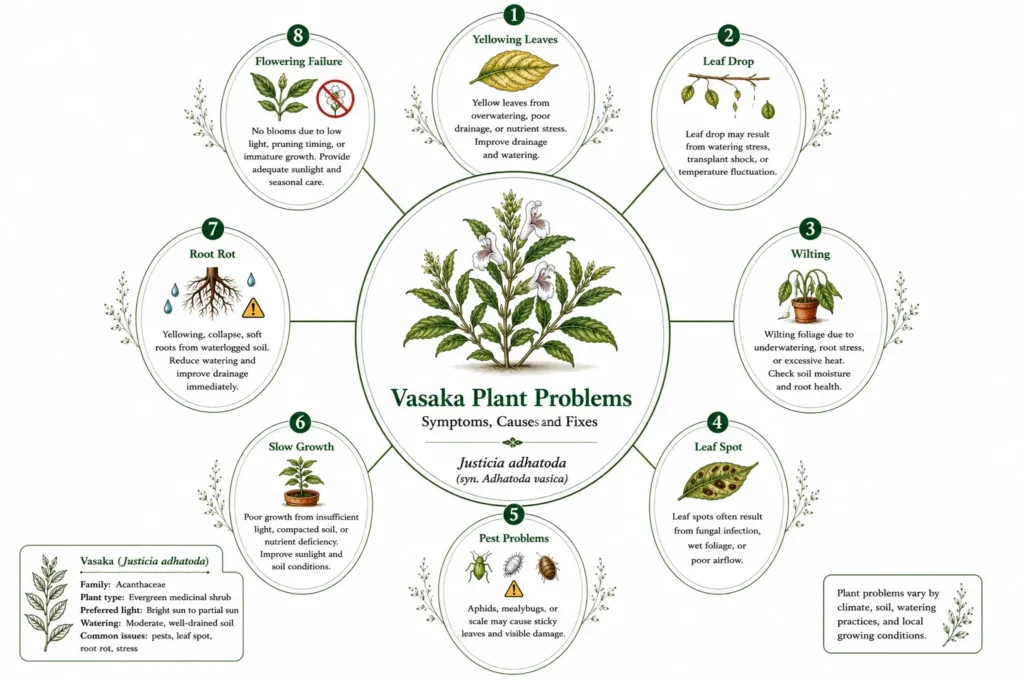
Quick Answer: Vasaka is one of the most problem-resistant medicinal shrubs you can grow in India. Its bitter alkaloids repel most chewing insects and browsing animals. The handful of issues that do occur — root rot, powdery mildew, scale insects — are almost always linked to poor drainage or inadequate airflow, and most are preventable.
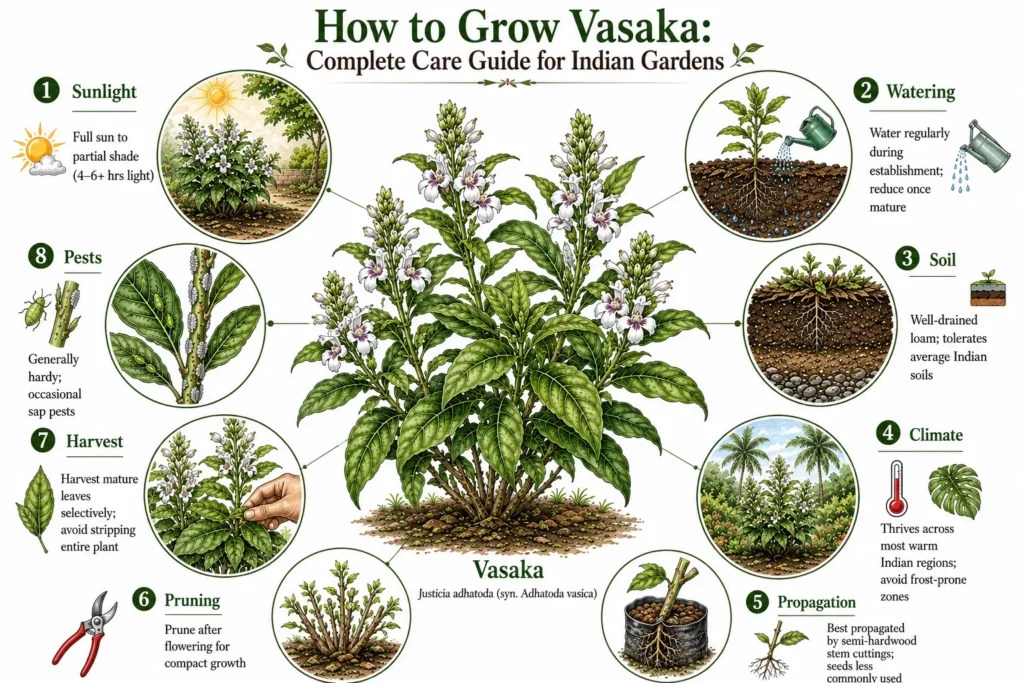
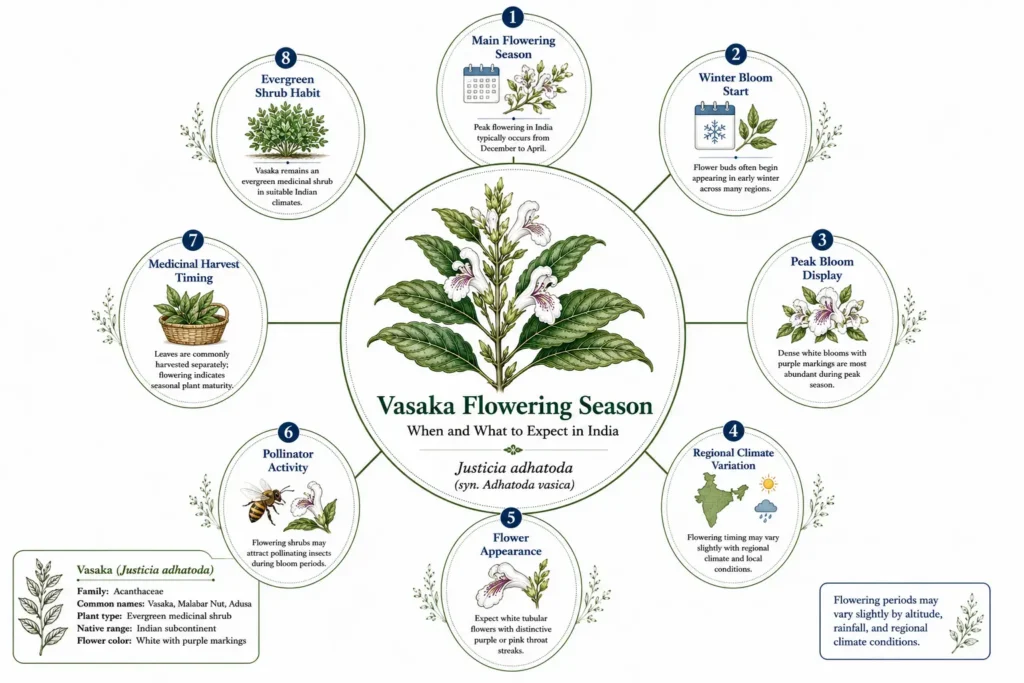
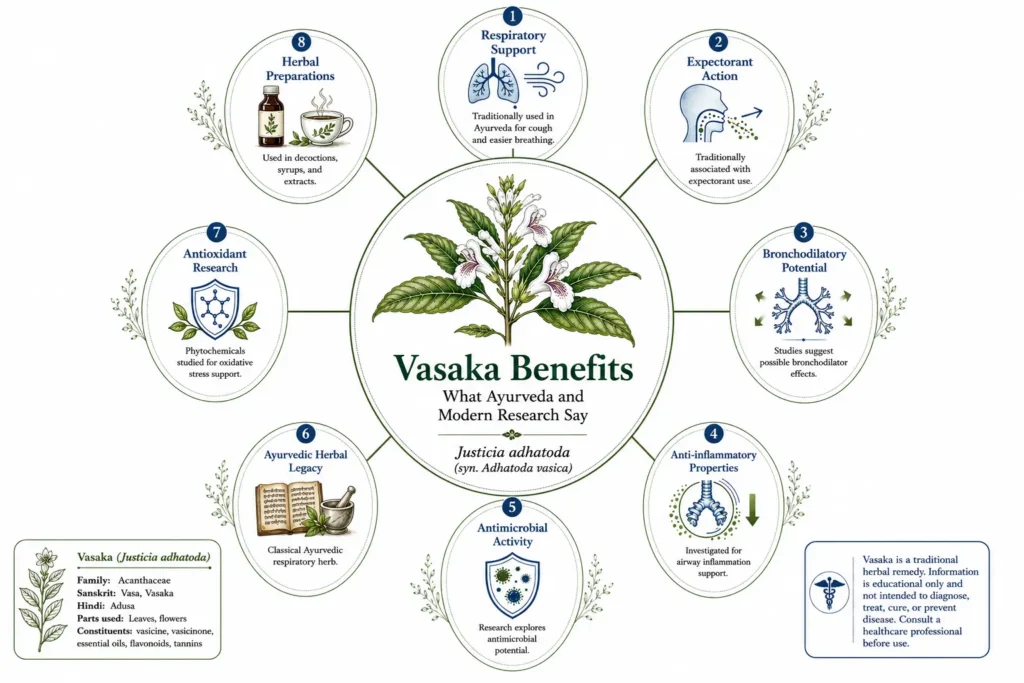
See also: Vasaka plant profile, how to grow it, its flowering season, its benefits, and its varieties.
Walk past a roadside Vasaka hedge that has been growing untended for years, and you will notice something: it looks healthy. No bite marks on the leaves, no visible pest damage, no wilting. The bitterness that makes the plant medicinally valuable is also its immune system. What actually troubles this shrub in a home garden setting is rarely biology — it is usually a drainage problem or a container that is too small.
Recommended Products
Disclosure: As an Amazon Associate, PlantsInfo may earn from qualifying purchases.
🌱 Growing Essentials
The following products can help with container gardening, potting, root development, soil management, and healthy plant growth.
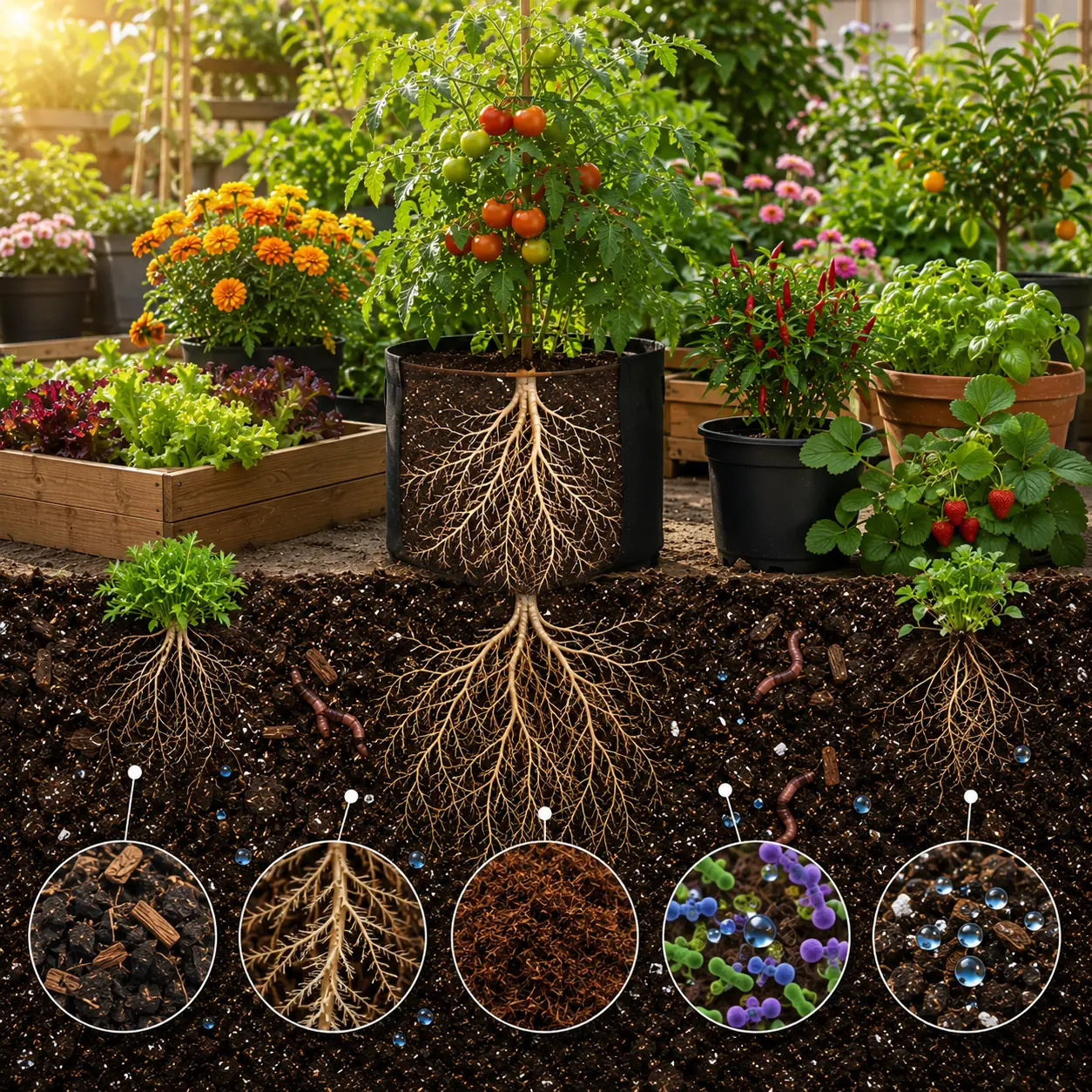
Organic Potting Soil Mix
Provides nutrients, structure, and healthy growing conditions for container plants.
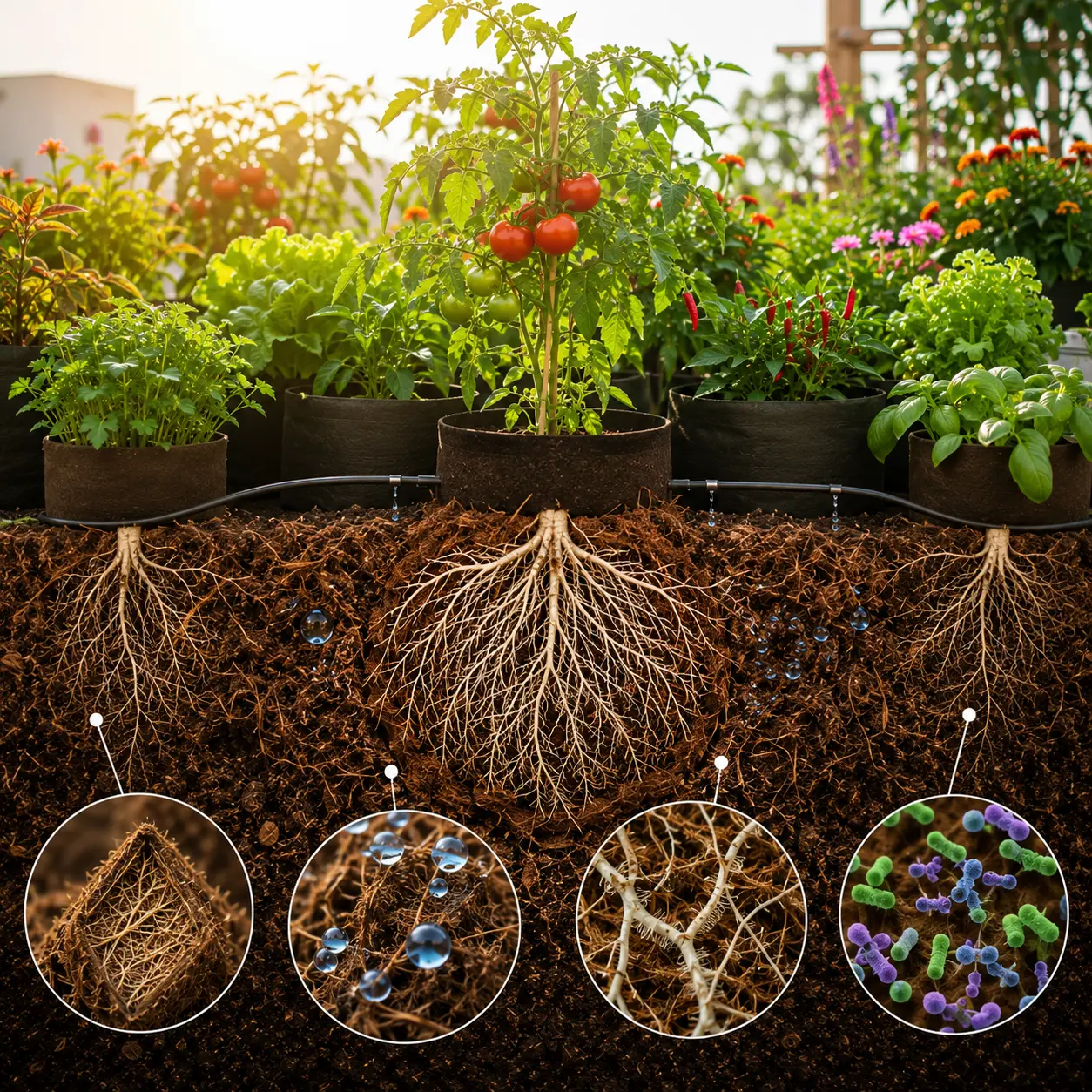
Coco Peat Growing Medium
Enhances moisture retention while maintaining excellent root-zone aeration.

Grow Bags for Plants
Improve drainage, root aeration, and vegetable production in limited spaces.

Plastic Pots for Plants
Ideal containers for seedlings, ornamentals, herbs, and balcony gardens.
Quick Diagnosis
| Symptom | Most Likely Cause | First Action |
|---|---|---|
| Soft, dark stem base at soil level | Collar rot from overwatering | Stop watering; assess root damage; replant in fresh mix if severe |
| White powdery coating on young leaves | Powdery mildew | Improve airflow; apply neem oil spray |
| Brown, crusty discs on older stems | Scale insects | Scrub off with a damp cloth; apply neem oil |
| Yellowing leaves on lower stems | Normal ageing, or nitrogen deficiency | If lower leaves only, normal; if widespread, apply light compost |
| Leaf tips browning and crisping | Heat scorch or underwatering in containers | Move to afternoon shade; check soil moisture |
| Wilting despite moist soil | Root rot already advanced | Inspect collar zone immediately |
| Webbing under leaves, bronzed leaf surface | Spider mites (rare but possible in hot dry periods) | Increase humidity; apply neem oil to undersides |
Diseases
Collar Rot / Root Rot (Pythium, Phytophthora species)
Collar rot is Vasaka’s most common fatal problem and is almost entirely a consequence of waterlogged soil or blocked container drainage. The first visible sign is deceptive: the upper plant looks normal or only slightly wilted while the stem at soil level is turning soft, dark, and spongy. By the time leaves begin yellowing, the damage is often already serious.
This condition can be reversed when caught early. Lift the plant, trim away all dark, mushy root tissue, dust the cut surfaces with Trichoderma viride biological fungicide powder, and replant in a fresh, gritty, well-drained mix. Keep the plant in a shaded position for two weeks after replanting.
When collar rot has reached the crown tissue — the junction between stem and root — recovery is unlikely. Prevention is the only reliable strategy: ensure every container has clear drainage holes, never use a sealed drip tray, and do not water on a fixed schedule; check soil moisture before every watering.
Powdery Mildew
Powdery mildew presents as a white to greyish flour-like coating on the upper surface of young leaves, concentrated on actively growing shoot tips. It is caused by fungal species in the order Erysiphales and thrives in the post-monsoon period (October–November) when humidity remains high, but temperatures drop, and airflow decreases.
The disease is manageable but persistent once established on a densely branched shrub. Physical management — thinning out crossing and crowded branches to improve airflow — reduces the problem as much as chemical spraying. Spray affected areas with neem oil solution (5 ml neem oil + 1 ml liquid soap per litre of water) every five to seven days for three weeks. Remove heavily infected leaf tips by hand.
Powdery mildew does not kill a healthy Vasaka plant, but it reduces the quality of leaves intended for medicinal use. Do not harvest mildew-affected leaves.
Leaf Spot (minor fungal)
Leaf spot shows as small, circular, brown to dark grey spots on mature leaves, sometimes with a yellow halo. It occurs most commonly on lower, interior leaves that receive less light and air circulation. It is caused by various fungal species and is rarely serious on an otherwise healthy plant.
Remove and dispose of heavily spotted leaves. Improve light penetration by pruning the shrub’s interior. A neem oil spray on affected areas helps arrest progression. Leaf spot in Vasaka is largely cosmetic and does not require intensive treatment.
Sooty Mould (secondary to pest infestation)
Sooty mould appears as a black, smudgy coating on leaf surfaces. It is not a primary infection — it grows on the sticky honeydew secreted by sap-feeding insects, particularly scale insects and aphids. Treating the underlying pest infestation eliminates sooty mould within two to three weeks.
Wipe sooty mould off leaves with a damp cloth to restore photosynthesis while the pest population is being controlled.
This information is for general guidance only. Always read product labels before applying any pesticide or fungicide. Follow state agriculture department guidelines for food crops. Keep children and pets away during and after application.
Pest Problems
Scale Insects
Scale insects are Vasaka’s most common persistent pest. They appear as small, flat, brown or grey discs firmly attached to the bark of older stems, particularly at branch junctions and on the underside of larger branches. They are easy to overlook because they do not move and resemble natural bark features at a glance.
Scale insects feed by inserting fine mouthparts into the stem and drawing sap continuously. A heavy infestation causes gradual yellowing, stem dieback, and the production of sticky honeydew that invites sooty mould.
Organic fix: Scrub visible scale clusters off stems with a firm, damp cloth or an old toothbrush. Follow with a neem oil spray (5 ml per litre) applied directly to stems. Repeat weekly for three weeks. Neem oil disrupts the insect’s lifecycle at the juvenile (crawler) stage before they develop their protective shell.
Chemical option: A systemic insecticide containing imidacloprid, applied as a soil drench at label dosage, translocates through the plant and reaches scale insects feeding on the stems. Do not use on plants from which leaves are being harvested for consumption within six weeks of application.
Scale insects are the pest most commonly mistaken for a disease or a bark anomaly by first-time Vasaka growers. If brown discs on the stem can be scraped off with a fingernail, they are scale insects — not bark blemishes or fungal growth.
Aphids
Aphids are a secondary concern for Vasaka — its bitter alkaloids deter most aphid species, and infestations are typically light and self-resolving. When they do occur, they appear as small green or pale clusters on actively growing shoot tips and young leaves in February–March as the plant pushes out new pre-flowering growth.
Light aphid pressure rarely needs treatment on an established Vasaka shrub. Strong water spray directed at affected shoot tips dislodges most colonies. For heavier infestations, neem oil spray at standard dilution applied twice, five days apart, is effective.
Spider Mites
Spider mites are uncommon on Vasaka in normal Indian conditions, but can appear during the hottest and driest weeks of April–May on container plants with poor air circulation. The characteristic sign is fine webbing on the underside of leaves combined with a bronze or rust-coloured stippling on the upper leaf surface.
Organic fix: Mist the undersides of leaves daily with plain water — spider mites are suppressed by humidity. Apply neem oil spray, specifically targeting the undersides of leaves. Moving the container to a slightly more humid, less exposed position usually resolves the problem within two weeks.
Environmental and Care Mistakes
Overwatering — The Most Common First-Year Mistake
Overwatering is the single most universal mistake made by new Vasaka growers, particularly in containers. The plant looks robust; the instinct is to water generously. In ground planting, excess water usually drains away; in containers, it accumulates and creates anaerobic root zone conditions.
The symptom — a soft, pale stem base with wilting leaves — is almost always misread as underwatering, which leads to even more watering and accelerates the collapse. Check the stem before reaching for the watering can. If the base is firm and the soil at depth feels moist, the plant does not need water regardless of how the leaves look.
Planting in a Low-Lying or Shaded Spot
Vasaka evolved in open, sun-exposed habitats — roadsides, rocky embankments, forest edges. Planting it in a shaded corner of the garden, or in a bed that collects runoff, puts it in conditions directly opposed to its natural preferences. The result is thin, pale growth, reduced leaf alkaloid content, and significantly higher susceptibility to fungal diseases.
Fix: for ground-planted shrubs, assess whether pruning overhead branches to improve light access is possible. For containers, move to a sunnier position. If the drainage issue is structural, raise the bed or add coarse gravel to improve runoff.
Container Too Small
Vasaka in a small pot — under 10 litres — becomes root-bound quickly and produces noticeably poor foliage. The roots circle the base, the pot heats up rapidly in summer, and the plant cannot access sufficient nutrients. This is a common mistake when growing from a purchased nursery seedling in a 3–4 inch pot without promptly upsizing.
Repot into a minimum 15–20 litre container at planting time and do not wait for visible root-bound symptoms before upsizing again.
Over-pruning in Autumn
Pruning hard in October or November — when the plant is slowing down ahead of winter — produces weak new growth that does not have time to harden before the coldest months. This growth is vulnerable to pest attack and does not contribute to the plant’s medicinal leaf reserve.
Reserve major structural pruning for March, after the flowering season ends. Limit autumn work to light clean-up: removing dead branches and trimming any stems that are clearly diseased.
Prevention Protocol
Before monsoon onset each year (late May to early June), clear all container drainage holes and ensure beds have good runoff capacity. This single action prevents the majority of root and collar rot cases.
Each March after flowering, prune the shrub to improve interior airflow — this is the most effective prevention step against powdery mildew and scale insect build-up in dense stems.
Inspect stems at branch junctions monthly from October through February for early scale insect colonies. Finding them at the two to three insect stage allows a simple cloth-wipe resolution rather than a multi-week spray programme.
Top-dress with vermicompost and a handful of neem cake in June, just before the monsoon. Neem cake in the root zone suppresses soil-borne fungal species and provides slow-release nutrition through the growing season.
Do not use fixed watering schedules. Check soil moisture before every watering and adjust for the season.
When to Give Up on a Plant
Advanced collar rot that has consumed the entire stem base and entered the crown tissue is unrecoverable. Signs: the stem at soil level is dark, hollow, or completely soft when pressed; the upper plant is collapsing despite appearing green. Remove the plant entirely.
Before replanting Vasaka in the same location or pot, remove all old soil, wash the container with diluted neem oil solution, and allow it to dry completely for several days before refilling with fresh mix. Do not replant in the same hole in the ground without replacing the soil in that area.
A plant with severe powdery mildew on more than 60% of its foliage during an active flush, combined with scale insects on the majority of older stems, is worth replacing rather than rehabilitating — particularly if the growing position itself (heavy shade, poor drainage) is not correctable.
Frequently Asked Questions
Can I eat Vasaka leaves harvested from a plant treated with neem oil?
Wait at least seven days after the last neem oil application before harvesting leaves for any medicinal or edible use. Neem oil is organic and biodegrades quickly, but this waiting period is a sensible practice.
My Vasaka lost many leaves in December — is it dying?
Probably not. In North and Central India, Vasaka drops some lower and interior leaves in winter as growth slows. It should retain its upper canopy and remain visibly green. Scratch the main stem — green tissue beneath the bark confirms the plant is alive. New growth resumes in February.
The white powdery patches reappear every October. What am I doing wrong?
Recurring powdery mildew is almost always an airflow problem rather than a soil or nutrition issue. The October–November post-monsoon period creates ideal conditions for the fungus regardless of care. The fix is structural: prune the interior of the shrub in September to open it up before the high-risk period, rather than treating the mildew after it appears each year.
Vasaka has earned its reputation as an almost self-managing medicinal shrub. Give it sun, drainage, and enough room, and most of this guide will remain theoretical for you.