Hybrid Rose Benefits: Ornamental Uses and Garden Applications

Quick Answer
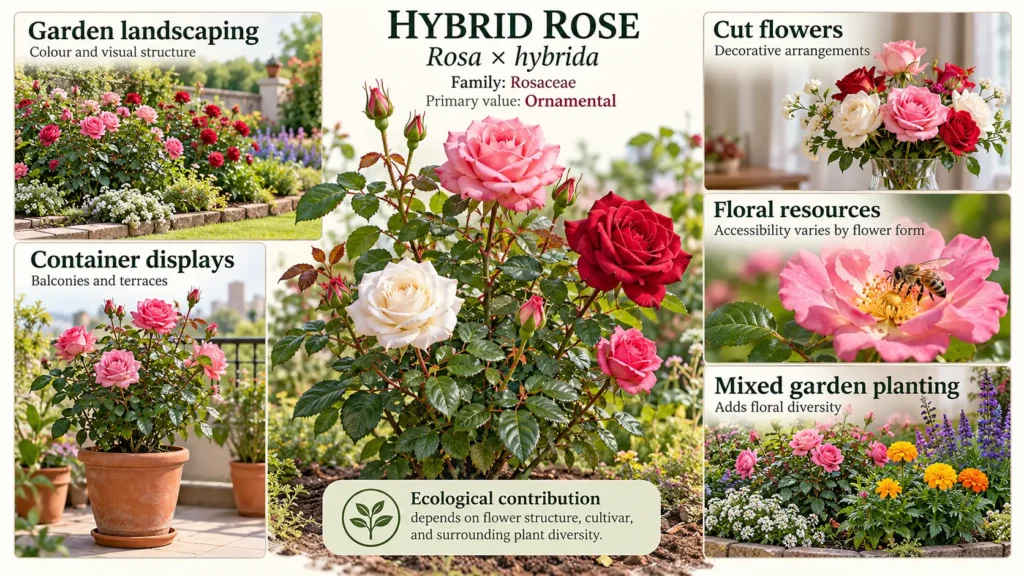
Hybrid roses (Rosa × hybrida) are primarily valued for their ornamental beauty, diverse flower forms, fragrance, and use in gardens, landscapes, and cut-flower arrangements. Selected rose petals and rose-derived preparations also have culinary and fragrance-related applications. Depending on flower structure, hybrid roses may provide floral resources for visiting insects.
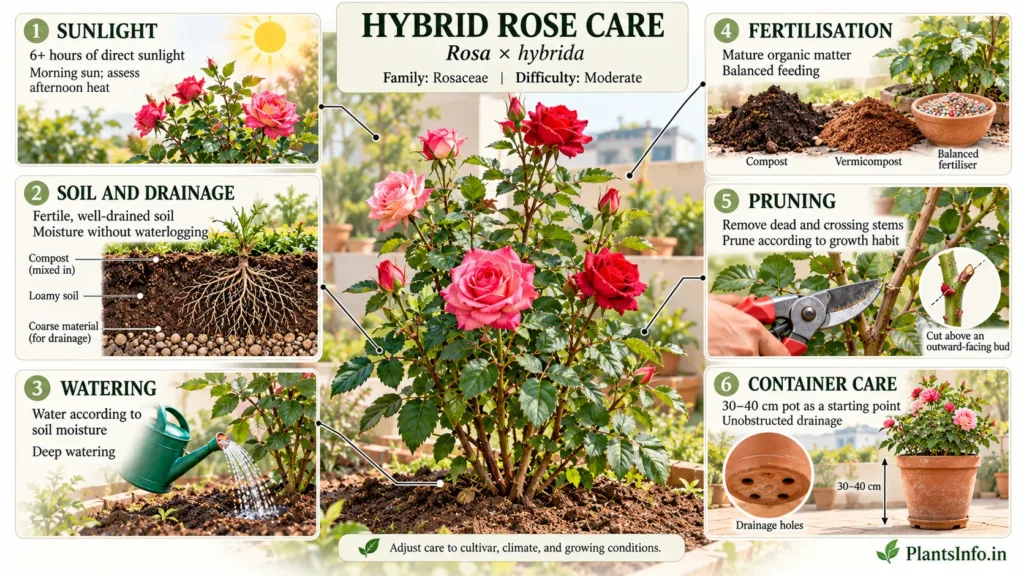
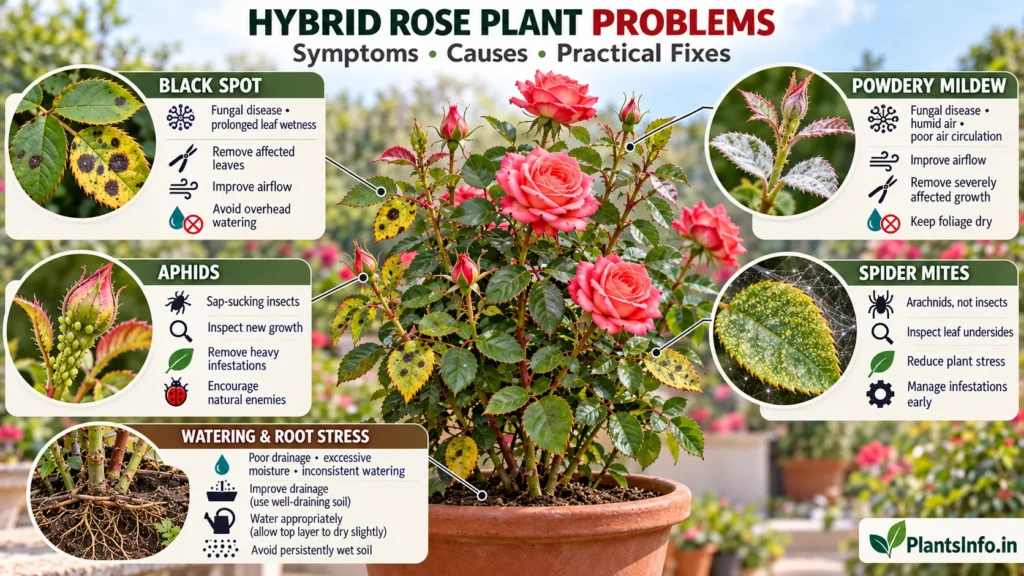
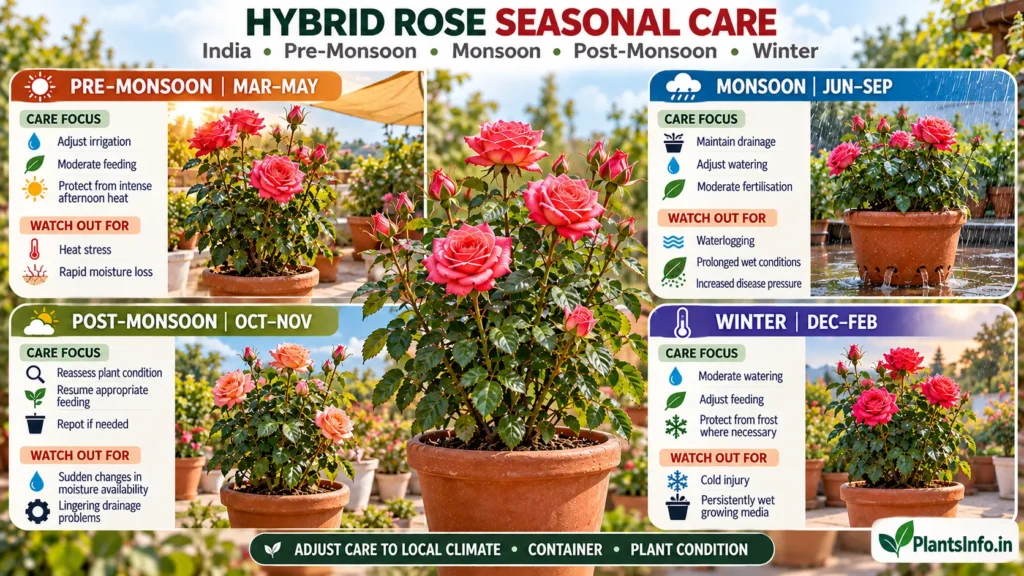
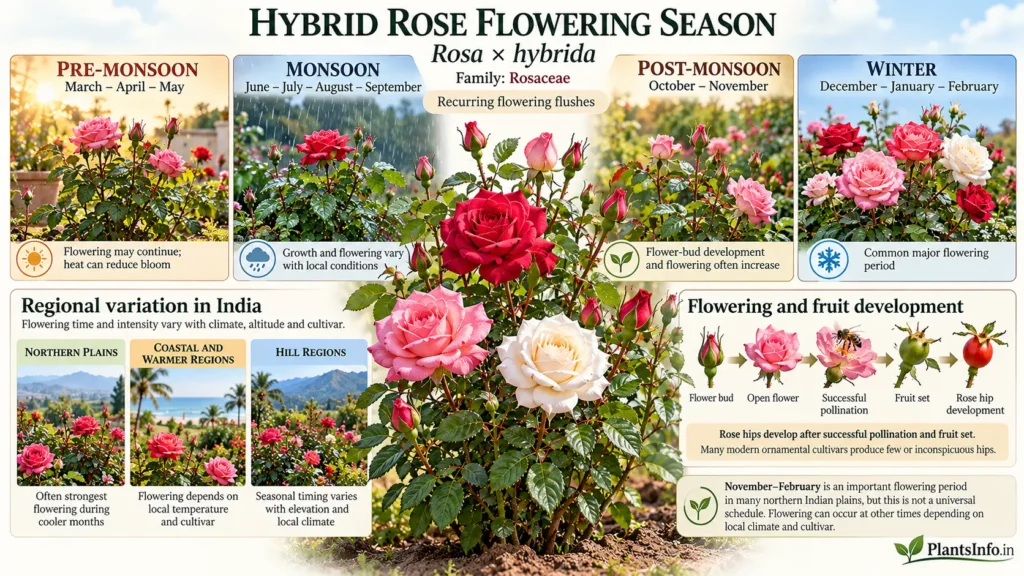
See also: Rose plant profile, how to grow it, common problems, seasonal care, and its flowering season.
Uses at a Glance
| Domain | Main Use or Role | Context |
|---|---|---|
| Ornamental | Garden display, landscape planting, and floral arrangements | Principal value of hybrid roses |
| Floriculture | Cut flowers, bouquets, and decorative displays | Particularly associated with hybrid tea cultivars |
| Fragrance | Floral scent and fragrance-related products | Depends on cultivar and aromatic characteristics |
| Culinary | Garnishing, confectionery, and aromatic preparations | Requires appropriately identified, food-grade flowers |
| Traditional | Rose water, rose-petal preparations, and fragrance products | Part of broader rose-based traditions |
| Ecological | Floral resources for visiting insects | Depends on flower structure and accessibility |
Introduction
Hybrid roses encompass cultivated forms with diverse flower colours, shapes, fragrances, and growth habits. Their variation makes them suitable for formal gardens, residential landscapes, container cultivation, and commercial floriculture.
Recommended Products
Disclosure: As an Amazon Associate, PlantsInfo may earn from qualifying purchases.
🌱 Growing Essentials
The following products can help with container gardening, potting, root development, soil management, and healthy plant growth.
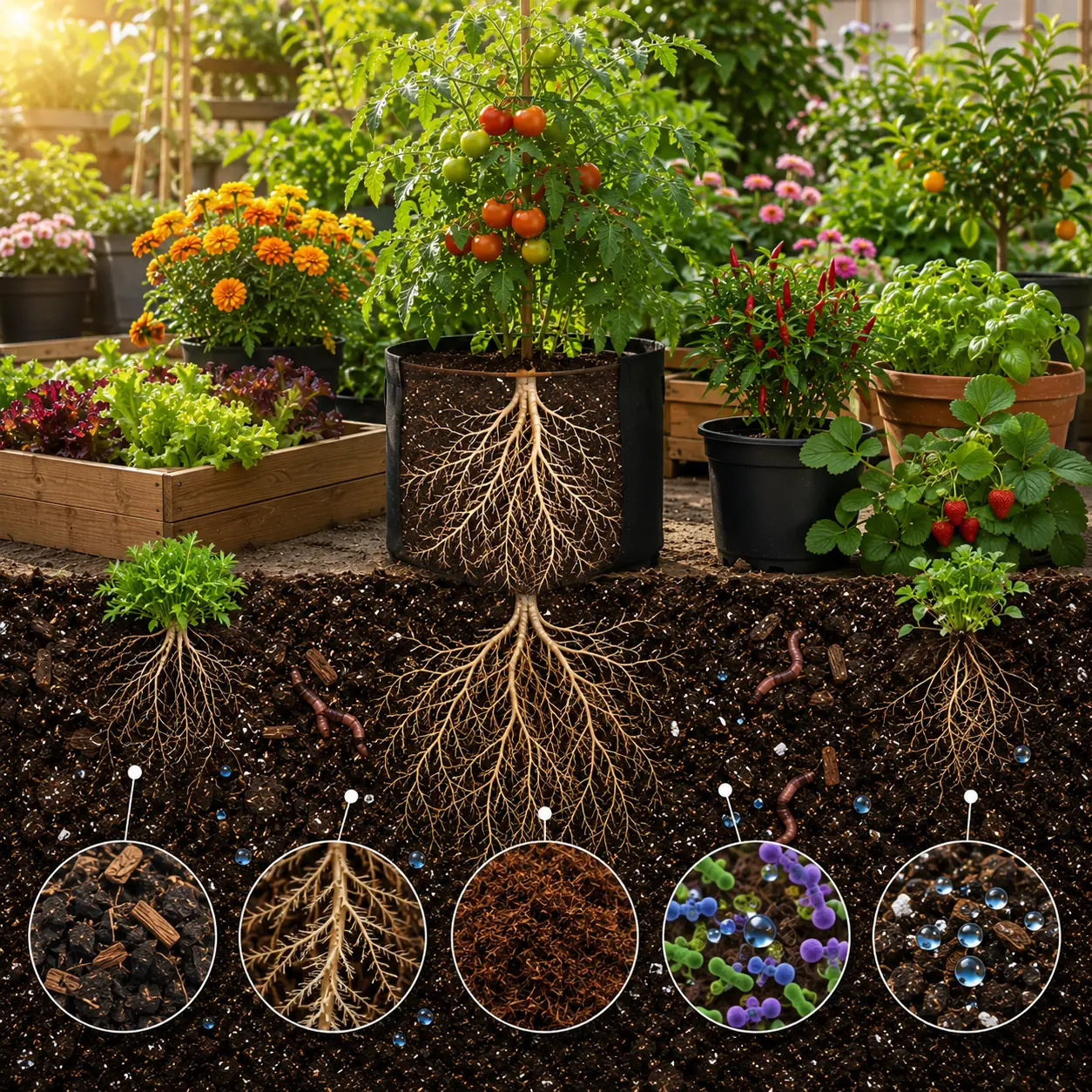
Organic Potting Soil Mix
Provides nutrients, structure, and healthy growing conditions for container plants.
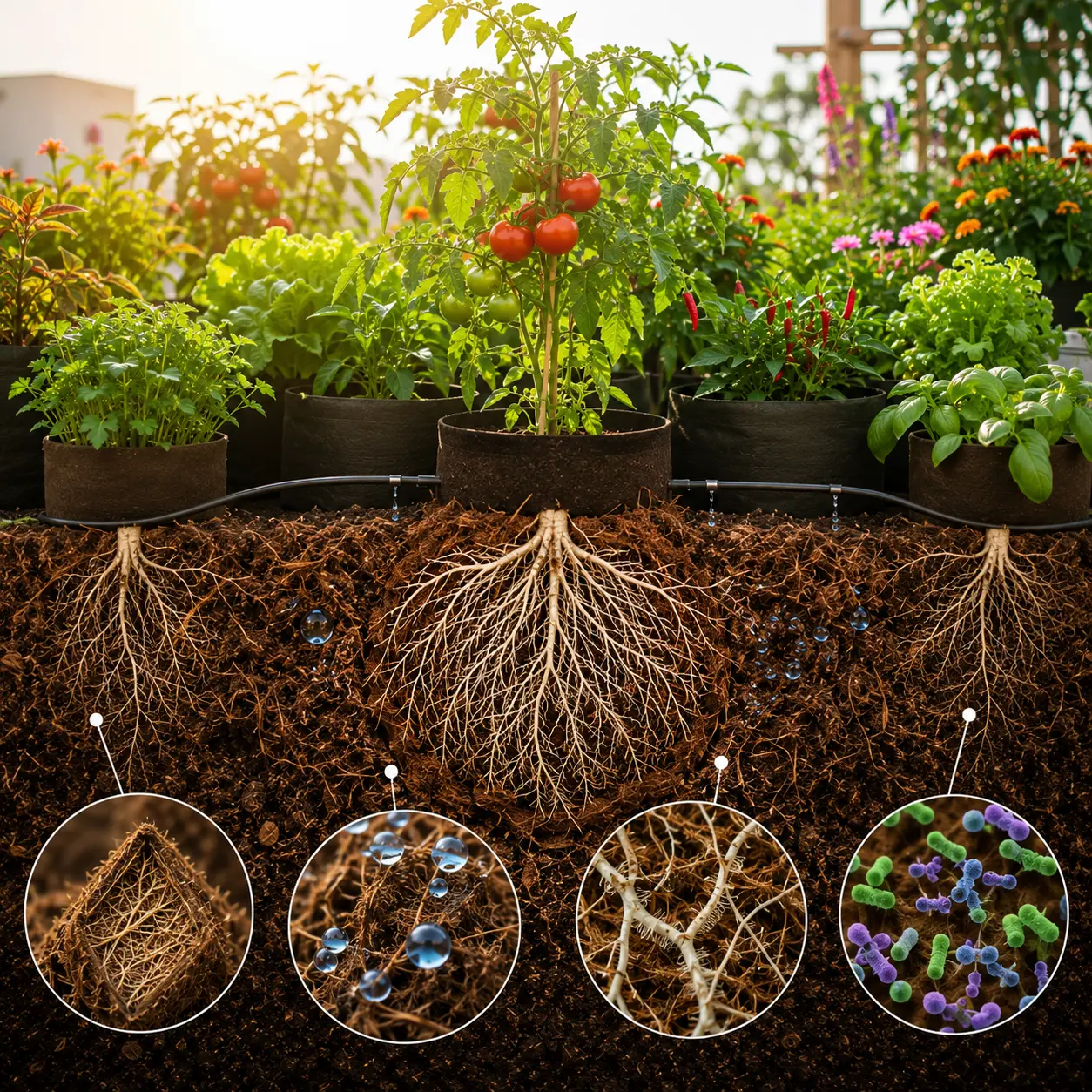
Coco Peat Growing Medium
Enhances moisture retention while maintaining excellent root-zone aeration.

Grow Bags for Plants
Improve drainage, root aeration, and vegetable production in limited spaces.

Plastic Pots for Plants
Ideal containers for seedlings, ornamentals, herbs, and balcony gardens.
Many modern hybrid roses are selected principally for ornamental characteristics, repeat flowering, stem quality, and suitability for cut-flower production. Their culinary and traditional applications require separate consideration because not every ornamental cultivar is suitable for consumption or fragrance extraction.
Ornamental Value of Hybrid Roses
The principal significance of Rosa × hybrida lies in its ornamental diversity. Cultivated hybrid roses display considerable variation in flower morphology, colour, fragrance, and plant form.
Garden and Landscape Appeal
Hybrid roses contribute several characteristics to garden design:
- Colour variation: Flowers occur in red, pink, white, yellow, orange, and combinations of these colours.
- Flower structure: Blooms range from relatively simple forms to densely layered flowers with numerous petals.
- Fragrance: Some cultivars possess noticeable floral or fruity scents, while others have little fragrance.
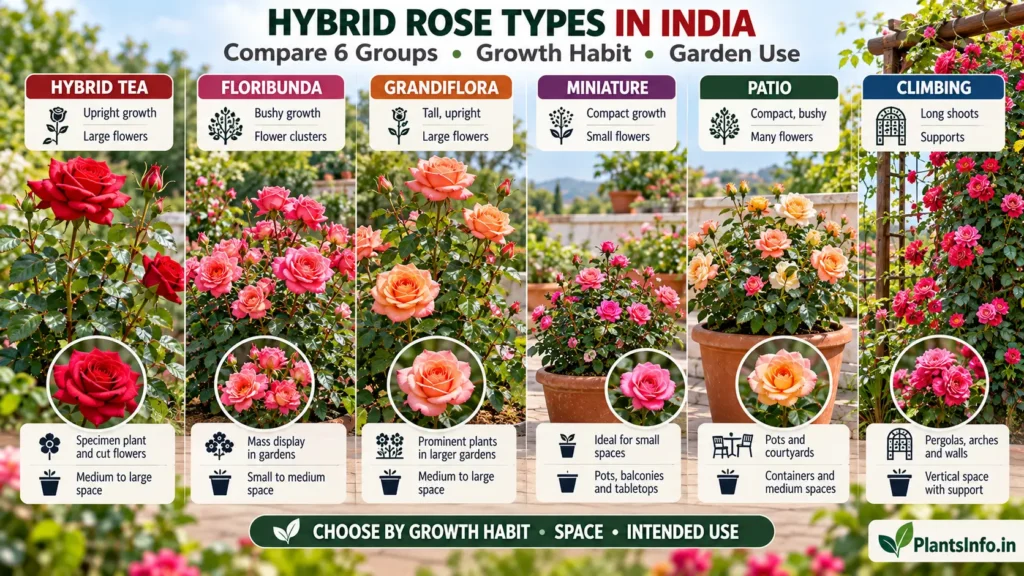
- Plant architecture: Upright stems, compact growth, and defined flower forms make different cultivars suitable for structured planting arrangements.
- Repeat flowering: Many modern garden roses produce successive flowering flushes under suitable growing conditions.
In Indian residential landscapes, hybrid roses are commonly incorporated into formal flower beds, entrance gardens, institutional landscapes, and decorative courtyard arrangements.
Their suitability for a particular setting depends on cultivar growth habit, local climate, available sunlight, and maintenance requirements.
Cut-Flower and Floristry Applications
Hybrid tea roses are particularly associated with the commercial cut-flower industry.
Their prominent individual flowers, stem characteristics, and colour diversity make them suitable for:
- Bouquets and floral arrangements
- Wedding decorations
- Event and ceremonial displays
- Indoor floral decoration
- Gift arrangements
Flower form, stem length, fragrance, and postharvest performance vary among cultivars. Consequently, ornamental garden suitability and commercial cut-flower suitability are not necessarily identical.
Fragrance and Perfumery
Rose fragrance results from a complex mixture of volatile compounds. Selected rose cultivars are valued for their aromatic characteristics, and rose-derived materials are used in perfumery and fragrance products.
However, fragrance intensity and aromatic composition vary considerably among cultivated roses. Not every hybrid rose is suitable for commercial fragrance extraction.
The suitability of a cultivar depends on its fragrance profile, flower characteristics, production requirements, and intended application.
Culinary and Traditional Uses
Rose has a long-standing presence in South Asian culinary and fragrance traditions. Rose petals and aromatic preparations are used in selected foods, personal fragrance products, and traditional preparations.
These applications relate to selected rose materials and should not be interpreted as universal uses of all modern hybrid cultivars.
Culinary Applications
Appropriately identified, food-grade rose petals may be used in:
- Floral garnishes
- Desserts and confectionery
- Rose-flavoured beverages
- Traditional rose preserves
- Aromatic sugar preparations
In India, gulkand is a traditional rose-petal preserve associated with regional food practices. Rose water is also used as a flavouring ingredient in selected sweets and desserts.
The suitability of rose petals for consumption depends on correct identification and production conditions. Flowers treated with pesticides or other products not approved for edible crops should not be consumed.
Traditional Fragrance Preparations
Rose water and rose-derived aromatic materials have applications in personal fragrance, household preparations, and traditional perfumery.
Their use depends on the source material, fragrance characteristics, preparation method, and intended product.
Traditional applications should be distinguished from the specific commercial capabilities of modern hybrid rose cultivars.
Nutritional and Phytochemical Context
Rose petals contain naturally occurring pigments and phenolic compounds. Anthocyanins contribute to pigmentation in many red and pink rose flowers, while other phenolic compounds contribute to their chemical composition.
The concentration and profile of these substances vary with cultivar, flower maturity, and growing conditions.
There is insufficient basis for assigning one universal nutritional profile or therapeutic effect to the entire hybrid rose group. Traditional use does not, by itself, establish medical efficacy.
Ecological Role
Hybrid roses can contribute floral resources to residential garden ecosystems, particularly when their flowers are accessible to insects.
Support for Visiting Insects
Open or relatively simple rose flowers may provide pollen and access to floral structures for visiting insects, including bees and other flower-visiting species.
The ecological value of a rose depends partly on its flower architecture.
Some densely double flowers contain numerous overlapping petals that restrict access to reproductive structures. Consequently, a large number of ornamental flowers does not necessarily translate into equivalent pollinator value.
Contribution to Urban Green Spaces
In Indian residential gardens, rose bushes can contribute:
- Floral diversity within planted landscapes
- Seasonal resources for flower-visiting insects
- Vegetative structure in managed green spaces
- Ornamental vegetation in courtyards and institutional gardens
Their ecological contribution is best understood as part of a diverse planting arrangement rather than as a substitute for a broader range of locally suitable flowering plants.
Practical Value for Home Gardeners
Beyond the appearance of individual flowers, hybrid roses have several practical applications in residential and urban gardening.
Residential Garden Design
Roses can serve as focal plants near entrances, along garden borders, and within formal planting arrangements.
Their defined flower forms and varied growth habits allow gardeners to incorporate them into different landscape layouts.
Balcony and Terrace Decoration
Selected compact rose cultivars can be grown in containers and incorporated into balcony and terrace arrangements.
Their flowers provide colour within a relatively small planting footprint, making them relevant to urban gardening where ground space is limited.
Container suitability depends on cultivar size, available sunlight, drainage, and appropriate plant care.
Floral Craft and Home Decoration
Cut flowers can be used in table arrangements, decorative displays, and personal floral projects.
Fragrance-bearing cultivars may also provide an aromatic element in suitable decorative settings.
Educational Value
Hybrid roses provide an accessible example of cultivated plant diversity. They can help students and gardening enthusiasts understand:
- Selective breeding in ornamental plants
- Variation in flower morphology
- Differences between single and double flowers
- The relationship between floral structure and insect accessibility
- The commercial importance of floriculture
These characteristics make hybrid roses useful examples when discussing the interaction between horticulture, plant breeding, and floral biology.
What to Avoid
Do Not Assume Every Ornamental Rose Is Edible
Flowers intended for consumption should be correctly identified and produced for food use. Avoid consuming flowers treated with pesticides or other products not approved for edible crops.
Do Not Treat Traditional Use as Established Medical Efficacy
Rose water, rose petals, and other rose-derived preparations have traditional applications. These uses do not establish that hybrid roses prevent or treat medical conditions.
Do Not Assume All Roses Provide Equal Pollinator Value
Flower architecture influences insect access. Densely double ornamental flowers may offer less accessible pollen than simpler flower forms.
Do Not Assume Every Hybrid Rose Is Suitable for Fragrance Extraction
Fragrance intensity and aromatic composition vary among cultivars. Commercial fragrance suitability cannot be inferred from flower appearance alone.
Conclusion
Hybrid roses demonstrate how ornamental plant diversity intersects with floriculture, cultural practices, and urban biodiversity. Their significance extends beyond individual flowers to their roles in gardens, decorative applications, and cultivated landscapes.