Hybrid Rose Flowering Season in India: Monthly Guide
Quick Answer
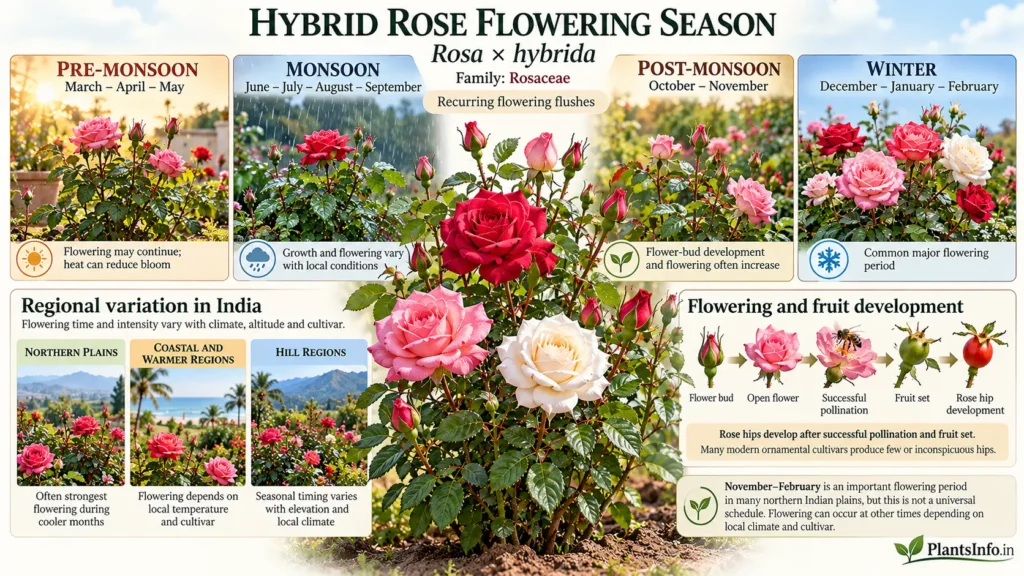
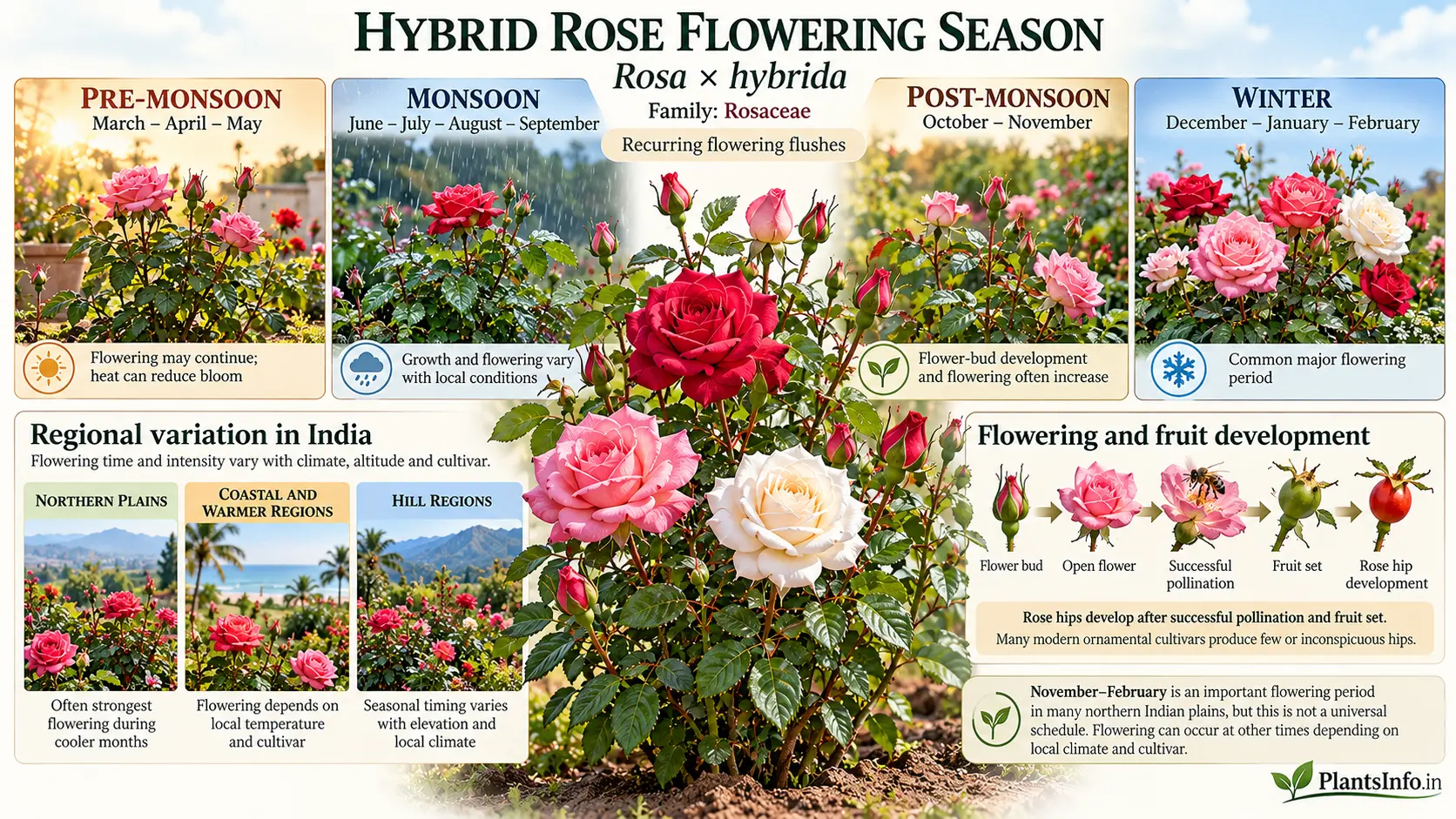
Hybrid roses (Rosa × hybrida) generally flower most profusely during the cooler months, particularly from October to March in many Indian plains. Flowering may recur during other months under suitable conditions, while warmer regions and hill areas experience different seasonal patterns. Rose hips develop after successful pollination and fruit set, although many modern ornamental cultivars produce few or inconspicuous fruits.
See also: Rose plant profile, how to grow it, common problems, seasonal care, and its benefits.
Biological Timing at a Glance
| Biological Stage | Typical Pattern |
|---|---|
| Flower-bud development | Often becomes more noticeable during the post-monsoon period in northern Indian plains |
| Peak flowering | Commonly November–February in many northern plains |
| Fruit set | Follows successful pollination and fertilisation |
| Fruit development | Continues after fruit set; duration varies with cultivar and environmental conditions |
| Fruit maturation | Variable; mature hips may develop colour during the cooler season or later |
These periods are broad observations rather than fixed dates applicable to every hybrid rose cultivar.
Recommended Products
Disclosure: As an Amazon Associate, PlantsInfo may earn from qualifying purchases.
🌱 Growing Essentials
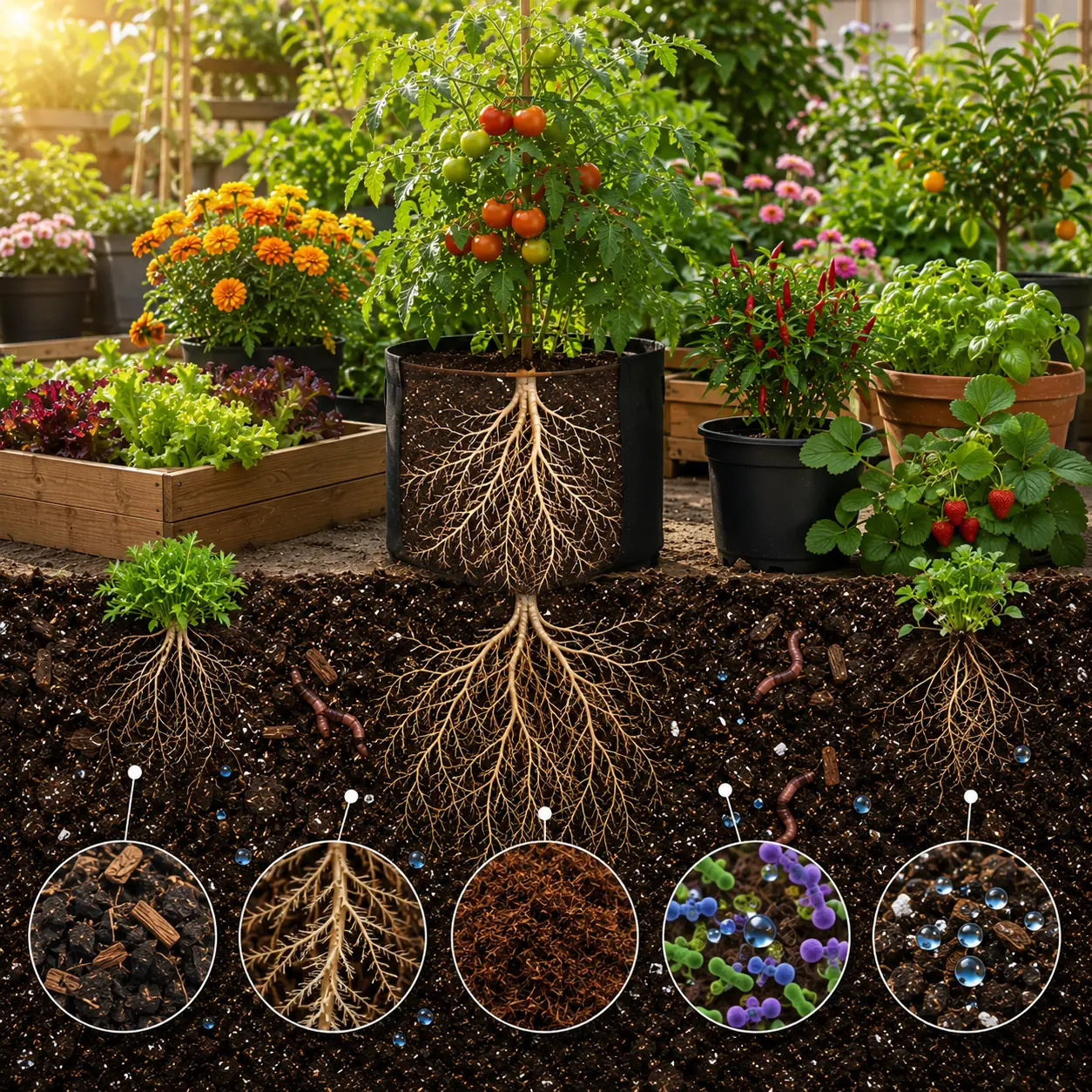
The following products can help with container gardening, potting, root development, soil management, and healthy plant growth.
Organic Potting Soil Mix
Provides nutrients, structure, and healthy growing conditions for container plants.
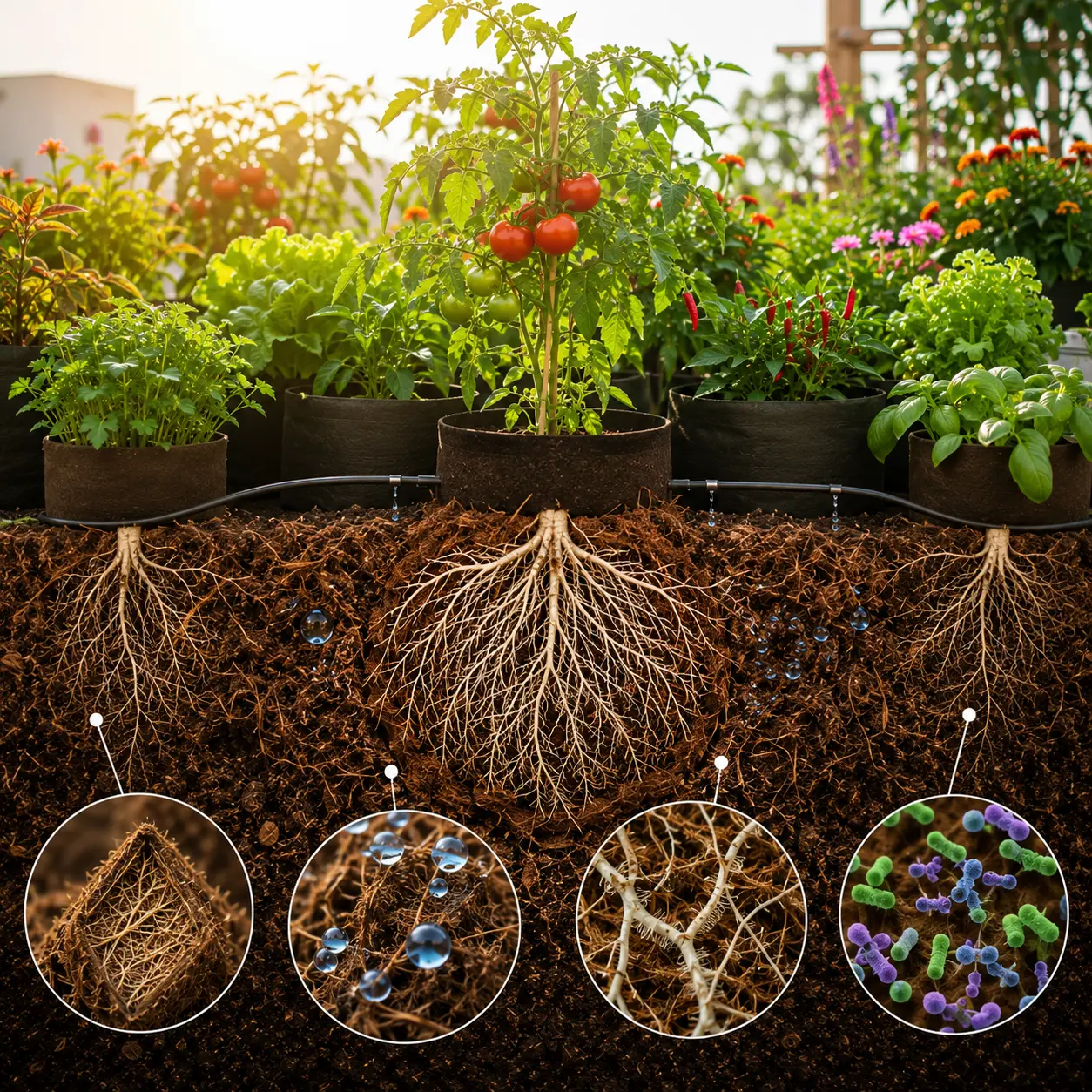
Coco Peat Growing Medium
Enhances moisture retention while maintaining excellent root-zone aeration.

Grow Bags for Plants
Improve drainage, root aeration, and vegetable production in limited spaces.

Plastic Pots for Plants
Ideal containers for seedlings, ornamentals, herbs, and balcony gardens.
Introduction
Hybrid roses may produce several distinct flowering flushes rather than one continuous flowering event. Their flowering patterns are influenced by cultivar characteristics, temperature, regional climate, and plant condition.
Consequently, the flowering calendar differs between the Indian plains, coastal areas, and hill regions. Understanding these differences helps distinguish normal seasonal variation from an unusual reduction in flowering.
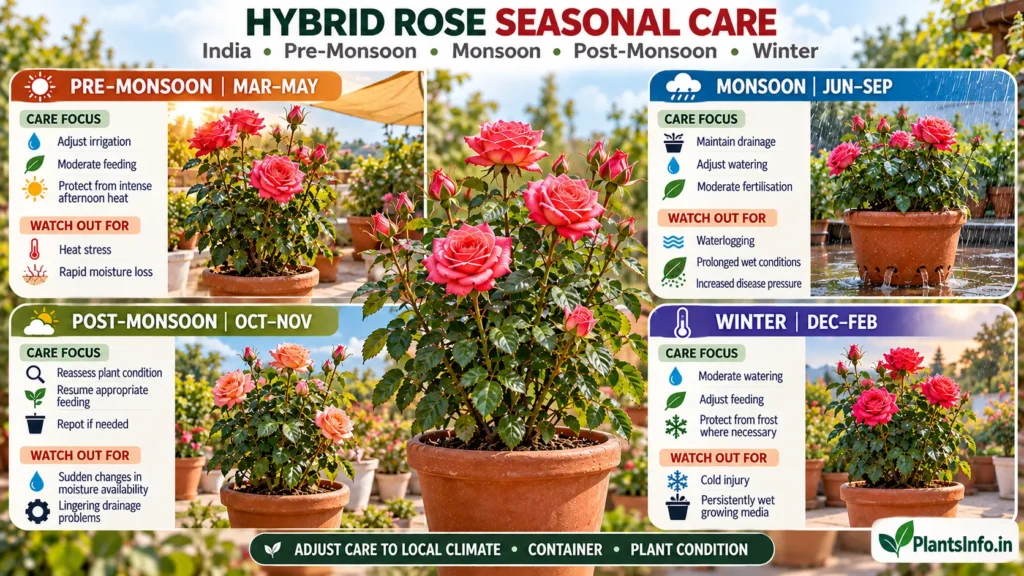
India’s Seasons and Hybrid Rose Flowering
| Season | Months | Typical Biological Pattern |
|---|---|---|
| Pre-monsoon | March–May | Flowering may continue in some regions, while increasing temperatures can reduce flower production and quality |
| Monsoon | June–September | Vegetative growth may be prominent; flowering varies with rainfall, humidity, and temperature |
| Post-monsoon | October–November | Flower-bud development and flowering commonly increase in northern plains |
| Winter | December–February | A major flowering period across many northern Indian growing regions |
These seasonal descriptions primarily reflect broad patterns observed in Indian plains. Local climate and cultivar characteristics can alter the timing.
Flowering Season in Detail
When Do Hybrid Rose Buds Appear?
In many northern Indian plains, visible flower-bud development commonly becomes more noticeable during the post-monsoon period.
Flowering may begin during October or November, depending on local temperatures and cultivar characteristics.
In southern and coastal India, flowering may be less sharply restricted to winter. Some cultivated roses produce successive flowering flushes across a longer part of the year.
Visible bud development should be distinguished from the earlier physiological process of floral initiation, whose timing can vary among cultivars.
Peak Bloom Period in India
| Region | Broad Flowering Pattern |
|---|---|
| Northern plains | Strong flowering commonly occurs from November to February |
| Western India | Flowering is often concentrated in cooler months, with inland and coastal variation |
| Southern India | Flowering may extend across a longer period, depending on elevation and local climate |
| Eastern India | Cooler-season flowering is common, although timing varies geographically |
| Himalayan and hill regions | Flowering is often associated with the warmer growing period, with substantial local variation |
These are broad regional patterns, not fixed flowering dates for every location or cultivar.
Elevation, temperature, rainfall, and cultivar characteristics can influence the timing and duration of flowering.
How Long Do Individual Flowers Last?
Individual hybrid rose flowers may remain attractive for several days. Their longevity is influenced by temperature, humidity, cultivar, and flower form.
A flowering flush may continue over several weeks, and additional flushes may follow under suitable conditions.
Individual flower longevity should not be confused with the duration of the plant’s overall flowering season.
What Triggers Flowering?
Temperature is an important influence on hybrid rose flowering.
- Moderate temperatures: Often associated with improved flowering and flower quality.
- High temperatures: Can shorten flower longevity and reduce flower size or production.
- Seasonal temperature changes: Often correspond with increased flowering in northern Indian plains.
- Day length: May influence some rose cultivars, although responses vary among cultivated roses.
Rainfall and humidity also influence seasonal flowering patterns. However, neither should be treated as a universal flowering trigger for the entire hybrid rose group.
Fruiting Season
When Do Hybrid Roses Produce Rose Hips?
Rose hips develop after successful pollination and fertilisation, when the flower’s ovary develops into fruit.
Fruit development follows flowering, but its timing varies with cultivar and environmental conditions.
Many modern ornamental hybrid roses are selected primarily for flower characteristics. Some produce few or no conspicuous hips, even when flowering is abundant.
Rose Hip Development and Ripening
A developing rose hip generally changes from green to a mature colour, often red, orange, or reddish-orange, depending on the cultivar.
The period between flower development and mature fruit can extend over several weeks or months.
Fruit colour and development should be interpreted in relation to cultivar characteristics rather than treated as a universal maturity indicator. There is no single nationwide harvest window for hybrid rose hips.
What Happens If the Fruit Is Not Collected?
Mature hips may remain attached to the plant for a period before drying, deteriorating, or falling.
Their persistence depends on cultivar, weather, and local growing conditions.
The presence of rose hips also indicates that successful fruit development has occurred, rather than merely that flowering has finished.
Best Time to Plant
For many regions of northern India, post-monsoon (October–November) is a commonly suitable planting window for hybrid roses.
The comparatively moderate temperatures provide an establishment period before the main cool-season flowering phase.
In warmer parts of India, suitable planting windows may differ according to local temperature and rainfall patterns. Hill regions may have a separate suitable period associated with the onset of warmer growing conditions.
These are broad seasonal indications; local growing conditions determine the appropriate planting period.
Month-by-Month Flowering Calendar
The following calendar represents broad patterns for hybrid roses in the Indian plains, particularly northern regions. It is not a fixed schedule for every cultivar or location.
| Month | Season | What the Plant Is Doing |
|---|---|---|
| January | Winter | Often within the main flowering period, with successive blooms possible |
| February | Winter | Flowering may remain active, although rising temperatures can begin to influence flower quality |
| March | Pre-monsoon | Flowering may continue, with increasing sensitivity to heat |
| April | Pre-monsoon | Flower production may decline in hotter plains, while vegetative activity continues |
| May | Pre-monsoon | High temperatures commonly coincide with reduced flowering in many northern locations |
| June | Monsoon | Vegetative growth may become prominent; flowering varies regionally |
| July | Monsoon | Growth and flowering patterns reflect rainfall, humidity, and temperature |
| August | Monsoon | Vegetative activity commonly continues, with possible intermittent flowering |
| September | Monsoon | Seasonal transition may precede renewed flower-bud development in northern plains |
| October | Post-monsoon | Flower-bud development and renewed flowering may become more noticeable |
| November | Post-monsoon | Flowering commonly increases in northern plains |
| December | Winter | A major flowering period in many northern Indian locations |
The calendar describes broad biological patterns, not guaranteed monthly flowering for an individual plant.
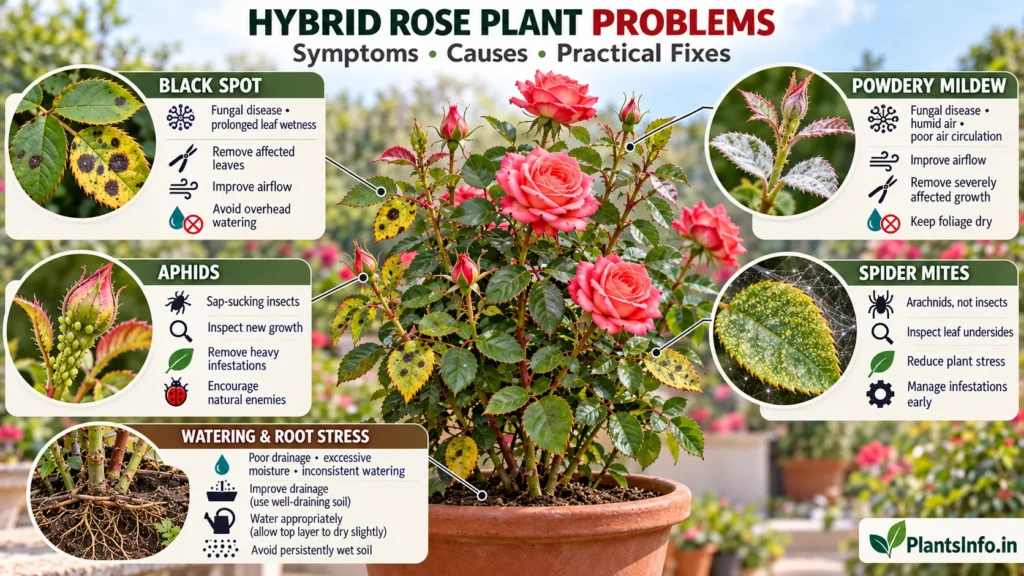
What Can Go Wrong Seasonally?
Summer Heat Stress
During pre-monsoon, high temperatures can cause shorter-lived flowers, reduced bloom production, and smaller blooms.
A seasonal reduction in flowering during hot weather does not necessarily indicate permanent loss of flowering capacity.
Prolonged Monsoon Humidity
During monsoon, persistent humidity and wet conditions may coincide with reduced flower quality and increased fungal disease pressure.
Flowering patterns during this period can differ substantially between regions.
Unexpected Flowering Decline
A reduction in blooms may reflect seasonal temperature stress, cultivar characteristics, or plant condition.
The timing and extent of flowering should therefore be interpreted in relation to the local climate rather than a single nationwide calendar.
Post-Bloom Biological Changes
After a flowering flush, the plant may enter a period of vegetative growth before another flush develops.
Individual flowers undergo senescence after their display period. Where successful pollination and fertilisation occur, fruit development may continue after the petals have fallen.
The plant may therefore follow different developmental pathways after flowering: renewed vegetative growth, another flowering flush, or rose-hip development.
Not every spent flower produces a fruit, and the occurrence of rose hips varies among ornamental cultivars.
Conclusion
Hybrid rose flowering reflects the interaction between cultivar characteristics and regional climate. Local seasonal observations are therefore more informative than a single nationwide flowering date.