Hybrid Rose Plant: Quick Facts, Names, Identification & Distribution
Quick Answer
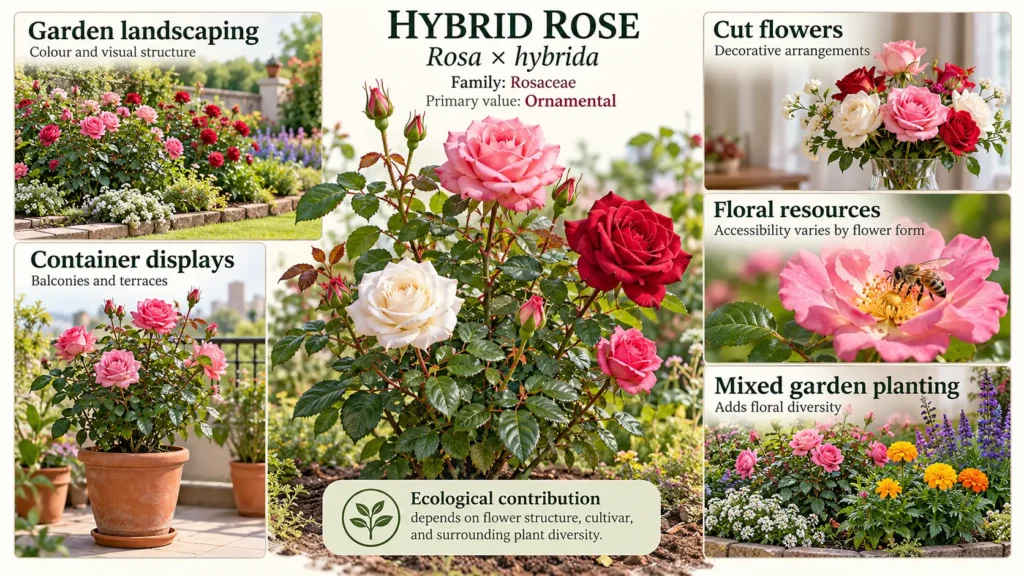
The hybrid rose (Rosa × hybrida) is a cultivated group of roses in the family Rosaceae, developed through hybridisation and selection of different rose lineages. In India, hybrid roses are widely cultivated in gardens, parks, nurseries, terraces, and commercial flower-growing areas. Their growth form, flower characteristics, and climatic suitability vary among cultivars.
See also: Rose plant profile, how to grow it, common problems, seasonal care, and its flowering season.
Introduction
A rose flower may have a relatively simple arrangement of five petals or dozens of overlapping petals, depending on its cultivar. This variation makes hybrid roses one of the most recognisable groups of ornamental flowering plants.
Recommended Products
Disclosure: As an Amazon Associate, PlantsInfo may earn from qualifying purchases.
🌱 Growing Essentials
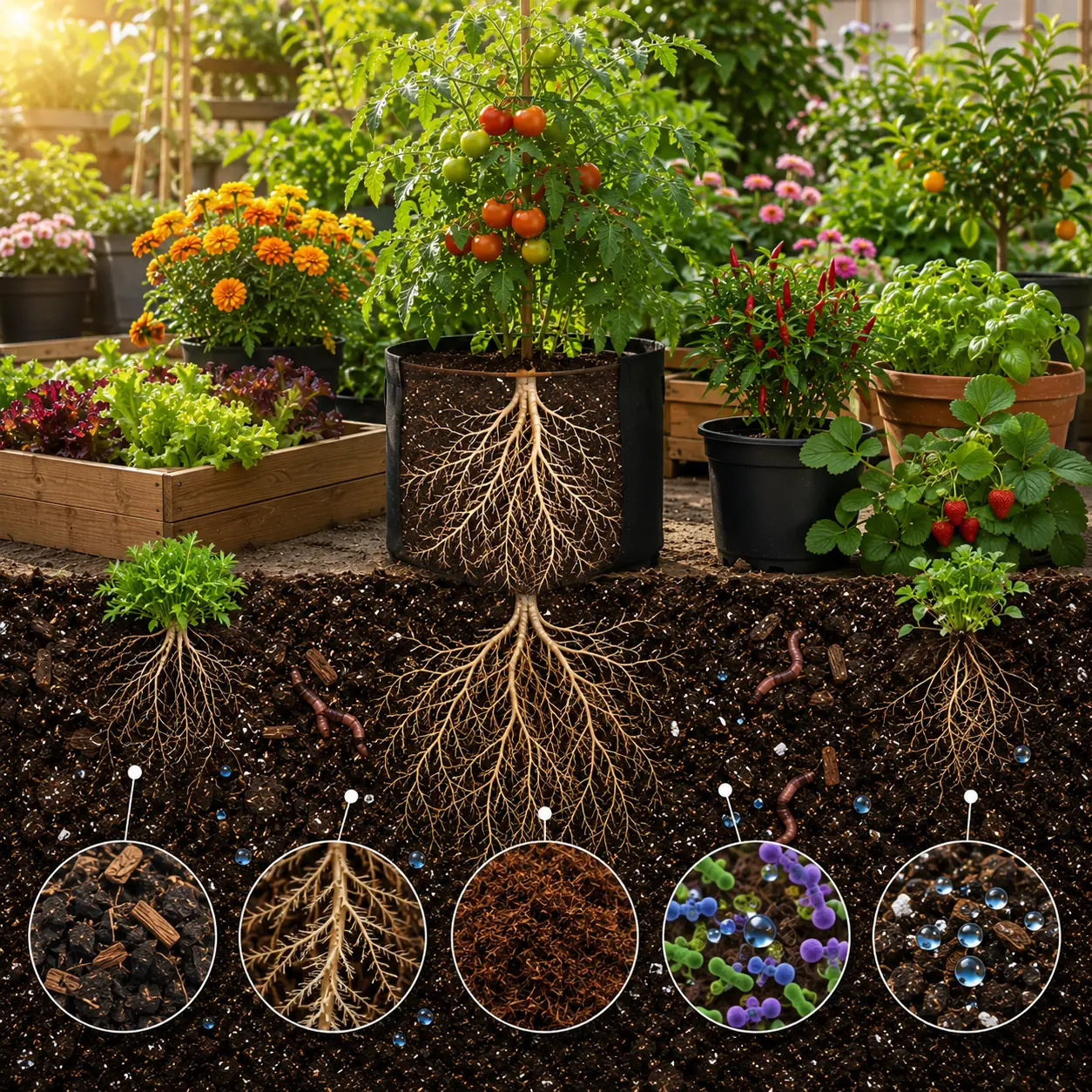
The following products can help with container gardening, potting, root development, soil management, and healthy plant growth.
Organic Potting Soil Mix
Provides nutrients, structure, and healthy growing conditions for container plants.
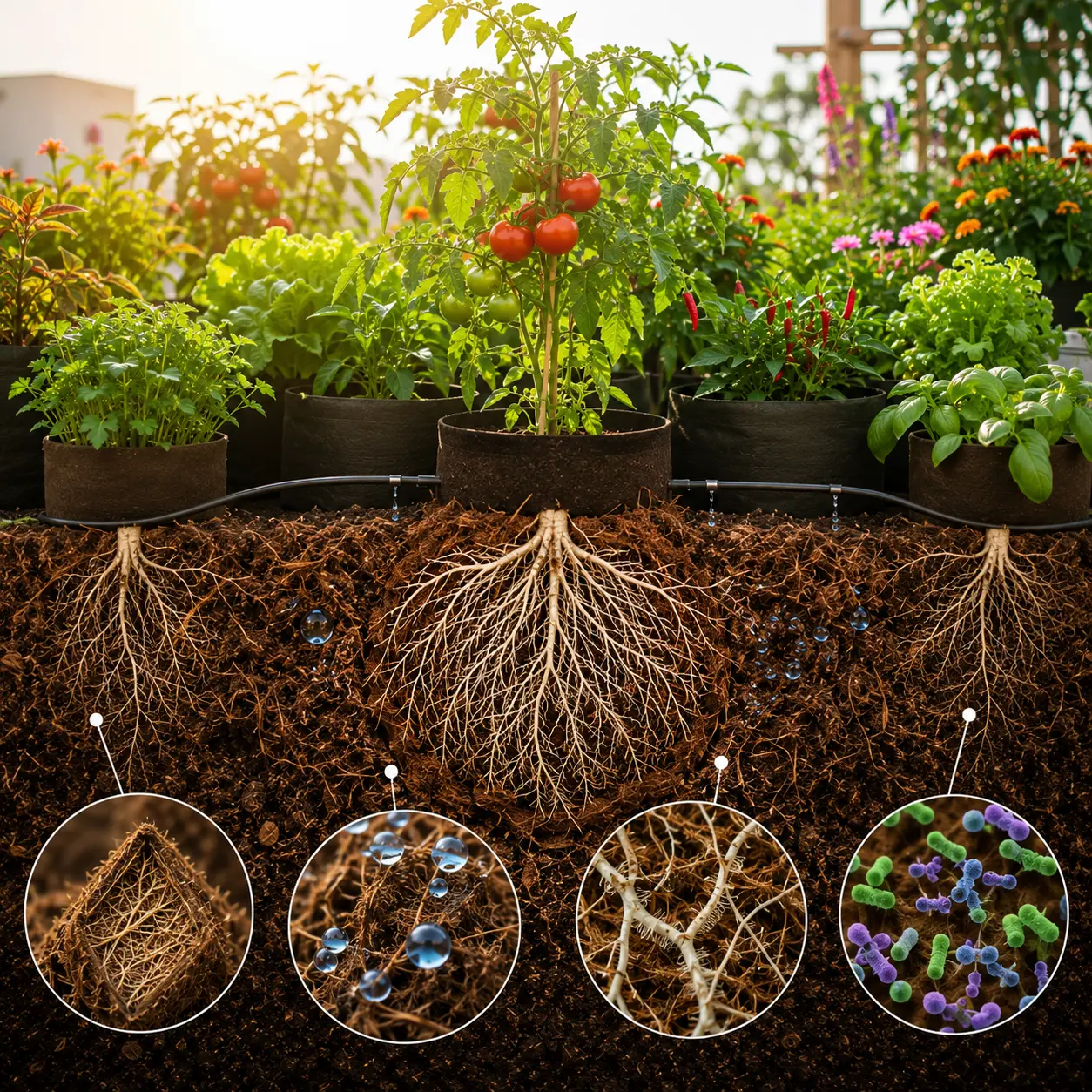
Coco Peat Growing Medium
Enhances moisture retention while maintaining excellent root-zone aeration.

Grow Bags for Plants
Improve drainage, root aeration, and vegetable production in limited spaces.

Plastic Pots for Plants
Ideal containers for seedlings, ornamentals, herbs, and balcony gardens.
Their cultivated forms range from compact bushes to larger shrubs and climbing plants, while selected long-stemmed cultivars are associated with the commercial cut-flower industry.
Quick Facts Table
| Feature | Typical Characteristic |
|---|---|
| Scientific name | Rosa × hybrida |
| Family | Rosaceae |
| Plant type | Cultivated hybrid group |
| Growth form | Woody shrub; some cultivars have climbing or spreading habits |
| Life cycle | Perennial |
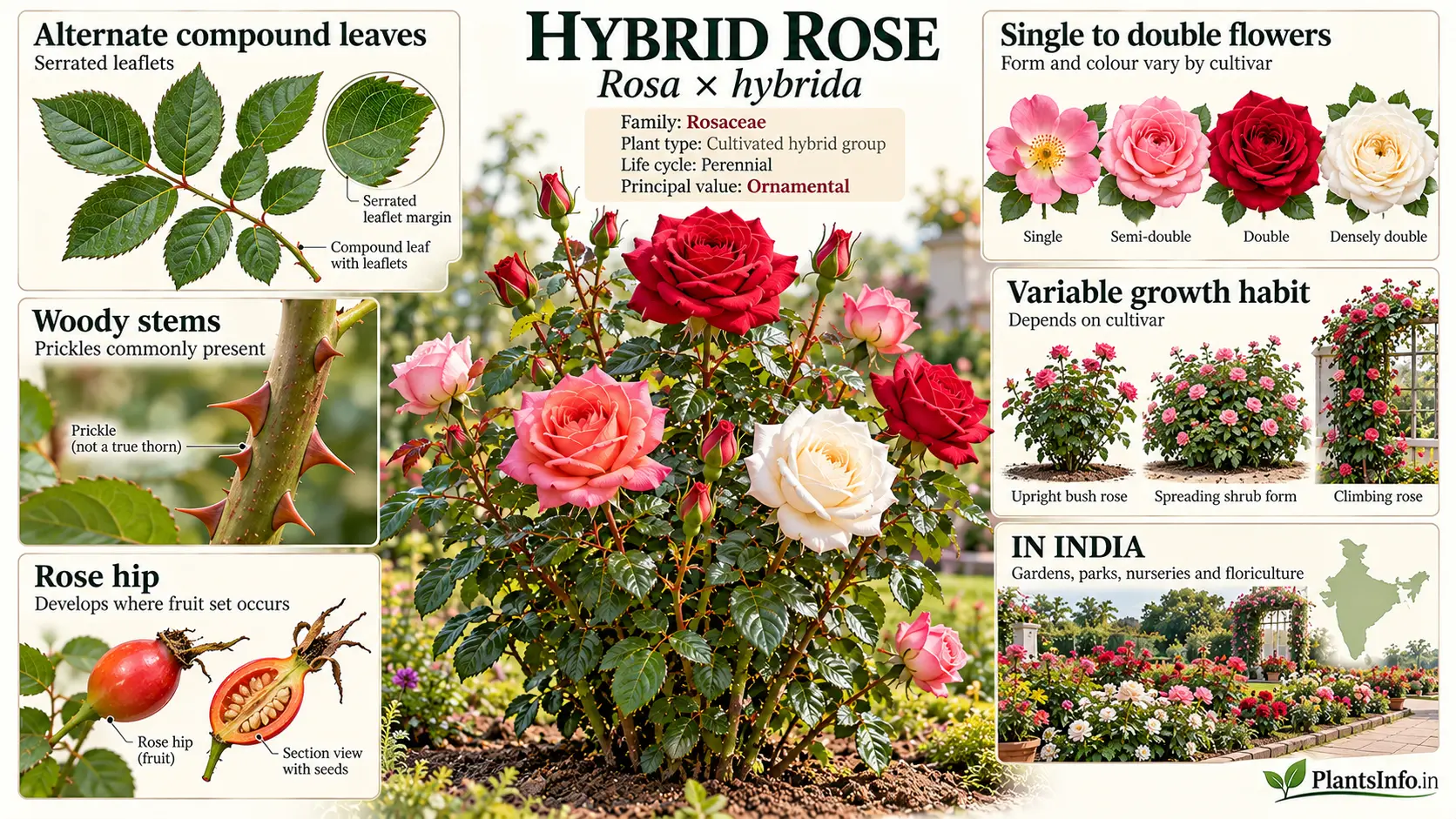
| Leaves | Alternate, compound leaves with serrated leaflets |
| Flowers | Single to densely double; colour and form vary by cultivar |
| Flower colours | Red, pink, white, yellow, orange, cream, and other shades |
| Fruit | Rose hip, where fruit develops |
| Stem characteristics | Woody stems commonly bearing prickles |
| Principal value | Ornamental and commercial floriculture |
Names in Different Languages
The following are common names for roses, including cultivated hybrid roses. They are not taxonomically exclusive names for Rosa × hybrida.
| Language | Common Name |
|---|---|
| English | Rose, Hybrid Rose, Garden Rose |
| Hindi | गुलाब (Gulab) |
| Bengali | গোলাপ (Golap) |
| Tamil | ரோஜா (Rōjā) |
| Telugu | గులాబీ (Gulābī) |
| Marathi | गुलाब (Gulab) |
| Kannada | ಗುಲಾಬಿ (Gulābi) |
| Malayalam | റോസാപ്പൂവ് (Rōsāppūv) |
| Gujarati | ગુલાબ (Gulab) |
| Punjabi | ਗੁਲਾਬ (Gulab) |
What Does It Look Like?
Hybrid roses are generally woody, branching plants. Their mature height and spread vary substantially according to cultivar, ranging from compact garden forms to taller bushes that may approach 2 m or more.
Leaves
The leaves are usually arranged alternately along the stems and consist of several leaflets.
Individual leaflets are generally oval to elliptical, with toothed margins and pointed tips. Leaf colour ranges from light green to deep green, depending on cultivar and growing conditions.
Flowers
Hybrid rose flowers occur in a wide range of colours, including:
- Red
- Pink
- White
- Yellow
- Orange
- Cream
- Purple and blended shades
Flower size, petal number, and arrangement vary by cultivar.
Some flowers have a relatively simple arrangement of five petals, while others possess numerous overlapping petals that create a dense, layered appearance.
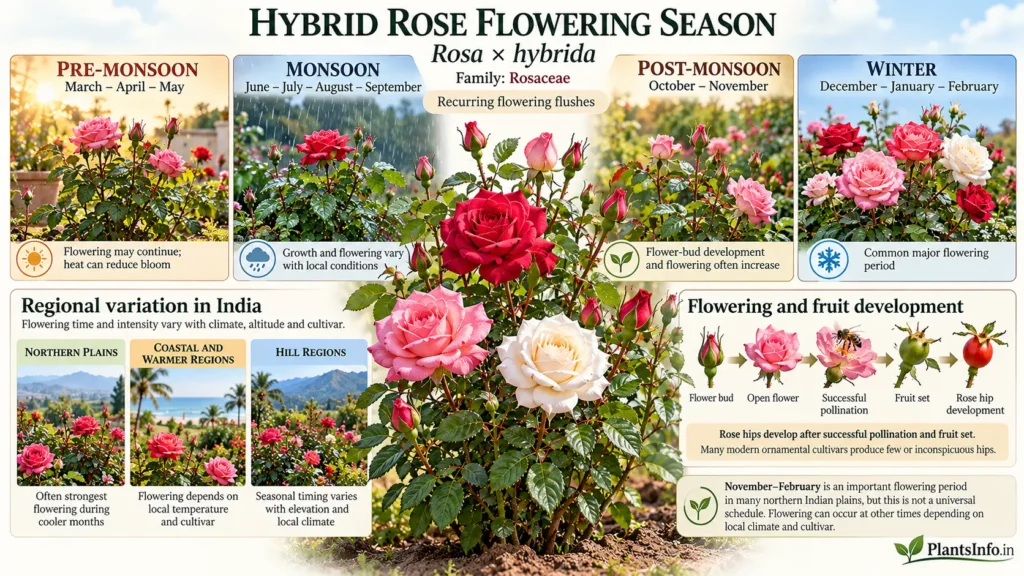
Many modern garden cultivars flower in repeated flushes under suitable conditions, although the pattern varies with cultivar and climate.
Fruit
The fruit of a rose is known as a rose hip. It develops from the flower following successful pollination and fertilisation.
Rose hips are typically rounded or oval and may become red, orange, or reddish-brown when mature, depending on the cultivar.
Many highly selected ornamental cultivars produce few fruits, while others may produce conspicuous hips if flowers are successfully pollinated and allowed to develop.
Distinguishing Features
Hybrid roses can be described by a combination of the following characteristics:
- Woody stems with prickles
- Alternate, compound leaves with serrated leaflets
- Flowers with variable petal numbers and arrangements
- Diverse flower colours and forms
- Cultivated growth habits ranging from compact bushes to larger or climbing forms
Roses bear prickles rather than true botanical thorns. Prickles are epidermal outgrowths, whereas true thorns are modified stems.
These characteristics are useful for recognising garden roses, but they are not individually unique to hybrid roses. Identification to a particular horticultural group or cultivar may require additional information.
Where Does It Grow in India?
Native or Cultivated?
Hybrid roses are cultivated horticultural plants rather than a single naturally occurring wild species with a defined native Indian distribution.
Their horticultural ancestry involves rose lineages originating in different regions, while modern garden cultivars have been developed through extensive breeding and selection.
Their presence across India therefore represents cultivation and horticultural distribution rather than natural native occurrence.
Distribution Across India
Hybrid roses are cultivated in many parts of India, including:
| Region | Examples of Cultivation Areas |
|---|---|
| Northern India | Delhi, Uttar Pradesh, Punjab, Haryana, and Jammu and Kashmir |
| Western India | Maharashtra, Gujarat, and Rajasthan |
| Southern India | Karnataka, Tamil Nadu, Kerala, and Telangana |
| Eastern India | West Bengal and neighbouring states |
| Northeastern India | Selected gardens, parks, and horticultural settings |
These examples indicate broad cultivation coverage, not a verified inventory of commercial production in every listed state.
The scale of cultivation and local availability vary according to climate, horticultural infrastructure, nursery networks, and market demand.
Altitude and Climate
Hybrid roses are cultivated from plains to hill regions.
Cooler conditions generally support flower quality in many cultivars, while hot and humid conditions can influence growth, flower development, and flowering performance.
Climatic suitability depends on the particular cultivar and local environmental conditions. Consequently, a flowering pattern observed in one region should not be assumed to apply throughout India.
Urban and Rural Distribution
Hybrid roses are commonly grown in:
- Urban residential gardens
- Public parks
- Institutional landscapes
- Private properties
- Commercial nurseries
- Rural horticultural areas
In commercial growing areas, roses may be cultivated for flower markets, decorative arrangements, and ceremonial applications.
What Is It Used For?
Hybrid roses have ornamental, commercial, and cultural applications.
Garden Ornamentation
They are used as flowering shrubs in residential gardens, public parks, institutional landscapes, and formal planting arrangements.
Cut Flowers
Selected cultivars, particularly those with suitable stem and flower characteristics, are grown for bouquets, floral arrangements, and commercial flower markets.
Ceremonial Use
Rose flowers are used in decorations, offerings, celebrations, and wedding arrangements.
Fragrance and Floral Products
Selected rose cultivars are valued for fragrance-related applications and the production of rose-scented products.
Suitability depends on cultivar characteristics and the intended application.
Traditional and Culinary Applications
Rose petals from correctly identified, food-grade flowers may be used in preparations such as gulkand and rose water.
Ornamental flowers should not automatically be assumed suitable for consumption, particularly when their pesticide treatment or production history is unknown.
Is It Easy to Grow?
Hybrid roses are moderately demanding ornamental plants.
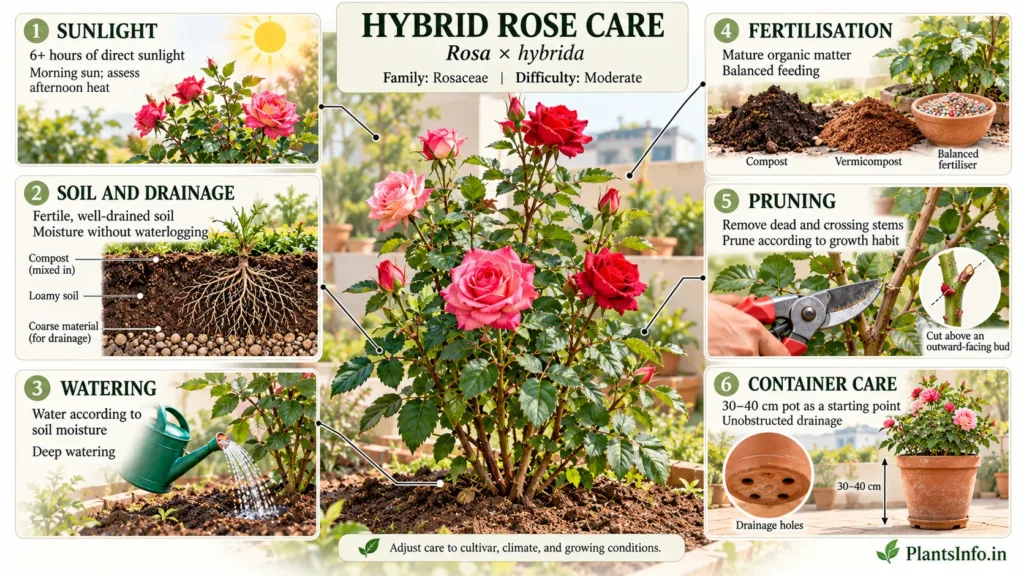
They can be grown in gardens and suitable containers, but their performance depends on cultivar, climate, available space, and general growing conditions.
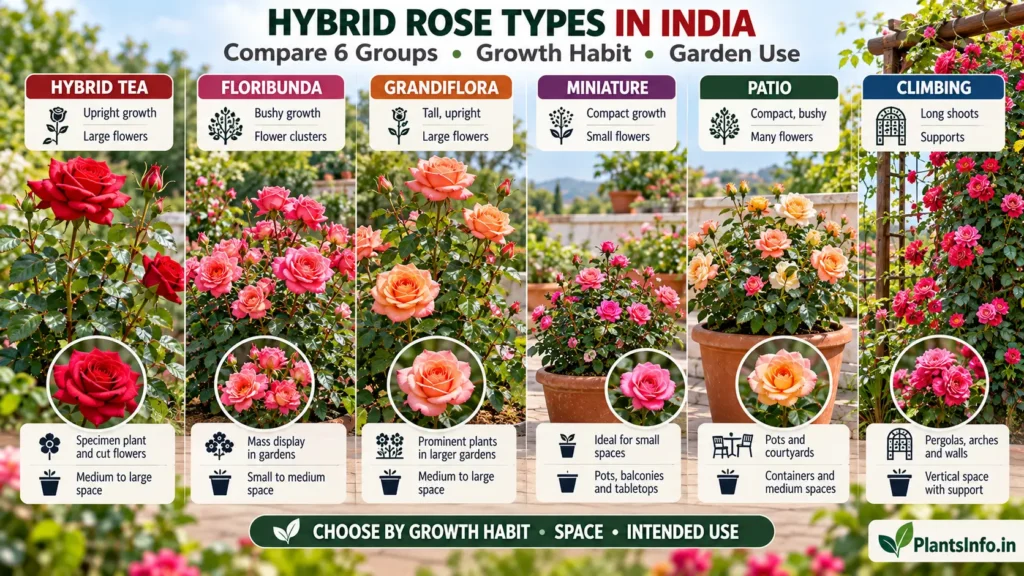
Compact cultivars are generally more suitable for restricted spaces than large, vigorous bushes.
Special Flags
Commonly Confused with Other Roses
Hybrid roses may be confused with other cultivated rose groups, including floribunda roses, miniature roses, and older garden rose groups.
Flower arrangement, plant architecture, and growth habit can provide useful descriptive clues. However, these characteristics may overlap between groups.
Identification to a specific cultivar may require nursery records, cultivar labels, or additional horticultural information.
Frequently Asked Questions
Is a hybrid rose a tree or a shrub?
Most hybrid roses are woody shrubs rather than trees. Some cultivars have climbing or spreading growth habits, and mature size varies considerably.
Do all hybrid roses produce rose hips?
No. Fruit production varies among cultivars and depends on flower fertility, successful pollination, fertilisation, and whether the flowers are allowed to develop into fruit.
Are hybrid roses native to India?
Modern hybrid roses are cultivated horticultural plants, not a single wild species native to India. They are grown extensively across the country.
Are all hybrid roses the same?
No. Hybrid roses vary in flower form, colour, fragrance, growth habit, mature size, and flowering pattern. These differences reflect the diversity of cultivated varieties and horticultural groups.
Summary
Hybrid roses illustrate how selective breeding has produced substantial diversity within a familiar ornamental plant group. Their cultivated distribution, variable floral characteristics, and commercial applications make them important subjects in ornamental horticulture.